
Glycerol Derivatives Market Report 2026
Global Outlook – By Product (4-(Hydroxymethyl)-1 3-Dioxolan-2-One, Polyglycerol, Propane-1 2 3-Triyl Triacetate, 1 3 Propanediol, Propylene Glycol, Other Products), By Grade (Bio-Based, Petroleum-Based), By End-Use (Food And Beverage, Pharmaceuticals, Cosmetics And Personal Care, Construction, Other End-Users) – Market Size, Trends, Strategies, and Forecast to 2030
Glycerol Derivatives Market Overview
• Glycerol Derivatives market size has reached to $17.1 billion in 2025 • Expected to grow to $23.13 billion in 2030 at a compound annual growth rate (CAGR) of 6.1% • Growth Driver: Surge In Food And Beverage Industry Fuels Growth In Glycerol Derivatives Market • Market Trend: Adoption Of Biodegradable Wax-Based Pearlizers To Enhance Personal Care Formulations • Asia-Pacific was the largest region in 2025 and North America is the fastest growing region.What Is Covered Under Glycerol Derivatives Market?
Glycerol derivatives refer to a variety of chemical compounds that are derived from glycerol, also known as glycerin or propane-1,2,3-triol. It is a simple polyol compound with three hydroxyl (OH) groups, and through chemical or enzymatic processes, it can undergo various reactions to yield different derivatives. The main products of glycerol derivatives are 4-(Hydroxymethyl)-1 3-Dioxolan-2-One, polyglycerol, propane-1 2 3-triyl triacetate, 1 3 propanediol, propylene glycol, and others. 4-(Hydroxymethyl)-1,3-Dioxolan-2-One, also known as Dioxolane, is a chemical compound with the molecular formula C4H6O3. The grades include bio-based, and petroleum-based for end users including food and beverage, pharmaceuticals, cosmetics, and personal care, construction, and others.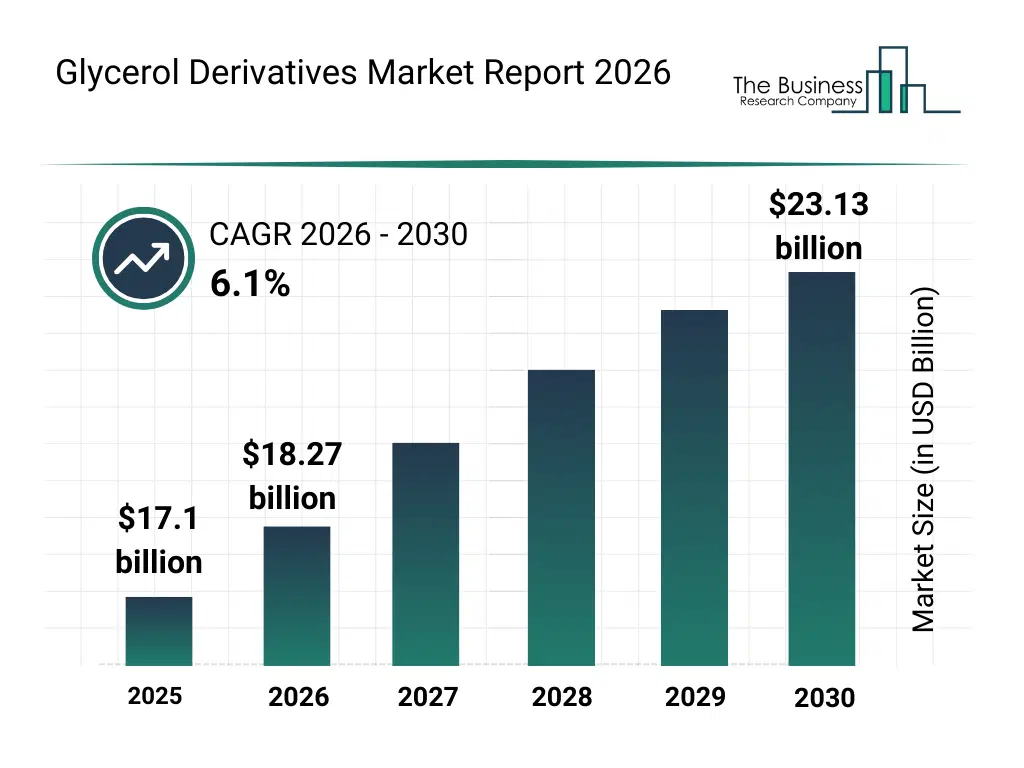
What Is The Glycerol Derivatives Market Size and Share 2026?
The glycerol derivatives market size has grown strongly in recent years. It will grow from $17.1 billion in 2025 to $18.27 billion in 2026 at a compound annual growth rate (CAGR) of 6.8%. The growth in the historic period can be attributed to growth of biodiesel production, availability of crude glycerol, expansion of personal care industry, use in pharmaceutical formulations, demand for food grade solvents.What Is The Glycerol Derivatives Market Growth Forecast?
The glycerol derivatives market size is expected to see strong growth in the next few years. It will grow to $23.13 billion in 2030 at a compound annual growth rate (CAGR) of 6.1%. The growth in the forecast period can be attributed to increasing biodiesel capacity, rising demand for bio-based chemicals, growth of clean label products, advancements in glycerol conversion technologies, expansion of sustainable packaging materials. Major trends in the forecast period include growing demand for bio-based glycerol derivatives, rising use in cosmetics and personal care, expansion of pharmaceutical grade applications, increasing adoption in food and beverage processing, focus on renewable and sustainable feedstocks.
Global Glycerol Derivatives Market Segmentation
1) By Product: 4-(Hydroxymethyl)-1 3-Dioxolan-2-One, Polyglycerol, Propane-1 2 3-Triyl Triacetate, 1 3 Propanediol, Propylene Glycol, Other Products 2) By Grade: Bio-Based, Petroleum-Based 3) By End-Use: Food And Beverage, Pharmaceuticals, Cosmetics And Personal Care, Construction, Other End-Users Subsegments: 1) By 4-(Hydroxymethyl)-1,3-Dioxolan-2-One: Industrial-Grade, Pharmaceutical-Grade 2) By Polyglycerol: Polyglycerol-4, Polyglycerol-6, Polyglycerol-10, Others 3) By Propane-1,2,3-Triyl Triacetate: Food-Grade, Pharmaceutical-Grade, Industrial-Grade 4) By 1,3 Propanediol: Bio-Based 1,3 Propanediol, Petroleum-Based 1,3 Propanediol 5) By Propylene Glycol: Food-Grade Propylene Glycol, Pharmaceutical-Grade Propylene Glycol, Industrial-Grade Propylene Glycol 6) By Other Products: Glycerol Esters, Glycerol Monoesters, Glycerol Fatty Acid Esters, Other Glycerol DerivativesWhat Is The Driver Of The Glycerol Derivatives Market?
The increasing food and beverage industry is expected to propel the growth of the glycerol derivatives market going forward. The food and beverage industry refers to the sector that involves the production, processing, distribution, and sale of food and drink products. The food and beverage industries are increasing due to urbanization, economic growth, rising incomes, health and wellness trends, globalization, and social media influence. Glycerol derivatives are integral to the food and beverage industry, offering a wide range of functionalities that improve product quality, stability, and consumer appeal. For instance, in April 2024, according to the data published by the National Association of Convenience Stores (NACS), a US-based trade association, total industry foodservice sales made up 26.9% of in-store sales in 2023, rising from 25.6% in 2022, with prepared food sales increasing by 12.2% per store per month, making it the leading in-store category. Additionally, in May 2024, according to the 2024 ANNUAL REPORT published by the British Soft Drinks Association, a UK-based trade association, the total volume of soft drinks consumed increased to 15,343 million liters in 2023, with an intermediate total of 14,912 million liters in 2022. Therefore, the increasing food and beverage industry is driving the growth of the glycerol derivatives industry.Key Players In The Global Glycerol Derivatives Market
Major companies operating in the glycerol derivatives market are Shell Plc, Cargill Incorporated, Archer Daniels Midland Company, BASF SE, The Procter & Gamble Company, The Dow Chemical Company, Mitsubishi Chemical Corporation, Saudi Basic Industries Corporation, Merck KGaA, Evonik Industries AG, Solvay SA, Sasol Limited, Arkema SA, Akzo Nobel N.V., Kerry Group plc, Huntsman Corporation, Lonza Group AG, Nouryon, Clariant AG, Stepan Company, Croda International Plc, Tokyo Chemical Industry Co. Ltd., Sakamoto Yakuhin Kogyo Co. Ltd., Acuro Organics Limited, Haihang Industry Co. Ltd.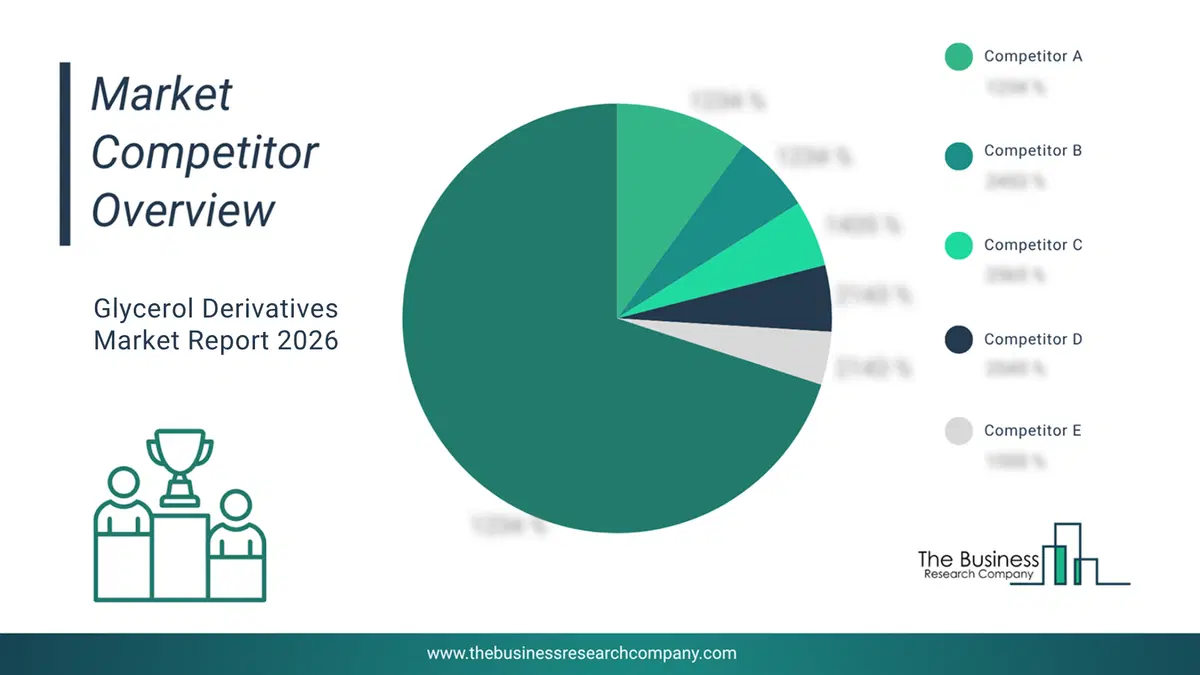
This chart is for illustrative purposes; the full report includes a detailed competitor analysis and comprehensive overview of the top 10 companies in the market.
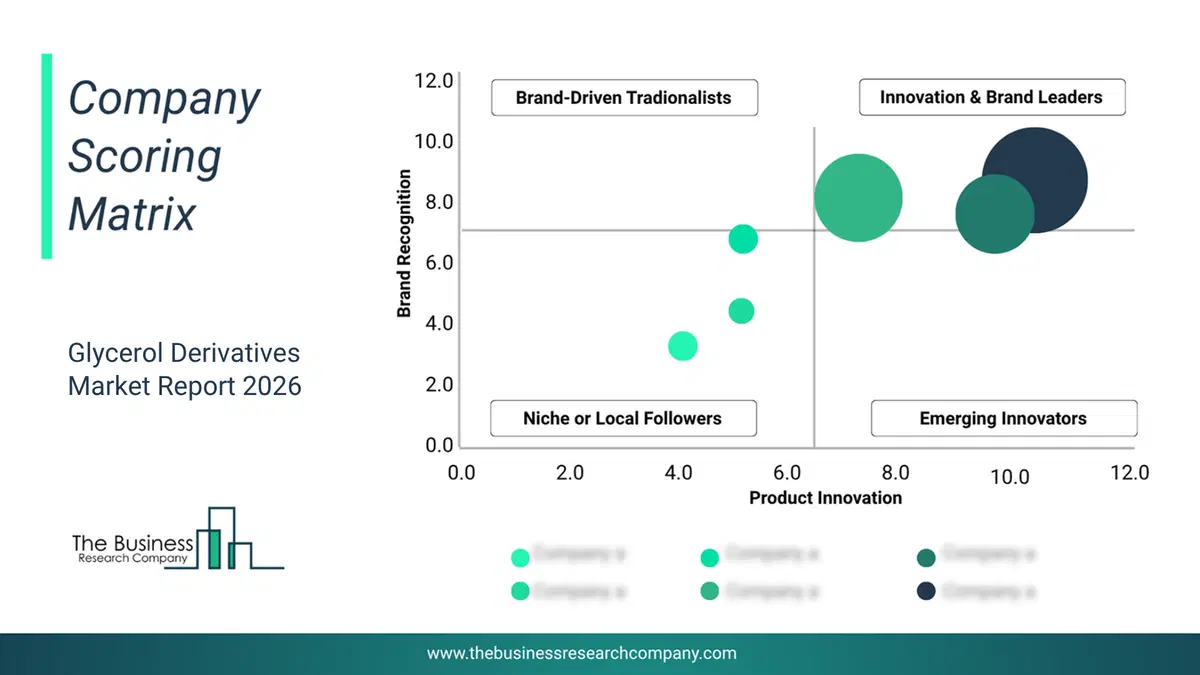
This chart maps companies by product innovation and brand strength, with bubble size indicating relative revenue, helping identify market leaders, challengers, and niche players. This is an illustrative chart; the full report provides a complete and accurate competitive analysis.
Global Glycerol Derivatives Market Trends and Insights
Major companies operating in the glycerol derivatives market are focusing on developing technological advancements such as wax-based opacifier dispersions to enhance formulation performance, improve visual appeal, and support sustainability goals. A wax-based opacifier dispersion uses naturally derived glycerol esters such as glyceryl oleate combined with other ingredients to create a pearlescent or creamy white appearance while maintaining biodegradability and surfactant compatibility. For instance, in April 2025, BASF SE, a Germany-based chemical company, introduced Lamesoft OP Plus, a wax-based opacifier dispersion developed for rinse-off personal care formulations. Designed to deliver strong opacity and a rich, creamy appearance, the ingredient enhances the sensory profile and visual appeal of products such as shampoos and body washes. Lamesoft OP Plus is readily biodegradable and compatible with modern sulfate-free and ethylene-oxide-free surfactant systems, aligning with the growing demand for “clean beauty” solutions. By combining aesthetic benefits with sustainability-focused features, the launch supports personal care brands seeking high-performance, eco-friendly ingredients for next-generation cleansing products.What Are Latest Mergers And Acquisitions In The Glycerol Derivatives Market?
In October 2023, Lootah Biofuels, a UAE-based provider of sustainable energy solutions, partnered with Deasyl SA to innovate biofuel and glycerol valorization manufacturing. This collaboration aims to develop sustainable and efficient processes for the production of biofuels and valuable by-products from crude glycerol, a by-product of biodiesel production. Deasyl SA is a Switzerland-based company that specializes in green chemistry and the development of sustainable solutions, particularly in the field of biofuels and glycerol.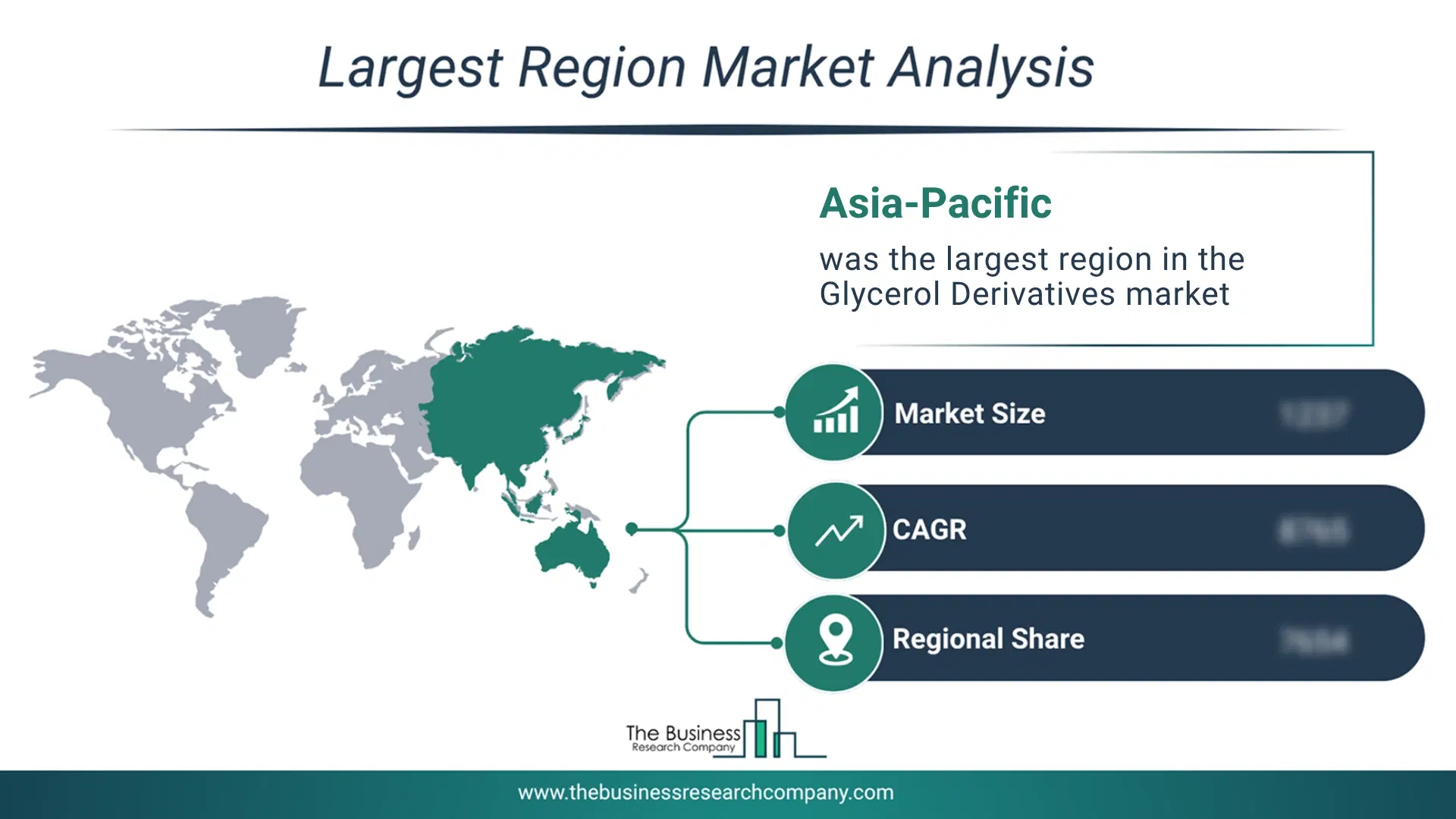
Regional Insights
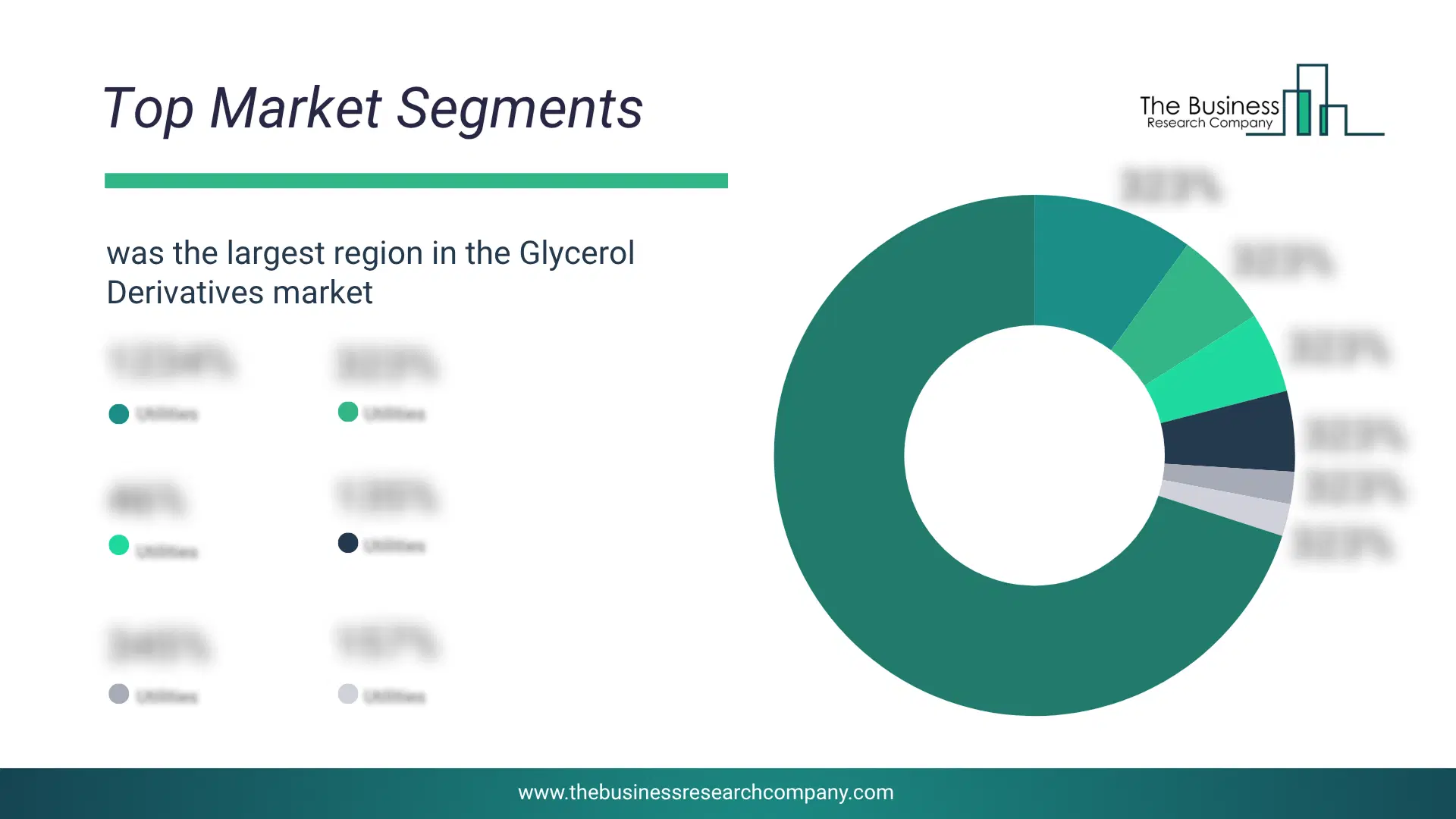
Asia-Pacific was the largest region in the glycerol derivatives market in 2025. The regions covered in this market report are Asia-Pacific, South East Asia, Western Europe, Eastern Europe, North America, South America, Middle East, Africa The countries covered in this market report are Australia, Brazil, China, France, Germany, India, Indonesia, Japan, Taiwan, Russia, South Korea, UK, USA, Canada, Italy, SpainWhat Defines the Glycerol Derivatives Market?
The glycerol derivatives market consists of sales of glycerides, glycerol ethers, and glycerol phosphates. Values in this market are ‘factory gate’ values, that is, the value of goods sold by the manufacturers or creators of the goods, whether to other entities (including downstream manufacturers, wholesalers, distributors, and retailers) or directly to end customers. The value of goods in this market includes related services sold by the creators of the goods.How is Market Value Defined and Measured?
The market value is defined as the revenues that enterprises gain from the sale of goods and/or services within the specified market and geography through sales, grants, or donations in terms of the currency (in USD unless otherwise specified). The revenues for a specified geography are consumption values that are revenues generated by organizations in the specified geography within the market, irrespective of where they are produced. It does not include revenues from resales along the supply chain, either further along the supply chain or as part of other products.
This chart presents market attractiveness based on a quantitative evaluation of growth, competition, strategic alignment, and risk, offering a clear view of opportunity areas for decision-making. This chart is for illustrative purposes; the full report contains the complete analysis.

This chart highlights the Total Addressable Market (TAM) by estimating the maximum revenue opportunity using an assumption-driven approach, supporting strategic planning and opportunity sizing across markets. The chart is illustrative; the full report provides a more comprehensive analysis.
What Key Data and Analysis Are Included in the Glycerol Derivatives Market Report 2026?
The glycerol derivatives market research report is one of a series of new reports from The Business Research Company that provides market statistics, including industry global market size, regional shares, competitors with the market share, detailed market segments, market trends and opportunities, and any further data you may need to thrive in the glycerol derivatives industry. The market research report delivers a complete perspective of everything you need, with an in-depth analysis of the current and future state of the industry.Glycerol Derivatives Market Report Forecast Analysis
| Report Attribute | Details |
|---|---|
| Market Size Value In 2026 | $18.27 billion |
| Revenue Forecast In 2030 | $23.13 billion |
| Growth Rate | CAGR of 6.8% from 2026 to 2030 |
| Base Year For Estimation | 2025 |
| Actual Estimates/Historical Data | 2020-2025 |
| Forecast Period | 2026 - 2030 |
| Market Representation | Revenue in USD Billion and CAGR from 2026 to 2030 |
| Segments Covered | Product, Grade, End-Use |
| Regional Scope | Asia-Pacific, Western Europe, Eastern Europe, North America, South America, Middle East, Africa |
| Country Scope | The countries covered in this market report are Australia, Brazil, China, France, Germany, India, Indonesia, Japan, Taiwan, Russia, South Korea, UK, USA, Canada, Italy, Spain |
| Key Companies Profiled | Shell Plc, Cargill Incorporated, Archer Daniels Midland Company, BASF SE, The Procter & Gamble Company, The Dow Chemical Company, Mitsubishi Chemical Corporation, Saudi Basic Industries Corporation, Merck KGaA, Evonik Industries AG, Solvay SA, Sasol Limited, Arkema SA, Akzo Nobel N.V., Kerry Group plc, Huntsman Corporation, Lonza Group AG, Nouryon, Clariant AG, Stepan Company, Croda International Plc, Tokyo Chemical Industry Co. Ltd., Sakamoto Yakuhin Kogyo Co. Ltd., Acuro Organics Limited, Haihang Industry Co. Ltd. |
| Customization Scope | Request for Customization |
| Pricing And Purchase Options | Explore Purchase Options |