
Glycomic Therapeutics Market Report 2026
Global Outlook – By Class (Isolated, Synthetic), By Structures (Glycoproteins, Targeting Sialic Acid, Proteoglycans, Targeting Glycosaminoglycans, Glycosylphosphatidylinositol (GPI)-Anchored Proteins And Heparin Based Glycans, Targeting Glycosphingolipids, Other Structures), By Mode Of Action (Inhibits Neuraminidase, Inhibits Heparanase And Selectins And Blocks Interactions Between Growth Factors And Heparan Sulfate, Erythropoietin And Enzyme Replacement Therapy (ERT), Tissue Plasminogen Activator, Inhibits Glucosylceramide Synthase, Interleukin 1, 2 And 3, Beta And Gamma Interferons, Other Mode Of Action), By Indications (Thrombosis And Chemoprophylaxis, Anemia, Anti-Adhesive And Anti-Inflammatory, Cataracts, Gaucher’s Disease, Mps-1 And IV, Cancer, Alzheimer’s Disease, Influenza Type A And B, Other Indications) - Market Size, Trends, Strategies, and Forecast to 2030
Glycomic Therapeutics Market Overview
• Glycomic Therapeutics market size has reached to $189.51 billion in 2025 • Expected to grow to $424.67 billion in 2030 at a compound annual growth rate (CAGR) of 17.6% • Growth Driver: Rising Diabetes Prevalence Fuels Growth In The Glycomic Therapeutics Market • Market Trend: Innovative Glyco-Immune Checkpoint Advances Aim To Boost Antitumor Immunity • North America was the largest region in 2025 and Asia-Pacific is the fastest growing region.What Is Covered Under Glycomic Therapeutics Market?
Glycomic therapeutics refers to the development of glycomics-based approaches in the field of therapeutics. Glycome is the complete set of glycans in a cell or organism, which is important for unraveling the complexity of biological systems and their implications for health and disease. Glycan plays important roles in various biological processes, including cell signaling, immune response, and disease development. The main glycomic therapeutics class types are isolated, and synthetic. Isolated glycomic therapy refers to the study or analysis of glycans in isolation, focusing specifically on the structural and functional characterization of individual glycan molecules and the therapeutic approach that involves the use of synthetic glycans or glycan-based molecules for the diagnosis and treatment of diseases or medical conditions. The various structures are glycoproteins, targeting sialic acid, proteoglycans, targeting glycosaminoglycans, glycosylphosphatidylinositol (GPI)-anchored proteins and heparin based glycans, targeting glycosphingolipids, others with various mode of actions such as inhibits neuraminidase, inhibits heparanase and selectins and blocks interactions between growth factors and heparan sulfate, erythropoietin and enzyme replacement therapy (ERT), tissue plasminogen activator, inhibits glucosylceramide synthase, interleukin 1, 2 and 3, beta and gamma interferons, others. The various indications are thrombosis and chemoprophylaxis, anemia, anti-adhesive and anti-inflammatory, cataracts; Gaucher’s disease, mps-1 and IV, cancer, Alzheimer's disease, influenza type A and B, and others.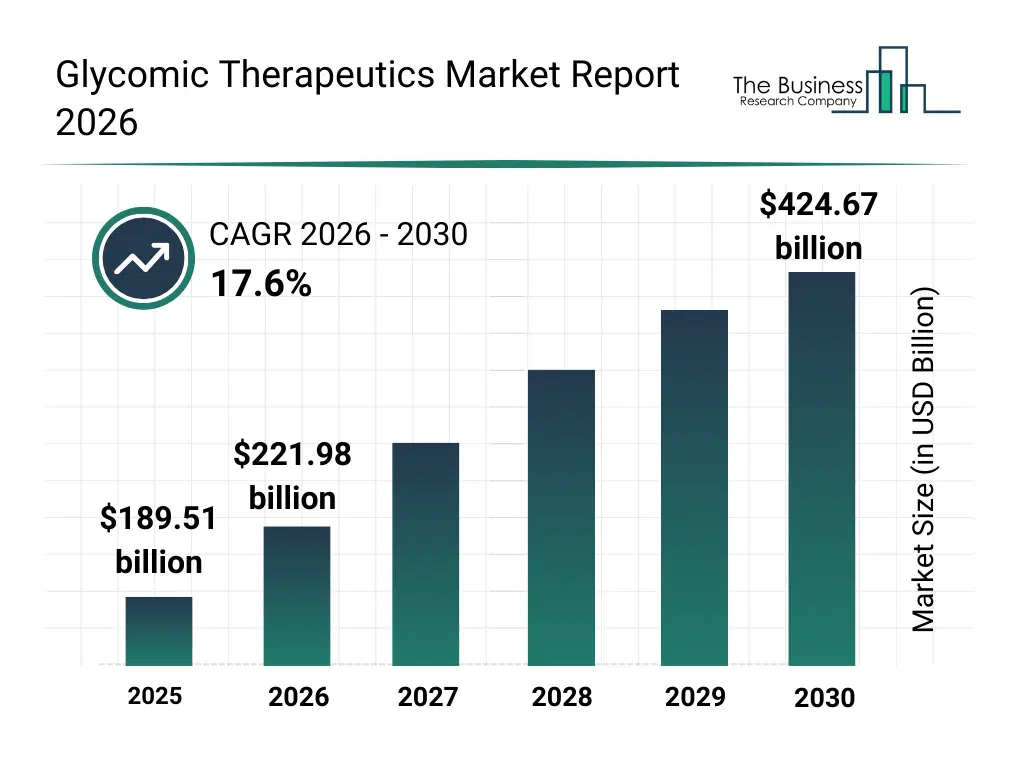
What Is The Glycomic Therapeutics Market Size and Share 2026?
The glycomic therapeutics market size has grown rapidly in recent years. It will grow from $189.51 billion in 2025 to $221.98 billion in 2026 at a compound annual growth rate (CAGR) of 17.1%. The growth in the historic period can be attributed to advances in glycobiology research, enzyme therapy development, rare disease drug approvals, academic research funding, biologics manufacturing growth.What Is The Glycomic Therapeutics Market Growth Forecast?
The glycomic therapeutics market size is expected to see rapid growth in the next few years. It will grow to $424.67 billion in 2030 at a compound annual growth rate (CAGR) of 17.6%. The growth in the forecast period can be attributed to precision medicine adoption, glycan biomarker discovery, expansion of orphan drug pipelines, synthetic biology innovation, increased pharma research investment. Major trends in the forecast period include expansion of glycan-based drug development, growing focus on immune modulation therapies, increasing use of enzyme replacement therapies, rising research on rare and metabolic diseases, growth of synthetic glycan technologies.
Global Glycomic Therapeutics Market Segmentation
1) By Class: Isolated, Synthetic 2) By Structures: Glycoproteins, Targeting Sialic Acid, Proteoglycans, Targeting Glycosaminoglycans, Glycosylphosphatidylinositol (GPI)-Anchored Proteins And Heparin Based Glycans, Targeting Glycosphingolipids, Other Structures 3) By Mode Of Action: Inhibits Neuraminidase, Inhibits Heparanase And Selectins And Blocks Interactions Between Growth Factors And Heparan Sulfate, Erythropoietin And Enzyme Replacement Therapy (ERT), Tissue Plasminogen Activator, Inhibits Glucosylceramide Synthase, Interleukin 1, 2 And 3, Beta And Gamma Interferons, Other Mode Of Action 4) By Indications: Thrombosis And Chemoprophylaxis, Anemia, Anti-Adhesive And Anti-Inflammatory, Cataracts, Gaucher’s Disease, Mps-1 And IV, Cancer, Alzheimer’s Disease, Influenza Type A And B, Other Indications Subsegments: 1) By Isolated: Natural Glycans, Glycan Derivatives, Glycoproteins 2) By Synthetic: Chemically Synthesized Glycans, Recombinant Glycans, GlycopeptidesWhat Are The Drivers Of The Glycomic Therapeutics Market?
The increase in the prevalence of diabetes is expected to drive the growth of the glycomic therapeutics market. Diabetes is a chronic medical condition that affects the body's ability to regulate blood sugar (glucose) levels. In diabetes, alterations in glycans have been observed, which can contribute to insulin resistance and other metabolic abnormalities. Specific glycan patterns serve as biomarkers for diagnosing diabetes, predicting its progression, and monitoring treatment responses. For instance, in March 2025, according to GOV.UK, a UK-based non-profit government organization, GP recorded type 2 diabetes prevalence in adults was 7.0% for those aged 17 and over in England at March 2024, which was an increase from 6.8% at March 2023. Therefore, the increase in the prevalence of diabetes is driving the growth of the glycomic therapeutics industry. The increasing prevalence of cancer is expected to propel the growth of the glycomic therapeutics market going forward. Cancer is a disease characterized by the uncontrolled growth and spread of abnormal cells in the body. Glycomic therapeutics are used in cancer treatment by targeting and modifying specific sugar molecules on cell surfaces, influencing critical cellular interactions, signaling pathways, and immune responses, with the aim of inhibiting tumor growth and enhancing the efficacy of cancer therapies. For instance, in 2023, according to a report published by the American Cancer Society, a US-based nationwide voluntary health organization dedicated to eliminating cancer, the estimated number of new cases of liver cancer in females diagnosed in the United States increased from 12,660 in 2022 to 13,230 in 2023. Therefore, the increasing prevalence of cancer is driving the growth of the glycomic therapeutics industry.Key Players In The Global Glycomic Therapeutics Market
Major companies operating in the glycomic therapeutics market are F Hoffmann-La Roche Ltd., Sanofi SA, Thermo Fisher Scientific Inc., GlaxoSmithKline plc, Merck KGaA, Agilent Technologies Inc., AMS Bio, Shimadzu Corporation, Waters Corporation, Bruker Corporation, BioMarin Pharmaceutical Inc., Bio Techne Corp., Halozyme Therapeutics Inc., Takara Bio Inc., Vector Laboratories, New England Biolabs Inc., Protalix Biotherapeutics Inc., Genovis AB, Ludger Ltd, GlycoMar Limited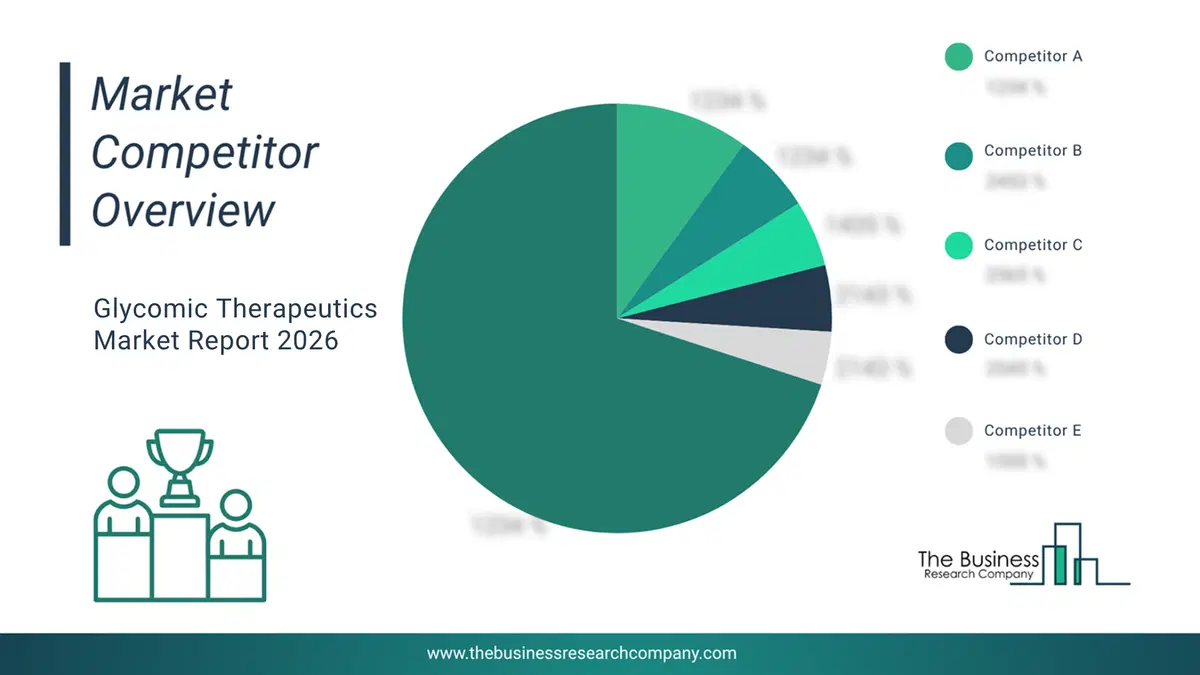
This chart is for illustrative purposes; the full report includes a detailed competitor analysis and comprehensive overview of the top 10 companies in the market.
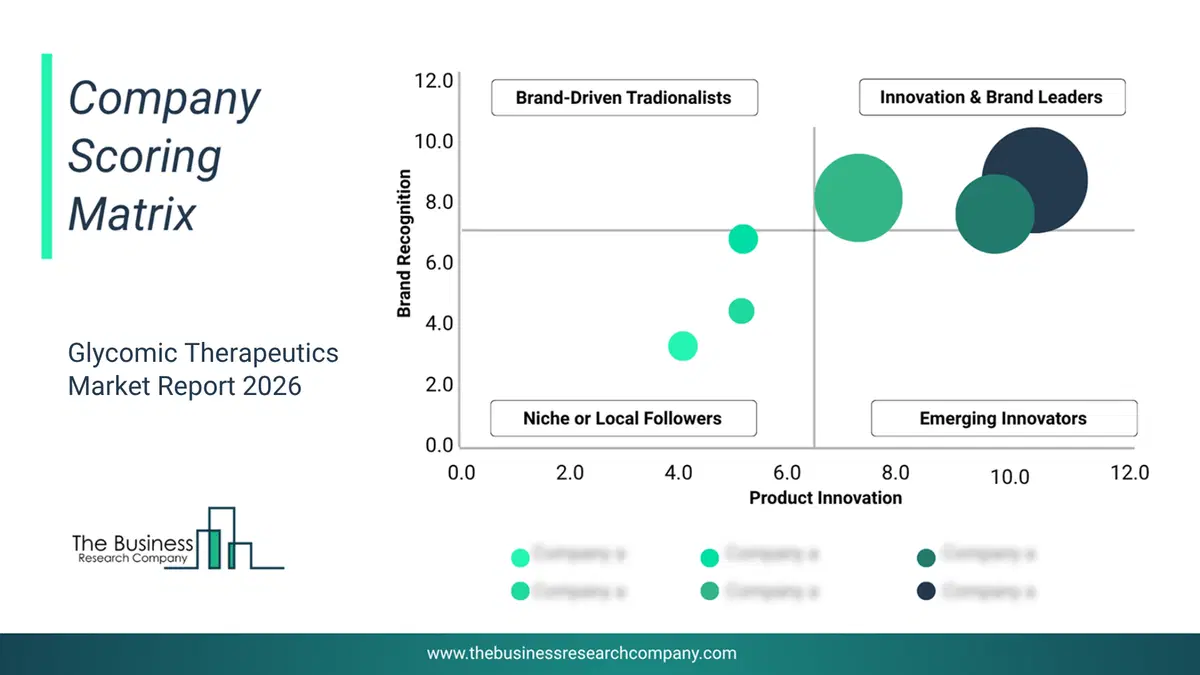
This chart maps companies by product innovation and brand strength, with bubble size indicating relative revenue, helping identify market leaders, challengers, and niche players. This is an illustrative chart; the full report provides a complete and accurate competitive analysis.
Global Glycomic Therapeutics Market Trends and Insights
Major companies operating in the glycomic therapeutics market are focusing on developing innovative solutions such as glyco-immune checkpoint inhibitors to overcome tumor immune evasion and enhance treatment efficacy. Glyco-immune checkpoint inhibitors are therapies designed to block immunosuppressive sugar molecules on cancer cells, helping the immune system better recognize and attack tumors. For instance, in June 2023, Palleon Pharmaceuticals Inc., a US-based biopharmaceutical company, announced that the first patient has been dosed in the combination therapy cohort of the Phase 1/2 GLIMMER-01 clinical trial, evaluating their lead glyco-immunology candidate E-602 in combination with cemiplimab (Libtayo®) in patients with advanced cancers. This trial studies E-602 both as a monotherapy and combined with cemiplimab to assess safety, pharmacodynamics, and antitumor activity. E-602 is a first-in-class glyco-immune checkpoint inhibitor designed to enzymatically degrade immunosuppressive sialoglycans on tumor and immune cells, aiming to restore antitumor immunity.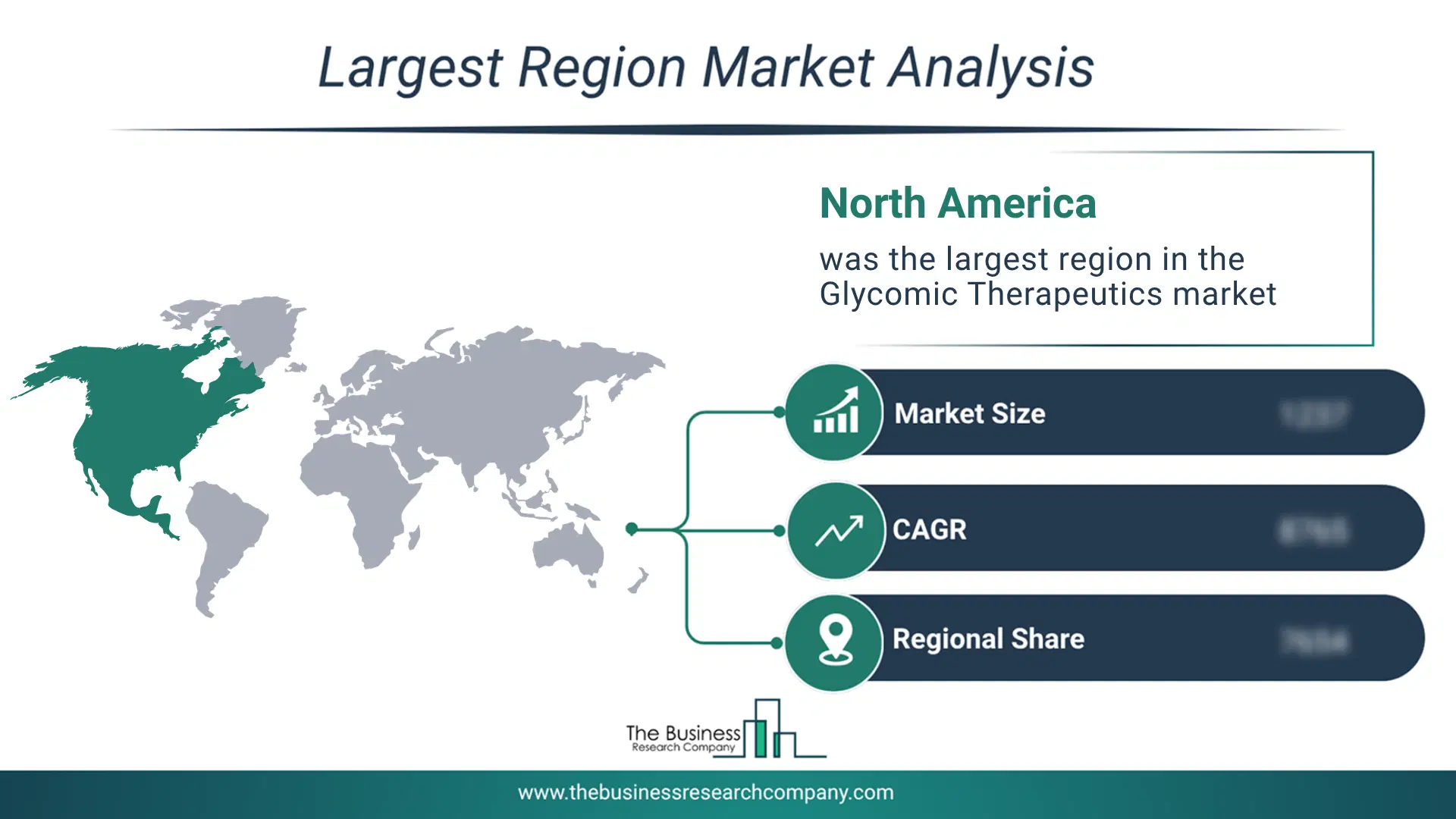
Regional Outlook
North America was the largest region in the glycomic therapeutics in 2025. Asia-Pacific is expected to be the fastest-growing region in the forecast period. The regions covered in this market report are Asia-Pacific, South East Asia, Western Europe, Eastern Europe, North America, South America, Middle East, Africa. The countries covered in this market report are Australia, Brazil, China, France, Germany, India, Indonesia, Japan, Taiwan, Russia, South Korea, UK, USA, Canada, Italy, Spain.What Defines the Glycomic Therapeutics Market?
The glycomic therapeutics market consists of sales of investigational glycomic therapeutics and therapeutic glycomic that target glycans or glycan-related pathways for the diagnosis and treatment of diseases. Values in this market are ‘factory gate’ values, that is the value of goods sold by the manufacturers or creators of the goods, whether to other entities (including downstream manufacturers, wholesalers, distributors and retailers) or directly to end customers. The value of goods in this market includes related services sold by the creators of the goods.How is Market Value Defined and Measured?
The market value is defined as the revenues that enterprises gain from the sale of goods and/or services within the specified market and geography through sales, grants, or donations in terms of the currency (in USD unless otherwise specified). The revenues for a specified geography are consumption values that are revenues generated by organizations in the specified geography within the market, irrespective of where they are produced. It does not include revenues from resales along the supply chain, either further along the supply chain or as part of other products.
This chart presents market attractiveness based on a quantitative evaluation of growth, competition, strategic alignment, and risk, offering a clear view of opportunity areas for decision-making. This chart is for illustrative purposes; the full report contains the complete analysis.

This chart highlights the Total Addressable Market (TAM) by estimating the maximum revenue opportunity using an assumption-driven approach, supporting strategic planning and opportunity sizing across markets. The chart is illustrative; the full report provides a more comprehensive analysis.
What Key Data and Analysis Are Included in the Glycomic Therapeutics Market Report 2026?
The glycomic therapeutics market research report is one of a series of new reports from The Business Research Company that provides market statistics, including industry global market size, regional shares, competitors with the market share, detailed market segments, market trends and opportunities, and any further data you may need to thrive in the glycomic therapeutics industry. The market research report delivers a complete perspective of everything you need, with an in-depth analysis of the current and future state of the industry.Glycomic Therapeutics Market Report Forecast Analysis
| Report Attribute | Details |
|---|---|
| Market Size Value In 2026 | $221.98 billion |
| Revenue Forecast In 2030 | $424.67 billion |
| Growth Rate | CAGR of 17.6% from 2026 to 2030 |
| Base Year For Estimation | 2025 |
| Actual Estimates/Historical Data | 2020-2025 |
| Forecast Period | 2026 - 2030 |
| Market Representation | Revenue in USD Billion and CAGR from 2026 to 2030 |
| Segments Covered | Class, Structures, Mode Of Action, Indications |
| Regional Scope | Asia-Pacific, Western Europe, Eastern Europe, North America, South America, Middle East, Africa |
| Country Scope | The countries covered in the report are Australia, Brazil, China, France, Germany, India, Indonesia, Japan, Taiwan, Russia, South Korea, UK, USA, Canada, Italy, Spain |
| Key Companies Profiled | F Hoffmann-La Roche Ltd., Sanofi SA, Thermo Fisher Scientific Inc., GlaxoSmithKline plc, Merck KGaA, Agilent Technologies Inc., AMS Bio, Shimadzu Corporation, Waters Corporation, Bruker Corporation, BioMarin Pharmaceutical Inc., Bio Techne Corp., Halozyme Therapeutics Inc., Takara Bio Inc., Vector Laboratories, New England Biolabs Inc., Protalix Biotherapeutics Inc., Genovis AB, Ludger Ltd, GlycoMar Limited |
| Customization Scope | Request for Customization |
| Pricing And Purchase Options | Explore Purchase Options |