

Green Automotive Mobility Market Report 2026
Global Outlook – By Type (Battery Electric Vehicles, Hybrid Electric Vehicles, Plug-In Hybrid Electric Vehicles, Fuel Cell Electric Vehicles, Other Types), By Vehicle Type (2 Wheeler Vehicles, 3 Wheeler Vehicles, 4 Wheeler Vehicles, Other Vehicle Types), By Sales Channel (Original Equipment Manufacturer Direct Sales, Dealerships And Retail Networks, Online Platforms, Leasing And Subscription Services), By Application (Private Mobility, Shared Mobility, Public Transport, Logistics And Delivery, Corporate And Fleet), By End User (Individual Consumers, Commercial Fleet Operators, Government And Public Transport Authorities, Mobility Service Providers, Logistics Companies) – Market Size, Trends, Strategies, and Forecast to 2030
Green Automotive Mobility Market Overview
• Green Automotive Mobility market size has reached to $165.15 billion in 2025 • Expected to grow to $360.05 billion in 2030 at a compound annual growth rate (CAGR) of 16.8% • Growth Driver: Increasing Adoption Of Electric Vehicles Fueling The Growth Of The Market Due To Rising Demand For Low-emission And Energy-efficient Transportation • Market Trend: Advanced Electric Ride-Hailing Services Enhance Sustainable And Zero-Emission Transportation • Asia-Pacific was the largest region in 2025 and Western Europe is the fastest growing region.What Is Covered Under Green Automotive Mobility Market?
The green automotive mobility refers to the development, deployment, and operation of environmentally sustainable transportation systems that minimize greenhouse gas emissions, improve energy efficiency, and reduce reliance on fossil fuels through the adoption of clean technologies, alternative energy sources, and intelligent mobility solutions. It integrates advanced vehicle technologies, digital connectivity, and sustainable infrastructure to enhance transportation efficiency while supporting environmental protection, regulatory compliance, and long-term decarbonization goals across the mobility ecosystem. The main types of green automotive mobility include battery electric vehicles, hybrid electric vehicles, plug-in hybrid electric vehicles, fuel cell electric vehicles, and other types. Battery electric vehicles refer to vehicles powered entirely by electric motors using rechargeable batteries as their primary energy source. These vehicles include 2 wheeler vehicles, 3 wheeler vehicles, 4 wheeler vehicles, and other vehicle types, and are sold through original equipment manufacturer direct sales, dealerships and retail networks, online platforms, and leasing and subscription services. They find application in private mobility, shared mobility, public transport, logistics and delivery, and corporate and fleet, serving end users including individual consumers, commercial fleet operators, government and public transport authorities, mobility service providers, and logistics companies.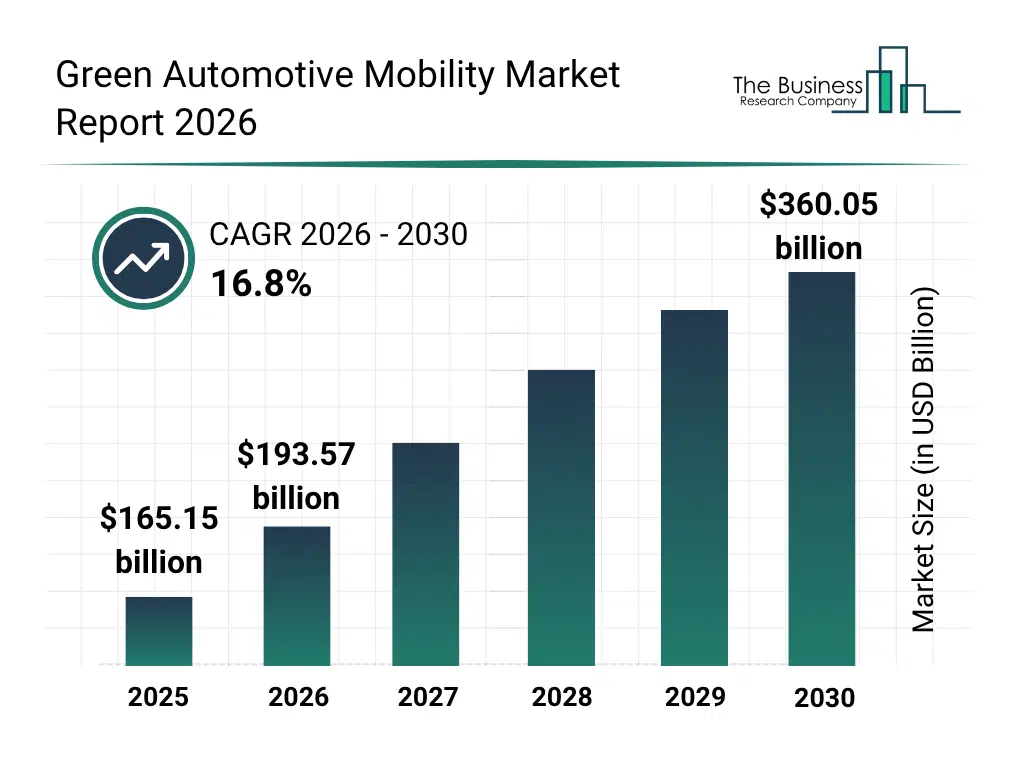
What Is The Green Automotive Mobility Market Size and Share 2026?
The green automotive mobility market size has grown rapidly in recent years. It will grow from $165.15 billion in 2025 to $193.57 billion in 2026 at a compound annual growth rate (CAGR) of 17.2%. The growth in the historic period can be attributed to government incentives for clean vehicle adoption, tightening vehicle emission regulations, rising consumer demand for fuel-efficient vehicles, increasing deployment of electric vehicle charging infrastructure, growing investment in alternative fuel technologies.What Is The Green Automotive Mobility Market Growth Forecast?
The green automotive mobility market size is expected to see rapid growth in the next few years. It will grow to $360.05 billion in 2030 at a compound annual growth rate (CAGR) of 16.8%. The growth in the forecast period can be attributed to expansion of zero-emission public transport, increasing corporate fleet decarbonization initiatives, growing demand for sustainable last-mile delivery, rising investment in hydrogen mobility infrastructure, increasing development of low-carbon urban transportation systems. Major trends in the forecast period include expansion of zero-emission public transportation, growth of green fleet and logistics solutions, development of alternative fuel mobility systems, expansion of sustainable charging and refueling infrastructure, increasing adoption of low-emission shared mobility services.Tariff Impact On Green Automotive Mobility Market
Tariffs are impacting the green automotive mobility market by increasing the cost of imported batteries, electric powertrains, semiconductors, charging equipment, and other components required for clean transportation technologies. This is slowing the adoption of electric and alternative-fuel mobility solutions, particularly in regions dependent on imported automotive components such as North America and Europe. Battery electric vehicles, charging infrastructure, and electric commercial fleets are most affected due to their reliance on globally sourced batteries, electronic components, and powertrain technologies. However, tariffs are also encouraging local manufacturing, regional supplier diversification, and increased investment in domestic battery and clean-mobility ecosystems, creating long-term resilience in the market.
Global Green Automotive Mobility Market Segmentation
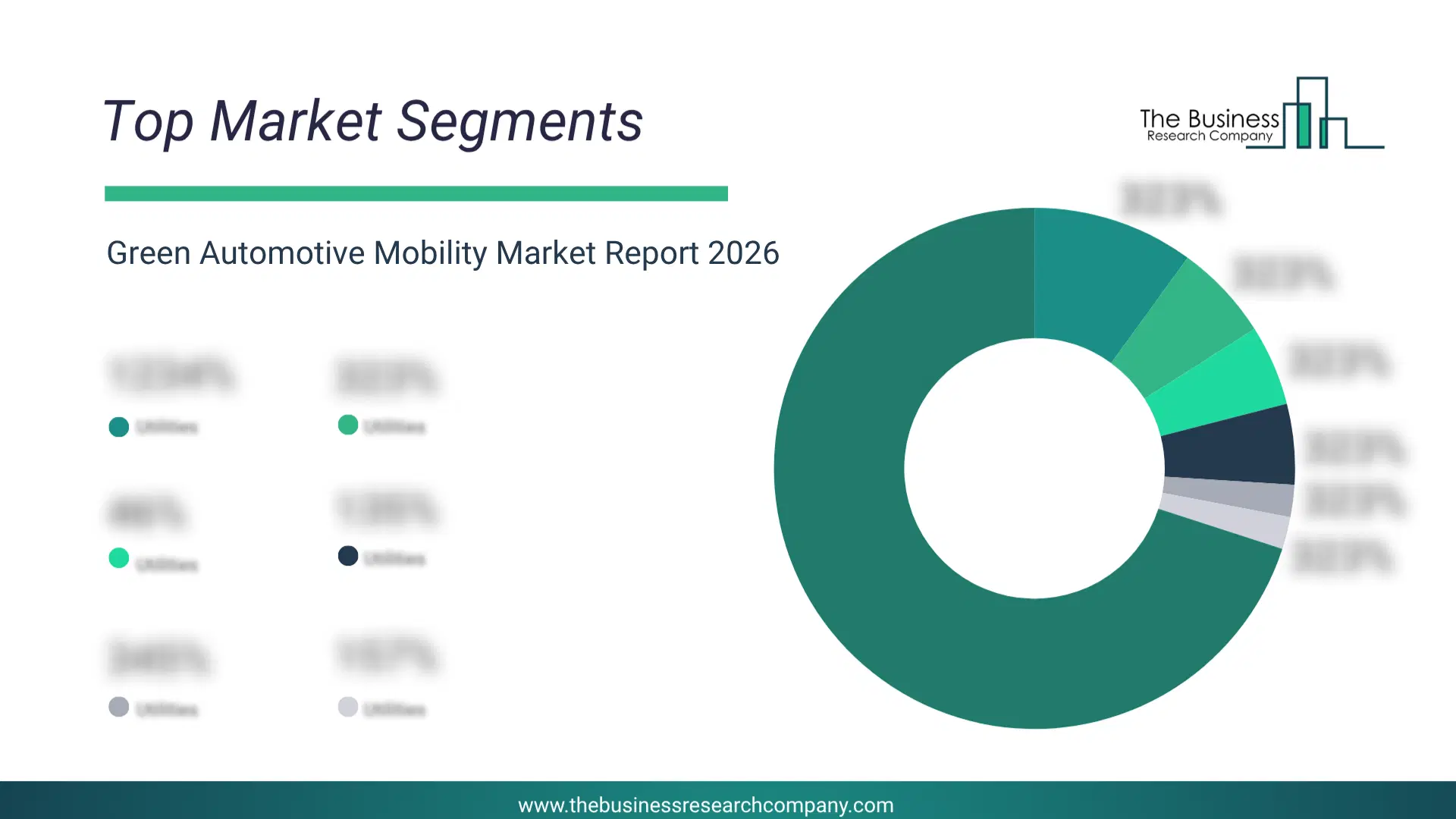
1) By Type: Battery Electric Vehicles, Hybrid Electric Vehicles, Plug-In Hybrid Electric Vehicles, Fuel Cell Electric Vehicles, Other Types 2) By Vehicle Type: 2 Wheeler Vehicles, 3 Wheeler Vehicles, 4 Wheeler Vehicles, Other Vehicle Types 3) By Sales Channel: Original Equipment Manufacturer Direct Sales, Dealerships And Retail Networks, Online Platforms, Leasing And Subscription Services 4) By Application: Private Mobility, Shared Mobility, Public Transport, Logistics And Delivery, Corporate And Fleet 5) By End User: Individual Consumers, Commercial Fleet Operators, Government And Public Transport Authorities, Mobility Service Providers, Logistics Companies Subsegments: 1) By Battery Electric Vehicles: Passenger Battery Electric Vehicles, Commercial Battery Electric Vehicles, High-Performance Battery Electric Vehicles 2) By Hybrid Electric Vehicles: Full Hybrid Electric Vehicles, Mild Hybrid Electric Vehicles 3) By Plug-In Hybrid Electric Vehicles: Series Plug-In Hybrid Electric Vehicles, Parallel Plug-In Hybrid Electric Vehicles, Series-Parallel Plug-In Hybrid Electric Vehicles 4) By Fuel Cell Electric Vehicles: Proton Exchange Membrane Fuel Cell Electric Vehicles, Solid Oxide Fuel Cell Electric Vehicles 5) By Other Types: Solar Electric Vehicles, Compressed Air Vehicles, Biofuel-Powered VehiclesWhat Is The Driver Of The Green Automotive Mobility Market?
The increasing adoption of electric vehicles is expected to propel the growth of the green automotive mobility market going forward. Electric vehicles are automobiles powered wholly or partially by electricity, offering lower greenhouse gas emissions and improved energy efficiency compared to conventional vehicles. The rising adoption of EVs is due to supportive government incentives and emissions regulations, that encourage consumers and businesses to transition from internal combustion engine vehicles to electric vehicles. The increasing adoption of electric vehicles supports the green automotive mobility by accelerating the demand for clean mobility technologies, charging infrastructure, digital mobility platforms, and energy management solutions, enabling sustainable transportation and reducing dependence on fossil fuel-powered vehicles. For instance, in May 2025, according to the International Energy Agency (IEA), a France-based intergovernmental organization, global electric car sales exceeded 17 million units in 2024, representing more than 20% of all new cars sold worldwide, while electric car sales in the first quarter of 2025 increased by 35% year-on-year. Therefore, the increasing adoption of electric vehicles is driving the growth of the green automotive mobility industry.Key Players In The Global Green Automotive Mobility Market
Major companies operating in the green automotive mobility market are Volkswagen AG, Toyota Motor Corporation, Stellantis NV, Ford Motor Company, General Motors Company, BMW AG, Mercedes-Benz Group AG, SAIC Motor Corporation Limited, BYD Company Limited, Tesla Inc, Hyundai Motor Company, Nissan Motor Co Ltd, Zhejiang Geely Holding Group Co Ltd, Renault SA, Kia Corporation, Guangzhou Automobile Group Co Ltd, Chongqing Changan Automobile Company Limited, Tata Motors Limited, Suzuki Motor Corporation, Chery Automobile Co Ltd, Mahindra & Mahindra Limited, NIO Inc, XPeng Inc, Rivian Automotive Inc, VinFast Auto Ltd, Lucid Group Inc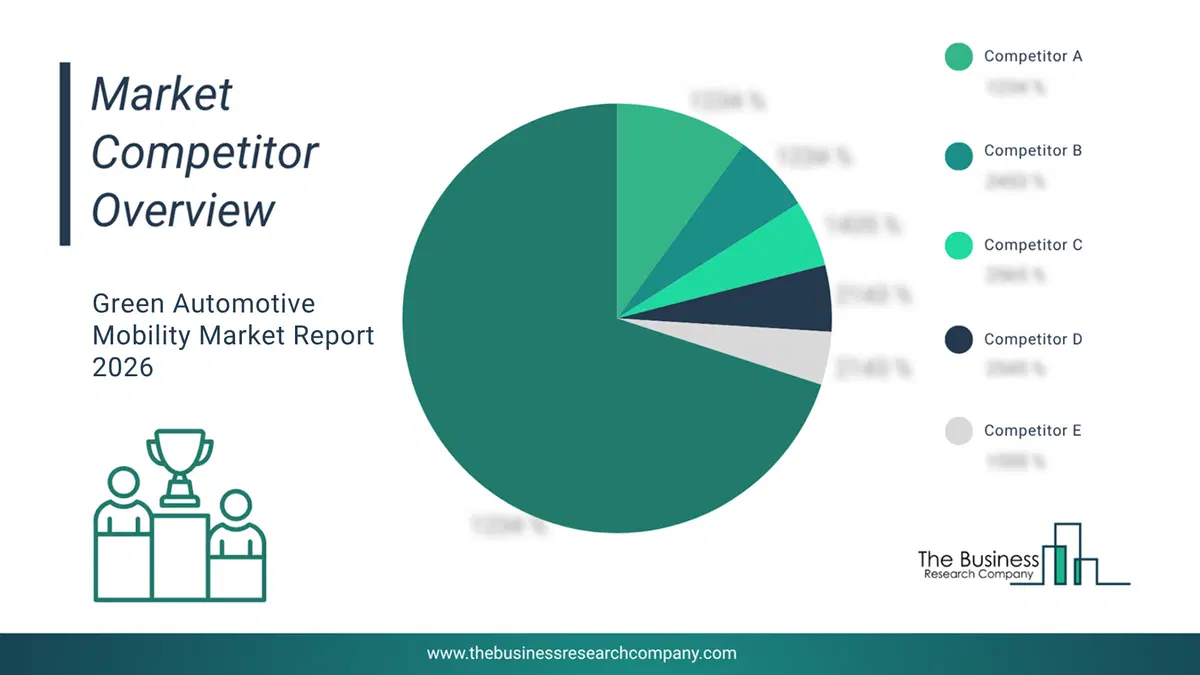
This chart is for illustrative purposes; the full report includes a detailed competitor analysis and comprehensive overview of the top 10 companies in the market.
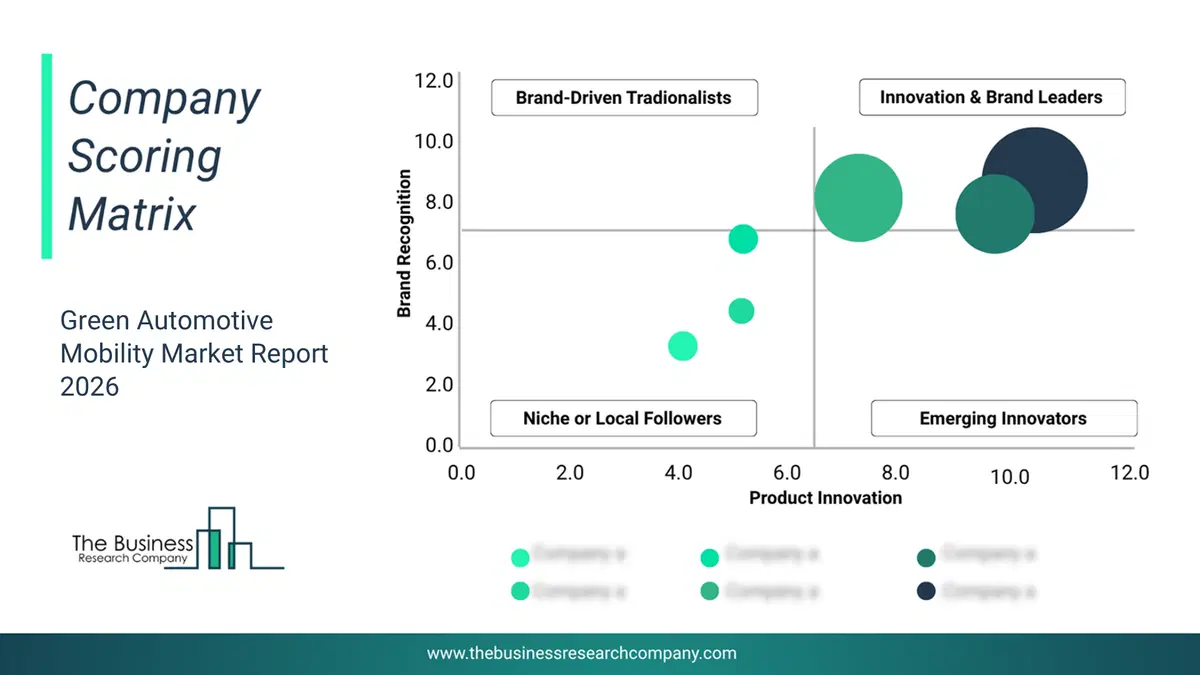
This chart maps companies by product innovation and brand strength, with bubble size indicating relative revenue, helping identify market leaders, challengers, and niche players. This is an illustrative chart; the full report provides a complete and accurate competitive analysis.
Global Green Automotive Mobility Market Trends and Insights
Major companies operating in the green automotive mobility market are focusing on expanding advanced solutions, such as fully electric taxi services, to accelerate zero-emission transportation, promote sustainable urban mobility, and enhance passenger travel experiences. Fully electric taxi services refer to ride-hailing and passenger transportation services that operate exclusively using battery electric vehicles, eliminating tailpipe emissions while providing environmentally friendly mobility. For instance, in June 2026, Green SM, a Vietnam-based electric mobility company, launched Green SM Limo, its fully electric taxi service in India. The service operates the VinFast Limo Green, a seven-seater fully electric sport utility vehicle designed for premium passenger transportation, featuring zero tailpipe emissions, spacious interiors, and artificial intelligence-powered safety technologies, including interior and exterior cameras and emergency support functions. Initially launched in the Delhi National Capital Region, the service offers app-based ride booking and aims to provide safe, reliable, and sustainable transportation while supporting the broader adoption of electric mobility in India.What Are Latest Mergers And Acquisitions In The Green Automotive Mobility Market?
In May 2026, JSW Group, an India-based delivers green automotive mobility partnered with Uber to accelerate electric vehicle adoption and expand sustainable mobility in India. Through this partnership, JSW Group and Uber aim to strengthen EV-based mobility and reduce emissions from urban transportation. Uber, a US-based provides green automotive mobility.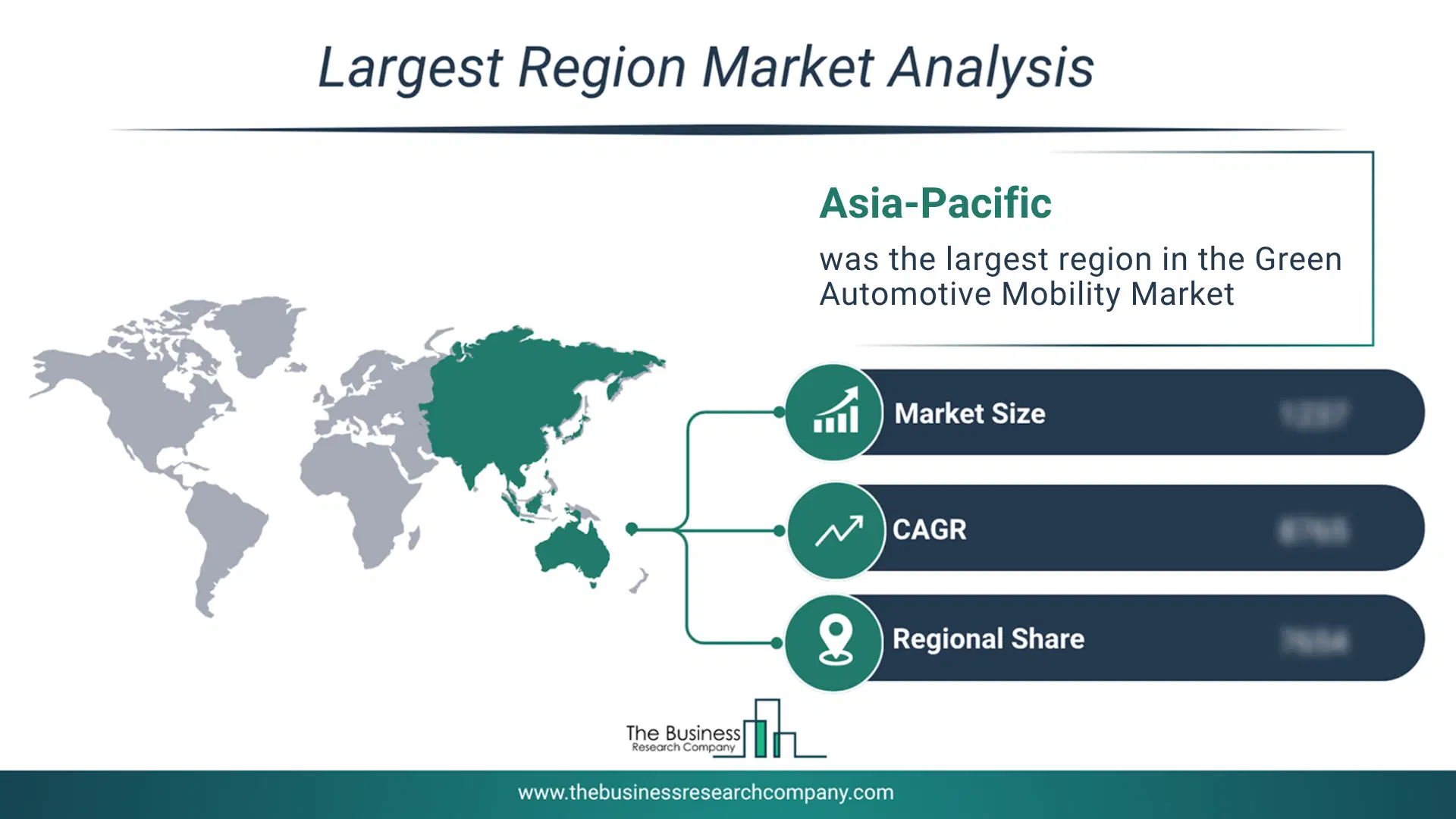
Regional Outlook
Asia-Pacific was the largest region in the green automotive mobility market in 2025. Western Europe is expected to be the fastest-growing region in the forecast period. The regions covered in this market report are Asia-Pacific, South East Asia, Western Europe, Eastern Europe, North America, South America, Middle East, Africa. The countries covered in this market report are Australia, Brazil, China, France, Germany, India, Indonesia, Japan, Taiwan, Russia, South Korea, UK, USA, Canada, Italy, Spain.What Defines the Green Automotive Mobility Market?
The green automotive mobility market includes revenues earned by entities through sustainable transportation technologies, mobility platforms, electric vehicle charging services, fleet electrification solutions, shared mobility services, smart mobility management, battery swapping services, and hydrogen mobility infrastructure services. The market value includes the value of related goods sold by the service provider or included within the service offering. Only goods and services traded between entities or sold to end consumers are included.How is Market Value Defined and Measured?
The market value is defined as the revenues that enterprises gain from the sale of goods and/or services within the specified market and geography through sales, grants, or donations in terms of the currency (in USD unless otherwise specified). The revenues for a specified geography are consumption values that are revenues generated by organizations in the specified geography within the market, irrespective of where they are produced. It does not include revenues from resales along the supply chain, either further along the supply chain or as part of other products.
This chart presents market attractiveness based on a quantitative evaluation of growth, competition, strategic alignment, and risk, offering a clear view of opportunity areas for decision-making. This chart is for illustrative purposes; the full report contains the complete analysis.

This chart highlights the Total Addressable Market (TAM) by estimating the maximum revenue opportunity using an assumption-driven approach, supporting strategic planning and opportunity sizing across markets. The chart is illustrative; the full report provides a more comprehensive analysis.
What Key Data and Analysis Are Included in the Green Automotive Mobility Market Report 2026?
The green automotive mobility market research report is one of a series of new reports from The Business Research Company that provides market statistics, including industry global market size, regional shares, competitors with the market share, detailed market segments, market trends and opportunities, and any further data you may need to thrive in the green automotive mobility industry. The market research report delivers a complete perspective of everything you need, with an in-depth analysis of the current and future state of the industry.Green Automotive Mobility Market Report Forecast Analysis
| Report Attribute | Details |
|---|---|
| Market Size Value In 2026 | $193.57 billion |
| Revenue Forecast In 2030 | $360.05 billion |
| Growth Rate | CAGR of 16.8% from 2026 to 2030 |
| Base Year For Estimation | 2025 |
| Actual Estimates/Historical Data | 2020-2025 |
| Forecast Period | 2026 - 2030 |
| Market Representation | Revenue in USD Billion and CAGR from 2026 to 2030 |
| Segments Covered | Type, Vehicle Type, Sales Channel, Application, End User |
| Regional Scope | Asia-Pacific, Western Europe, Eastern Europe, North America, South America, Middle East, Africa |
| Country Scope | The countries covered in the report are Australia, Brazil, China, France, Germany, India, Indonesia, Japan, Taiwan, Russia, South Korea, UK, USA, Canada, Italy, Spain. |
| Key Companies Profiled | Volkswagen AG, Toyota Motor Corporation, Stellantis NV, Ford Motor Company, General Motors Company, BMW AG, Mercedes-Benz Group AG, SAIC Motor Corporation Limited, BYD Company Limited, Tesla Inc, Hyundai Motor Company, Nissan Motor Co Ltd, Zhejiang Geely Holding Group Co Ltd, Renault SA, Kia Corporation, Guangzhou Automobile Group Co Ltd, Chongqing Changan Automobile Company Limited, Tata Motors Limited, Suzuki Motor Corporation, Chery Automobile Co Ltd, Mahindra & Mahindra Limited, NIO Inc, XPeng Inc, Rivian Automotive Inc, VinFast Auto Ltd, Lucid Group Inc |
| Customization Scope | Request for Customization |
| Pricing And Purchase Options | Explore Purchase Options |