
Green Coffee Global Market Opportunities And Strategies To 2035
By Product Type (Green Unroasted Coffee Beans, Green Coffee Extract, Other Green Coffee Products), By Coffee Bean Type (Arabica, Robusta, Liberica, Excelsa), By Nature (Organic, Conventional), By Distribution Channel (Organized Retail, Specialty Stores, Online Retail, Direct Sales Or B2B, Other Distribution Channels), By End-Use (Dietary Supplements, Functional Food And Beverage Ingredients, Pharmaceutical And Nutraceutical Manufacturing, Other Industrial End Uses), And By Region, Opportunities And Strategies – Global Forecast To 2035
Green Coffee Market Definition
Green coffee refers to the raw, unroasted seeds of coffee cherries obtained from the coffee plant. These beans are processed (washed or dried) after harvesting but have not yet undergone roasting, preserving their natural green color and higher levels of certain bioactive compounds such as chlorogenic acids. The primary purpose of green coffee is to serve as the primary raw material for roasted coffee production in the global coffee industry. The green coffee market consists of sales of green coffee by entities (organizations, sole traders and partnerships) that is used by a diverse group of stakeholders, including coffee roasters, food and beverage manufacturers, dietary supplement producers and pharmaceutical companies. It is typically utilized prior to roasting in the traditional coffee production process or processed into extracts for use in nutraceuticals, weight management products and functional foods. The demand for green coffee spans both industrial applications and direct consumption in processed forms such as capsules, powders and beverages.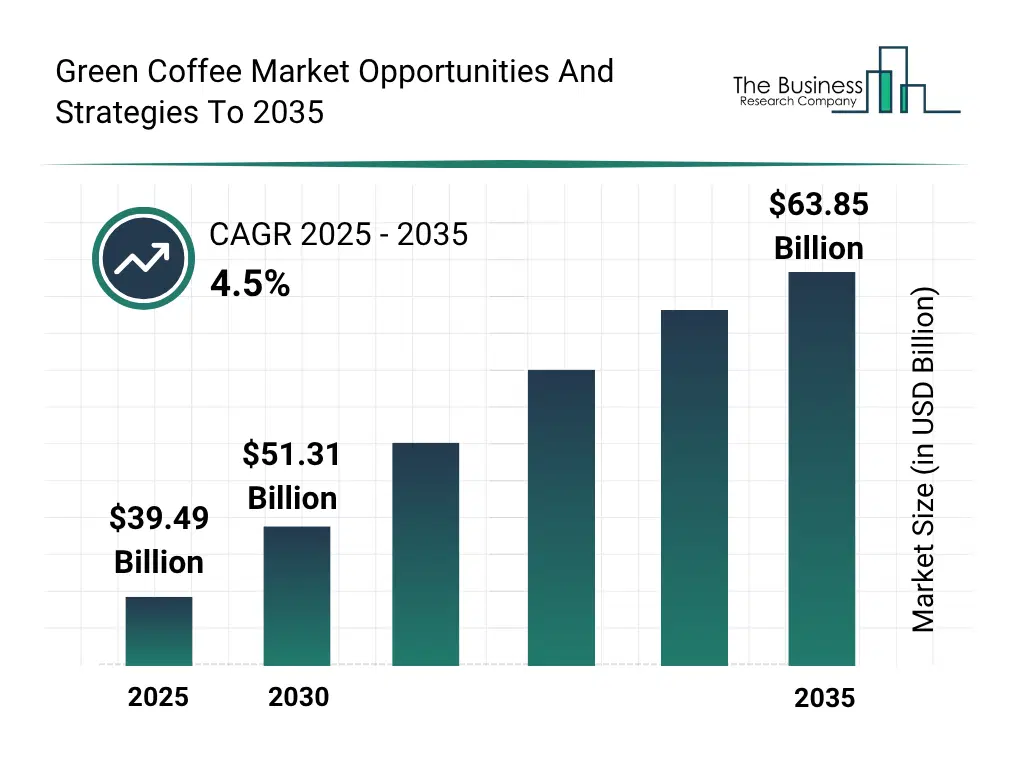
Green Coffee Market Size
The global green coffee market reached a value of nearly $39,491.2 million in 2025, having grown at a compound annual growth rate (CAGR) of 5.8% since 2020. The market is expected to grow from $39,491.2 million in 2025 to $51,306.6 million in 2030 at a rate of 5.4%. The market is then expected to grow at a CAGR of 4.5% from 2030 and reach $63,852.7 million in 2035. Growth in the historic period resulted from rising global coffee consumption, increasing global trade of raw coffee beans, favorable government support for coffee production and investments in sustainable cultivation and ethical sourcing practices. Factors that negatively affected growth in the historic period were price volatility of raw coffee beans and supply chain disruption due to climate change. Going forward, increasing awareness of antioxidant-rich products, growth in sports nutrition and active lifestyle products, demand for natural and organic products and increasing incorporation in meal replacements and diet programs will drive the growth. Factors that could hinder the growth of the green coffee market in the future include limited clinical evidence and inconsistent efficacy claims, processing and extraction complexity affecting cost structures and impact of trade wars and tariffs.
Green Coffee Market Segmentation
The green coffee market is segmented by product type, by coffee bean type, by nature, by distribution channel, and by end-use.By Product Type –
The green coffee market is segmented by product type into:
- a) Green Unroasted Coffee Beans
- b) Green Coffee Extract
- C) Other Green Coffee Products
By Coffee Bean Type –
The green coffee market is segmented by coffee bean type into:
- a) Arabica
- b) Robusta
- c) Liberica
- d) Excelsa
By Nature –
The green coffee market is segmented by nature into:
- a) Organic
- b) Conventional
By Distribution Channel –
The green coffee market is segmented by distribution channel into:
- a) Organized Retail
- b) Specialty Stores
- C) Online Retail
- d) Direct Sales Or B2B
- e) Other Distribution Channels
By End-Use –
The green coffee market is segmented by end-use into:
- a) Dietary Supplements
- b) Functional Food And Beverage Ingredients
- c) Pharmaceutical And Nutraceutical Manufacturing
- d) Other Industrial End Uses
By Geography - The green coffee market is segmented by geography into:
- China
- India
- Japan
- Australia
- Indonesia
- South Korea
- USA
- Canada
- Brazil
- France
- Germany
- UK
- Italy
- Spain
- Russia
-
o Asia Pacific
o Africa