
Green-Pharma Solvent Systems Market Report 2026
Global Outlook – By Product Type (Bio-Based Solvents, Water-Based Solvents, Supercritical Fluid Solvents, Ionic Liquids, Other Product Types), By Function (Reaction Medium, Extraction Solvent, Formulation Or Blending Agent), By Application (Synthesis Or Process Chemistry, Formulation And Drug Product Manufacturing, Analytical And Chromatography, Extraction And Purification, Cleaning And Degreasing), By End-User (Pharmaceutical Companies, Contract Manufacturing Organizations, Research Institutes, Other End-Users) – Market Size, Trends, Strategies, and Forecast to 2030
Green-Pharma Solvent Systems Market Overview
• Green-Pharma Solvent Systems market size has reached to $3.20 billion in 2025 • Expected to grow to $5.74 billion in 2030 at a compound annual growth rate (CAGR) of 12.3% • Growth Driver: Increasing Regulatory Pressure To Limit Toxic Solvents Fueling The Market Growth Due To Adoption Of Sustainable And Low?Toxicity Solvent Solutions • Market Trend: Carbon-Neutral Solvent Portfolios Advance Sustainable Pharmaceutical Manufacturing • North America was the largest region in 2025 and Asia-Pacific is the fastest growing region.What Is Covered Under Green-Pharma Solvent Systems Market?
Green-Pharma Solvent systems are environmentally sustainable solvent formulations designed for pharmaceutical manufacturing that reduce toxicity, environmental impact, and energy consumption compared to conventional chemical solvents. Their purpose is to enable safer, more sustainable drug synthesis and formulation while meeting regulatory, quality, and performance requirements. The main product types of Green-Pharma Solvent systems are bio-based solvents, water-based solvents, supercritical fluid solvents, ionic liquids, and others. Bio-based solvents are environmentally friendly solvents derived from renewable resources and designed to reduce toxicity, emissions, and environmental impact in pharmaceutical manufacturing processes. These systems function as reaction media, extraction solvents, and formulation or blending agents, used in applications including synthesis or process chemistry, formulation and drug product manufacturing, analytical and chromatography, extraction and purification, and cleaning and degreasing, among end users such as pharmaceutical companies, contract manufacturing organizations, research institutes, and others.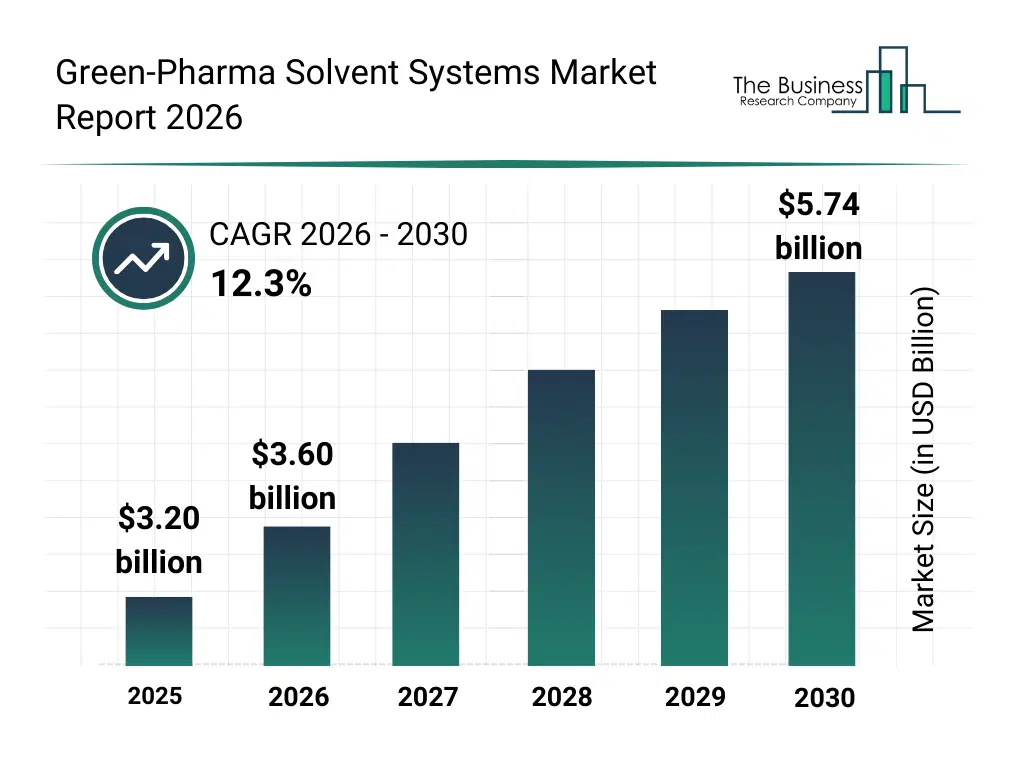
What Is The Green-Pharma Solvent Systems Market Size and Share 2026?
The Green-Pharma Solvent systems market size has grown rapidly in recent years. It will grow from $3.20 billion in 2025 to $3.60 billion in 2026 at a compound annual growth rate (CAGR) of 12.6%. The growth in the historic period can be attributed to growing demand for eco-friendly solvents, increasing adoption of green chemistry, rising environmental regulations, expansion of pharmaceutical manufacturing, and increasing awareness about sustainable processes.What Is The Green-Pharma Solvent Systems Market Growth Forecast?
The Green-Pharma Solvent systems market size is expected to see rapid growth in the next few years. It will grow to $5.74 billion in 2030 at a compound annual growth rate (CAGR) of 12.3%. The growth in the forecast period can be attributed to increasing investment in green technologies, growing preference for non-toxic solvents, rising research in sustainable pharmaceutical processes, expansion of biopharmaceutical production, and increasing government incentives for eco-friendly solutions. Major trends in the forecast period include technological advancements in solvent systems, innovations in biodegradable solvents, developments in solvent recycling techniques, research and developments in green extraction methods, and advancements in process optimization and efficiency.
Global Green-Pharma Solvent Systems Market Segmentation
1) By Product Type: Bio-Based Solvents, Water-Based Solvents, Supercritical Fluid Solvents, Ionic Liquids, Other Product Types 2) By Function: Reaction Medium, Extraction Solvent, Formulation Or Blending Agent 3) By Application: Synthesis Or Process Chemistry, Formulation And Drug Product Manufacturing, Analytical And Chromatography, Extraction And Purification, Cleaning And Degreasing 4) By End-User: Pharmaceutical Companies, Contract Manufacturing Organizations, Research Institutes, Other End-Users Subsegments: 1) By Bio-Based Solvents: Ethanol, Lactic Acid, Glycerol, Terpene-Based Solvents, Other Bio-Based Solvents 2) By Water-Based Solvents: Aqueous Alcohol, Aqueous Acetone, Aqueous Ethyl Lactate, Aqueous Glycol, Other Water-Based Solvents 3) By Supercritical Fluid Solvents: Supercritical Carbon Dioxide, Supercritical Nitrous Oxide, Supercritical Water, Supercritical Methanol, Other Supercritical Fluid Solvents 4) By Ionic Liquids: Imidazolium-Based, Pyridinium-Based, Ammonium-Based, Phosphonium-Based, Other Ionic Liquids 5) By Other Product Types: Hydrocarbon Solvents, Ester Solvents, Ketone Solvents, Chlorinated Solvents, Other Specialty SolventsWhat Are The Drivers Of The Green-Pharma Solvent Systems Market?
The increasing regulatory pressure to reduce the use of toxic and hazardous solvents is expected to propel the growth of the Green-Pharma Solvent systems market going forward. Regulatory pressure refers to legally binding rules and restrictions issued by governments and intergovernmental bodies that require pharmaceutical manufacturers to limit or replace hazardous chemical substances to protect human health and the environment. The rise in regulatory pressure is due to amendments that reduce allowable concentrations of hazardous solvents and expand the list of restricted chemicals. Green-Pharma Solvent systems address regulatory pressure to reduce the use of toxic and hazardous solvents by providing safer, environmentally friendly alternatives in pharmaceutical manufacturing. They improve compliance and sustainability while minimizing health and environmental risks associated with traditional solvent use. For instance, in June 2025, according to the European Commission, an Belgium-based regulatory authority, N, N‑dimethylacetamide (DMAC) and 1‑ethylpyrrolidin‑2‑one (NEP) shall not be placed on the market as substances on their own or in mixtures at concentrations equal to or greater than 0.3% after 23 December 2026 unless manufacturers, importers and downstream users include in chemical safety reports and safety data sheets derived no effect levels of 13 milligrams per cubic meter for long term inhalation exposure and 1.8 milligrams per kilogram body weight per day for long term dermal exposure of workers. Therefore, the increasing regulatory pressure to reduce the use of toxic and hazardous solvents is driving the growth of the Green-Pharma Solvent systems industry. The growing demand for sustainable pharmaceutical manufacturing is expected to propel the growth of the Green-Pharma Solvent systems market going forward. Sustainable pharmaceutical manufacturing refers to the adoption of environmentally friendly processes and materials in drug production to minimize waste, reduce emissions, and improve energy efficiency. The rise in demand for sustainable pharmaceutical manufacturing is due to increasing regulatory pressure and growing awareness of environmental impacts in the pharmaceutical industry. Green-Pharma Solvent systems support sustainable pharmaceutical manufacturing by providing safer, recyclable, and less toxic solvents for drug formulation and synthesis, reducing environmental footprint and ensuring compliance with green manufacturing standards. For instance, in March 2025, according to Innovate UK, a UK-based government innovation agency, an investment of over $18.9 million (£14 million) was announced across 29 innovative projects to help make the UK medicines manufacturing sector more sustainable. Therefore, the growing demand for sustainable pharmaceutical manufacturing is driving the growth of the Green-Pharma Solvent systems industry.Key Players In The Global Green-Pharma Solvent Systems Market
Major companies operating in the Green-Pharma Solvent systems market are Cargill Incorporated, BASF SE, Merck KGaA, Dow Chemical Company, Eastman Chemical Company, Evonik Industries AG, Croda International Plc, Arkema S.A., Wacker Chemie AG, Clariant AG, Solvay S.A., Corbion N.V., InKemia Green Chemicals Inc, GF Biochemicals S.p.A., Vertec BioSolvents Inc., Soysolv Biosolvents LLC, AstroBio Green Solvent Solutions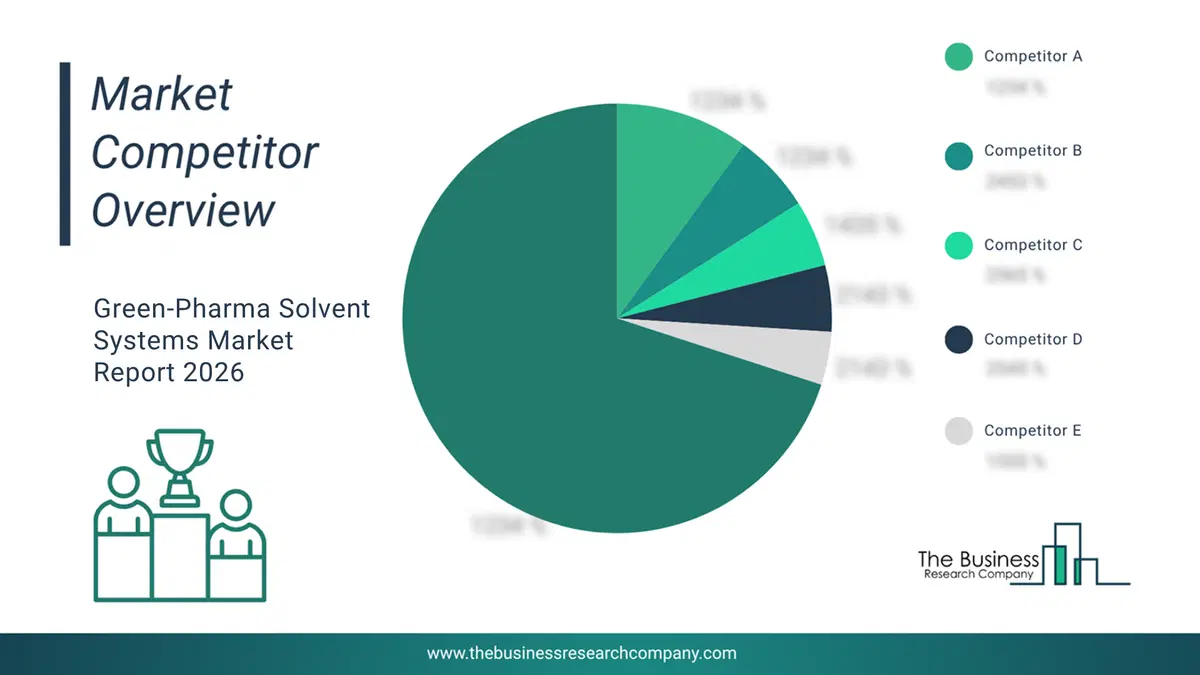
This chart is for illustrative purposes; the full report includes a detailed competitor analysis and comprehensive overview of the top 10 companies in the market.
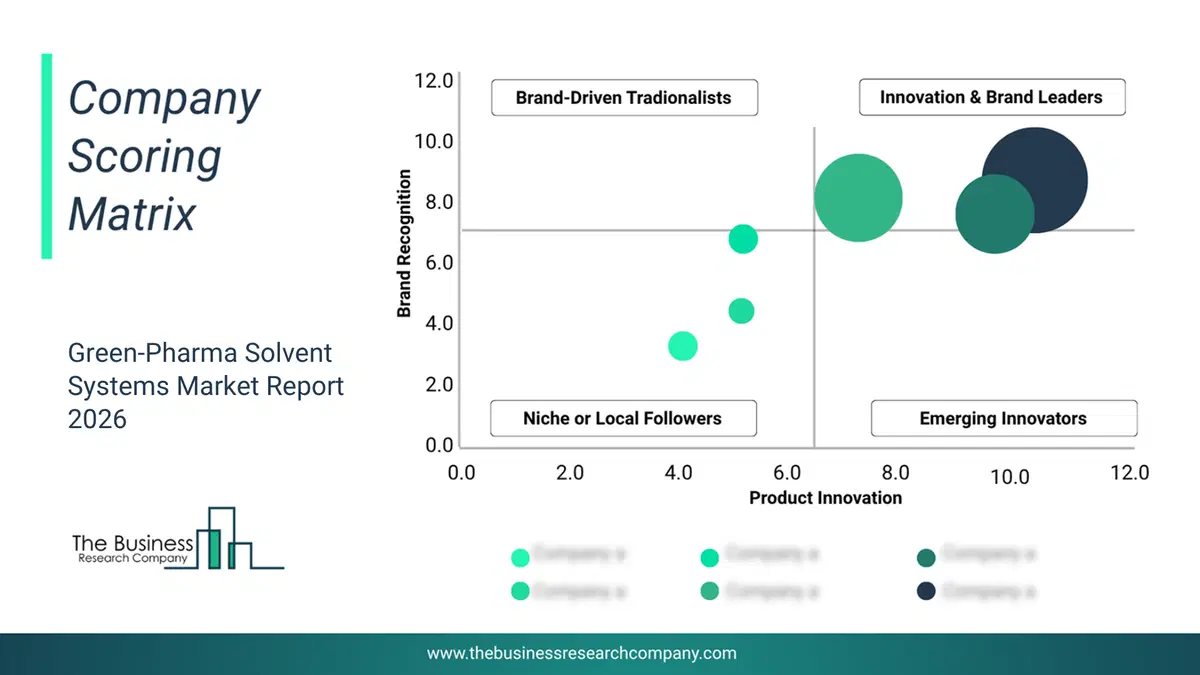
This chart maps companies by product innovation and brand strength, with bubble size indicating relative revenue, helping identify market leaders, challengers, and niche players. This is an illustrative chart; the full report provides a complete and accurate competitive analysis.
Global Green-Pharma Solvent Systems Market Trends and Insights
Major companies operating in the Green-Pharma Solvent systems marketare focusing on developing advanced solutions, such as carbon-neutral portfolios, to boost sustainability, enhance environmental performance, and reduce carbon footprints. Carbon-neutral portfolios refer to product lines where the greenhouse gas emissions from their entire lifecycle are measured, reduced where possible, and any remaining emissions are compensated by investing in certified carbon offset projects. For instance, in January 2024, Solvay SA, a Belgium-based specialty chemicals company, launched its Augeo carbon‑neutral portfolio. It is a line of bio-based, readily biodegradable solvents featuring a certified carbon-neutral portfolio that helps reduce the environmental impact of cleaning and air care products. The portfolio includes products like Solsys® Bio Etac, an ethyl acetate made entirely from renewable sources such as sugarcane-derived ethanol. It is designed for use in air care, home, and institutional cleaning, enabling a lower carbon profile for finished goods without compromising on performance.Green-Pharma Solvent Systems Market Overview
• Green-Pharma Solvent Systems market size has reached to $3.20 billion in 2025 • Expected to grow to $5.74 billion in 2030 at a compound annual growth rate (CAGR) of 12.3% • Growth Driver: Increasing Regulatory Pressure To Limit Toxic Solvents Fueling The Market Growth Due To Adoption Of Sustainable And Low?Toxicity Solvent Solutions • Market Trend: Carbon-Neutral Solvent Portfolios Advance Sustainable Pharmaceutical Manufacturing • North America was the largest region in 2025 and Asia-Pacific is the fastest growing region.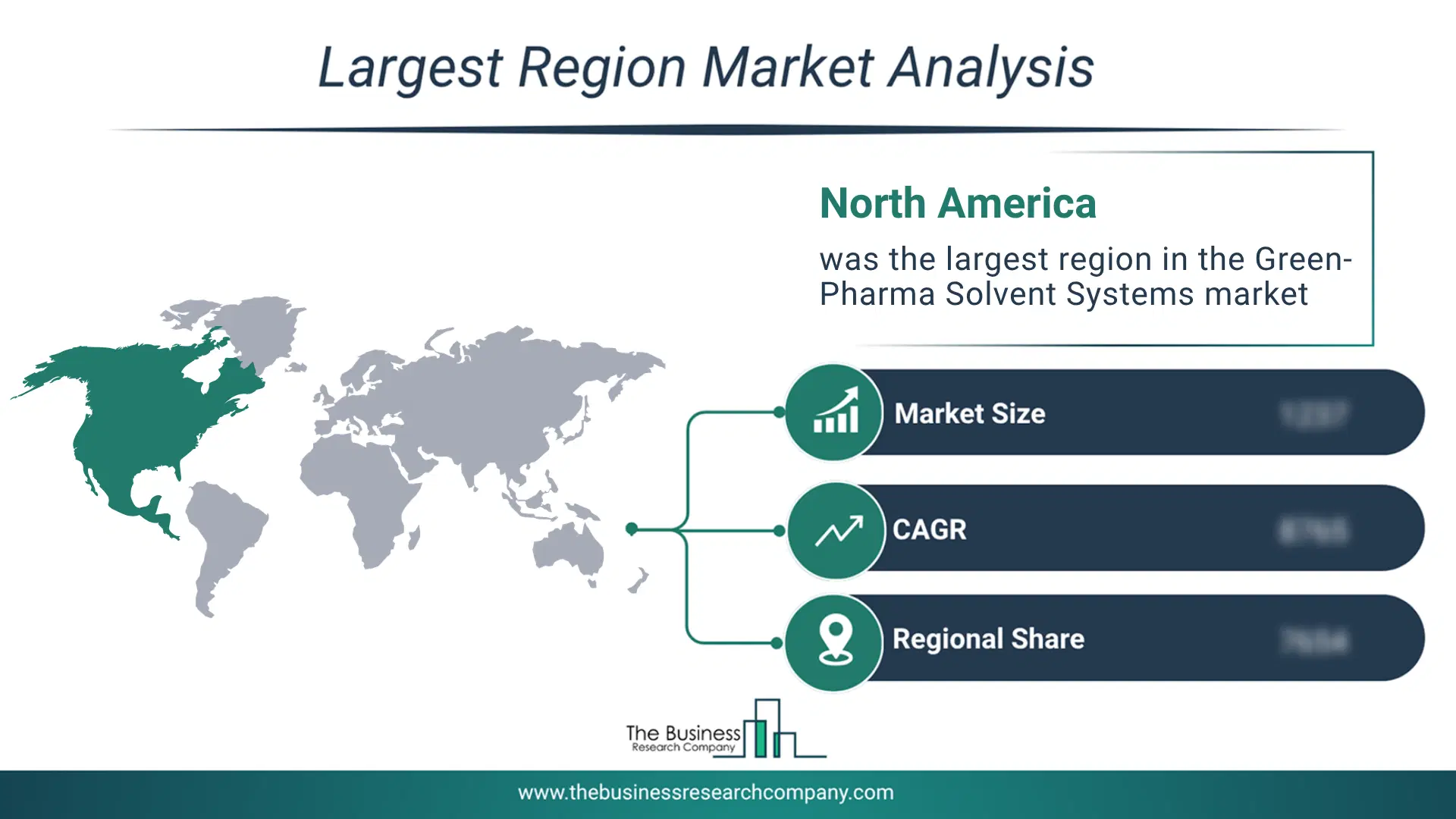
Regional Insights
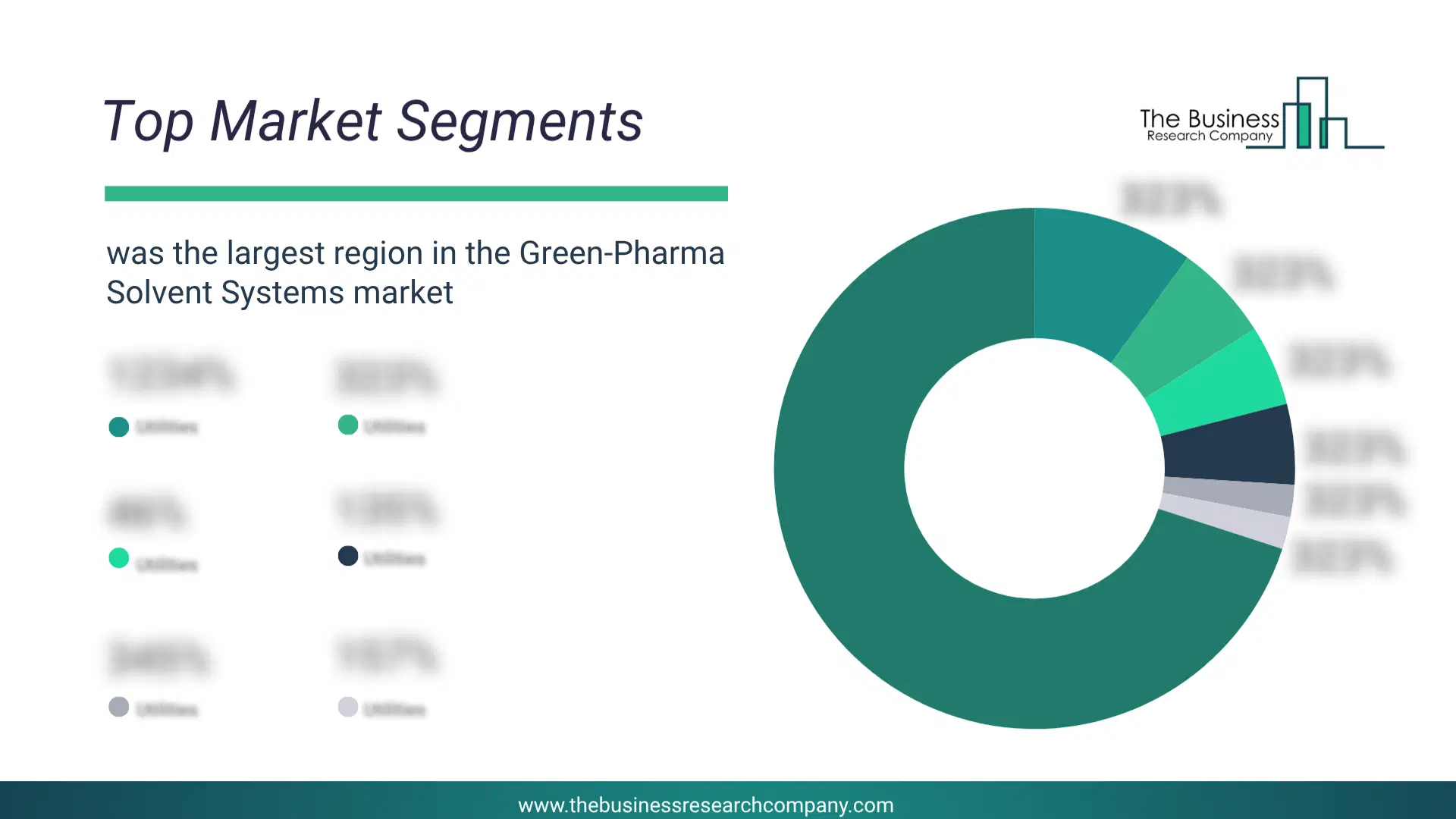
North America was the largest region in the Green-Pharma Solvent systems market in 2025. Asia-Pacific is expected to be the fastest-growing region in the forecast period. The regions covered in the Green-Pharma Solvent systems market report are Asia-Pacific, South East Asia, Western Europe, Eastern Europe, North America, South America, Middle East, Africa. The countries covered in the Green-Pharma Solvent systems market report are Australia, Brazil, China, France, Germany, India, Indonesia, Japan, Taiwan, Russia, South Korea, UK, USA, Canada, Italy, Spain.What Defines the Green-Pharma Solvent Systems Market?
The Green-Pharma Solvent systems market consists of revenues earned by entities by providing services such as green solvent selection and formulation support, process optimization and scale-up assistance, regulatory and environmental compliance consulting, solvent recovery and recycling support, and technical training and after-sales support. The market value includes the value of related goods sold by the service provider or included within the service offering. The Green-Pharma Solvent systems market also includes sales of bio-based pharmaceutical solvents, recyclable solvent systems, low-toxicity solvent blends, water-based solvent alternatives, and solvent recovery-compatible formulations. Values in this market are ‘factory gate’ values, that is, the value of goods sold by the manufacturers or creators of the goods, whether to other entities (including downstream manufacturers, wholesalers, distributors, and retailers) or directly to end customers. The value of goods in this market includes related services sold by the creators of the goods.How is Market Value Defined and Measured?
The market value is defined as the revenues that enterprises gain from the sale of goods and/or services within the specified market and geography through sales, grants, or donations in terms of the currency (in USD unless otherwise specified). The revenues for a specified geography are consumption values that are revenues generated by organizations in the specified geography within the market, irrespective of where they are produced. It does not include revenues from resales along the supply chain, either further along the supply chain or as part of other products.
This chart presents market attractiveness based on a quantitative evaluation of growth, competition, strategic alignment, and risk, offering a clear view of opportunity areas for decision-making. This chart is for illustrative purposes; the full report contains the complete analysis.

This chart highlights the Total Addressable Market (TAM) by estimating the maximum revenue opportunity using an assumption-driven approach, supporting strategic planning and opportunity sizing across markets. The chart is illustrative; the full report provides a more comprehensive analysis.
What Key Data and Analysis Are Included in the Green-Pharma Solvent Systems Market Report 2026?
The Green-Pharma Solvent systems market research report is one of a series of new reports from The Business Research Company that provides market statistics, including industry global market size, regional shares, competitors with the market share, detailed market segments, market trends and opportunities, and any further data you may need to thrive in the Green-Pharma Solvent systems industry. The market research report delivers a complete perspective of everything you need, with an in-depth analysis of the current and future state of the industry.Green‑Pharma Solvent Systems Market Report Forecast Analysis
| Report Attribute | Details |
|---|---|
| Market Size Value In 2026 | $3.60 billion |
| Revenue Forecast In 2030 | $5.74 billion |
| Growth Rate | CAGR of 12.6% from 2026 to 2030 |
| Base Year For Estimation | 2025 |
| Actual Estimates/Historical Data | 2020-2025 |
| Forecast Period | 2026 - 2030 |
| Market Representation | Revenue in USD Billion and CAGR from 2026 to 2030 |
| Segments Covered | Product Type, Function, Application, End-User |
| Regional Scope | Asia-Pacific, Western Europe, Eastern Europe, North America, South America, Middle East, Africa |
| Country Scope | The countries covered in this market report are Australia, Brazil, China, France, Germany, India, Indonesia, Japan, Taiwan, Russia, South Korea, UK, USA, Canada, Italy, Spain |
| Key Companies Profiled | Cargill Incorporated, BASF SE, Merck KGaA, Dow Chemical Company, Eastman Chemical Company, Evonik Industries AG, Croda International Plc, Arkema S.A., Wacker Chemie AG, Clariant AG, Solvay S.A., Corbion N.V., InKemia Green Chemicals Inc, GF Biochemicals S.p.A., Vertec BioSolvents Inc., Soysolv Biosolvents LLC, AstroBio Green Solvent Solutions |
| Customization Scope | Request for Customization |
| Pricing And Purchase Options | Explore Purchase Options |