

Grid Analytics Software Market Report 2026
Global Outlook – By Component (Software, Services), By Deployment Mode (Cloud-Based, On-Premises, Hybrid), By Application (Asset Management, Demand Response, Energy Forecasting, Grid Optimization, Load Research, Other Applications), By End User (Utilities, Energy Providers, Industrial, Commercial, Other End Users) – Market Size, Trends, Strategies, and Forecast to 2030
Grid Analytics Software Market Overview
• Grid Analytics Software market size has reached to $4.45 billion in 2025 • Expected to grow to $8.68 billion in 2030 at a compound annual growth rate (CAGR) of 14.3% • Growth Driver: Rising Integration Of Renewable Energy Driving The Market Growth Due To Enhanced Grid Management And Efficient Renewable Integration • Market Trend: Advancing Energy Efficiency And Grid Resilience Through Innovative Smart Platforms • North America was the largest region in 2025 and Asia-Pacific is the fastest growing region.What Is Covered Under Grid Analytics Software Market?
Grid analytics software is a digital platform that collects, processes, and analyzes data from power grids, including generation, transmission, and distribution systems. It uses advanced algorithms, AI, and visualization tools to provide insights into grid performance, reliability, and efficiency. It helps to optimize grid operations, predict failures, support decision-making, and enhance the overall reliability and efficiency of electricity delivery. The main components of grid analytics software are software and services. Software refers to platforms that collect, process, and analyze grid data to provide actionable insights for improving efficiency, reliability, and decision-making. These solutions are deployed through various deployment modes, including cloud-based, on-premises, and hybrid. They are used across multiple applications, such as asset management, demand response, energy forecasting, grid optimization, load research, and other applications, and serve various end-users, including utilities, energy providers, industrial, commercial, and other end-users.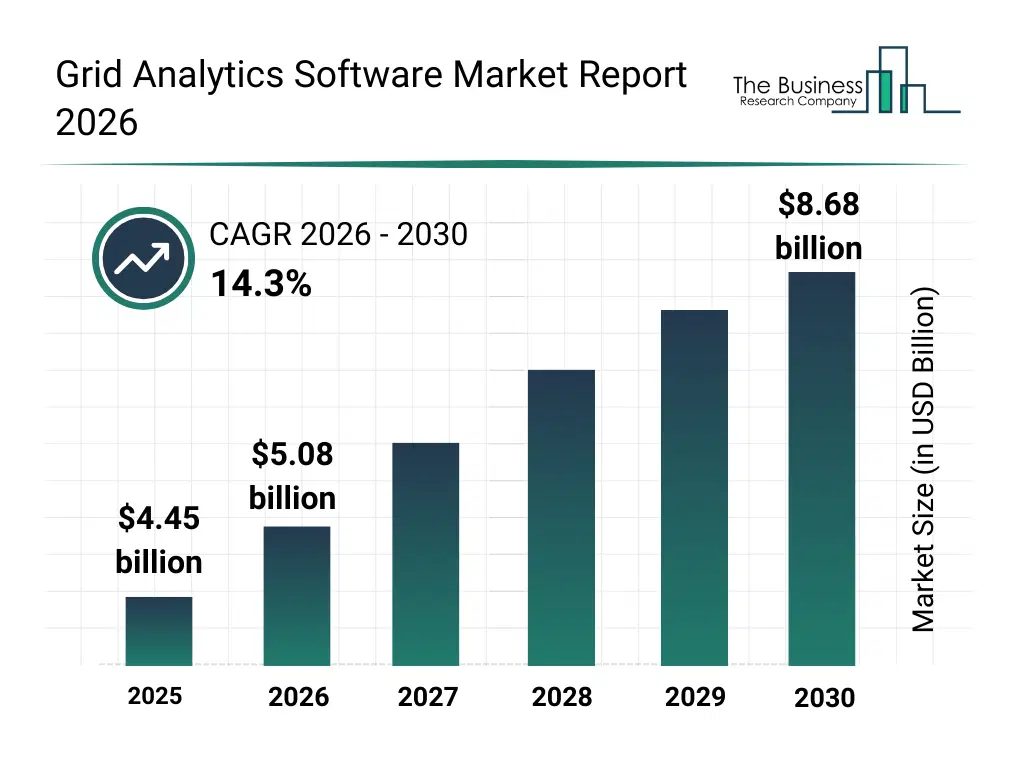
What Is The Grid Analytics Software Market Size and Share 2026?
The grid analytics software market size has grown rapidly in recent years. It will grow from $4.45 billion in 2025 to $5.08 billion in 2026 at a compound annual growth rate (CAGR) of 14.1%. The growth in the historic period can be attributed to expansion of smart grid infrastructure, increasing deployment of smart meters, rising complexity of power distribution networks, growth of renewable energy integration, early adoption of grid monitoring software.What Is The Grid Analytics Software Market Growth Forecast?
The grid analytics software market size is expected to see rapid growth in the next few years. It will grow to $8.68 billion in 2030 at a compound annual growth rate (CAGR) of 14.3%. The growth in the forecast period can be attributed to increasing electrification of transportation, rising investments in grid digitalization, growing need for real-time grid intelligence, expansion of distributed energy resources, increasing focus on predictive maintenance. Major trends in the forecast period include increasing adoption of real-time grid monitoring platforms, rising use of predictive analytics for grid reliability, growing integration of demand response analytics, expansion of cloud-based grid analytics solutions, enhanced focus on grid resilience and reliability.
Global Grid Analytics Software Market Segmentation
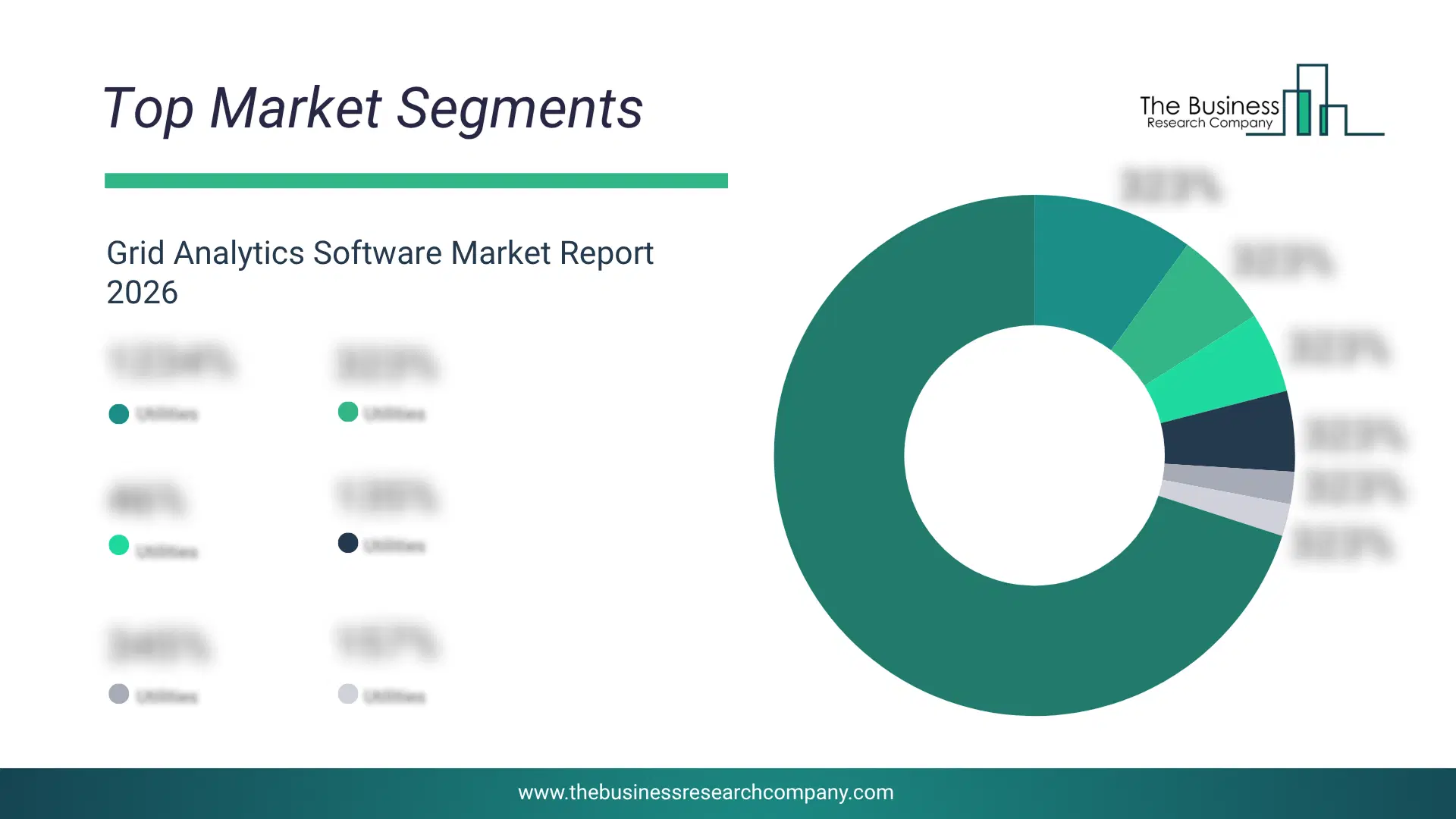
1) By Component: Software; Services 2) By Deployment Mode: Cloud-Based; On-Premises; Hybrid 3) By Application: Asset Management; Demand Response; Energy Forecasting; Grid Optimization; Load Research; Other Applications 4) By End User: Utilities; Energy Providers; Industrial; Commercial; Other End Users Subsegments: 1) By Software: Advanced Distribution Management System; Outage Management System; Predictive Analytics Platform; Energy Management System; Asset Performance Management System 2) By Services: System Integration; Consulting; Support And Maintenance; Implementation And Deployment; Training And EducationWhat Is The Driver Of The Grid Analytics Software Market?
The increasing integration of renewable energy sources is expected to propel the growth of the grid analytics software market going forward. Renewable energy sources are energies derived from natural processes that are continuously replenished, such as solar, wind, hydro, geothermal, and biomass. Renewable energy sources are increasing to reduce reliance on fossil fuels and lower greenhouse gas emissions, helping mitigate climate change. Grid analytics software aids renewable energy by providing real-time insights into grid performance, optimizing energy flow, and enabling efficient integration of variable renewable sources. For instance, in January 2024, according to the International Energy Agency, a France-based intergovernmental organization, in 2023, global renewable energy capacity additions surged by 50%, reaching nearly 510 gigawatts (GW), with solar PV contributing about three-quarters of the total new installations worldwide. Therefore, the increasing integration of renewable energy sources is driving the growth of the grid analytics software industry.Key Players In The Global Grid Analytics Software Market
Major companies operating in the grid analytics software market are Siemens AG, Hitachi Ltd., Lockheed Martin Corporation, Accenture plc, IBM Corporation, Cisco Systems Inc., General Electric Company, Oracle Corporation, Schneider Electric SE, SAP SE, ABB Ltd., Eaton Corporation, Leidos Holdings Inc., Wipro Limited, Landis+Gyr Group AG., itron inc., Holley Technology Ltd., Willdan Group, C3 AI Inc., AutoGrid Systems Inc., Amperon Holdings Inc., Grid4C Ltd.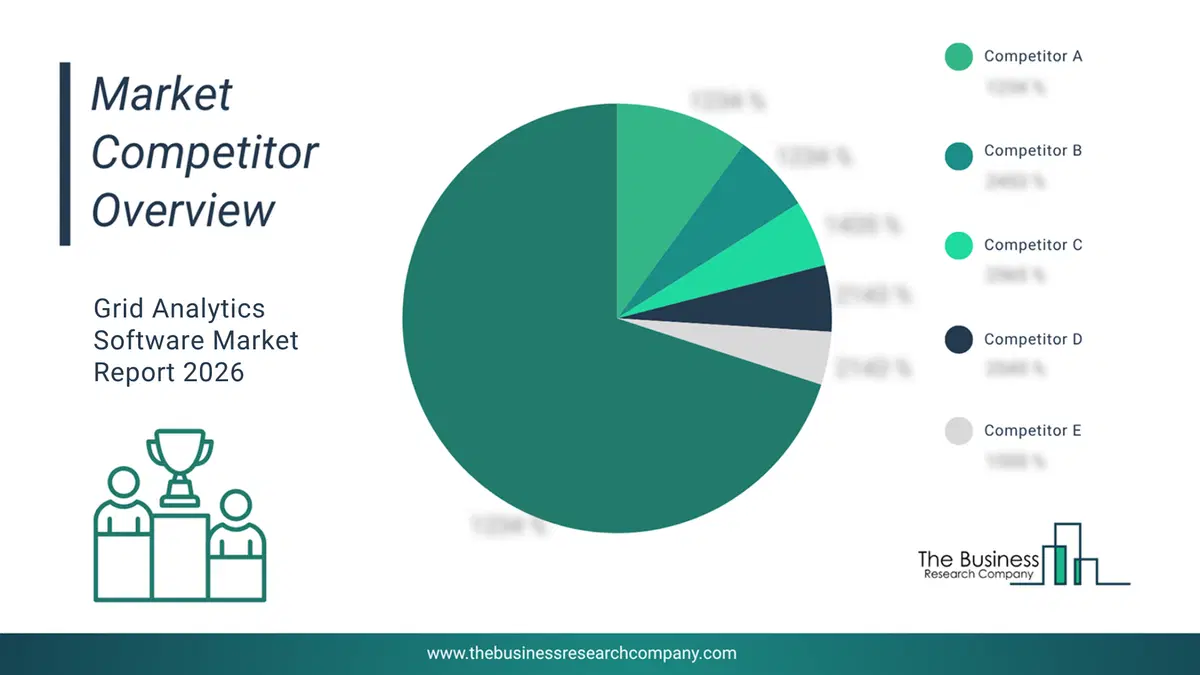
This chart is for illustrative purposes; the full report includes a detailed competitor analysis and comprehensive overview of the top 10 companies in the market.
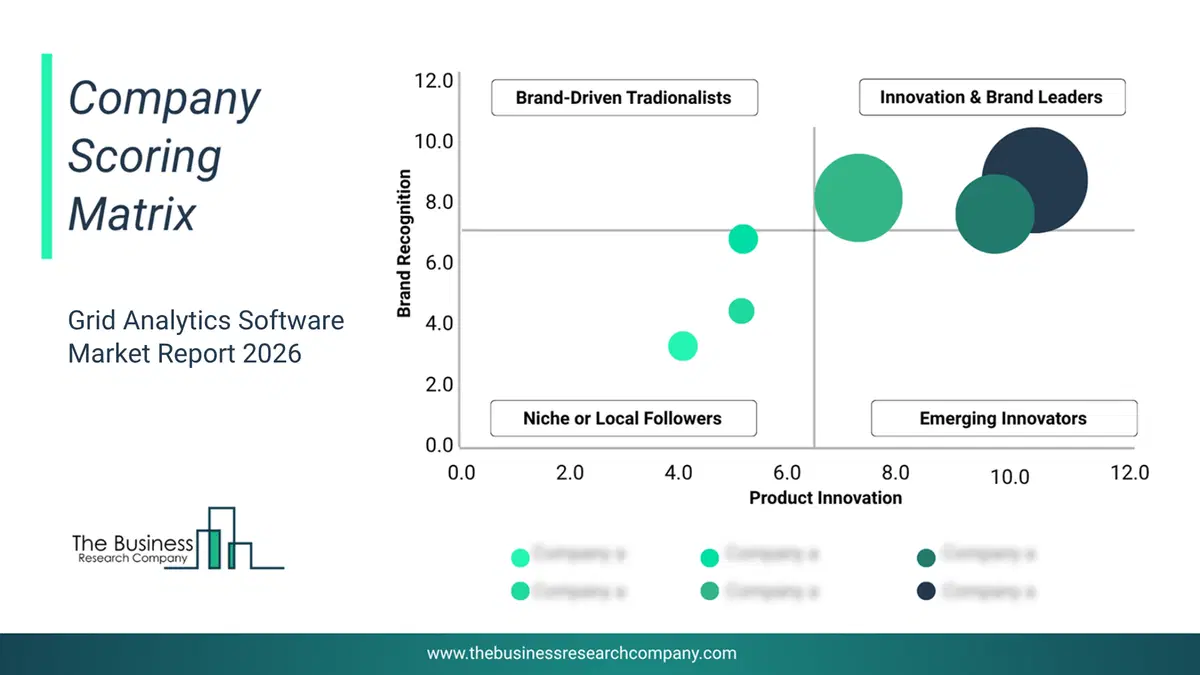
This chart maps companies by product innovation and brand strength, with bubble size indicating relative revenue, helping identify market leaders, challengers, and niche players. This is an illustrative chart; the full report provides a complete and accurate competitive analysis.
Global Grid Analytics Software Market Trends and Insights
Major companies operating in the grid analytics software market are focusing on developing innovative solutions, such as the smart grid management platform, to optimize energy distribution, enhance grid reliability, enable real-time monitoring, and support predictive maintenance for more efficient and resilient power systems. A smart grid management platform refers to a digital solution that enables utilities to manage and analyze electricity flow across the grid, detect faults, forecast demand, and integrate renewable energy sources for improved operational efficiency and grid stability. For instance, in March 2025, Schneider Electric SE, a France-based energy technology company, launched a One Digital Grid Platform to unify grid operations, enable real-time monitoring, and enhance energy efficiency. It is a unified, AI-powered solution on Microsoft Azure that modernizes utility grids by integrating planning, operations, asset management, and customer engagement to tackle rising electricity demand from AI data centers, EVs, renewables, and extreme weather challenges. Its core purpose is to deliver real-time insights, predictive analytics, and automation, reducing outages by up to 40%, DER interconnection times by 25%, and application deployment by 60% while enabling seamless scalability without legacy overhauls. Utilities achieve a proven ROI, a 184% return, $62M in benefits, and a 16-month payback, with advantages like 65% operator time savings, 35% faster field resolutions, and enhanced resilience for decarbonization, directly aligning with grid innovation needs in your energy tech expertise.What Are Latest Mergers And Acquisitions In The Grid Analytics Software Market?
In September 2025, GridX Inc., a Germany-based cloud solutions company, acquired Innowatts for an undisclosed amount. Through this acquisition, GridX aims to enhance its enterprise rate platform by integrating advanced load forecasting, grid planning, and analytics capabilities, enabling utilities and retail energy providers to design more resilient, data-driven pricing strategies aligned with evolving grid conditions and demand flexibility needs. Innowatts Inc. is a US-based company that offers AI-powered grid analytics software with an emphasis on grid planning, load forecasting, and behind-the-meter (BTM) DER identification.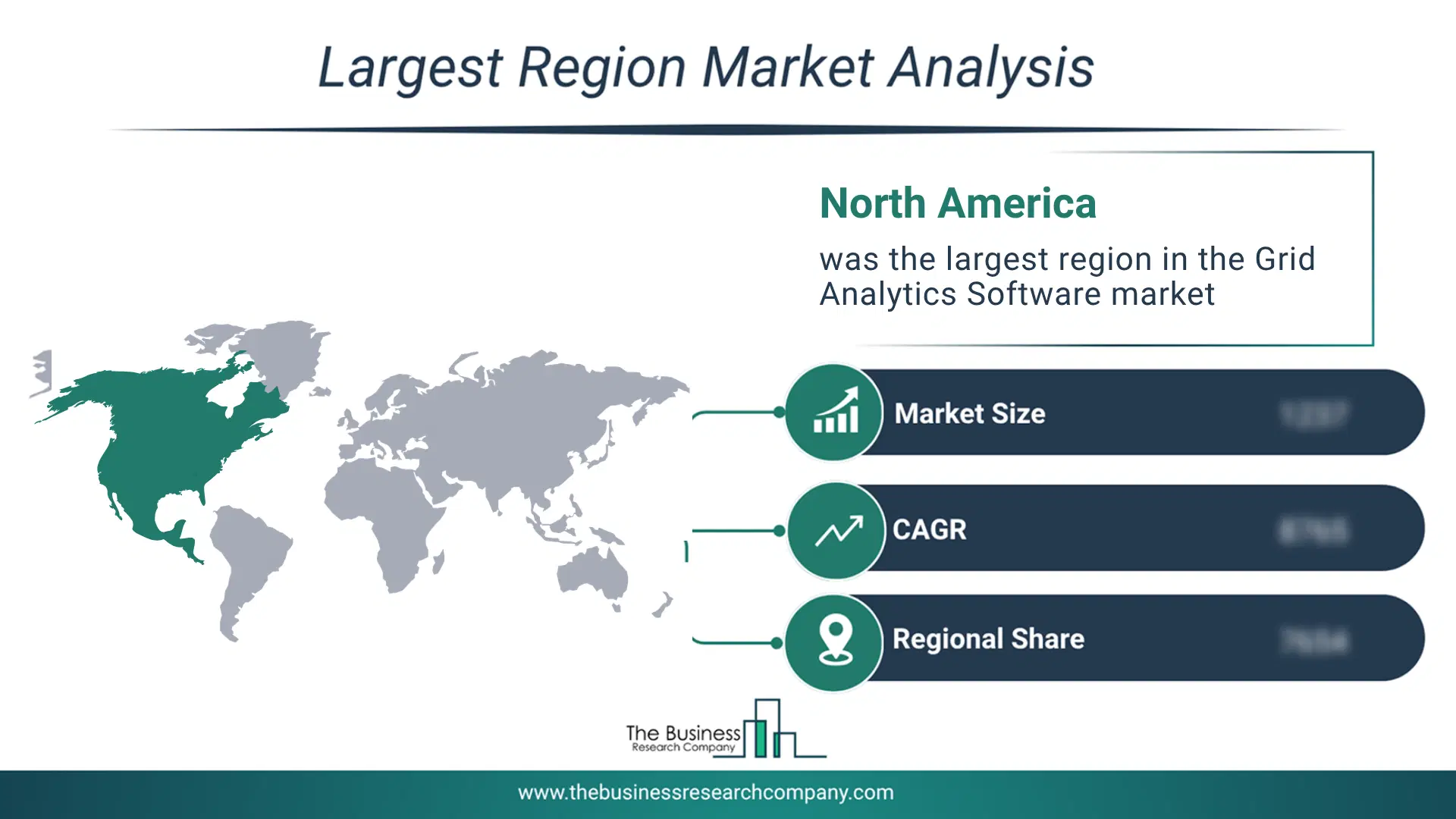
Regional Insights
North America was the largest region in the grid analytics software market in 2025. Asia-Pacific is expected to be the fastest-growing region in the forecast period. The regions covered in this market report are Asia-Pacific, South East Asia, Western Europe, Eastern Europe, North America, South America, Middle East, Africa. The countries covered in this market report are Australia, Brazil, China, France, Germany, India, Indonesia, Japan, Taiwan, Russia, South Korea, UK, USA, Canada, Italy, Spain.What Defines the Grid Analytics Software Market?
The grid analytics software market consists of revenues earned by entities by providing services such as automated demand response (ADR) solutions, demand-side energy optimization, grid balancing and frequency regulation services, and energy consumption monitoring and analytics. The market value includes the value of related goods sold by the service provider or included within the service offering. The grid analytics software market includes sales of smart meters, phasor measurement units, grid monitoring sensors, data acquisition devices, edge computing hardware, and on-premise analytics servers. Values in this market are ‘factory gate’ values, that is, the value of goods sold by the manufacturers or creators of the goods, whether to other entities (including downstream manufacturers, wholesalers, distributors, and retailers) or directly to end customers. The value of goods in this market includes related services sold by the creators of the goods.How is Market Value Defined and Measured?
The market value is defined as the revenues that enterprises gain from the sale of goods and/or services within the specified market and geography through sales, grants, or donations in terms of the currency (in USD unless otherwise specified). The revenues for a specified geography are consumption values that are revenues generated by organizations in the specified geography within the market, irrespective of where they are produced. It does not include revenues from resales along the supply chain, either further along the supply chain or as part of other products.
This chart presents market attractiveness based on a quantitative evaluation of growth, competition, strategic alignment, and risk, offering a clear view of opportunity areas for decision-making. This chart is for illustrative purposes; the full report contains the complete analysis.

This chart highlights the Total Addressable Market (TAM) by estimating the maximum revenue opportunity using an assumption-driven approach, supporting strategic planning and opportunity sizing across markets. The chart is illustrative; the full report provides a more comprehensive analysis.
What Key Data and Analysis Are Included in the Grid Analytics Software Market Report 2026?
The grid analytics software market research report is one of a series of new reports from The Business Research Company that provides market statistics, including industry global market size, regional shares, competitors with the market share, detailed market segments, market trends and opportunities, and any further data you may need to thrive in the grid analytics software industry. The market research report delivers a complete perspective of everything you need, with an in-depth analysis of the current and future state of the industry.Grid Analytics Software Market Report Forecast Analysis
| Report Attribute | Details |
|---|---|
| Market Size Value In 2026 | $5.08 billion |
| Revenue Forecast In 2030 | $8.68 billion |
| Growth Rate | CAGR of 14.1% from 2026 to 2030 |
| Base Year For Estimation | 2025 |
| Actual Estimates/Historical Data | 2020-2025 |
| Forecast Period | 2026 - 2030 - 2030 |
| Market Representation | Revenue in USD Billion and CAGR from 2026 to 2030 |
| Segments Covered | Component, Deployment Mode, Application, End User |
| Regional Scope | Asia-Pacific, Western Europe, Eastern Europe, North America, South America, Middle East, Africa |
| Country Scope | The countries covered in the report are Australia, Brazil, China, France, Germany, India, Indonesia, Japan, Taiwan, Russia, South Korea, UK, USA, Canada, Italy, Spain. |
| Key Companies Profiled | Siemens AG, Hitachi Ltd., Lockheed Martin Corporation, Accenture plc, IBM Corporation, Cisco Systems Inc., General Electric Company, Oracle Corporation, Schneider Electric SE, SAP SE, ABB Ltd., Eaton Corporation, Leidos Holdings Inc., Wipro Limited, Landis+Gyr Group AG., itron inc., Holley Technology Ltd., Willdan Group, C3 AI Inc., AutoGrid Systems Inc., Amperon Holdings Inc., Grid4C Ltd. |
| Customization Scope | Request for Customization |
| Pricing And Purchase Options | Explore Purchase Options |