
Grid Forming Inverter Market Report 2026
Global Outlook – By Type (Micro Inverter, String Inverter, Central Inverter, Other Types), By Connectivity (Standalone, Grid-Connected), By Power Rating (Below 50 Kilowatt (KW), 50-100 Kilowatt (KW), Above 100 Kilowatt (KW)), By Application (Solar Photovoltaic (PV) Plants, Wind Power Plants, Energy Storage System, Electric Vehicles, Other Applications), By End-User (Residential, Commercial, Other End-Users) – Market Size, Trends, Strategies, and Forecast to 2030
Grid Forming Inverter Market Overview
• Grid Forming Inverter market size has reached to $0.75 billion in 2025 • Expected to grow to $1.15 billion in 2030 at a compound annual growth rate (CAGR) of 8.8% • Growth Driver: The Increasing Integration Of Renewable Energy Is Fueling The Growth Of The Market Due To Its Critical Role In Enhancing Grid Stability And Supporting Cleaner, More Reliable Power Generation • Market Trend: Development In Next-Generation Grid-Forming Inverters Enhance Renewable Integration And Grid Stability • Asia-Pacific was the largest region in 2025.Market Gains By 2030 – Top Opportunities By Segment
Market Gain identifies the most promising market opportunities by highlighting the segments or products expected to generate the highest incremental revenue growth over the next five years.
What Is Covered Under Grid Forming Inverter Market?
A grid-forming inverter (GFI) is a power inverter that actively sets and controls voltage and frequency within an electrical grid, playing a key role in microgrids and renewable-heavy systems. This inverter operates autonomously or alongside other sources to maintain grid stability and ensure reliable and stable operation in decentralized, renewable-integrated power networks. The main types of grid-forming inverters are microinverters, string inverters, central inverters, and others. A microinverter converts DC from a single solar panel to AC, maximizing output, enhancing reliability, and enabling individual panel monitoring. The connectivity includes standalone and grid-connected, with various power ratings such as below 50 kilowatts (kW), 50-100 kilowatts (kW), and above 100 kilowatts (kW). It is applicable in several applications, including solar photovoltaic (PV) plants, wind power plants, energy storage systems, electric vehicles, and others, and is used by various end users, such as residential, commercial, and others.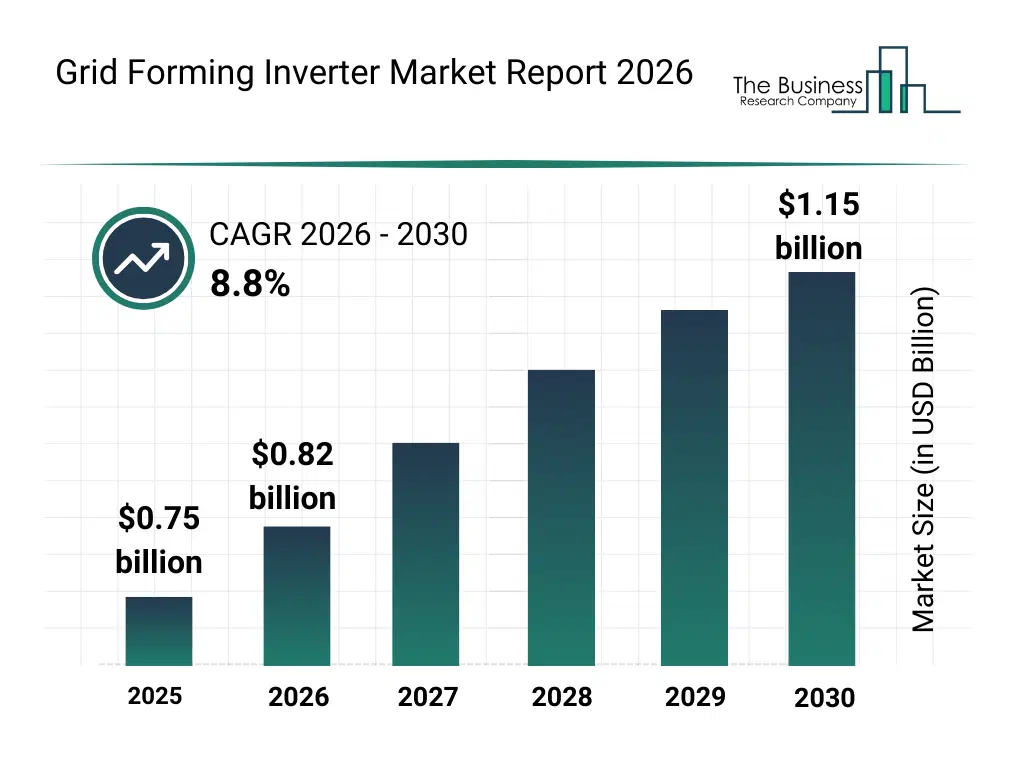
What Is The Grid Forming Inverter Market Size and Share 2026?
The grid forming inverter market size has grown strongly in recent years. It will grow from $0.75 billion in 2025 to $0.82 billion in 2026 at a compound annual growth rate (CAGR) of 9.1%. The growth in the historic period can be attributed to expansion of renewable energy installations, early deployment of microgrid systems, rising penetration of inverter-based resources, increased grid decentralization initiatives, availability of advanced power electronics.What Is The Grid Forming Inverter Market Growth Forecast?
The grid forming inverter market size is expected to see strong growth in the next few years. It will grow to $1.15 billion in 2030 at a compound annual growth rate (CAGR) of 8.8%. The growth in the forecast period can be attributed to increasing investments in grid resilience solutions, rising adoption of battery-integrated power systems, expansion of distributed energy resources, growing demand for inverter-dominated grids, increasing focus on grid-forming standards and interoperability. Major trends in the forecast period include increasing deployment of grid-stabilizing inverter technologies, rising adoption of inverters in renewable-heavy grids, growing integration of inverters with energy storage systems, expansion of microgrid and islanded grid applications, enhanced focus on frequency and voltage control capabilities.
Global Grid Forming Inverter Market Segmentation
1) By Type: Micro Inverter, String Inverter, Central Inverter, Other Types 2) By Connectivity: Standalone, Grid-Connected 3) By Power Rating: Below 50 Kilowatt (KW), 50-100 Kilowatt (KW), Above 100 Kilowatt (KW) 4) By Application: Solar Photovoltaic (PV) Plants, Wind Power Plants, Energy Storage System, Electric Vehicles, Other Applications 5) By End-User: Residential, Commercial, Other End-Users Subsegments: 1) By Micro Inverter: Residential Micro Inverters, Commercial Micro Inverters, Hybrid Micro Inverters, Off-Grid Micro Inverters 2) By String Inverter: Single-Phase String Inverters, Three-Phase String Inverters, Hybrid String Inverters, Transformerless String Inverters 3) By Central Inverter: Utility-Scale Central Inverters, Commercial Central Inverters, High Power Central Inverters, Medium Power Central Inverters 4) By Other Types: Hybrid Inverters, Battery Integrated Inverters, Modular Inverters, Bidirectional Inverters The top segments in the grid forming inverter market will be: • String Inverter will reach $0.53 Billion by 2030. • Central Inverter will reach $0.29 Billion by 2030. • Micro Inverter will reach $0.22 Billion by 2030. • Other Types will reach $0.1 Billion by 2030.What Is The Driver Of The Grid Forming Inverter Market?
The increasing integration of renewable energy is expected to propel the growth of the grid-forming inverter market going forward. Renewable energy comes from naturally replenishing sources like sunlight, wind, water, and geothermal heat. The increasing integration of renewable energy is due to an increase in the adoption of governments and industries for cleaner sources to cut carbon emissions and address climate change. Grid-forming inverters enhance grid stability by replicating conventional generator functions, allowing smoother integration of renewable energy. They regulate voltage and frequency, ensuring consistent and reliable power despite fluctuations from solar or wind sources. For instance, in February 2025, according to the International Energy Agency (IEA), a France-based autonomous intergovernmental organization, in 2023, solar photovoltaic (PV) power generation saw a remarkable increase of 320 TWh, a 25% rise compared to 2022. Therefore, the increasing integration of renewable energy is driving the growth of the grid-forming inverter market.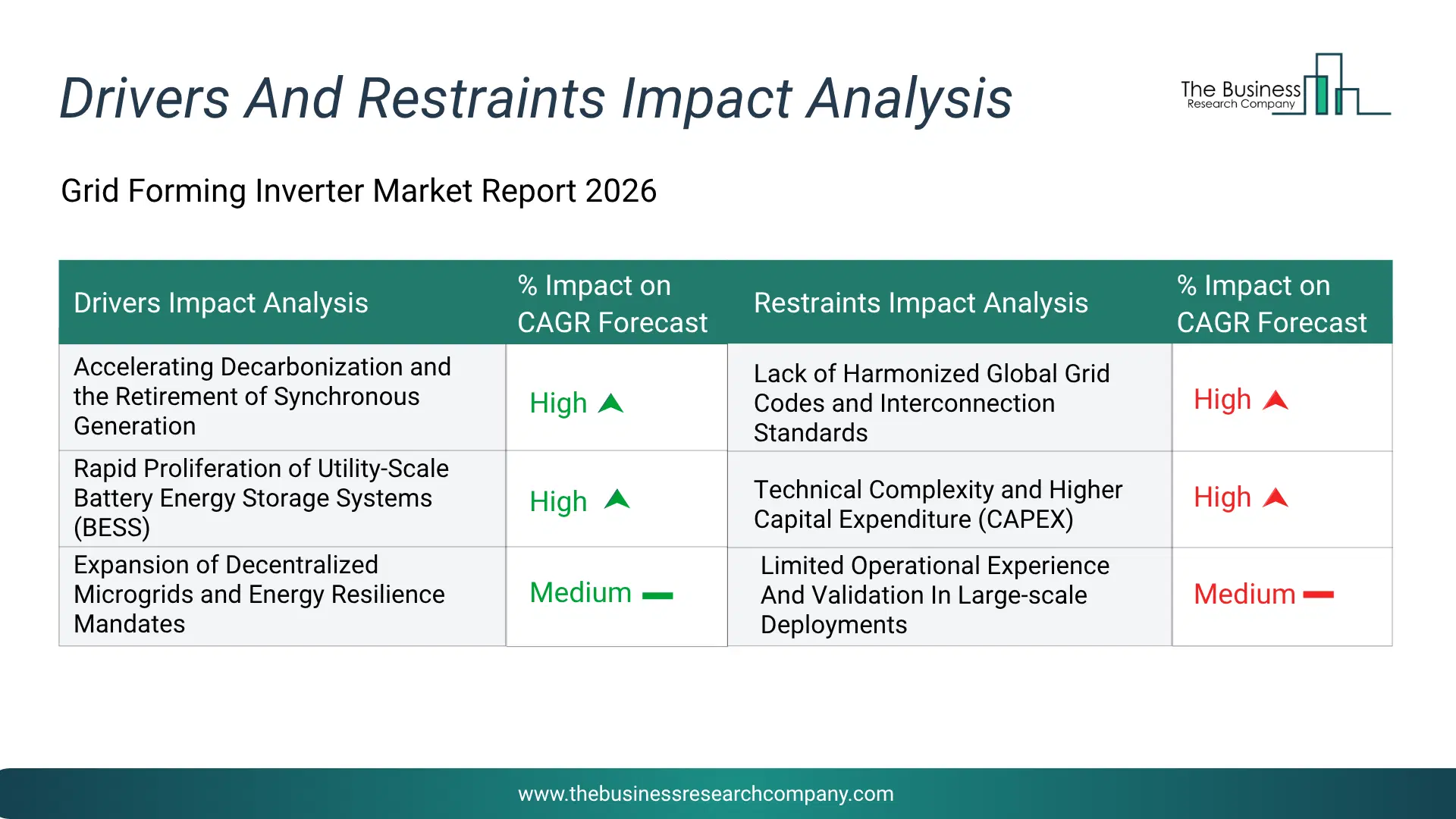
Infographic Chart Showing Key Market Drivers Analysis And Restraints For Grid Forming Inverter Market
The chart presents an impact analysis of key drivers and restraints, quantifying their relative influence on the market's growth rate and helping assess the balance between growth enablers and limiting factors. This chart offers a high-level perspective; the full report contains more detailed insights.
How Will The Drivers Impact Growth In The Global Grid Forming Inverter Market?
• Accelerating Decarbonization and the Retirement of Synchronous Generation (High) – During the forecast period, the accelerating decarbonization and the retirement of synchronous generation is expected to become a key growth driver for the grid forming inverter market by 2030. The phase-out of conventional coal and gas-based power plants is reducing the availability of inherent grid inertia traditionally provided by synchronous machines. This shift is creating a critical need for advanced inverter technologies capable of replicating inertia and stabilizing grid frequency. Grid forming inverters are increasingly being deployed to ensure system reliability in low-inertia grids with high renewable penetration. Utilities and grid operators are therefore prioritizing inverter-based resources that can operate independently and support voltage and frequency regulation. • Rapid Proliferation of Utility-Scale Battery Energy Storage Systems (BESS) (High) – During the forecast period, the rapid proliferation of utility-scale battery energy storage systems (BESS) is expected to emerge as a major factor driving the expansion of the grid forming inverter market by 2030. The increasing deployment of large-scale energy storage is enabling better management of renewable intermittency and load balancing across power networks. Grid forming inverters are essential in these systems to provide black start capability, grid stabilization, and seamless integration with variable renewable energy sources. The growing need for flexible and dispatchable energy resources is accelerating the adoption of inverter technologies with advanced control capabilities. • Expansion of Decentralized Microgrids and Energy Resilience Mandates (Medium) – During the forecast period, the expansion of decentralized microgrids and energy resilience mandates is expected to act as a key growth catalyst for the grid forming inverter market by 2030. Increasing occurrences of grid outages and extreme weather events are driving demand for resilient and self-sufficient power systems. Microgrids powered by renewable energy and storage systems rely on grid forming inverters to maintain stable operation in islanded modes. Governments and organizations are emphasizing energy security and continuity of operations, particularly in critical infrastructure and remote locations. This is encouraging the deployment of decentralized power systems with advanced inverter capabilities.How Will The Restraints Impact Growth In The Global Grid Forming Inverter Market?
• Lack of Harmonized Global Grid Codes and Interconnection Standards (High) – During the forecast period, lack of harmonized global grid codes and interconnection standards is restricting the growth of the grid forming inverter market. Variations in grid regulations and absence of unified technical standards across regions are creating compliance complexities and delaying deployment of advanced inverter technologies • Technical Complexity and Higher Capital Expenditure (CAPEX) (High) – During the forecast period, technical complexity and higher capital expenditure (CAPEX) are restricting the growth of the grid forming inverter market. Advanced control algorithms, system design requirements, and higher upfront costs compared to conventional inverters are increasing financial and operational barriers for utilities and developers • Limited Operational Experience And Validation In Large-scale Deployments (Medium) – During the forecast period, limited operational experience and validation in large-scale deployments are restricting the growth of the grid forming inverter market. Insufficient real-world performance data and concerns over system stability and reliability are slowing adoption among grid operators and project developersKey Players In The Global Grid Forming Inverter Market
Major companies operating in the grid forming inverter market are Huawei Technologies Co. Ltd., Siemens AG, ABB Ltd., Toshiba Corporation, Infineon Technologies AG, Delta Electronics Inc., Sungrow Power Supply Co. Ltd., Enphase Energy Inc., SMA Solar Technology AG, GoodWe, Sineng Electric, SolaX Power, Hitachi Energy Ltd, TMEIC Corporation, Growatt New Energy Co. Ltd., FIMER Group, Yaskawa Solectria Solar, Su-Kam Power Systems Ltd., NingBo Deye Inverter Technology Co. Ltd, Medha, Bharat Heavy Electricals Limited (BHEL)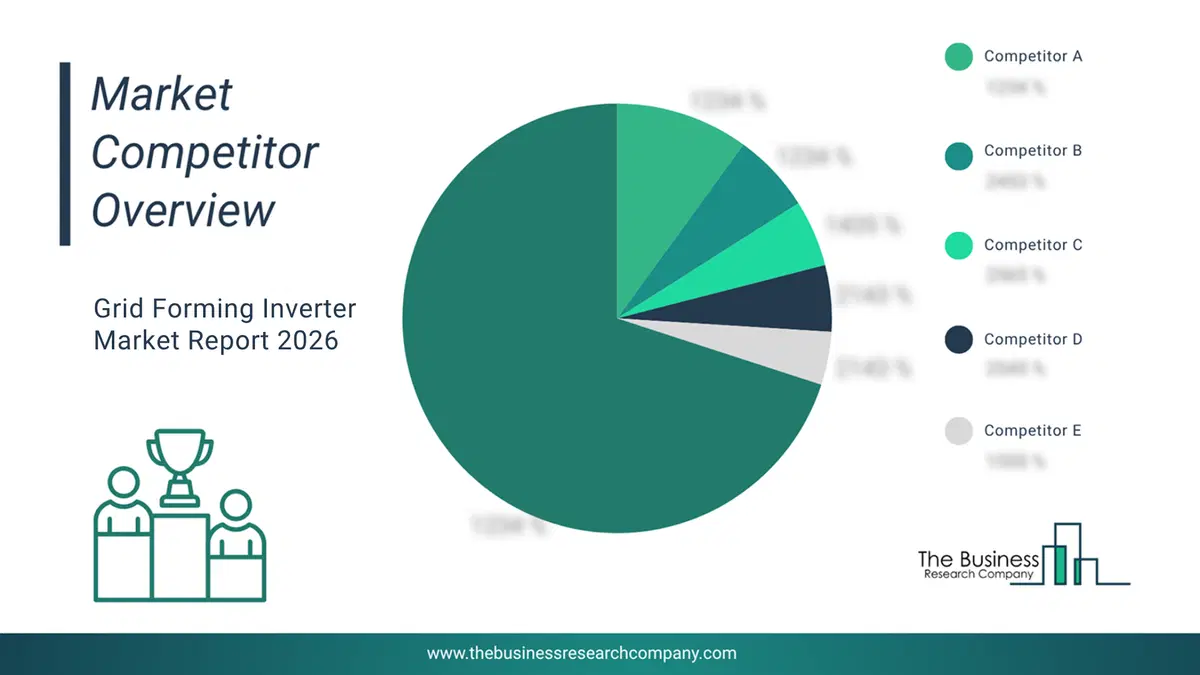
This chart is for illustrative purposes; the full report includes a detailed competitor analysis and comprehensive overview of the top 10 companies in the market.
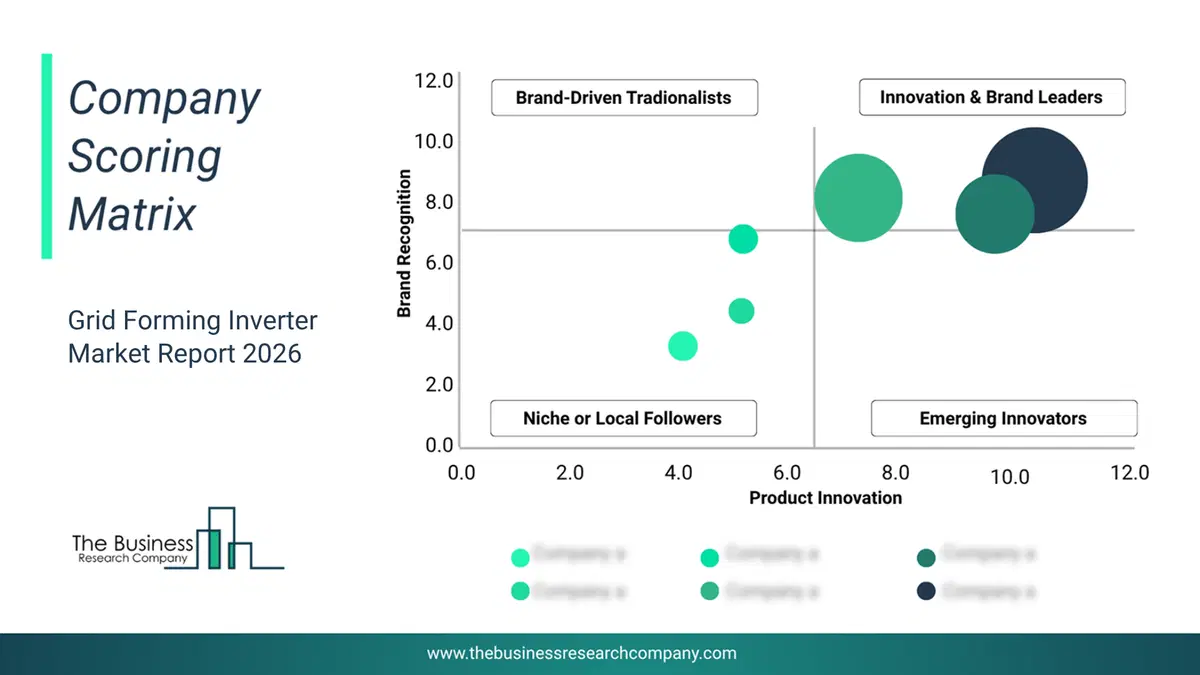
This chart maps companies by product innovation and brand strength, with bubble size indicating relative revenue, helping identify market leaders, challengers, and niche players. This is an illustrative chart; the full report provides a complete and accurate competitive analysis.
Global Grid Forming Inverter Market Trends and Insights
Major companies operating in the grid-forming inverter market are focusing on developing advanced products, such as the central grid inverter, to support higher integration of renewable energy sources in power systems. A central grid inverter is a high-capacity device that converts DC from multiple solar sources into AC for the grid, ensuring efficient power management. It also stabilizes the grid by regulating voltage and frequency at a central point in large-scale renewable energy systems. For instance, in April 2025, Hitachi Industrial Equipment Systems Co., Ltd., a Japan-based provider of industrial equipment, launched its next-generation Grid Forming Inverter (GFM) system. This advanced inverter technology is designed to support stable and resilient power grids by simulating the stabilizing inertia effects traditionally provided by large power plants, which is increasingly important as renewable energy sources such as solar and wind replace conventional generators. The GFM system enables the creation and stabilization of self-sustaining microgrids, enhances grid resilience, and allows for continued operations even during power fluctuations or blackouts, contributing to carbon reduction and disaster preparedness efforts.What Are Latest Mergers And Acquisitions In The Grid Forming Inverter Market?
In January 2025, ABB Group, a Switzerland-based automation company, acquired the power electronics business of Gamesa Electric for an undisclosed amount. Through thisacquisition aims to strengthen ABB’s position in the rapidly growing renewable power conversion market by expanding its portfolio with Gamesa Electric’s offerings in wind converters, battery energy storage systems, and solar inverters, as well as enhance its engineering capabilities, increase its serviceable installed base, and support its profitable growth strategy in the renewables sector. Gamesa Electric is a Spain-based manufacturer of grid-forming central inverters.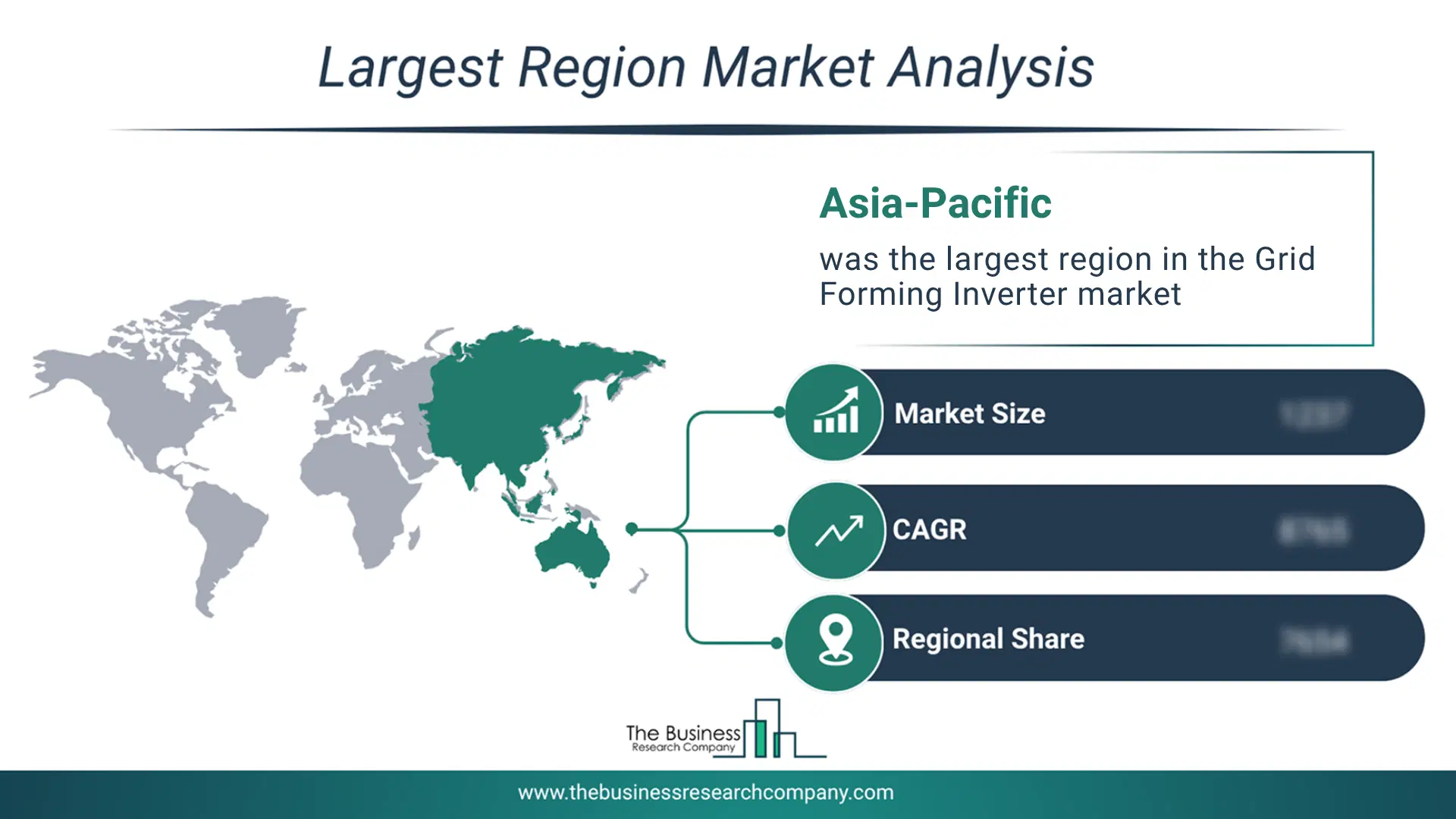
Regional Outlook
Asia-Pacific was the largest region in the grid-forming inverter market in 2025. The regions covered in this market report are Asia-Pacific, South East Asia, Western Europe, Eastern Europe, North America, South America, Middle East, Africa. The countries covered in this market report are Australia, Brazil, China, France, Germany, India, Indonesia, Japan, Taiwan, Russia, South Korea, UK, USA, Canada, Italy, SpainWhat Defines the Grid Forming Inverter Market?
The grid-forming inverter market consists of sales of modular inverters, hybrid inverters, battery-based inverters, and solid-state transformer (SST)-based inverters. Values in this market are ‘factory gate’ values, that is, the value of goods sold by the manufacturers or creators of the goods, whether to other entities (including downstream manufacturers, wholesalers, distributors, and retailers) or directly to end customers. The value of goods in this market includes related services sold by the creators of the goods.How is Market Value Defined and Measured?
The market value is defined as the revenues that enterprises gain from the sale of goods and/or services within the specified market and geography through sales, grants, or donations in terms of the currency (in USD unless otherwise specified). The revenues for a specified geography are consumption values that are revenues generated by organizations in the specified geography within the market, irrespective of where they are produced. It does not include revenues from resales along the supply chain, either further along the supply chain or as part of other products.
This chart presents market attractiveness based on a quantitative evaluation of growth, competition, strategic alignment, and risk, offering a clear view of opportunity areas for decision-making. This chart is for illustrative purposes; the full report contains the complete analysis.

This chart highlights the Total Addressable Market (TAM) by estimating the maximum revenue opportunity using an assumption-driven approach, supporting strategic planning and opportunity sizing across markets. The chart is illustrative; the full report provides a more comprehensive analysis.
What Key Data and Analysis Are Included in the Grid Forming Inverter Market Report 2026?
The grid forming inverter market research report is one of a series of new reports from The Business Research Company that provides market statistics, including Market Report 2026?global market size, regional shares, competitors with the market share, detailed market segments, market trends and opportunities, and any further data you may need to thrive in the grid forming inverter Market Report 2026? The market research report delivers a complete perspective of everything you need, with an in-depth analysis of the current and future state of the Market Report 2026?Grid Forming Inverter Market Report Forecast Analysis
| Report Attribute | Details |
|---|---|
| Market Size Value In 2026 | $0.82 billion |
| Revenue Forecast In 2030 | $1.15 billion |
| Growth Rate | CAGR of 9.1% from 2026 to 2030 |
| Base Year For Estimation | 2025 |
| Actual Estimates/Historical Data | 2020-2025 |
| Forecast Period | 2026 - 2030 |
| Market Representation | Revenue in USD Billion and CAGR from 2026 to 2030 |
| Segments Covered | Type, Connectivity, Power Rating, Application, End-User |
| Regional Scope | Asia-Pacific, Western Europe, Eastern Europe, North America, South America, Middle East, Africa |
| Country Scope | The countries covered in the report are Australia, Brazil, China, France, Germany, India, Indonesia, Japan, Taiwan, Russia, South Korea, UK, USA, Canada, Italy, Spain. |
| Key Companies Profiled | Huawei Technologies Co. Ltd., Siemens AG, ABB Ltd., Toshiba Corporation, Infineon Technologies AG, Delta Electronics Inc., Sungrow Power Supply Co. Ltd., Enphase Energy Inc., SMA Solar Technology AG, GoodWe, Sineng Electric, SolaX Power, Hitachi Energy Ltd, TMEIC Corporation, Growatt New Energy Co. Ltd., FIMER Group, Yaskawa Solectria Solar, Su-Kam Power Systems Ltd., NingBo Deye Inverter Technology Co. Ltd, Medha, Bharat Heavy Electricals Limited (BHEL) |
| Customization Scope | Request for Customization |
| Pricing And Purchase Options | Explore Purchase Options |