
Guillain-Barre Syndrome Market Report 2026
Global Outlook – By Type (Acute Inflammatory Demyelinating Polyneuropathy (AIDP), Miller Fisher Syndrome (MFS), Acute Motor Axonal Neuropathy (AMAN)), By Therapeutics (Intravenous Immunoglobulin (IVIG), Plasma Exchange, Other Therapeutics), By End User (Hospitals, Specialty Neurology Clinics, Rehabilitation Centers, Home Healthcare Settings) - Market Size, Trends, Strategies, and Forecast to 2030
Guillain-Barre Syndrome Market Overview
• Guillain-Barre Syndrome market size has reached to $0.64 billion in 2025 • Expected to grow to $0.83 billion in 2030 at a compound annual growth rate (CAGR) of 5.4% • Growth Driver: Rising Immunological Disease Cases Fuel Demand For Advanced Treatments And Research • Market Trend: Advancing Therapeutic Innovations For Improved Patient Outcomes • North America was the largest region in 2025 and Asia-Pacific is the fastest growing region.What Is Covered Under Guillain-Barre Syndrome Market?
Guillain-barre syndrome is a rare neurological disorder in which the body's immune system mistakenly attacks the peripheral nervous system. This can lead to muscle weakness, numbness, tingling, and, in severe cases, paralysis. The exact cause is unknown, but it is triggered by infections, such as respiratory or gastrointestinal infections, and sometimes by vaccinations or surgery. The main types of guillain-barre syndrome are acute inflammatory demyelinating polyneuropathy (AIDP), chronic inflammatory demyelinating polyradiculoneuropathy (CIDP), miller fisher syndrome (MFS), acute motor axonal neuropathy (AMAN), and others. AIDP is an autoimmune disorder where the immune system attacks the myelin sheaths of peripheral nerves, causing inflammation and demyelination. Therapeutic options for GBS include intravenous immunoglobulin (IVIG), plasma exchange, and others. The primary routes of administration are parenteral and oral. The condition is managed across various healthcare settings, including hospitals, clinics, diagnostic centers, and others.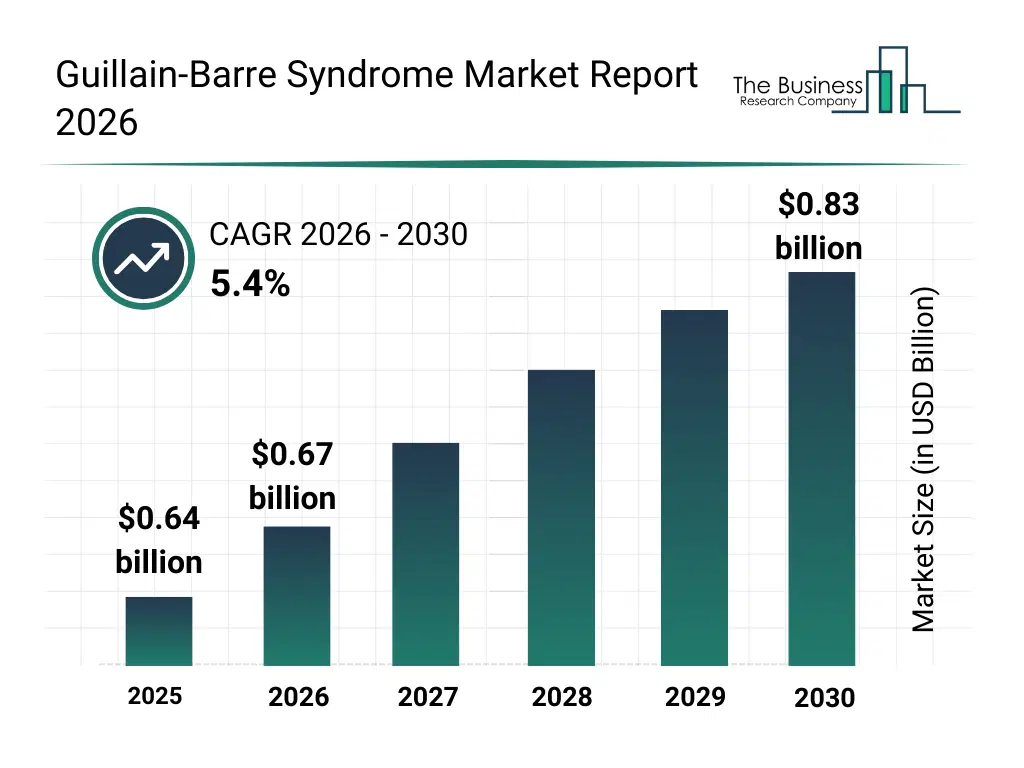
What Is The Guillain-Barre Syndrome Market Size and Share 2026?
The guillain-barre syndrome market size has grown strongly in recent years. It will grow from $0.64 billion in 2025 to $0.67 billion in 2026 at a compound annual growth rate (CAGR) of 5.6%. The growth in the historic period can be attributed to improved recognition of autoimmune neurological conditions, expansion of hospital-based neurology departments, increased availability of immunotherapy treatments, rising post-infectious complication cases, better critical care infrastructure.What Is The Guillain-Barre Syndrome Market Growth Forecast?
The guillain-barre syndrome market size is expected to see strong growth in the next few years. It will grow to $0.83 billion in 2030 at a compound annual growth rate (CAGR) of 5.4%. The growth in the forecast period can be attributed to increasing investments in neurology research, rising demand for advanced immunomodulatory therapies, expansion of specialized rehabilitation services, growing use of digital neurological assessment tools, increasing focus on early intervention strategies. Major trends in the forecast period include increasing use of intravenous immunoglobulin therapies, rising adoption of plasma exchange procedures, growing focus on early neurological diagnosis, expansion of specialized neurology care centers, enhanced monitoring of autoimmune neurological disorders.
Global Guillain-Barre Syndrome Market Segmentation
1) By Type: Acute Inflammatory Demyelinating Polyneuropathy (AIDP), Miller Fisher Syndrome (MFS), Acute Motor Axonal Neuropathy (AMAN) 2) By Therapeutics: Intravenous Immunoglobulin (IVIG), Plasma Exchange, Other Therapeutics 3) By End User: Hospitals, Specialty Neurology Clinics, Rehabilitation Centers, Home Healthcare Settings Subsegments: 1) By Acute Inflammatory Demyelinating Polyneuropathy (AIDP): Classical AIDP, AIDP with Autonomic Involvement 2) By Miller Fisher Syndrome (MFS): Classical MFS, MFS With Ataxia, MFS With Ophthalmoplegia 3) By Acute Motor Axonal Neuropathy (AMAN): Classical AMAN, AMAN with Respiratory InvolvementWhat Are The Drivers Of The Guillain-Barre Syndrome Market?
The increasing risk of immunological diseases is expected to propel the growth of the guillain-barre syndrome market going forward. Immunological diseases are conditions where the immune system is overactive, underactive, or misdirected, leading to disorders such as autoimmune diseases, allergies, or immunodeficiencies. Immunological diseases are increasing due to factors such as environmental changes, lifestyle, better diagnosis, and genetic predisposition. Immunological diseases can cause guillain-barré syndrome by triggering an autoimmune response in which the body's immune system mistakenly attacks the peripheral nerves, leading to inflammation and nerve damage. For instance, in July 2024, according to a report published by the Joint United Nations Programme on HIV/AIDS (UNAIDS), a Switzerland-based government organization, by the end of 2022, approximately 39.5 million people worldwide were living with HIV, with 1.3 million new infections and 630,000 AIDS-related deaths reported that year. In 2023, the number of people living with HIV globally rose to around 39.9 million. Therefore, the increasing risk of immunological diseases is driving the guillain-barre syndrome industry. The rising healthcare expenditure is expected to propel the growth of the guillain-barre syndrome market going forward. Healthcare expenditure refers to the total financial resources spent by individuals, organizations, or governments on preventing, treating, and managing health conditions. Healthcare expenditure is increasing due to advancements in medical technology, as new diagnostic tools, treatments, and innovative therapies often come at higher costs, leading to greater overall spending in healthcare. Rising healthcare expenditure is helping advance Guillain-Barré syndrome management by enabling greater investment in early diagnosis, advanced immunotherapies, and improved critical care infrastructure that enhances patient outcomes. For instance, in December 2024, according to the Centers for Medicare & Medicaid Services, a US-based agency responsible for administering the Medicare and Medicaid programs, in 2023, U.S. health care expenditures increased by 7.5%, climbing to $4.9 trillion, or roughly $14,570 for each individual. Therefore, the rising healthcare expenditure is driving the growth of the guillain-barre syndrome industry.Key Players In The Global Guillain-Barre Syndrome Market
Major companies operating in the guillain-barre syndrome market are Pfizer Inc., Roche AG, AstraZeneca PLC, GSK plc, Takeda Pharmaceutical Company Limited, Merck & Co. Inc., Baxter International Inc., Biogen Inc., Horizon Therapeutics, Octapharma AG, Kedrion S.p.A., CSL Behring, Hansa Biopharma AB, Annexon Inc., Immunovant Inc., UCB S.A., Alexion Pharmaceuticals, Argenx SE, Grifols S.A., LFB S.A
This chart is for illustrative purposes; the full report includes a detailed competitor analysis and comprehensive overview of the top 10 companies in the market.
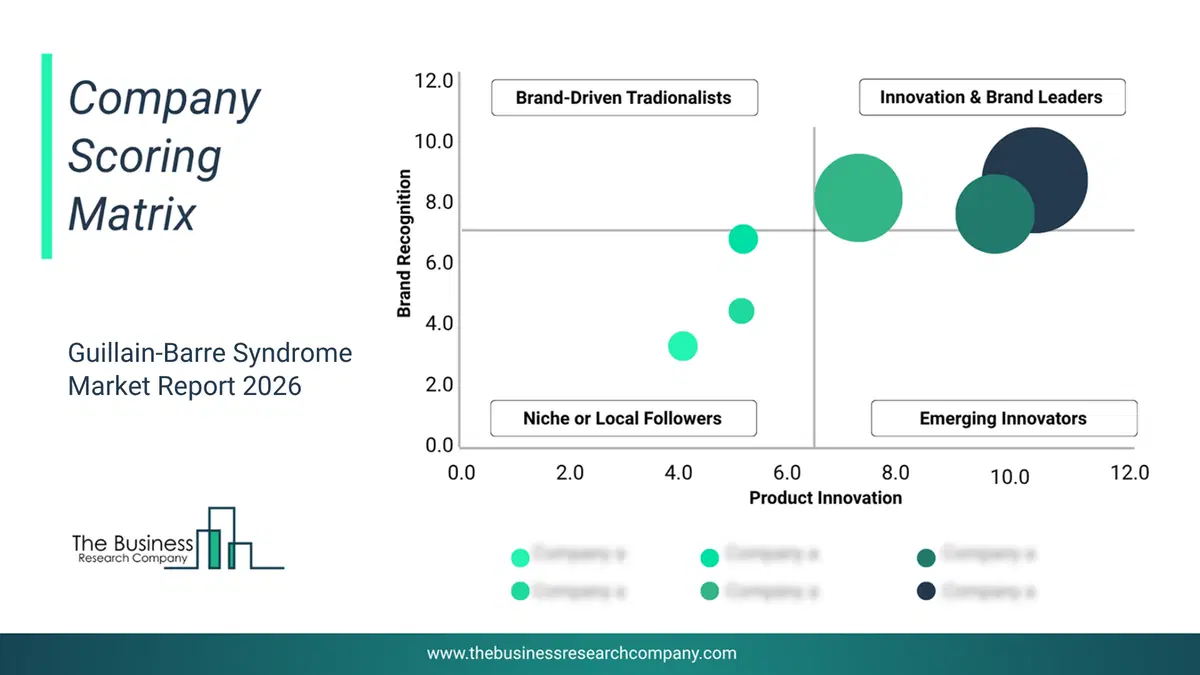
This chart maps companies by product innovation and brand strength, with bubble size indicating relative revenue, helping identify market leaders, challengers, and niche players. This is an illustrative chart; the full report provides a complete and accurate competitive analysis.
Global Guillain-Barre Syndrome Market Trends and Insights
Major companies operating in the guillain-barre syndrome market are prioritizing innovative drug development, such as monoclonal antibodies, to enhance treatment efficacy, address unmet clinical needs, and expand their market presence. Monoclonal antibodies are laboratory-engineered proteins designed to target specific antigens, helping modulate immune responses and improve therapeutic outcomes. For instance, in October 2023, Annexon Inc., a US-based biopharmaceutical company, received orphan drug designation by the European Medicines Agency (EMA) for its drug ANX005 for the treatment of guillain-barre syndrome (GBS). It is a monoclonal antibody targeting C1q, demonstrating early muscle strength improvements and reduced need for ventilation compared to IVIg, marking it as a significant therapeutic advancement.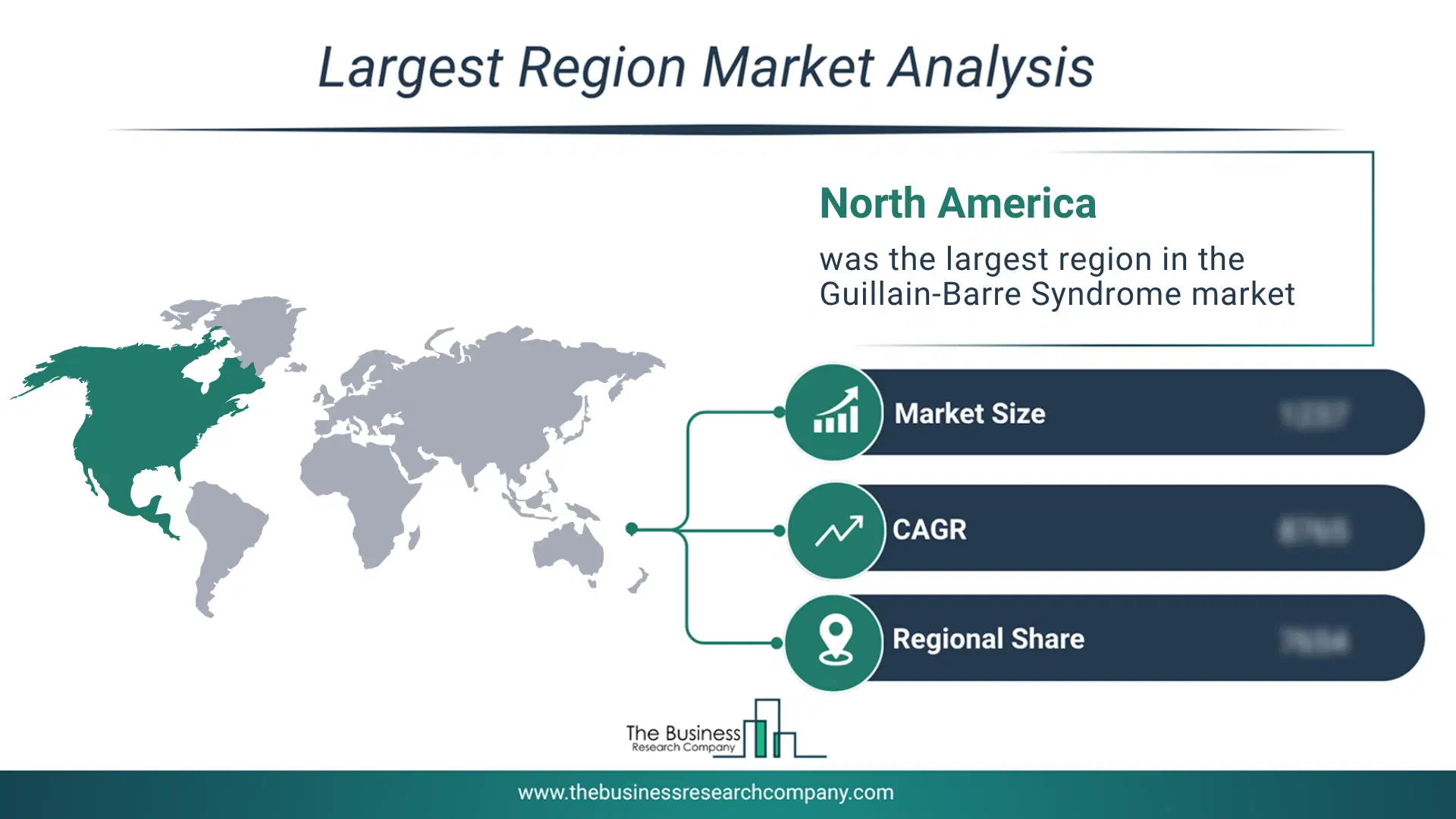
Regional Outlook
North America was the largest region in the guillain-barre syndrome market in 2025. Asia-Pacific is expected to be the fastest-growing region in the forecast period. The regions covered in this market report are Asia-Pacific, South East Asia, Western Europe, Eastern Europe, North America, South America, Middle East, Africa. The countries covered in this market report are Australia, Brazil, China, France, Germany, India, Indonesia, Japan, Taiwan, Russia, South Korea, UK, USA, Canada, Italy, Spain.What Defines the Guillain-Barre Syndrome Market?
The guillain-barre syndrome market consists of revenues earned by entities by providing services such as plasma exchange (plasmapheresis), intravenous immunoglobulin (IVIG) therapy, neurological diagnostic tests, and supportive care treatments. The market value includes the value of related goods sold by the service provider or included within the service offering. The guillain-barre syndrome market also includes sales of pharmaceutical drugs, immunotherapies, and diagnostic tests. Values in this market are ‘factory gate’ values, that is the value of goods sold by the manufacturers or creators of the goods, whether to other entities (including downstream manufacturers, wholesalers, distributors and retailers) or directly to end customers. The value of goods in this market includes related services sold by the creators of the goods.How is Market Value Defined and Measured?
The market value is defined as the revenues that enterprises gain from the sale of goods and/or services within the specified market and geography through sales, grants, or donations in terms of the currency (in USD unless otherwise specified). The revenues for a specified geography are consumption values that are revenues generated by organizations in the specified geography within the market, irrespective of where they are produced. It does not include revenues from resales along the supply chain, either further along the supply chain or as part of other products.
This chart presents market attractiveness based on a quantitative evaluation of growth, competition, strategic alignment, and risk, offering a clear view of opportunity areas for decision-making. This chart is for illustrative purposes; the full report contains the complete analysis.

This chart highlights the Total Addressable Market (TAM) by estimating the maximum revenue opportunity using an assumption-driven approach, supporting strategic planning and opportunity sizing across markets. The chart is illustrative; the full report provides a more comprehensive analysis.
What Key Data and Analysis Are Included in the Guillain-Barre Syndrome Market Report 2026?
The guillain-barre syndrome market research report is one of a series of new reports from The Business Research Company that provides market statistics, including industry global market size, regional shares, competitors with the market share, detailed market segments, market trends and opportunities, and any further data you may need to thrive in the guillain-barre syndrome industry. The market research report delivers a complete perspective of everything you need, with an in-depth analysis of the current and future state of the industry.Guillain-Barre Syndrome Market Report Forecast Analysis
| Report Attribute | Details |
|---|---|
| Market Size Value In 2026 | $0.67 billion |
| Revenue Forecast In 2030 | $0.83 billion |
| Growth Rate | CAGR of 5.4% from 2026 to 2030 |
| Base Year For Estimation | 2025 |
| Actual Estimates/Historical Data | 2020-2025 |
| Forecast Period | 2026 - 2030 |
| Market Representation | Revenue in USD Billion and CAGR from 2026 to 2030 |
| Segments Covered | Type, Therapeutics, End User |
| Regional Scope | Asia-Pacific, Western Europe, Eastern Europe, North America, South America, Middle East, Africa |
| Country Scope | The countries covered in the report are Australia, Brazil, China, France, Germany, India, Indonesia, Japan, Taiwan, Russia, South Korea, UK, USA, Canada, Italy, Spain |
| Key Companies Profiled | Pfizer Inc., Roche AG, AstraZeneca PLC, GSK plc, Takeda Pharmaceutical Company Limited, Merck & Co. Inc., Baxter International Inc., Biogen Inc., Horizon Therapeutics, Octapharma AG, Kedrion S.p.A., CSL Behring, Hansa Biopharma AB, Annexon Inc., Immunovant Inc., UCB S.A., Alexion Pharmaceuticals, Argenx SE, Grifols S.A., LFB S.A |
| Customization Scope | Request for Customization |
| Pricing And Purchase Options | Explore Purchase Options |