
Gynecological Cancer Drugs Market Report 2026
Global Outlook – By Type (Alkylating Agent, Plant Alkaloid, Anthracyclines, Antitumor Antibiotic, Other Types), By Therapeutic Modality (Chemotherapy, Targeted Therapy, Hormonal Therapy), By Indication (Cervical Cancer, Uterine Cancer, Ovarian And Fallopian Tube Cancer, Vulvar Cancer, Vaginal Cancer), By End Users (Hospitals, Clinics, Specialized Cancer Treatment Centers, Other End Users) – Market Size, Trends, Strategies, and Forecast to 2030
Gynecological Cancer Drugs Market Overview
• Gynecological Cancer Drugs market size has reached to $15.47 billion in 2025 • Expected to grow to $21.3 billion in 2030 at a compound annual growth rate (CAGR) of 6.8% • Growth Driver: Gynecological Cancer Drugs Market Set To Grow Due To Rising Prevalence Of Gynecological Cancer • Market Trend: Revolutionizing Gynecological Cancer Treatment FDA Approval Of SH-105 Enhances Oncology Landscape • North America was the largest region in 2025.What Is Covered Under Gynecological Cancer Drugs Market?
Gynecological cancer drugs are pharmaceutical products specifically developed and used to treat gynecological cancers and malignancies that affect the female reproductive system. These drugs target and destroy cancer cells, inhibit their growth, or prevent the spread of malignant cells. The main types of gynecological cancer drugs are alkylating agents, plant alkaloids, anthracyclines, antitumor antibiotics, and others. An alkylating agent refers to a type of chemotherapy drug that interferes with the DNA of cancer cells, preventing their replication and leading to cell death and it is used in gynecological cancer drugs as a cytotoxic treatment to target and destroy cancer cells in the ovaries, uterus, cervix, and other reproductive organs. The various therapeutic modalities are chemotherapy, targeted therapy, and hormonal therapy that are used in different indications cervical cancer, uterine cancer, ovarian and fallopian tube cancer, vulvar cancer, and vaginal cancer. These are used by end users such as hospitals, clinics, specialized cancer treatment centers, and others.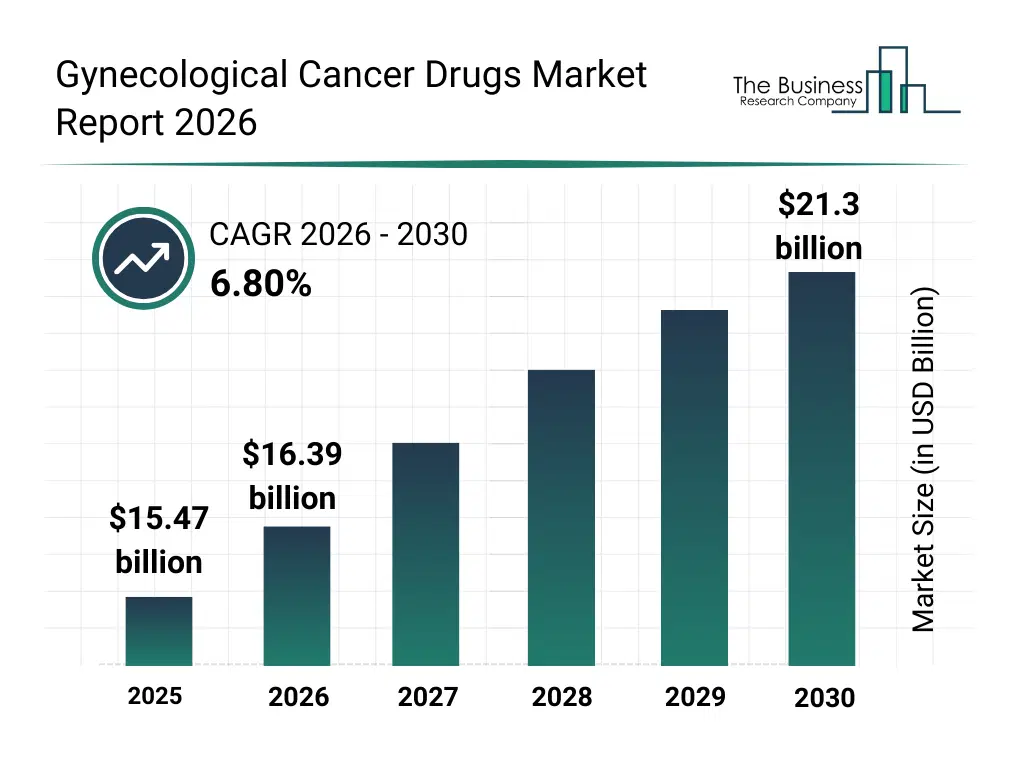
What Is The Gynecological Cancer Drugs Market Size and Share 2026?
The gynecological cancer drugs market size has grown strongly in recent years. It will grow from $15.47 billion in 2025 to $16.39 billion in 2026 at a compound annual growth rate (CAGR) of 5.9%. The growth in the historic period can be attributed to limited treatment options, high mortality rates, late-stage diagnosis, conventional chemotherapy reliance, low awareness programs.What Is The Gynecological Cancer Drugs Market Growth Forecast?
The gynecological cancer drugs market size is expected to see strong growth in the next few years. It will grow to $21.3 billion in 2030 at a compound annual growth rate (CAGR) of 6.8%. The growth in the forecast period can be attributed to rise in precision medicine adoption, increasing r&d investments, growth in targeted therapies, expansion of screening programs, technological advancements in drug delivery. Major trends in the forecast period include personalized cancer therapy, immunotherapy advancements, combination drug regimens, minimally invasive treatment approaches, early detection and screening programs.
Global Gynecological Cancer Drugs Market Segmentation
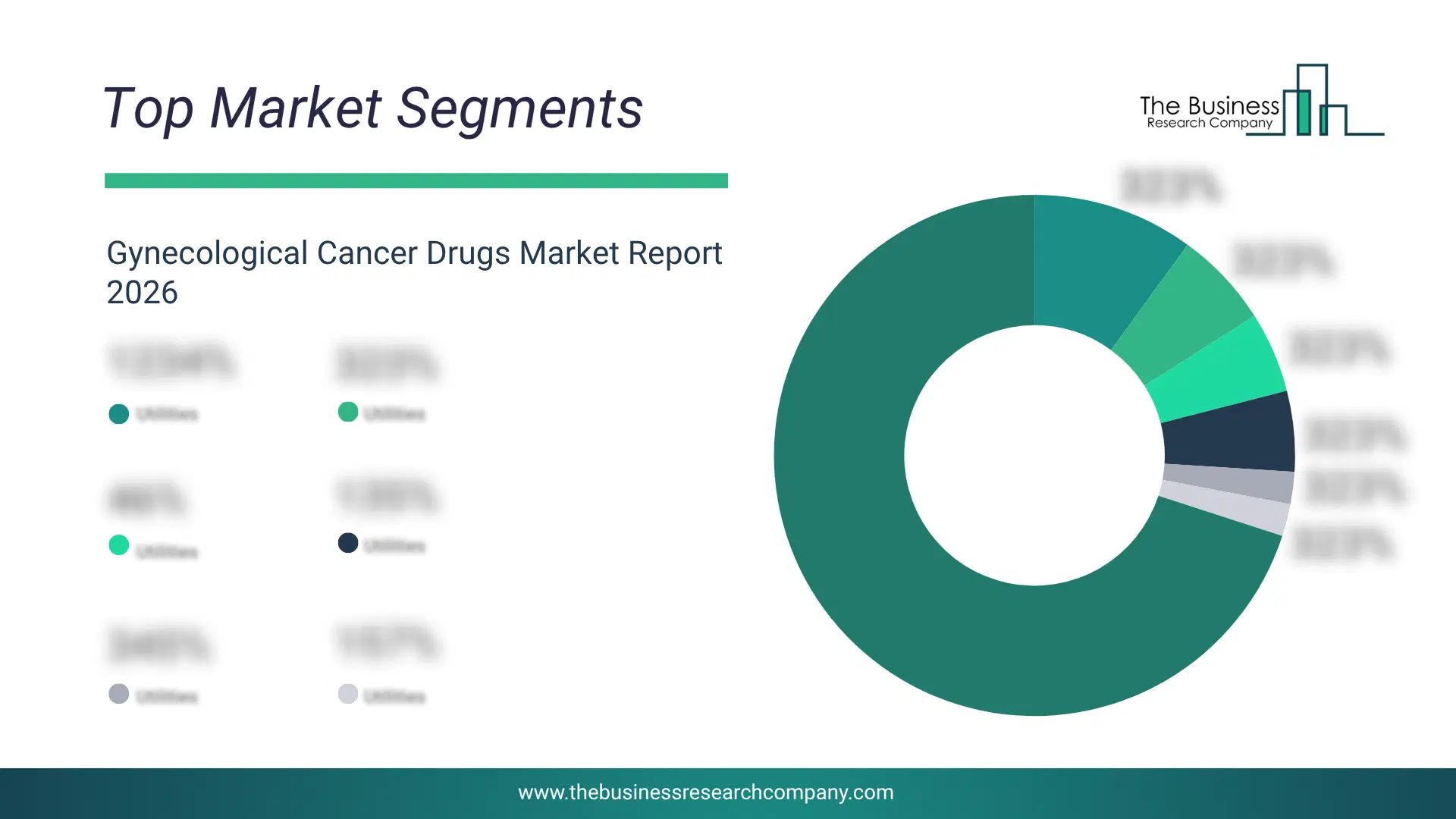
1) By Type: Alkylating Agent, Plant Alkaloid, Anthracyclines, Antitumor Antibiotic, Other Types 2) By Therapeutic Modality: Chemotherapy, Targeted Therapy, Hormonal Therapy 3) By Indication: Cervical Cancer, Uterine Cancer, Ovarian And Fallopian Tube Cancer, Vulvar Cancer, Vaginal Cancer 4) By End Users: Hospitals, Clinics, Specialized Cancer Treatment Centers, Other End Users Subsegments: 1) By Alkylating Agent: Cyclophosphamide, Ifosfamide, Carmustine 2) By Plant Alkaloid: Paclitaxel, Docetaxel, Vincristine 3) By Anthracyclines: Doxorubicin, Epirubicin, Daunorubicin 4) By Antitumor Antibiotic: Actinomycin D, Mitomycin C 5) By Other Types: Hormonal Therapies, Targeted Therapies, ImmunotherapiesWhat Is The Driver Of The Gynecological Cancer Drugs Market?
The prevalence of gynecological cancer is expected to propel the growth of the gynecological cancer drugs market going forward. Gynecologic cancer refers to any cancer that begins in a woman's reproductive organs. Gynecological cancer drugs help reduce the prevalence of gynecological cancer by treating and managing the disease, preventing recurrence, and improving patient outcomes by applying different therapies. For instance, in August 2025, According to the American Cancer Society, a US-based non-profit organization, 2025 estimates indicate that approximately 20,890 women in the United States will be newly diagnosed with ovarian cancer, and about 12,730 are expected to die from the disease. Therefore, the high prevalence of gynecological cancer is driving the growth of the gynecological cancer drugs industry.Key Players In The Global Gynecological Cancer Drugs Market
Major companies operating in the gynecological cancer drugs market are Pfizer Inc., Johnson & Johnson, F. Hoffmann-La Roche AG, AbbVie Inc., Bayer AG, Novartis AG, Bristol-Myers Squibb, Sanofi S.A., AstraZeneca, GlaxoSmithKline, Takeda Pharmaceutical Company Limited, Eli Lilly and Company, Amgen Inc., Merck KGaA, Baxter International Inc., Eisai Co. Ltd., Sun Pharmaceutical Industries Ltd., Teva Pharmaceutical Industries, Ipsen, Dr. Reddy’s Laboratories, Cipla Ltd., Apotex Inc., Hikma Pharmaceuticals, Seagen Inc., CSL Vifor, Accord Healthcare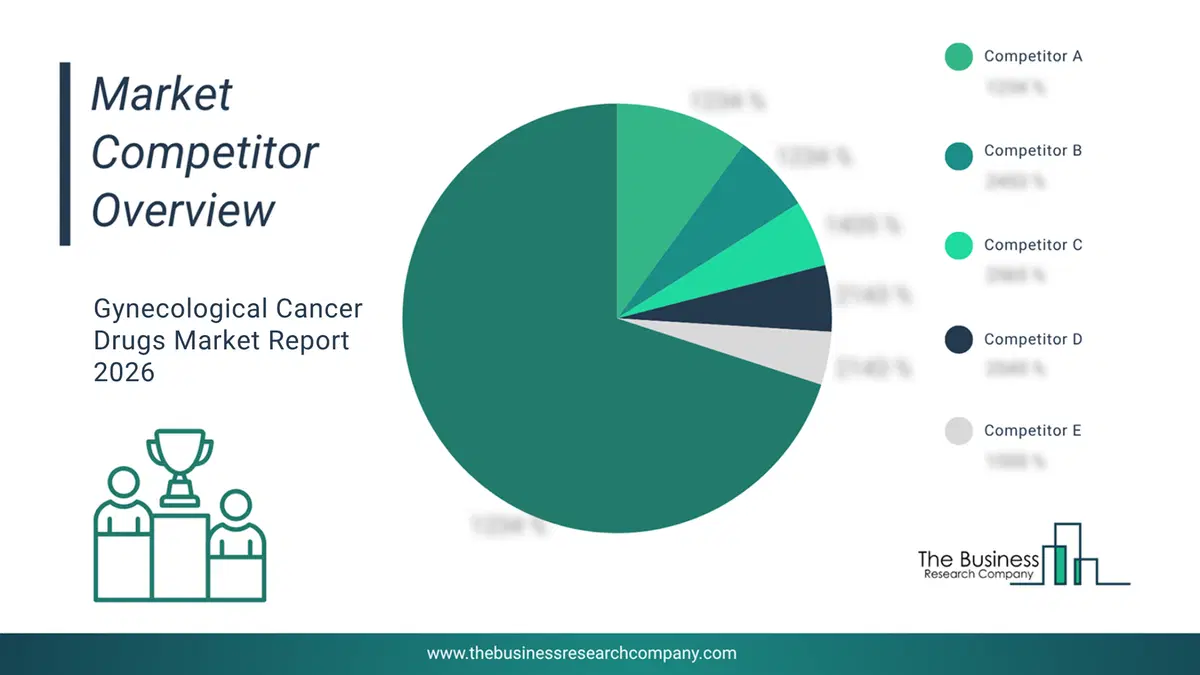
This chart is for illustrative purposes; the full report includes a detailed competitor analysis and comprehensive overview of the top 10 companies in the market.
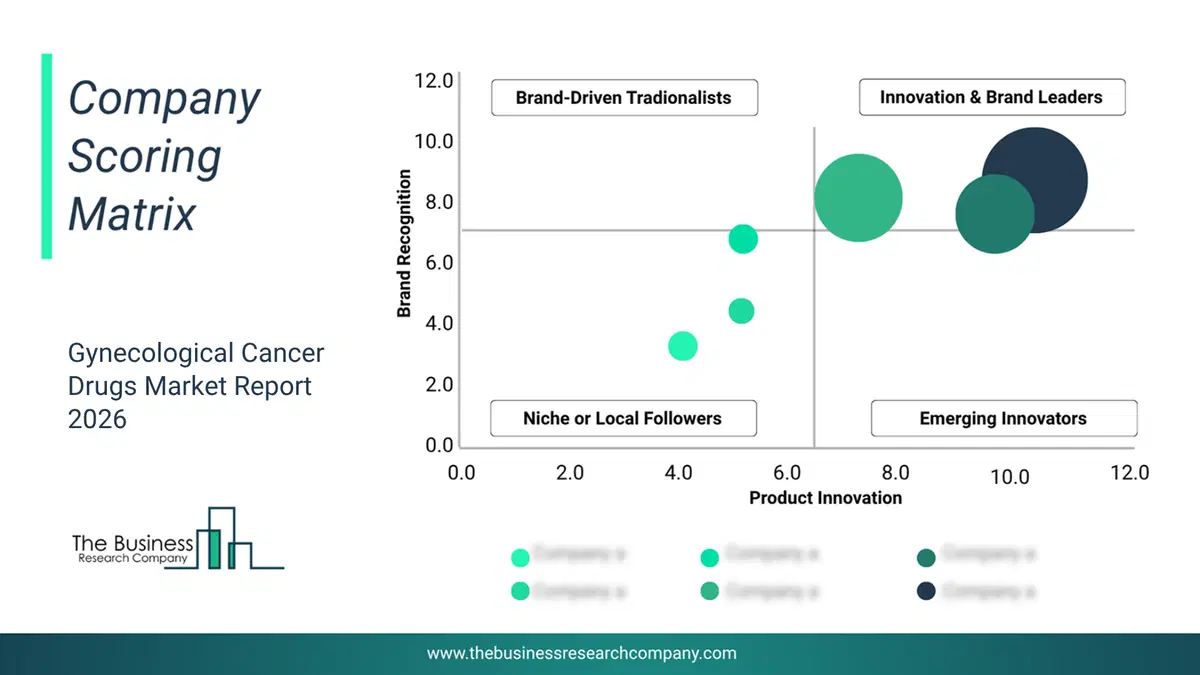
This chart maps companies by product innovation and brand strength, with bubble size indicating relative revenue, helping identify market leaders, challengers, and niche players. This is an illustrative chart; the full report provides a complete and accurate competitive analysis.
Global Gynecological Cancer Drugs Market Trends and Insights
Major companies operating in the gynecological cancer drugs market are developing alkylating agents to improve treatment efficacy by targeting cancer cells' DNA, thereby preventing them from multiplying. Alkylating agents work by adding alkyl groups to the DNA, causing the strands to break or form abnormal cross-links, which disrupts the cell cycle. For instance, in June 2024, Shorla Oncology, an Ireland-based pharmaceutical company, announced FDA approval for Tepylute, an alkylating agent. Tepylute is presented as a liquid formulation, eliminating the need for complex reconstitution processes that are typically required with powder forms. Tepylute is indicated for patients with adenocarcinoma of the breast and ovary, conditions that are often challenging to treat due to late-stage diagnosis and varying responses to existing therapies.What Are Latest Mergers And Acquisitions In The Gynecological Cancer Drugs Market?
In April 2023, SK Capital Partners LP, a US-based investment firm, acquired Apotex Pharmaceutical Holdings Inc. for an undisclosed amount. With this acquisition, SK Capital aims to expand its portfolio by incorporating Apotex's expertise in providing gynecological cancer drugs. Apotex Pharmaceutical Holdings Inc. is a Canada-based company that develops gynecological cancer drugs.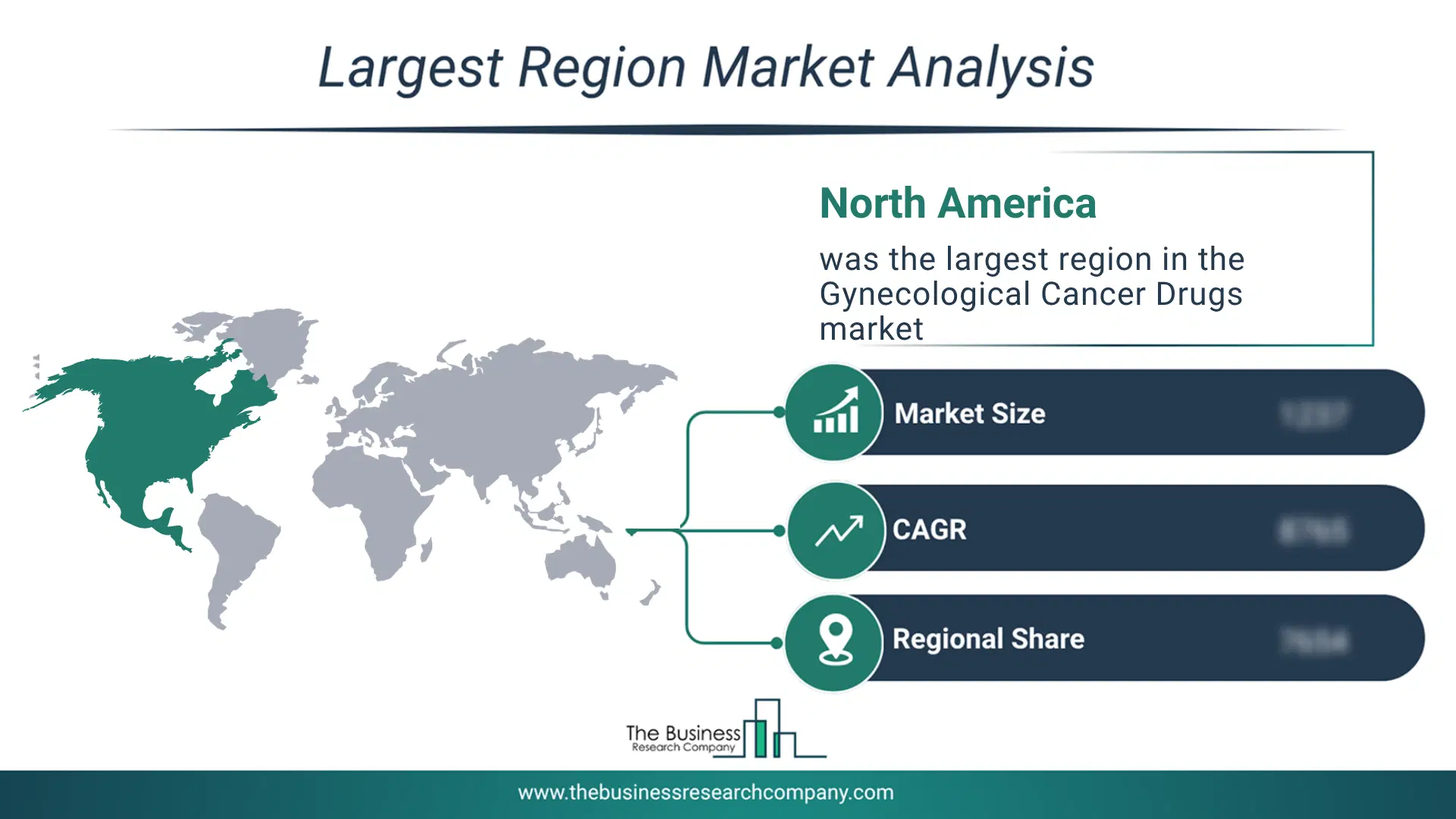
Regional Insights
North America was the dominant region in the gynecological cancer drugs market in 2025. The regions covered in this market report are Asia-Pacific, South East Asia, Western Europe, Eastern Europe, North America, South America, Middle East, Africa. The countries covered in this market report are Australia, Brazil, China, France, Germany, India, Indonesia, Japan, Taiwan, Russia, South Korea, UK, USA, Canada, Italy, Spain.What Defines the Gynecological Cancer Drugs Market?
The gynecological cancer drugs market consists of revenues earned by entities by providing immunotherapy, anti-angiogenesis, and radiation therapy. The market value includes the values of related goods sold by the service provider or included within the service offering. The gynecological cancer drugs market also includes sales of platinum-based chemotherapy drugs, taxane-based chemotherapy drugs, PARP inhibitors, and angiogenesis inhibitors. Values in this market are ‘factory gate’ values, that is the value of goods sold by the manufacturers or creators of the goods, whether to other entities (including downstream manufacturers, wholesalers, distributors, and retailers) or directly to end customers. The value of goods in this market includes related services sold by the creators of the goods.How is Market Value Defined and Measured?
The market value is defined as the revenues that enterprises gain from the sale of goods and/or services within the specified market and geography through sales, grants, or donations in terms of the currency (in USD unless otherwise specified). The revenues for a specified geography are consumption values that are revenues generated by organizations in the specified geography within the market, irrespective of where they are produced. It does not include revenues from resales along the supply chain, either further along the supply chain or as part of other products.
This chart presents market attractiveness based on a quantitative evaluation of growth, competition, strategic alignment, and risk, offering a clear view of opportunity areas for decision-making. This chart is for illustrative purposes; the full report contains the complete analysis.

This chart highlights the Total Addressable Market (TAM) by estimating the maximum revenue opportunity using an assumption-driven approach, supporting strategic planning and opportunity sizing across markets. The chart is illustrative; the full report provides a more comprehensive analysis.
What Key Data and Analysis Are Included in the Gynecological Cancer Drugs Market Report 2026?
The gynecological cancer drugs market research report is one of a series of new reports from The Business Research Company that provides market statistics, including industry global market size, regional shares, competitors with the market share, detailed market segments, market trends and opportunities, and any further data you may need to thrive in the gynecological cancer drugs industry. The market research report delivers a complete perspective of everything you need, with an in-depth analysis of the current and future state of the industry.Gynecological Cancer Drugs Market Report Forecast Analysis
| Report Attribute | Details |
|---|---|
| Market Size Value In 2026 | $16.39 billion |
| Revenue Forecast In 2030 | $21.3 billion |
| Growth Rate | CAGR of 5.9% from 2026 to 2030 |
| Base Year For Estimation | 2025 |
| Actual Estimates/Historical Data | 2020-2025 |
| Forecast Period | 2026 - 2030 |
| Market Representation | Revenue in USD Billion and CAGR from 2026 to 2030 |
| Segments Covered | Type, Therapeutic Modality, Indication, End Users |
| Regional Scope | Asia-Pacific, Western Europe, Eastern Europe, North America, South America, Middle East, Africa |
| Country Scope | The countries covered in the report are Australia, Brazil, China, France, Germany, India, Indonesia, Japan, Taiwan, Russia, South Korea, UK, USA, Canada, Italy, Spain. |
| Key Companies Profiled | Pfizer Inc., Johnson & Johnson, F. Hoffmann-La Roche AG, AbbVie Inc., Bayer AG, Novartis AG, Bristol-Myers Squibb, Sanofi S.A., AstraZeneca, GlaxoSmithKline, Takeda Pharmaceutical Company Limited, Eli Lilly and Company, Amgen Inc., Merck KGaA, Baxter International Inc., Eisai Co. Ltd., Sun Pharmaceutical Industries Ltd., Teva Pharmaceutical Industries, Ipsen, Dr. Reddy’s Laboratories, Cipla Ltd., Apotex Inc., Hikma Pharmaceuticals, Seagen Inc., CSL Vifor, Accord Healthcare |
| Customization Scope | Request for Customization |
| Pricing And Purchase Options | Explore Purchase Options |