
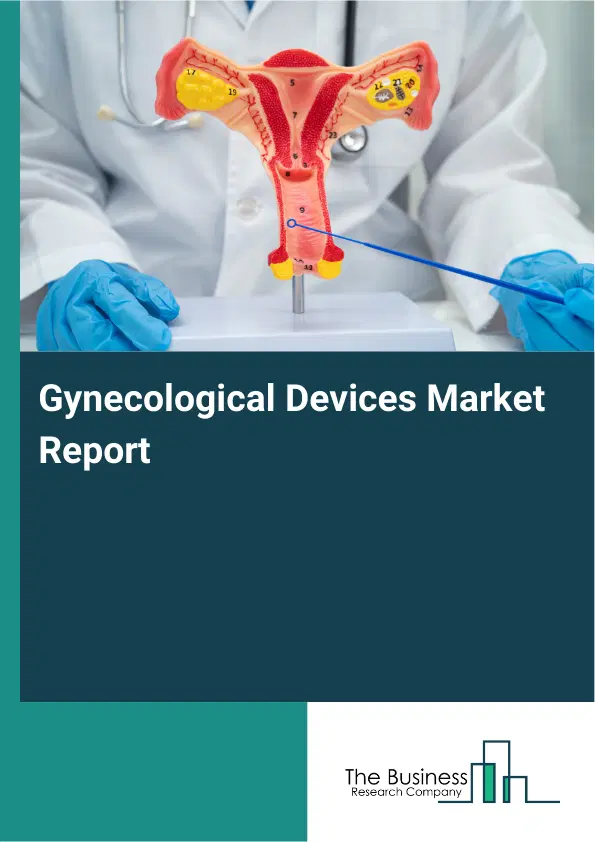
Gynecological Devices Market Report 2026
Global Outlook – By Device (Surgical Devices, Hand-Held Instruments), By Application (Laparoscopy, Hysteroscopy, Dilation And Curettage, Colposcopy, Other Applications), By End User (Clinics, Hospitals, Other End Users) – Market Size, Trends, Strategies, and Forecast to 2030
Gynecological Devices Market Overview
• Gynecological Devices market size has reached to $14.07 billion in 2025 • Expected to grow to $21.72 billion in 2030 at a compound annual growth rate (CAGR) of 9.1% • Growth Driver: The Surge In Gynecological Disorders Propelling Growth In The Gynecology Devices Market • Market Trend: Technological Advancements Transforming The Landscape Of The Gynecological Devices Market • North America was the largest region in 2025 and Asia-Pacific is the fastest growing region.What Is Covered Under Gynecological Devices Market?
Gynecological devices are instruments designed for the management of the female’s reproductive system, childbirth, and pregnancy. Gynecology devices are used to perform various medical procedures for the well-being of females. The main types of gynecological devices are surgical devices, diagnostic imaging systems, hand-held instruments, software, and other devices. Surgical devices refer to the medical devices that are used for various surgical procedures that help in the identification, treatment, and cure of a wide range of medical conditions in gynecology such as colposcopy, loop electrical excision, IUD insertion, dilation and curettage (D&C), ovarian cystectomy, tubal ligation, and others. Major applications are laparoscopy, hysteroscopy, dilation and curettage, colposcopy, and others that are used in clinics, hospitals, diagnostic centers, research institutes, and others.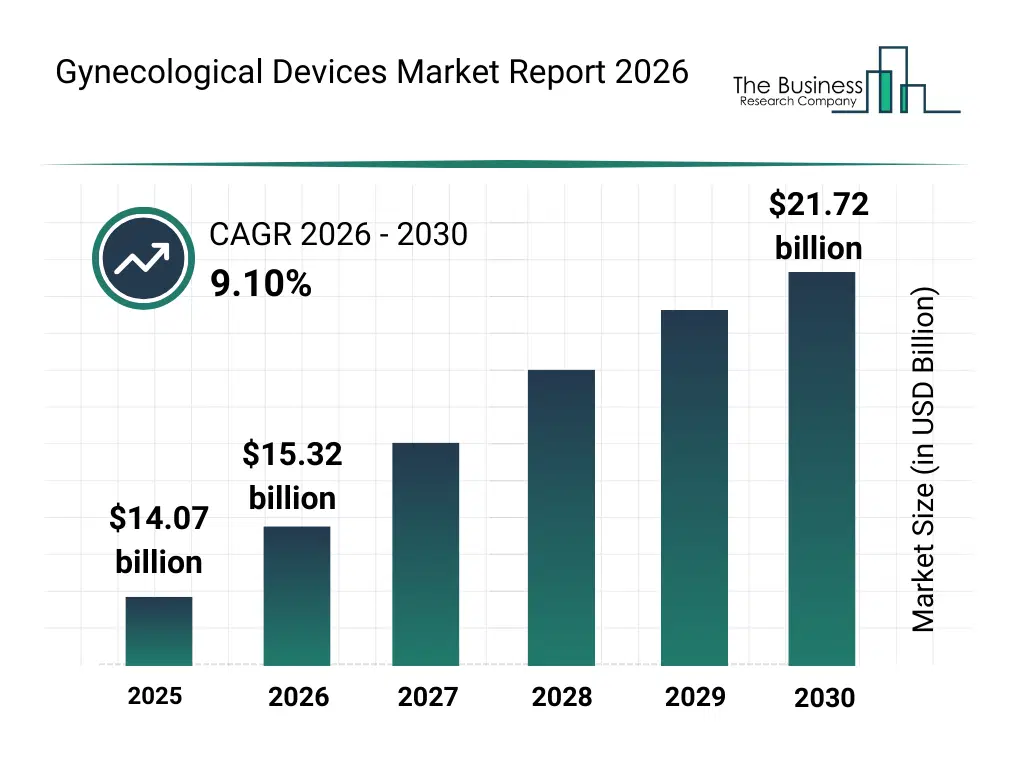
What Is The Gynecological Devices Market Size and Share 2026?
The gynecological devices market size has grown strongly in recent years. It will grow from $14.07 billion in 2025 to $15.32 billion in 2026 at a compound annual growth rate (CAGR) of 8.9%. The growth in the historic period can be attributed to increasing prevalence of gynecological disorders, expansion of hospital and clinic infrastructure, rising use of diagnostic imaging in women’s health, availability of basic gynecological instruments, increasing healthcare access for women.What Is The Gynecological Devices Market Growth Forecast?
The gynecological devices market size is expected to see strong growth in the next few years. It will grow to $21.72 billion in 2030 at a compound annual growth rate (CAGR) of 9.1%. The growth in the forecast period can be attributed to increasing demand for minimally invasive treatment options, rising investments in women’s healthcare technologies, expansion of diagnostic centers, growing adoption of digital health records in gynecology, increasing focus on early disease detection. Major trends in the forecast period include increasing adoption of minimally invasive gynecological procedures, rising use of advanced diagnostic imaging systems, growing integration of digital gynecology software solutions, expansion of outpatient gynecological care, enhanced focus on patient-centric device design.
Global Gynecological Devices Market Segmentation
1) By Device: Surgical Devices, Hand-Held Instruments 2) By Application: Laparoscopy, Hysteroscopy, Dilation And Curettage, Colposcopy, Other Applications 3) By End User: Clinics, Hospitals, Other End Users Subsegments: 1) By Surgical Devices: Hysteroscopes, Laparoscopes, Endometrial Ablation Devices, Biopsy Forceps 2) By Hand Held Instruments: Speculums, Forceps, ScissorsWhat Is The Driver Of The Gynecological Devices Market?
The increasing prevalence of gynecological disorders is expected to propel the growth of the gynecology devices market going forward. A gynecological disorder is a condition that interferes with the normal function of female reproductive organs such as the breasts and abdominal and pelvic organs. Gynecology devices are used to control the female reproductive system, including pregnancy and childbirth and they are used to perform various medical producers such as colposcopy, loop electrical excision procedure (LEEP), endometrial biopsy, IUD insertion, dilation and curettage (D&C), tubal ligation, ovarian cystectomy, and others. For instance, in March 2023, according to the World Health Organization (WHO) report, a Switzerland-based intergovernmental organization, endometriosis affects around 190 million women and girls of reproductive age worldwide. Additionally, in January 2023, according to the report published by the American Cancer Society, a US-based non-profit organization, approximately 13,960 new cases of invasive cervical cancer are projected to be diagnosed in 2023, with an estimated 4,310 women facing mortality due to cervical cancer during the same period. Therefore, the increasing prevalence of gynecological disorders is driving the growth of the gynecological devices industry.Key Players In The Global Gynecological Devices Market
Major companies operating in the gynecological devices market are Medtronic plc, CooperSurgical Inc., Richard Wolf GmbH, Hologic Inc., Boston Scientific Corporation, Stryker Corporation, Karl Storz SE & Co. KG, Ethicon Inc., MedGyn Products Inc., Gynex Corporation, Gynemed Medizinprodukte GmbH & Co. KG, Meril Life Sciences Pvt. Ltd., Cook Group Inc., B. Braun Melsungen AG, Olympus Medical Systems Corporation, Smith & Nephew plc, General Electric Company, Siemens Healthineers AG, Fujifilm Holdings Corporation, Koninklijke Philips N.V., Mindray Medical International Limited, Abbott Laboratories, Steris Corporation, Medline Industries Inc., Cardinal Health Inc.
This chart is for illustrative purposes; the full report includes a detailed competitor analysis and comprehensive overview of the top 10 companies in the market.
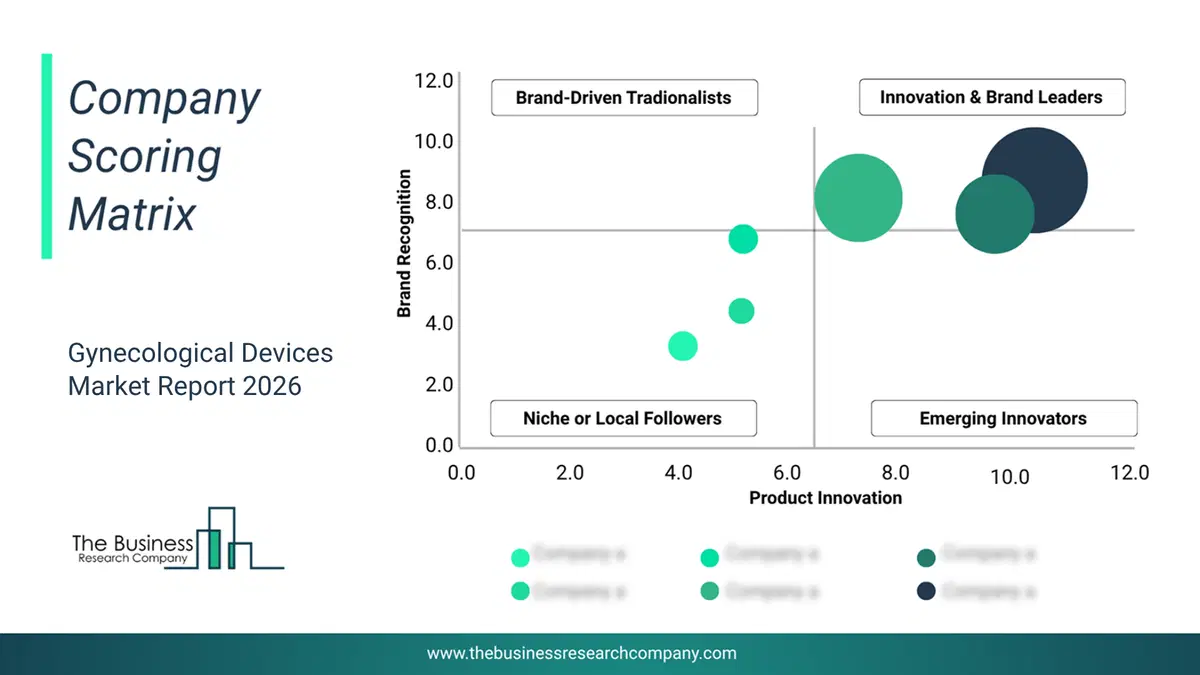
This chart maps companies by product innovation and brand strength, with bubble size indicating relative revenue, helping identify market leaders, challengers, and niche players. This is an illustrative chart; the full report provides a complete and accurate competitive analysis.
Global Gynecological Devices Market Trends and Insights
Major companies operating in the gynecological devices market are focusing on developing innovative products such as artificial intelligence-enabled imaging systems to enhance diagnostic accuracy and improve clinical workflows. Artificial-intelligence–enabled imaging systems are tools that use AI to analyze and enhance images, helping people get faster, clearer, and more accurate information from what they see, which improves decision-making, reduces errors, and speeds up complex tasks across many fields. For instance, in February 2023, Boston Imaging (Samsung), a US-based company operating in medical imaging technology, introduced Hera W10 Elite, an artificial intelligence-enabled women’s health ultrasound system that allows for the visualization of microcirculatory and sluggish blood in 2D and 3D. Hera W10 Elite offers an advanced MV-Flow function as well as a larger organic light-emitting diode (OLED) display, which allows for better characterization of various ultrasound images that are used in obstetrics and gynecology procedures to provide greater diagnosis insight for clinicians. Furthermore, the platform includes a novel transducer that allows endovaginal visualization of the fetal heart and brain. HeartAssist, ViewAssist, and BiometryAssist are enhanced AI aspects of the system.What Are Latest Mergers And Acquisitions In The Gynecological Devices Market?
In October 2024, Hologic, Inc., a US-based health technology company, acquired Gynesonics for an undisclosed amount. Through this acquisition, Hologic aims to enhance its women's health portfolio by integrating the Sonata System, a minimally invasive, incisionless treatment for uterine fibroids, expanding options for gynecological surgeons, and improving the quality of life for women with heavy menstrual bleeding. Gynesonics is a US-based medical equipment manufacturing company that produces gynecological devices.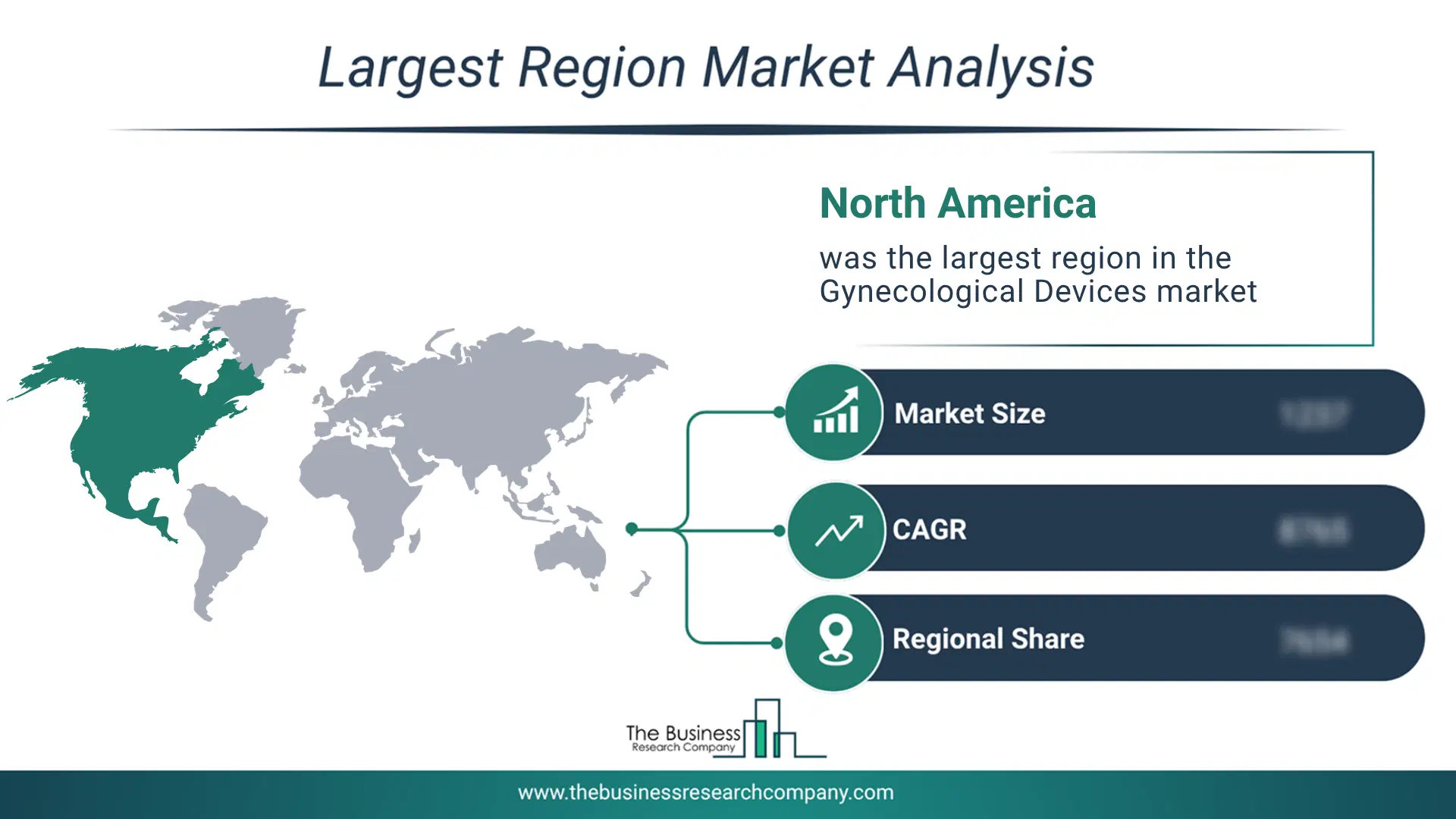
Regional Outlook
North America was the largest region in the gynecological devices market in 2025. Asia-Pacific is expected to be the fastest-growing region in the gynecological devices market report forecast period. The regions covered in this market report are Asia-Pacific, South East Asia, Western Europe, Eastern Europe, North America, South America, Middle East, Africa. The countries covered in this market report are Australia, Brazil, China, France, Germany, India, Indonesia, Japan, Taiwan, Russia, South Korea, UK, USA, Canada, Italy, SpainWhat Defines the Gynecological Devices Market?
The gynecological devices market consists of sales of cesarean forceps, cervical dilators, punch forceps, ultrasound (US) devices, computed tomography (CT) devices, magnetic resonance imaging (MRI) devices, contraceptive devices, fluid management systems, endoscopy devices, and endometrial ablation devices. Values in this market are ‘factory gate’ values, that is the value of goods sold by the manufacturers or creators of the goods, whether to other entities (including downstream manufacturers, wholesalers, distributors, and retailers) or directly to end customers. The value of goods in this market includes related services sold by the creators of the goods.How is Market Value Defined and Measured?
The market value is defined as the revenues that enterprises gain from the sale of goods and/or services within the specified market and geography through sales, grants, or donations in terms of the currency (in USD unless otherwise specified). The revenues for a specified geography are consumption values that are revenues generated by organizations in the specified geography within the market, irrespective of where they are produced. It does not include revenues from resales along the supply chain, either further along the supply chain or as part of other products.
This chart presents market attractiveness based on a quantitative evaluation of growth, competition, strategic alignment, and risk, offering a clear view of opportunity areas for decision-making. This chart is for illustrative purposes; the full report contains the complete analysis.

This chart highlights the Total Addressable Market (TAM) by estimating the maximum revenue opportunity using an assumption-driven approach, supporting strategic planning and opportunity sizing across markets. The chart is illustrative; the full report provides a more comprehensive analysis.
What Key Data and Analysis Are Included in the Gynecological Devices Market Report 2026?
The gynecological devices market research report is one of a series of new reports from The Business Research Company that provides market statistics, including industry global market size, regional shares, competitors with the market share, detailed market segments, market trends and opportunities, and any further data you may need to thrive in the gynecological devices industry. The market research report delivers a complete perspective of everything you need, with an in-depth analysis of the current and future state of the industry.Gynecological Devices Market Report Forecast Analysis
| Report Attribute | Details |
|---|---|
| Market Size Value In 2026 | $15.32 billion |
| Revenue Forecast In 2030 | $21.72 billion |
| Growth Rate | CAGR of 9.1% from 2026 to 2030 |
| Base Year For Estimation | 2025 |
| Actual Estimates/Historical Data | 2020-2025 |
| Forecast Period | 2026 - 2030 |
| Market Representation | Revenue in USD Billion and CAGR from 2026 to 2030 |
| Segments Covered | Device, Application, End User |
| Regional Scope | Asia-Pacific, Western Europe, Eastern Europe, North America, South America, Middle East, Africa |
| Country Scope | The countries covered in the report are Australia, Brazil, China, France, Germany, India, Indonesia, Japan, Taiwan, Russia, South Korea, UK, USA, Canada, Italy, Spain. |
| Key Companies Profiled | Medtronic plc, CooperSurgical Inc., Richard Wolf GmbH, Hologic Inc., Boston Scientific Corporation, Stryker Corporation, Karl Storz SE & Co. KG, Ethicon Inc., MedGyn Products Inc., Gynex Corporation, Gynemed Medizinprodukte GmbH & Co. KG, Meril Life Sciences Pvt. Ltd., Cook Group Inc., B. Braun Melsungen AG, Olympus Medical Systems Corporation, Smith & Nephew plc, General Electric Company, Siemens Healthineers AG, Fujifilm Holdings Corporation, Koninklijke Philips N.V., Mindray Medical International Limited, Abbott Laboratories, Steris Corporation, Medline Industries Inc., Cardinal Health Inc. |
| Customization Scope | Request for Customization |
| Pricing And Purchase Options | Explore Purchase Options |