

Gynecology Medical Lasers Market Report 2026
Global Outlook – By Product Type (CO2 Laser, KTP–Argon Laser, Nd(YAG Laser)), By Application (Colposcopy, Laparoscopy, Hysteroscopy), By End-User (Hospital, Specialized clinics, Ambulatory surgical centers, Medical centers) – Market Size, Trends, Strategies, and Forecast to 2030
Gynecology Medical Lasers Market Overview
• Gynecology Medical Lasers market size has reached to $0.64 billion in 2025 • Expected to grow to $3.08 billion in 2030 at a compound annual growth rate (CAGR) of 36.6% • Growth Driver: Obesity-Related Gynecology Disorders Drive Demand For Medical Lasers • North America was the largest region in 2025 and Asia-Pacific is the fastest growing region.What Is Covered Under Gynecology Medical Lasers Market?
Gynecology medical lasers are advanced devices used in a variety of minimally invasive gynecological procedures to enhance precision and reduce recovery times. These lasers work by delivering focused light energy to cut, coagulate, or vaporize tissue, making them effective for treating conditions such as endometriosis and fibroids. The use of lasers in gynecology offers significant advantages, including minimized bleeding, decreased postoperative pain, and shorter healing times compared to traditional surgical methods. The gynaecology medical lasers market covered in this report is segmented by product type into CO2 laser, KTP–argon laser, and Nd:YAG laser. The CO2 laser aids in the removal of thin layers of skin while causing minimal damage to the surrounding structures.The various applications involved are colposcopy, laparoscopy, and hysteroscopy, which are used by end-users such as hospitals, specialised clinics, ambulatory surgical centres, and medical centres.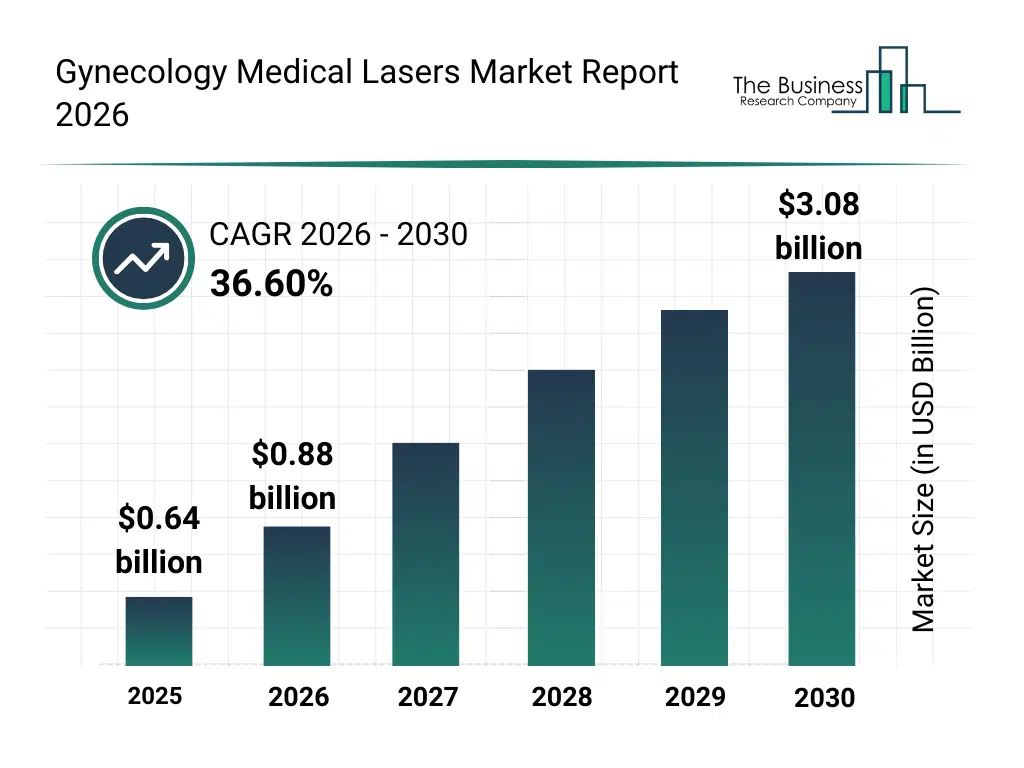
What Is The Gynecology Medical Lasers Market Size and Share 2026?
The gynecology medical lasers market size has grown exponentially in recent years. It will grow from $0.64 billion in 2025 to $0.88 billion in 2026 at a compound annual growth rate (CAGR) of 38.8%. The growth in the historic period can be attributed to rising prevalence of gynecological disorders, increasing adoption of minimally invasive treatments, expansion of women’s healthcare facilities, growing availability of laser-based surgical options, improved clinician training in laser procedures.What Is The Gynecology Medical Lasers Market Growth Forecast?
The gynecology medical lasers market size is expected to see exponential growth in the next few years. It will grow to $3.08 billion in 2030 at a compound annual growth rate (CAGR) of 36.6%. The growth in the forecast period can be attributed to increasing demand for outpatient gynecological procedures, rising investments in advanced laser platforms, expansion of laser-assisted fertility and diagnostic treatments, growing focus on patient comfort and safety, increasing adoption of next-generation laser technologies. Major trends in the forecast period include increasing adoption of minimally invasive laser procedures, rising demand for high-precision gynecological lasers, growing use of laser-based tissue ablation, expansion of outpatient gynecological laser treatments, enhanced focus on faster recovery outcomes.
Global Gynecology Medical Lasers Market Segmentation
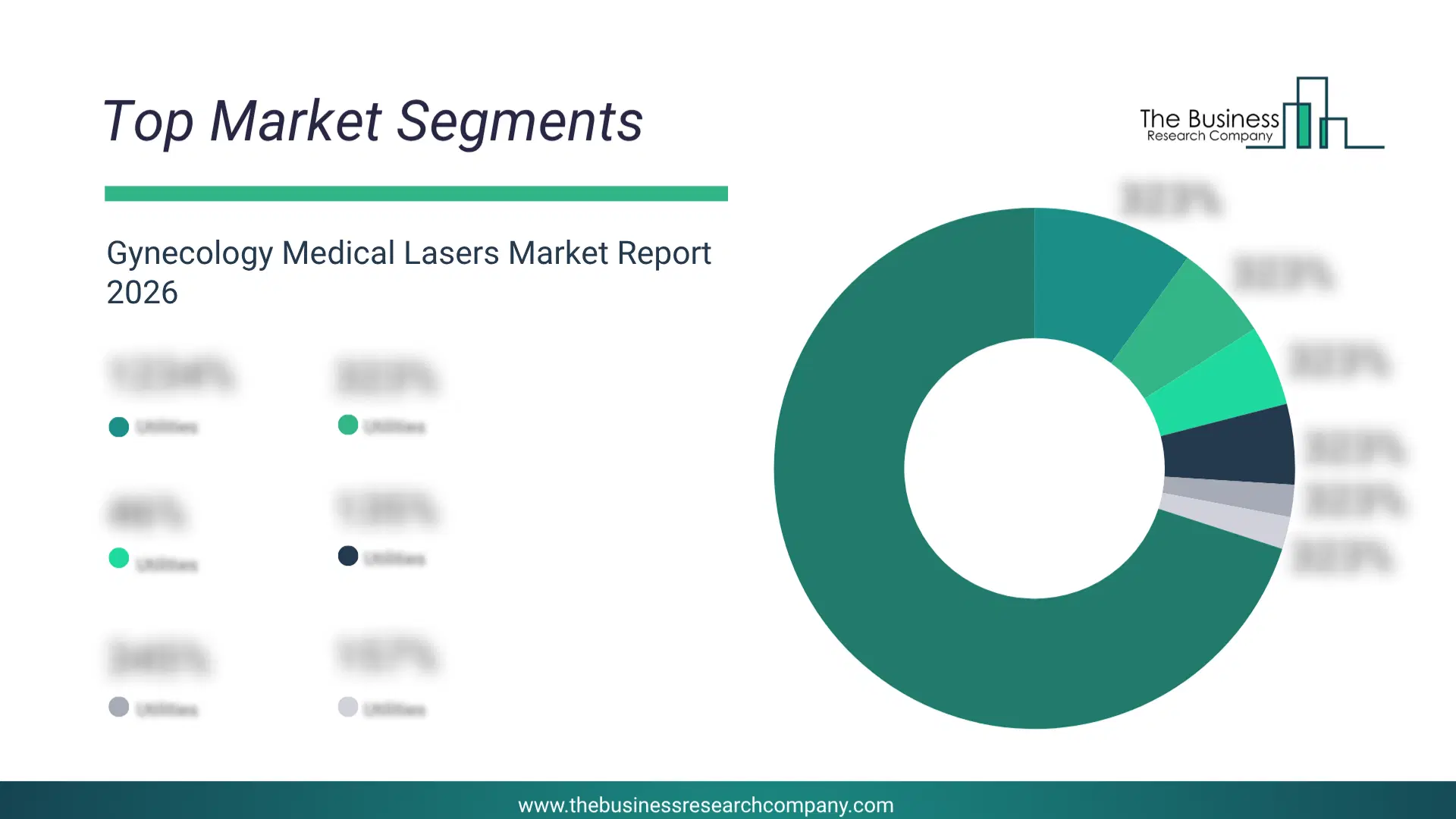
1) By Product Type: CO2 Laser, KTP–Argon Laser, Nd(YAG Laser) 2) By Application: Colposcopy, Laparoscopy, Hysteroscopy 3) By End-User: Hospital, Specialized clinics, Ambulatory surgical centers, Medical centers Subsegments: 1) By CO2 Laser: Fractional CO2 Laser, Continuous Wave CO2 Laser 2) By KTP–Argon Laser: Potassium Titanyl Phosphate (KTP) Laser, Argon Laser 3) By Nd:YAG Laser: Long-Pulsed Nd:YAG Laser, Q-Switched Nd:YAG LaserWhat Are The Drivers Of The Gynecology Medical Lasers Market?
The rising obesity is expected to drive the gynecology medical lasers market. Obesity refers to a medical condition characterized by excessive accumulation of body fat that poses a risk to an individual’s health, typically defined by a body mass index (BMI) of 30 or higher. Obesity is increasing due to increasingly sedentary lifestyles driven by reduced physical activity and prolonged screen time. Gynecology medical lasers support the growing obesity patient population by enabling minimally invasive, lower-risk surgical and therapeutic procedures that are safer, more precise, and better tolerated in individuals with higher body mass. For instance, in May 2024, according to the Office for Health Improvement and Disparities, a UK-based government body, it was estimated that 64.0% of adults aged 18 and older in England were either overweight or living with obesity between 2022 and 2023. Therefore, the rising obesity is driving the growth of gynecology medical lasers industry. The rise in demand for gynecology treatment is expected to propel the growth of the gynecology medical laser market going forward. Gynecology treatment refers to treating health disorders that affect the female reproductive organs, including the uterus, ovaries, fallopian tubes, external genitalia, and breasts. These disorders can impede a woman's childbearing abilities and her sexual function. Gynecology medical lasers are extensively used in gynecology treatment by treating various gynecological conditions, including endometriosis, fibroids, and vaginal atrophy, among others. For instance, in June 2024, according to the University of Pittsburgh Medical Center, a US-based nonprofit health enterprise, around 500,000 women in the U.S. opt for hysterectomy each year, making it one of the most common surgeries performed among females. Therefore, the rise in gynecology disorders is driving the growth of the gynecology medical laser industry.Key Players In The Global Gynecology Medical Lasers Market
Major companies operating in the gynecology medical lasers market are Quanta System S.p.A, Biolitec AG, DEKA Medical Inc., Limmer Laser GmbH, Linline Medical Systems LLC., Fotona d.d., GIGAA Laser Group, LISA laser products GmbH, Lumenis Ltd., Asclepion Laser Technologies GmbH, Medelux LLC., NeoLaser LLC., INTERmedic S.A., Jena Surgical GmbH, New Star Lasers Inc., Sharplan Lasers Inc., SpectraMedi LLC, Zimmer MedizinSysteme GmbH, Baltic Lasers UAB, Cynosure Inc.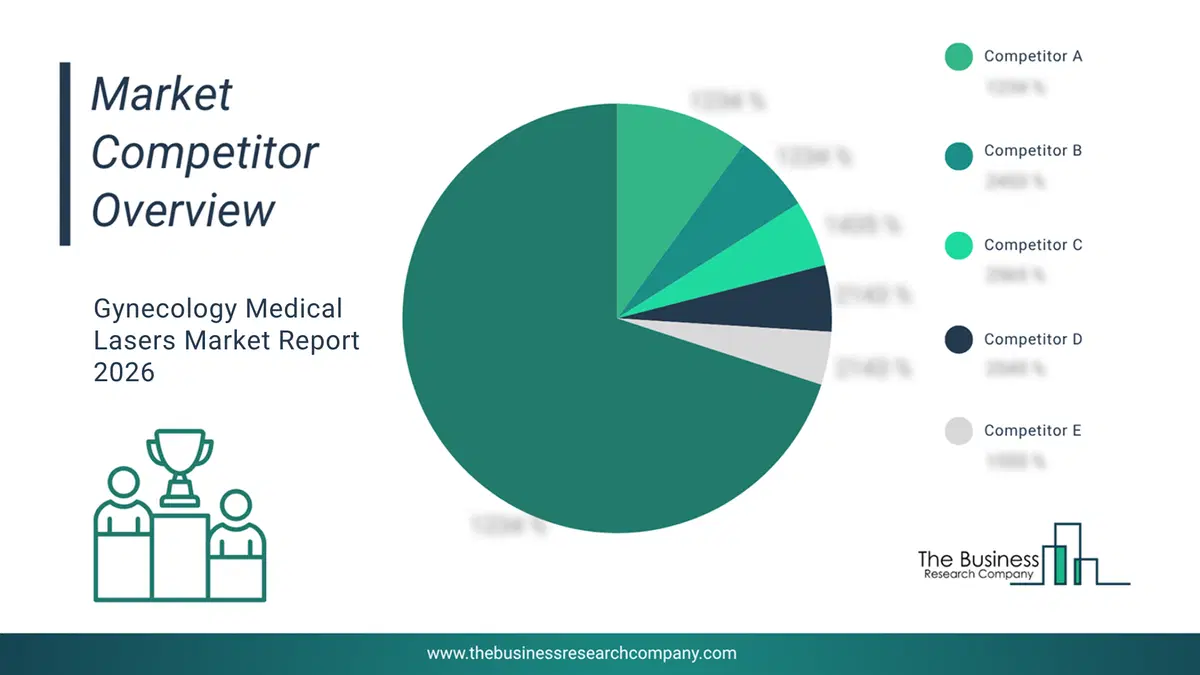
This chart is for illustrative purposes; the full report includes a detailed competitor analysis and comprehensive overview of the top 10 companies in the market.
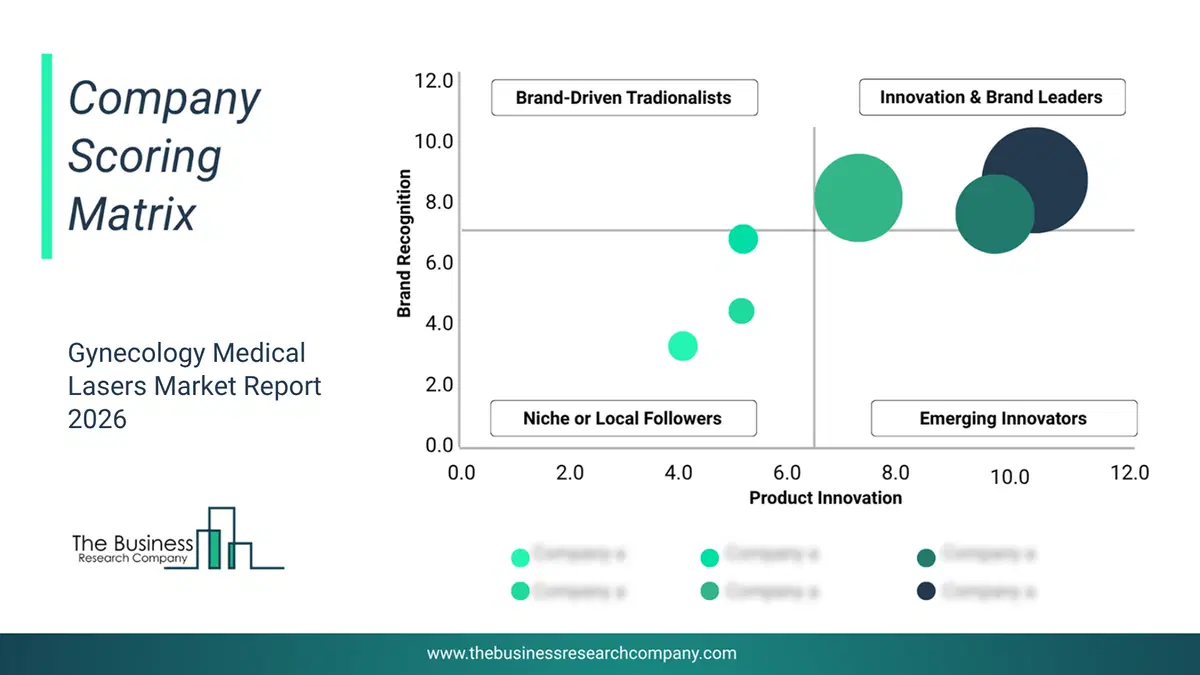
This chart maps companies by product innovation and brand strength, with bubble size indicating relative revenue, helping identify market leaders, challengers, and niche players. This is an illustrative chart; the full report provides a complete and accurate competitive analysis.
What Are Latest Mergers And Acquisitions In The Gynecology Medical Lasers Market?
In June 2024, Boston Scientific, a US-based medical device company, acquired Silk Road Medical, Inc. for an undisclosed amount. With this acquisition Boston Scientific aims to strengthen its portfolio and expand its market presence through acquisitions. Silk Road Medical, Inc. is a US-based company, specializes in developing and commercializing innovative medical devices for the treatment of carotid artery disease.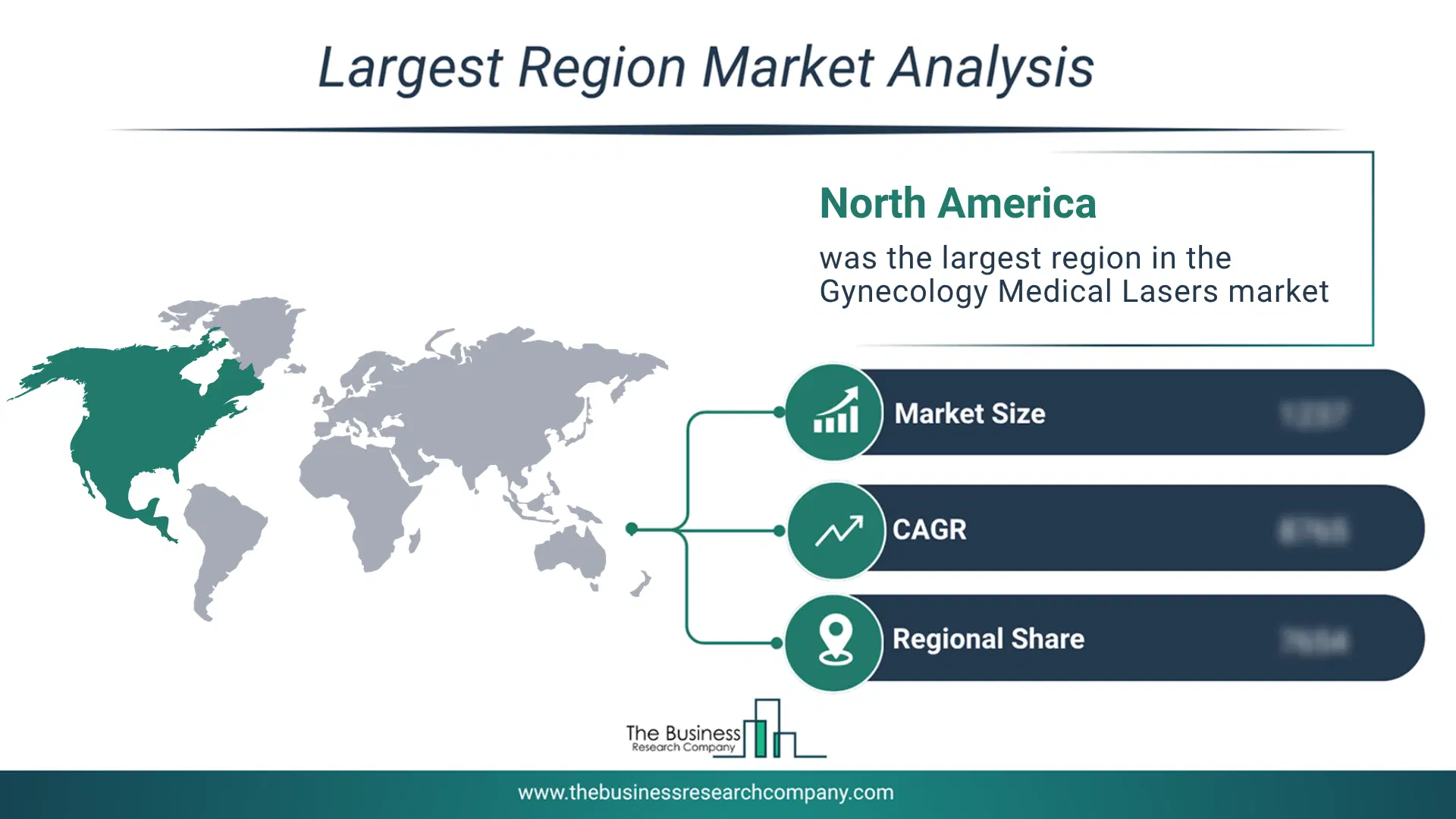
Regional Outlook
North America was the largest region in the gynecology medical lasers market in 2025. Asia-Pacific was the second-largest region in the gynecology medical lasers market report. The regions covered in this market report are Asia-Pacific, South East Asia, Western Europe, Eastern Europe, North America, South America, Middle East, Africa. The countries covered in this market report are China, India, Japan, Australia, Indonesia, South Korea, Bangladesh, Thailand, Vietnam, Malaysia, Singapore, Philippines, Hong Kong, Taiwan, New Zealand, UK, Germany, France, Italy, Spain, Austria, Belgium, Denmark, Finland, Ireland, Netherlands, Norway, Portugal, Sweden, Switzerland, Russia, Czech Republic, Poland, Romania, Ukraine, USA, Canada, Mexico, Brazil, Chile, Argentina, Colombia, Peru, Saudi Arabia, Israel, Iran, Turkey, UAE, Egypt, Nigeria, South Africa.What Defines the Gynecology Medical Lasers Market?
The gynecology medical lasers market consists of sales of instruments that include Nd: YAG, neodymium, and potassium-titanyl-phosphate (KTP). Values in this market are factory gate values, that is the value of goods sold by the manufacturers or creators of the goods, whether to other entities (including downstream manufacturers, wholesalers, distributors, and retailers) or directly to end customers. The value of goods in this market includes related services sold by the creators of the goods.How is Market Value Defined and Measured?
The market value is defined as the revenues that enterprises gain from the sale of goods and/or services within the specified market and geography through sales, grants, or donations in terms of the currency (in USD unless otherwise specified). The revenues for a specified geography are consumption values that are revenues generated by organizations in the specified geography within the market, irrespective of where they are produced. It does not include revenues from resales along the supply chain, either further along the supply chain or as part of other products.
This chart presents market attractiveness based on a quantitative evaluation of growth, competition, strategic alignment, and risk, offering a clear view of opportunity areas for decision-making. This chart is for illustrative purposes; the full report contains the complete analysis.

This chart highlights the Total Addressable Market (TAM) by estimating the maximum revenue opportunity using an assumption-driven approach, supporting strategic planning and opportunity sizing across markets. The chart is illustrative; the full report provides a more comprehensive analysis.
What Key Data and Analysis Are Included in the Gynecology Medical Lasers Market Report 2026?
The gynecology medical lasers market research report is one of a series of new reports from The Business Research Company that provides market statistics, including industry global market size, regional shares, competitors with the market share, detailed market segments, market trends and opportunities, and any further data you may need to thrive in the gynecology medical lasers industry. The market research report delivers a complete perspective of everything you need, with an in-depth analysis of the current and future state of the industry.Gynecology Medical Lasers Market Report Forecast Analysis
| Report Attribute | Details |
|---|---|
| Market Size Value In 2026 | $0.88 billion |
| Revenue Forecast In 2030 | $3.08 billion |
| Growth Rate | CAGR of 36.6% from 2026 to 2030 |
| Base Year For Estimation | 2025 |
| Actual Estimates/Historical Data | 2020-2025 |
| Forecast Period | 2026 - 2030 |
| Market Representation | Revenue in USD Billion and CAGR from 2026 to 2030 |
| Segments Covered | Product Type, Application, End-User |
| Regional Scope | Asia-Pacific, Western Europe, Eastern Europe, North America, South America, Middle East, Africa |
| Country Scope | The countries covered in the report are Australia, Brazil, China, France, Germany, India, Indonesia, Japan, Taiwan, Russia, South Korea, UK, USA, Canada, Italy, Spain. |
| Key Companies Profiled | Quanta System S.p.A, Biolitec AG, DEKA Medical Inc., Limmer Laser GmbH, Linline Medical Systems LLC., Fotona d.d., GIGAA Laser Group, LISA laser products GmbH, Lumenis Ltd., Asclepion Laser Technologies GmbH, Medelux LLC., NeoLaser LLC., INTERmedic S.A., Jena Surgical GmbH, New Star Lasers Inc., Sharplan Lasers Inc., SpectraMedi LLC, Zimmer MedizinSysteme GmbH, Baltic Lasers UAB, Cynosure Inc. |
| Customization Scope | Request for Customization |
| Pricing And Purchase Options | Explore Purchase Options |