

Hall Effect Sensors Market Report 2026
Global Outlook – By Type (Linear Hall Effect Sensors, Rotary Hall Effect Sensors, Digital Hall Effect Sensors, Analog Hall Effect Sensors), By Material Type (Indium Antimonide, Gallium Arsenide, Indium Arsenide, Other Material Types), By Technology Type (Bipolar, Unipolar, Omnipolar, Latching), By Application Type (Position Sensing, Current Sensing, Speed Sensing, Proximity Detection, Level Sensing, Motion Detection, Angle Sensing, Magnetic Field Detection), By End User (Automotive, Consumer Electronics, Industrial Automation, Aerospace And Defense, Healthcare And Medical Devices, Energy And Utilities, Telecommunications, Robotics) – Market Size, Trends, Strategies, and Forecast to 2030
Hall Effect Sensors Market Overview
• Hall Effect Sensors market size has reached to $2.63 billion in 2025 • Expected to grow to $4.33 billion in 2030 at a compound annual growth rate (CAGR) of 10.6% • Growth Driver: The Growing Demand For Advanced Driver Assistance Systems Driving The Growth Of The Market Due To Rising Road Safety Concerns • Market Trend: Technological Advancements In Digital-Output Technology Have Enhanced Signal Integrity, Meeting The Demanding Performance Requirements Of High-Power Electric Vehicles • Asia-Pacific was the largest region and fastest growing region.What Is Covered Under Hall Effect Sensors Market?
Hall effect sensors refer to semiconductor devices that detect and measure the presence, strength, or changes of a magnetic field using the hall effect principle. They convert magnetic field variations into electrical signals, enabling accurate, contactless detection of position, speed, proximity, current, and rotational movement. These sensors provide reliable performance, long operational life, and high precision across a wide range of electronic and industrial applications. The main types of hall effect sensors include linear Hall effect sensors, rotary Hall effect sensors, digital Hall effect sensors, and analog Hall effect sensors. Linear Hall effect sensors refer to sensors that produce an output proportional to the strength of an applied magnetic field, enabling continuous measurement of magnetic field variations. These sensors are manufactured using indium antimonide, gallium arsenide, indium arsenide, and other material types and use bipolar, unipolar, omnipolar, and latching technologies. The various applications involved are position sensing, current sensing, speed sensing, proximity detection, level sensing, motion detection, angle sensing, and magnetic field detection and they are utilized by end users including automotive, consumer electronics, industrial automation, aerospace and defense, healthcare and medical devices, energy and utilities, telecommunications, and robotics.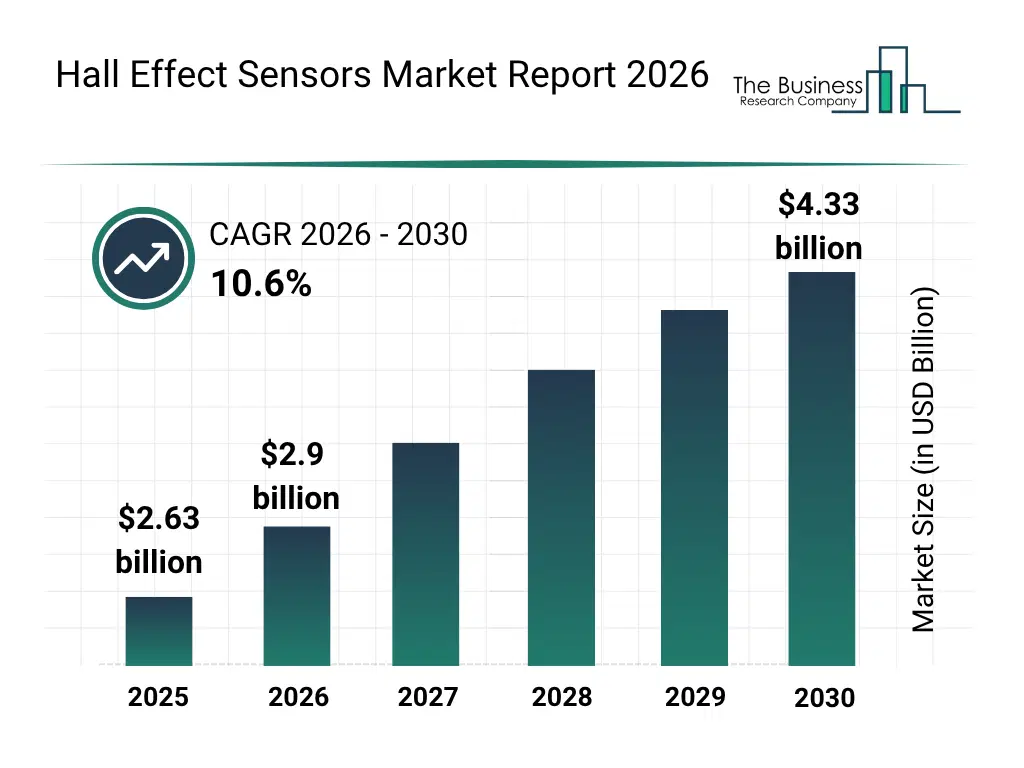
What Is The Hall Effect Sensors Market Size and Share 2026?
The hall effect sensors market size has grown rapidly in recent years. It will grow from $2.63 billion in 2025 to $2.9 billion in 2026 at a compound annual growth rate (CAGR) of 10.3%. The growth in the historic period can be attributed to increasing demand for contactless sensing, growing automotive electronics adoption, rising industrial automation, increasing use of magnetic position detection, growing demand for reliable speed sensing.What Is The Hall Effect Sensors Market Growth Forecast?
The hall effect sensors market size is expected to see rapid growth in the next few years. It will grow to $4.33 billion in 2030 at a compound annual growth rate (CAGR) of 10.6%. The growth in the forecast period can be attributed to rising adoption of electric vehicles, increasing deployment of advanced driver assistance systems, growing demand for smart robotics, increasing integration of magnetic current sensing, rising demand for high-precision industrial sensors. Major trends in the forecast period include increasing adoption of contactless magnetic sensing, rising demand for high-precision position and speed detection, development of miniaturized hall effect sensor packages, increasing integration of multi-axis magnetic sensing, growing demand for programmable and application-specific hall effect sensors.
Global Hall Effect Sensors Market Segmentation
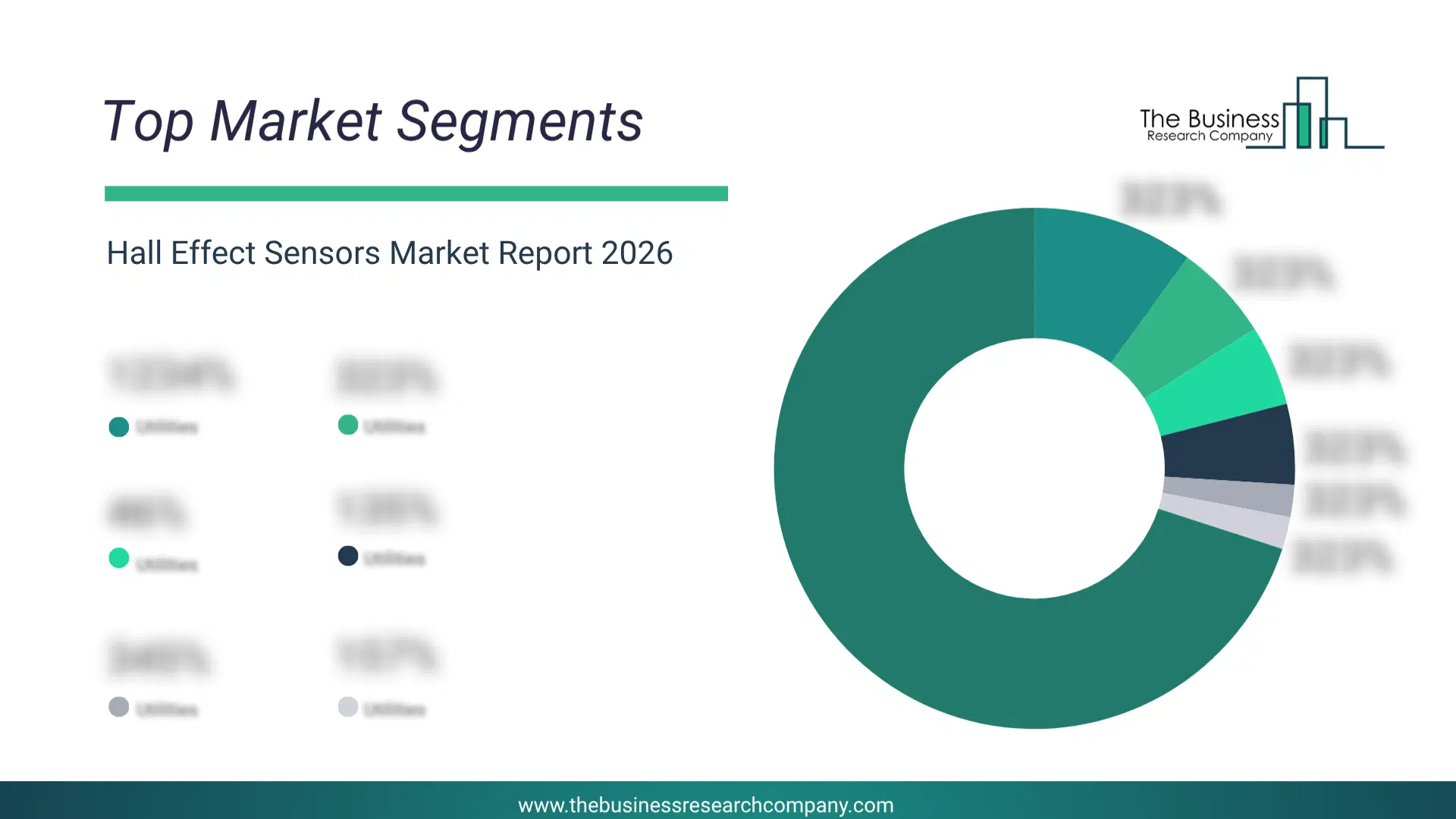
1) By Type: Linear Hall Effect Sensors, Rotary Hall Effect Sensors, Digital Hall Effect Sensors, Analog Hall Effect Sensors 2) By Material Type: Indium Antimonide, Gallium Arsenide, Indium Arsenide, Other Material Types 3) By Technology Type: Bipolar, Unipolar, Omnipolar, Latching 4) By Application Type: Position Sensing, Current Sensing, Speed Sensing, Proximity Detection, Level Sensing, Motion Detection, Angle Sensing, Magnetic Field Detection 5) By End User: Automotive, Consumer Electronics, Industrial Automation, Aerospace And Defense, Healthcare And Medical Devices, Energy And Utilities, Telecommunications, Robotics Subsegments: 1) By Linear Hall Effect Sensors: Open-Loop Linear Hall Effect Sensors, Closed-Loop Linear Hall Effect Sensors, Current Sensing Linear Hall Effect Sensors, Position Sensing Linear Hall Effect Sensors, Magnetic Field Measurement Linear Hall Effect Sensors 2) By Rotary Hall Effect Sensors: Absolute Rotary Hall Effect Sensors, Incremental Rotary Hall Effect Sensors, Angular Position Hall Effect Sensors, Rotational Speed Hall Effect Sensors, Steering Angle Hall Effect Sensors 3) By Digital Hall Effect Sensors: Switch-Type Digital Hall Effect Sensors, Speed Detection Hall Effect Sensors, Gear Tooth Detection Hall Effect Sensors, Proximity Detection Hall Effect Sensors, Limit Detection Hall Effect Sensors 4) By Analog Hall Effect Sensors: Voltage Output Analog Hall Effect Sensors, Current Output Analog Hall Effect Sensors, Ratiometric Analog Hall Effect Sensors, Programmable Analog Hall Effect Sensors, Precision Analog Hall Effect SensorsWhat Are The Drivers Of The Hall Effect Sensors Market?
The growing demand for advanced driver assistance systems is expected to propel the growth of the hall effect sensors market going forward. Advanced driver assistance systems refer to electronic systems in vehicles that use sensors, cameras, and software to assist drivers in safe driving and parking by enhancing vehicle awareness, automating certain driving functions, and reducing the risk of collisions. The demand for advanced driver assistance systems is due to rising road safety concerns and the need to reduce traffic accidents through real-time driver support and automated safety features. As advanced driver assistance systems (ADAS) continue to enhance vehicle safety, automation, and real-time decision-making through precise monitoring of steering, braking, throttle position, and wheel speed, hall effect sensors have become indispensable for enabling accurate, reliable, and contactless position and speed sensing. For instance, in October 2024, according to the MITRE Corporation, a US-based not-for-profit organization, advanced Driver Assistance Systems (ADAS) have experienced significant market growth, with 10 of the 14 ADAS features exceeding 50% penetration by the 2023 model year and five features surpassing 90% adoption. Therefore, the growing demand for advanced driver assistance systems is driving the growth of the hall effect sensors industry. The increasing industrial automation is expected to propel the growth of the hall effect sensors market going forward. Industrial automation refers to the use of control systems, robotics, and information technologies to operate industrial processes and machinery with minimal human intervention. The adoption of industrial automation is due to manufacturers' need to enhance production efficiency and address labor shortages in critical sectors. As industrial automation continues to advance through the widespread adoption of smart manufacturing, robotics, and automated process control, the increasing demand for precise, reliable, and contactless sensing has made hall effect sensors essential for accurate position, speed, current, and proximity measurement. For instance, in September 2024, according to the World Robotics 2024 report released by the International Federation of Robotics, a Germany-based non-profit organization, operational stock of industrial robots reached 4,281,585 units in factories worldwide, representing a 10% year-on-year increase, while annual installations exceeded 500,000 units for the third consecutive year. Therefore, the increasing industrial automation is driving the growth of the hall effect sensors industry.Key Players In The Global Hall Effect Sensors Market
Major companies operating in the hall effect sensors market are Texas Instruments Incorporated, Honeywell International Inc., STMicroelectronics N.V., Infineon Technologies AG, NXP Semiconductors N.V., Microchip Technology Inc., TE Connectivity plc, TDK Corporation, Renesas Electronics Corporation, Sensata Technologies Inc., ams-OSRAM AG, ROHM Co. Ltd., Asahi Kasei Microdevices Corporation, Littelfuse Inc., Allegro MicroSystems Inc., LEM Holding SA, Diodes Incorporated, Melexis NV, Shanghai Belling Co. Ltd., Tamura Corporation, Silan Microelectronics Co. Ltd., Nanjing AH Electronic Science & Technology Co. Ltd., Celduc Relais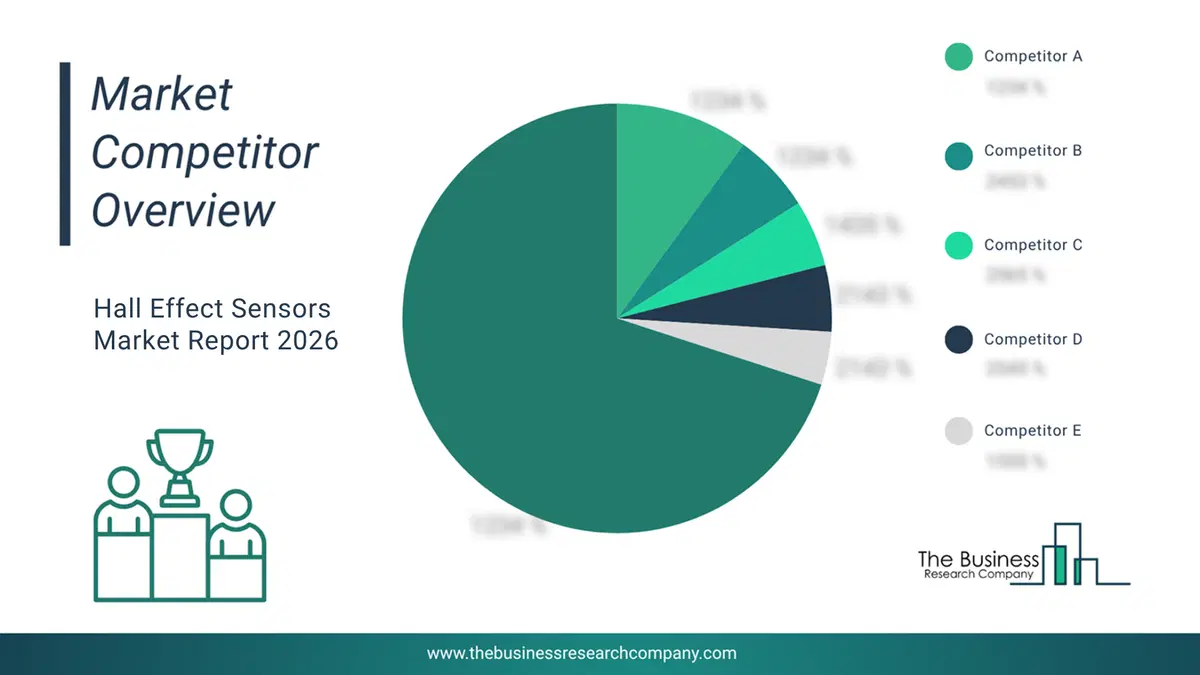
This chart is for illustrative purposes; the full report includes a detailed competitor analysis and comprehensive overview of the top 10 companies in the market.
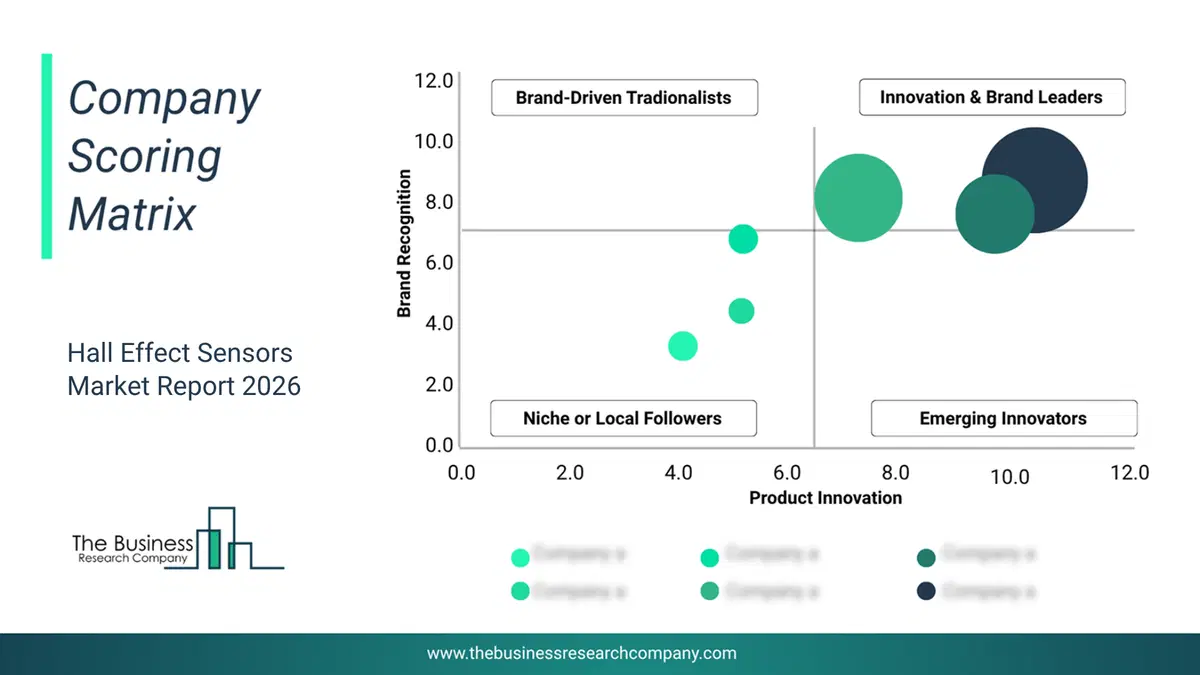
This chart maps companies by product innovation and brand strength, with bubble size indicating relative revenue, helping identify market leaders, challengers, and niche players. This is an illustrative chart; the full report provides a complete and accurate competitive analysis.
Global Hall Effect Sensors Market Trends and Insights
Major companies operating in the hall effect sensors market are focusing on leveraging innovative technologies, such as digital-output technology, to enhance signal integrity, improve electromagnetic interference (EMI) immunity, and enable accurate current sensing in high-power electric vehicle applications. Digital-output technology is a sensing technology that converts measured physical signals into digital data, enabling higher noise immunity, improved signal integrity, and more reliable communication compared to traditional analog-output sensors. For instance, in June 2026, Melexis N.V., a Belgium-based semiconductor company, launched the MLX91229, an innovative digital-output Hall-effect current sensor for automotive current sensing applications. The MLX91229 incorporates a second-order sigma-delta digital output that transfers current measurements as a high-speed digital bitstream rather than an analog voltage, significantly improving signal integrity in electrically noisy environments. The sensor supports current sensing from 200 A to 2000 A and is optimized for traction inverters, battery management systems, and other high-power automotive electronics. It features a drop-in footprint compatible with existing analog Hall-effect solutions, enabling seamless upgrades without major PCB redesigns. The device also allows configurable demodulation at the microcontroller to optimize either response speed or measurement accuracy while providing high immunity to EMI, making it well-suited for next-generation EV powertrains and advanced mobility systems.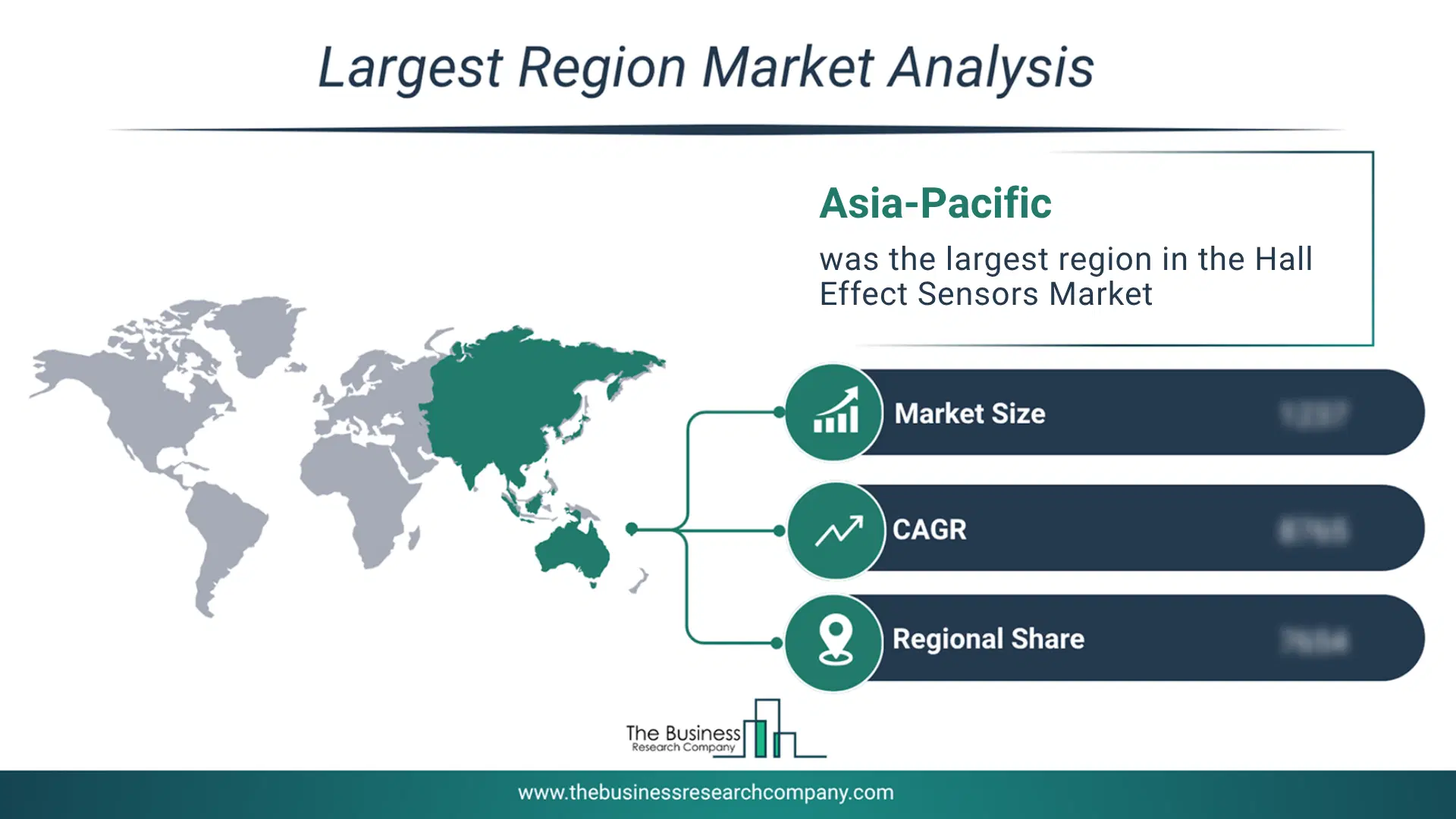
Regional Insights
Asia-Pacific was the largest region in the hall effect sensors market in 2025. Asia-Pacific is expected to be the fastest-growing region in the forecast period. The regions covered in this market report are Asia-Pacific, South East Asia, Western Europe, Eastern Europe, North America, South America, Middle East, Africa. The countries covered in this market report are Australia, Brazil, China, France, Germany, India, Indonesia, Japan, Taiwan, Russia, South Korea, UK, USA, Canada, Italy, Spain.What Defines the Hall Effect Sensors Market?
The hall effect sensors market consists of sales of current sensing devices, position sensing devices, proximity sensing devices, speed sensing devices, magnetic switches, magnetic encoders, magnetic field sensing modules, integrated Hall effect sensor ICs, and other magnetic sensing devices. Values in this market are ‘factory gate’ values, that is, the value of goods sold by the manufacturers or creators of the goods, whether to other entities (including downstream manufacturers, wholesalers, distributors, and retailers) or directly to end customers. The value of goods in this market includes related services sold by the creators of the goods.How is Market Value Defined and Measured?
The market value is defined as the revenues that enterprises gain from the sale of goods and/or services within the specified market and geography through sales, grants, or donations in terms of the currency (in USD unless otherwise specified). The revenues for a specified geography are consumption values that are revenues generated by organizations in the specified geography within the market, irrespective of where they are produced. It does not include revenues from resales along the supply chain, either further along the supply chain or as part of other products.
This chart presents market attractiveness based on a quantitative evaluation of growth, competition, strategic alignment, and risk, offering a clear view of opportunity areas for decision-making. This chart is for illustrative purposes; the full report contains the complete analysis.

This chart highlights the Total Addressable Market (TAM) by estimating the maximum revenue opportunity using an assumption-driven approach, supporting strategic planning and opportunity sizing across markets. The chart is illustrative; the full report provides a more comprehensive analysis.
What Key Data and Analysis Are Included in the Hall Effect Sensors Market Report 2026?
The hall effect sensors market research report is one of a series of new reports from The Business Research Company that provides market statistics, including industry global market size, regional shares, competitors with the market share, detailed market segments, market trends and opportunities, and any further data you may need to thrive in the hall effect sensors industry. The market research report delivers a complete perspective of everything you need, with an in-depth analysis of the current and future state of the industry.Hall Effect Sensors Market Report Forecast Analysis
| Report Attribute | Details |
|---|---|
| Market Size Value In 2026 | $2.9 billion |
| Revenue Forecast In 2030 | $4.33 billion |
| Growth Rate | CAGR of 10.6% from 2026 to 2030 |
| Base Year For Estimation | 2025 |
| Actual Estimates/Historical Data | 2020-2025 |
| Forecast Period | 2026 - 2030 |
| Market Representation | Revenue in USD Billion and CAGR from 2026 to 2030 |
| Segments Covered | Type, Material Type, Technology Type, Application Type, End User |
| Regional Scope | Asia-Pacific, Western Europe, Eastern Europe, North America, South America, Middle East, Africa |
| Country Scope | The countries covered in the report are Australia, Brazil, China, France, Germany, India, Indonesia, Japan, Taiwan, Russia, South Korea, UK, USA, Canada, Italy, Spain. |
| Key Companies Profiled | Texas Instruments Incorporated, Honeywell International Inc., STMicroelectronics N.V., Infineon Technologies AG, NXP Semiconductors N.V., Microchip Technology Inc., TE Connectivity plc, TDK Corporation, Renesas Electronics Corporation, Sensata Technologies Inc., ams-OSRAM AG, ROHM Co. Ltd., Asahi Kasei Microdevices Corporation, Littelfuse Inc., Allegro MicroSystems Inc., LEM Holding SA, Diodes Incorporated, Melexis NV, Shanghai Belling Co. Ltd., Tamura Corporation, Silan Microelectronics Co. Ltd., Nanjing AH Electronic Science & Technology Co. Ltd., Celduc Relais |
| Customization Scope | Request for Customization |
| Pricing And Purchase Options | Explore Purchase Options |