
Hashimotos Disease Market Report 2026
Global Outlook – By Type (Stress Related, Infection Related, Autoimmune Related, Environmental Related, Disease Related, Mixed, Other Types), By Treatment Type (Hormone Replacement Therapy, Immunotherapy, Antithyroid Medication, Surgery, Dietary Supplements, Other Treatment Types), By Route Of Administration (Oral Route, Injectable Route, Transdermal Route, Other Route Of Administrations), By Distribution Channel (Hospital Pharmacy, Retail Pharmacy, Online Pharmacy, Other Distribution Channels), By End User (Hospitals, Speciality Clinics, Homecare, Other End Users) - Market Size, Trends, Strategies, and Forecast to 2030
Hashimotos Disease Market Overview
• Hashimotos Disease market size has reached to $1.73 billion in 2025 • Expected to grow to $2.27 billion in 2030 at a compound annual growth rate (CAGR) of 5.5% • Growth Driver: Rising Prevalence Of Autoimmune Disorders Is Fueling The Market Growth Due To Increasing Diagnosis And Awareness • North America was the largest region in 2025 and Asia-Pacific is the fastest growing region.What Is Covered Under Hashimotos Disease Market?
Hashimoto's disease, also known as Hashimoto's thyroiditis or chronic lymphocytic thyroiditis, is an autoimmune disorder in which the body’s immune system mistakenly attacks the thyroid gland, a small, butterfly-shaped gland located at the base of the neck. This immune response leads to chronic inflammation of the thyroid, which can impair its ability to produce thyroid hormones, often resulting in hypothyroidism, a condition characterized by slowed metabolism, fatigue, weight gain, sensitivity to cold, and depression. The main types of hashimotos disease are stress-related, infection-related, autoimmune-related, environmental-related, disease-related, mixed, and other types. Stress-related Hashimoto’s refers to conditions or symptoms that are triggered or worsened by physical or emotional stress, often impacting immune function and exacerbating autoimmune diseases. Treatment types include hormone replacement therapy, immunotherapy, antithyroid medication, surgery, dietary supplements, and other treatment types. Drugs are administered through various routes such as the oral route, injectable route, transdermal route, and other routes of administration. These treatments are distributed through hospital pharmacies, retail pharmacies, online pharmacies, and other distribution channels, and are used by various end users including hospitals, specialty clinics, homecare settings, and other end users.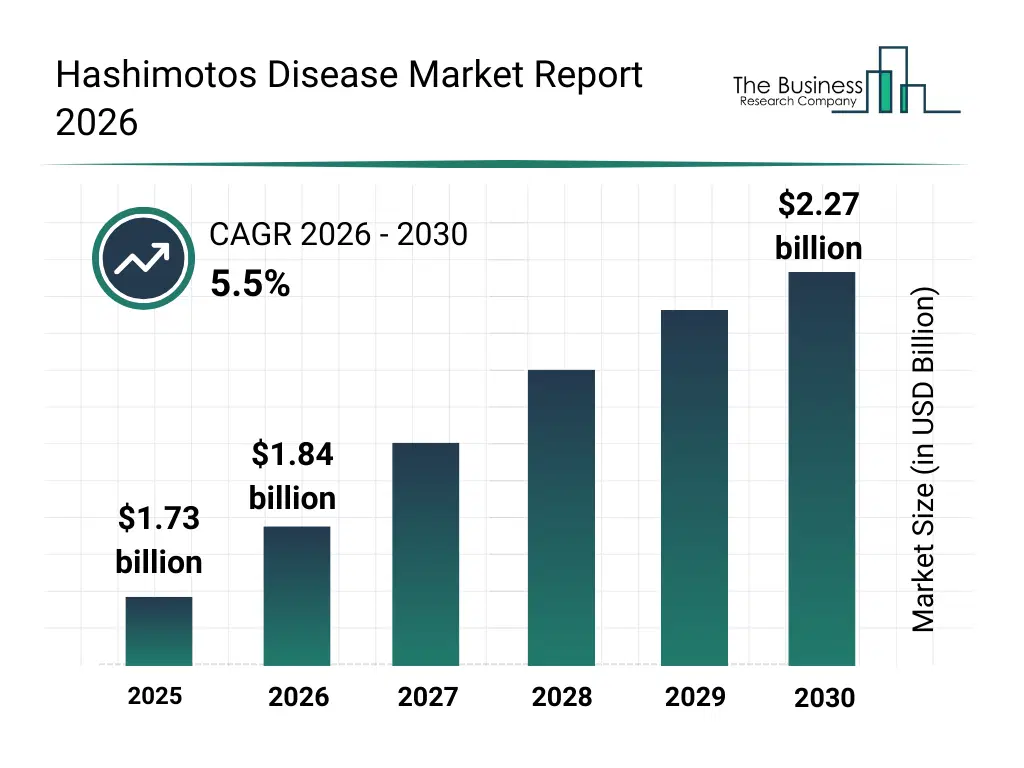
What Is The Hashimotos Disease Market Size and Share 2026?
The hashimotos disease market size has grown strongly in recent years. It will grow from $1.73 billion in 2025 to $1.84 billion in 2026 at a compound annual growth rate (CAGR) of 5.8%. The growth in the historic period can be attributed to increasing awareness of autoimmune thyroid disorders, rising diagnosis rates of hypothyroidism, improved access to endocrine care, expansion of routine thyroid screening programs, growing prevalence of chronic autoimmune conditions.What Is The Hashimotos Disease Market Growth Forecast?
The hashimotos disease market size is expected to see strong growth in the next few years. It will grow to $2.27 billion in 2030 at a compound annual growth rate (CAGR) of 5.5%. The growth in the forecast period can be attributed to rising demand for precision medicine approaches, increasing research on immune-modulating therapies, expansion of digital health monitoring tools, growing focus on early intervention strategies, increasing long-term disease management needs. Major trends in the forecast period include increasing focus on early autoimmune disease diagnosis, growing adoption of personalized hormone replacement therapy, rising integration of biomarker-based thyroid testing, expansion of patient-centric disease management approaches, enhanced monitoring of long-term hypothyroidism outcomes.
Global Hashimotos Disease Market Segmentation
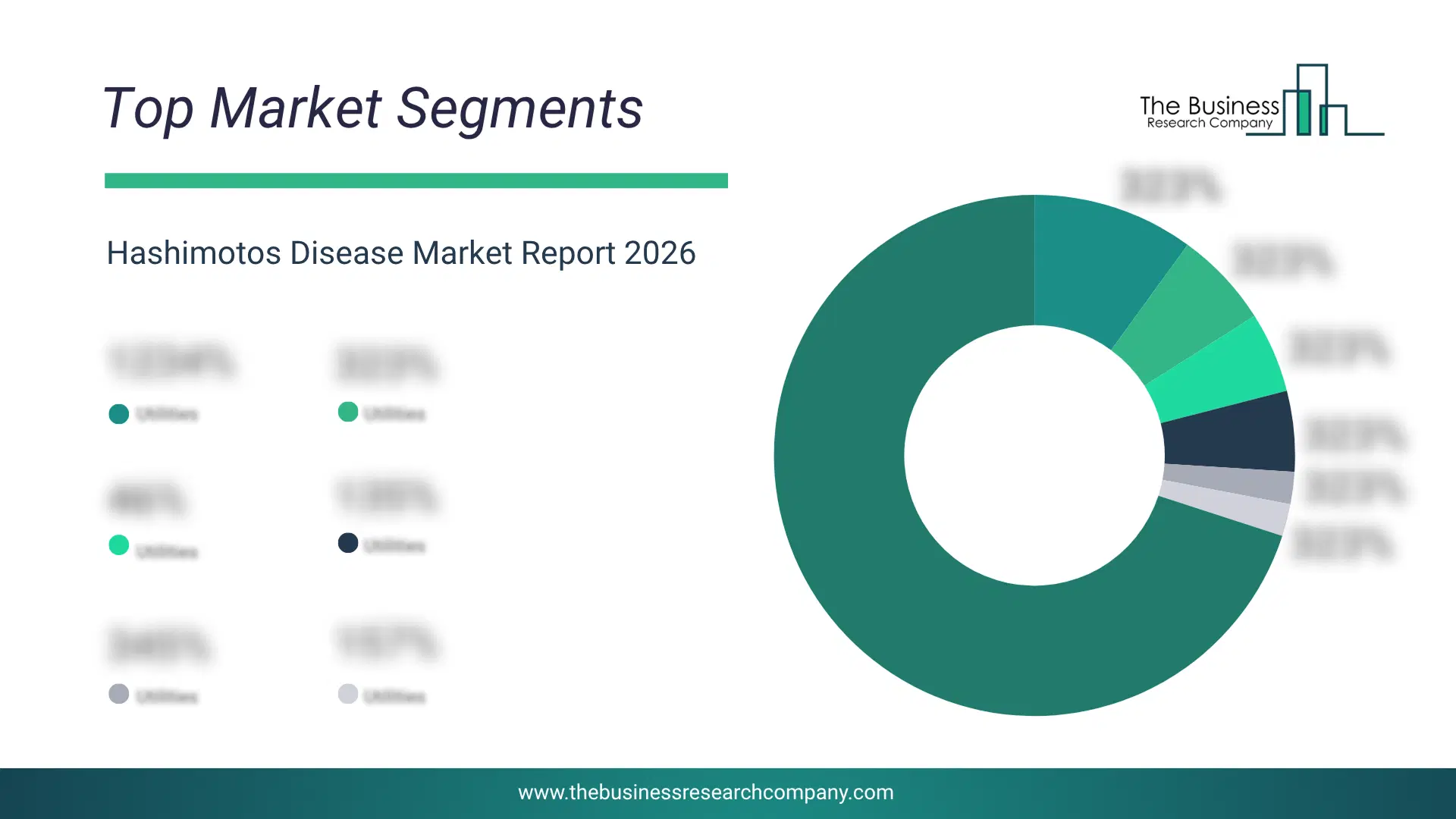
1) By Type: Stress Related, Infection Related, Autoimmune Related, Environmental Related, Disease Related, Mixed, Other Types 2) By Treatment Type: Hormone Replacement Therapy, Immunotherapy, Antithyroid Medication, Surgery, Dietary Supplements, Other Treatment Types 3) By Route Of Administration: Oral Route, Injectable Route, Transdermal Route, Other Route Of Administrations 4) By Distribution Channel: Hospital Pharmacy, Retail Pharmacy, Online Pharmacy, Other Distribution Channels 5) By End User: Hospitals, Speciality Clinics, Homecare, Other End Users Subsegments: 1) By Stress Related: Chronic Psychological Stress, Work-Related Stress, Post-Traumatic Stress, Lifestyle-Induced Stress, Anxiety And Depression-Induced Stress 2) By Infection Related: Viral Infections, Bacterial Infections, Fungal Infections, Parasitic Infections, Chronic Inflammatory Infections 3) By Autoimmune Related: Coexisting Autoimmune Thyroiditis, Type 1 Diabetes, Rheumatoid Arthritis, Systemic Lupus Erythematosus (SLE), Celiac Disease 4) By Environmental Related: Exposure To Radiation, Iodine Imbalance, Chemical Exposure, Heavy Metal Toxicity, Endocrine Disruptors 5) By Disease Related: Polycystic Ovary Syndrome (PCOS), Cardiovascular Disorders, Chronic Fatigue Syndrome, Fibromyalgia, Metabolic Syndrome 6) By Mixed: Stress And Autoimmune Combined, Infection And Environmental Combined, Autoimmune And Disease Combined, Stress And Environmental Combined, Multiple Etiology Overlap 7) By Other Types: Drug-induced Thyroiditis, Postpartum Thyroiditis, Silent Thyroiditis, Genetic Predisposition, Idiopathic CasesWhat Are The Drivers Of The Hashimotos Disease Market?
The rising prevalence of autoimmune disorders is expected to propel the growth of the hashimoto's disease market going forward. Autoimmune disorder refers to a condition where the immune system mistakenly attacks the body’s own healthy tissues, causing inflammation and damage. The rise in the prevalence of autoimmune disorders is primarily due to a combination of genetic susceptibility and environmental factors, which may trigger immune system dysfunction. Hashimoto's disease, an autoimmune disorder where the immune system attacks the thyroid, provides insight into the broader mechanisms of autoimmune conditions, highlighting the immune system's potential to malfunction and target healthy tissues. For instance, in February 2024, according to the Arthritis Australia, an Australia-based non-profit organization, it is estimated that 562,378 Australians will be living with RA in 2025, accounting for 14% of all arthritis cases that year. By 2040, this number is projected to rise by 33% to 748,721 people. This represents an increase of 186,343 Australians with RA compared with 2025.Therefore, the rising prevalence of autoimmune disorders is driving the growth of the hashimoto's disease market. The increasing healthcare expenditure is expected to propel the growth of the hashimotos disease market going forward. Healthcare expenditure refers to the total amount of money spent on healthcare services, including prevention, diagnosis, treatment, and rehabilitation of diseases and health conditions. The rise in healthcare expenditure is due to growing demand for advanced treatments that offer better outcomes, faster recovery, and improved quality of life. Hashimoto’s disease contributes to healthcare expenditure as it requires continuous monitoring, hormone replacement therapy, and regular medical care, which increase the demand for healthcare resources and costs over time. For instance, in April 2025, according to the American Medical Association, a US-based professional association, health spending in the US rose by 7.5% in 2023 to reach $4.9 trillion, or $14,570 per person, marking a notable increase compared to the 4.6% growth recorded in 2022. Therefore, the increasing healthcare expenditure is driving the growth of the hashimotos disease industry.Key Players In The Global Hashimotos Disease Market
Major companies operating in the hashimotos disease market are Pfizer Inc., Merck & Co. Inc., AbbVie Inc., Abbott Laboratories, GlaxoSmithKline plc, Viatris Inc., Teva Pharmaceutical Industries Ltd., Lupin Limited, Lannett Company Inc., Aurore Life Sciences Inc., Acella Pharmaceuticals LLC, Sigmapharm Laboratories LLC, Jerome Stevens Pharmaceuticals Inc., RLC Labs Inc., AdvaCare Pharma, GNH India Ltd., Clayman Thyroid Center P.C., Rakshit Pharmaceuticals Ltd., Lexicare Pharma Private Limited, Forest Pharmaceuticals Inc.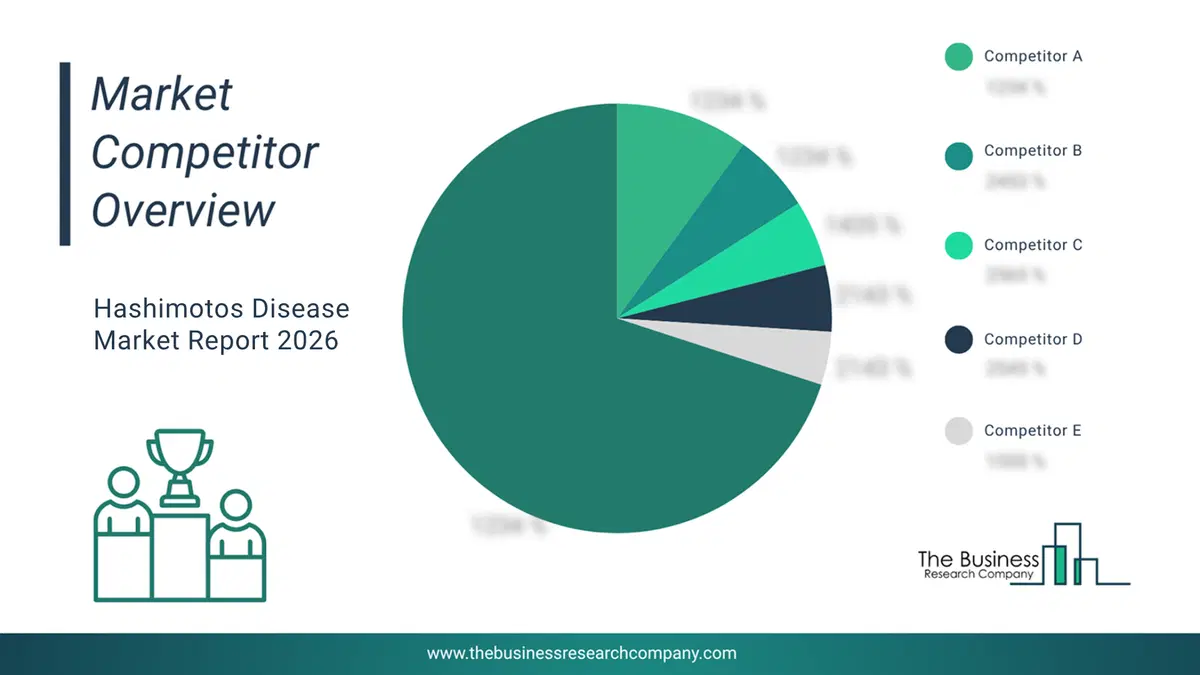
This chart is for illustrative purposes; the full report includes a detailed competitor analysis and comprehensive overview of the top 10 companies in the market.
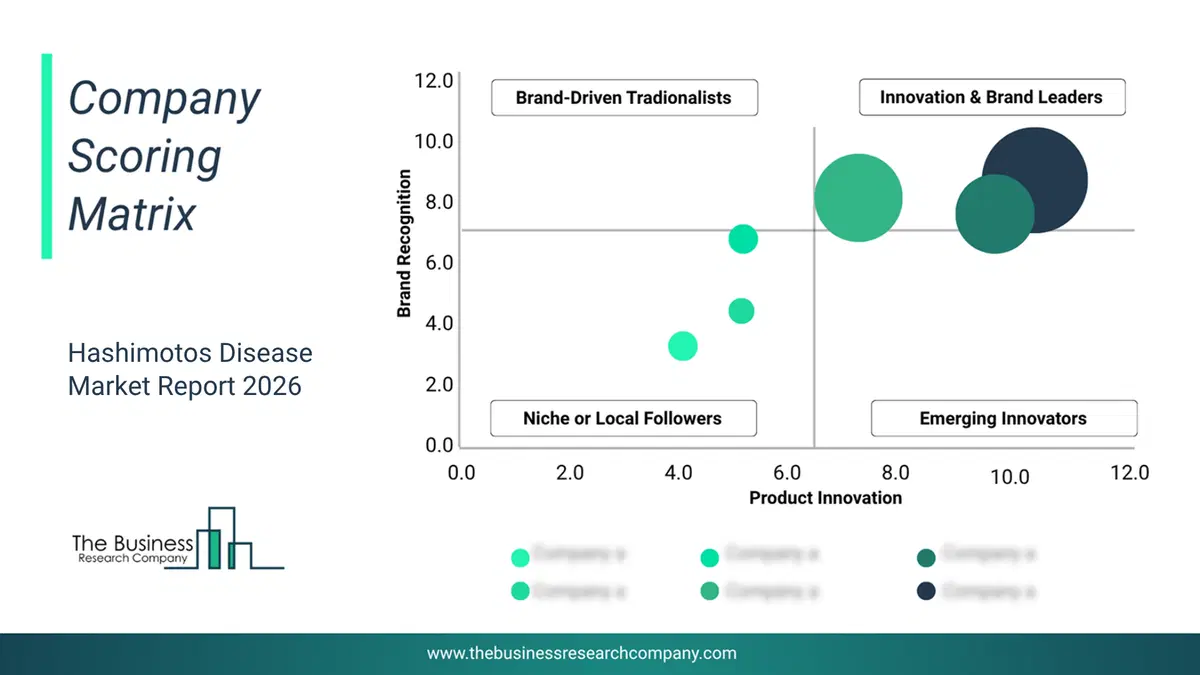
This chart maps companies by product innovation and brand strength, with bubble size indicating relative revenue, helping identify market leaders, challengers, and niche players. This is an illustrative chart; the full report provides a complete and accurate competitive analysis.
What Are Latest Mergers And Acquisitions In The Hashimotos Disease Market?
In October 2024, Acella Pharmaceuticals LLC, a US based specialty pharmaceutical company, partnered with Paloma Health to expand virtual access to personalized hypothyroidism care. With this partnership, Acella Pharmaceuticals and Paloma Health aim to improve access to comprehensive care for individuals living with hypothyroidism and Hashimoto’s disease by connecting patients with licensed telehealth providers who can offer personalized treatment options, including NP thyroid. Paloma Health's is a US-based virtual platform that specializes in providing comprehensive, personalized care for patients with hypothyroidism and Hashimoto’s disease through telehealth services, including medical consultations, diagnostic testing, and lifestyle management.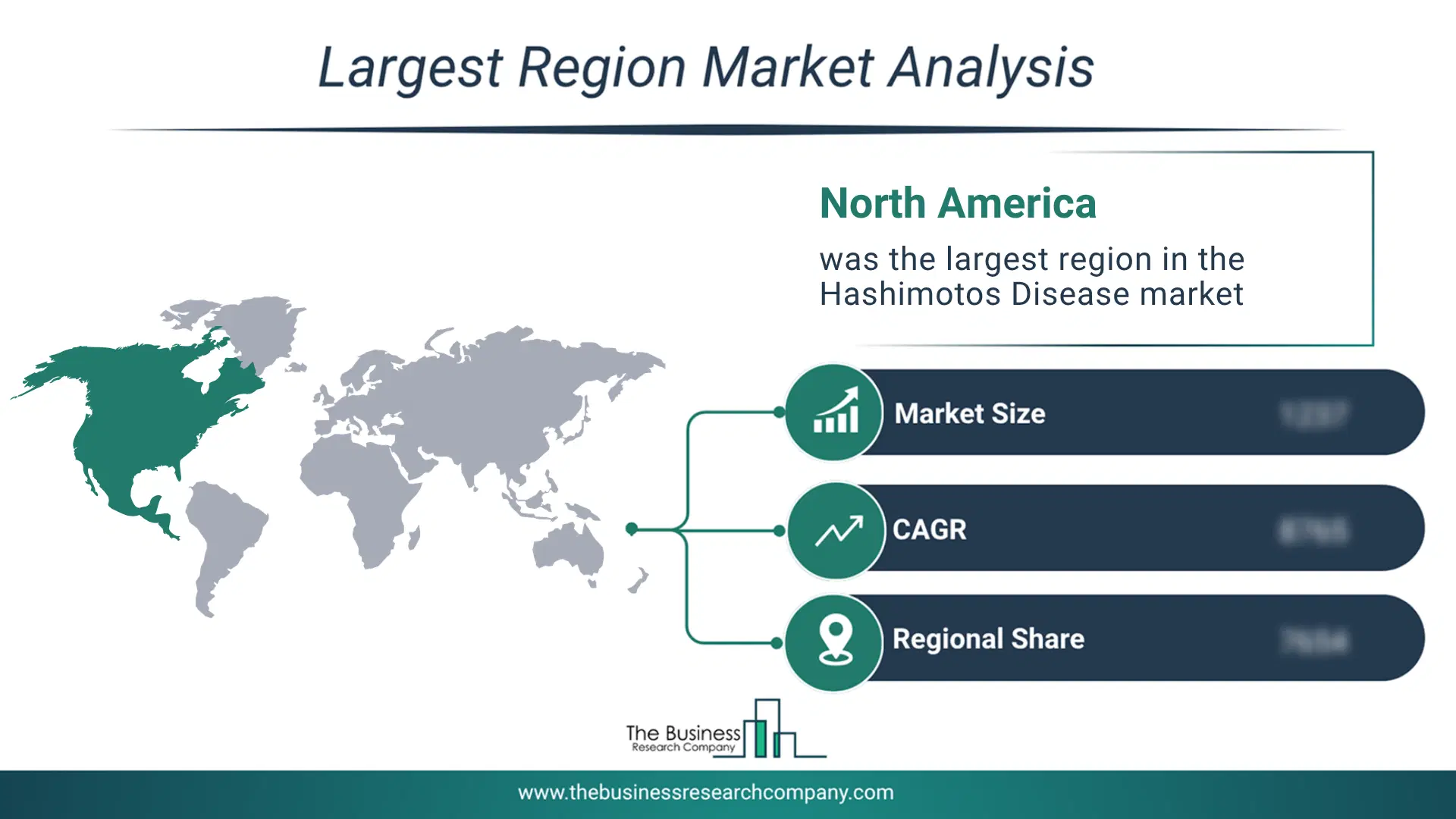
Regional Outlook
North America was the largest region in the hashimotos disease market in 2025. Asia-Pacific is expected to be the fastest-growing region in the forecast period. The regions covered in this market report are Asia-Pacific, South East Asia, Western Europe, Eastern Europe, North America, South America, Middle East, Africa. The countries covered in this market report are Australia, Brazil, China, France, Germany, India, Indonesia, Japan, Taiwan, Russia, South Korea, UK, USA, Canada, Italy, Spain.What Defines the Hashimotos Disease Market?
The hashimotos disease market consists of revenues earned by entities by providing services such as diagnosis and screening, pharmaceutical therapy management, nutritional and lifestyle counseling, autoimmune disease monitoring, patient education and support programs, and telemedicine and digital health monitoring. The market value includes the value of related goods sold by the service provider or included within the service offering. The hashimotos disease market also includes sales of levothyroxine sodium tablets, liothyronine (T3) tablets, desiccated thyroid extract, vitamin and nutritional supplements, and anti-inflammatory and immunomodulatory products. Values in this market are ‘factory gate’ values, that is the value of goods sold by the manufacturers or creators of the goods, whether to other entities (including downstream manufacturers, wholesalers, distributors and retailers) or directly to end customers. The value of goods in this market includes related services sold by the creators of the goods.How is Market Value Defined and Measured?
The market value is defined as the revenues that enterprises gain from the sale of goods and/or services within the specified market and geography through sales, grants, or donations in terms of the currency (in USD unless otherwise specified). The revenues for a specified geography are consumption values that are revenues generated by organizations in the specified geography within the market, irrespective of where they are produced. It does not include revenues from resales along the supply chain, either further along the supply chain or as part of other products.
This chart presents market attractiveness based on a quantitative evaluation of growth, competition, strategic alignment, and risk, offering a clear view of opportunity areas for decision-making. This chart is for illustrative purposes; the full report contains the complete analysis.

This chart highlights the Total Addressable Market (TAM) by estimating the maximum revenue opportunity using an assumption-driven approach, supporting strategic planning and opportunity sizing across markets. The chart is illustrative; the full report provides a more comprehensive analysis.
What Key Data and Analysis Are Included in the Hashimotos Disease Market Report 2026?
The hashimotos disease market research report is one of a series of new reports from The Business Research Company that provides market statistics, including industry global market size, regional shares, competitors with the market share, detailed market segments, market trends and opportunities, and any further data you may need to thrive in the hashimotos disease industry. The market research report delivers a complete perspective of everything you need, with an in-depth analysis of the current and future state of the industry.Hashimotos Disease Market Report Forecast Analysis
| Report Attribute | Details |
|---|---|
| Market Size Value In 2026 | $1.84 billion |
| Revenue Forecast In 2030 | $2.27 billion |
| Growth Rate | CAGR of 5.5% from 2026 to 2030 |
| Base Year For Estimation | 2025 |
| Actual Estimates/Historical Data | 2020-2025 |
| Forecast Period | 2026 - 2030 |
| Market Representation | Revenue in USD Billion and CAGR from 2026 to 2030 |
| Segments Covered | Type, Treatment Type, Route Of Administration, Distribution Channel, End User |
| Regional Scope | Asia-Pacific, Western Europe, Eastern Europe, North America, South America, Middle East, Africa |
| Country Scope | The countries covered in the report are Australia, Brazil, China, France, Germany, India, Indonesia, Japan, Taiwan, Russia, South Korea, UK, USA, Canada, Italy, Spain |
| Key Companies Profiled | Pfizer Inc., Merck & Co. Inc., AbbVie Inc., Abbott Laboratories, GlaxoSmithKline plc, Viatris Inc., Teva Pharmaceutical Industries Ltd., Lupin Limited, Lannett Company Inc., Aurore Life Sciences Inc., Acella Pharmaceuticals LLC, Sigmapharm Laboratories LLC, Jerome Stevens Pharmaceuticals Inc., RLC Labs Inc., AdvaCare Pharma, GNH India Ltd., Clayman Thyroid Center P.C., Rakshit Pharmaceuticals Ltd., Lexicare Pharma Private Limited, Forest Pharmaceuticals Inc. |
| Customization Scope | Request for Customization |
| Pricing And Purchase Options | Explore Purchase Options |