
Health Sensors Market Report 2026
Global Outlook – By Product ( Hand Held Diagnostic Sensors, Wearable Sensors, Ingestible Or Implantable Sensors), By Application ( Chronic Illness And At Risk-Monitoring, Wellness Monitoring, Patient Admission Triage, Logistical Tracking, In Hospital Clinical Monitoring, Sensor Therapeutics, Post-Acute Care Monitoring, Other Applications), By End User ( Hospitals And Clinics, Long-Term Care Centers And Nursing homes, Home Care Settings, Other End Users) – Market Size, Trends, Strategies, and Forecast to 2030
Health Sensors Market Overview
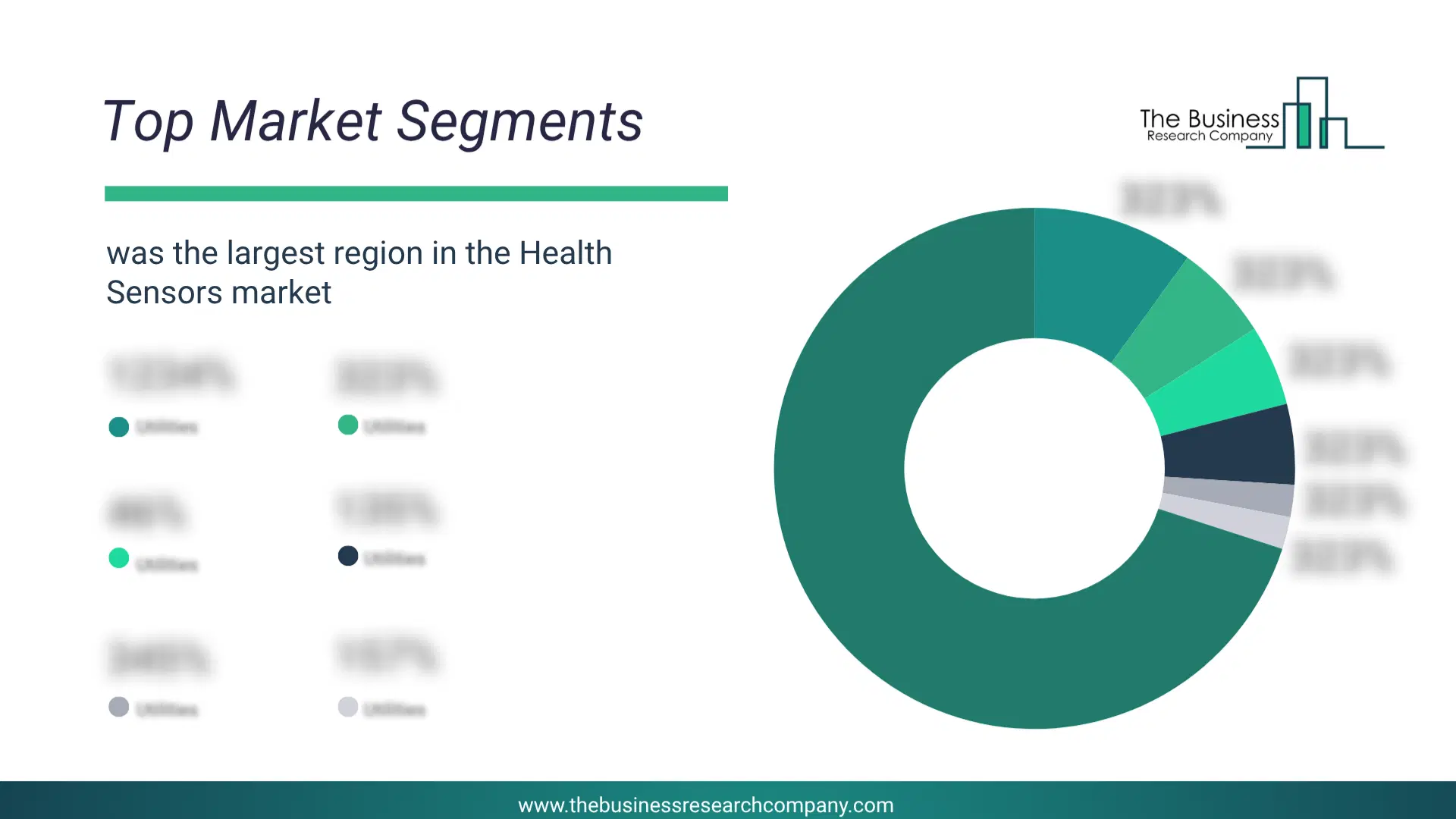
• Health Sensors market size has reached to $71.76 billion in 2025 • Expected to grow to $159.84 billion in 2030 at a compound annual growth rate (CAGR) of 17% • Growth Driver: Role Of Health Sensors In Driving The Growth Of Home-Based Healthcare Services • Market Trend: Next-Generation Wearables Enhance Real-Time Health Monitoring And Personalized Wellness Insights • North America was the largest region in 2025 and Asia-Pacific is the fastest growing region.What Is Covered Under Health Sensors Market?
Health sensors refer to devices that are used to monitor various physiological parameters or health-related data in individuals. The sensors can be worn on the body or incorporated into everyday objects, and they typically measure things such as heart rate, blood pressure, body temperature, oxygen saturation, glucose levels, and activity levels. Health sensors are used in healthcare settings for monitoring patients' health status, diagnosing medical conditions, and managing chronic diseases. The main products of health sensors are hand held diagnostic sensors, wearable sensors, and ingestible or implantable sensors. Hand-held diagnostic sensors are portable devices used to diagnose and monitor diseases at the point of patient care, outside of regular healthcare settings. They are used for various applications including chronic illness and at risk-monitoring, wellness monitoring, patient admission triage, logistical tracking, in hospital clinical monitoring, sensor therapeutics, post-acute care monitoring, and others by hospitals and clinics, long-term care centers and nursing homes, home care settings, and other end users.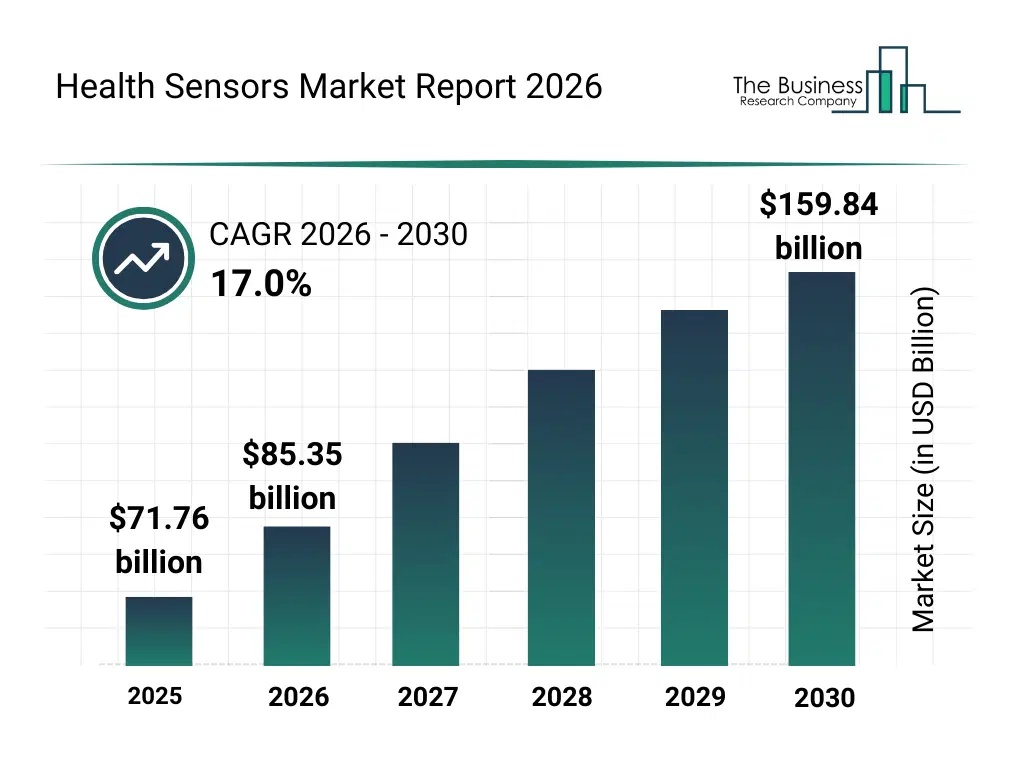
What Is The Health Sensors Market Size 2026 And Growth Rate?
The health sensors market size has grown rapidly in recent years. It will grow from $71.76 billion in 2025 to $85.35 billion in 2026 at a compound annual growth rate (CAGR) of 18.9%. The growth in the historic period can be attributed to growth of chronic disease prevalence, increasing adoption of basic diagnostic sensors, expansion of hospital monitoring equipment, rising awareness of preventive healthcare, advancements in biosensor technologies.What Is The Health Sensors Market Growth Forecast?
The health sensors market size is expected to see rapid growth in the next few years. It will grow to $159.84 billion in 2030 at a compound annual growth rate (CAGR) of 17.0%. The growth in the forecast period can be attributed to expansion of remote and home based healthcare, rising use of AI driven health analytics, increasing aging population worldwide, growth of telemedicine platforms, demand for continuous and real time health monitoring. Major trends in the forecast period include growing adoption of wearable and continuous health monitoring sensors, rising integration of multi parameter sensors in single devices, increasing demand for remote patient monitoring solutions, expansion of miniaturized and non invasive sensor technologies, growing focus on data accuracy and clinical grade sensor performance.
Global Health Sensors Market Segmentation
1) By Product: Hand Held Diagnostic Sensors, Wearable Sensors, Ingestible Or Implantable Sensors 2) By Application: Chronic Illness And At Risk-Monitoring, Wellness Monitoring, Patient Admission Triage, Logistical Tracking, In Hospital Clinical Monitoring, Sensor Therapeutics, Post-Acute Care Monitoring, Other Applications 3) By End User: Hospitals And Clinics, Long-Term Care Centers And Nursing homes, Home Care Settings, Other End Users Subsegments: 1) By Hand Held Diagnostic Sensors: Glucose Monitoring Sensors, Blood Pressure Sensors, Thermometers, Pulse Oximeters, ECG Sensors 2) By Wearable Sensors: Fitness Trackers, Smartwatches, Wearable ECG Monitors, Sleep Monitoring Sensors, Activity Monitors 3) By Ingestible Or Implantable Sensors: Ingestible Pill Sensors, Implantable Glucose Sensors, Biometric Implantable Sensors, Ingestible Medication Adherence SensorsWhat Is The Driver Of The Health Sensors Market?
The shift towards home-based healthcare services is expected to propel the growth of the health sensors market going forward. Home-based healthcare services refer to a range of medical and non-medical services provided to individuals in their own homes to promote recovery, manage chronic illness, or assist with activities of daily living. Home-based healthcare services are on the rise due to an aging population, cost-effectiveness, advancements in technology, and preference for independence. Health sensors help home-based healthcare services by enabling remote monitoring of vital signs and health parameters, improving the quality of care and patient outcomes. For instance, in June 2025, the Australian Institute of Health and Welfare (AIHW), an Australia-based government agency, reported that in 2024, residential care spending reached $21.5B, nearly double the $11.5B spent on home care and support, up from 2023, when both categories were lower. Therefore, the shift towards home-based healthcare services is driving the growth of the health sensors industry.Key Players In The Global Health Sensors Market
Major companies operating in the health sensors market are Apple Inc., Samsung Electronics Co. Ltd., Johnson & Johnson, Abbott Laboratories, Medtronic plc, Nokia Corporation, Texas Instruments Incorporated, Koninklijke Philips N.V., Strykar Healthcare, GE HealthCare Technologies Inc., STMicroelectronics, Boston Scientific Corporation, Analog Devices Inc., OMRON Healthcare Inc., Garmin Ltd., Smiths Group plc, Dexcom Inc., Masimo Corporation, Nihon Kohden Corporation, Google Fitbit, Nonin, Sotera Inc., Empatica Inc., AliveCor Inc., Shimmer Sensing
This chart is for illustrative purposes; the full report includes a detailed competitor analysis and comprehensive overview of the top 10 companies in the market.
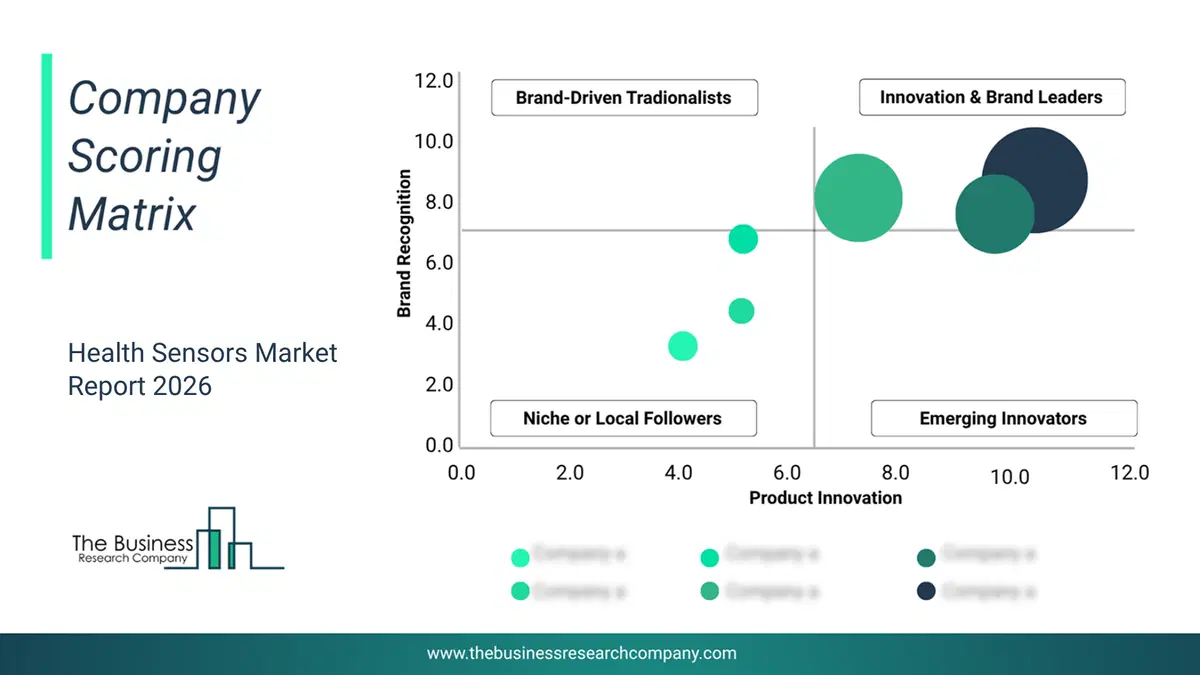
This chart maps companies by product innovation and brand strength, with bubble size indicating relative revenue, helping identify market leaders, challengers, and niche players. This is an illustrative chart; the full report provides a complete and accurate competitive analysis.
Global Health Sensors Market Trends and Insights
Major companies in the health sensors market are increasingly developing next-generation wearables to advance real-time health monitoring, deliver personalized wellness insights, and support proactive disease management through sophisticated biometric and physiological data tracking. Next-generation wearables are advanced devices designed with cutting-edge technology that go beyond traditional functions like step counting or basic heart-rate monitoring. For example, in May 2025, WHOOP Inc., a U.S.-based human performance company, introduced WHOOP 5.0 and WHOOP MG, next-generation wearables that elevate health and longevity tracking. These devices feature a sleek design with a 14-day battery life, precision sensors capturing data 26 times per second, medical-grade ECG capabilities, blood pressure insights, and a new Healthspan feature that measures physiological age and aging pace. Additionally, WHOOP 5.0 and MG offer comprehensive fitness tracking, hormonal insights for women, and integration with WHOOP Body and AnyWear technology for continuous 24/7 monitoring empowering users to make informed, data-driven decisions for better health and performance outcomes.What Are Latest Mergers And Acquisitions In The Health Sensors Market?
In June 2024, Becton, Dickinson and Company, a US-based medical technology company, acquired Edwards Lifesciences Corporation’s Critical Care product group for an undisclosed amount. With this acquisition, Becton, Dickinson and Company wants to improve its smart-connected care offerings by adding better patient-monitoring technologies and AI tools to grow its role in intensive care and surgery. Edwards Lifesciences Corporation is a US-based medical technology company that provides health sensors.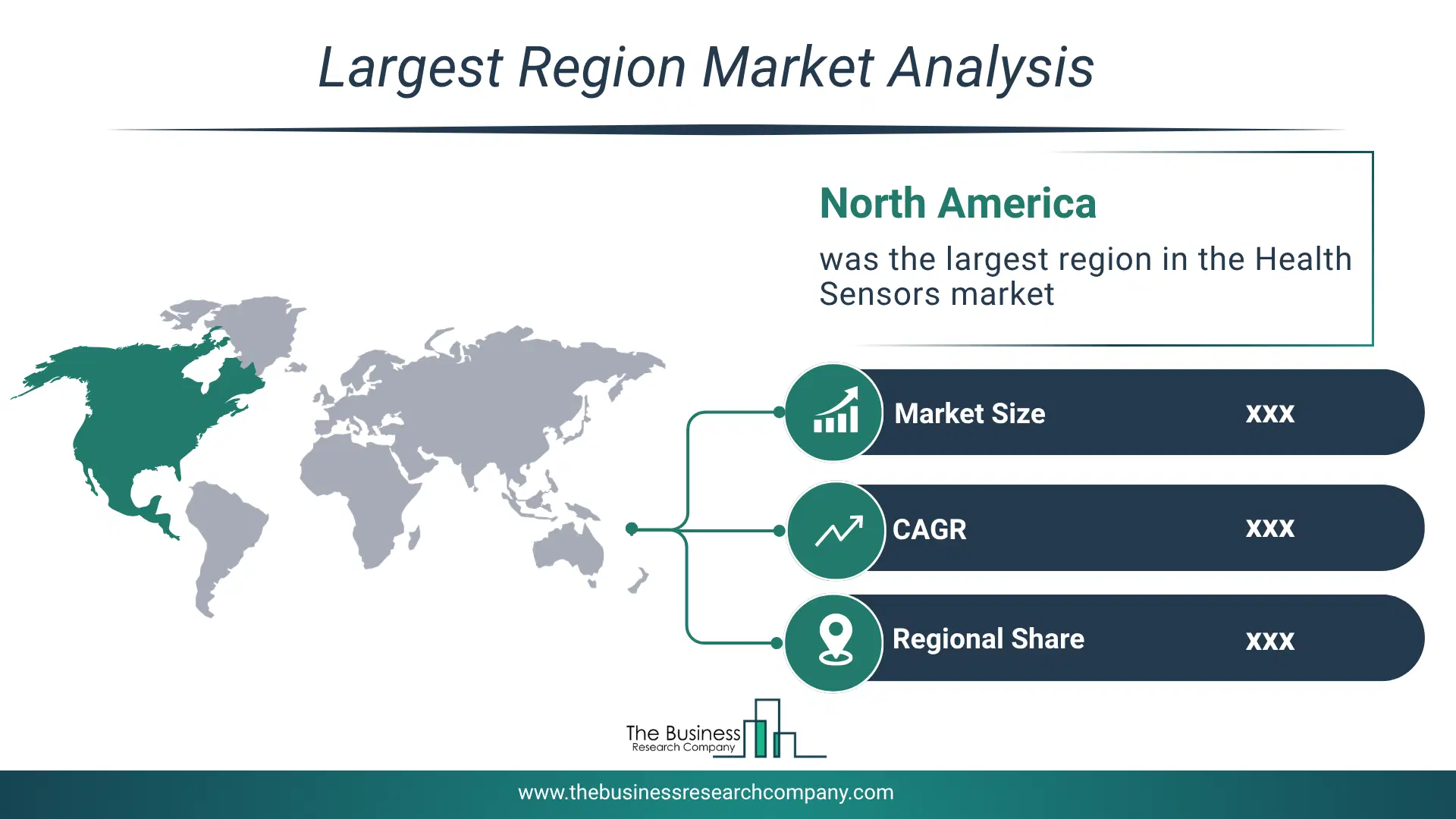
Regional Outlook
North America was the largest region in the dominated market in 2025. Asia-Pacific is expected to be the fastest-growing region in the forecast period. The regions covered in this market report are Asia-Pacific, South East Asia, Western Europe, Eastern Europe, North America, South America, Middle East, Africa. The countries covered in this market report are Australia, Brazil, China, France, Germany, India, Indonesia, Japan, Taiwan, Russia, South Korea, UK, USA, Canada, Italy, Spain.What Defines the Health Sensors Market?
The health sensors market consists of sales of blood glucose meters, pulse oximeters, electrocardiogram (ECG) monitors, and thermometers. Values in this market are ‘factory gate’ values, that is the value of goods sold by the manufacturers or creators of the goods, whether to other entities (including downstream manufacturers, wholesalers, distributors and retailers) or directly to end customers. The value of goods in this market includes related services sold by the creators of the goods.How is Market Value Defined and Measured?
The market value is defined as the revenues that enterprises gain from the sale of goods and/or services within the specified market and geography through sales, grants, or donations in terms of the currency (in USD unless otherwise specified). The revenues for a specified geography are consumption values that are revenues generated by organizations in the specified geography within the market, irrespective of where they are produced. It does not include revenues from resales along the supply chain, either further along the supply chain or as part of other products.
This chart presents market attractiveness based on a quantitative evaluation of growth, competition, strategic alignment, and risk, offering a clear view of opportunity areas for decision-making. This chart is for illustrative purposes; the full report contains the complete analysis.

This chart highlights the Total Addressable Market (TAM) by estimating the maximum revenue opportunity using an assumption-driven approach, supporting strategic planning and opportunity sizing across markets. The chart is illustrative; the full report provides a more comprehensive analysis.
What Key Data and Analysis Are Included in the Health Sensors Market Report 2026?
The health sensors market research report is one of a series of new reports from The Business Research Company that provides market statistics, including industry global market size, regional shares, competitors with the market share, detailed market segments, market trends and opportunities, and any further data you may need to thrive in the health sensors industry. The market research report delivers a complete perspective of everything you need, with an in-depth analysis of the current and future state of the industry.Health Sensors Market Report Forecast Analysis
| Report Attribute | Details |
|---|---|
| Market Size Value In 2026 | $85.35 billion |
| Revenue Forecast In 2030 | $159.84 billion |
| Growth Rate | CAGR of 17% from 2026 to 2030 |
| Base Year For Estimation | 2025 |
| Actual Estimates/Historical Data | 2020-2025 |
| Forecast Period | 2026 - 2030 |
| Market Representation | Revenue in USD Billion and CAGR from 2026 to 2030 |
| Segments Covered | Product, Application, End User |
| Regional Scope | Asia-Pacific, Western Europe, Eastern Europe, North America, South America, Middle East, Africa |
| Country Scope | The countries covered in the report are Australia, Brazil, China, France, Germany, India, Indonesia, Japan, Taiwan, Russia, South Korea, UK, USA, Canada, Italy, Spain. |
| Key Companies Profiled | Apple Inc., Samsung Electronics Co. Ltd., Johnson & Johnson, Abbott Laboratories, Medtronic plc, Nokia Corporation, Texas Instruments Incorporated, Koninklijke Philips N.V., Strykar Healthcare, GE HealthCare Technologies Inc., STMicroelectronics, Boston Scientific Corporation, Analog Devices Inc., OMRON Healthcare Inc., Garmin Ltd., Smiths Group plc, Dexcom Inc., Masimo Corporation, Nihon Kohden Corporation, Google Fitbit, Nonin, Sotera Inc., Empatica Inc., AliveCor Inc., Shimmer Sensing |
| Customization Scope | Request for Customization |
| Pricing And Purchase Options | Explore Purchase Options |