
Healthcare Buildings Global Market Opportunities And Strategies To 2035
By Facility Type (Hospitals, Ambulatory Surgery Centers, Long Term Care Facilities And Nursing Homes, Academic Institutes, Other Facility Types), By Service Type (New Construction, Refurbishment), By Healthcare Type (Public Healthcare, Private Healthcare), And By Region, Opportunities And Strategies – Global Forecast To 2035
Healthcare Buildings Market Definition
Healthcare buildings refer to specialized facilities designed and constructed to provide medical services, healthcare treatment and support for patients' well-being. These buildings are essential components of the healthcare infrastructure and encompass a wide range of structures, each serving specific functions within the healthcare system. The healthcare buildings market consists of sales by entities (organizations, sole traders and partnerships) of healthcare buildings through specialized structures designed and constructed to facilitate the provision of medical services, treatment and care. Healthcare buildings are closely associated with complementary products and services such as medical equipment, healthcare IT systems, pharmaceuticals, facility management services and diagnostic technologies, all of which are essential for delivering effective care. Substitute services may include telemedicine or home-based care, which reduce reliance on physical infrastructure in certain cases. These buildings are designed to accommodate specialized workflows, including patient intake, diagnosis, treatment, recovery and administrative operations, ensuring compliance with stringent healthcare regulations and safety standards.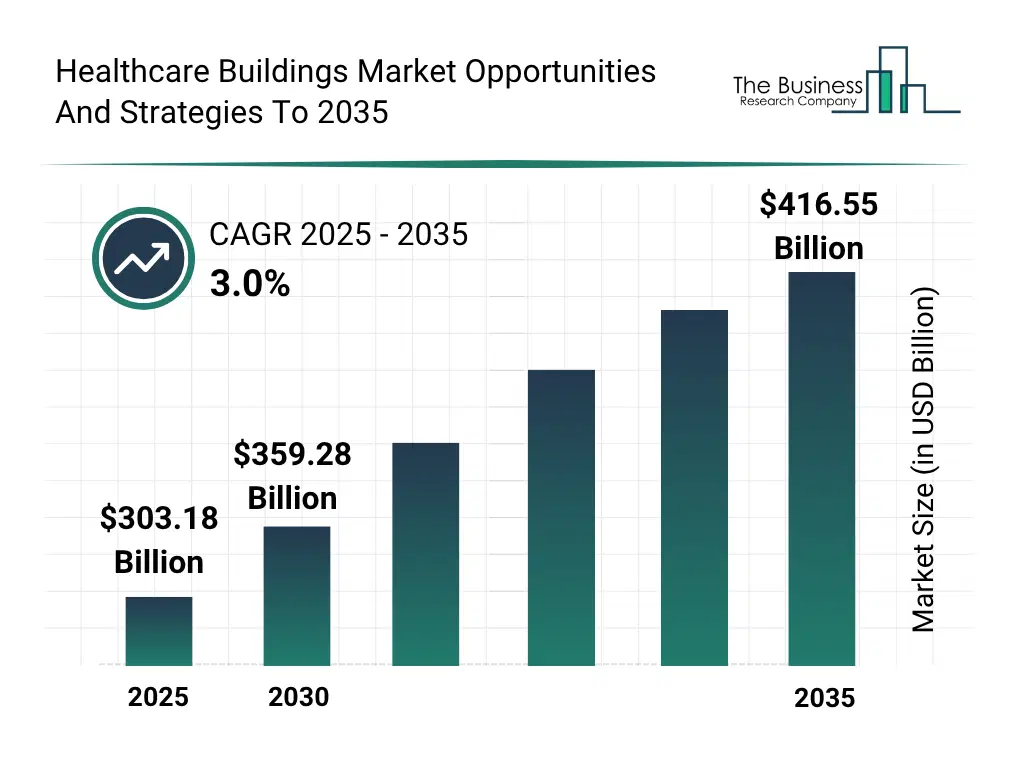
Healthcare Buildings Market Size
The global healthcare buildings market reached a value of nearly $303,181.4 million in 2025, having grown at a compound annual growth rate (CAGR) of 4.5% since 2020. The market is expected to grow from $303,181.4 million in 2025 to $359,284.0 million in 2030 at a rate of 3.5%. The market is then expected to grow at a CAGR of 3.0% from 2030 and reach $416,548.8 million in 2035. Growth in the historic period resulted from increasing government healthcare budgets, surge in patient population, growing healthcare infrastructure investments and increasing prevalence chronic disease. Factors that negatively affected growth in the historic period were high initial investment and shortage of skilled construction labor. Going forward, expanding hospital and clinic construction, growing renovation of aging healthcare facilities, rising demand for specialized care facilities, growth in private healthcare investments and PPP model will drive the growth. Factors that could hinder the growth of the healthcare buildings market in the future include sustainability and environmental compliance pressures, supply chain disruptions for construction materials and impact of trade war and tariff.
Healthcare Buildings Market Segmentation
The healthcare buildings market is segmented by facility type, by service type, by healthcare type.By Facility Type –
The healthcare buildings market is segmented by facility type into:
- a) Hospitals
- b) Ambulatory Surgery Centers
- c) Long Term Care Facilities And Nursing Homes
- d) Academic Institutes
- e) Other Facility Types
By Service Type –
The healthcare buildings market is segmented by service type into:
- a) New Construction
- b) Refurbishment
By Healthcare Type –
The healthcare buildings market is segmented by healthcare type into:
- a) Auto Dealers Or Manufacturers
- b) Third-Party Providers
By Application –
The healthcare buildings market is segmented by application into:
- a) Public Healthcare
- b) Private Healthcare
By Geography - The healthcare buildings market is segmented by geography into:
- China
- India
- Japan
- Australia
- Indonesia
- South Korea
- USA
- Canada
- Brazil
- France
- Germany
- UK
- Italy
- Spain
- Russia
-
o Asia Pacific
o Africa