

Healthcare Gamification Market Report 2026
Global Outlook – By Type (Casual Games, Serious Games, Exercise Games, Brain Training Games, Other Types), By Application (Health And Wellness Management, Medical Training And Education, Patient Engagement, Physical Therapy And Rehabilitation, Behavior Change And Lifestyle Improvement, Other Applications), By End User (Hospitals And Clinics, Pharmaceutical Companies, Medical Schools And Training Institutions, Patients, Healthcare Professionals, Other End Users) - Market Size, Trends, Strategies, and Forecast to 2030
Healthcare Gamification Market Overview
• Healthcare Gamification market size has reached to $5.34 billion in 2025 • Expected to grow to $10.86 billion in 2030 at a compound annual growth rate (CAGR) of 15.2% • Growth Driver: Rising Chronic Disease Rates Fuel Growth In Healthcare Gamification Market • Market Trend: Innovative AI Health Coaching With Game-Like Engagement Strategies • North America was the largest region in 2025 and Europe is the fastest growing region.What Is Covered Under Healthcare Gamification Market?
Healthcare gamification refers to the incorporation of game elements, such as competition, rewards, and interactive challenges, into healthcare-related activities and platforms. It is utilized to encourage positive behavior change and promote wellness. Gamification is employed in healthcare to educate patients about medical conditions, treatment plans, and medication adherence. The main types of healthcare gamification are casual games, serious games, exercise games, brain training games, and others. Casual games refer to simple, easy-to-learn video games designed for a broad audience. These are used in various applications, such as health and wellness management, medical training and education, patient engagement, physical therapy and rehabilitation, behavior change and lifestyle improvement, and others, and are used by various end-users, such as hospitals and clinics, pharmaceutical companies, medical schools and training institutions, patients, healthcare professionals, others.
What Is The Healthcare Gamification Market Size and Share 2026?
The healthcare gamification market size has grown rapidly in recent years. It will grow from $5.34 billion in 2025 to $6.16 billion in 2026 at a compound annual growth rate (CAGR) of 15.3%. The growth in the historic period can be attributed to increasing smartphone penetration in healthcare, rising demand for patient engagement tools, adoption of digital wellness platforms, growth of remote care programs, integration of gamification in medical education.What Is The Healthcare Gamification Market Growth Forecast?
The healthcare gamification market size is expected to see rapid growth in the next few years. It will grow to $10.86 billion in 2030 at a compound annual growth rate (CAGR) of 15.2%. The growth in the forecast period can be attributed to increasing use of ai-driven personalized gamification, rising demand for preventive healthcare solutions, expansion of digital therapeutics, growing focus on long-term patient adherence, increased investment in health engagement technologies. Major trends in the forecast period include increasing adoption of gamified patient engagement platforms, rising use of mobile health games, growing deployment of gamification in therapy programs, expansion of behavior change and wellness applications, enhanced focus on personalized health experiences.
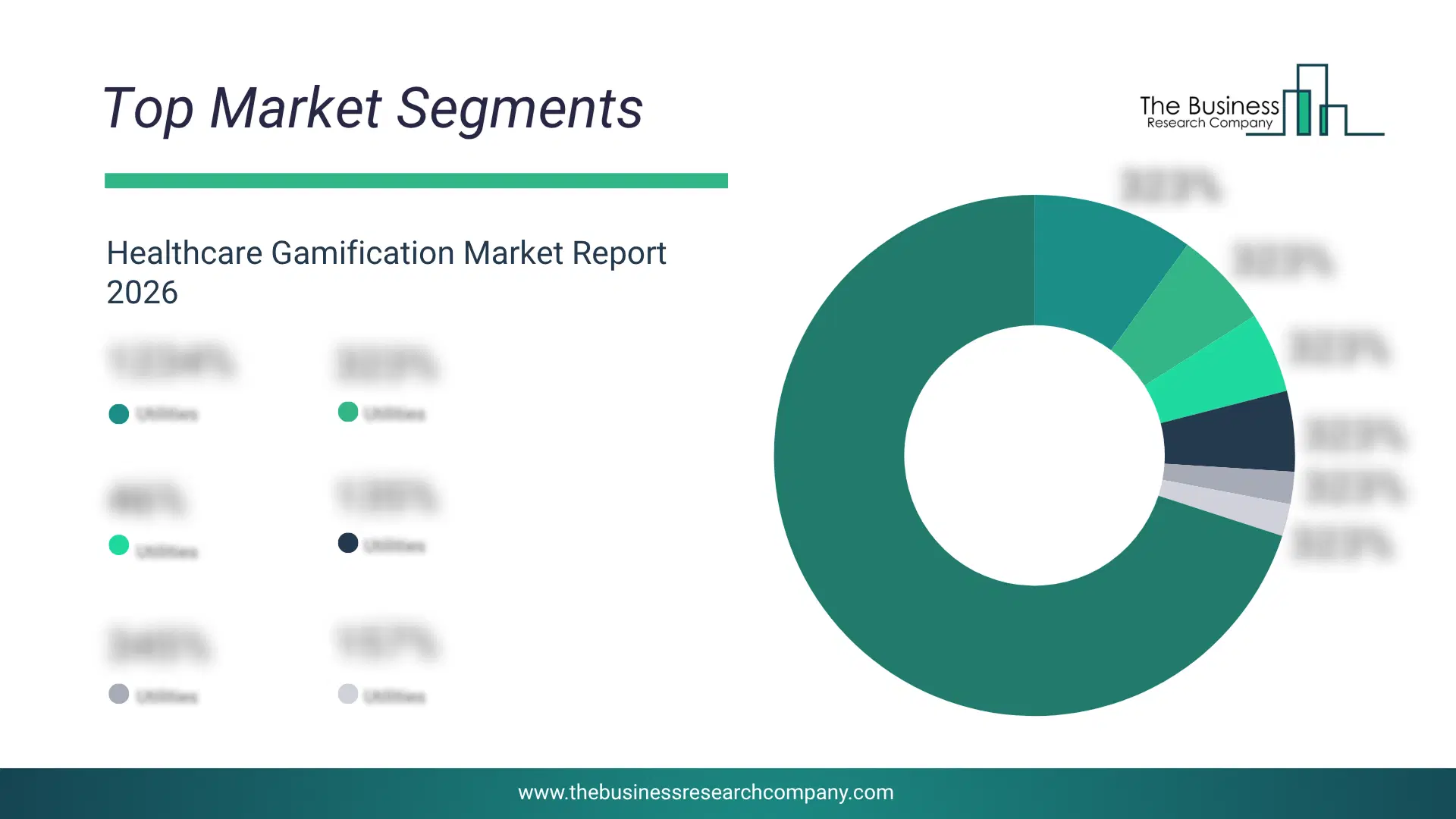
Global Healthcare Gamification Market Segmentation
1) By Type: Casual Games, Serious Games, Exercise Games, Brain Training Games, Other Types 2) By Application: Health And Wellness Management, Medical Training And Education, Patient Engagement, Physical Therapy And Rehabilitation, Behavior Change And Lifestyle Improvement, Other Applications 3) By End User: Hospitals And Clinics, Pharmaceutical Companies, Medical Schools And Training Institutions, Patients, Healthcare Professionals, Other End Users Subsegments: 1) By Casual Games: Mobile Casual Games, Web-Based Casual Games 2) By Serious Games: Educational Healthcare Games, Simulation-Based Training Games 3) By Exercise Games: Fitness Games, Motion-Sensing Games 4) By Brain Training Games: Cognitive Skill Games, Memory Improvement Games, Attention And Focus Games 5) By Other Types: Virtual Reality (VR) Games, Augmented Reality (AR) Games, Social And Multiplayer Health GamesWhat Is The Driver Of The Healthcare Gamification Market?
The increasing incidence rate of lifestyle-related and chronic diseases is expected to propel the growth of the healthcare gamification market going forward. Lifestyle-related and chronic diseases are health conditions that are influenced or exacerbated by individual choices and habits, as well as long-term factors. Healthcare gamification is efficient in addressing lifestyle-related diseases and chronic conditions by leveraging game mechanics and design elements to motivate individuals to adopt healthier behaviors and manage their health more effectively. For instance, in June 2023, the Institute for Health Metrics and Evaluation, a US-based public health research institute, reported that over half a billion people globally were living with diabetes. This number is expected to more than double, reaching 1.3 billion people by 2050. Therefore, the increasing incidence rate of lifestyle-related diseases and chronic diseases is driving the growth of the healthcare gamification industry.Key Players In The Global Healthcare Gamification Market
Major companies operating in the healthcare gamification market are Nike Inc., Adidas AG, Omada Health Inc., Happify Inc., WellDoc Inc., Akili Inc., Kaia Health, Mango Health, Pear Therapeutics, CogniFit Inc., Ayogo Health Inc., Freespira, Syandus Inc., Badgeville Inc., Google LLC, Microsoft Corporation, Medtronic PLC, Cognizant, Rally Health, BioSerenity, Biofourmis, MPS Interactive Systems Limited, Axonify Inc.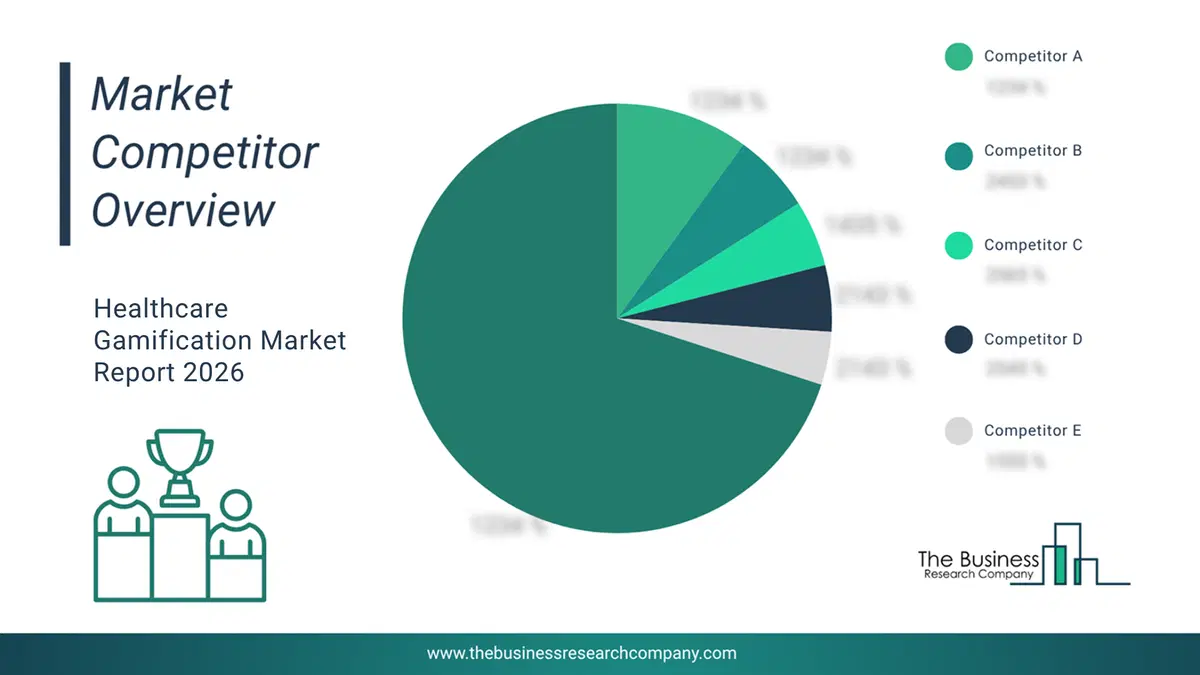
This chart is for illustrative purposes; the full report includes a detailed competitor analysis and comprehensive overview of the top 10 companies in the market.
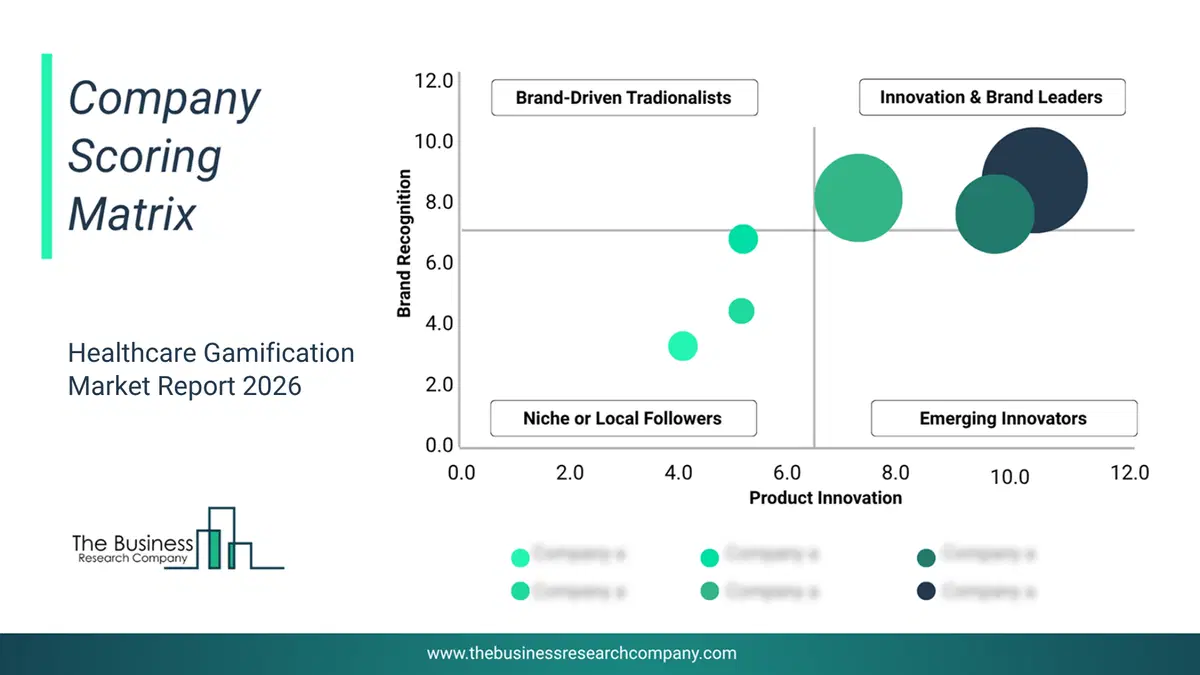
This chart maps companies by product innovation and brand strength, with bubble size indicating relative revenue, helping identify market leaders, challengers, and niche players. This is an illustrative chart; the full report provides a complete and accurate competitive analysis.
Global Healthcare Gamification Market Trends and Insights
Major companies operating in the healthcare gamification market are focused on developing innovative products with advanced technologies, such as AI health coaches with gamification, to increase their profitability in the market. An AI health coach with gamification is a digital platform that uses artificial intelligence to provide personalized health coaching and motivation, incorporating game-like elements to engage and encourage users to achieve their health and fitness goals. For instance, in May 2023, T-Systems International GmbH, a Germany-based IT company, launched MagMoves. MagMoves aims to revolutionize virtual care by integrating gamified healthcare, customization, and personalization for proactive and preventative healthcare. The app is designed to make healthcare engaging and enjoyable, taking it to the next level of virtual care. It uses artificial intelligence to provide a gamified virtual health coach experience, promoting a proactive approach to health management.What Are Latest Mergers And Acquisitions In The Healthcare Gamification Market?
In June 2023, EvokAI Creative Labs Inc., a Switzerland-based technology company, acquired Rehaboo Oy for an undisclosed amount. Through this acquisition, EvokAI Creative Labs aims to strengthen its position in the healthcare sector by integrating AI-powered rehabilitation solutions to enhance patient care and outcomes. Rehaboo Oy is a Finland-based healthcare technology company that specializes in providing digital rehabilitation solutions and platforms that utilize gamification and artificial intelligence to improve patient engagement and recovery outcomes.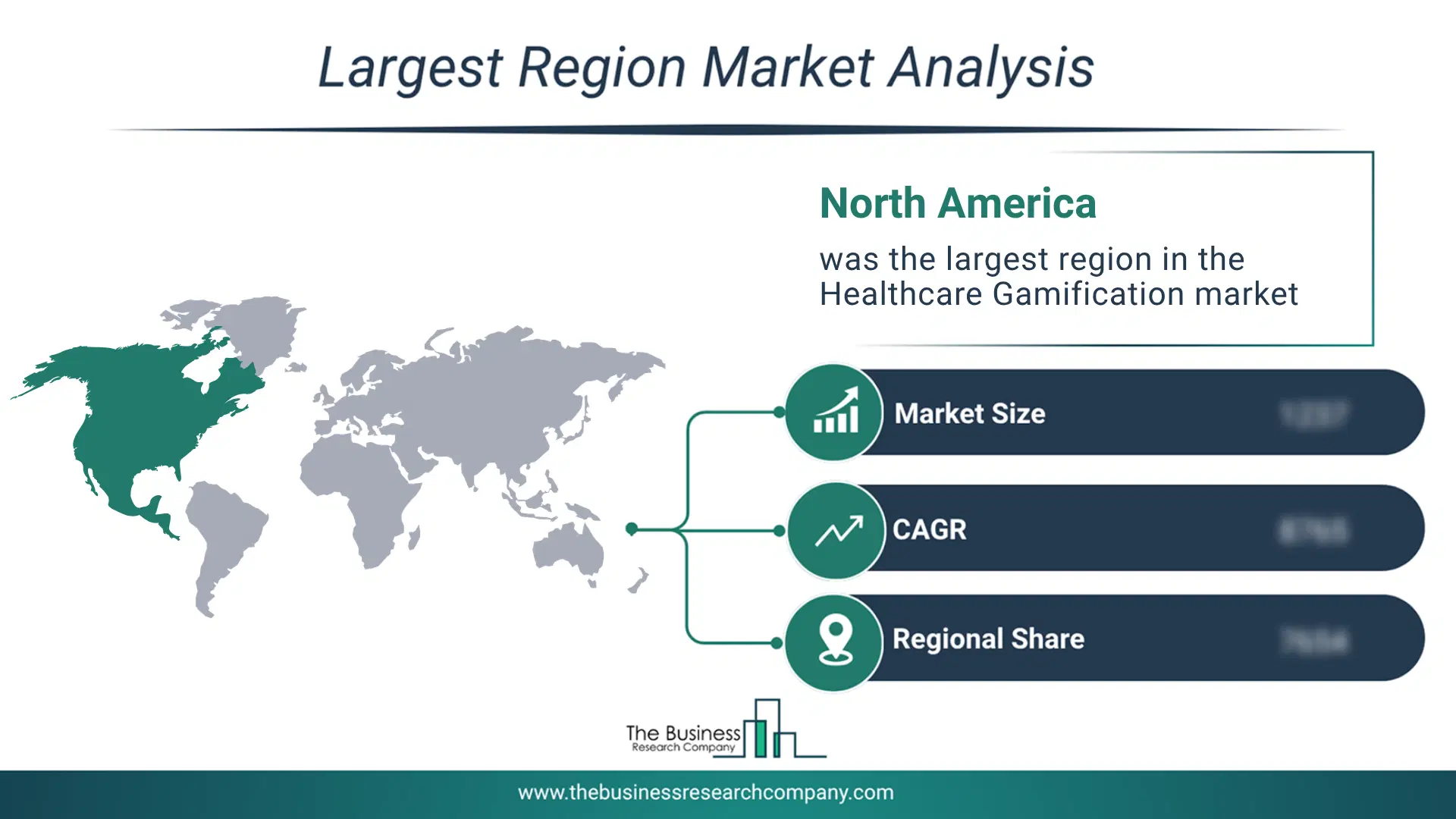
Regional Outlook
North America was the largest region in the healthcare gamification market in 2025. Europe was the fastest-growing region in the forecast period. The regions covered in this market report are Asia-Pacific, South East Asia, Western Europe, Eastern Europe, North America, South America, Middle East, Africa. The countries covered in this market report are Australia, Brazil, China, France, Germany, India, Indonesia, Japan, Taiwan, Russia, South Korea, UK, USA, Canada, Italy, Spain.What Defines the Healthcare Gamification Market?
The healthcare gamification market includes revenues earned by entities by providing services such as corporate wellness programs, stress management and community health initiatives. The market value includes the value of related goods sold by the service provider or included within the service offering. Only goods and services traded between entities or sold to end consumers are included.How is Market Value Defined and Measured?
The market value is defined as the revenues that enterprises gain from the sale of goods and/or services within the specified market and geography through sales, grants, or donations in terms of the currency (in USD unless otherwise specified). The revenues for a specified geography are consumption values that are revenues generated by organizations in the specified geography within the market, irrespective of where they are produced. It does not include revenues from resales along the supply chain, either further along the supply chain or as part of other products.
This chart presents market attractiveness based on a quantitative evaluation of growth, competition, strategic alignment, and risk, offering a clear view of opportunity areas for decision-making. This chart is for illustrative purposes; the full report contains the complete analysis.

This chart highlights the Total Addressable Market (TAM) by estimating the maximum revenue opportunity using an assumption-driven approach, supporting strategic planning and opportunity sizing across markets. The chart is illustrative; the full report provides a more comprehensive analysis.
What Key Data and Analysis Are Included in the Healthcare Gamification Market Report 2026?
The healthcare gamification market research report is one of a series of new reports from The Business Research Company that provides market statistics, including industry global market size, regional shares, competitors with the market share, detailed market segments, market trends and opportunities, and any further data you may need to thrive in the healthcare gamification industry. The market research report delivers a complete perspective of everything you need, with an in-depth analysis of the current and future state of the industry.Healthcare Gamification Market Report Forecast Analysis
| Report Attribute | Details |
|---|---|
| Market Size Value In 2026 | $6.16 billion |
| Revenue Forecast In 2030 | $10.86 billion |
| Growth Rate | CAGR of 15.2% from 2026 to 2030 |
| Base Year For Estimation | 2025 |
| Actual Estimates/Historical Data | 2020-2025 |
| Forecast Period | 2026 - 2030 |
| Market Representation | Revenue in USD Billion and CAGR from 2026 to 2030 |
| Segments Covered | Type, Application, End User |
| Regional Scope | Asia-Pacific, Western Europe, Eastern Europe, North America, South America, Middle East, Africa |
| Country Scope | The countries covered in the report are Australia, Brazil, China, France, Germany, India, Indonesia, Japan, Taiwan, Russia, South Korea, UK, USA, Canada, Italy, Spain |
| Key Companies Profiled | Nike Inc., Adidas AG, Omada Health Inc., Happify Inc., WellDoc Inc., Akili Inc., Kaia Health, Mango Health, Pear Therapeutics, CogniFit Inc., Ayogo Health Inc., Freespira, Syandus Inc., Badgeville Inc., Google LLC, Microsoft Corporation, Medtronic PLC, Cognizant, Rally Health, BioSerenity, Biofourmis, MPS Interactive Systems Limited, Axonify Inc. |
| Customization Scope | Request for Customization |
| Pricing And Purchase Options | Explore Purchase Options |