

Healthcare Logistics Market Report 2026
Global Outlook – By Service (Transportation; Warehousing), By Product (Pharmaceutical Products; Medical Devices; Medical Equipment), By End-Users Outlook (Pharmacies; Healthcare Facilities; Research And Diagnostic Laboratories) – Market Size, Trends, Strategies, and Forecast to 2030
Healthcare Logistics Market Overview
• Healthcare Logistics market size has reached to $131.73 billion in 2025 • Expected to grow to $213.74 billion in 2030 at a compound annual growth rate (CAGR) of 10.1% • Growth Driver: Constant Rise In Medical Facilities And Infrastructure • Market Trend: Tech Advancements Reshaping Healthcare Logistics • North America was the largest region and fastest growing region.Market Gains By 2030 – Top Opportunities By Segment
Market Gain identifies the most promising market opportunities by highlighting the segments or products expected to generate the highest incremental revenue growth over the next five years.
What Is Covered Under Healthcare Logistics Market?
Healthcare logistics refer to the logistics service of surgical, medical, and pharmaceutical supplies. The aim of healthcare logistics is to maximize the use of technical and material resources available to health systems for improving the efficiency, quality, and traceability of health operations. The main types of services of healthcare logistics include transportation and warehousing. Healthcare transportation services refer to the movement of healthcare goods from one place to another by various means such as marine, inland, and aviation. The products transported or stored in the warehouse are pharmaceutical products, medical devices, and medical equipment. These products are brand drugs or generic drugs. These logistics services are utilized by pharmacies, healthcare facilities, and research and diagnostics laboratories.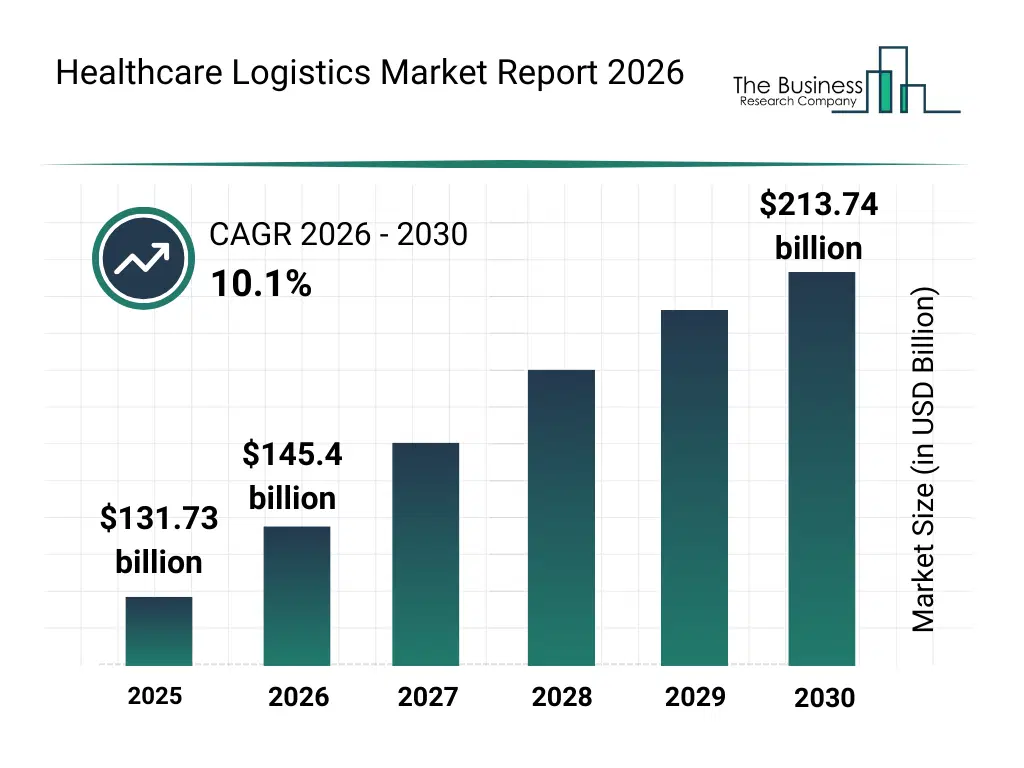
What Is The Healthcare Logistics Market Size and Share 2026?
The healthcare logistics market size has grown rapidly in recent years. It will grow from $131.73 billion in 2025 to $145.4 billion in 2026 at a compound annual growth rate (CAGR) of 10.4%. The growth in the historic period can be attributed to expansion of pharmaceutical distribution networks, increasing demand for medical supplies, growth of hospital infrastructure, rising use of temperature-controlled logistics, adoption of centralized healthcare warehousing.What Is The Healthcare Logistics Market Growth Forecast?
The healthcare logistics market size is expected to see rapid growth in the next few years. It will grow to $213.74 billion in 2030 at a compound annual growth rate (CAGR) of 10.1%. The growth in the forecast period can be attributed to increasing investments in digital healthcare logistics platforms, rising demand for biologics and vaccines distribution, expansion of home healthcare delivery, growing regulatory focus on supply chain transparency, increasing adoption of smart inventory systems. Major trends in the forecast period include increasing adoption of cold chain logistics solutions, rising demand for end-to-end supply chain visibility, growing use of automated warehousing in healthcare, expansion of last-mile medical delivery services, enhanced focus on traceability and compliance.
Global Healthcare Logistics Market Segmentation
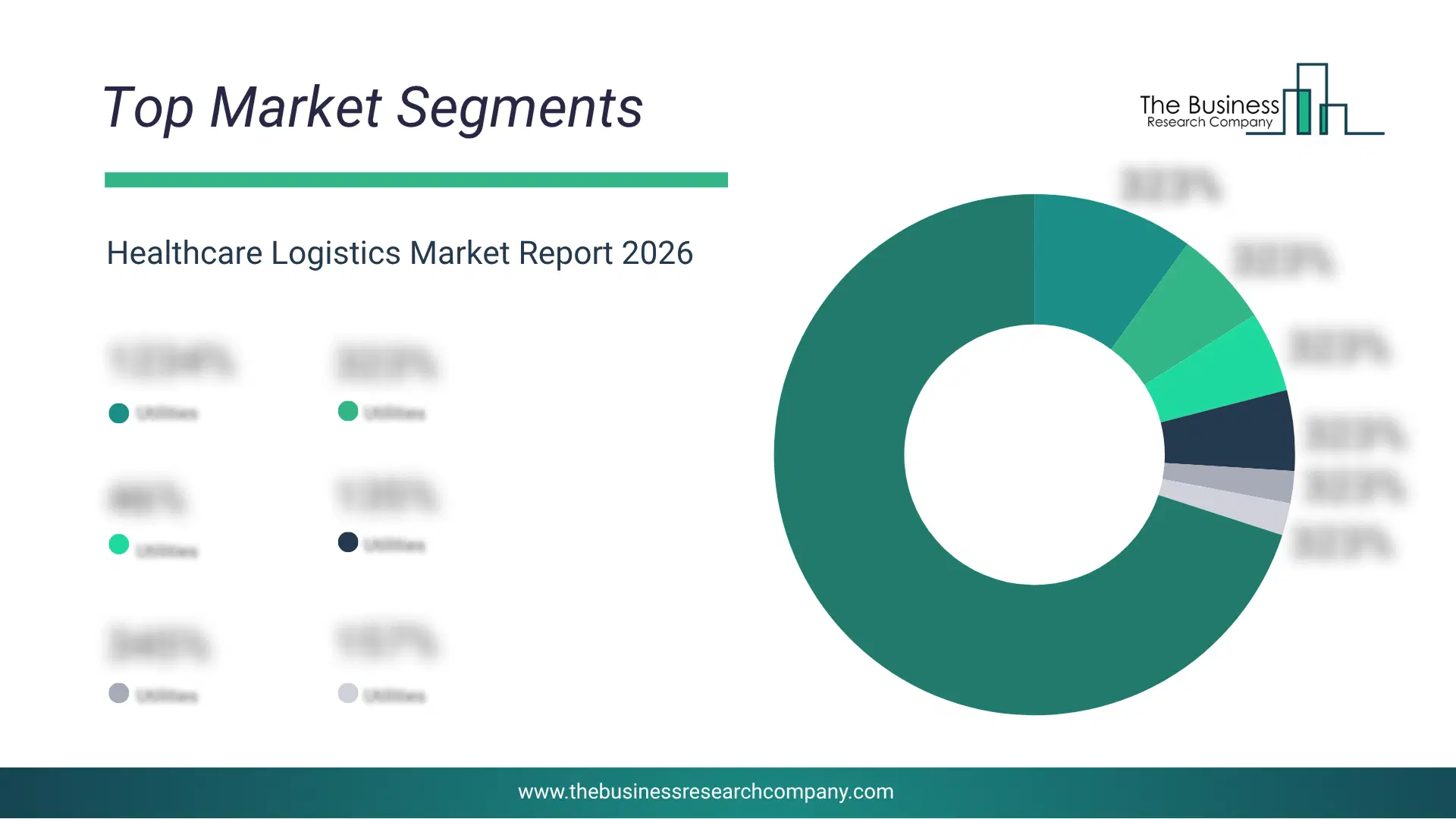
1) By Service: Transportation, Warehousing 2) By Product: Pharmaceutical Products, Medical Devices, Medical Equipment 3) By End-Users Outlook: Pharmacies, Healthcare Facilities, Research And Diagnostic Laboratories Subsegments: 1) By Transportation: Medical Supply Transportation, Pharmaceutical Transportation, Patient Transport Services, Last-Mile Delivery Services 2) By Warehousing: Storage Of Medical Supplies, Pharmaceutical Warehousing, Cold Chain Storage Solutions, Inventory Management Services The top segments in the healthcare logistics market will be: • Transportation will reach $110.92 Billion by 2030. • Warehousing will reach $101.93 Billion by 2030.What Is The Driver Of The Healthcare Logistics Market?
Rising medical facilities and infrastructure expenditures are expected to propel the growth of the healthcare logistics market going forward. Medical facilities and infrastructure refer to the physical locations, buildings, equipment, and resources that are used for healthcare purposes. The growth and establishment of new healthcare facilities such as hospitals, clinics, and diagnostic centers drive increased demand for healthcare logistics services. These facilities rely on efficient supply chains for a continuous flow of essential medical equipment, pharmaceuticals, and supplies, highlighting the vital role of healthcare logistics providers in sourcing, storing, and delivering these critical items. For instance, in July 2025, according to Eurostat, Luxembourg-based statistical office of the European Union, the EU recorded 511 hospital beds per 100,000 people in 2023, while Bulgaria reported the highest ratio in the region at 864 beds per 100,000 people. Therefore, rising medical facilities and infrastructure are expected to propel the growth of the healthcare logistics industry.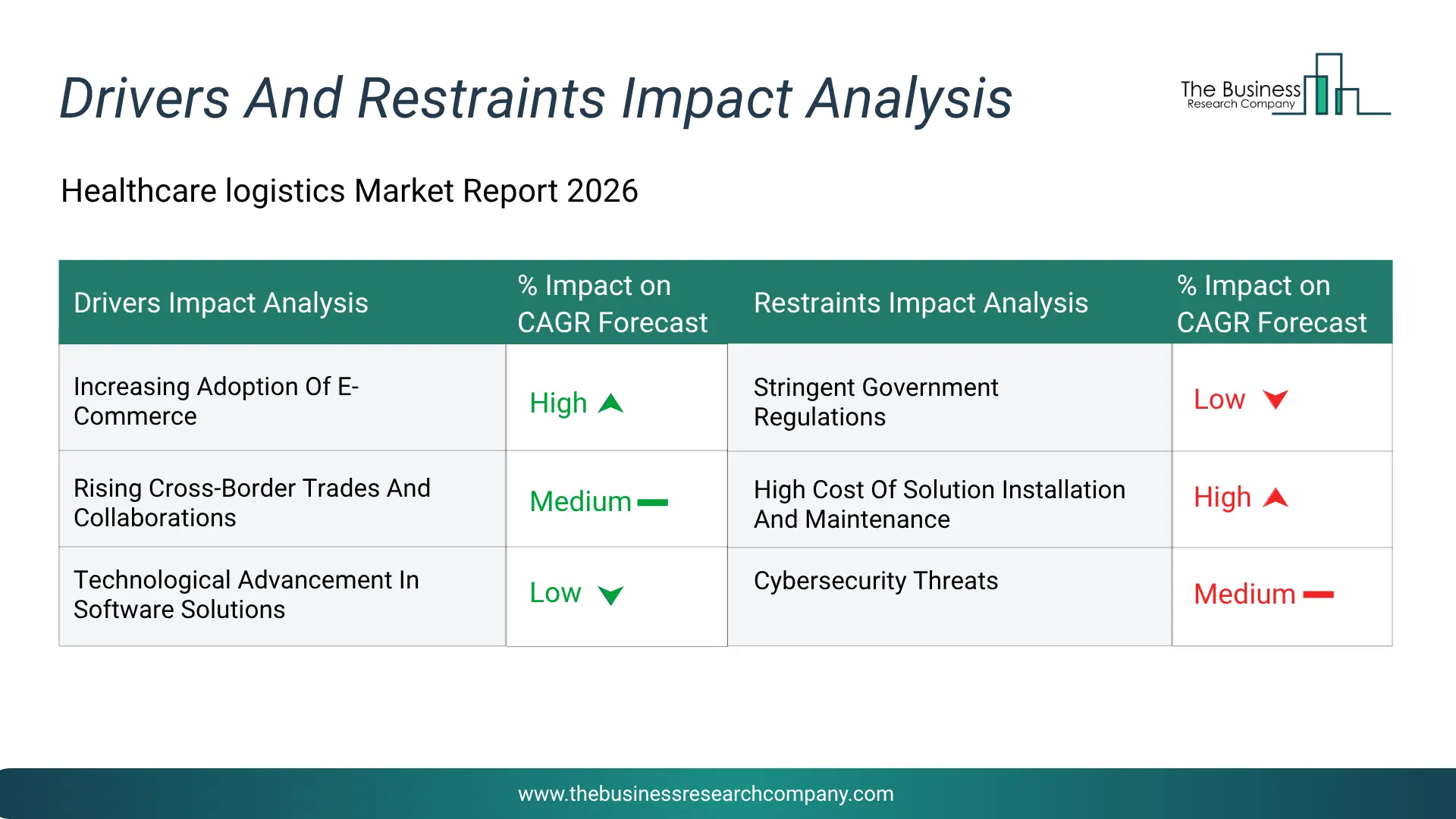
Infographic Chart Showing Key Market Drivers Analysis And Restraints For Healthcare Logistics Market
The chart presents an impact analysis of key drivers and restraints, quantifying their relative influence on the market's growth rate and helping assess the balance between growth enablers and limiting factors. This chart offers a high-level perspective; the full report contains more detailed insights.
How Will The Drivers Impact Growth In The Global Healthcare logistics Market?
• Increasing Adoption Of E-Commerce (High) – During the forecast period, the increasing adoption of e-commerce in healthcare distribution is expected to become a key growth driver for the healthcare logistics market by 2030. The expansion of online pharmaceutical sales, digital health platforms, and direct-to-patient delivery services is significantly increasing demand for efficient healthcare logistics operations. Healthcare providers and pharmacies are adopting faster and more flexible distribution models to support growing consumer expectations for rapid medicine and medical product deliveries. This shift is encouraging logistics providers to expand warehousing capacity, optimize fulfillment networks, and strengthen last-mile delivery capabilities for healthcare products. The growing digitalization of healthcare purchasing channels is therefore supporting sustained market expansion. • Rising Cross-Border Trades And Collaborations (Medium) – During the forecast period, the rising cross-border trades and collaborations are expected to emerge as a major factor driving the expansion of the healthcare logistics market by 2030. The growing globalization of pharmaceutical manufacturing, medical device production, and healthcare research activities is increasing the movement of healthcare products across international markets. Strategic partnerships between pharmaceutical companies, contract manufacturers, hospitals, and research organizations are further accelerating the need for reliable international transportation and customs-compliant logistics services. In addition, increasing demand for specialty drugs and biologics is strengthening the importance of temperature-controlled cross-border distribution networks. • Technological Advancement In Software Solutions (Low) – During the forecast period, the technological advancement in software solutions is expected to act as a key growth catalyst for the healthcare logistics market by 2030. The growing integration of artificial intelligence, cloud-based logistics platforms, predictive analytics, and real-time shipment monitoring systems is transforming healthcare supply chain operations. Logistics providers are increasingly adopting advanced software tools to improve inventory visibility, optimize route planning, reduce operational disruptions, and ensure regulatory compliance for sensitive healthcare products. Automation and digital tracking technologies are also improving delivery accuracy and cold chain monitoring across healthcare distribution systems. As software capabilities continue to advance, operational efficiency and service reliability within healthcare logistics networks are expected to improve significantly.How Will The Restraints Impact Growth In The Global Healthcare logistics Market?
• Stringent Government Regulations (High) – During the forecast period, the stringent government regulations act as a major restraint in the healthcare logistics market by increasing the complexity of operations and compliance requirements. Logistics providers must adhere to strict guidelines related to storage conditions, transportation standards, and product traceability, especially for pharmaceuticals and biologics. These regulations often vary across regions, making cross-border logistics more challenging and time-consuming. Companies are required to invest heavily in compliance systems, audits, and certifications, which raises operational costs. Any failure to meet regulatory standards can lead to penalties, shipment delays, or product recalls. This reduces flexibility and slows down decision-making processes within the supply chain. As a result, smaller players may struggle to compete, limiting overall market expansion. • High Cost Of Solution Installation And Maintenance (Medium) – During the forecast period, the high cost of solution installation and maintenance restrains the healthcare logistics market by creating financial barriers for companies adopting advanced logistics infrastructure. Investments in cold chain facilities, automated warehouses, tracking systems, and specialized transportation equipment require significant capital expenditure. In addition to initial setup costs, ongoing maintenance, upgrades, and operational expenses further increase the financial burden. Smaller and mid-sized logistics providers may find it difficult to afford these technologies, limiting their scalability. High costs can also impact profit margins and slow down the adoption of innovative solutions. Organizations may delay modernization efforts due to budget constraints, affecting efficiency improvements. Consequently, overall market growth is hindered by limited accessibility to advanced logistics solutions. • Cybersecurity Threats (Low) – During the forecast period, the cybersecurity threats pose a significant restraint on the healthcare logistics market by exposing sensitive data and disrupting supply chain operations. With increasing reliance on digital platforms, real-time tracking systems, and cloud-based logistics management, the risk of cyberattacks has grown substantially. Breaches can compromise confidential patient, shipment, and pharmaceutical data, leading to financial and reputational damage. Cyber incidents may also disrupt logistics networks, causing delays in the delivery of critical medical supplies. Companies must invest in robust cybersecurity infrastructure, which adds to operational costs. Additionally, fear of data breaches may slow the adoption of advanced digital solutions in logistics. As a result, cybersecurity concerns create uncertainty and act as a barrier to seamless market growth.Key Players In The Global Healthcare Logistics Market
Major companies operating in the healthcare logistics market are AmerisourceBergen Corporation, CEVA Logistics AG, Cold Chain Technologies LLC, Deutsche Post DHL Group, DHL Supply Chain, UPS Healthcare, FedEx HealthCare Solutions, DB Schenker, Kuehne + Nagel International AG, XPO Logistics Inc., Cardinal Health Inc., World Courier, Agility Logistics Corp., Marken, QuickSTAT, VersaCold Logistics Services, LifeConEx LLC, Expeditors International of Washington Inc., Cryoport Inc., Movianto GmbH, Hellmann Worldwide Logistics SE & Co KG, Lineage Logistics Holdings LLC, Logista Pharma SA, FedEx Custom Critical, BDP International Inc., Purolator Inc., MNX Global Logistics, Envirotainer AB, Yusen Logistics Co Ltd.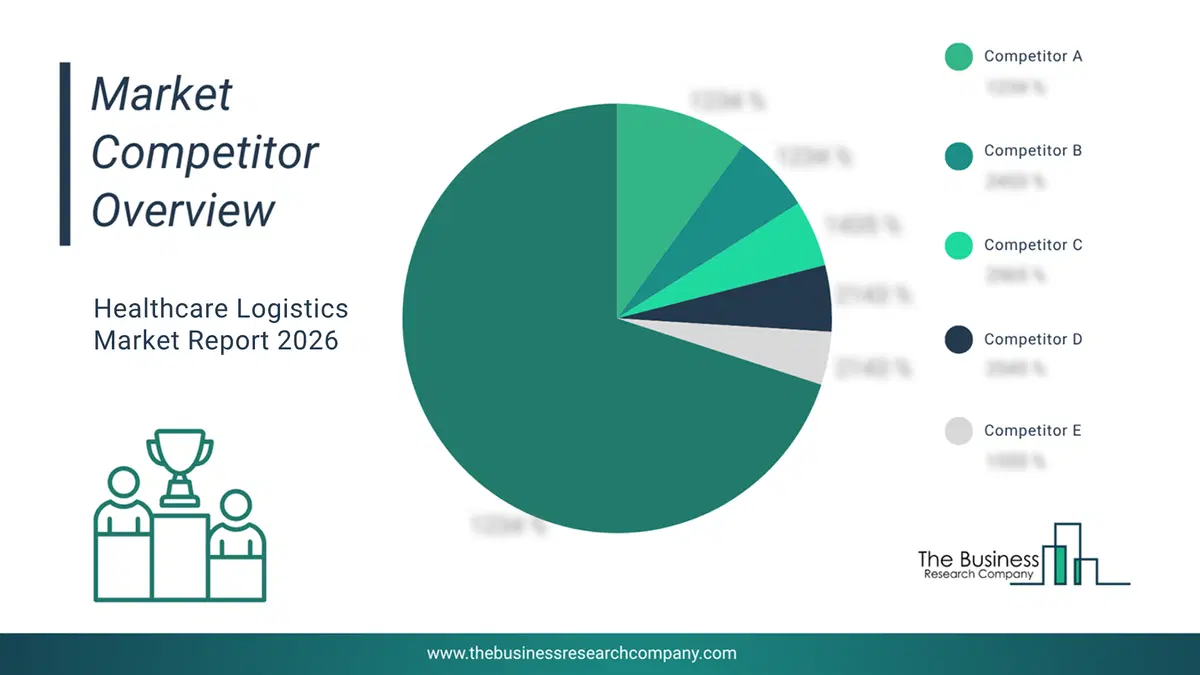
This chart is for illustrative purposes; the full report includes a detailed competitor analysis and comprehensive overview of the top 10 companies in the market.
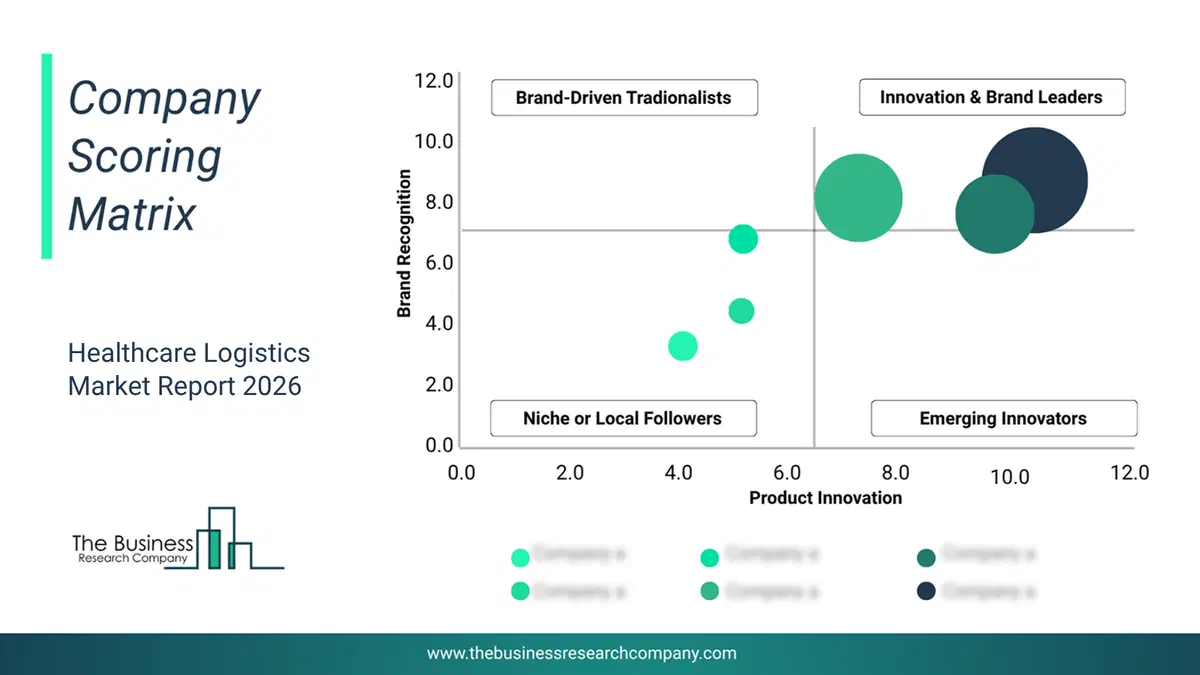
This chart maps companies by product innovation and brand strength, with bubble size indicating relative revenue, helping identify market leaders, challengers, and niche players. This is an illustrative chart; the full report provides a complete and accurate competitive analysis.
Global Healthcare Logistics Market Trends and Insights
Major companies operating in healthcare logistics market are focused on implementing innovative facilities to improve supply chain efficiency. For instance, in September 2024, Kuehne+Nagel, a Germany-based transport company has inaugurated its 10th healthcare logistics facility in Canada, specifically a new temperature-controlled fulfilment centre located in Milton, Ontario, approximately 50 kilometers from Toronto. This new facility not only marks a significant milestone for Kuehne+Nagel but also strengthens its position as a leading logistics provider in the healthcare industry.What Are Latest Mergers And Acquisitions In The Healthcare Logistics Market?
In April 2025, United Parcel Service Inc., a US-based logistics and transportation company, acquired Andlauer Healthcare Group Inc. for approximately USD 1.6 billion. With this acquisition, UPS aims to strengthen and expand its global healthcare logistics capabilities by enhancing cold chain, pharmaceutical distribution, and specialized healthcare supply chain services across North America. Andlauer Healthcare Group Inc. is a Canada based healthcare logistics company that specializes in providing third party logistics, temperature controlled transportation, and integrated supply chain solutions for pharmaceutical, biotechnology, and medical device customers.Regional Outlook
North America was the largest region in the healthcare logistics market in 2025 and is expected to be the fastest growing region in the forecast period. The regions covered in this market report are Asia-Pacific, South East Asia, Western Europe, Eastern Europe, North America, South America, Middle East, Africa. The countries covered in this market report are Australia; Brazil; China; France; Germany; India; Indonesia; Japan; Taiwan; Russia; South Korea; UK; USA; Canada; Italy; Spain.What Defines the Healthcare Logistics Market?
The healthcare logistics market includes revenues earned by entities by storing, delivering, and shipping of medical supplies. The market value includes the value of related goods sold by the service provider or included within the service offering. Only goods and services traded between entities or sold to end consumers are included.How is Market Value Defined and Measured?
The market value is defined as the revenues that enterprises gain from the sale of goods and/or services within the specified market and geography through sales, grants, or donations in terms of the currency (in USD unless otherwise specified). The revenues for a specified geography are consumption values that are revenues generated by organizations in the specified geography within the market, irrespective of where they are produced. It does not include revenues from resales along the supply chain, either further along the supply chain or as part of other products.
This chart presents market attractiveness based on a quantitative evaluation of growth, competition, strategic alignment, and risk, offering a clear view of opportunity areas for decision-making. This chart is for illustrative purposes; the full report contains the complete analysis.

This chart highlights the Total Addressable Market (TAM) by estimating the maximum revenue opportunity using an assumption-driven approach, supporting strategic planning and opportunity sizing across markets. The chart is illustrative; the full report provides a more comprehensive analysis.
What Key Data and Analysis Are Included in the Healthcare Logistics Market Report 2026?
The healthcare logistics market research report is one of a series of new reports from The Business Research Company that provides market statistics, including Market Report 2026?global market size, regional shares, competitors with the market share, detailed market segments, market trends and opportunities, and any further data you may need to thrive in the healthcare logistics Market Report 2026? The market research report delivers a complete perspective of everything you need, with an in-depth analysis of the current and future state of the Market Report 2026?Healthcare Logistics Market Report Forecast Analysis
| Report Attribute | Details |
|---|---|
| Market Size Value In 2026 | $145.4 billion |
| Revenue Forecast In 2030 | $213.74 billion |
| Growth Rate | CAGR of 10.4% from 2026 to 2030 |
| Base Year For Estimation | 2025 |
| Actual Estimates/Historical Data | 2020-2025 |
| Forecast Period | 2026 - 2030 |
| Market Representation | Revenue in USD Billion and CAGR from 2026 to 2030 |
| Segments Covered | Service, Product, End-Users Outlook |
| Regional Scope | Asia-Pacific, Western Europe, Eastern Europe, North America, South America, Middle East, Africa |
| Country Scope | The countries covered in the report are Australia, Brazil, China, France, Germany, India, Indonesia, Japan, Taiwan, Russia, South Korea, UK, USA, Canada, Italy, Spain. |
| Key Companies Profiled | AmerisourceBergen Corporation, CEVA Logistics AG, Cold Chain Technologies LLC, Deutsche Post DHL Group, DHL Supply Chain, UPS Healthcare, FedEx HealthCare Solutions, DB Schenker, Kuehne + Nagel International AG, XPO Logistics Inc., Cardinal Health Inc., World Courier, Agility Logistics Corp., Marken, QuickSTAT, VersaCold Logistics Services, LifeConEx LLC, Expeditors International of Washington Inc., Cryoport Inc., Movianto GmbH, Hellmann Worldwide Logistics SE & Co KG, Lineage Logistics Holdings LLC, Logista Pharma SA, FedEx Custom Critical, BDP International Inc., Purolator Inc., MNX Global Logistics, Envirotainer AB, Yusen Logistics Co Ltd. |
| Customization Scope | Request for Customization |
| Pricing And Purchase Options | Explore Purchase Options |