
Heat Stress Prevention Products Market Report 2026
Global Outlook – By Product Type (Cooling Wearables And Apparel, Hydration And Electrolyte Solutions, Environmental Heat Reduction Products, Personal Cooling Devices, Monitoring And Safety Devices), By Technology (Passive Cooling, Active Cooling, Insulative Or Reflective, Smart Or Connected, Hydration Optimization), By Distribution Channel (Business-To-Business (B2B), Business-To-Consumer (B2C)), By End-User (Industrial Or Occupational, Sports And Recreation, Military And First Responders, Healthcare, General Consumer) – Market Size, Trends, Strategies, and Forecast to 2030
Heat Stress Prevention Products Market Overview
• Heat Stress Prevention Products market size has reached to $2.86 billion in 2025 • Expected to grow to $3.98 billion in 2030 at a compound annual growth rate (CAGR) of 6.8% • Growth Driver: Rising Demand For Wearable Devices Fueling The Growth Of The Market Due To Real-Time Health Monitoring And Worker Safety Needs • North America was the largest region in 2025 and Asia-Pacific is the fastest growing region.Market Gains By 2030 – Top Opportunities By Segment
Market Gain identifies the most promising market opportunities by highlighting the segments or products expected to generate the highest incremental revenue growth over the next five years.
What Is Covered Under Heat Stress Prevention Products Market?
Heat stress prevention products are items designed to help individuals maintain safe body temperatures in high-heat environments. They work by enhancing cooling, improving hydration, or reducing heat exposure through specialized materials or engineered designs. These products support safer working and living conditions by minimizing the risk of heat-related strain. The main product types of heat stress prevention products include cooling wearables and apparel, hydration and electrolyte solutions, environmental heat reduction products, personal cooling devices, and monitoring and safety devices. Cooling wearables and apparel refer to clothing and accessories designed to reduce body temperature and improve thermal comfort for individuals exposed to high-temperature environments, incorporating materials and technologies that enhance heat dissipation and sweat management. The Technologies such as passive cooling, active cooling, insulative or reflective, smart or connected and hydration optimization. The distribution channels are business-to-business (B2B) and business-to-consumer (B2C) channels. The key end-users such as industrial or occupational settings, sports and recreation, military and first responders, healthcare, and general consumer.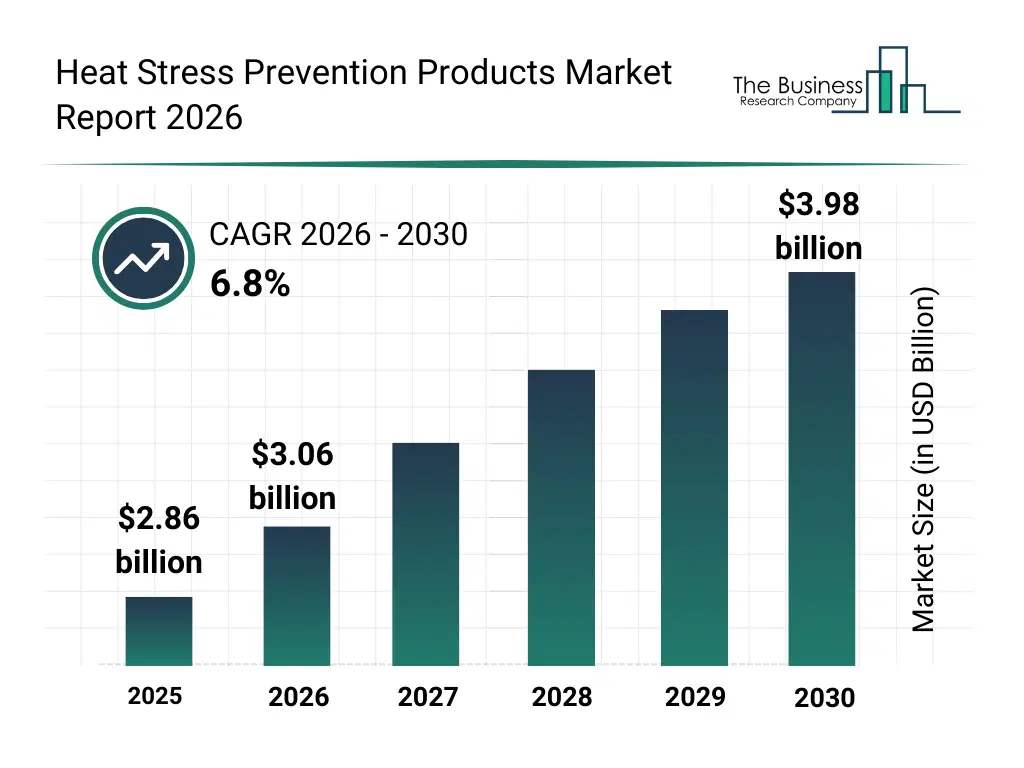
What Is The Heat Stress Prevention Products Market Size and Share 2026?
The heat stress prevention products market size has grown strongly in recent years. It will grow from $2.86 billion in 2025 to $3.06 billion in 2026 at a compound annual growth rate (CAGR) of 7.1%. The growth in the historic period can be attributed to growing awareness of heat-related health risks, rising occupational health and safety regulations, increasing incidence of extreme heat events, expansion of industrial and construction sectors, and rising adoption of safety clothing and cooling devices.What Is The Heat Stress Prevention Products Market Growth Forecast?
The heat stress prevention products market size is expected to see strong growth in the next few years. It will grow to $3.98 billion in 2030 at a compound annual growth rate (CAGR) of 6.8%. The growth in the forecast period can be attributed to rising global temperatures due to climate change, increasing industrialization in hot regions, stricter workplace safety regulations, growing adoption of wearable cooling and monitoring devices, and increasing demand in the agriculture and construction sectors. Major trends in the forecast period include technological advancements in wearable cooling and monitoring devices, innovations in cooling apparel and personal cooling solutions, integration of IoT and AI for real-time heat stress monitoring, growth in smart wearable heat-stress prevention tools, and increasing demand for multifunctional and eco-friendly cooling products.
Global Heat Stress Prevention Products Market Segmentation
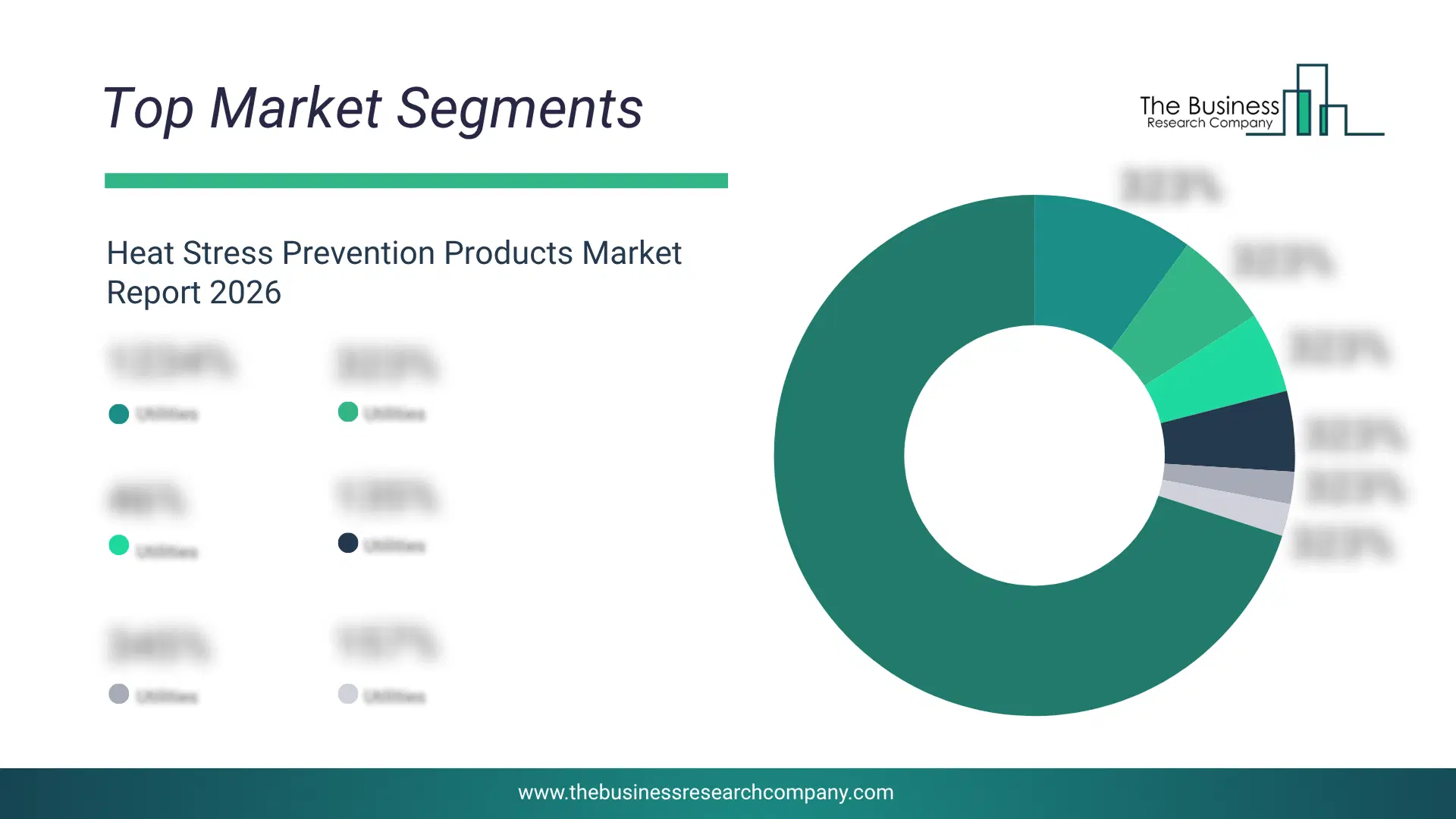
1) By Product Type: Cooling Wearables And Apparel, Hydration And Electrolyte Solutions, Environmental Heat Reduction Products, Personal Cooling Devices, Monitoring And Safety Devices 2) By Technology: Passive Cooling, Active Cooling, Insulative Or Reflective, Smart Or Connected, Hydration Optimization 3) By Distribution Channel: Business-To-Business (B2B), Business-To-Consumer (B2C) 4) By End-User: Industrial Or Occupational, Sports And Recreation, Military And First Responders, Healthcare, General Consumer Subsegments: 1) By Cooling Wearables And Apparel: Cooling Vest, Cooling Shirt, Cooling Jacket, Cooling Gloves, Cooling Hat 2) By Hydration And Electrolyte Solutions: Oral Rehydration Solution, Electrolyte Drink Mix, Ready To Drink Electrolyte Beverage, Electrolyte Powder Sachets, Electrolyte Tablets 3) By Environmental Heat Reduction Products: Shade Structures, Ventilation Fans, Evaporative Cooling Systems, Air Cooling Units, Reflective Shelters 4) By Personal Cooling Devices: Battery Powered Cooling Vest, Personal Fan, Neck Cooler, Cooling Bandana, Cooling Wristband 5) By Monitoring And Safety Devices: Body Temperature Sensor Device, Heat Exposure Alert Wearable, Hydration Reminder Device, Heart Rate Monitor Wearable, Environmental Heat Index Monitor The top segments in the heat stress prevention products market will be: • Cooling Wearables And Apparel will reach $1.41 Billion by 2030. • Hydration And Electrolyte Solutions will reach $0.97 Billion by 2030. • Environmental Heat Reduction Products will reach $0.71 Billion by 2030. • Personal Cooling Devices will reach $0.52 Billion by 2030. • Monitoring And Safety Devices will reach $0.38 Billion by 2030.What Are The Drivers Of The Heat Stress Prevention Products Market?
The increasing demand for wearable devices is expected to propel the growth of the heat stress prevention products market going forward. Wearable devices refer to electronic gadgets that can be worn on the body, often designed to track health, fitness, or provide smart features. The rising demand for wearable devices is due to growing consumer health consciousness, as people increasingly seek to monitor and improve their fitness, track vital signs, and manage overall well-being. Heat stress prevention products enable wearable devices by integrating sensors and monitoring technologies that track body temperature, hydration, and physiological strain in real time. They enhance worker safety and health outcomes by delivering timely alerts and data-driven insights to prevent heat-related illnesses. For instance, in April 2025, according to the Parliamentary Office of Science and Technology, a UK-based parliamentary research and advisory body, between 2023 and 2024, the National Institute for Health and Care Research (NIHR) and UK Research and Innovation (UKRI) invested £11.5 million ($15.52 million) in 10 research projects focused on developing wearable technologies to support greater independence for people living with frailty or long-term physical disabilities. Therefore, the increasing demand for wearable devices is driving the growth of the heat stress prevention products industry. The increasing worker safety regulations are expected to propel the growth of the heat stress prevention products market going forward. Worker safety regulations refer to legal and industry-mandated requirements aimed at protecting employees from occupational hazards, including extreme heat exposure, physical strain, and heat-related illnesses in workplaces such as construction sites, manufacturing plants, and outdoor environments. The rise in such regulations is due to growing awareness of occupational health risks, which requires stricter government enforcement for employee well-being. Heat stress prevention products support worker safety regulations by providing solutions such as cooling vests, wearable sensors, hydration systems, and environmental monitoring tools that reduce the risk of heat-related injuries and ensure compliance with safety standards. For instance, in April 2025, according to the Virginia Department of Labor and Industry, a US-based state occupational safety agency, the Virginia Occupational Safety and Health (VOSH) program reported total safety and health inspections reached 2,008 in fiscal year 2024, representing a 46% increase over fiscal year 2022. Therefore, the increasing worker safety regulations are driving the growth of the heat stress prevention products industry.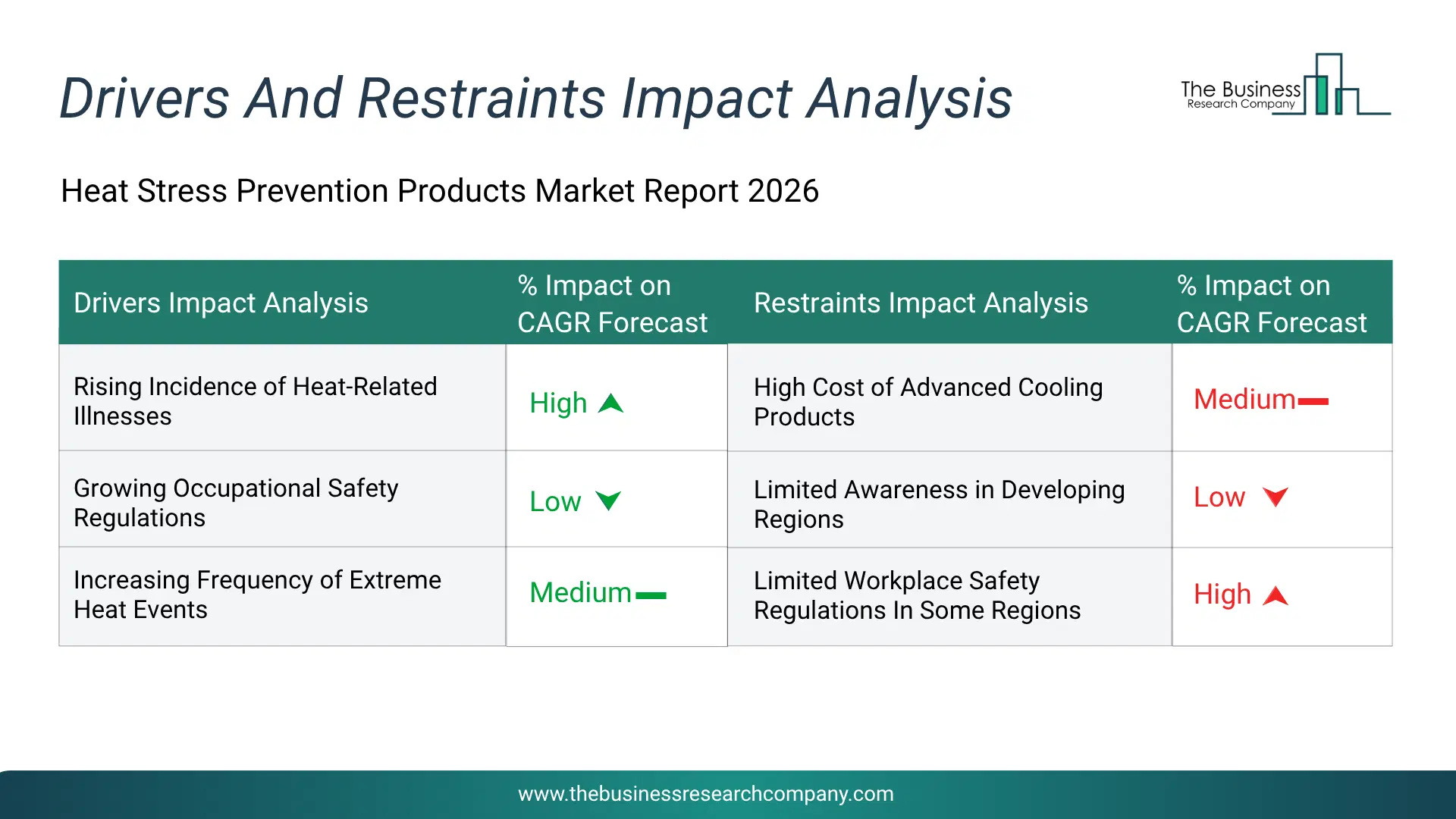
Infographic Chart Showing Key Market Drivers Analysis And Restraints For Heat Stress Prevention Products Market
The chart presents an impact analysis of key drivers and restraints, quantifying their relative influence on the market's growth rate and helping assess the balance between growth enablers and limiting factors. This chart offers a high-level perspective; the full report contains more detailed insights.
How Will The Drivers Impact Growth In The Global Heat Stress Prevention Products Market?
• Rising Incidence of Heat-Related Illnesses (High) – During the forecast period, the rising incidence of heat-related illnesses is expected to become a key growth driver for the heat stress prevention products market by 2030. Rising incidence of heat-related illnesses acts as a major driver for the heat stress prevention products market because increasing cases of heat exhaustion, heat stroke, and dehydration are encouraging organizations to protect workers and individuals exposed to high temperatures. Industries such as construction, manufacturing, mining, agriculture, and utilities are adopting cooling products to reduce health risks and improve workplace safety. Employers are also recognizing that preventing heat stress helps reduce absenteeism and medical costs while maintaining productivity. • Growing Occupational Safety Regulations (Low) – During the forecast period, the growing occupational safety regulations is expected to emerge as a major factor driving the expansion of the heat stress prevention products market by 2030. Growing occupational safety regulations act as a major driver for the heat stress prevention products market because governments and workplace safety agencies are introducing stricter guidelines to protect employees working in hot environments. Companies are increasingly required to provide protective equipment, hydration solutions, and cooling products to comply with safety standards. Failure to meet these regulations can lead to penalties, legal liabilities, and workplace accidents. • Increasing Frequency of Extreme Heat Events (Medium) – During the forecast period, the increasing frequency of extreme heat events is expected to act as a key growth catalyst for the heat stress prevention products market by 2030. Increasing frequency of extreme heat events acts as a major driver for the heat stress prevention products market because climate change is causing more frequent and prolonged heatwaves across many regions. Higher temperatures increase the risk of heat-related illnesses among outdoor workers, emergency responders, athletes, and military personnel. This creates greater demand for cooling vests, cooling towels, hydration packs, and heat-resistant protective apparel.How Will The Restraints Impact Growth In The Global Heat Stress Prevention Products Market?
• High Cost of Advanced Cooling Products (High) – During the forecast period, the high cost of advanced cooling products acts as a major restraint for the heat stress prevention products market because many cooling vests, wearable cooling devices, and specialized protective apparel use advanced materials and technologies that increase their prices. Small businesses and organizations with limited budgets often find it difficult to purchase these products for large workforces. High replacement and maintenance costs also reduce adoption, particularly in developing countries. As a result, demand for premium heat stress prevention products grows at a slower pace despite increasing awareness of worker safety. • Limited Awareness in Developing Regions (Low) – During the forecast period, the limited awareness in developing regions acts as a major restraint for the heat stress prevention products market because many employers and workers are still unaware of the health risks associated with prolonged heat exposure and the benefits of preventive products. Traditional workplace practices often receive greater attention than proactive heat protection measures. This reduces investments in cooling apparel, hydration solutions, and wearable cooling technologies. Consequently, market penetration remains lower in many emerging economies. • Limited Workplace Safety Regulations In Some Regions (Medium) – During the forecast period, the limited workplace safety regulations in some regions act as a restraint for the Heat Stress Prevention Products market because weak enforcement of occupational safety standards reduces employer incentives to invest in protective solutions. In areas where heat exposure risks are not strictly monitored, businesses may prioritize cost reduction over employee protection measures. This reduces demand for cooling apparel, hydration systems, and heat monitoring technologies. Lack of mandatory requirements also limits awareness among workers and employers regarding heat-related health risks. Consequently, regulatory gaps can slow market adoption.Key Players In The Global Heat Stress Prevention Products Market
Major companies operating in the heat stress prevention products market are Symphony Limited, Radians Inc., Ergodyne Inc., Honeywell Safety Products, Thermoteknix Systems Ltd., Encon Safety Products Inc., TechNiche International, Allegro Industries Inc., COOLSHIRT Systems LLC, i2Cool Technology Inc., Climacool, Coolcore LLC, Polar Products Inc., Evalan GmbH, StaCool Industries, Arctic Heat Pty Ltd., CoolVest Inc., CoolPax Systems, Glacier Tek Inc., Bodytrak Inc.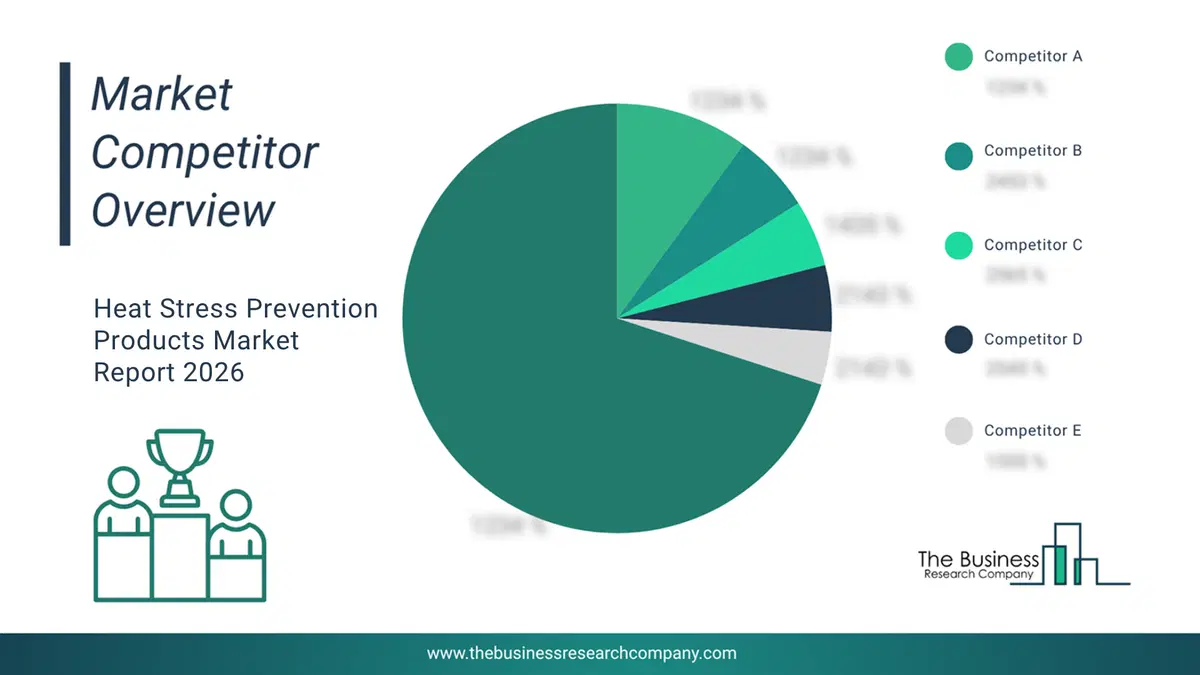
This chart is for illustrative purposes; the full report includes a detailed competitor analysis and comprehensive overview of the top 10 companies in the market.
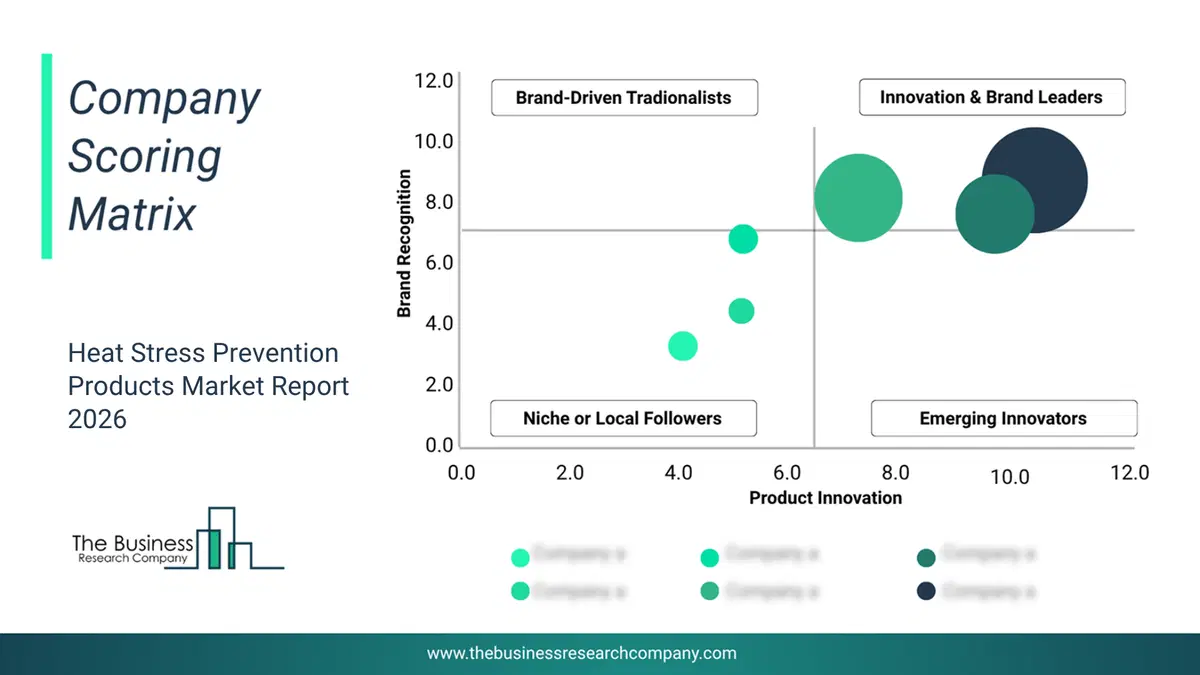
This chart maps companies by product innovation and brand strength, with bubble size indicating relative revenue, helping identify market leaders, challengers, and niche players. This is an illustrative chart; the full report provides a complete and accurate competitive analysis.
What Are Latest Mergers And Acquisitions In The Heat Stress Prevention Products Market?
In May 2025, DuPont de Nemours Inc., a US‑based science and innovation company, partnered with Epicore Biosystems Inc. to advance worker safety through smart wearable heat stress prevention products. Through this collaboration, DuPont and Epicore Biosystems aim to integrate Epicore’s wearable biosensor technology with DuPont’s protective materials and worker‑safety expertise to create enhanced heat‑stress‑monitoring solutions for industrial, construction, and outdoor occupational environments. Epicore Biosystems Inc. is a US‑based wearable technology and biosensing company.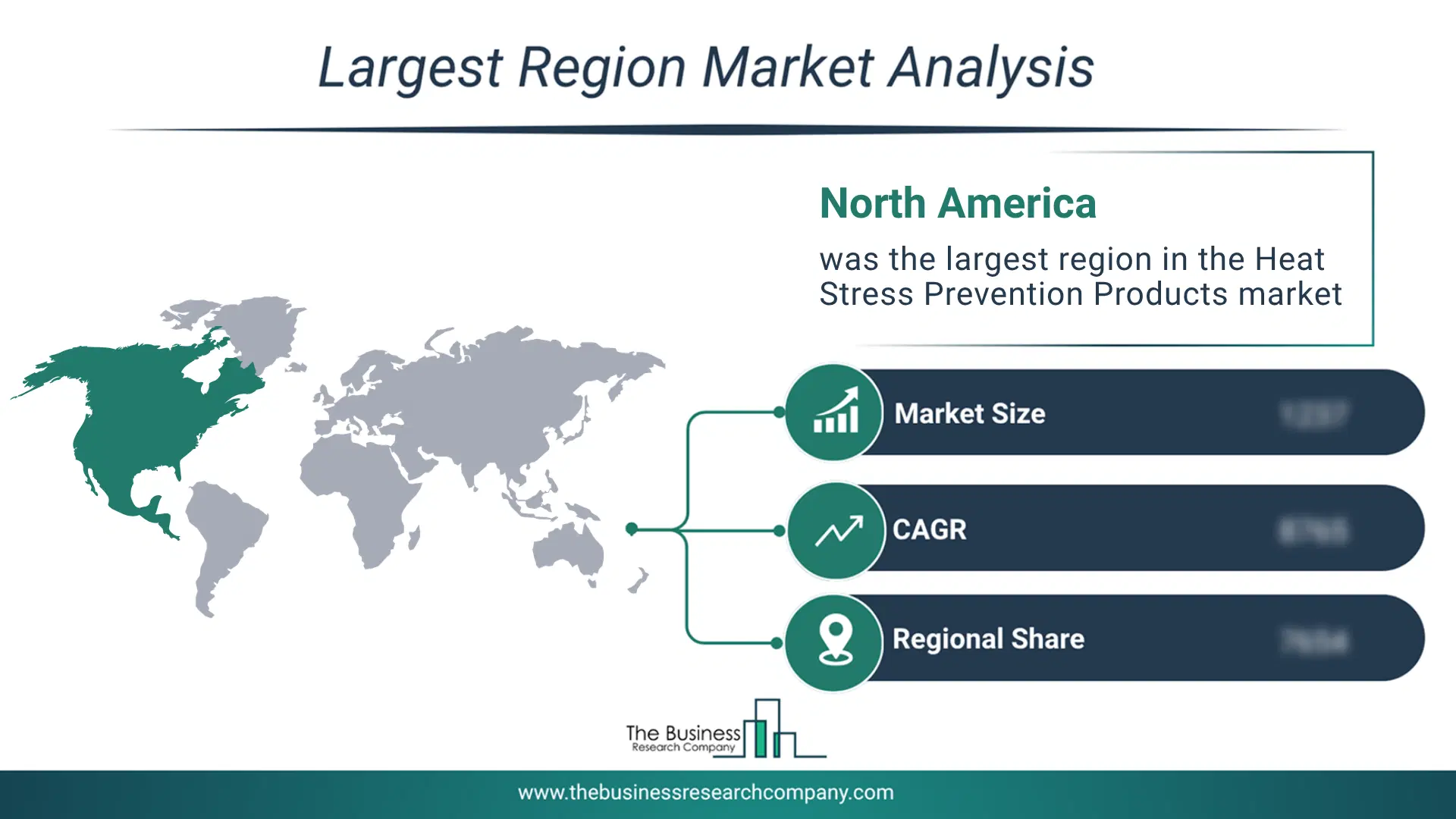
Regional Insights
North America was the largest region in the heat stress prevention products market in 2025. Asia-Pacific is expected to be the fastest-growing region in the forecast period. The regions covered in this market report are Asia-Pacific, South East Asia, Western Europe, Eastern Europe, North America, South America, Middle East, Africa. The countries covered in this market report are Australia, Brazil, China, France, Germany, India, Indonesia, Japan, Taiwan, Russia, South Korea, UK, USA, Canada, Italy, Spain.What Defines the Heat Stress Prevention Products Market?
The heat stress prevention products market also consists of sales of cooling vests, cooling towels, hydration packs, wearable cooling devices, and heat-resistant protective apparel. Values in this market are ‘factory gate’ values, that is, the value of goods sold by the manufacturers or creators of the goods, whether to other entities (including downstream manufacturers, wholesalers, distributors, and retailers) or directly to end customers. The value of goods in this market includes related services sold by the creators of the goods.How is Market Value Defined and Measured?
The market value is defined as the revenues that enterprises gain from the sale of goods and/or services within the specified market and geography through sales, grants, or donations in terms of the currency (in USD unless otherwise specified). The revenues for a specified geography are consumption values that are revenues generated by organizations in the specified geography within the market, irrespective of where they are produced. It does not include revenues from resales along the supply chain, either further along the supply chain or as part of other products.
This chart presents market attractiveness based on a quantitative evaluation of growth, competition, strategic alignment, and risk, offering a clear view of opportunity areas for decision-making. This chart is for illustrative purposes; the full report contains the complete analysis.

This chart highlights the Total Addressable Market (TAM) by estimating the maximum revenue opportunity using an assumption-driven approach, supporting strategic planning and opportunity sizing across markets. The chart is illustrative; the full report provides a more comprehensive analysis.
What Key Data and Analysis Are Included in the Heat Stress Prevention Products Market Report 2026?
The heat stress prevention products market research report is one of a series of new reports from The Business Research Company that provides market statistics, including industry global market size, regional shares, competitors with the market share, detailed market segments, market trends and opportunities, and any further data you may need to thrive in the heat stress prevention products industry. The market research report delivers a complete perspective of everything you need, with an in-depth analysis of the current and future state of the industry.Heat Stress Prevention Products Market Report Forecast Analysis
| Report Attribute | Details |
|---|---|
| Market Size Value In 2026 | $3.06 billion |
| Revenue Forecast In 2030 | $3.98 billion |
| Growth Rate | CAGR of 7.1% from 2026 to 2030 |
| Base Year For Estimation | 2025 |
| Actual Estimates/Historical Data | 2020-2025 |
| Forecast Period | 2026 - 2030 |
| Market Representation | Revenue in USD Billion and CAGR from 2026 to 2030 |
| Segments Covered | Product Type, Technology, Distribution Channel, End-User |
| Regional Scope | Asia-Pacific, Western Europe, Eastern Europe, North America, South America, Middle East, Africa |
| Country Scope | The countries covered in the report are Australia, Brazil, China, France, Germany, India, ... |
| Key Companies Profiled | Symphony Limited, Radians Inc., Ergodyne Inc., Honeywell Safety Products, Thermoteknix Systems Ltd., Encon Safety Products Inc., TechNiche International, Allegro Industries Inc., COOLSHIRT Systems LLC, i2Cool Technology Inc., Climacool, Coolcore LLC, Polar Products Inc., Evalan GmbH, StaCool Industries, Arctic Heat Pty Ltd., CoolVest Inc., CoolPax Systems, Glacier Tek Inc., Bodytrak Inc. |
| Customization Scope | Request for Customization |
| Pricing And Purchase Options | Explore Purchase Options |