
Heavy Engineering Equipment Market Report 2026
Global Outlook – By Vertical (Excavators, Crushers, Loaders, Bulldozers, Dump Trucks, Scrapers, Forklifts), By Propulsion Type (Diesel-Powered, Electric-Powered, Hybrid, Hydrogen Fuel Cell), By Automation Level (Manual Or Conventional, Semi-Autonomous, Fully Autonomous), By Sales Channel (Direct Sales, Dealer Or Distributor Sales, Leasing And Rental), By End-User Industry (Construction, Mining, Energy, Manufacturing And Heavy Fabrication, Agriculture) – Market Size, Trends, Strategies, and Forecast to 2030
Heavy Engineering Equipment Market Overview
• Heavy Engineering Equipment market size has reached to $148.47 billion in 2025 • Expected to grow to $179.16 billion in 2030 at a compound annual growth rate (CAGR) of 3.9% • Growth Driver: Surge In Industrialization Fueling The Growth Of The Market Due To Expansion Of Manufacturing And Infrastructure Development Activities • Market Trend: Innovation In High-Capacity Crawler Transport Solutions Strengthening Load Handling And Operational Flexibility In Industrial Applications • North America was the largest region in 2025 and Asia-Pacific is the fastest growing region.Market Gains By 2030 – Top Opportunities By Segment
Market Gain identifies the most promising market opportunities by highlighting the segments or products expected to generate the highest incremental revenue growth over the next five years.
What Is Covered Under Heavy Engineering Equipment Market?
Heavy engineering equipment is a category of large industrial machines designed for heavy-duty operations in sectors such as construction, mining, energy, and infrastructure development. It includes complex, high-capital equipment such as cranes, excavators, turbines, and drilling systems used for large-scale engineering projects. The main verticals of heavy engineering equipment include excavators, crushers, loaders, bulldozers, dump trucks, scrapers, and forklifts. Excavators refer to heavy-duty earthmoving machines used for digging, material handling, and large-scale construction and mining operations. The different propulsion types include diesel-powered, electric-powered, hybrid, and hydrogen fuel cell, various automation levels include manual or conventional, semi-autonomous, and fully autonomous. They utitlize sales channels include direct sales, dealer or distributor sales, and leasing and rental, while the end-user industries involved are construction, mining, energy, manufacturing and heavy fabrication, and agriculture.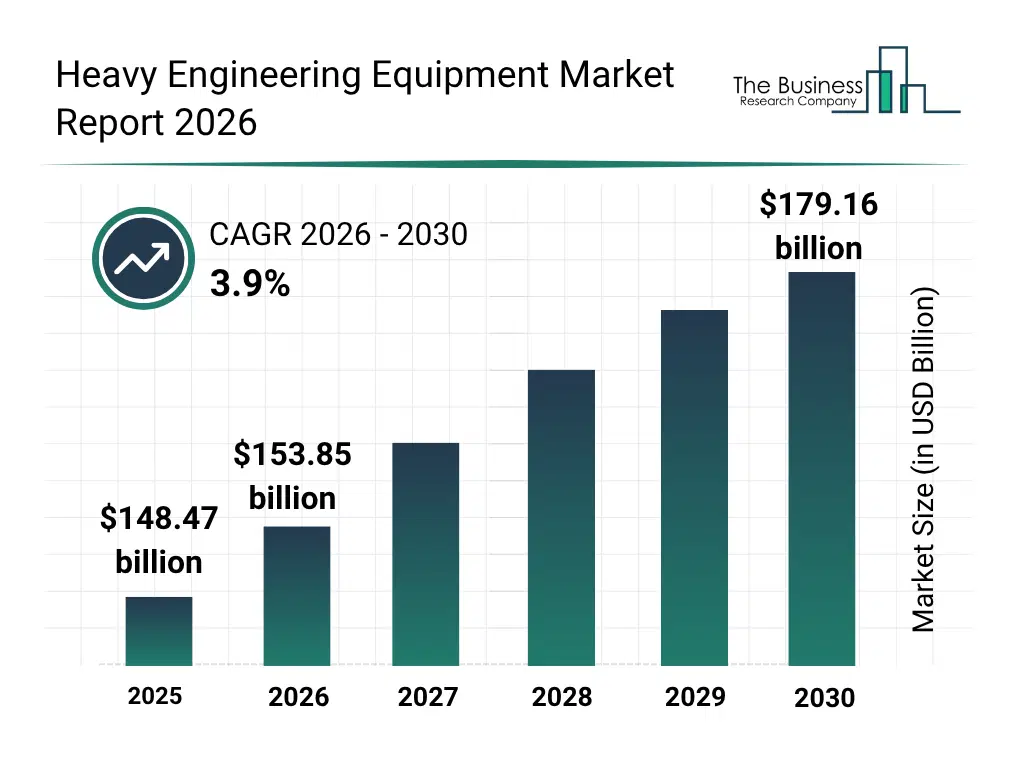
What Is The Heavy Engineering Equipment Market Size and Share 2026?
The heavy engineering equipment market size has grown steadily in recent years.It will grow from $148.47 billion in 2025 to $153.85 billion in 2026 at a compound annual growth rate (CAGR) of 3.6%. The growth in the historic period can be attributed to rapid urbanization and infrastructure expansion projects, rising mining and natural resource extraction activities, increasing mechanization in construction and agriculture, growing demand for large scale energy projects, expansion of industrial manufacturing capacity.What Is The Heavy Engineering Equipment Market Growth Forecast?
The heavy engineering equipment market size is expected to see steady growth in the next few years.It will grow to $179.16 billion by 2030 at a compound annual growth rate (CAGR) of 3.9%. The growth in the forecast period can be attributed to increasing adoption of autonomous heavy machinery systems, rising electrification of construction and mining fleets, growing demand for low emission high efficiency equipment, expansion of smart connected equipment ecosystems, increasing investment in large scale infrastructure modernization projects.Major trends in the forecast period include predictive maintenance integration in heavy machinery operations, increasing adoption of hybrid and electric heavy equipment, growth of modular and multifunctional equipment design, rising demand for fuel efficient high capacity machinery, expansion of remote controlled and teleoperated construction equipment systems.
Global Heavy Engineering Equipment Market Segmentation
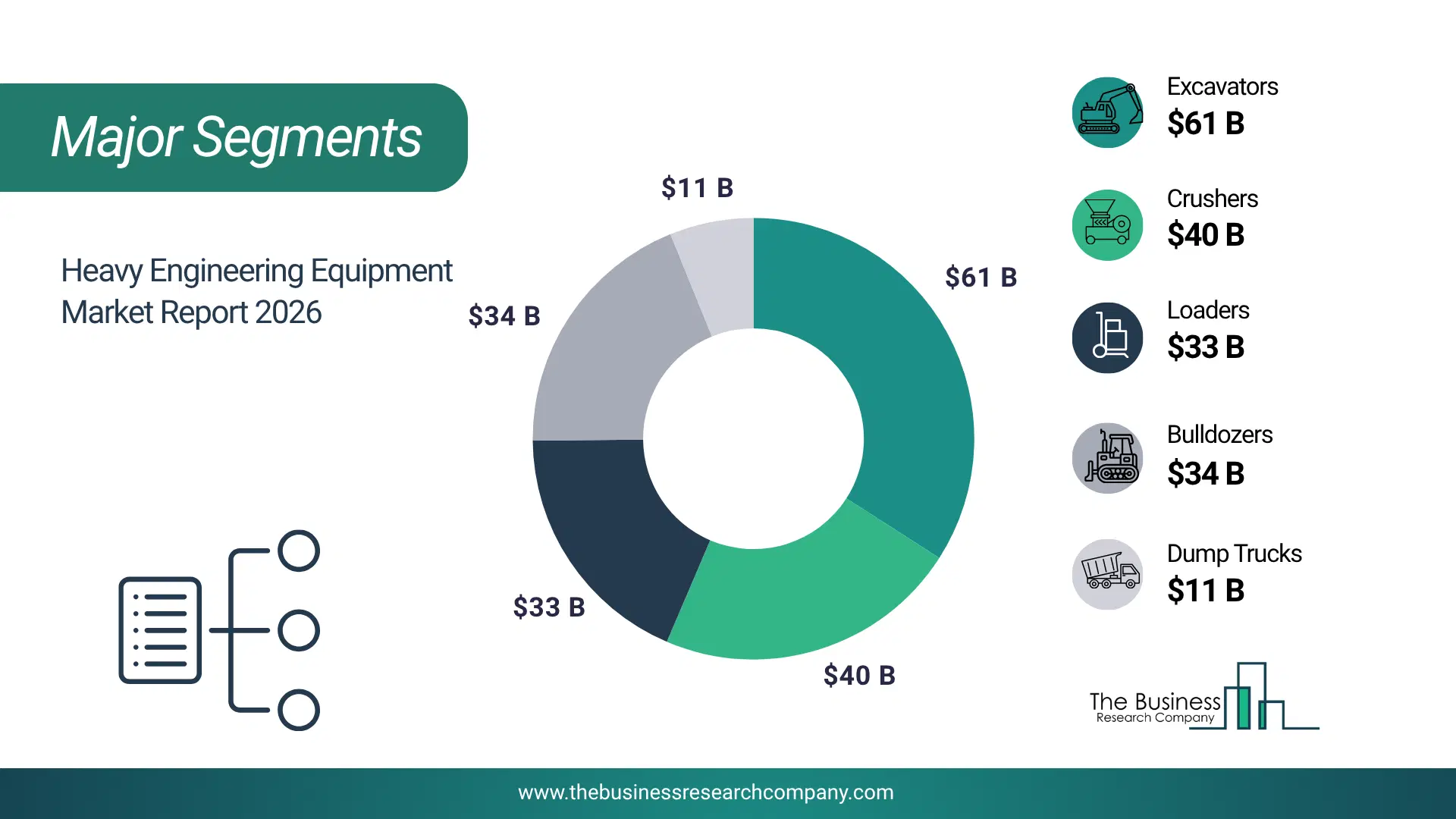
1) By Vertical: Excavators, Crushers, Loaders, Bulldozers, Dump Trucks, Scrapers, Forklifts 2) By Propulsion Type: Diesel-Powered, Electric-Powered, Hybrid, Hydrogen Fuel Cell 3) By Automation Level: Manual Or Conventional, Semi-Autonomous, Fully Autonomous 4) By Sales Channel: Direct Sales, Dealer Or Distributor Sales, Leasing And Rental 5) By End-User Industry: Construction, Mining, Energy, Manufacturing And Heavy Fabrication, Agriculture Subsegments: 1) By Excavators: Crawler Excavators, Wheeled Excavators, Mini Or Compact Excavators, Long-Reach Excavators, Dragline Excavators 2) By Crushers: Jaw Crushers, Cone Crushers, Impact Crushers, Gyratory Crushers, Hammer Crushers 3) By Loaders: Wheel Loaders, Backhoe Loaders, Skid Steer Loaders, Crawler Loaders, Compact Track Loaders 4) By Bulldozers: Crawler Bulldozers, Wheel Bulldozers, Mini Bulldozers, Swamp Bulldozers, Pipe Layer Bulldozers 5) By Dump Trucks: Articulated Dump Trucks, Rigid Dump Trucks, Mining Dump Trucks, Off-Highway Dump Trucks, Rear Dump Trucks 6) By Scrapers: Elevating Scrapers, Open Bowl Scrapers, Tandem Scrapers, Self-Propelled Scrapers, Tractor-Towed Scrapers 7) By Forklifts: Counterbalance Forklifts, Reach Trucks, Pallet Jacks, Rough Terrain Forklifts, Order Picker Forklifts The top segments in the heavy engineering equipment market will be: • Excavators will reach $61.08 Billion by 2030. • Crushers will reach $40.01 Billion by 2030. • Loaders will reach $33.11 Billion by 2030. • Bulldozers will reach $34.28 Billion by 2030. • Dump Trucks will reach $10.75 Billion by 2030.What Is The Driver Of The Heavy Engineering Equipment Market?
The rising industrialization is expected to propel the growth of the heavy engineering equipment industry going forward.Industrialization is the process of transforming an economy from agriculture-based to one dominated by manufacturing and factory-based production using machines.Increasing industrialization is driven mainly by rising demand for goods, which pushes industries to use machines and factories to produce more efficiently and at a larger scale.Heavy engineering equipment supports industrialization by enabling large-scale construction, mining, and infrastructure development, which increases production capacity, improves efficiency, and accelerates the growth of industries and factories.For instance, in February 2024, according to the Xinhua News Agency, a China-based government agency, Mexico's industrial activity increased by 3.5% in 2023 compared to the prior year.Therefore, the rising industrialization is driving the growth of the heavy engineering equipment industry.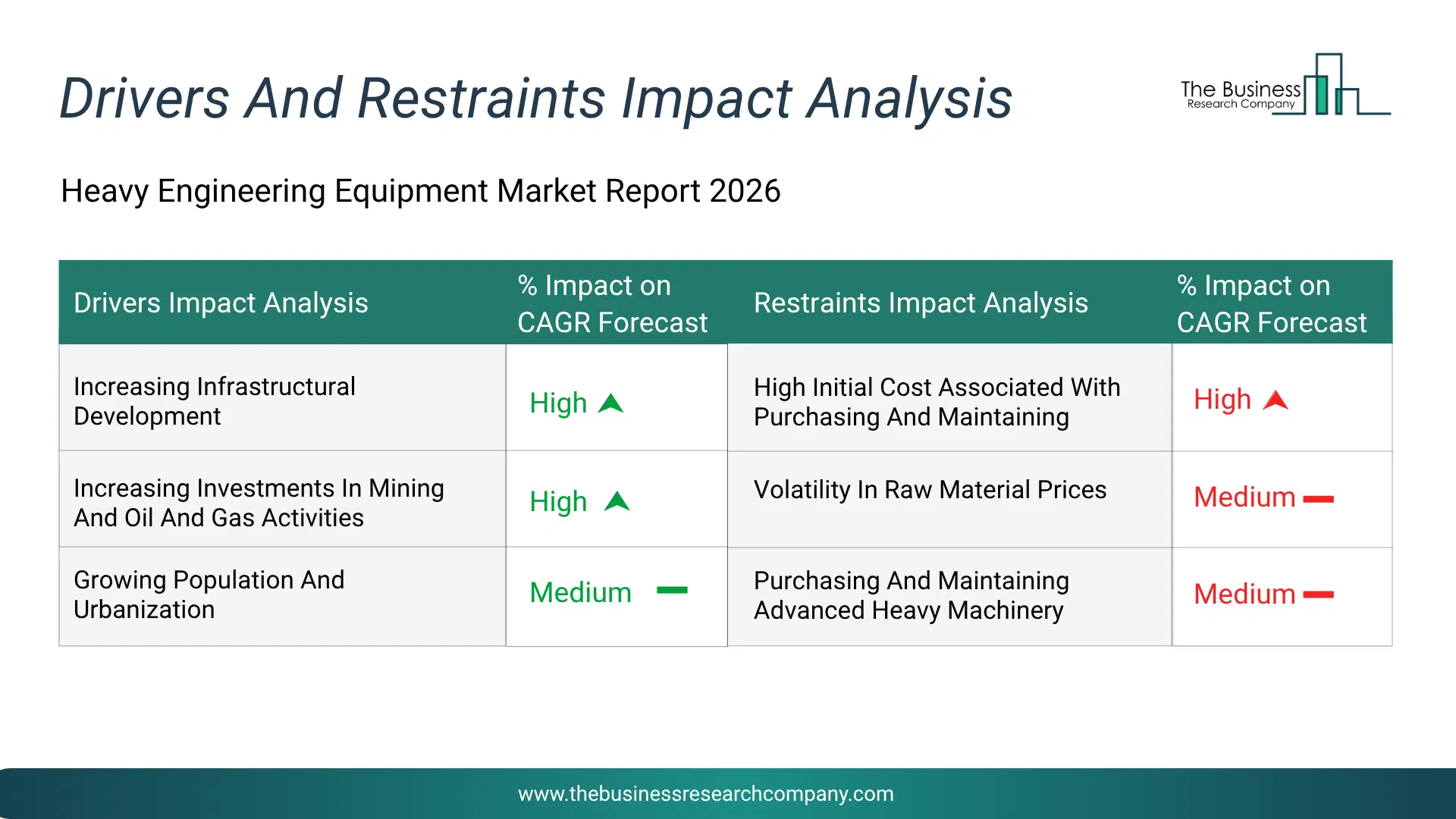
Infographic Chart Showing Key Market Drivers Analysis And Restraints For Heavy Engineering Equipment Market
The chart presents an impact analysis of key drivers and restraints, quantifying their relative influence on the market's growth rate and helping assess the balance between growth enablers and limiting factors. This chart offers a high-level perspective; the full report contains more detailed insights.
How Will The Drivers Impact Growth In The Global Heavy Engineering Equipment Market?
• Increasing Infrastructural Development (High) – During the forecast period, the increasing infrastructural development is expected to become a key growth driver for the heavy engineering equipment market by 2030. Governments and private sector players are accelerating investments in transportation networks, smart cities, energy infrastructure, and industrial corridors, creating sustained demand for high-capacity machinery. Large-scale projects such as highways, railways, ports, and urban transit systems require advanced equipment for excavation, material handling, and site preparation. The growing focus on improving connectivity and economic productivity is further boosting equipment deployment across regions. As infrastructure pipelines expand globally, demand for efficient and durable machinery is expected to rise significantly. • Increasing Investments In Mining And Oil And Gas Activities (High) – During the forecast period, the increasing investments in mining and oil and gas activities are expected to emerge as a major factor driving the expansion of the heavy engineering equipment market by 2030. Rising global demand for minerals, metals, and energy resources is encouraging exploration and extraction activities in both developed and emerging economies. These operations require specialized heavy equipment for drilling, hauling, crushing, and material processing under challenging conditions. Technological advancements in equipment durability and performance are further supporting adoption in harsh environments. Additionally, expansion of offshore and onshore energy projects is creating new demand avenues for heavy machinery. • Growing Population And Urbanization (Medium) – During the forecast period, the growing population and urbanization are expected to act as a key growth catalyst for the heavy engineering equipment market by 2030. Rapid urban expansion is driving the need for residential, commercial, and industrial construction, leading to increased demand for earthmoving and material handling equipment. Urban population growth is also intensifying the need for efficient waste management, water infrastructure, and public utilities, all of which require heavy machinery support. The shift toward megacities and urban clusters is further accelerating construction intensity and equipment usage rates. As cities continue to expand and modernize, equipment demand is expected to scale accordingly.How Will The Restraints Impact Growth In The Global Heavy Engineering Equipment Market?
• High Initial Cost Associated With Purchasing And Maintaining (High) – During the forecast period, high initial cost associated with purchasing and maintaining is restricting the growth of the heavy engineering equipment market. Significant capital investment required for acquiring and maintaining heavy machinery is limiting adoption, especially among small and medium enterprises. • Volatility In Raw Material Prices (High) – During the forecast period, volatility in raw material prices is restricting the growth of the heavy engineering equipment market. Fluctuations in the cost of steel and other key materials are increasing manufacturing expenses and affecting pricing stability. • Purchasing And Maintaining Advanced Heavy Machinery (Medium) – Purchasing And Maintaining Advanced Heavy Machinery - During the forecast period, purchasing and maintaining advanced heavy machinery is restricting the growth of the heavy engineering equipment market. High costs associated with technologically advanced equipment and their upkeep are creating financial burdens for end users, thereby limiting market growth.Key Players In The Global Heavy Engineering Equipment Market
Major companies operating in the heavy engineering equipment market are Caterpillar Inc., Komatsu Ltd., Deere & Company, XCMG Group, Liebherr Group, Sany Heavy Industry Co Ltd., Hitachi Construction Machinery, Volvo Construction Equipment, JCB (J. C. Bamford Excavators Limited), Sandvik AB, Doosan Infracore, Atlas Copco, Zoomlion Heavy Industry Science & Technology Co Ltd., Terex Corporation, Kubota Corporation, LiuGong Machinery, CNH Industrial N. V., HD Hyundai Infracore, Kobelco Construction Machinery, BEML Limited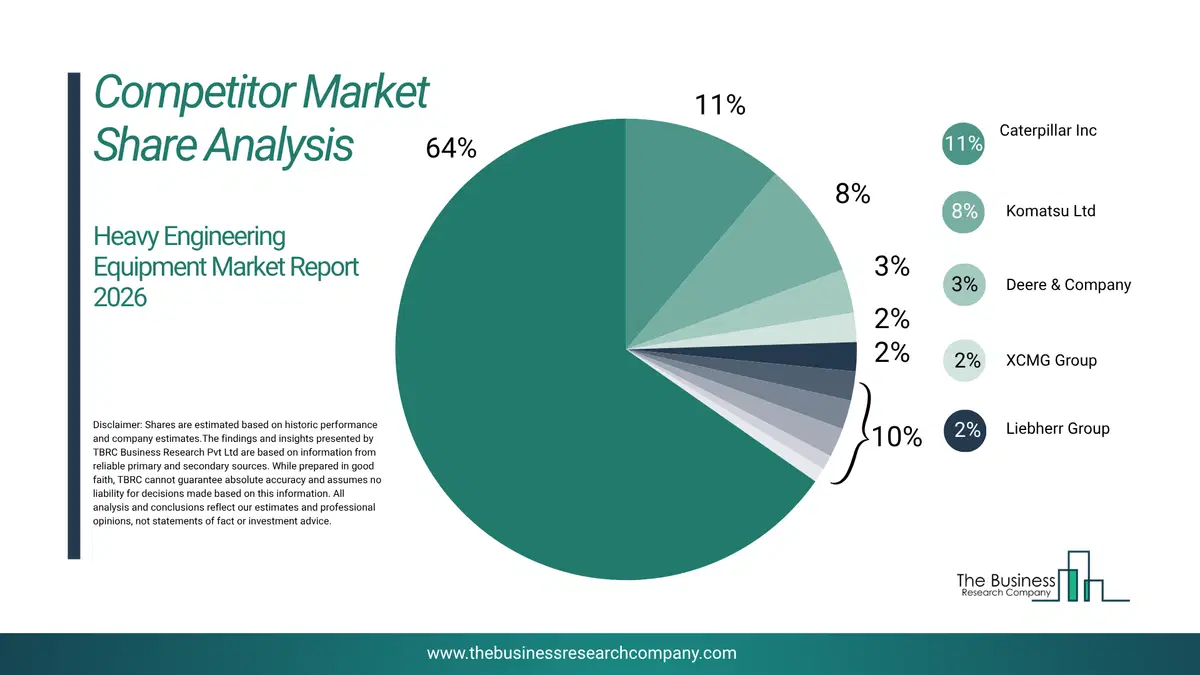
This chart is for illustrative purposes; the full report includes a detailed competitor analysis and comprehensive overview of the top 10 companies in the market.
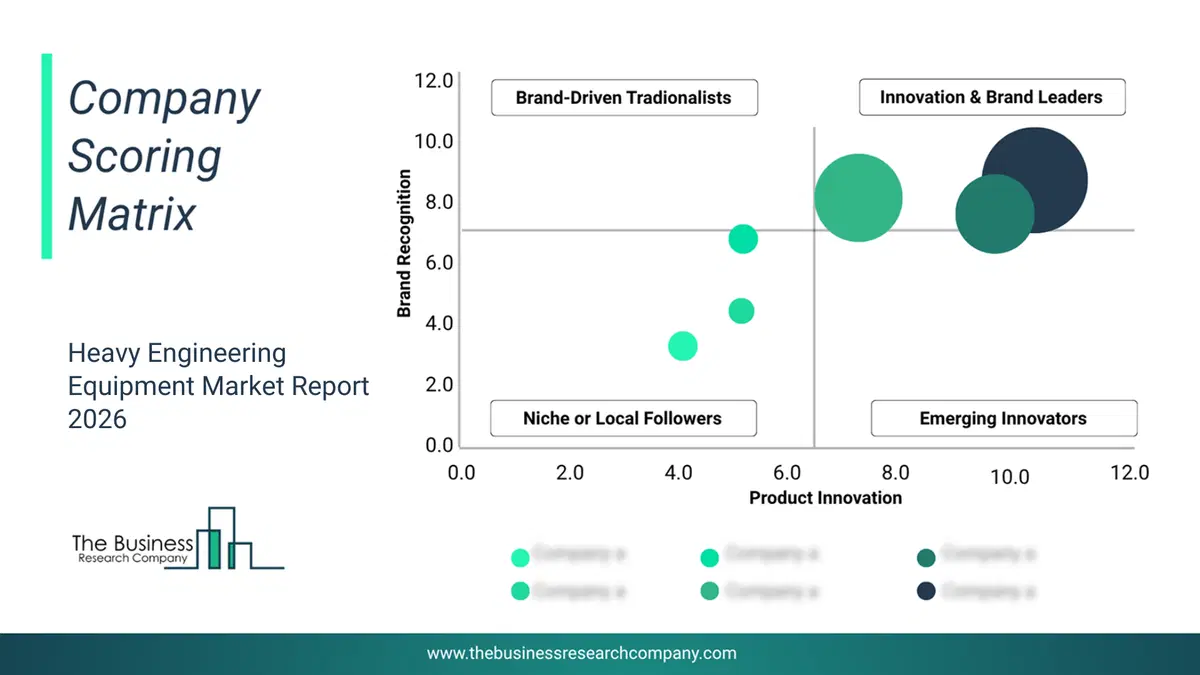
This chart maps companies by product innovation and brand strength, with bubble size indicating relative revenue, helping identify market leaders, challengers, and niche players. This is an illustrative chart; the full report provides a complete and accurate competitive analysis.
Global Heavy Engineering Equipment Market Trends and Insights
Major companies operating in the heavy engineering equipment market are focusing on developing advanced solutions, such as rotating crawler carriers to enhance material handling efficiency, improve operational flexibility in challenging terrains, and increase overall productivity in construction and industrial applications. Rotating crawler carriers are tracked, heavy-duty transport machines equipped with a rotating upper structure that allows them to move and position loads efficiently in rough, uneven, and confined working environments. For instance, in March 2026, Prinoth Ltd., an Italy-based heavy equipment company, launched the Panther T23r crawler carrier featuring a first-of-its-kind PowerForce undercarriage, a 22. 5-short-ton payload capacity, and adaptive independent suspension engineered to deliver superior terrain handling and improved fuel efficiency. This innovation supports increased performance on challenging jobsites while meeting rising demand for high-mobility hauling solutions.What Are Latest Mergers And Acquisitions In The Heavy Engineering Equipment Market?
In January 2026, SMS Equipment Inc., a Canada-based heavy equipment company, acquired Suomen Rakennuskone Oy for an undisclosed amount. With this acquisition, SMS Equipment aims to establish its first European foothold and grow its global mining and construction equipment business by integrating Suomen Rakennuskone Oy’s local market strength and service infrastructure. Suomen Rakennuskone Oy is a Finland-based manufacturing company that offers heavy engineering equipment.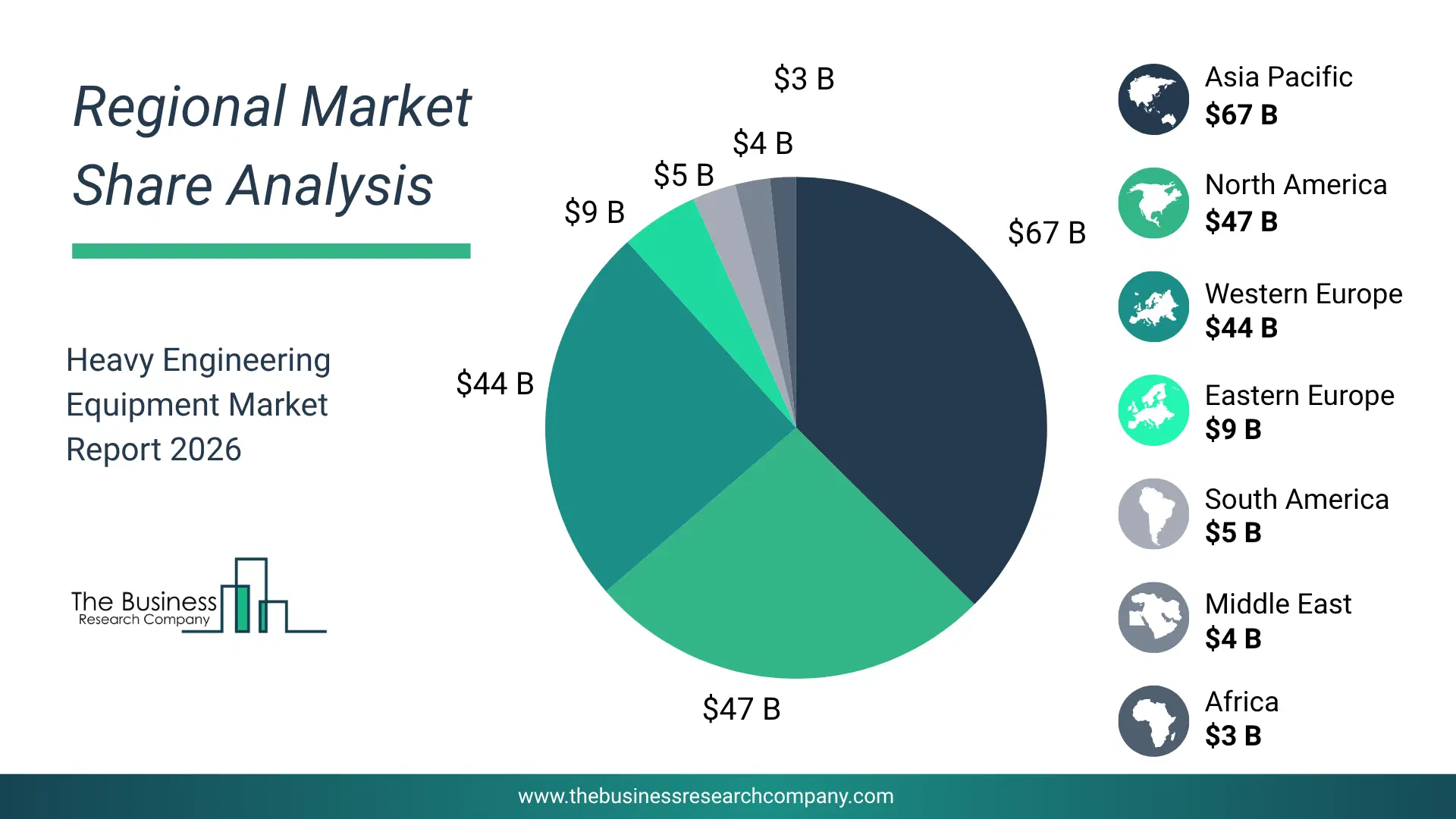
Regional Insights
North America was the largest region in the heavy engineering equipment market in 2025. Asia-Pacific is expected to be the fastest-growing region in the forecast period. The regions covered in this market report are Asia-Pacific, South East Asia, Western Europe, Eastern Europe, North America, South America, Middle East and Africa. The countries covered in this market report are Australia, Brazil, China, France, Germany, India, Indonesia, Japan, Taiwan, Russia, South Korea, UK, USA, Canada, Italy, Spain.What Defines the Heavy Engineering Equipment Market?
The heavy engineering equipment market consists of sales of power generation equipment, industrial process equipment, and steel plant and metallurgical equipment. Values in this market are ‘factory gate’ values, that is, the value of goods sold by the manufacturers or creators of the goods, whether to other entities (including downstream manufacturers, wholesalers, distributors, and retailers) or directly to end customers. The value of goods in this market includes related services sold by the creators of the goods.What is the Market Assessment and Strategic Outlook for the Heavy Engineering Equipment Industry?
The heavy engineering equipment market research report is one of a series of new reports from The Business Research Company that provides market statistics, including industry global market size, regional shares, competitors with the market share, detailed market segments, market trends and opportunities, and any further data you may need to thrive in the heavy engineering equipment industry. The market research report delivers a complete perspective of everything you need, with an in-depth analysis of the current and future state of the industry.
This chart presents market attractiveness based on a quantitative evaluation of growth, competition, strategic alignment, and risk, offering a clear view of opportunity areas for decision-making. This chart is for illustrative purposes; the full report contains the complete analysis.

This chart highlights the Total Addressable Market (TAM) by estimating the maximum revenue opportunity using an assumption-driven approach, supporting strategic planning and opportunity sizing across markets. The chart is illustrative; the full report provides a more comprehensive analysis.
What is the Market Assessment and Strategic Outlook for the Heavy Engineering Equipment Market Report 2026?
The heavy engineering equipment market research report is one of a series of new reports from The Business Research Company that provides heavy engineering equipment market statistics, including heavy engineering equipment industry global market size, regional shares, competitors with a heavy engineering equipment market share, detailed heavy engineering equipment market segments, market trends and opportunities, and any further data you may need to thrive in the heavy engineering equipment industry. This heavy engineering equipment market research report delivers a complete perspective of everything you need, with an in-depth analysis of the current and future scenario of the industry.Heavy Engineering Equipment Market Report Forecast Analysis
| Report Attribute | Details |
|---|---|
| Market Size Value In 2026 | $153.85 billion |
| Revenue Forecast In 2030 | $179.16 billion |
| Growth Rate | CAGR of 3.9% from 2026 to 2030 |
| Base Year For Estimation | 2025 |
| Actual Estimates/Historical Data | 2020-2025 |
| Forecast Period | 2026 - 2030 |
| Market Representation | Revenue in USD Billion and CAGR from 2026 to 2030 |
| Segments Covered | Vertical, Propulsion Type, Automation Level, Sales Channel, End-User Industry |
| Regional Scope | Asia-Pacific, Western Europe, Eastern Europe, North America, South America, Middle East, Africa |
| Country Scope | The countries covered in the report are Australia, Brazil, China, France, Germany, India, Indonesia, Japan, Taiwan, Russia, South Korea, UK, USA, Canada, Italy, Spain. |
| Key Companies Profiled | Caterpillar Inc., Komatsu Ltd., Deere & Company, XCMG Group, Liebherr Group, Sany Heavy Industry Co Ltd., Hitachi Construction Machinery, Volvo Construction Equipment, JCB (J. C. Bamford Excavators Limited), Sandvik AB, Doosan Infracore, Atlas Copco, Zoomlion Heavy Industry Science & Technology Co Ltd., Terex Corporation, Kubota Corporation, LiuGong Machinery, CNH Industrial N. V., HD Hyundai Infracore, Kobelco Construction Machinery, BEML Limited |
| Customization Scope | Request for Customization |
| Pricing And Purchase Options | Explore Purchase Options |