
Hematocrit Test Devices Market Report 2026
Global Outlook – By Product (Hematocrit Test Meter, Hematocrit Test Analyzer, Reagents And Consumables), By Application (Anemia, Polycythemia Vera, Congenital Heart Diseases, Other Applications), By End-User (Hospitals And Ambulatory Surgical Centers, Clinics, Diagnostic And Pathology Labs, Other End-Users) – Market Size, Trends, Strategies, and Forecast to 2030
Hematocrit Test Devices Market Overview
• Hematocrit Test Devices market size has reached to $4.91 billion in 2025 • Expected to grow to $6.47 billion in 2030 at a compound annual growth rate (CAGR) of 5.5% • Growth Driver: Impact Of Blood Disorders On The Hematocrit Test Devices Market • Market Trend: New Compact Analyzer Integrating CBC And ESR For Medium-Volume Labs • North America was the largest region in 2025 and Asia-Pacific is the fastest growing region.What Is Covered Under Hematocrit Test Devices Market?
Hematocrit test devices refer to medical instruments used to measure the percentage of red blood cells (RBCs) in a person's total blood volume. These devices are utilized for monitoring chronic conditions, preoperative assessments, detecting blood doping, screening blood donors, managing emergencies, and conducting research and clinical trials. The main types of hematocrit test devices include hematocrit test meters, hematocrit test analyzers, and reagents and consumables. A hematocrit (HCT) test meter is a point-of-care device used to measure the percentage of red blood cells in whole blood. It is applied for various applications such as anemia, polycythemia vera, congenital heart diseases, and others, and it is used by several end-users, including hospitals and ambulatory surgical centers, clinics, diagnostic and pathology labs, and others.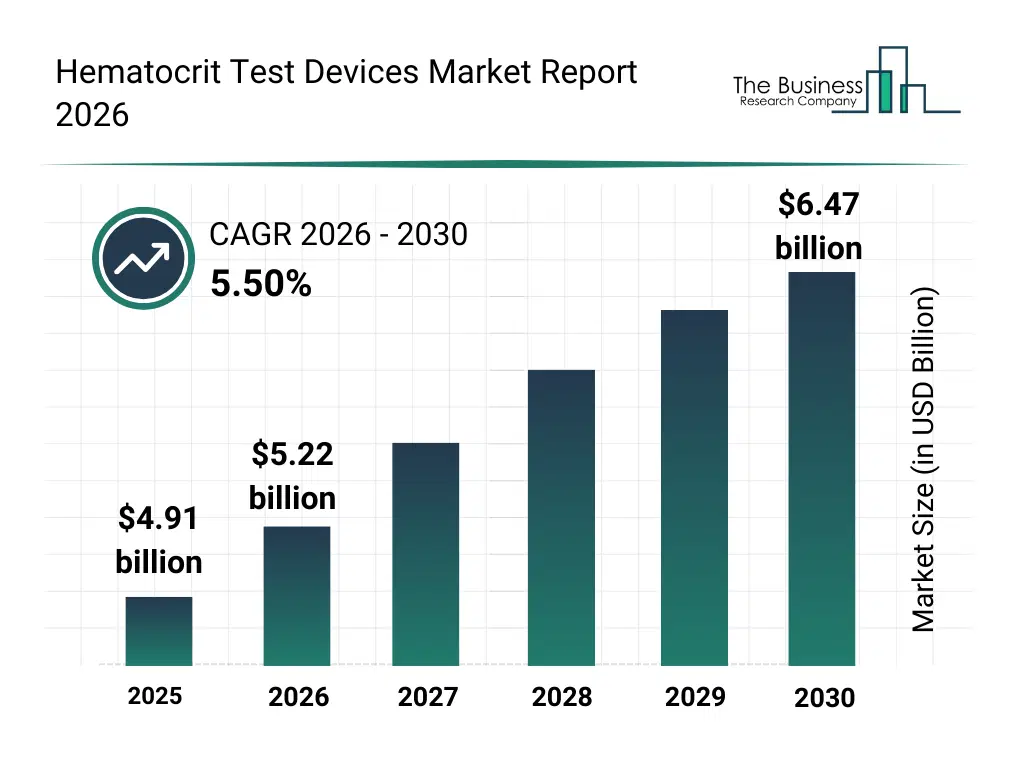
What Is The Hematocrit Test Devices Market Size and Share 2026?
The hematocrit test devices market size has grown strongly in recent years. It will grow from $4.91 billion in 2025 to $5.22 billion in 2026 at a compound annual growth rate (CAGR) of 6.4%. The growth in the historic period can be attributed to increasing prevalence of anemia and blood disorders, growth in hospital and laboratory diagnostic testing, rising demand for blood donor screening, expansion of emergency and trauma care services, growing awareness of hematocrit monitoring in clinical practice.What Is The Hematocrit Test Devices Market Growth Forecast?
The hematocrit test devices market size is expected to see strong growth in the next few years. It will grow to $6.47 billion in 2030 at a compound annual growth rate (CAGR) of 5.5%. The growth in the forecast period can be attributed to rising demand for point-of-care diagnostics, increasing burden of chronic and lifestyle-related diseases, expansion of decentralized healthcare and home-based testing, growing investments in diagnostic infrastructure, increasing focus on early disease detection and preventive healthcare. Major trends in the forecast period include rising adoption of point-of-care hematocrit testing devices, growing demand for rapid and accurate blood parameter assessment, increasing use of portable and handheld hematocrit meters, expansion of hematocrit testing in emergency and critical care settings, rising focus on routine screening and chronic disease monitoring.
Global Hematocrit Test Devices Market Segmentation
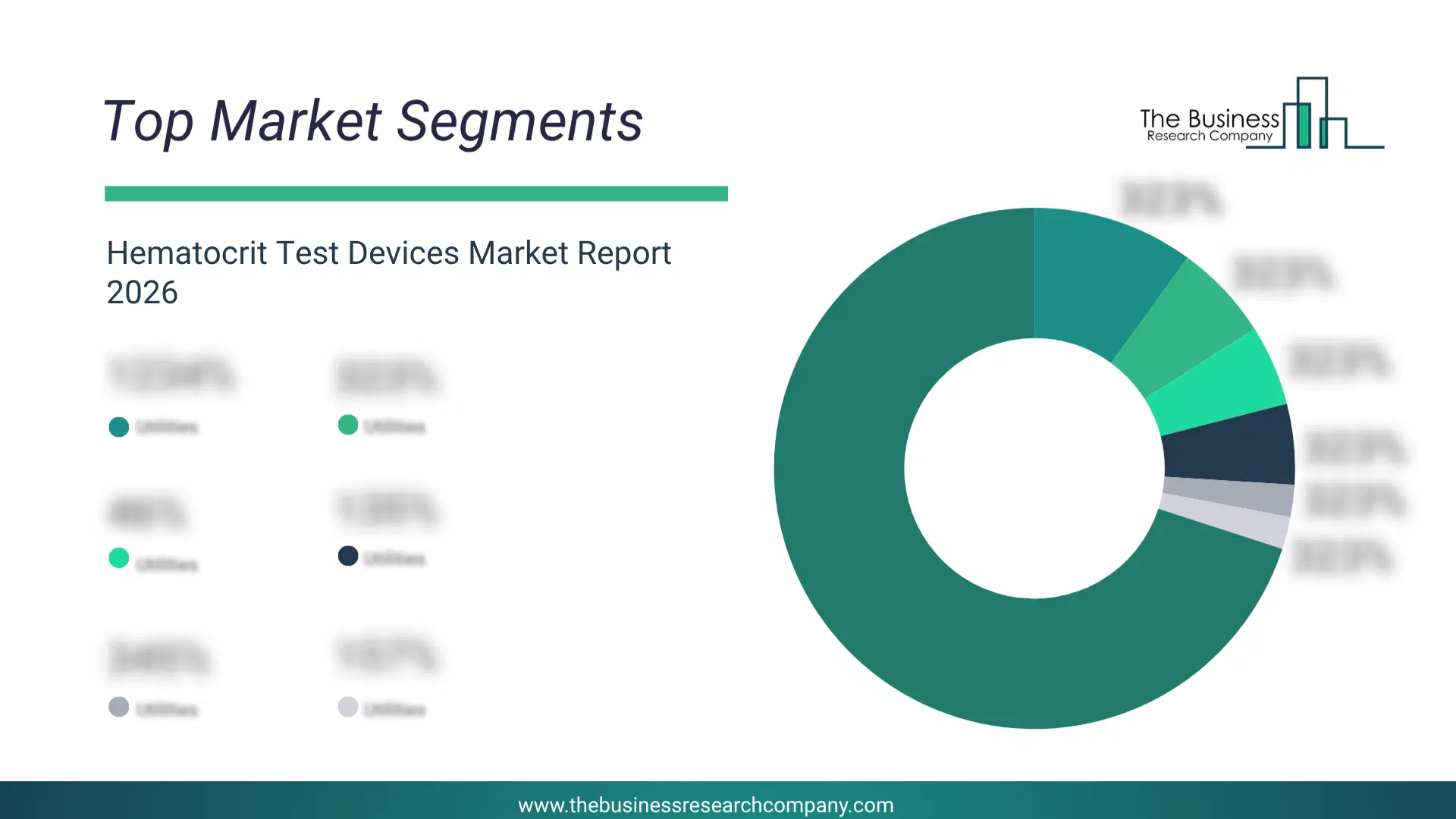
1) By Product: Hematocrit Test Meter, Hematocrit Test Analyzer, Reagents And Consumables 2) By Application: Anemia, Polycythemia Vera, Congenital Heart Diseases, Other Applications 3) By End-User: Hospitals And Ambulatory Surgical Centers, Clinics, Diagnostic And Pathology Labs, Other End-Users Subsegments: 1) By Hematocrit Test Meter: Handheld Hematocrit Meters, Portable Hematocrit Meters, Desktop Hematocrit Meters, Point-Of-Care Hematocrit Meters, Digital Hematocrit Meters, Battery-Powered Hematocrit Meters 2) By Hematocrit Test Analyzer: Automated Hematocrit Analyzers, Benchtop Hematocrit Analyzers, Semi-Automated Hematocrit Analyzers, Microhematocrit Analyzers, High-Throughput Hematocrit Analyzers, Compact Hematocrit Analyzers 3) By Reagents And Consumables: Hematocrit Test Strips, Hematocrit Pipettes And Capillaries, Blood Sample Collection Tubes For Hematocrit Testing, Quality Control Reagents For Hematocrit Testing, Calibration Standards For Hematocrit Devices, Disposable Test Kits And ConsumablesWhat Is The Driver Of The Hematocrit Test Devices Market?
The growing cases of blood disorders are expected to propel the growth of the hematocrit test devices market going forward. A blood disorder is a condition that affects the components of human blood, including red blood cells, white blood cells, platelets, and blood plasma. Blood disorders are becoming more common due to several variables, including genetic predispositions, pollution in the environment, and lifestyle changes. Hematocrit test devices are primarily used to measure the volume percentage of red blood cells in whole blood, providing crucial information about the patient's hematological health. For instance, in January 2024, according to a report published by the American Cancer Society, a US-based non-profit organization, approximately 62,770 new cases of leukemia, encompassing all types, are anticipated in the United States in 2024, leading to an estimated 23,670 deaths. Among these cases, around 20,800 new instances of acute myeloid leukemia (AML) are expected, primarily affecting adults, with approximately 11,220 deaths attributed to AML, almost exclusively occurring in adult patients. Therefore, the growing cases of blood disorders are driving the growth of the hematocrit test devices industry.Key Players In The Global Hematocrit Test Devices Market
Major companies operating in the hematocrit test devices market are F. Hoffmann-La Roche Ltd., Thermo Fisher Scientific Inc., Abbott Laboratories, Danaher Corporation, Siemens Healthcare GmbH, Becton Dickinson and Company, Terumo Corporation, Beckman Coulter Inc., Mindray Medical International Limited, bioMérieux SA, Sysmex Corporation, Horiba Ltd., Nihon Kohden Corporation, Erba Mannheim, EKF Diagnostics Holding Plc., Nova Biomedical Corporation, Boule Diagnostics AB, Stanbio Laboratory LP, Drucker Diagnostics, A. Menarini Diagnostics Srl, Sensa Core, Mikroscan Technologies Inc.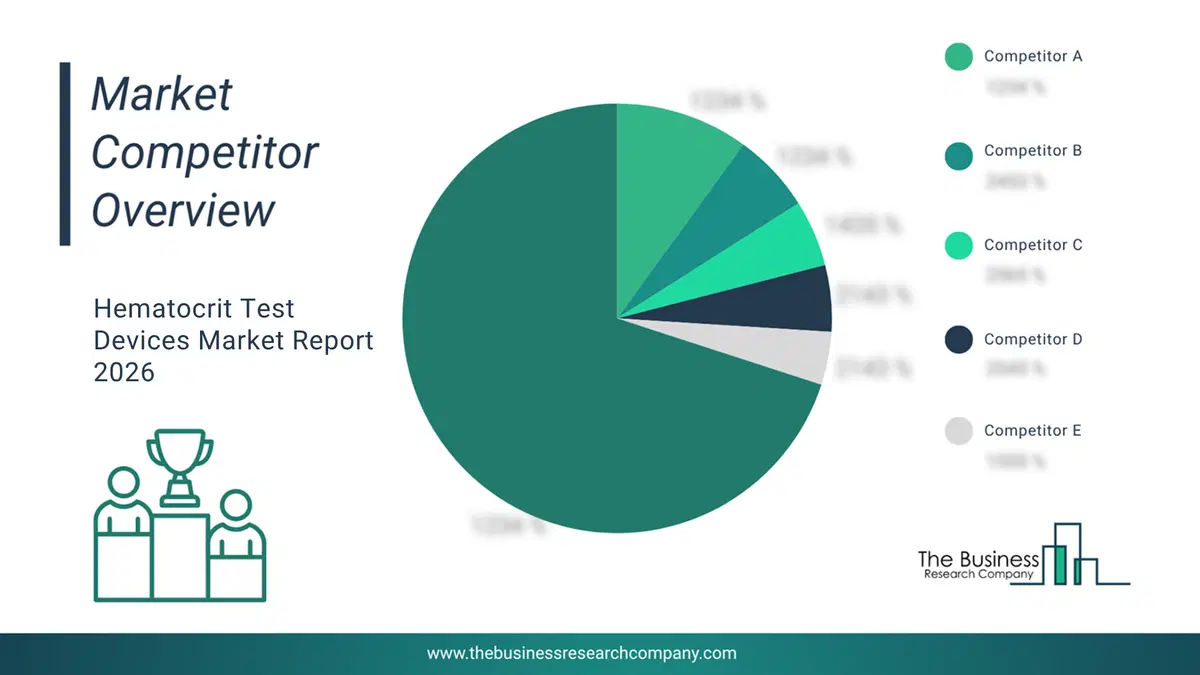
This chart is for illustrative purposes; the full report includes a detailed competitor analysis and comprehensive overview of the top 10 companies in the market.
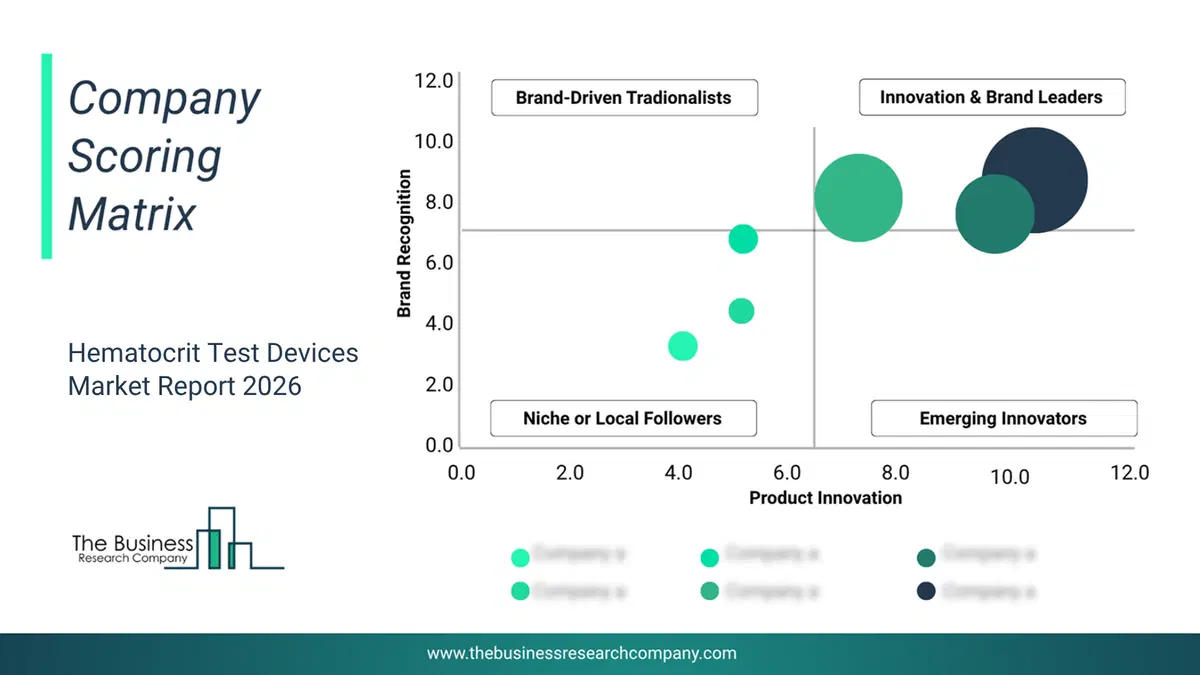
This chart maps companies by product innovation and brand strength, with bubble size indicating relative revenue, helping identify market leaders, challengers, and niche players. This is an illustrative chart; the full report provides a complete and accurate competitive analysis.
Global Hematocrit Test Devices Market Trends and Insights
Major companies in the hematocrit test device market are focusing on advanced technologies, including easy-to-use platforms designed for medium-volume laboratories. An easy-to-use platform is a system built with intuitive, user-friendly features that enable quick operation with minimal training. For example, in March 2024, Mindray, a China-based health technology company, introduced the BC-700 Series—a compact, integrated hematology analyzer for small to medium-sized labs that combines CBC and ESR testing into one device. It delivers results in just 1.5 minutes, boosting efficiency and workflow. The system uses SF Cube 3D analysis technology for accurate cell differentiation and includes the PLT-H parameter for improved platelet counting. By integrating CBC and ESR into a single unit, it reduces equipment and consumable costs. Available in both open vial and autoloader versions, the BC-700 Series provides reliable, automated, space-saving testing with strong correlation to traditional methods and enhanced safety and repeatability.What Are Latest Mergers And Acquisitions In The Hematocrit Test Devices Market?
In June 2023, Mars Incorporated, a US-based manufacturer of packaged food products, acquired Heska Corporation for $1.3 billion. Following the acquisition, Heska now operates within Mars Petcare's Science & Diagnostics division, enabling a broader reach in diagnostics and technology. This integration also accelerates research and development efforts while enhancing global access to pet healthcare solutions. Heska Corporation is a US-based manufacturer of hematocrit test devices.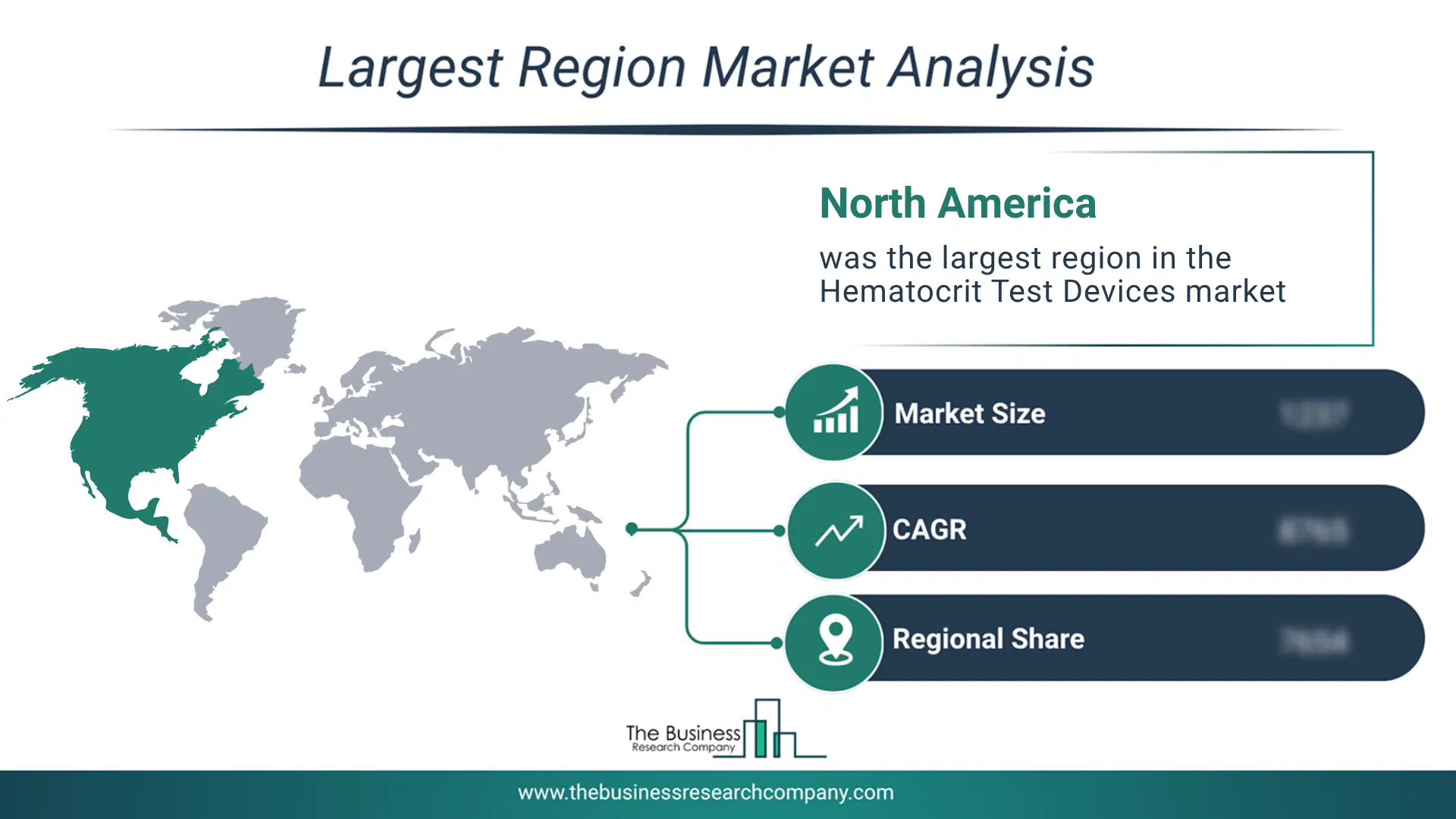
Regional Outlook
North America was the largest region in the hematocrit test devices market in 2025. Asia-Pacific is expected to be the fastest-growing region in the forecast period. The regions covered in this market report are Asia-Pacific, South East Asia, Western Europe, Eastern Europe, North America, South America, Middle East, Africa. The countries covered in this market report are Australia, Brazil, China, France, Germany, India, Indonesia, Japan, Taiwan, Russia, South Korea, UK, USA, Canada, Italy, SpainWhat Defines the Hematocrit Test Devices Market?
The hematocrit test devices market consists of sales of hematocrit centrifuges, test strips, capillary transfer tubes, and adapter kits. Values in this market are ‘factory gate’ values, that is the value of goods sold by the manufacturers or creators of the goods, whether to other entities (including downstream manufacturers, wholesalers, distributors and retailers) or directly to end customers. The value of goods in this market includes related services sold by the creators of the goods.How is Market Value Defined and Measured?
The market value is defined as the revenues that enterprises gain from the sale of goods and/or services within the specified market and geography through sales, grants, or donations in terms of the currency (in USD unless otherwise specified). The revenues for a specified geography are consumption values that are revenues generated by organizations in the specified geography within the market, irrespective of where they are produced. It does not include revenues from resales along the supply chain, either further along the supply chain or as part of other products.
This chart presents market attractiveness based on a quantitative evaluation of growth, competition, strategic alignment, and risk, offering a clear view of opportunity areas for decision-making. This chart is for illustrative purposes; the full report contains the complete analysis.

This chart highlights the Total Addressable Market (TAM) by estimating the maximum revenue opportunity using an assumption-driven approach, supporting strategic planning and opportunity sizing across markets. The chart is illustrative; the full report provides a more comprehensive analysis.
What Key Data and Analysis Are Included in the Hematocrit Test Devices Market Report 2026?
The hematocrit test devices market research report is one of a series of new reports from The Business Research Company that provides market statistics, including industry global market size, regional shares, competitors with the market share, detailed market segments, market trends and opportunities, and any further data you may need to thrive in the hematocrit test devices industry. The market research report delivers a complete perspective of everything you need, with an in-depth analysis of the current and future state of the industry.Hematocrit Test Devices Market Report Forecast Analysis
| Report Attribute | Details |
|---|---|
| Market Size Value In 2026 | $5.22 billion |
| Revenue Forecast In 2030 | $6.47 billion |
| Growth Rate | CAGR of 5.5% from 2026 to 2030 |
| Base Year For Estimation | 2025 |
| Actual Estimates/Historical Data | 2020-2025 |
| Forecast Period | 2026 - 2030 |
| Market Representation | Revenue in USD Billion and CAGR from 2026 to 2030 |
| Segments Covered | Product, Application, End-User |
| Regional Scope | Asia-Pacific, Western Europe, Eastern Europe, North America, South America, Middle East, Africa |
| Country Scope | The countries covered in the report are Australia, Brazil, China, France, Germany, India, Indonesia, Japan, Taiwan, Russia, South Korea, UK, USA, Canada, Italy, Spain. |
| Key Companies Profiled | F. Hoffmann-La Roche Ltd., Thermo Fisher Scientific Inc., Abbott Laboratories, Danaher Corporation, Siemens Healthcare GmbH, Becton Dickinson and Company, Terumo Corporation, Beckman Coulter Inc., Mindray Medical International Limited, bioMérieux SA, Sysmex Corporation, Horiba Ltd., Nihon Kohden Corporation, Erba Mannheim, EKF Diagnostics Holding Plc., Nova Biomedical Corporation, Boule Diagnostics AB, Stanbio Laboratory LP, Drucker Diagnostics, A. Menarini Diagnostics Srl, Sensa Core, Mikroscan Technologies Inc. |
| Customization Scope | Request for Customization |
| Pricing And Purchase Options | Explore Purchase Options |