
Hemodynamic Monitoring Systems Market Report 2026
Global Outlook – By Product (Monitors, Consumables), By Technique Type (Invasive, Non-Invasive), By End-User (Hospitals, Cath Labs, Other End-Users) - Market Size, Trends, Strategies, and Forecast to 2030
Hemodynamic Monitoring Systems Market Overview
• Hemodynamic Monitoring Systems market size has reached to $1.67 billion in 2025 • Expected to grow to $2.42 billion in 2030 at a compound annual growth rate (CAGR) of 7.8% • Growth Driver: Elevated Prevalence Of Cardiovascular Diseases Boosts Hemodynamic Monitoring Systems Market Growth • Market Trend: Advancements In Hemodynamic Monitoring The Role Of FloTrac Sensor And Strategic Partnerships In Improving Critical Care Outcomes • North America was the largest region in 2025.What Is Covered Under Hemodynamic Monitoring Systems Market?
Hemodynamic monitoring systems are medical devices and techniques used to measure and assess physiological parameters related to the functioning of the cardiovascular system. These systems provide real-time data and insights into blood circulation, cardiac output, and other vital parameters within the circulatory system. The main product types of hemodynamic monitoring systems are monitors and consumables. Monitors in hemodynamic monitoring systems refer to the electronic devices and equipment used to display and record physiological parameters related to a patient's cardiovascular system. The various technique types include invasive and non-invasive. These are used by various end-users such as hospitals, Cath labs, and others.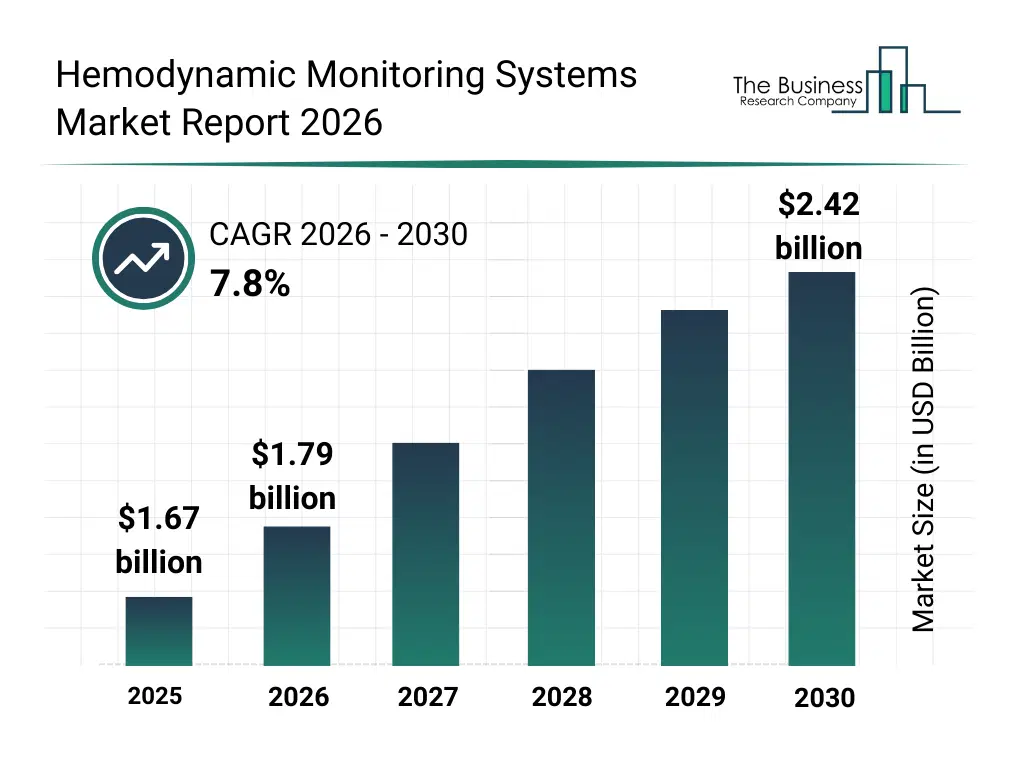
What Is The Hemodynamic Monitoring Systems Market Size and Share 2026?
The hemodynamic monitoring systems market size has grown strongly in recent years. It will grow from $1.67 billion in 2025 to $1.79 billion in 2026 at a compound annual growth rate (CAGR) of 7.1%. The growth in the historic period can be attributed to increasing number of critical care admissions, expansion of intensive care units, rising adoption of invasive monitoring techniques, technological improvements in sensor accuracy, increased clinician awareness.What Is The Hemodynamic Monitoring Systems Market Growth Forecast?
The hemodynamic monitoring systems market size is expected to see strong growth in the next few years. It will grow to $2.42 billion in 2030 at a compound annual growth rate (CAGR) of 7.8%. The growth in the forecast period can be attributed to increasing demand for remote patient monitoring, rising adoption of ai-assisted clinical decision support, expansion of minimally invasive monitoring solutions, growing focus on early shock detection, increasing investments in advanced monitoring systems. Major trends in the forecast period include increasing adoption of non-invasive monitoring techniques, rising integration of real-time data analytics, growing use of portable hemodynamic monitors, expansion of critical care monitoring applications, enhanced focus on early hemodynamic intervention.
Global Hemodynamic Monitoring Systems Market Segmentation
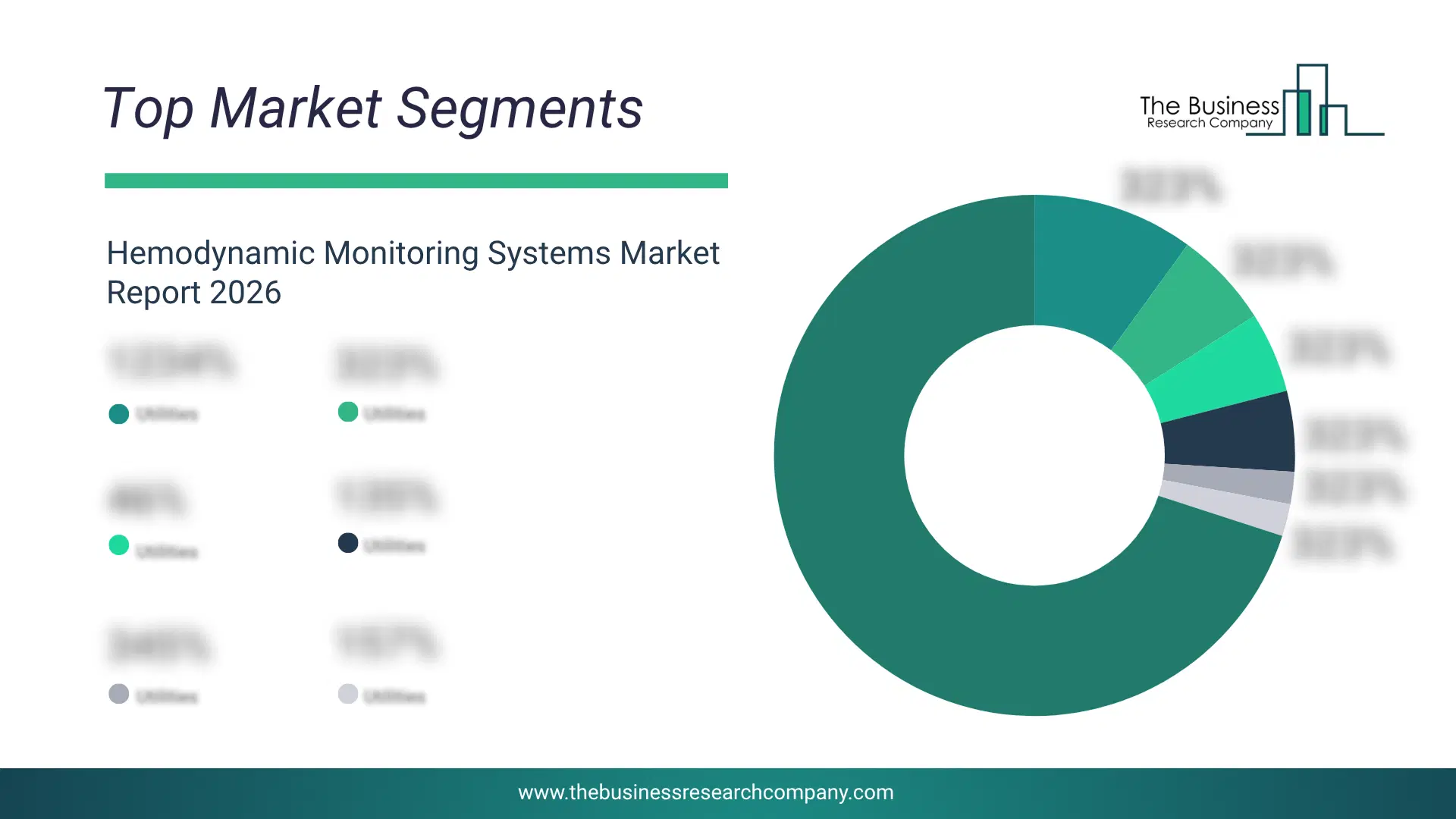
1) By Product: Monitors, Consumables 2) By Technique Type: Invasive, Non-Invasive 3) By End-User: Hospitals, Cath Labs, Other End-Users Subsegments: 1) By Monitors: Bedside Monitors, Handheld Monitors, Portable Monitors 2) By Consumables: Catheters, Sensors, Tubing and AccessoriesWhat Is The Driver Of The Hemodynamic Monitoring Systems Market?
The rising prevalence of cardiovascular diseases is expected to propel the growth of the hemodynamic monitoring systems market going forward. Cardiovascular disease is a group of conditions affecting the heart and blood vessels. Hemodynamic monitoring systems provide real-time data and insights into a patient’s cardiovascular status, enabling healthcare professionals to make timely and precise interventions, optimize treatment strategies, and improve patient outcomes. For instance, in March 2024, according to the Government of the United Kingdom, a UK-based website, in the financial year ending in 2023, slightly more than 1,862,500 people in England, representing 3% of the population, had a GP diagnosis of coronary heart disease (CHD). Therefore, the rising prevalence of cardiovascular diseases will drive the growth of the hemodynamic monitoring systems industry.Key Players In The Global Hemodynamic Monitoring Systems Market
Major companies operating in the hemodynamic monitoring systems market are Abbott Laboratories, Medtronic Plc., Siemens Healthineers AG, Koninklijke Philips N.V., GE HealthCare Technologies Inc., Baxter International Inc., CNSystems Medizintechnik GmbH, Edwards Lifesciences Corporation, Drägerwerk AG & Co. KGaA, Getinge AB, ICU Medical Inc., Masimo Corporation, N.I. Medical Ltd., Nihon Kohden Corporation, Deltex Medical Group plc, CareTaker Medical, Osypka Medical GmbH, Cnoga Digital Care, Tensys Medical Inc., Uscom Limited, Shenzhen Keman Medical Equipment Co. Ltd., Schwarzer Cardiotek GmbH, EMTEL Śliwa sp. k.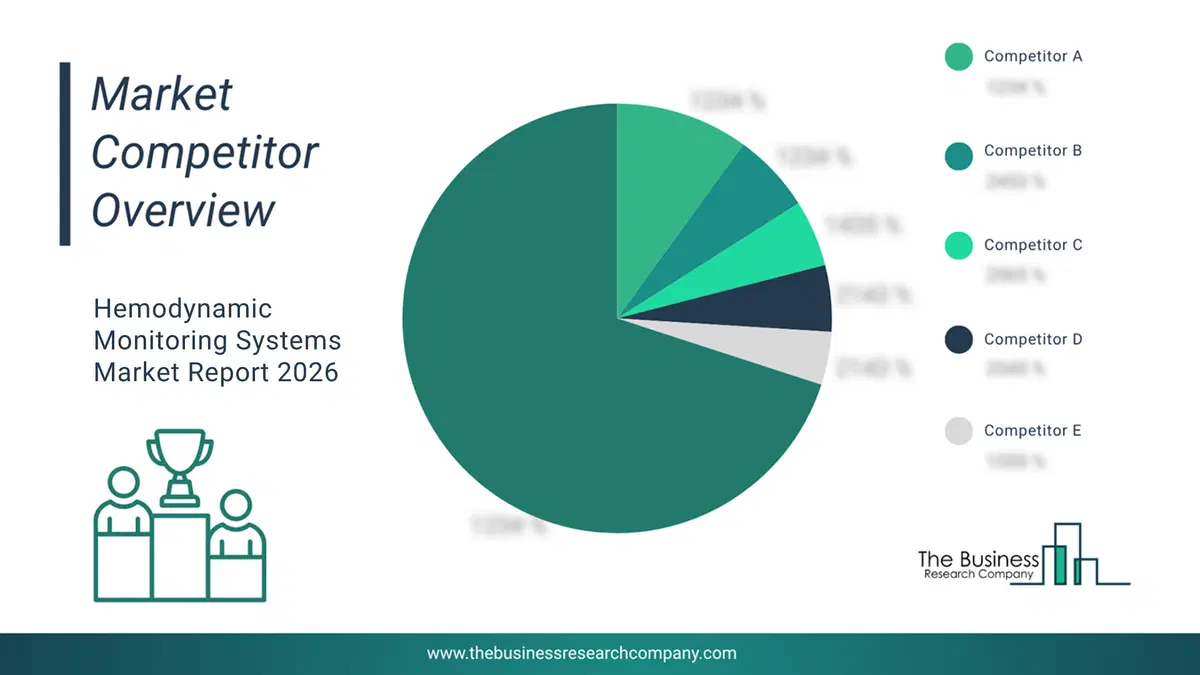
This chart is for illustrative purposes; the full report includes a detailed competitor analysis and comprehensive overview of the top 10 companies in the market.
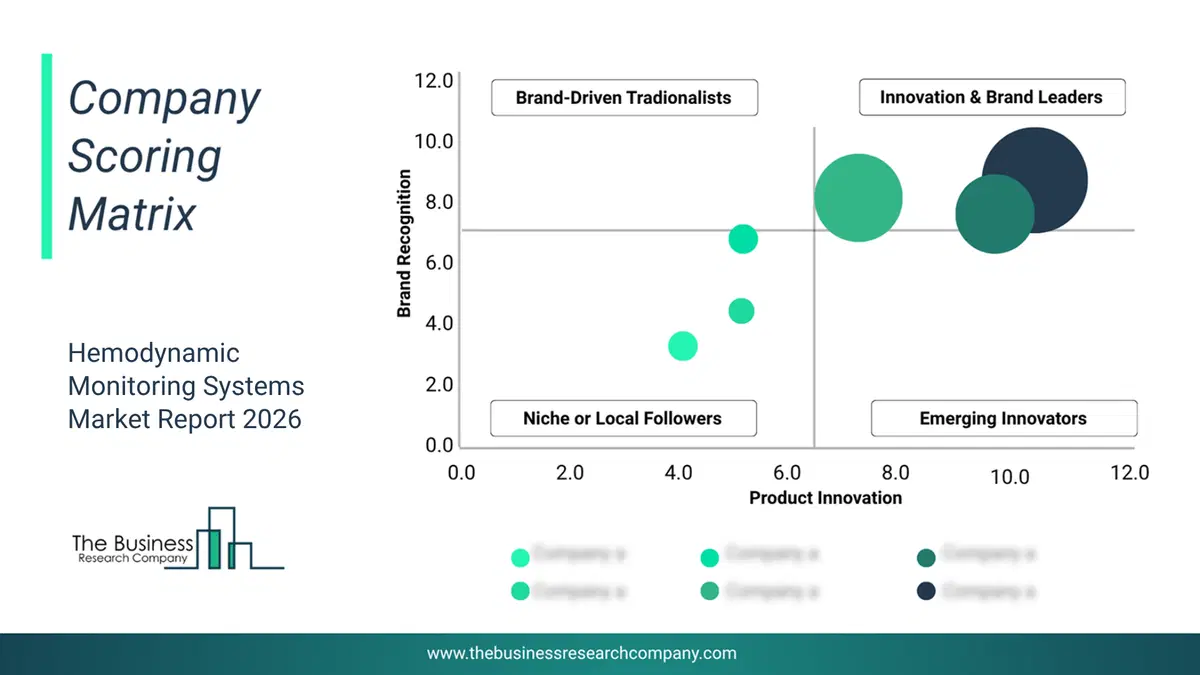
This chart maps companies by product innovation and brand strength, with bubble size indicating relative revenue, helping identify market leaders, challengers, and niche players. This is an illustrative chart; the full report provides a complete and accurate competitive analysis.
Global Hemodynamic Monitoring Systems Market Trends and Insights
Major companies operating in the hemodynamic monitoring systems market are focused on developing advanced hemodynamic monitoring solutions to enhance patient outcomes, improve accuracy in cardiovascular assessments, and enable real-time data analysis for better clinical decision-making in critical care settings. The FloTrac Sensor is a minimally invasive device designed for continuous hemodynamic monitoring in critically ill patients. It provides real-time measurements of cardiac output and other key hemodynamic parameters by utilizing arterial waveform analysis through a standard arterial catheter. For instance, in June 2023, Mindray Medical International Ltd, a China-based company, partnered with Edwards Lifesciences, a US-based company, has launched a hemodynamic monitoring solution, The solution incorporates the FloTrac™ sensor, which connects to an arterial line. This sensor automatically calculates crucial hemodynamic parameters such as Cardiac Output (CO), Stroke Volume (SV), Stroke Volume Variation (SVV), Systemic Vascular Resistance (SVR), and Mean Arterial Pressure (MAP) every 20 seconds. Mindray's BeneVision N series patient monitors serve as the platform for this integration.What Are Latest Mergers And Acquisitions In The Hemodynamic Monitoring Systems Market?
In August 2023, Exor N.V., a Netherlands-based company, acquired Philips for $2.8 billion. With this acquisition, Exor aims to expand its portfolio by incorporating Philip's expertise in providing hemodynamic monitoring systems. Koninklijke Philips NV, is a Netherlands-based company that offers hemodynamic monitoring systems.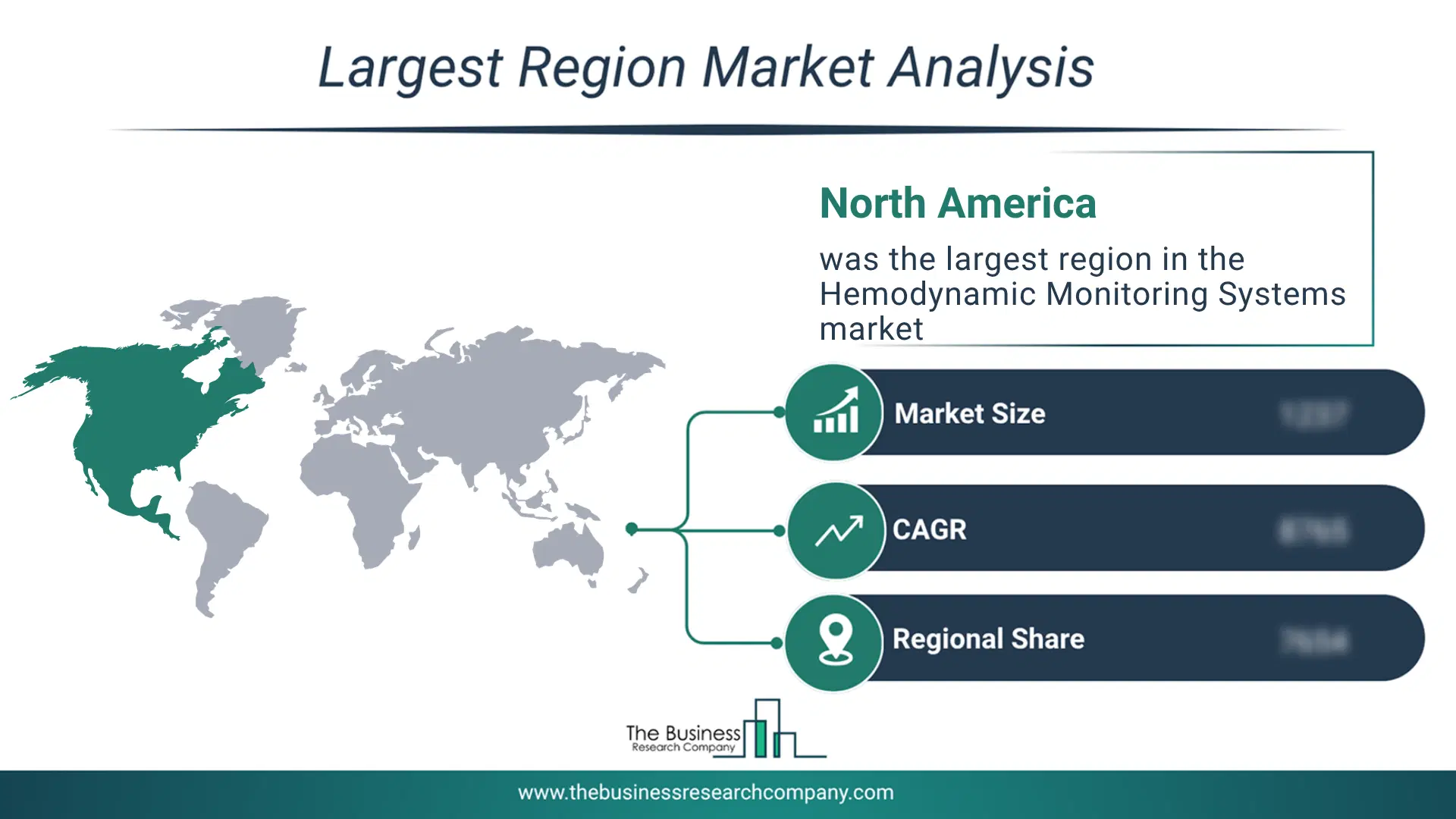
Regional Outlook
North America was the largest region in the hemodynamic monitoring systems market in 2025. The regions covered in this market report are Asia-Pacific, South East Asia, Western Europe, Eastern Europe, North America, South America, Middle East, Africa. The countries covered in this market report are Australia, Brazil, China, France, Germany, India, Indonesia, Japan, Taiwan, Russia, South Korea, UK, USA, Canada, Italy, Spain.What Defines the Hemodynamic Monitoring Systems Market?
The hemodynamic monitoring systems market consists of sales of central venous pressure (CVP) monitoring systems, pulmonary artery catheters, and accessories. Values in this market are ‘factory gate’ values, that is the value of goods sold by the manufacturers or creators of the goods, whether to other entities (including downstream manufacturers, wholesalers, distributors, and retailers) or directly to end customers. The value of goods in this market includes related services sold by the creators of the goods.How is Market Value Defined and Measured?
The market value is defined as the revenues that enterprises gain from the sale of goods and/or services within the specified market and geography through sales, grants, or donations in terms of the currency (in USD unless otherwise specified). The revenues for a specified geography are consumption values that are revenues generated by organizations in the specified geography within the market, irrespective of where they are produced. It does not include revenues from resales along the supply chain, either further along the supply chain or as part of other products.
This chart presents market attractiveness based on a quantitative evaluation of growth, competition, strategic alignment, and risk, offering a clear view of opportunity areas for decision-making. This chart is for illustrative purposes; the full report contains the complete analysis.

This chart highlights the Total Addressable Market (TAM) by estimating the maximum revenue opportunity using an assumption-driven approach, supporting strategic planning and opportunity sizing across markets. The chart is illustrative; the full report provides a more comprehensive analysis.
What Key Data and Analysis Are Included in the Hemodynamic Monitoring Systems Market Report 2026?
The hemodynamic monitoring systems market research report is one of a series of new reports from The Business Research Company that provides market statistics, including industry global market size, regional shares, competitors with the market share, detailed market segments, market trends and opportunities, and any further data you may need to thrive in the hemodynamic monitoring systems industry. The market research report delivers a complete perspective of everything you need, with an in-depth analysis of the current and future state of the industry.Hemodynamic Monitoring Systems Market Report Forecast Analysis
| Report Attribute | Details |
|---|---|
| Market Size Value In 2026 | $1.79 billion |
| Revenue Forecast In 2030 | $2.42 billion |
| Growth Rate | CAGR of 7.8% from 2026 to 2030 |
| Base Year For Estimation | 2025 |
| Actual Estimates/Historical Data | 2020-2025 |
| Forecast Period | 2026 - 2030 |
| Market Representation | Revenue in USD Billion and CAGR from 2026 to 2030 |
| Segments Covered | Product, Technique Type, End-User |
| Regional Scope | Asia-Pacific, Western Europe, Eastern Europe, North America, South America, Middle East, Africa |
| Country Scope | The countries covered in the report are Australia, Brazil, China, France, Germany, India, Indonesia, Japan, Taiwan, Russia, South Korea, UK, USA, Canada, Italy, Spain |
| Key Companies Profiled | Abbott Laboratories, Medtronic Plc., Siemens Healthineers AG, Koninklijke Philips N.V., GE HealthCare Technologies Inc., Baxter International Inc., CNSystems Medizintechnik GmbH, Edwards Lifesciences Corporation, Drägerwerk AG & Co. KGaA, Getinge AB, ICU Medical Inc., Masimo Corporation, N.I. Medical Ltd., Nihon Kohden Corporation, Deltex Medical Group plc, CareTaker Medical, Osypka Medical GmbH, Cnoga Digital Care, Tensys Medical Inc., Uscom Limited, Shenzhen Keman Medical Equipment Co. Ltd., Schwarzer Cardiotek GmbH, EMTEL Śliwa sp. k. |
| Customization Scope | Request for Customization |
| Pricing And Purchase Options | Explore Purchase Options |