
Hemoglobin A1c (HbA1c) Testing Market Report 2026
Global Outlook – By Testing Method (Laboratory-Based Testing, Point Of Care (PoC) Testing), By Product Type (Instruments, Reagents, Kits), By Technology (Immunoassays, Chromatography, Enzymatic Assays, Boronate Affinity Chromatography, High Performance Liquid Chromatography), By End User (Hospitals And Clinics, Diagnostic Laboratories, Homecare Settings) - Market Size, Trends, And Global Forecast 2026-2030
Hemoglobin A1c (HbA1c) Testing Market Overview
• Hemoglobin A1c (HbA1c) Testing market size has reached to $2.02 billion in 2025 • Expected to grow to $3.31 billion in 2030 at a compound annual growth rate (CAGR) of 10.3% • Growth Driver: Increasing Diabetes Prevalence To Boost HbA1c Testing Demand • Market Trend: Technological Innovations in HbA1c Home Testing • North America was the largest region in 2025 and Asia-Pacific is the fastest growing region.Market Gains By 2030 – Top Opportunities By Segment
Market Gain identifies the most promising market opportunities by highlighting the segments or products expected to generate the highest incremental revenue growth over the next five years.
What Is Covered Under Hemoglobin A1c (HbA1c) Testing Market?
Hemoglobin A1c (HbA1c) testing measures the percentage of hemoglobin with glucose attached, reflecting average blood glucose levels over the past 2 to 3 months. It is used to monitor long-term glucose control in diabetic patients and to diagnose diabetes and prediabetes. The main types of hemoglobin A1c (HbA1c) testing are laboratory-based testing and point-of-care (PoC) testing. Laboratory-based testing is a is a type of HbA1c testing performed in a laboratory setting where blood samples are analyzed using advanced equipment. The product types include instruments, reagents, kits, and technologies categorized into immunoassays, chromatography, enzymatic assays, boronate affinity chromatography, high-performance liquid chromatography, and others. The end users include hospitals and clinics, diagnostic laboratories, homecare settings, and others.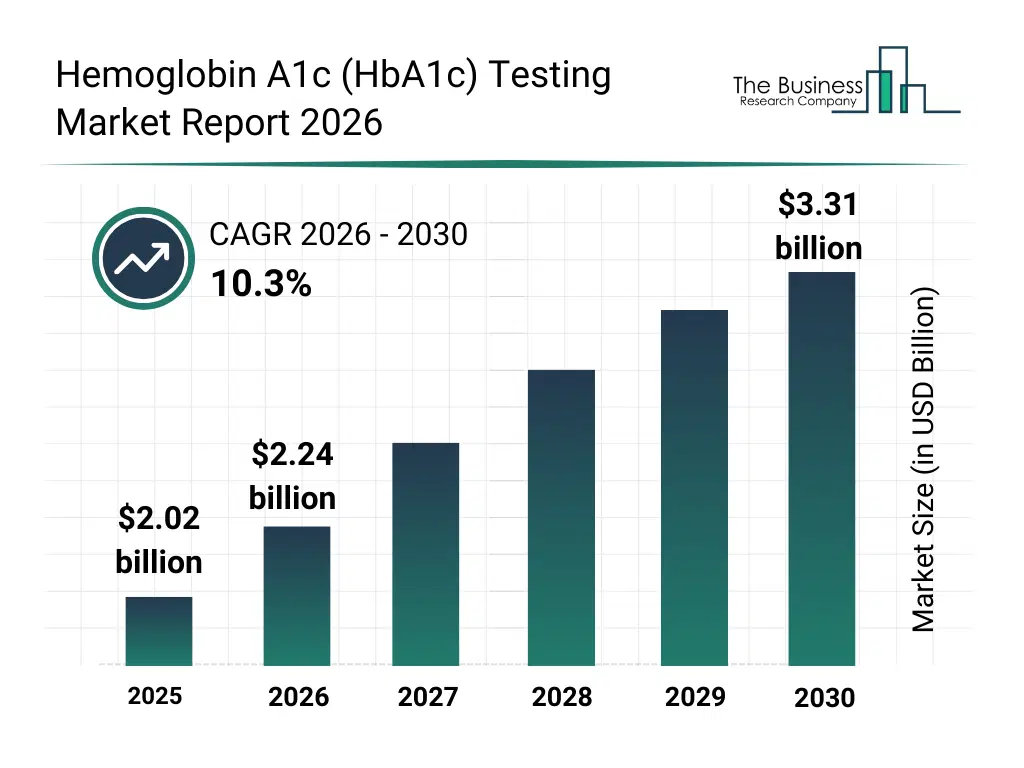
What Is The Hemoglobin A1c (HbA1c) Testing Market Size and Share 2026?
The hemoglobin a1c (hba1c) testing market size has grown rapidly in recent years. It will grow from $2.02 billion in 2025 to $2.24 billion in 2026 at a compound annual growth rate (CAGR) of 10.5%. The growth in the historic period can be attributed to rising global diabetes prevalence, increased use of long-term glucose monitoring, expansion of diagnostic laboratory infrastructure, growing awareness of diabetes screening, wider adoption of hba1c as diagnostic standard.What Is The Hemoglobin A1c (HbA1c) Testing Market Growth Forecast?
The hemoglobin a1c (hba1c) testing market size is expected to see rapid growth in the next few years. It will grow to $3.31 billion in 2030 at a compound annual growth rate (CAGR) of 10.3%. The growth in the forecast period can be attributed to increasing adoption of home-based diabetes monitoring, rising investments in connected diagnostic devices, expansion of preventive healthcare initiatives, growing focus on early diabetes detection, increasing demand for rapid diagnostic solutions. Major trends in the forecast period include increasing adoption of point-of-care hba1c testing devices, rising demand for portable and home-use hba1c analyzers, growing integration of wireless and connected testing solutions, expansion of high-accuracy laboratory-based hba1c technologies, enhanced focus on standardization and diagnostic accuracy.
Global Hemoglobin A1c (HbA1c) Testing Market Segmentation
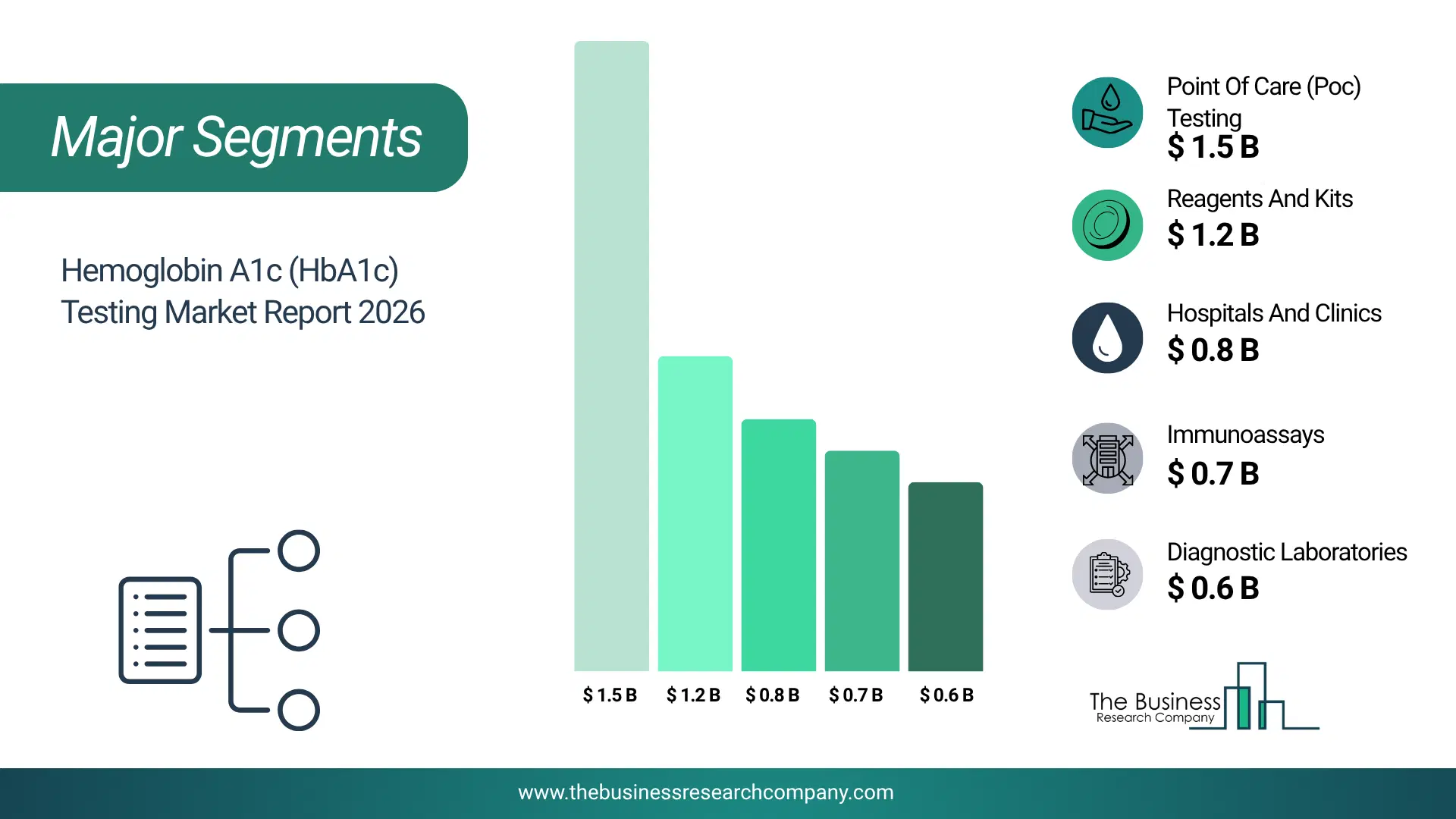
1) By Testing Method: Laboratory-Based Testing, Point Of Care (PoC) Testing 2) By Product Type: Instruments, Reagents, Kits 3) By Technology: Immunoassays, Chromatography, Enzymatic Assays, Boronate Affinity Chromatography, High Performance Liquid Chromatography 4) By End User: Hospitals And Clinics, Diagnostic Laboratories, Homecare Settings Subsegments: 1) By Laboratory-Based Testing: High-Performance Liquid Chromatography (HPLC) Testing, Ion-Exchange Chromatography, Capillary Electrophoresis 2) By Point Of Care (PoC) Testing: Fingerstick Testing Devices, Portable Hba1c Analyzers, Handheld Hba1c Test Kits The top segments in the hemoglobin a1c (hba1c) testing market will be: • Point Of Care (Poc) Testing will reach $1597.63 Million by 2025. • Reagents And Kits will reach $1248.79 Million by 2025. • Hospitals And Clinics will reach $813.38 Million by 2025. • Immunoassays will reach $737.82 Million by 2025. • Diagnostic Laboratories will reach $665.44 Million by 2025.What Is The Driver Of The Hemoglobin A1c (HbA1c) Testing Market?
The increasing prevalence of diabetes is expected to propel the growth of the hemoglobin A1c (HbA1c) testing market going forward. Diabetes is a chronic medical condition where the body cannot properly regulate blood glucose levels due to insufficient insulin production or insulin resistance. The diabetes case are rising due to poor diet, especially high consumption of processed foods and sugary drinks, and sedentary lifestyles characterized by minimal physical activity. Moreover, the aging population and family history of diabetes increase the probability of diabetes. HbA1c testing is used to monitor long-term blood glucose control in individuals with diabetes by measuring the average level of blood sugar over the past 2–3 months. For instance, in June 2023, according to the data published by The Lancet, a UK-based book and periodic data publishing organization, global diabetes cases are projected to increase from 529 million in 2021 to 1.3 billion by 2050. Therefore, the increasing prevalence of diabetes will drive the growth of the hemoglobin A1c (HbA1c) testing industry.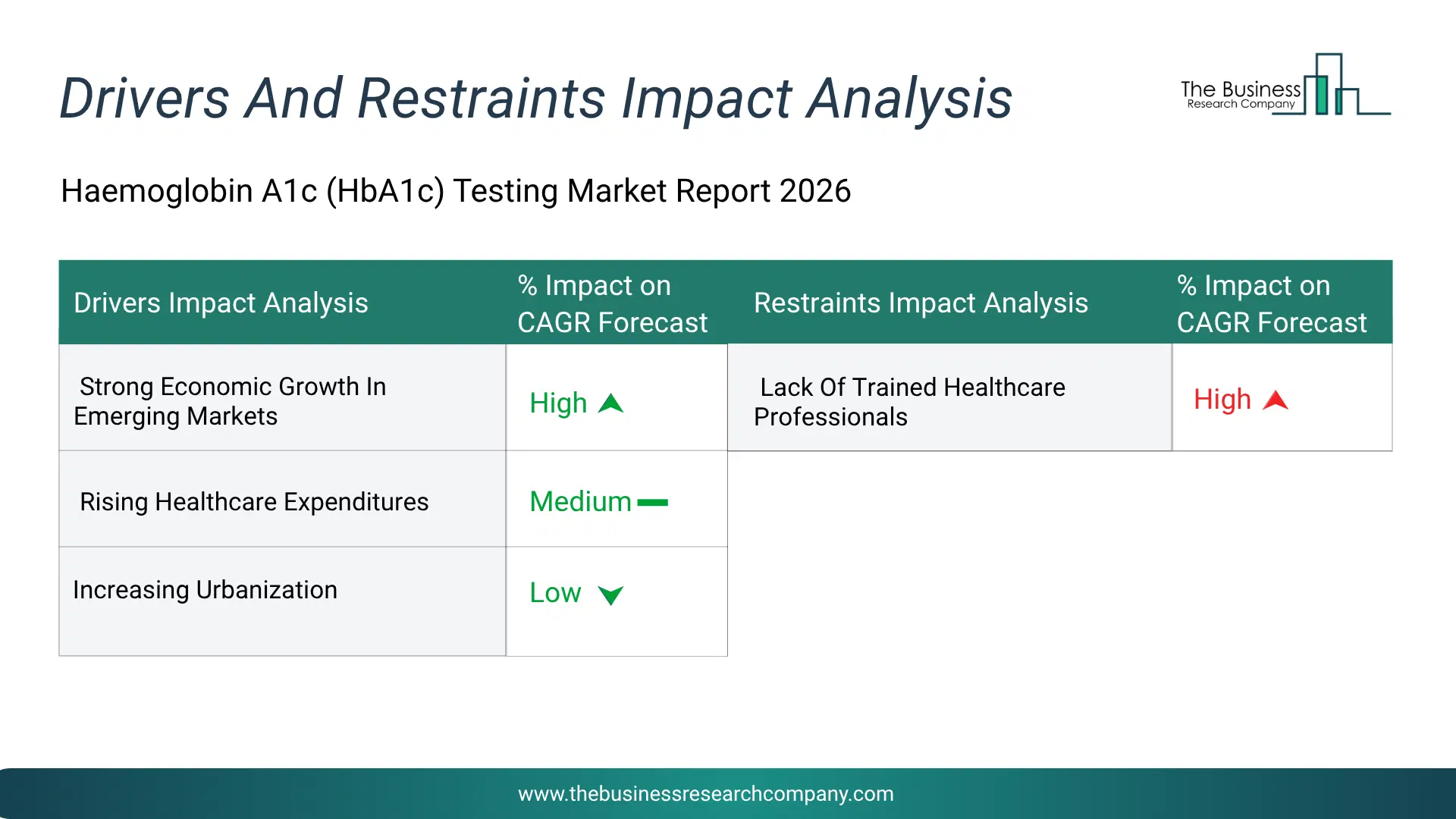
Infographic Chart Showing Key Market Drivers Analysis And Restraints For Hemoglobin A1C (Hba1C) Testing Market
The chart presents an impact analysis of key drivers and restraints, quantifying their relative influence on the market's growth rate and helping assess the balance between growth enablers and limiting factors. This chart offers a high-level perspective; the full report contains more detailed insights.
How Will The Drivers Impact Growth In The Global Haemoglobin A1c (HbA1c) Testing Market?
• Strong Economic Growth In Emerging Markets (High) – The strong economic growth in emerging markets will become a key driver of growth in the haemoglobin A1c (HbA1c) testing market by 2030. As emerging economies expand, they generally see an increase in disposable incomes and government revenues, enabling higher healthcare expenditure. As disposable incomes rise in these regions, there is an increased ability to afford healthcare services, which drives higher demand for advanced diagnostic technologies, such as HbA1C testing. Concurrently, governments in these markets are likely to expand healthcare budgets to accommodate the growing demand for medical services, facilitating the adoption of innovative healthcare solutions. As a result, strong economic growth in emerging market is anticipated to contributing to annual growth in the market. • Rising Healthcare Expenditures (Medium) – The rising healthcare expenditures will become a key driver of growth in the haemoglobin A1c (HbA1c) testing market by 2030. Healthcare expenditures refer to the total spending on healthcare services and products, including hospital care, physician services, prescription drugs, medical devices, preventive care, public health initiatives, and administrative costs. Healthcare expenditures drive HbA1c testing by funding chronic disease management programs, advancing diagnostic technologies, and improving access through insurance coverage and preventive initiatives. As a result, rising healthcare expenditures is anticipated to contributing to annual growth in the market. • Increasing Urbanization (Low) – The increasing urbanization will serve as a key growth catalyst for haemoglobin A1c (HbA1c) testing market by 2030. Urbanization refers to the process by which an increasing proportion of a population lives in urban areas, often resulting from migration from rural areas and the expansion of cities. Rising urbanization contributes to the increasing prevalence of diabetes due to lifestyle changes like unhealthy diets, sedentary behaviours, and stress, driving demand for HbA1c testing. Additionally, urban areas provide better access to healthcare facilities and greater awareness of chronic disease management, further fueling market growth. Therefore, this increasing urbanization is projected to supporting to annual growth in the market. • Expanding Geriatric Population (Low) – The expanding geriatric population will serve as a key growth catalyst for haemoglobin A1c (HbA1c) testing market by 2030. The geriatric population refers to individuals typically aged 65 and older, who are in the later stages of life and may experience specific health and social care needs. Geriatric populations are likely to favor point-of-care (POC) HbA1C testing due to its convenience, particularly when mobility or access to healthcare facilities is restricted. Therefore, this expanding geriatric population is projected to supporting to annual growth in the market.How Will The Restraints Impact Growth In The Global Haemoglobin A1c (HbA1c) Testing Market?
• Lack Of Trained Healthcare Professionals (High) – Lack Of Trained Healthcare Professionals will restrict the growth of the Haemoglobin A1c (HbA1c) Testing market during the forecast period. HbA1c testing requires trained healthcare professionals for sample collection, analysis, and result interpretation. The shortage of qualified laboratory technicians and diabetes care specialists limits testing capacity and patient access. Skill gaps particularly affect developing regions where healthcare infrastructure is limited, slowing market growth and diabetes management.Key Players In The Global Hemoglobin A1c (HbA1c) Testing Market
Major companies operating in the hemoglobin a1c (hba1c) testing market are Roche Holding AG, Thermo Fisher Scientific Inc., Abbott Laboratories, Danaher Corporation, Siemens Healthineers, Tosoh Corporation, Hitachi High-Technologies Corporation, Beckman Coulter Inc, Sysmex Corporation, Bio Rad Laboratories Inc, ARKRAY Inc, Randox Laboratories Ltd, Ortho Clinical Diagnostics, Agappe Diagnostics Ltd, SEKISUI Diagnostics LLC, Helena Laboratories, Transasia Bio Medicals Ltd, EKF Diagnostics, Trinity Biotech plc, HemoCue AB, CPC Diagnostics Pvt Ltd, PTS Diagnostics, Menarini Diagnostics srl, Diazyme Laboratories Inc, Osang HealthCare Co Ltd, Eurolyser Diagnostica GmbH, DiaSys Diagnostic Systems GmbH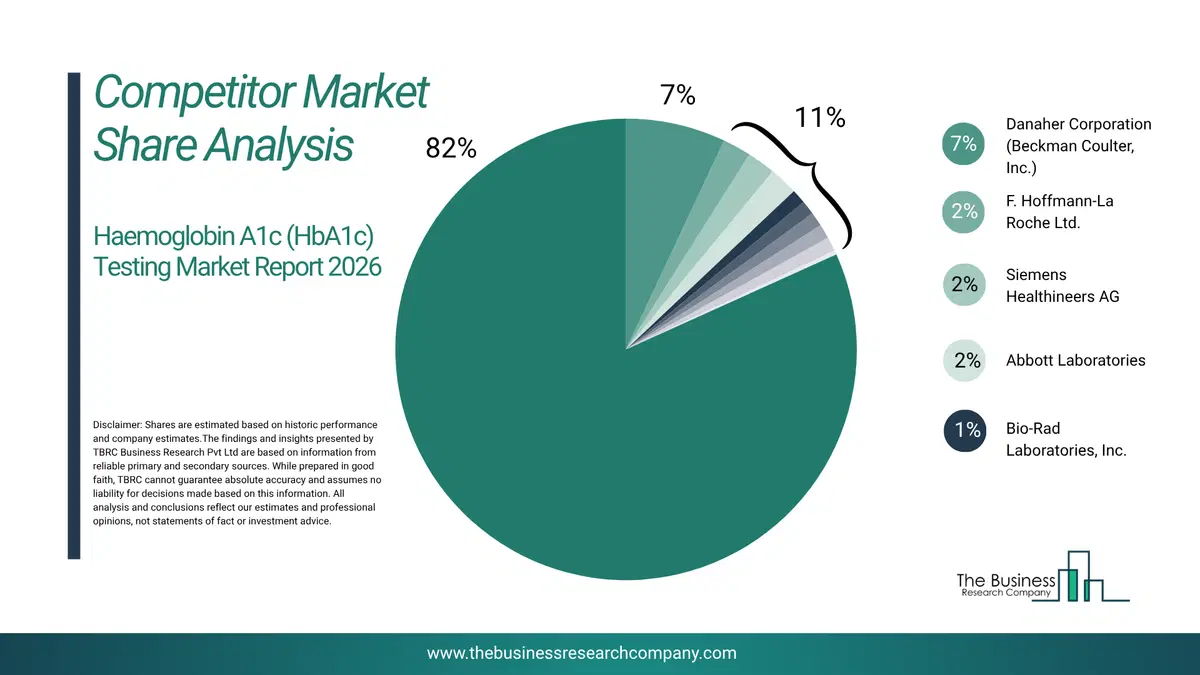
This chart is for illustrative purposes; the full report includes a detailed competitor analysis and comprehensive overview of the top 10 companies in the market.
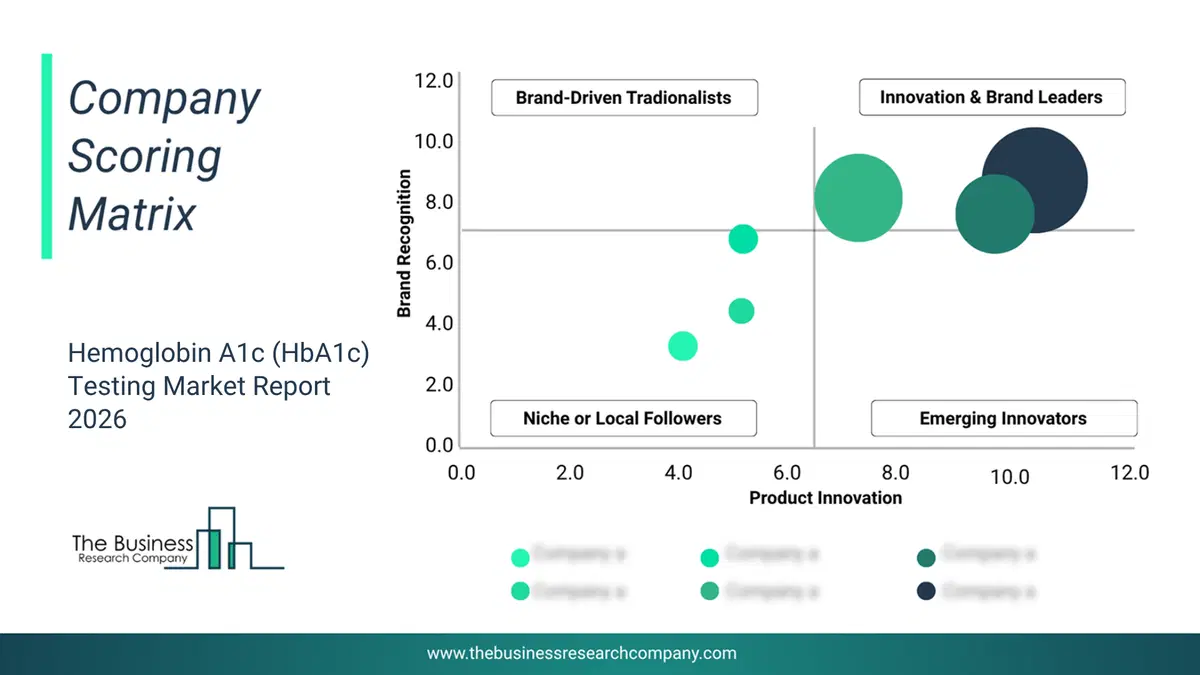
This chart maps companies by product innovation and brand strength, with bubble size indicating relative revenue, helping identify market leaders, challengers, and niche players. This is an illustrative chart; the full report provides a complete and accurate competitive analysis.
Global Hemoglobin A1c (HbA1c) Testing Market Trends and Insights
Major companies operating in the hemoglobin A1c (HbA1c) testing market are focusing on technological advancements in diagnostic testing, such as HbA1c home tests, to offer more convenient, accurate, and accessible solutions for early diabetes detection and management. HbA1c home tests refer to at-home diagnostic kits that allow individuals to measure their average blood sugar levels over the past 2-3 months, helping to monitor and manage diabetes. For instance, in February 2023, Hurdle Health, a US-based company focused on providing innovative healthcare solutions, including diagnostic tools for chronic disease management, launched the Hemoglobin A1c (HbA1c) Test. This new at-home blood sample test enables adults to screen and monitor diabetes, furthering Chronomics' mission to enhance accessibility to diagnostic testing and improve health outcomes through direct-to-consumer solutions.What Are Latest Mergers And Acquisitions In The Hemoglobin A1c (HbA1c) Testing Market?
In January 2024, Roche Holding AG, a Switzerland-based provider of pharmaceuticals and diagnostics, acquired point-of-care (POC) technology from LumiraDx for $350 million. The aim of Roche's acquisition of LumiraDx's POC technology is to expand its diagnostics portfolio, enhance capabilities in decentralized healthcare settings, and offer quick, reliable tests like the CE-marked HbA1c test without needing specialized storage. LumiraDx is a UK-based point-of-care (POC) technology company offering immunoassay and clinical chemistry tests for HbA1c.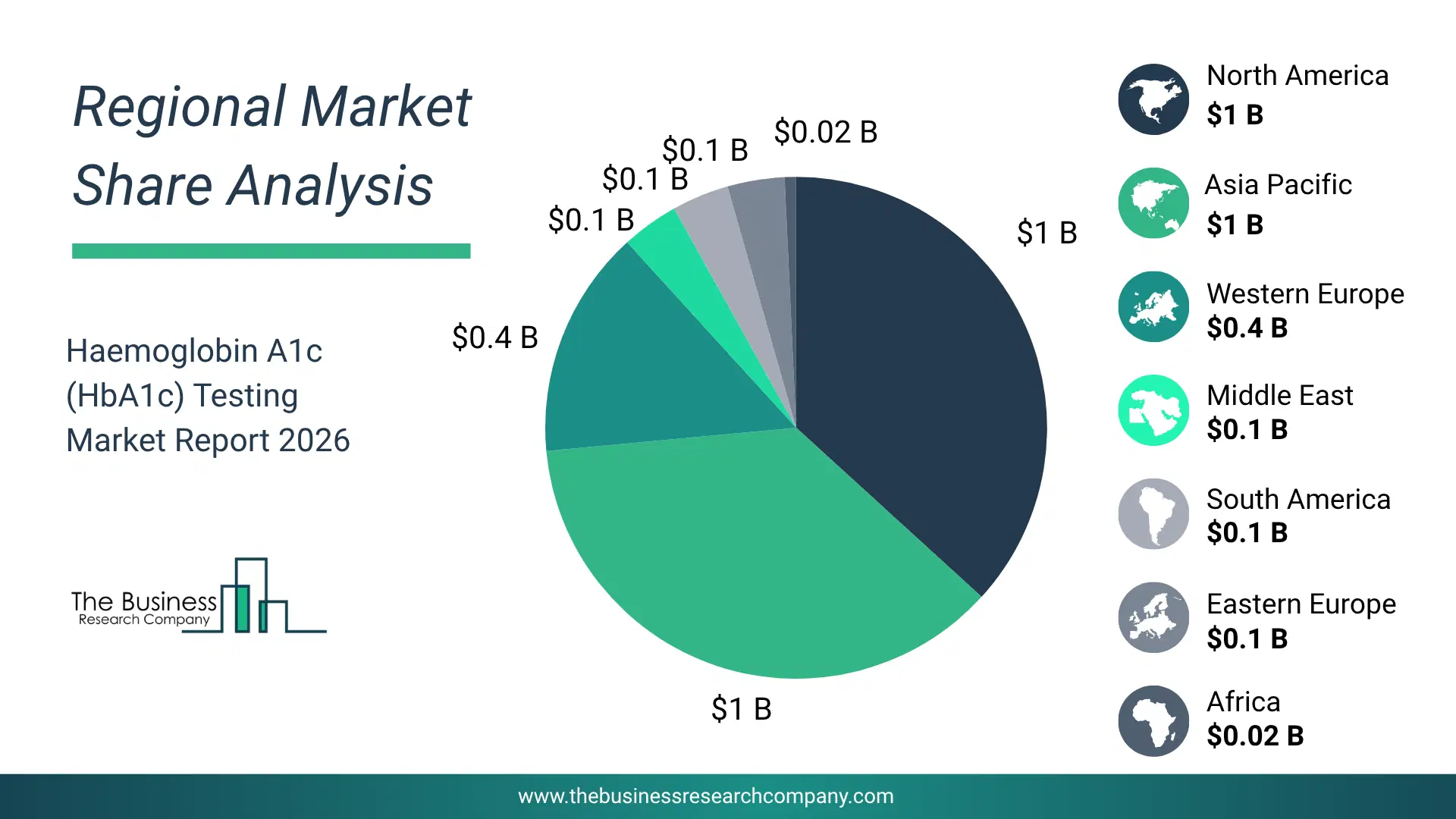
Regional Outlook
North America was the largest region in the hemoglobin A1c (HbA1c) testing market in 2025. Asia-Pacific is expected to be the fastest-growing region in the forecast period. The regions covered in this market report are Asia-Pacific, South East Asia, Western Europe, Eastern Europe, North America, South America, Middle East, Africa. The countries covered in this market report are Australia, Brazil, China, France, Germany, India, Indonesia, Japan, Taiwan, Russia, South Korea, UK, USA, Canada, Italy, Spain.What Defines the Hemoglobin A1c (HbA1c) Testing Market?
The hemoglobin A1c (HbA1c) testing market consists of revenues earned by entities by providing services such as home monitoring services, remote patient monitoring solutions, specialized HbA1c assay development, telehealth HbA1c monitoring, and personalized treatment management consulting. The market value includes the value of related goods sold by the service provider or included within the service offering. The hemoglobin A1c (HbA1c) testing market also includes sales of diagnostic reagents, test cartridges, automated analyzers, and calibration standards. Values in this market are ‘factory gate’ values, that is the value of goods sold by the manufacturers or creators of the goods, whether to other entities (including downstream manufacturers, wholesalers, distributors and retailers) or directly to end customers. The value of goods in this market includes related services sold by the creators of the goods.How is Market Value Defined and Measured?
The market value is defined as the revenues that enterprises gain from the sale of goods and/or services within the specified market and geography through sales, grants, or donations in terms of the currency (in USD unless otherwise specified). The revenues for a specified geography are consumption values that are revenues generated by organizations in the specified geography within the market, irrespective of where they are produced. It does not include revenues from resales along the supply chain, either further along the supply chain or as part of other products.
This chart presents market attractiveness based on a quantitative evaluation of growth, competition, strategic alignment, and risk, offering a clear view of opportunity areas for decision-making. This chart is for illustrative purposes; the full report contains the complete analysis.

This chart highlights the Total Addressable Market (TAM) by estimating the maximum revenue opportunity using an assumption-driven approach, supporting strategic planning and opportunity sizing across markets. The chart is illustrative; the full report provides a more comprehensive analysis.
What Key Data and Analysis Are Included in the Hemoglobin A1c (HbA1c) Testing Market Report 2026?
The hemoglobin a1c (hba1c) testing market research report is one of a series of new reports from The Business Research Company that provides market statistics, including industry global market size, regional shares, competitors with the market share, detailed market segments, market trends and opportunities, and any further data you may need to thrive in the hemoglobin a1c (hba1c) testing industry. The market research report delivers a complete perspective of everything you need, with an in-depth analysis of the current and future state of the industry.Hemoglobin A1c (HbA1c) Testing Market Report Forecast Analysis
| Report Attribute | Details |
|---|---|
| Market Size Value In 2026 | $2.24 billion |
| Revenue Forecast In 2030 | $3.31 billion |
| Growth Rate | CAGR of 10.5% from 2026 to 2030 |
| Base Year For Estimation | 2025 |
| Actual Estimates/Historical Data | 2020-2025 |
| Forecast Period | 2026 - 2030 |
| Market Representation | Revenue in USD Billion and CAGR from 2026 to 2030 |
| Segments Covered | Testing Method, Product Type, Technology, End User |
| Regional Scope | Asia-Pacific, Western Europe, Eastern Europe, North America, South America, Middle East, Africa |
| Country Scope | The countries covered in the report are Australia, Brazil, China, France, Germany, India, Indonesia, Japan, Taiwan, Russia, South Korea, UK, USA, Canada, Italy, Spain. |
| Key Companies Profiled | Roche Holding AG, Thermo Fisher Scientific Inc., Abbott Laboratories, Danaher Corporation, Siemens Healthineers, Tosoh Corporation, Hitachi High-Technologies Corporation, Beckman Coulter Inc, Sysmex Corporation, Bio Rad Laboratories Inc, ARKRAY Inc, Randox Laboratories Ltd, Ortho Clinical Diagnostics, Agappe Diagnostics Ltd, SEKISUI Diagnostics LLC, Helena Laboratories, Transasia Bio Medicals Ltd, EKF Diagnostics, Trinity Biotech plc, HemoCue AB, CPC Diagnostics Pvt Ltd, PTS Diagnostics, Menarini Diagnostics srl, Diazyme Laboratories Inc, Osang HealthCare Co Ltd, Eurolyser Diagnostica GmbH, DiaSys Diagnostic Systems GmbH |
| Customization Scope | Request for Customization |
| Pricing And Purchase Options | Explore Purchase Options |