

Hepatorenal Syndrome Market Report 2026
Global Outlook – By Type (Type 1 Hepatorenal Syndrome, Type 2 Hepatorenal Syndrome, Other Types), By Treatment (Liver Transplantation, Terlipressin Infusion, Albumin Infusion, Hemodialysis, Vasoconstrictors), By Diagnosis (Liver Function Tests, Urinalysis And Urine Electrolytes, Other Diagnoses), By End Users (Hospitals, Specialty Clinics) - Market Size, Trends, Strategies, and Forecast to 2030
Hepatorenal Syndrome Market Overview
• Hepatorenal Syndrome market size has reached to $1.37 billion in 2025 • Expected to grow to $1.91 billion in 2030 at a compound annual growth rate (CAGR) of 6.9% • Growth Driver: Rising Prevalence Of Liver Diseases Driving The Growth Of The Market Due To Increasing Risk Of Kidney Dysfunction • Market Trend: Innovative Therapies Target Liver And Kidney Dysfunction For Better Outcomes • North America was the largest region in 2025 and Asia-Pacific is the fastest growing region.What Is Covered Under Hepatorenal Syndrome Market?
Hepatorenal Syndrome (HRS) is a severe complication of advanced liver disease, characterized by functional kidney failure due to reduced renal blood flow without structural kidney damage. It is caused by splanchnic vasodilation, leading to renal vasoconstriction and decreased glomerular filtration. The main types of hepatorenal syndrome are type 1 hepatorenal syndrome, type 2 hepatorenal syndrome, and other types. Type 1 hepatorenal syndrome is a rapidly progressing kidney failure in patients with advanced liver disease, characterized by a sharp decline in kidney function over days to weeks. It includes various treatment options such as liver transplantation, terlipressin infusion, albumin infusion, hemodialysis, vasoconstrictors, and antibiotic therapy. Diagnosis involves tests such as complete blood cell count, liver function tests, urinalysis, and urine electrolytes, among others. It is distributed through various channels such as hospital pharmacies, online pharmacies, retail pharmacies, and other avenues. The primary end users are hospitals, home care settings, specialty clinics, and other healthcare providers.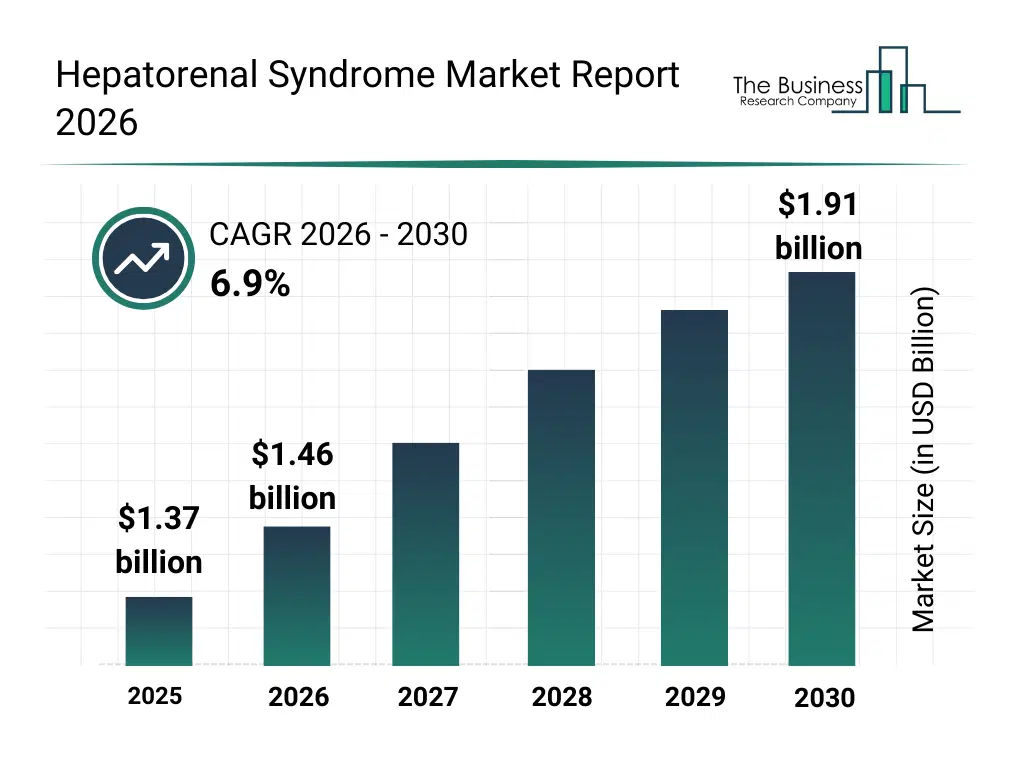
What Is The Hepatorenal Syndrome Market Size and Share 2026?
The hepatorenal syndrome market size has grown strongly in recent years. It will grow from $1.37 billion in 2025 to $1.46 billion in 2026 at a compound annual growth rate (CAGR) of 7.1%. The growth in the historic period can be attributed to increasing prevalence of chronic liver disease, rising incidence of cirrhosis-related complications, expansion of intensive care unit infrastructure, growing clinical awareness of HRS diagnosis, availability of vasoconstrictor-based therapies.What Is The Hepatorenal Syndrome Market Growth Forecast?
The hepatorenal syndrome market size is expected to see strong growth in the next few years. It will grow to $1.91 billion in 2030 at a compound annual growth rate (CAGR) of 6.9%. The growth in the forecast period can be attributed to increasing liver transplant procedures, rising focus on early-stage HRS detection, expansion of advanced renal support therapies, growing adoption of precision medicine approaches, increasing investment in hepatology-focused clinical research. Major trends in the forecast period include increasing adoption of targeted vasoconstrictor therapies, growing use of early diagnostic biomarkers, rising focus on multidisciplinary critical care management, expansion of albumin-based combination treatments, enhanced monitoring of renal function in liver disease patients.
Global Hepatorenal Syndrome Market Segmentation
1) By Type: Type 1 Hepatorenal Syndrome, Type 2 Hepatorenal Syndrome, Other Types 2) By Treatment: Liver Transplantation, Terlipressin Infusion, Albumin Infusion, Hemodialysis, Vasoconstrictors 3) By Diagnosis: Liver Function Tests, Urinalysis And Urine Electrolytes, Other Diagnoses 4) By End Users: Hospitals, Specialty Clinics Subsegments: 1) By Type 1 Hepatorenal Syndrome: Acute Kidney Injury-Associated HRS, Rapidly Progressive Renal Failure 2) By Type 2 Hepatorenal Syndrome: Chronic Kidney Dysfunction-Associated HRS, Slowly Progressive Renal Failure 3) By Other Types: HRS With Cirrhosis, HRS With Acute Liver Failure, HRS With Alcoholic HepatitisWhat Are The Drivers Of The Hepatorenal Syndrome Market?
The rising prevalence of liver diseases is expected to propel the growth of the hepatorenal syndrome market going forward. Liver diseases refer to conditions that impair liver function, including hepatitis, cirrhosis, fatty liver, liver cancer, genetic disorders, and autoimmune diseases. The increase in liver diseases is due to obesity, diabetes, alcohol use, viral infections, poor diet, and toxin exposure. The rising prevalence of liver diseases, such as cirrhosis and acute liver failure, increases the risk of hepatorenal syndrome (HRS) by causing severe hemodynamic and kidney dysfunction due to progressive liver impairment. For instance, in April 2024, according to the Office for Health Improvement & Disparities (OHID), a UK-based government department, reported that UK hospital admissions for liver disease rose to 155.2 per 100,000 in 2023, up from 150.6 per 100,000 in 2022. Therefore, the rising prevalence of liver diseases is driving the growth of the hepatorenal syndrome industry. The increase in research and development investments is expected to propel the growth of the hepatorenal syndrome market going forward. Research and development investments refer to funding allocated for innovation, product improvement, and new technology development. The rise in research and development investments is driven by technological advancements, competition, healthcare needs, and demand for innovation. Research and development investments in hepatorenal syndrome drive advancements in innovative therapies, diagnostic tools, and treatment approaches, improving patient outcomes and survival rates. For instance, in 2023, according to Office for National Statistics, a UK-based, government agency, the UK government’s net spending on research and development (R&D) increased to £17.4 ($22.1 billion) billion in 2023, up from £16.1 billion ($20.45 billion) in 2022, marking an 8.2% rise. Therefore, the increase in research and development investments is driving the growth of the hepatorenal syndrome industry.Key Players In The Global Hepatorenal Syndrome Market
Major companies operating in the hepatorenal syndrome market are Eli Lilly and Company, Baxter International Inc., Mallinckrodt Pharmaceuticals, Ferring Pharmaceuticals Ltd, La Jolla Pharmaceutical Company, Teva Pharmaceutical Industries Ltd, Cumberland Pharmaceuticals Inc., Innoviva Specialty Therapeutics Inc, BioVie Inc., SeaStar Medical, Otsuka Pharmaceutical Co. Ltd, Pfizer Inc., AbbVie Inc., Bristol Myers Squibb, Novartis AG, Sanofi, Astellas Pharma Inc., Takeda Pharmaceutical Company Limited, Bayer AG, AstraZeneca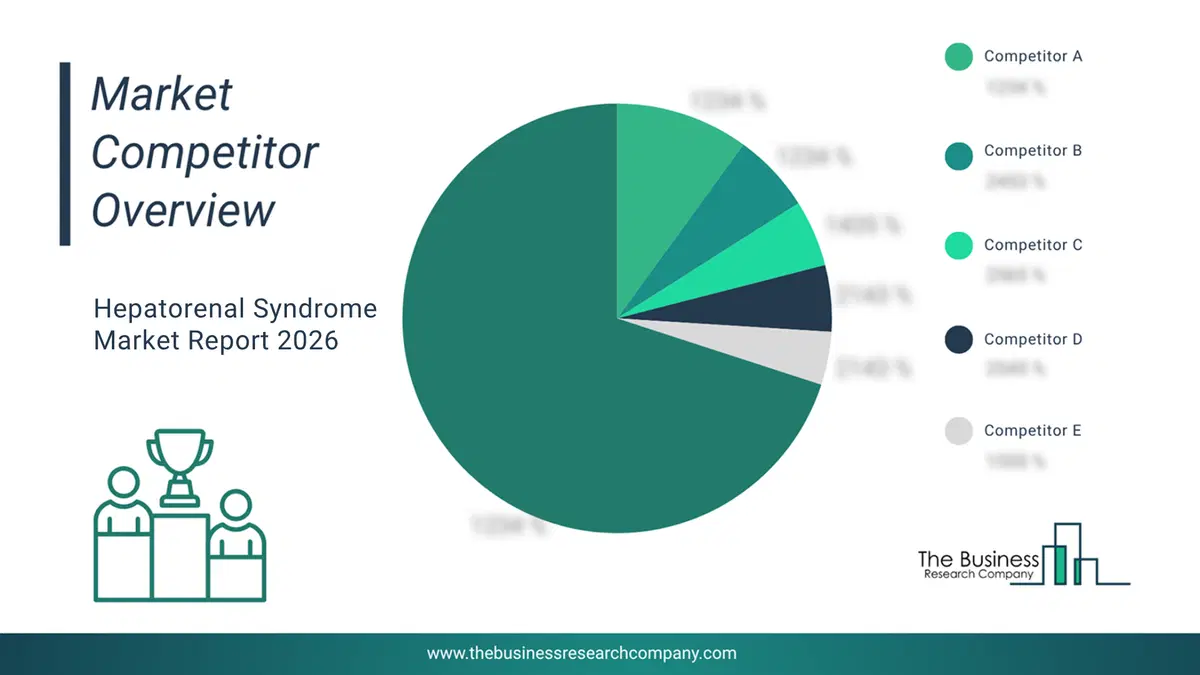
This chart is for illustrative purposes; the full report includes a detailed competitor analysis and comprehensive overview of the top 10 companies in the market.
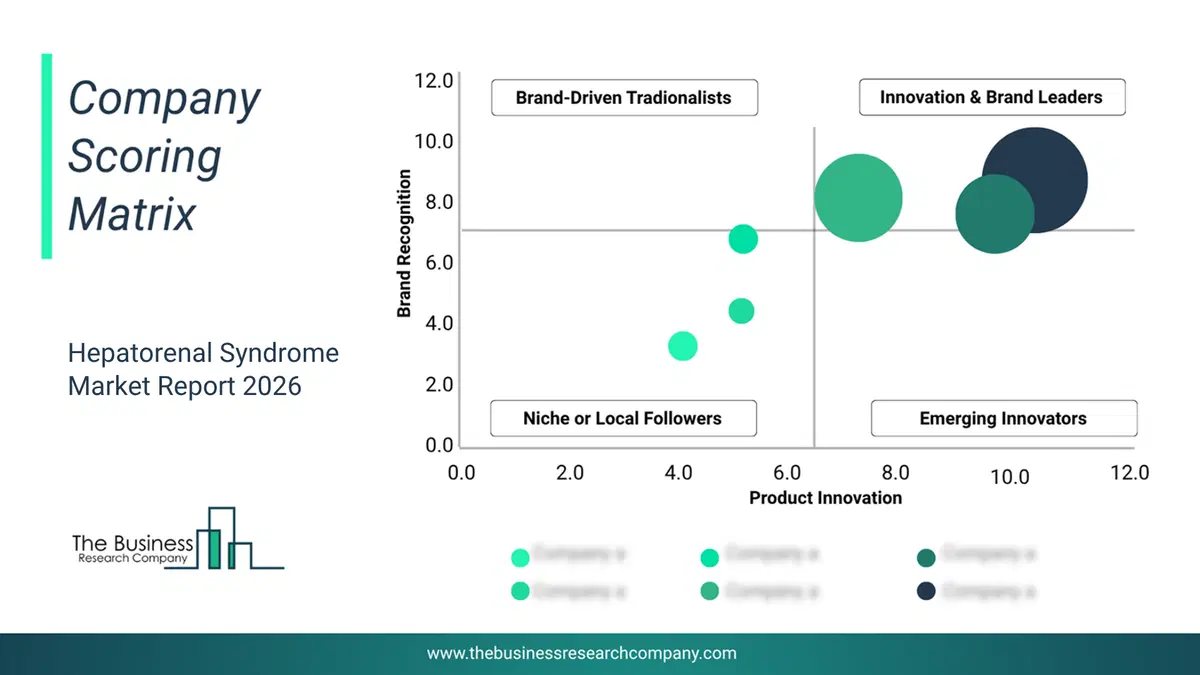
This chart maps companies by product innovation and brand strength, with bubble size indicating relative revenue, helping identify market leaders, challengers, and niche players. This is an illustrative chart; the full report provides a complete and accurate competitive analysis.
Global Hepatorenal Syndrome Market Trends and Insights
Major companies operating in the hepatorenal syndrome market are focusing on developing innovative devices, such as cytopheretic devices, to improve patient outcomes by reducing inflammation, stabilizing kidney function, and enhancing treatment effectiveness for Hepatorenal Syndrome (HRS). The cytopheretic device (Cytosorb) is an extracorporeal blood purification therapy designed to reduce systemic inflammation and immune activation in critically ill patients, including those with Hepatorenal Syndrome (HRS). For instance, in October 2023, SeaStar Medical Holding Corporation, a US-based medical device company, received FDA approval for its Selective Cytopheretic Device (SCD) for the treatment of hepatorenal syndrome (HRS). This advanced, cell-directed therapy targets hyperinflammation, a key driver of kidney dysfunction in patients with acute-on-chronic liver failure. By leveraging immunomodulation, SCD helps regulate abnormal immune responses, potentially supporting kidney recovery and improving patients' eligibility for life-saving liver transplants. Its effectiveness in enhancing solid organ function has been demonstrated in preclinical and clinical studies across conditions such as sepsis, acute kidney injury (AKI), and cardiorenal syndrome.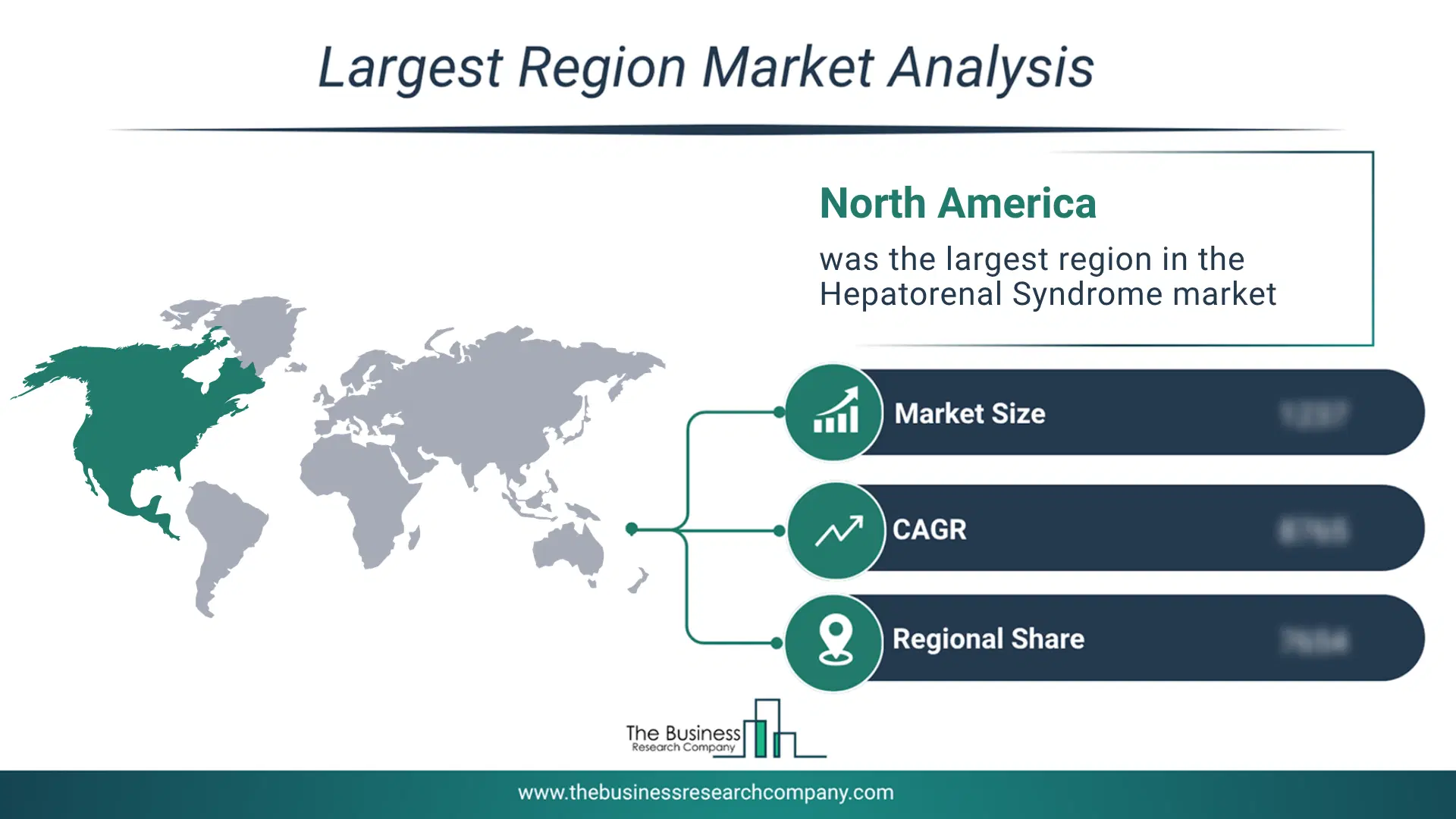
Regional Outlook
North America was the largest region in the hepatorenal syndrome market in 2025. Asia-Pacific is expected to be the fastest-growing region in the forecast period. The regions covered in this market report are Asia-Pacific, South East Asia, Western Europe, Eastern Europe, North America, South America, Middle East, Africa. The countries covered in this market report are Australia, Brazil, China, France, Germany, India, Indonesia, Japan, Taiwan, Russia, South Korea, UK, USA, Canada, Italy, Spain.What Defines the Hepatorenal Syndrome Market?
The hepatorenal syndrome market consists of revenues earned by entities by providing services such as medical management services, dialysis services, and liver transplant services. The market value includes the value of related goods sold by the service provider or included within the service offering. The hepatorenal syndrome market also includes sales of angiotensin, dialysis products, and continuous renal replacement therapy (CRRT) machines. Values in this market are ‘factory gate’ values, that is, the value of goods sold by the manufacturers or creators of the goods, whether to other entities (including downstream manufacturers, wholesalers, distributors, and retailers) or directly to end customers. The value of goods in this market includes related services sold by the creators of the goods.How is Market Value Defined and Measured?
The market value is defined as the revenues that enterprises gain from the sale of goods and/or services within the specified market and geography through sales, grants, or donations in terms of the currency (in USD unless otherwise specified). The revenues for a specified geography are consumption values that are revenues generated by organizations in the specified geography within the market, irrespective of where they are produced. It does not include revenues from resales along the supply chain, either further along the supply chain or as part of other products.
This chart presents market attractiveness based on a quantitative evaluation of growth, competition, strategic alignment, and risk, offering a clear view of opportunity areas for decision-making. This chart is for illustrative purposes; the full report contains the complete analysis.

This chart highlights the Total Addressable Market (TAM) by estimating the maximum revenue opportunity using an assumption-driven approach, supporting strategic planning and opportunity sizing across markets. The chart is illustrative; the full report provides a more comprehensive analysis.
What Key Data and Analysis Are Included in the Hepatorenal Syndrome Market Report 2026?
The hepatorenal syndrome market research report is one of a series of new reports from The Business Research Company that provides market statistics, including industry global market size, regional shares, competitors with the market share, detailed market segments, market trends and opportunities, and any further data you may need to thrive in the hepatorenal syndrome industry. The market research report delivers a complete perspective of everything you need, with an in-depth analysis of the current and future state of the industry.Hepatorenal Syndrome Market Report Forecast Analysis
| Report Attribute | Details |
|---|---|
| Market Size Value In 2026 | $1.46 billion |
| Revenue Forecast In 2030 | $1.91 billion |
| Growth Rate | CAGR of 6.9% from 2026 to 2030 |
| Base Year For Estimation | 2025 |
| Actual Estimates/Historical Data | 2020-2025 |
| Forecast Period | 2026 - 2030 |
| Market Representation | Revenue in USD Billion and CAGR from 2026 to 2030 |
| Segments Covered | Type, Treatment, Diagnosis, End Users |
| Regional Scope | Asia-Pacific, Western Europe, Eastern Europe, North America, South America, Middle East, Africa |
| Country Scope | The countries covered in the report are Australia, Brazil, China, France, Germany, India, Indonesia, Japan, Taiwan, Russia, South Korea, UK, USA, Canada, Italy, Spain |
| Key Companies Profiled | Eli Lilly and Company, Baxter International Inc., Mallinckrodt Pharmaceuticals, Ferring Pharmaceuticals Ltd, La Jolla Pharmaceutical Company, Teva Pharmaceutical Industries Ltd, Cumberland Pharmaceuticals Inc., Innoviva Specialty Therapeutics Inc, BioVie Inc., SeaStar Medical, Otsuka Pharmaceutical Co. Ltd, Pfizer Inc., AbbVie Inc., Bristol Myers Squibb, Novartis AG, Sanofi, Astellas Pharma Inc., Takeda Pharmaceutical Company Limited, Bayer AG, AstraZeneca |
| Customization Scope | Request for Customization |
| Pricing And Purchase Options | Explore Purchase Options |