
Hereditary Cancer Testing Market Report 2026
Global Outlook – By Test Type (Multi Panel Test, Single-Site Genetic Test), By Indication (Breast Cancer, Ovarian Cancer, Colorectal Cancer, Other Indications), By End user (Hospital, Clinics, Diagnostic Centers) - Market Size, Trends, Strategies, and Forecast to 2030
Hereditary Cancer Testing Market Overview
• Hereditary Cancer Testing market size has reached to $4.75 billion in 2025 • Expected to grow to $8.02 billion in 2030 at a compound annual growth rate (CAGR) of 10.9% • Growth Driver: Hereditary Cancer Testing's Crucial Role Amidst The Escalating Overall Cancer Burden • Market Trend: Enhancing Patient Care Through Molecular Diagnostics • North America was the largest region in 2025.What Is Covered Under Hereditary Cancer Testing Market?
The hereditary cancer testing refers to testing methods for hereditary cancers that can identify specific hereditary cancer diseases and disease-related gene mutations. This testing may decrease the risk of developing particular cancer mutants, allowing for a more comprehensive cancer risk for patients. The primary purpose of this cancer testing is to detect hereditary cancer early and maximize patient health outcomes. This testing procedure assists in identifying cancers for which one has a genetic risk and allows them to receive preventive treatment. The main types of tests for hereditary cancer are multi panel tests and single-site genetic tests. The multi-panel test refers to a hereditary cancer test that is used to detect many chemicals simultaneously. Panels come in a variety of types, from three-panel tests that look for three substances to five, seven, and 12-panel tests. The choice of conducting the required number of tests is up to the tester’s discretion. Hereditary cancer testing is conducted to detect breast cancer, ovarian cancer, colorectal cancer, and other indications that are used in hospitals, clinics, and diagnostic centers.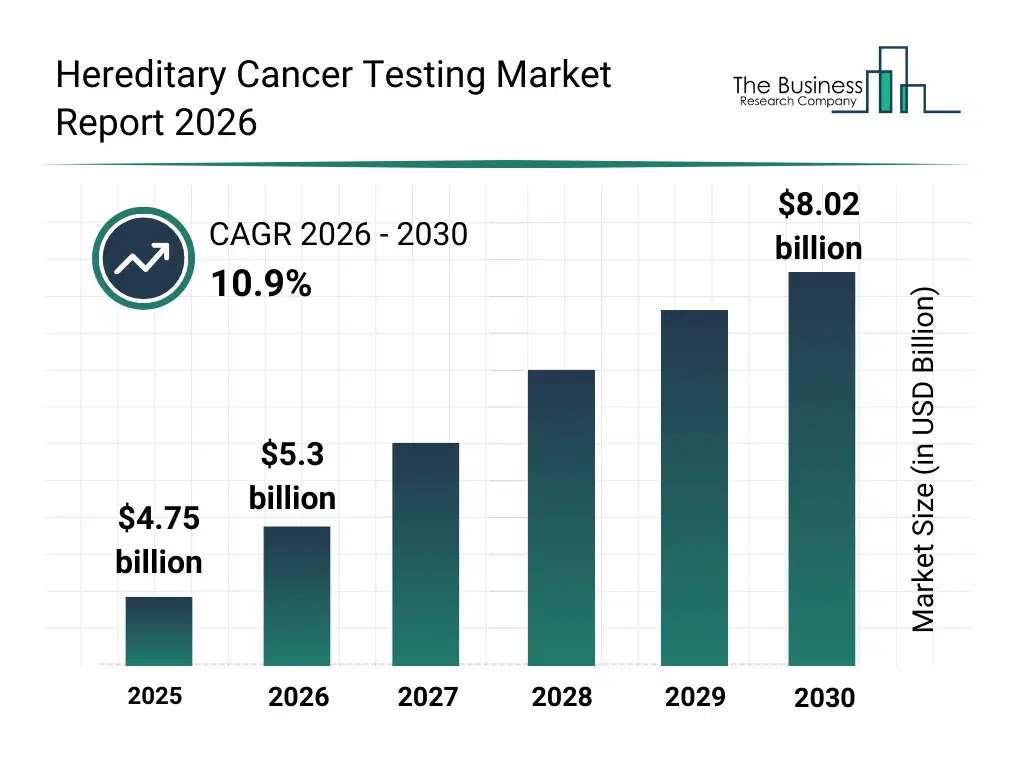
What Is The Hereditary Cancer Testing Market Size and Share 2026?
The hereditary cancer testing market size has grown rapidly in recent years. It will grow from $4.75 billion in 2025 to $5.3 billion in 2026 at a compound annual growth rate (CAGR) of 11.6%. The growth in the historic period can be attributed to increasing awareness of hereditary cancer risks, availability of next-generation sequencing platforms, expansion of diagnostic laboratory networks, rising physician recommendation for genetic testing, growth of personalized risk assessment models.What Is The Hereditary Cancer Testing Market Growth Forecast?
The hereditary cancer testing market size is expected to see rapid growth in the next few years. It will grow to $8.02 billion in 2030 at a compound annual growth rate (CAGR) of 10.9%. The growth in the forecast period can be attributed to expansion of population-scale genetic screening, increasing use of ai-driven genomic analysis, growth in preventive oncology initiatives, rising demand for cost-effective testing solutions, enhanced regulatory support for genetic diagnostics. Major trends in the forecast period include increasing adoption of multi-gene panel testing, rising demand for early cancer risk detection, growing use of advanced genetic sequencing technologies, expansion of preventive testing programs, enhanced integration of clinical decision support tools.
Global Hereditary Cancer Testing Market Segmentation
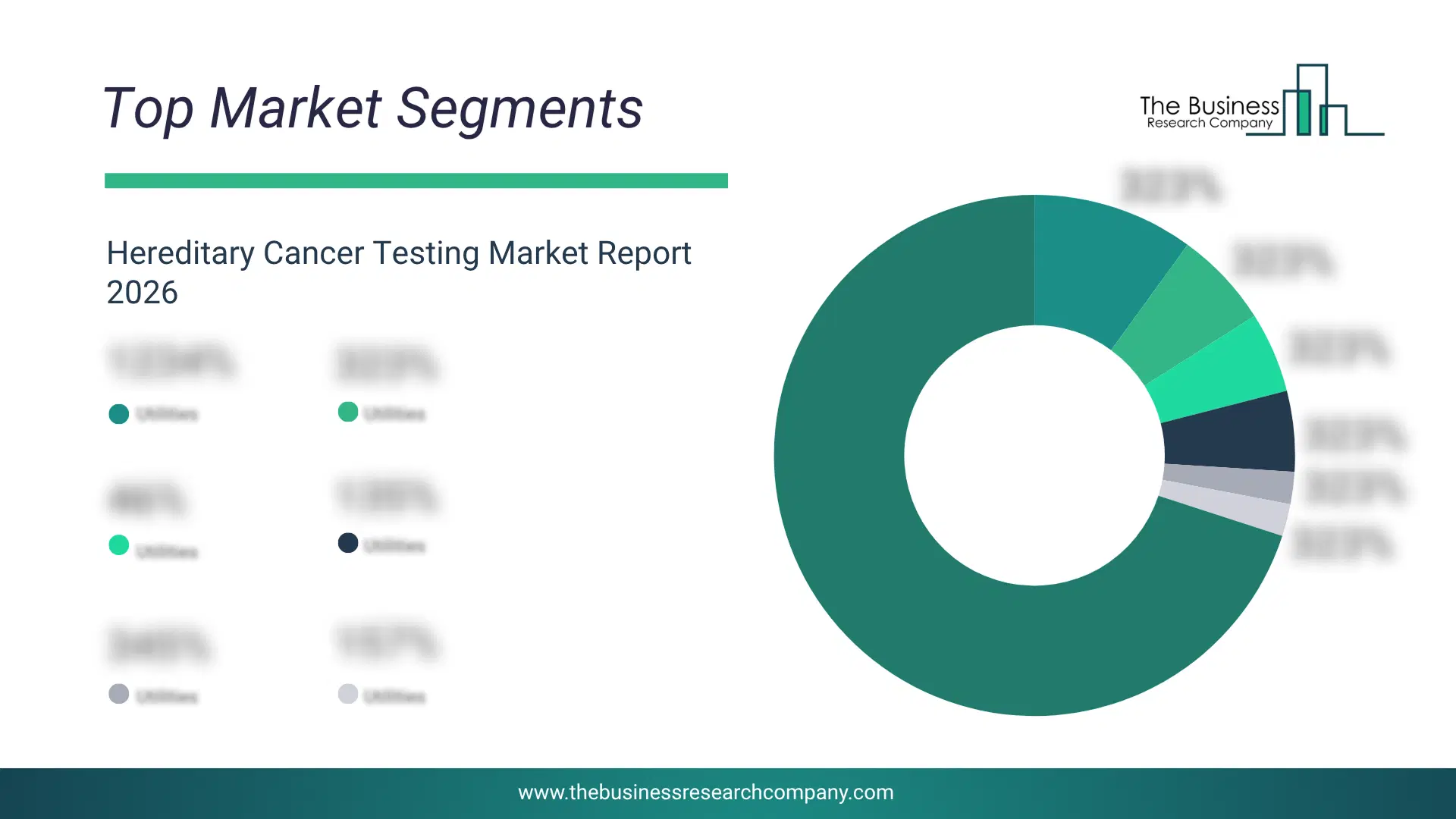
1) By Test Type: Multi Panel Test, Single-Site Genetic Test 2) By Indication: Breast Cancer, Ovarian Cancer, Colorectal Cancer, Other Indications 3) By End user: Hospital, Clinics, Diagnostic Centers Subsegments: 1) By Multi Panel Test: Comprehensive Genetic Panels, Targeted Gene Panels 2) By Single-Site Genetic Test: Specific Gene Testing, Familial Mutation TestingWhat Is The Driver Of The Hereditary Cancer Testing Market?
An increase in the overall cancer burden is expected to propel the hereditary cancer testing market going forward. Cancer is a group of diseases characterized by the uncontrolled and abnormal growth of cells, which can invade and spread to other tissues and parts of the body. In a healthy organism, cells follow a regulated process of growth, division, and death. Hereditary cancer testing plays a critical role in addressing the overall burden of cancer by identifying individuals with a genetic predisposition to certain cancers. By assessing inherited mutations and familial risk factors, this testing helps identify individuals at higher risk, enabling early intervention, personalized treatment plans, and proactive preventive measures. For instance, in July 2024, according to the Australian Institute of Health and Welfare, an Australia-based government agency, in Australia the number of cancer cases diagnosed increased from 160,570 in 2022 to 164,694 in 2023, reflecting a notable rise over the year. This upward trend highlights the growing prevalence of cancer within the country. Therefore, an increase in the overall cancer burden is driving the hereditary cancer testing industry.Key Players In The Global Hereditary Cancer Testing Market
Major companies operating in the hereditary cancer testing market are Centogene NV, Ambry Genetics Inc., Myriad Genetics Inc., NeoGenomics Laboratories Inc., Quest Diagnostics, PreventionGenetics, Fulgent Genetics Inc., Invitae Corporation, Medical Diagnostic Laboratories LLC, Natera Inc., Color Health Inc., CooperSurgical Inc., OPKO Health Inc., Illumina Inc., Laboratory Corporation of America Holdings, Pathway Genomics Corporation, Strand Life Sciences Private Limited, Progenity Inc., Myogenes Ltd., Associated Regional and University Pathologists Inc., 4baseCare, Biocartis Group NV, F. Hoffmann-La Roche AG, Medgenome Pvt. Ltd., Abbott Laboratories, Agilent Technologies Inc., Bio-Rad Laboratories Inc., Thermo Fisher Scientific Inc., Oxford Nanopore Technologies PLC, PerkinElmer Inc.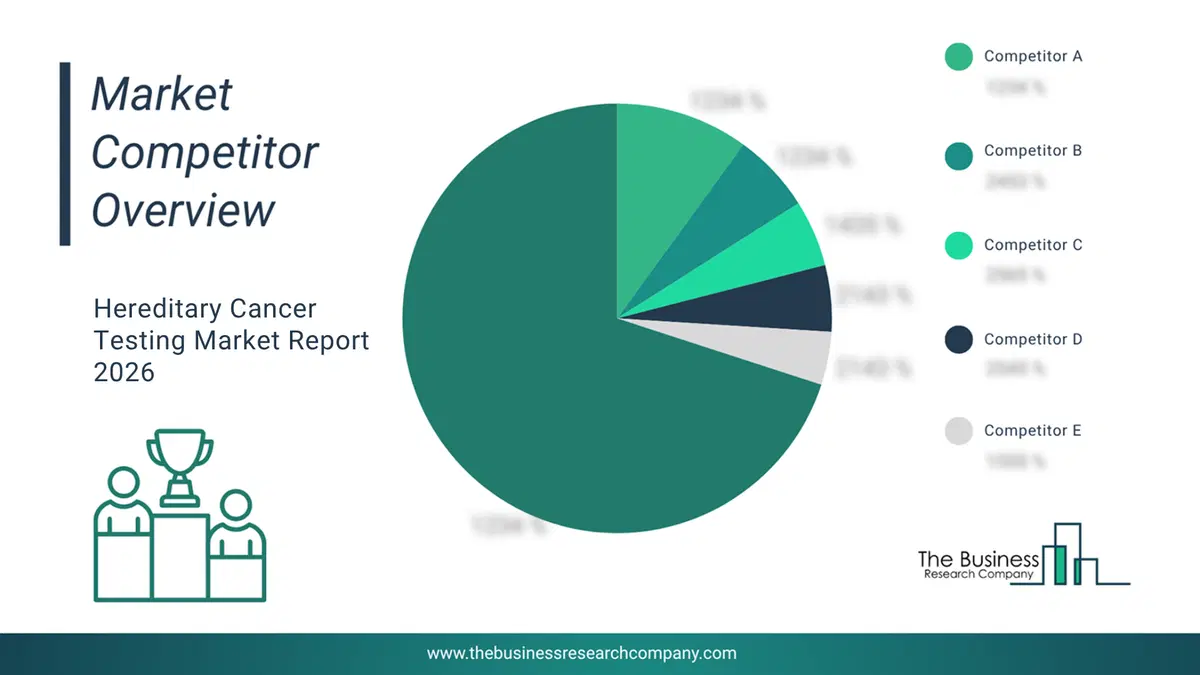
This chart is for illustrative purposes; the full report includes a detailed competitor analysis and comprehensive overview of the top 10 companies in the market.
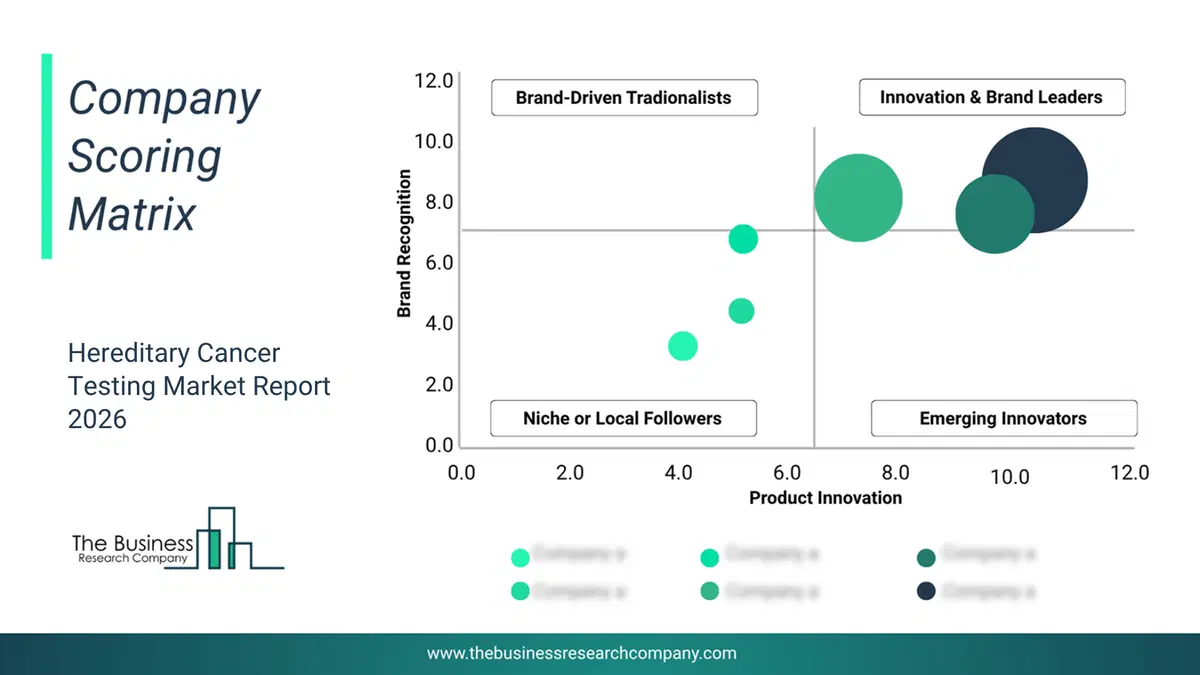
This chart maps companies by product innovation and brand strength, with bubble size indicating relative revenue, helping identify market leaders, challengers, and niche players. This is an illustrative chart; the full report provides a complete and accurate competitive analysis.
Global Hereditary Cancer Testing Market Trends and Insights
Major companies operating in the hereditary cancer testing market are focusing on innovative technologies, such as molecular diagnostic tumor testing, to enhance accuracy, improve patient outcomes, and personalize treatment strategies. Molecular diagnostic tumor testing involves analyzing a tumor's genetic and molecular characteristics to inform treatment decisions and predict outcomes. For instance, in February 2023, Chubb Business Services India Private Limited, an India-based global insurance company, launched Cancer Advocate Plus. The program includes genetics-based testing to identify inherited genes that increase cancer risk. This proactive approach allows individuals to understand their susceptibility to various cancers, facilitating early intervention and personalized care strategies.What Are Latest Mergers And Acquisitions In The Hereditary Cancer Testing Market?
In March 2024, Ambry Genetics, a US-based genetic testing company, formed a collaboration with Tempus AI, to offer integrated germline and somatic testing services. The collaboration aims to enhance access to comprehensive genomic insights, improve the accuracy of cancer diagnostics, and support personalized treatment strategies, while advancing innovation and growth in the molecular diagnostics market. Tempus AI is a US-based technology-driven precision medicine company specializes in leveraging data and technology to accelerate precision medicine and optimize patient care.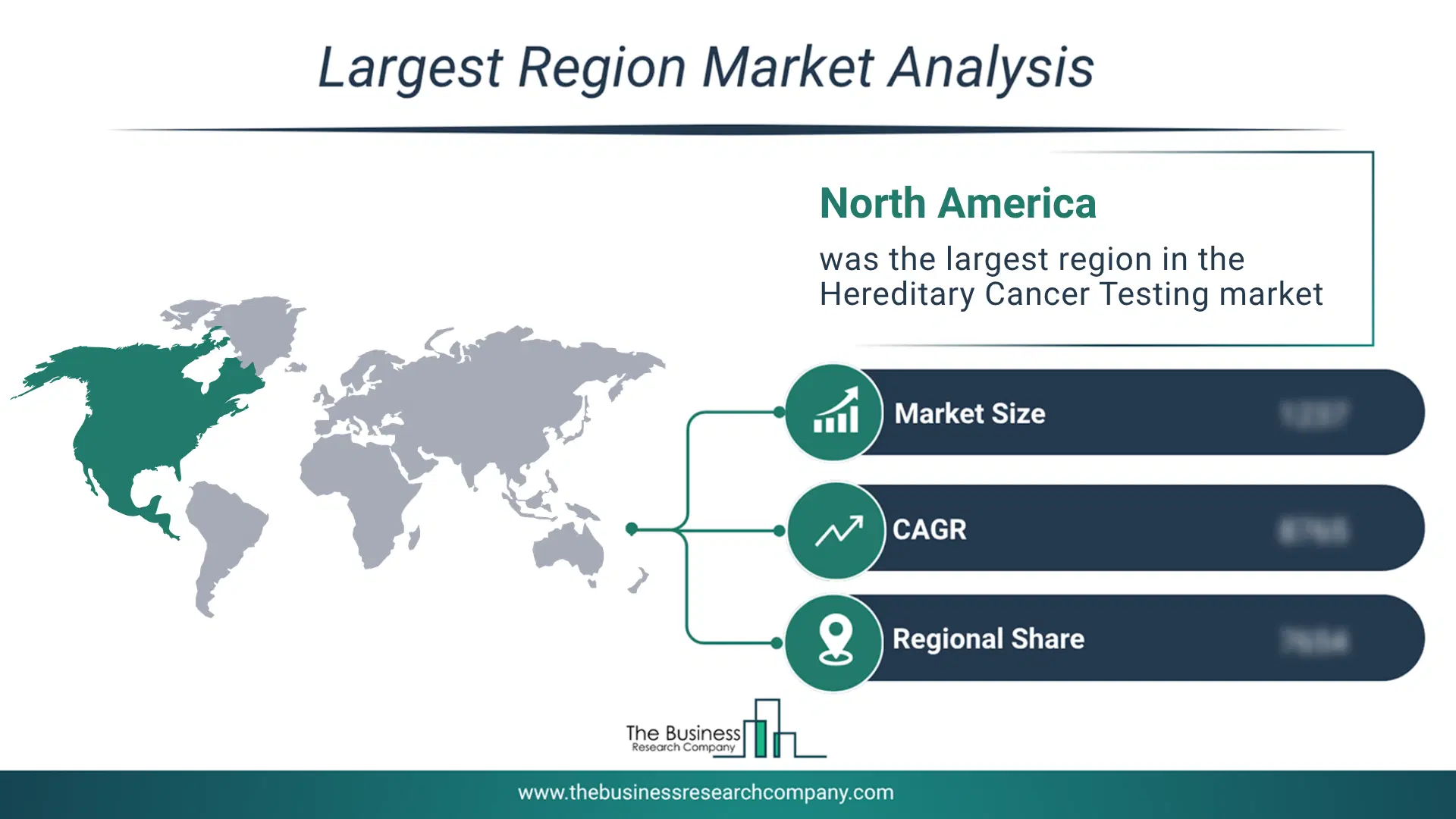
Regional Outlook
North America was the largest region in the hereditary cancer testing market in 2025. The regions covered in this market report are Asia-Pacific, South East Asia, Western Europe, Eastern Europe, North America, South America, Middle East, Africa. The countries covered in this market report are Australia, Brazil, China, France, Germany, India, Indonesia, Japan, Taiwan, Russia, South Korea, UK, USA, Canada, Italy, Spain.What Defines the Hereditary Cancer Testing Market?
The hereditary cancer testing market includes revenues earned by entities by providing hereditary cancer testing for lung cancer, cervical cancer, prostate cancer, stomach/gastric cancer, melanoma, sarcoma, and uterine cancer. The market value includes the value of related goods sold by the service provider or included within the service offering. Only goods and services traded between entities or sold to end consumers are included.How is Market Value Defined and Measured?
The market value is defined as the revenues that enterprises gain from the sale of goods and/or services within the specified market and geography through sales, grants, or donations in terms of the currency (in USD unless otherwise specified). The revenues for a specified geography are consumption values that are revenues generated by organizations in the specified geography within the market, irrespective of where they are produced. It does not include revenues from resales along the supply chain, either further along the supply chain or as part of other products.
This chart presents market attractiveness based on a quantitative evaluation of growth, competition, strategic alignment, and risk, offering a clear view of opportunity areas for decision-making. This chart is for illustrative purposes; the full report contains the complete analysis.

This chart highlights the Total Addressable Market (TAM) by estimating the maximum revenue opportunity using an assumption-driven approach, supporting strategic planning and opportunity sizing across markets. The chart is illustrative; the full report provides a more comprehensive analysis.
What Key Data and Analysis Are Included in the Hereditary Cancer Testing Market Report 2026?
The hereditary cancer testing market research report is one of a series of new reports from The Business Research Company that provides market statistics, including industry global market size, regional shares, competitors with the market share, detailed market segments, market trends and opportunities, and any further data you may need to thrive in the hereditary cancer testing industry. The market research report delivers a complete perspective of everything you need, with an in-depth analysis of the current and future state of the industry.Hereditary Cancer Testing Market Report Forecast Analysis
| Report Attribute | Details |
|---|---|
| Market Size Value In 2026 | $5.3 billion |
| Revenue Forecast In 2030 | $8.02 billion |
| Growth Rate | CAGR of 10.9% from 2026 to 2030 |
| Base Year For Estimation | 2025 |
| Actual Estimates/Historical Data | 2020-2025 |
| Forecast Period | 2026 - 2030 |
| Market Representation | Revenue in USD Billion and CAGR from 2026 to 2030 |
| Segments Covered | Test Type, Indication, End user |
| Regional Scope | Asia-Pacific, Western Europe, Eastern Europe, North America, South America, Middle East, Africa |
| Country Scope | The countries covered in the report are Australia, Brazil, China, France, Germany, India, Indonesia, Japan, Taiwan, Russia, South Korea, UK, USA, Canada, Italy, Spain |
| Key Companies Profiled | Centogene NV, Ambry Genetics Inc., Myriad Genetics Inc., NeoGenomics Laboratories Inc., Quest Diagnostics, PreventionGenetics, Fulgent Genetics Inc., Invitae Corporation, Medical Diagnostic Laboratories LLC, Natera Inc., Color Health Inc., CooperSurgical Inc., OPKO Health Inc., Illumina Inc., Laboratory Corporation of America Holdings, Pathway Genomics Corporation, Strand Life Sciences Private Limited, Progenity Inc., Myogenes Ltd., Associated Regional and University Pathologists Inc., 4baseCare, Biocartis Group NV, F. Hoffmann-La Roche AG, Medgenome Pvt. Ltd., Abbott Laboratories, Agilent Technologies Inc., Bio-Rad Laboratories Inc., Thermo Fisher Scientific Inc., Oxford Nanopore Technologies PLC, PerkinElmer Inc. |
| Customization Scope | Request for Customization |
| Pricing And Purchase Options | Explore Purchase Options |