
Hereditary Transthyretin Amyloidosis Market Report 2026
Global Outlook – By Type (Oral, Subcutaneous Injection, Other Types), By Drug Class (RNAi Agents (Patisiran), Small Interfering RNAs (siRNAs) (Vutrisiran)), By Distribution Channel (Hospital Pharmacies, Retail Pharmacies), By Application (Hospital, Clinic, Other Applications) - Market Size, Trends, Strategies, and Forecast to 2030
Hereditary Transthyretin Amyloidosis Market Overview
• Hereditary Transthyretin Amyloidosis market size has reached to $1.49 billion in 2025 • Expected to grow to $2.28 billion in 2030 at a compound annual growth rate (CAGR) of 8.9% • Growth Driver: Rising Geriatric Population Driving The Growth Of The Market Due To Increasing Disease Prevalence • Market Trend: Innovative RNAi Therapeutics Driving Advancements In The Market • North America was the largest region in 2025 and Asia-Pacific is the fastest growing region.What Is Covered Under Hereditary Transthyretin Amyloidosis Market?
Hereditary transthyretin amyloidosis is a rare, inherited disorder caused by mutations in the TTR gene, leading to the misfolding and accumulation of transthyretin protein as amyloid deposits in organs. This condition primarily affects the nervous system, heart, and other tissues, causing progressive neuropathy and cardiomyopathy. The main types of hereditary transthyretin amyloidosis are oral, subcutaneous injection, and other types. Oral administration, involving tablets, capsules, or liquids, offers a convenient and patient-friendly treatment option for hATTR amyloidosis, improving accessibility and adherence. The drug classes used in the treatment of hATTR amyloidosis include RNAi agents, such as patisiran, and small interfering RNAs (siRNAs) like vutrisiran. These therapies are distributed through hospital pharmacies and retail pharmacies and used in applications such as hospitals, clinics, and others.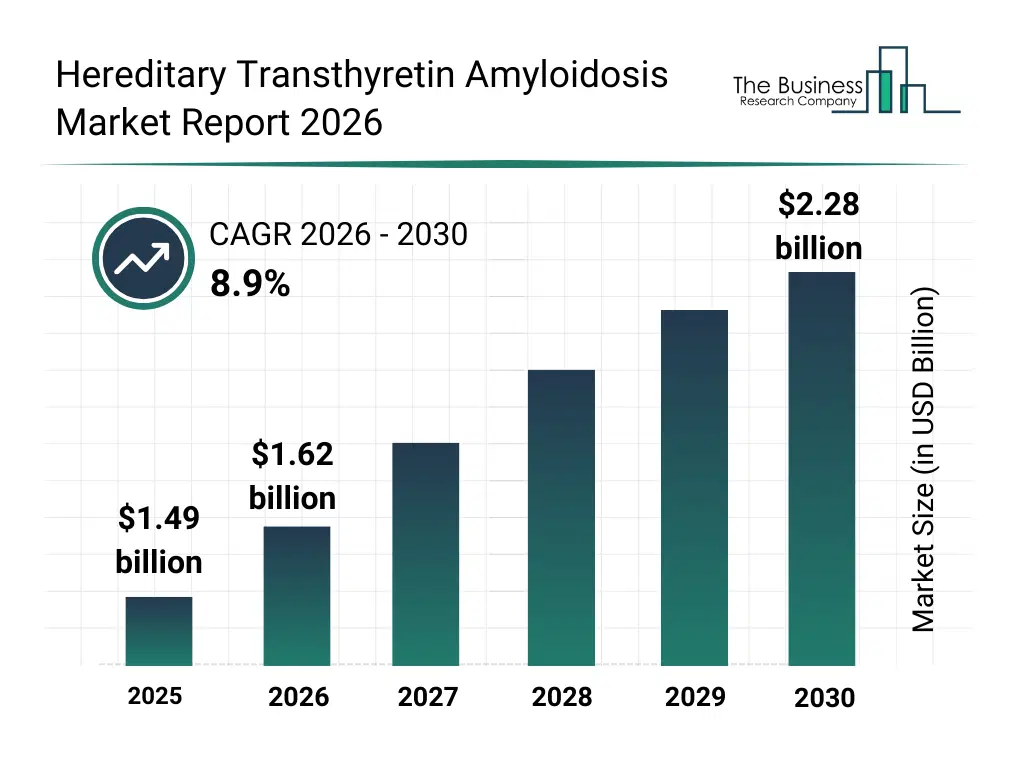
What Is The Hereditary Transthyretin Amyloidosis Market Size and Share 2026?
The hereditary transthyretin amyloidosis market size has grown strongly in recent years. It will grow from $1.49 billion in 2025 to $1.62 billion in 2026 at a compound annual growth rate (CAGR) of 9.0%. The growth in the historic period can be attributed to increasing clinical recognition of attr amyloidosis, availability of tafamidis therapy, expansion of specialized neurology and cardiology centers, improved genetic testing for ttr mutations, rising patient registry programs.What Is The Hereditary Transthyretin Amyloidosis Market Growth Forecast?
The hereditary transthyretin amyloidosis market size is expected to see strong growth in the next few years. It will grow to $2.28 billion in 2030 at a compound annual growth rate (CAGR) of 8.9%. The growth in the forecast period can be attributed to expansion of next-generation gene therapies, increasing investment in rare disease research, growing adoption of precision medicine approaches, rising development of crispr-based treatments, improved disease outcome monitoring technologies. Major trends in the forecast period include increasing adoption of gene silencing therapies, rising use of rnAI-based treatments, growing focus on early cardiac and neurological diagnosis, expansion of oral therapeutic options, enhanced long-term disease management strategies.
Global Hereditary Transthyretin Amyloidosis Market Segmentation
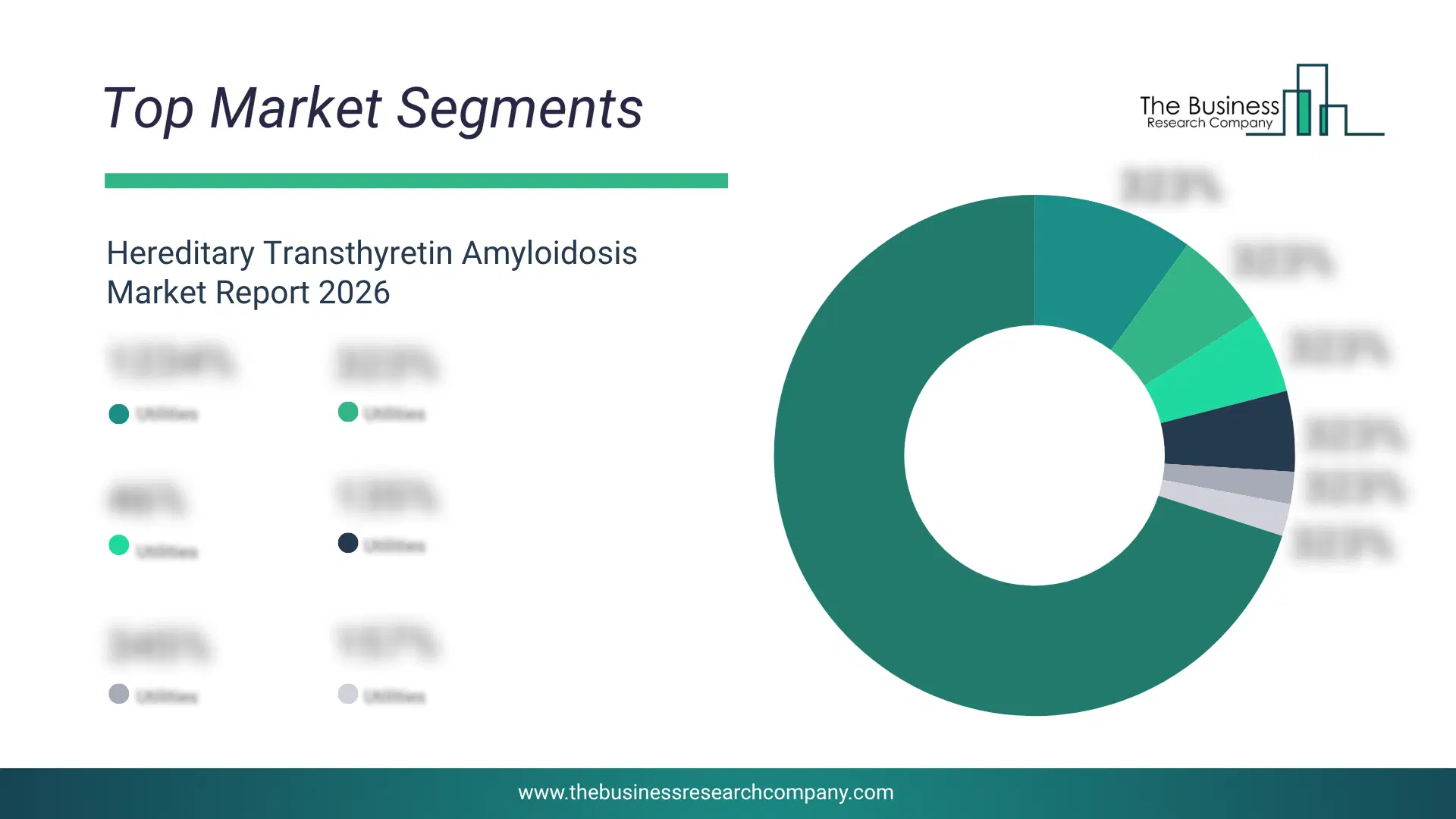
1) By Type: Oral, Subcutaneous Injection, Other Types 2) By Drug Class: RNAi Agents (Patisiran), Small Interfering RNAs (siRNAs) (Vutrisiran) 3) By Distribution Channel: Hospital Pharmacies, Retail Pharmacies 4) By Application: Hospital, Clinic, Other Applications Subsegments: 1) By Oral: Tafamidis, Experimental Oral Therapies 2) By Subcutaneous Injection: Inotersen, Vutrisiran 3) By Other Types: Intravenous Therapies, Gene Silencing Therapies, CRISPR-Based TherapiesWhat Is The Driver Of The Hereditary Transthyretin Amyloidosis Market?
The growing geriatric population is expected to propel the growth of the hereditary transthyretin amyloidosis market going forward. The geriatric population refers to individuals aged 65 and older, often requiring specialized healthcare and support due to aging. The geriatric population is growing due to increasing life expectancy driven by advancements in healthcare and living conditions. Hereditary transthyretin amyloidosis (hATTR) significantly impacts the geriatric population by causing progressive neuropathy and cardiomyopathy, leading to increased morbidity in aging individuals. For instance, in January 2024, according to the Population Reference Bureau, a US-based nonprofit organization, the US population aged 65 and older is expected to grow from 58 million in 2022 to 82 million by 2050, marking a 47% increase. Therefore, the growing geriatric population is driving the growth of the hereditary transthyretin amyloidosis industry.Key Players In The Global Hereditary Transthyretin Amyloidosis Market
Major companies operating in the hereditary transthyretin amyloidosis market are Alnylam Pharmaceuticals Inc., Ionis Pharmaceuticals Inc., BridgeBio Pharma Inc., Pfizer Inc., Eli Lilly and Company, Intellia Therapeutics Inc., Regeneron Pharmaceuticals Inc., AstraZeneca plc, Novartis AG, Roche Holding AG, Sanofi S.A., Takeda Pharmaceutical Company Limited, GlaxoSmithKline plc, Bristol Myers Squibb, Merck and Co Inc., Johnson and Johnson, AbbVie Inc., Biogen Inc., Vertex Pharmaceuticals Incorporated, Amgen Inc.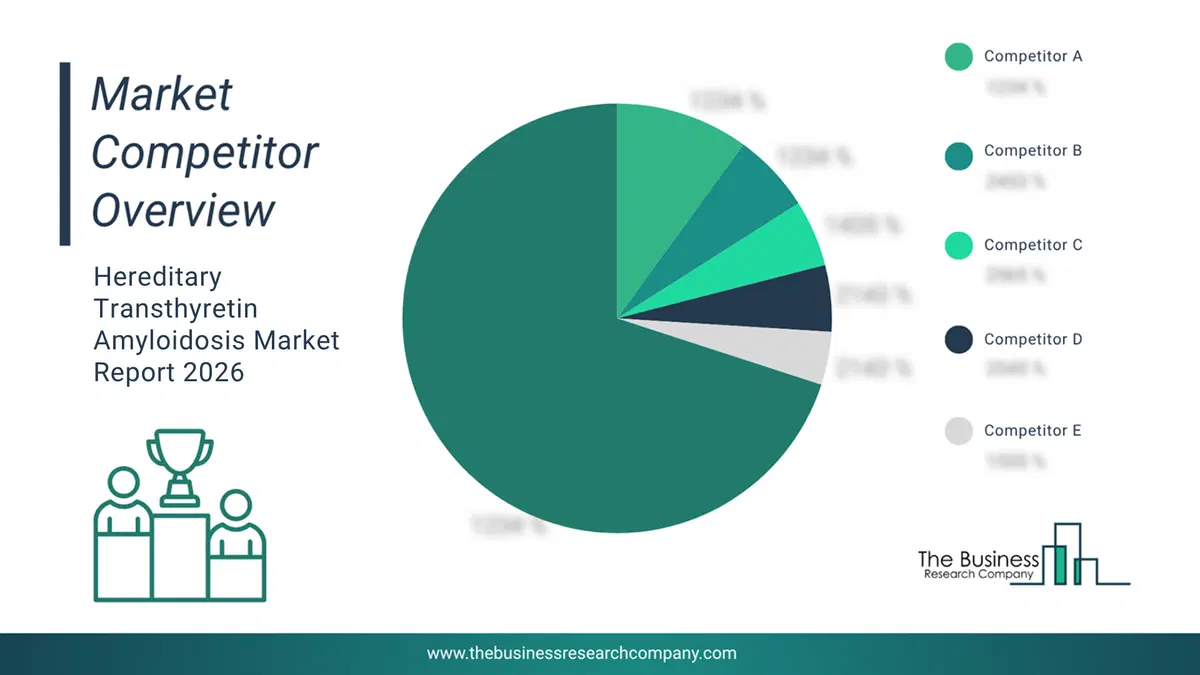
This chart is for illustrative purposes; the full report includes a detailed competitor analysis and comprehensive overview of the top 10 companies in the market.
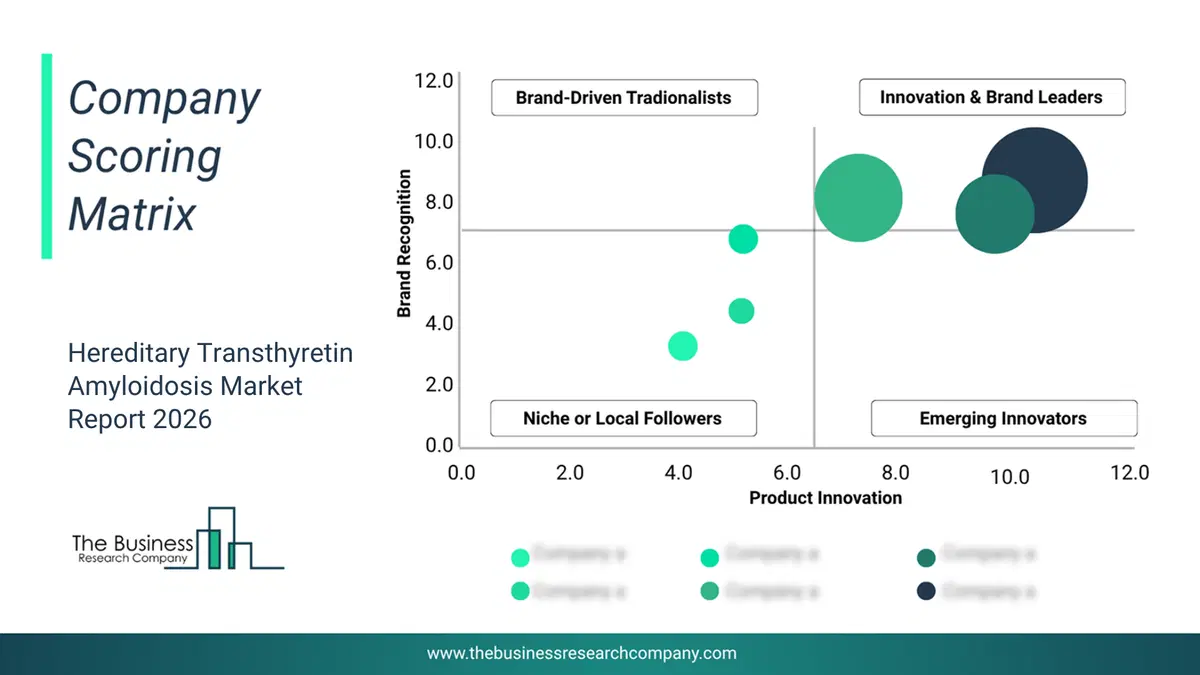
This chart maps companies by product innovation and brand strength, with bubble size indicating relative revenue, helping identify market leaders, challengers, and niche players. This is an illustrative chart; the full report provides a complete and accurate competitive analysis.
Global Hereditary Transthyretin Amyloidosis Market Trends and Insights
Major companies operating in the hereditary transthyretin amyloidosis market are developing innovative therapeutics, such as RNAi therapeutics, to target and reduce the production of transthyretin (TTR) protein. RNAi therapeutics are a class of drugs that use RNA interference technology to silence specific genes, thereby reducing the production of disease-causing proteins. For instance, in October 2024, Alnylam Pharmaceuticals, Inc., a US-based biopharmaceutical company, submitted a supplemental new drug application (sNDA) to the US FDA for Vutrisiran (AMVUTTRA) as a treatment for transthyretin amyloidosis with cardiomyopathy. This submission underscores its innovative RNAi therapeutic approach, designed to target and reduce transthyretin (TTR) protein, a key factor in disease progression. Vutrisiran’s subcutaneous administration offers a more convenient and patient-friendly dosing regimen compared to traditional intravenous treatments, positioning it as a potentially transformative option for individuals with this serious condition.What Are Latest Mergers And Acquisitions In The Hereditary Transthyretin Amyloidosis Market?
In July 2023, Ionis Pharmaceuticals, Inc., a US-based biopharmaceutical company specializing in RNA-targeted drug discovery and development, partnered with AstraZeneca plc to jointly develop and market eplontersen for the treatment of transthyretin amyloidosis (ATTR) in the U.S. This collaboration also seeks to expand global access to the treatment by leveraging AstraZeneca’s strong commercial presence, particularly in Latin America and other international markets. AstraZeneca plc. is a UK-based biopharmaceutical company dedicated to the discovery, development, and commercialization of prescription medicines.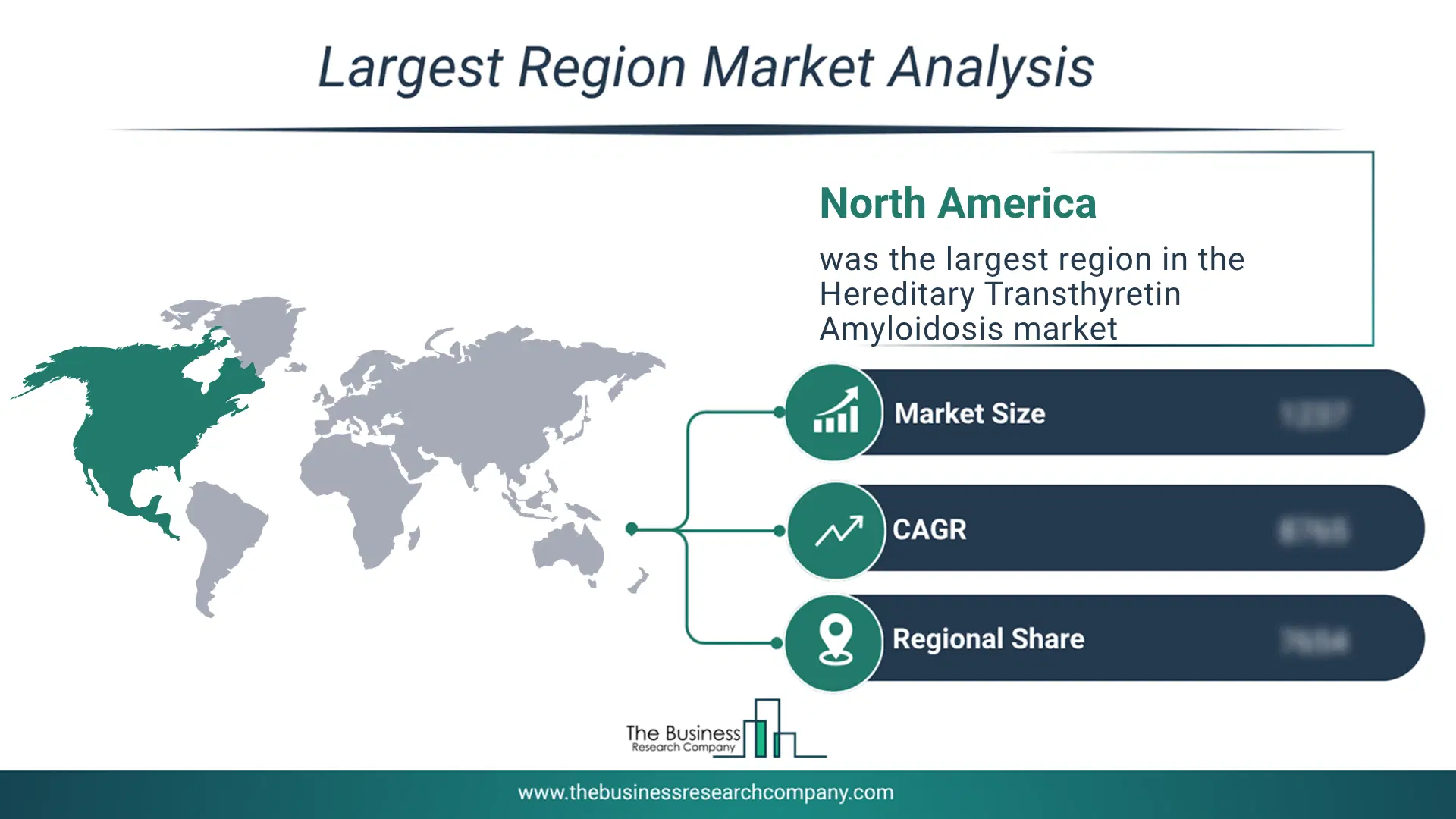
Regional Outlook
North America was the largest region in the hereditary transthyretin amyloidosis market in 2025. Asia-Pacific is expected to be the fastest-growing region in the forecast period. The regions covered in this market report are Asia-Pacific, South East Asia, Western Europe, Eastern Europe, North America, South America, Middle East, Africa. The countries covered in this market report are Australia, Brazil, China, France, Germany, India, Indonesia, Japan, Taiwan, Russia, South Korea, UK, USA, Canada, Italy, Spain.What Defines the Hereditary Transthyretin Amyloidosis Market?
The hereditary transthyretin amyloidosis market consists of revenues earned by entities by providing services such as diagnostic services, treatment services, and genetic counseling services. The market value includes the value of related goods sold by the service provider or included within the service offering. The hereditary transthyretin amyloidosis market also includes sales of genetic testing kits, imaging technologies, biomarkers, and assays. Values in this market are ‘factory gate’ values, that is, the value of goods sold by the manufacturers or creators of the goods, whether to other entities (including downstream manufacturers, wholesalers, distributors, and retailers) or directly to end customers. The value of goods in this market includes related services sold by the creators of the goods.How is Market Value Defined and Measured?
The market value is defined as the revenues that enterprises gain from the sale of goods and/or services within the specified market and geography through sales, grants, or donations in terms of the currency (in USD unless otherwise specified). The revenues for a specified geography are consumption values that are revenues generated by organizations in the specified geography within the market, irrespective of where they are produced. It does not include revenues from resales along the supply chain, either further along the supply chain or as part of other products.
This chart presents market attractiveness based on a quantitative evaluation of growth, competition, strategic alignment, and risk, offering a clear view of opportunity areas for decision-making. This chart is for illustrative purposes; the full report contains the complete analysis.

This chart highlights the Total Addressable Market (TAM) by estimating the maximum revenue opportunity using an assumption-driven approach, supporting strategic planning and opportunity sizing across markets. The chart is illustrative; the full report provides a more comprehensive analysis.
What Key Data and Analysis Are Included in the Hereditary Transthyretin Amyloidosis Market Report 2026?
The hereditary transthyretin amyloidosis market research report is one of a series of new reports from The Business Research Company that provides market statistics, including industry global market size, regional shares, competitors with the market share, detailed market segments, market trends and opportunities, and any further data you may need to thrive in the hereditary transthyretin amyloidosis industry. The market research report delivers a complete perspective of everything you need, with an in-depth analysis of the current and future state of the industry.Hereditary Transthyretin Amyloidosis Market Report Forecast Analysis
| Report Attribute | Details |
|---|---|
| Market Size Value In 2026 | $1.62 billion |
| Revenue Forecast In 2030 | $2.28 billion |
| Growth Rate | CAGR of 8.9% from 2026 to 2030 |
| Base Year For Estimation | 2025 |
| Actual Estimates/Historical Data | 2020-2025 |
| Forecast Period | 2026 - 2030 |
| Market Representation | Revenue in USD Billion and CAGR from 2026 to 2030 |
| Segments Covered | Type, Drug Class, Distribution Channel, Application |
| Regional Scope | Asia-Pacific, Western Europe, Eastern Europe, North America, South America, Middle East, Africa |
| Country Scope | The countries covered in the report are Australia, Brazil, China, France, Germany, India, Indonesia, Japan, Taiwan, Russia, South Korea, UK, USA, Canada, Italy, Spain |
| Key Companies Profiled | Alnylam Pharmaceuticals Inc., Ionis Pharmaceuticals Inc., BridgeBio Pharma Inc., Pfizer Inc., Eli Lilly and Company, Intellia Therapeutics Inc., Regeneron Pharmaceuticals Inc., AstraZeneca plc, Novartis AG, Roche Holding AG, Sanofi S.A., Takeda Pharmaceutical Company Limited, GlaxoSmithKline plc, Bristol Myers Squibb, Merck and Co Inc., Johnson and Johnson, AbbVie Inc., Biogen Inc., Vertex Pharmaceuticals Incorporated, Amgen Inc. |
| Customization Scope | Request for Customization |
| Pricing And Purchase Options | Explore Purchase Options |