
Hindered Amine Light Stabilizers (HALS) Market Report 2026
Global Outlook – By Type (Polymeric, Monomeric, Oligomeric), By Application (Plastics, Paints and Coatings, Adhesives and Sealants, Other Applications), By End Use Industry (Packaging, Automotive, Agriculture Films, Construction, Other End User Industries) – Market Size, Trends, Strategies, and Forecast to 2030
Hindered Amine Light Stabilizers (HALS) Market Overview
• Hindered Amine Light Stabilizers (HALS) market size has reached to $1.63 billion in 2025 • Expected to grow to $3.22 billion in 2030 at a compound annual growth rate (CAGR) of 14.4% • Growth Driver: The Expanding Automotive Industry Fuels Growth In Hindered Amine Light Stabilizers (HALS) Market • Market Trend: Increasing Focus On Introducing High Performance Light Stabilizers • Asia-Pacific was the largest region and fastest growing region.Market Gains By 2030 – Top Opportunities By Segment
Market Gain identifies the most promising market opportunities by highlighting the segments or products expected to generate the highest incremental revenue growth over the next five years.
What Is Covered Under Hindered Amine Light Stabilizers (HALS) Market?
Hindered amine light stabilizers are chemical substances with an amine functional group that are used as stabilizers in polymers and plastics. They protect polymer coatings from photo-oxidative damage by producing nitroxide radicals. The main types of hindered amine light stabilizers (HALS) are polymeric, monomeric, and oligomeric. A polymeric stabilizer is a chemical compound used to prevent the degradation of polymers. Polymeric hindered amine light stabilizers are used to safeguard the core of the material. It is used in plastics, paints and coatings, adhesives and sealants, and others, and is implemented in various verticals such as packaging, automotive, agricultural films, construction, and others. Monomeric hindered amine light stabilizers provide effective surface protection, while polymeric HALS protect the core of the material. Oligomeric hindered amine light stabilizers have excellent polymer compatibility, good extraction resistance, and good heat stability. It is highly effective in polyacetals, polyamides, polyurethanes, flexible and rigid PVC, as well as PVC blends.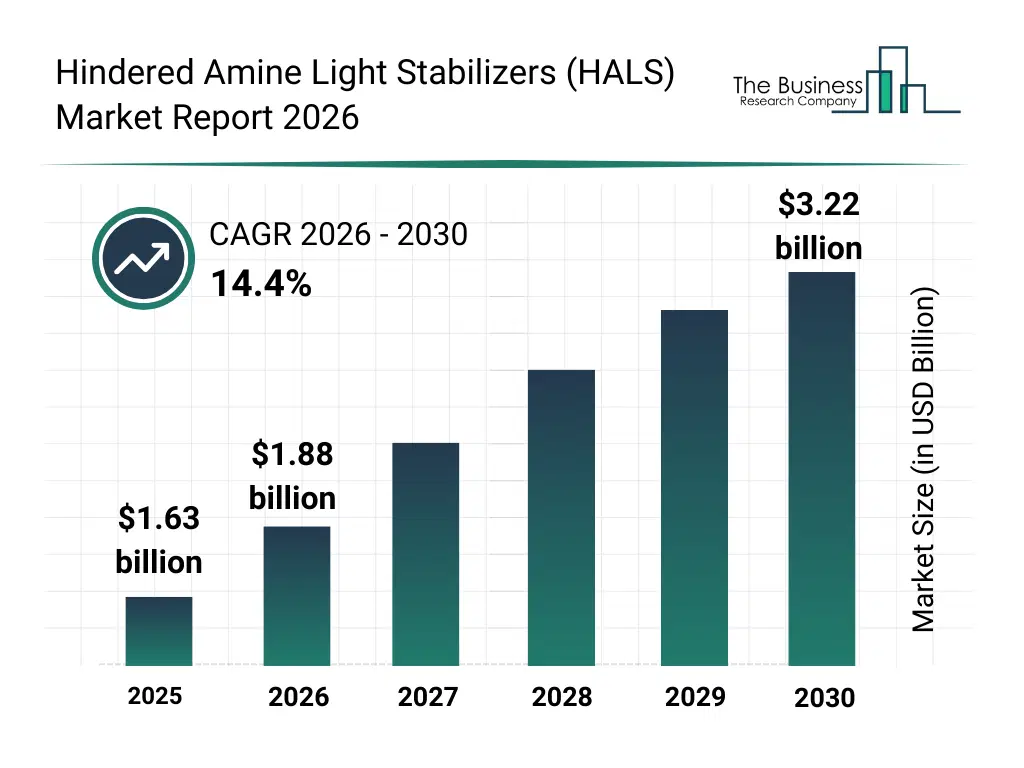
What Is The Hindered Amine Light Stabilizers (HALS) Market Size and Share 2026?
The hindered amine light stabilizers (hals) market size has grown rapidly in recent years. It will grow from $1.63 billion in 2025 to $1.88 billion in 2026 at a compound annual growth rate (CAGR) of 15.3%. The growth in the historic period can be attributed to growth of plastics consumption in construction, rising automotive production volumes, increasing use of polymer coatings, expansion of agricultural film applications, availability of advanced stabilizer formulations.What Is The Hindered Amine Light Stabilizers (HALS) Market Growth Forecast?
The hindered amine light stabilizers (hals) market size is expected to see rapid growth in the next few years. It will grow to $3.22 billion in 2030 at a compound annual growth rate (CAGR) of 14.4%. The growth in the forecast period can be attributed to increasing demand for durable lightweight materials, rising adoption of sustainable plastic additives, expansion of electric vehicle component production, growing investments in high-performance coatings, increasing focus on extended product lifecycles. Major trends in the forecast period include increasing use of hals in automotive plastics, rising demand for long-life polymer stabilization, growing adoption in agricultural films, expansion of weather-resistant coatings, enhanced focus on uv protection performance.
Global Hindered Amine Light Stabilizers (HALS) Market Segmentation
1) By Type: Polymeric, Monomeric, Oligomeric 2) By Application: Plastics, Paints and Coatings, Adhesives and Sealants, Other Applications 3) By End Use Industry: Packaging, Automotive, Agriculture Films, Construction, Other End User Industries Subsegments: 1) By Polymeric: Long-Chain Polymeric HALS, Multi-Functional Polymeric HALS 2) By Monomeric: Low Molecular Weight Monomeric HALS, High Molecular Weight Monomeric HALS 3) By Oligomeric: Short-Chain Oligomeric HALS, Medium-Chain Oligomeric HALS The top segments in the hindered amine light stabilizers (hals) market will be: • Polymeric will reach $1.49 Billion by 2030. • Monomeric will reach $0.67 Billion by 2030. • Oligomeric will reach $0.64 Billion by 2030.What Are The Drivers Of The Hindered Amine Light Stabilizers (HALS) Market?
The expanding automotive industry is expected to propel the growth of the hindered amine light stabilizers (HALS) market going forward. The automotive industry refers to a sector that involves various companies and organizations engaged in the design, development, manufacturing, marketing, selling, repairing, and modification of motor vehicles. Hindered amine light stabilizers (HALS) play an essential role in the automotive industry by safeguarding polymers and plastics from UV radiation and heat. This protection prolongs the lifespan and appearance of automotive components, reduces degradation, and enhances overall durability. For instance, in August 2023, according to the Board of Governors of the Federal Reserve System, a US-based government agency, total vehicle production in the United States increased to 11.77 million units in July, up from 10.91 million units in June. Therefore, the expanding automotive industry is driving the growth of the hindered amine light stabilizers (HALS) industry. The rising applications in the packaging industry are projected to fuel the demand for hindered amine light stabilizers (HALS) over the coming years. The packaging industry encompasses designing, manufacturing, and distributing materials and containers that protect, preserve, and transport products. The demand for the packaging industry is rising due to several factors, including e-commerce growth, food safety and freshness, and consumer convenience. HALS enhances UV resistance in packaging, maintaining its mechanical integrity, color, and clarity, which is vital for outdoor exposure and prolonged shelf life. This boosts consumer appeal, especially in food products, and offers a cost-effective solution by improving durability and longevity. For instance, in August 2024, according to GOV.UK, a UK-based official website for the UK government, in the 2023 to 2024 period, the taxable share of plastic packaging increased to 42%, up from 41% in the 2022 to 2023 period. Therefore, the rising applications in the packaging industry is driving the growth of the hindered amine light stabilizers (HALS) industry.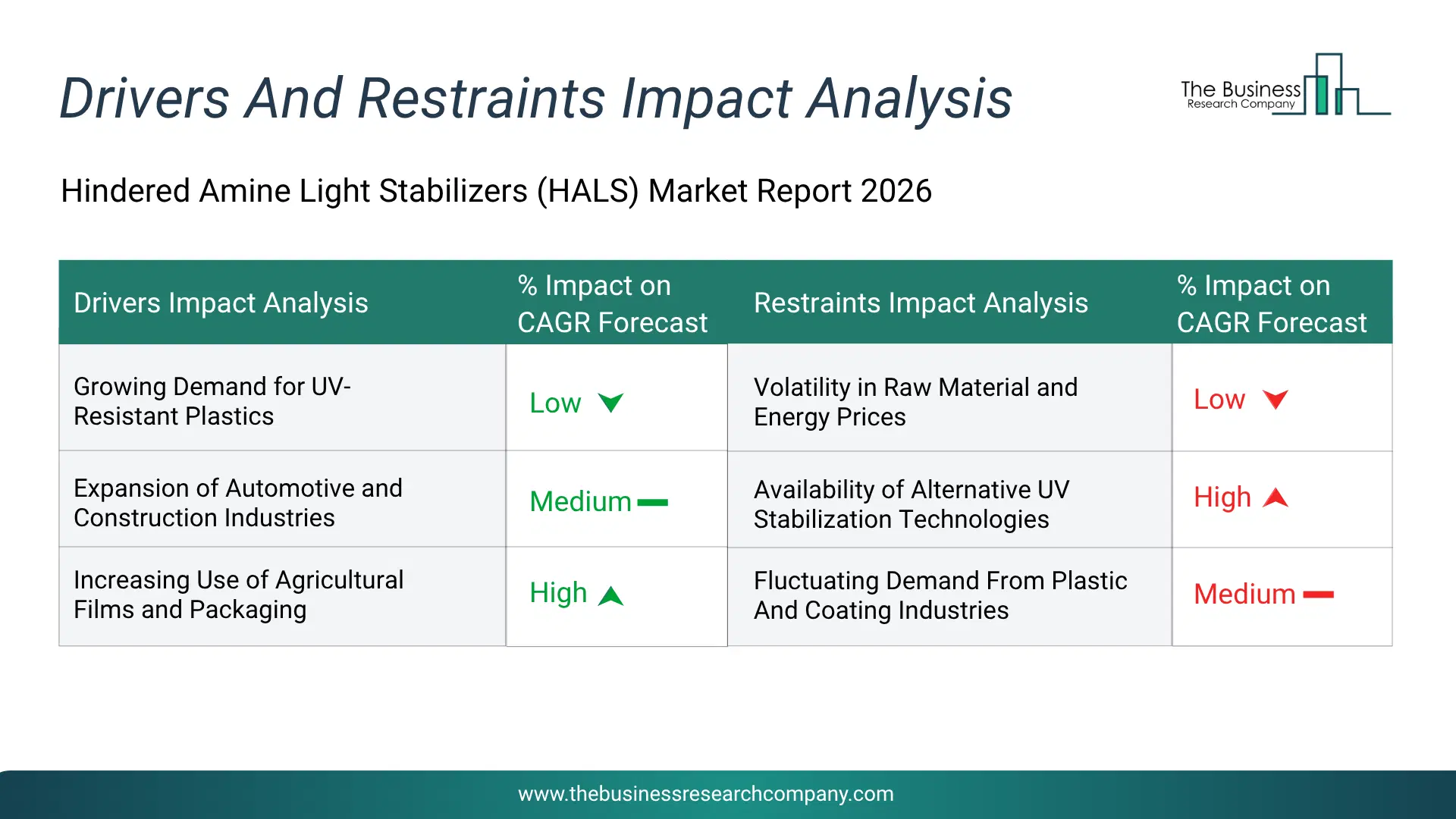
Infographic Chart Showing Key Market Drivers Analysis And Restraints For Hindered Amine Light Stabilizers (Hals) Market
The chart presents an impact analysis of key drivers and restraints, quantifying their relative influence on the market's growth rate and helping assess the balance between growth enablers and limiting factors. This chart offers a high-level perspective; the full report contains more detailed insights.
How Will The Drivers Impact Growth In The Global Hindered Amine Light Stabilizers (HALS) Market?
• Growing Demand for UV-Resistant Plastics (Low) – During the forecast period, the growing demand for uv-resistant plastics is expected to become a key growth driver for the hindered amine light stabilizers (HALS) market by 2030. The increasing use of plastics in automotive, construction, agriculture, and outdoor products is driving demand for HALS. These additives protect polymers from sunlight and extend product life. Manufacturers are focusing on durable materials that can withstand harsh weather conditions. This is increasing the use of HALS in both developed and emerging market. • Expansion of Automotive and Construction Industries (Medium) – During the forecast period, the expansion of automotive and construction industries is expected to emerge as a major factor driving the expansion of the hindered amine light stabilizers (HALS) market by 2030. Automotive manufacturers are using more lightweight plastic components to improve fuel efficiency and reduce emissions. Construction activities are also increasing the use of weather-resistant plastic pipes, panels, cables, and coatings. These products require effective UV stabilization to maintain performance over long periods. HALS helps prevent cracking, fading, and material degradation. • Increasing Use of Agricultural Films and Packaging (High) – During the forecast period, the increasing use of agricultural films and packaging is expected to act as a key growth catalyst for the hindered amine light stabilizers (HALS) market by 2030. Agricultural films, greenhouse covers, irrigation products, and food packaging are continuously exposed to sunlight. HALS improves the durability and service life of these products by preventing UV damage. Rising food production and modern farming practices are increasing demand for UV-stabilized agricultural plastics. The packaging industry also requires longer-lasting plastic materials.How Will The Restraints Impact Growth In The Global Hindered Amine Light Stabilizers (HALS) Market?
• Volatility in Raw Material and Energy Prices (Low) – During the forecast period, the hALS production depends on petrochemical feedstocks and specialty chemical intermediates whose prices can fluctuate significantly. Rising energy costs also increase manufacturing expenses. These cost increases reduce profit margins for manufacturers and may lead to higher product prices. Some customers delay purchases during periods of high costs. This creates pricing pressure across the market. • Availability of Alternative UV Stabilization Technologies (Medium) – During the forecast period, the hALS competes with UV absorbers and other light stabilization technologies depending on the application. Some manufacturers choose alternative stabilizers based on cost, formulation requirements, or specific performance needs. In lower-value applications, customers may prefer less expensive stabilization options. This limits HALS adoption in certain end-use segments. As a result, competition from alternative technologies restrains overall market growth. • Fluctuating Demand From Plastic And Coating Industries (High) – During the forecast period, the fluctuating demand from plastic and coating industries acts as a restraint on the Hindered Amine Light Stabilizers (HALS) market because these industries represent major application areas for light stabilization products. Economic slowdowns, reduced construction activities, and changes in automotive production can directly influence demand for polymer additives. Uncertainty in downstream markets makes production planning more challenging for manufacturers. Reduced consumption from key industries can create inventory pressure and affect revenue stability. These demand fluctuations can limit consistent market expansion.Key Players In The Global Hindered Amine Light Stabilizers (HALS) Market
Major companies operating in the hindered amine light stabilizers (hals) market are ADEKA Corporation, Clariant AG, Solvay SA, BASF SE, Arkema Group, Songwon Industrial Co. Ltd., Valtris Specialty Chemicals, Evonik Industries AG, Baerlocher GmbH, Rianlon Corporation, SABO S.p.A, Ampacet Corporation, Dover Chemical Corporation, Emery Oleochemicals, IGM Resins, Mayzo Inc., TinToll Ltd., Wellspring Chemical Corporation, Adeka Palmarole SAS, AkzoNobel N.V.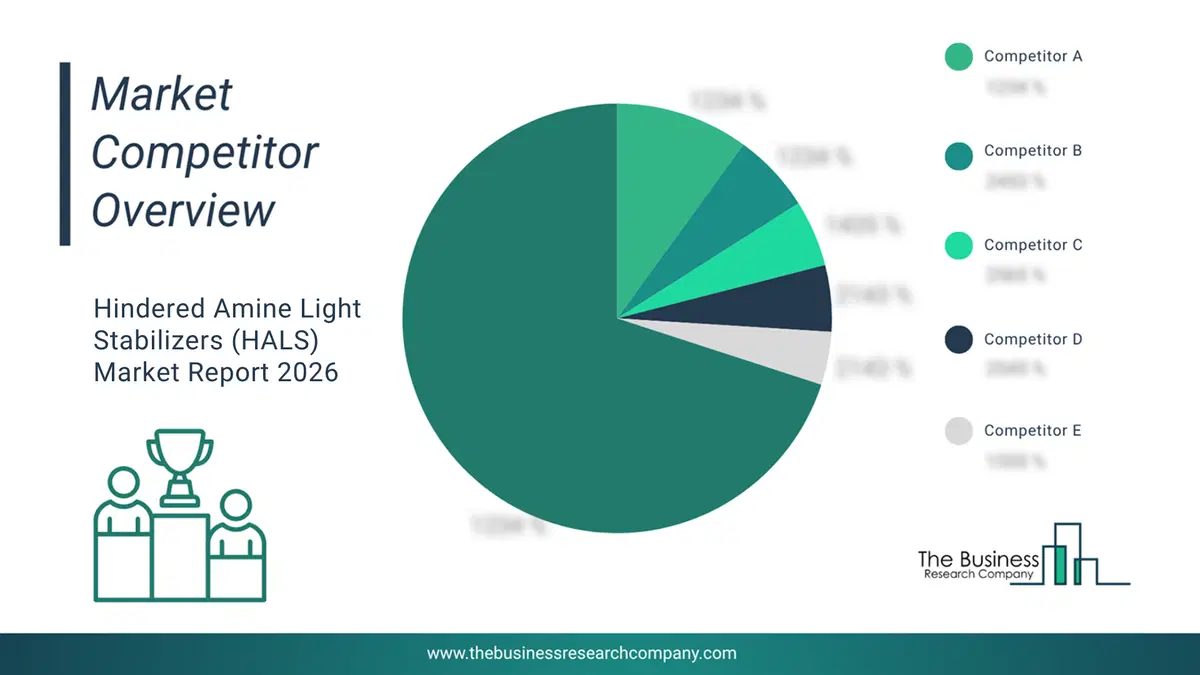
This chart is for illustrative purposes; the full report includes a detailed competitor analysis and comprehensive overview of the top 10 companies in the market.
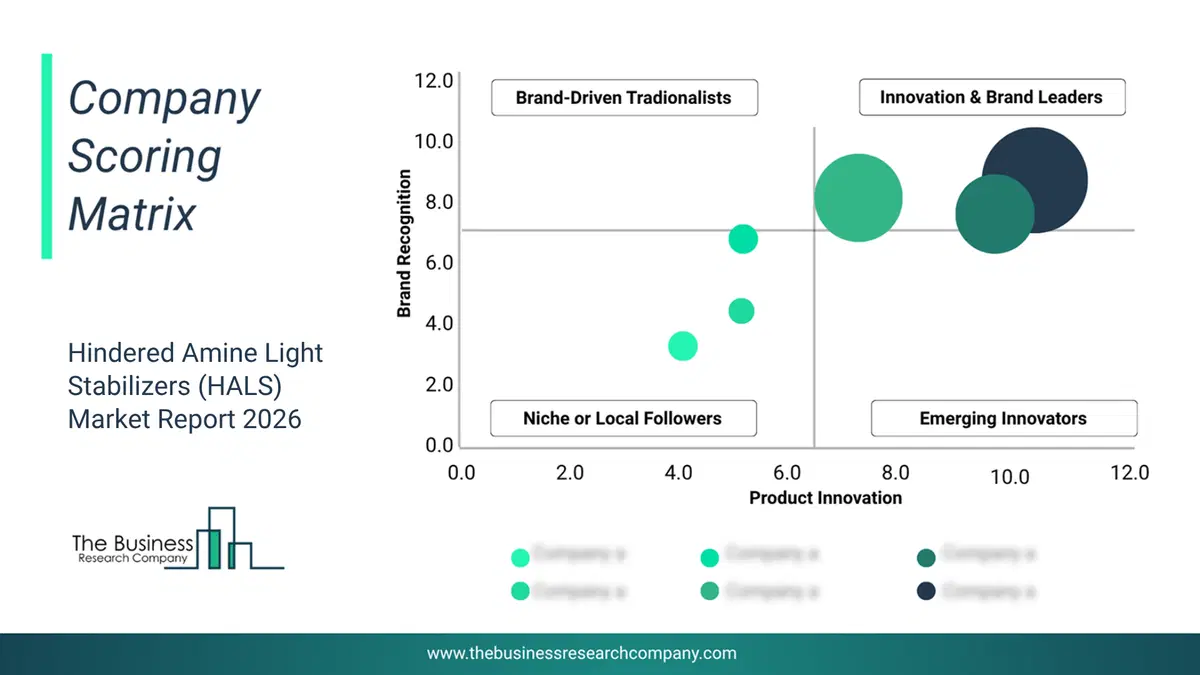
This chart maps companies by product innovation and brand strength, with bubble size indicating relative revenue, helping identify market leaders, challengers, and niche players. This is an illustrative chart; the full report provides a complete and accurate competitive analysis.
Global Hindered Amine Light Stabilizers (HALS) Market Trends and Insights
Major companies operating in the hindered amine light stabilizers (hals) market are increasing their focus on introducing high-performance light stabilizers to gain a competitive edge in the market. High-performance light stabilizers are chemical compounds or additives used to protect materials, such as polymers, plastics, and coatings, from the deteriorating effects of exposure to ultraviolet (UV) radiation and other environmental factors, such as heat and oxidation. For instance, in March 2024, Clean Fino-Chem Limited, an India-based manufacturer of specialty chemicals, started commercial production of the hindered amine light stabilizer series. The HALS series falls under the performance chemicals category and is designed to serve both domestic and international markets. It boasts a total installed capacity of 10,500 metric tons per year. This capacity enables the series to meet the growing demand in various applications worldwide.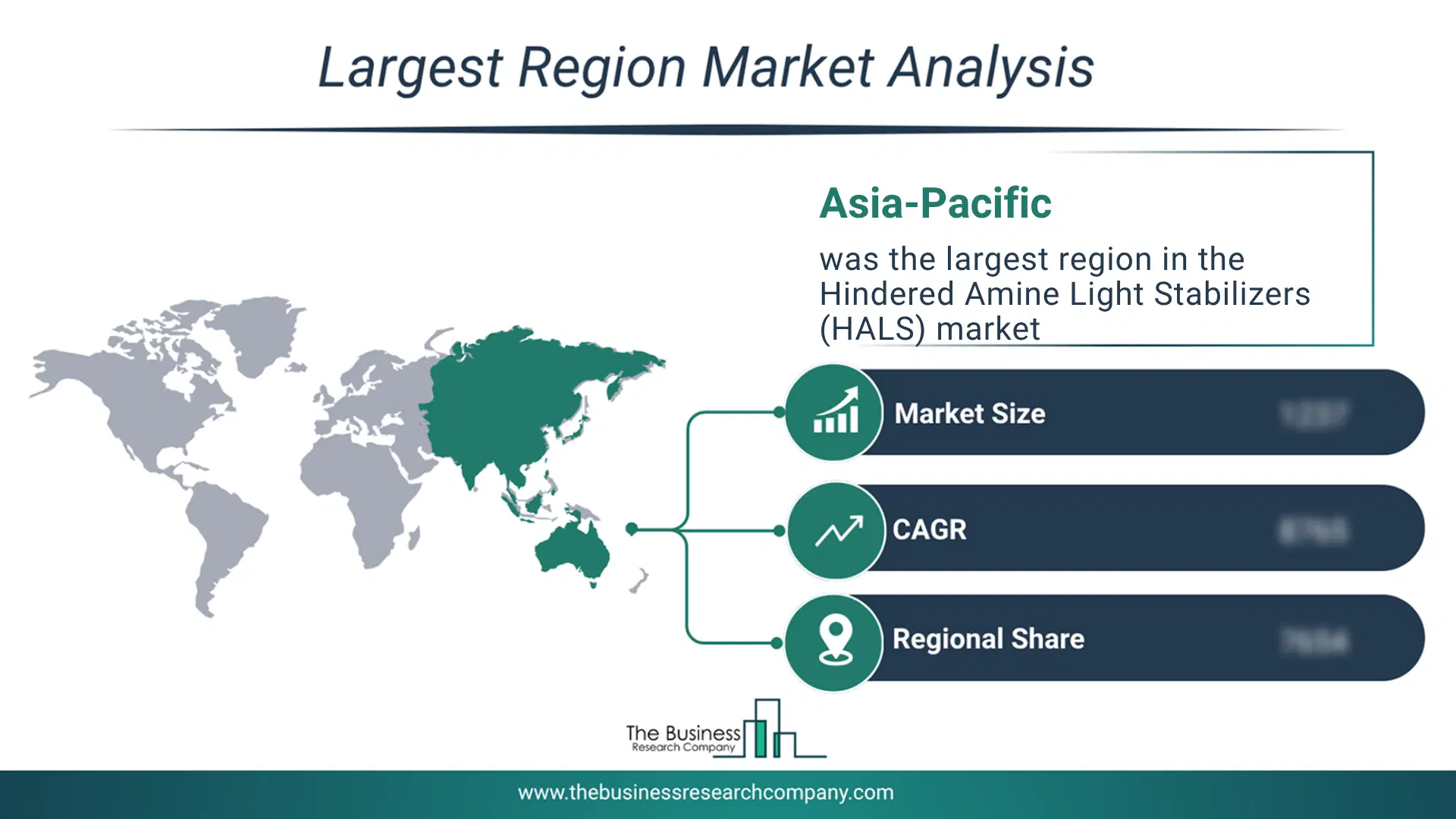
Regional Insights
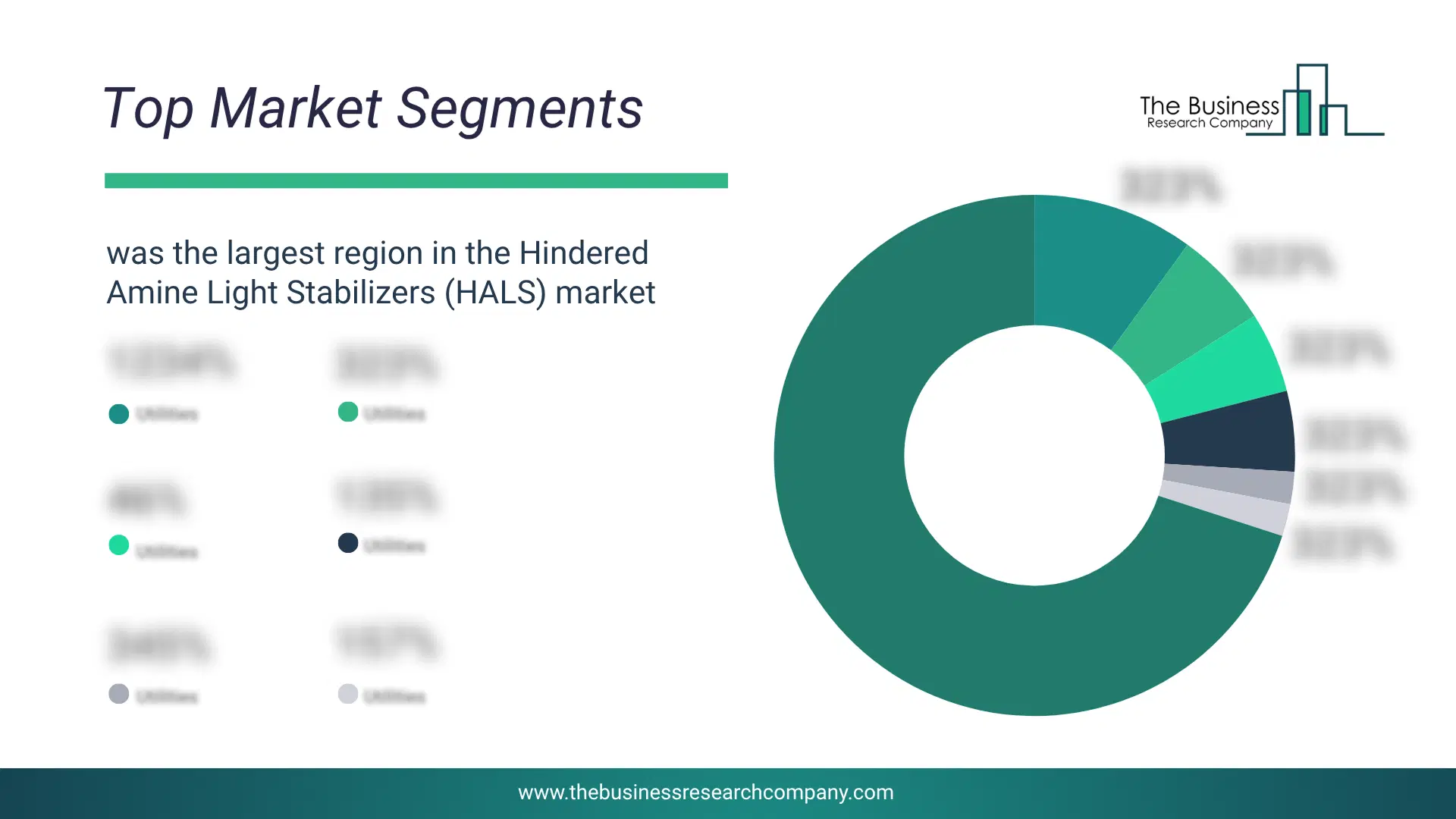
Asia-Pacific was the leading region in the market for hindered amine light stabilizers (HALS) market in 2025. Asia-Pacific is expected to be the fastest-growing region in the forecast period. The regions covered in this market report are Asia-Pacific, South East Asia, Western Europe, Eastern Europe, North America, South America, Middle East, Africa The countries covered in this market report are Australia, Brazil, China, France, Germany, India, Indonesia, Japan, Taiwan, Russia, South Korea, UK, USA, Canada, Italy, SpainWhat Defines the Hindered Amine Light Stabilizers (HALS) Market?
The hindered amine light stabilizers (HALS) market consists of sales of hindered amine light stabilizer products such as HALS 770 and HALS 622. Values in this market are ‘factory gate’ values, that is, the value of goods sold by the manufacturers or creators of the goods, whether to other entities (including downstream manufacturers, wholesalers, distributors, and retailers) or directly to end customers. The value of goods in this market includes related services sold by the creators of the goods.How is Market Value Defined and Measured?
The market value is defined as the revenues that enterprises gain from the sale of goods and/or services within the specified market and geography through sales, grants, or donations in terms of the currency (in USD unless otherwise specified). The revenues for a specified geography are consumption values that are revenues generated by organizations in the specified geography within the market, irrespective of where they are produced. It does not include revenues from resales along the supply chain, either further along the supply chain or as part of other products.
This chart presents market attractiveness based on a quantitative evaluation of growth, competition, strategic alignment, and risk, offering a clear view of opportunity areas for decision-making. This chart is for illustrative purposes; the full report contains the complete analysis.

This chart highlights the Total Addressable Market (TAM) by estimating the maximum revenue opportunity using an assumption-driven approach, supporting strategic planning and opportunity sizing across markets. The chart is illustrative; the full report provides a more comprehensive analysis.
What Key Data and Analysis Are Included in the Hindered Amine Light Stabilizers (HALS) Market Report 2026?
The hindered amine light stabilizers (hals) market research report is one of a series of new reports from The Business Research Company that provides market statistics, including industry global market size, regional shares, competitors with the market share, detailed market segments, market trends and opportunities, and any further data you may need to thrive in the hindered amine light stabilizers (hals) industry. The market research report delivers a complete perspective of everything you need, with an in-depth analysis of the current and future state of the industry.Hindered Amine Light Stabilizers (HALS) Market Report Forecast Analysis
| Report Attribute | Details |
|---|---|
| Market Size Value In 2026 | $1.88 billion |
| Revenue Forecast In 2030 | $3.22 billion |
| Growth Rate | CAGR of 15.3% from 2026 to 2030 |
| Base Year For Estimation | 2025 |
| Actual Estimates/Historical Data | 2020-2025 |
| Forecast Period | 2026 - 2030 |
| Market Representation | Revenue in USD Billion and CAGR from 2026 to 2030 |
| Segments Covered | Type, Application, End Use Industry |
| Regional Scope | Asia-Pacific, Western Europe, Eastern Europe, North America, South America, Middle East, Africa |
| Country Scope | The countries covered in the report are Australia, Brazil, China, France, Germany, India, ... |
| Key Companies Profiled | ADEKA Corporation, Clariant AG, Solvay SA, BASF SE, Arkema Group, Songwon Industrial Co. Ltd., Valtris Specialty Chemicals, Evonik Industries AG, Baerlocher GmbH, Rianlon Corporation, SABO S.p.A, Ampacet Corporation, Dover Chemical Corporation, Emery Oleochemicals, IGM Resins, Mayzo Inc., TinToll Ltd., Wellspring Chemical Corporation, Adeka Palmarole SAS, AkzoNobel N.V. |
| Customization Scope | Request for Customization |
| Pricing And Purchase Options | Explore Purchase Options |