
Home Healthcare Software Market Report 2026
Global Outlook – By Product (Clinical Management Systems, Hospice Systems, Agency Software Systems, Tele-Health Systems), By Usage (Clinical Homecare Systems, Non-Clinical Homecare Systems), By Delivery Mode (Web-Based Software, On-Premises Software, Cloud-Based Software), By End User (Hospice Agencies, Homecare Agencies, Private Duty, Other End Users) - Market Size, Trends, And Global Forecast 2026-2030
Home Healthcare Software Market Overview
• Home Healthcare Software market size has reached to $8.71 billion in 2025 • Expected to grow to $15.12 billion in 2030 at a compound annual growth rate (CAGR) of 11.6% • Growth Driver: Increasing Prevalence Of Chronic Illnesses Driving Home Healthcare Software Market Growth • Market Trend: Ai-Powered Conversational Assistants Transforming Home Healthcare Software • North America was the largest region in 2025 and Asia-Pacific is the fastest growing region.Market Gains By 2030 – Top Opportunities By Segment
Market Gain identifies the most promising market opportunities by highlighting the segments or products expected to generate the highest incremental revenue growth over the next five years.
What Is Covered Under Home Healthcare Software Market?
Home healthcare software refers to a type of software application designed to support healthcare providers in delivering medical care and services to patients at home. This software enables healthcare professionals to manage patient information, track health status, schedule appointments, and communicate with patients remotely. It also helps coordinate care between different healthcare providers and ensures that patients receive the appropriate level of care at home. The main products of home healthcare software are clinical management systems, hospice systems, agency software systems, and tele-health systems. Clinical management systems are software platforms used by healthcare providers to organize and manage patient information, appointments, and treatment plans, ensuring efficient delivery of care. It is used for clinical homecare systems and non-clinical homecare systems, through different delivery modes, including web-based software, on-premises software, and cloud-based software for hospice agencies, homecare agencies, private duty, and other end users.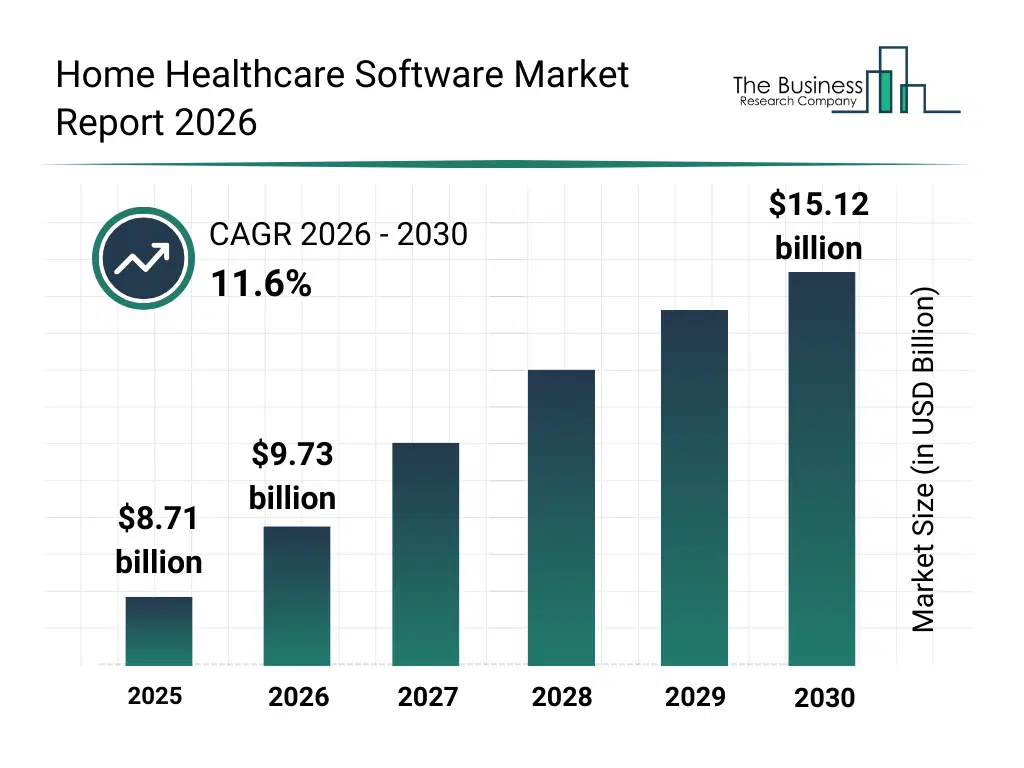
What Is The Home Healthcare Software Market Size and Share 2026?
The home healthcare software market size has grown rapidly in recent years. It will grow from $8.71 billion in 2025 to $9.73 billion in 2026 at a compound annual growth rate (CAGR) of 11.7%. The growth in the historic period can be attributed to rising demand for home-based care services, increasing digitization of patient records, growing need for care coordination among providers, expansion of homecare agencies, adoption of basic telehealth solutions.What Is The Home Healthcare Software Market Growth Forecast?
The home healthcare software market size is expected to see rapid growth in the next few years. It will grow to $15.12 billion in 2030 at a compound annual growth rate (CAGR) of 11.6%. The growth in the forecast period can be attributed to increasing chronic disease management at home, rising need for real-time patient data access, expansion of cloud-based healthcare platforms, growing focus on operational efficiency in homecare agencies, increasing regulatory emphasis on data accuracy and reporting. Major trends in the forecast period include expansion of integrated care coordination platforms, rising adoption of tele-health and virtual care management, increasing focus on workflow and scheduling optimization, growth in data-driven patient monitoring and reporting, expansion of compliance and billing automation in homecare.
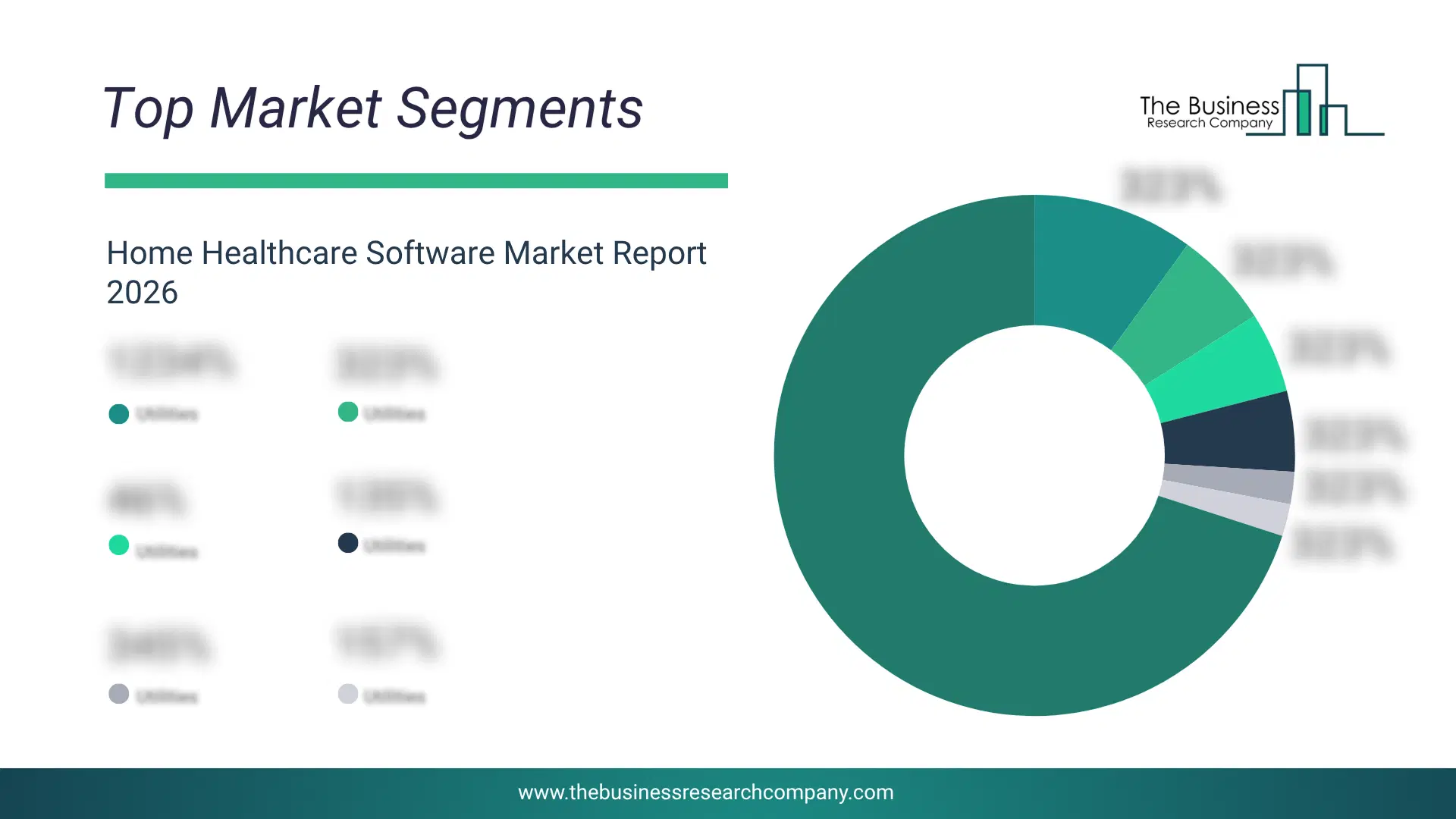
Global Home Healthcare Software Market Segmentation
1) By Product: Clinical Management Systems, Hospice Systems, Agency Software Systems, Tele-Health Systems 2) By Usage: Clinical Homecare Systems, Non-Clinical Homecare Systems 3) By Delivery Mode: Web-Based Software, On-Premises Software, Cloud-Based Software 4) By End User: Hospice Agencies, Homecare Agencies, Private Duty, Other End Users Subsegments: 1) By Clinical Management Systems: Electronic Health Records (EHR), Patient Scheduling And Workflow Management, Care Plan Management, Clinical Decision Support 2) By Hospice Systems: Hospice Care Management, Palliative Care Documentation, Hospice Billing And Reporting 3) By Agency Software Systems: Home Care Agency Management, Billing And Scheduling Software, Employee Management And Compliance, Patient And Family Communication Tools 4) By Tele-Health Systems: Telemedicine Platforms, Remote Patient Monitoring, Video Consultation Software, Telehealth Reporting And Analytics The top segments in the home healthcare software market will be: • Clinical Management Systems will reach $5.62 Billion by 2030. • Hospice Systems will reach $4.93 Billion by 2030. • Agency Software Systems will reach $2.64 Billion by 2030. • Tele-Health Systems will reach $1.85 Billion by 2030.What Is The Driver Of The Home Healthcare Software Market?
The increasing prevalence of chronic illnesses is expected to propel the growth of the home healthcare software market going forward. Chronic illnesses are problems that last a year or longer, necessitating continuing medical care, restricting everyday activities, or both. The prevalence of chronic illnesses is increasing due to the aging population, unhealthy lifestyle habits, urbanization, genetic predisposition, improved disease management and diagnosis, and changes in food systems. Home healthcare software helps manage chronic illness by enabling healthcare providers to remotely monitor patients' health, track their progress, and ensure they adhere to treatment plans. For instance, in April 2025, according to the Centers for Disease Control and Prevention (CDC), a US-based federal agency. in 2023, approximately 194 million U.S. adults, or 76.4%, reported having at least one chronic condition. The prevalence was 59.5% among young adults, 78.4% among midlife adults, and 93.0% among older adults. Therefore, the increasing prevalence of chronic illnesses is driving the growth of the home healthcare software industry.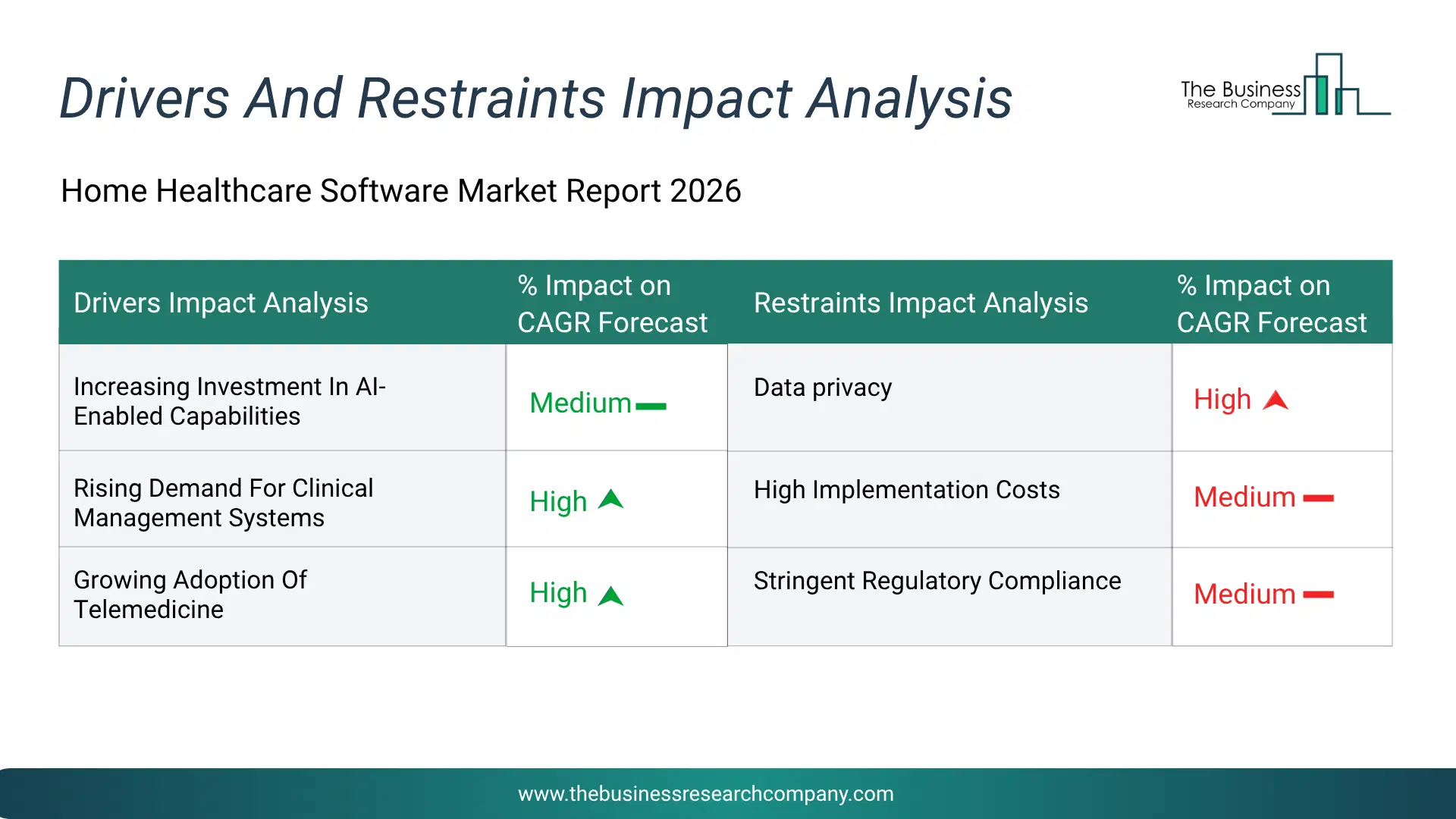
Infographic Chart Showing Key Market Drivers Analysis And Restraints For Home Healthcare Software Market
The chart presents an impact analysis of key drivers and restraints, quantifying their relative influence on the market's growth rate and helping assess the balance between growth enablers and limiting factors. This chart offers a high-level perspective; the full report contains more detailed insights.
How Will The Drivers Impact Growth In The Global Home Healthcare Software Market?
• Increasing Investment In AI-Enabled Capabilities (Medium) – During the forecast period, the increasing investment in AI-enabled capabilities is expected to become a key growth driver for the home healthcare software market by 2030. Healthcare providers are adopting artificial intelligence technologies to improve patient monitoring, automate documentation processes, and enhance clinical decision-making. AI-powered analytics help identify health risks, optimize care plans, and support proactive interventions, improving the quality of home-based care. Software vendors are continuously integrating machine learning and predictive intelligence features to strengthen platform functionality and care coordination. This growing emphasis on intelligent healthcare solutions is reinforcing sustained market expansion. • Rising Demand For Clinical Management Systems (High) – During the forecast period, the rising demand for clinical management systems is expected to emerge as a major factor driving the expansion of the home healthcare software market by 2030. Healthcare organizations are increasingly deploying comprehensive clinical platforms to streamline patient assessments, treatment documentation, medication tracking, and care planning activities. These systems improve workflow standardization, enhance visibility into patient outcomes, and support efficient coordination among caregivers. Growing patient volumes and the need for effective management of complex care requirements are further accelerating adoption. • Growing Adoption Of Telemedicine (High) – During the forecast period, the growing adoption of telemedicine is expected to act as a key growth catalyst for the home healthcare software market by 2030. The expansion of virtual healthcare services is increasing demand for software solutions that enable remote consultations, digital communication, and continuous patient engagement. Home healthcare providers are leveraging telemedicine platforms to improve accessibility, reduce travel requirements, and deliver timely care to patients in remote locations. Advancements in connected devices and digital communication infrastructure are further supporting widespread utilization.How Will The Restraints Impact Growth In The Global Home Healthcare Software Market?
• Data privacy (Medium) – During the forecast period, the data privacy acts as a major restraint in the home healthcare software market as sensitive patient information is continuously collected, stored, and transmitted across digital platforms. Healthcare providers must ensure strict protection of personal health data to avoid breaches, which can lead to legal penalties and reputational damage. The increasing frequency of cyberattacks raises concerns among users and organizations, limiting trust in digital healthcare systems. Compliance with data protection laws requires advanced encryption, secure cloud infrastructure, and regular system audits, which add complexity. Smaller providers may struggle to implement such robust security measures due to limited resources. These challenges slow down software adoption, particularly in regions with strict privacy expectations. As a result, data privacy concerns hinder the overall growth of the market. • High Implementation Costs (High) – During the forecast period, the high implementation costs restrain the growth of the home healthcare software market by creating financial barriers for healthcare providers. Deploying advanced software solutions involves significant expenses related to infrastructure setup, software licensing, customization, and staff training. Small and mid-sized healthcare agencies often find it difficult to allocate sufficient budgets for such investments. Additionally, ongoing maintenance, upgrades, and technical support further increase the total cost of ownership. These financial constraints discourage organizations from transitioning to digital systems or upgrading existing ones. In developing regions, cost sensitivity further limits adoption rates. Consequently, high implementation costs act as a key obstacle to market expansion. • Stringent Regulatory Compliance (High) – During the forecast period, the stringent regulatory compliance poses a significant challenge to the home healthcare software market by increasing operational complexity. Healthcare software providers must adhere to various local and international regulations related to data security, patient safety, and interoperability standards. Meeting these requirements often involves continuous updates, documentation, and certification processes, which demand time and resources. Non-compliance can result in severe penalties, legal actions, or loss of market credibility. The evolving nature of healthcare regulations adds further uncertainty for software developers and providers. This creates barriers for new entrants and slows innovation within the industry. Therefore, stringent regulatory compliance acts as a restraint, limiting the pace of market growth.Key Players In The Global Home Healthcare Software Market
Major companies operating in the home healthcare software market are Mckesson Corporation, DarioHealth Corp., Koninklijke Philips N.V., GE HealthCare Technologies Inc., B. Braun SE, Cerner Corporation, ResMed Inc., NextGen Healthcare Information System LLC, Medical Information Technology Inc. (Meditech), Homecare Homebase LLC, AlayaCare USA Inc., Omada Health Inc., Loyal Healthcare LLC, Casamba Home & Hospice, Axxess Technology Solutions Inc., Delta Health Technologies Inc., Family First Inc., KanTime Inc., ClearCare Inc. (WellSky), Thornberry Ltd., Centex AxisCare LLC, Alora Healthcare Systems Inc., Carallel LLC, HomeHero Inc.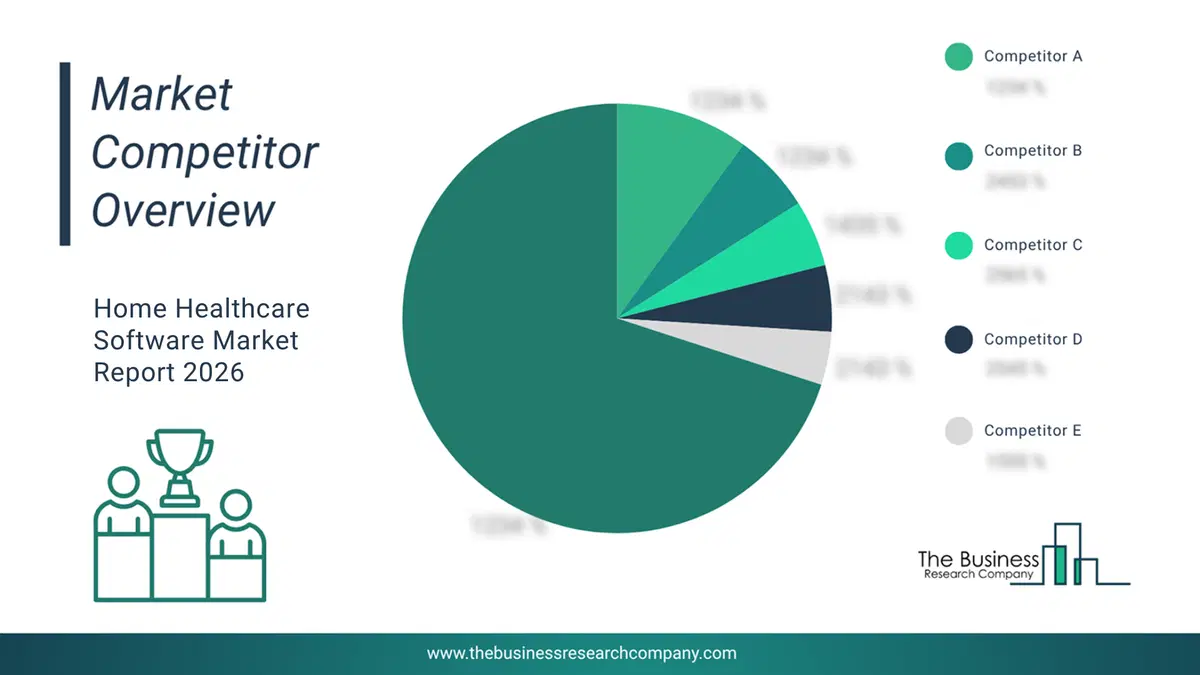
This chart is for illustrative purposes; the full report includes a detailed competitor analysis and comprehensive overview of the top 10 companies in the market.
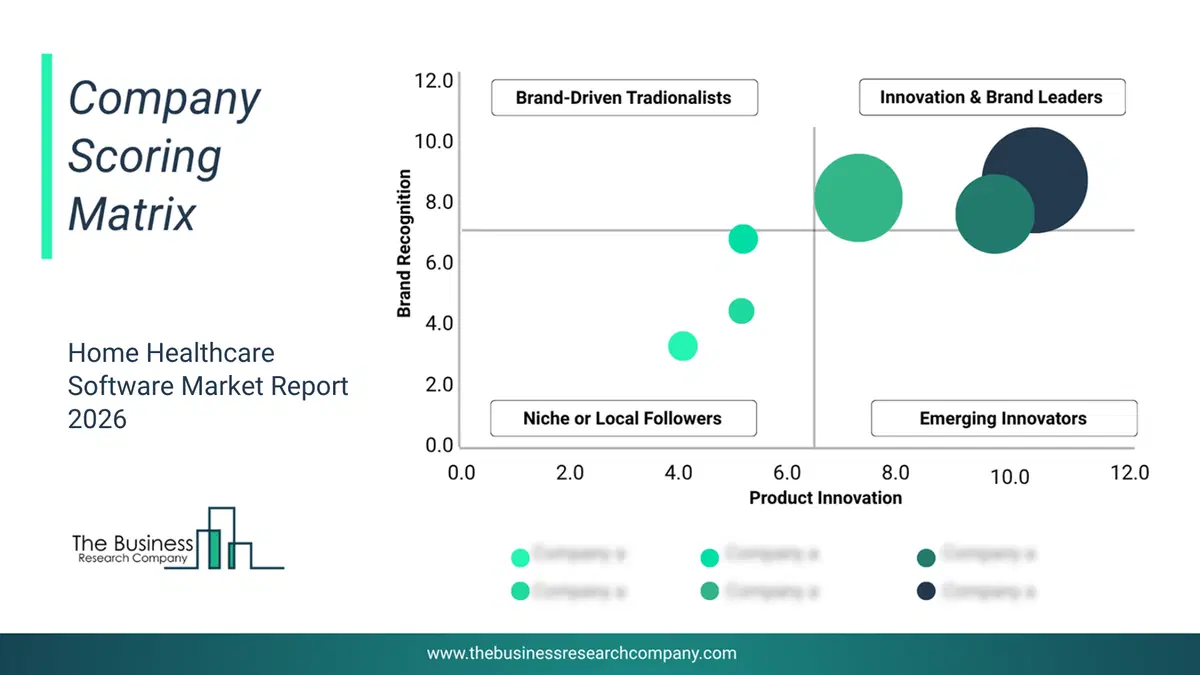
This chart maps companies by product innovation and brand strength, with bubble size indicating relative revenue, helping identify market leaders, challengers, and niche players. This is an illustrative chart; the full report provides a complete and accurate competitive analysis.
Global Home Healthcare Software Market Trends and Insights
Major companies operating in the home healthcare software market are focusing on developing innovative solutions, such as AI-powered conversational assistants, to enhance patient engagement, streamline care coordination, and improve operational efficiency for home healthcare providers. An AI-powered conversational assistant is a software application or system that uses artificial intelligence, particularly natural language processing (NLP) and machine learning, to understand, interpret, and respond to human language in a conversational manner. For instance, in June 2025, AlayaCare, a Canada-based provider of cloud-based home and community care solutions, launched Layla, an AI-powered assistant designed for home care. Layla offers comprehensive data access across care plans, client records, visit notes, and schedules; mobile-first support for on-the-go caregivers; secure, HIPAA-compliant infrastructure; and trusted clinical knowledge for accurate medical guidance. By enabling faster, safer decisions and reducing administrative workload, Layla exemplifies the next generation of home healthcare software solutions.What Are Latest Mergers And Acquisitions In The Home Healthcare Software Market?
In September 2023, Virgin Pulse, a US-based digital health, wellbeing, and engagement company, merged with HealthComp for $3 billion. With this merger, HealthComp introduced a novel category in the healthcare sector, revolutionizing employers to tackle the dual objective of cost reduction and enhanced member outcomes. HealthComp is a US-based healthcare solutions company that specializes in providing customized and innovative healthcare solutions to improve access to healthcare.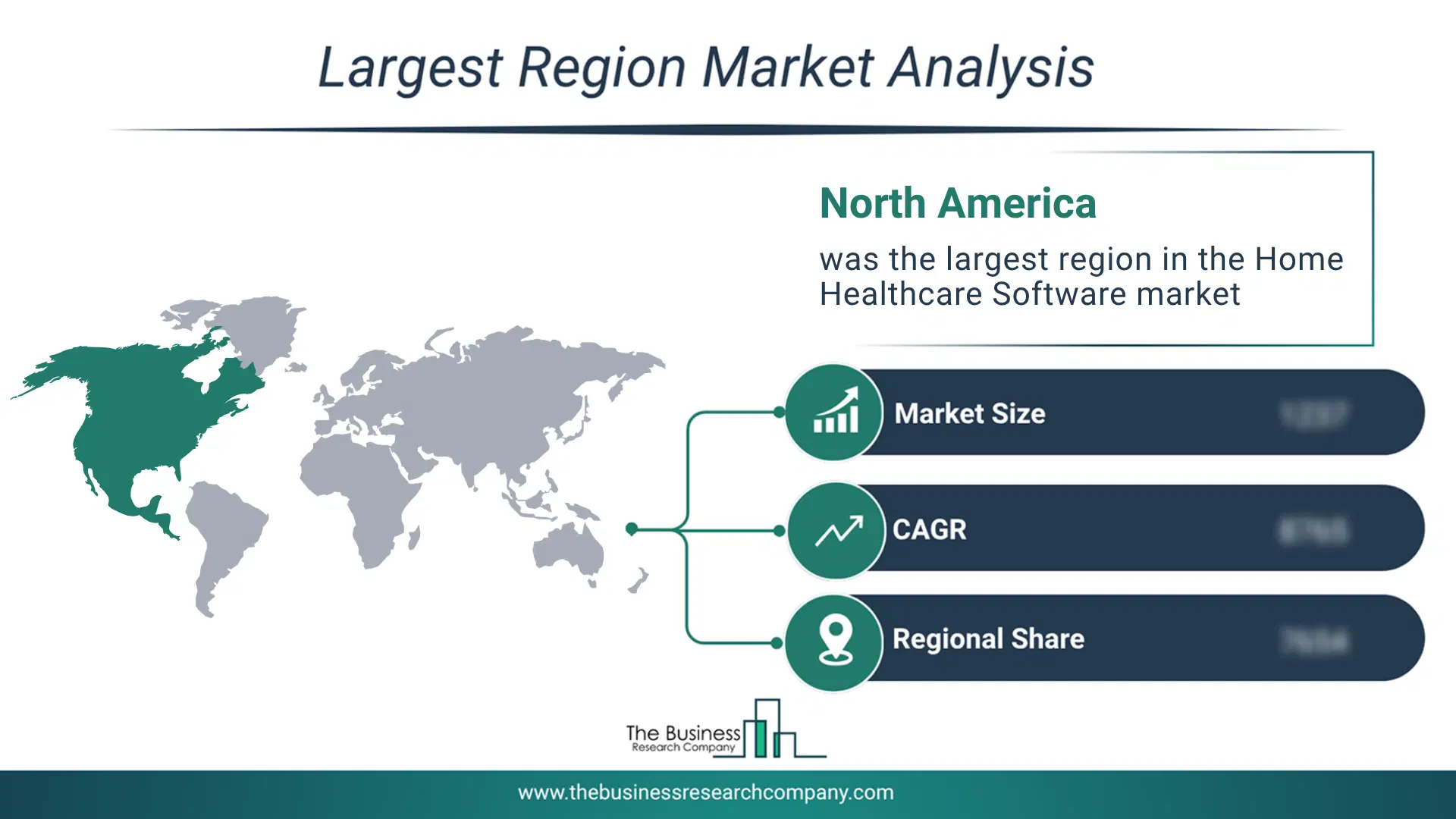
Regional Outlook
North America was the largest region in the home healthcare software market in 2025. Asia-Pacific is expected to be the fastest-growing region in the forecast period. The regions covered in this market report are Asia-Pacific, South East Asia, Western Europe, Eastern Europe, North America, South America, Middle East, Africa. The countries covered in this market report are Australia, Brazil, China, France, Germany, India, Indonesia, Japan, Taiwan, Russia, South Korea, UK, USA, Canada, Italy, Spain.What Defines the Home Healthcare Software Market?
The home healthcare software market includes revenues earned by entities by providing services such as scheduling and appointment management, clinical documentation and care planning, remote patient monitoring, billing and financial management, and medication management. The market value includes the value of related goods sold by the service provider or included within the service offering. Only goods and services traded between entities or sold to end consumers are included.How is Market Value Defined and Measured?
The market value is defined as the revenues that enterprises gain from the sale of goods and/or services within the specified market and geography through sales, grants, or donations in terms of the currency (in USD unless otherwise specified). The revenues for a specified geography are consumption values that are revenues generated by organizations in the specified geography within the market, irrespective of where they are produced. It does not include revenues from resales along the supply chain, either further along the supply chain or as part of other products.
This chart presents market attractiveness based on a quantitative evaluation of growth, competition, strategic alignment, and risk, offering a clear view of opportunity areas for decision-making. This chart is for illustrative purposes; the full report contains the complete analysis.

This chart highlights the Total Addressable Market (TAM) by estimating the maximum revenue opportunity using an assumption-driven approach, supporting strategic planning and opportunity sizing across markets. The chart is illustrative; the full report provides a more comprehensive analysis.
What Key Data and Analysis Are Included in the Home Healthcare Software Market Report 2026?
The home healthcare software market research report is one of a series of new reports from The Business Research Company that provides market statistics, including industry global market size, regional shares, competitors with the market share, detailed market segments, market trends and opportunities, and any further data you may need to thrive in the home healthcare software industry. The market research report delivers a complete perspective of everything you need, with an in-depth analysis of the current and future state of the industry.Home Healthcare Software Market Report Forecast Analysis
| Report Attribute | Details |
|---|---|
| Market Size Value In 2026 | $9.73 billion |
| Revenue Forecast In 2030 | $15.12 billion |
| Growth Rate | CAGR of 11.7% from 2026 to 2030 |
| Base Year For Estimation | 2025 |
| Actual Estimates/Historical Data | 2020-2025 |
| Forecast Period | 2026 - 2030 |
| Market Representation | Revenue in USD Billion and CAGR from 2026 to 2030 |
| Segments Covered | Product, Usage, Delivery Mode, End User |
| Regional Scope | Asia-Pacific, Western Europe, Eastern Europe, North America, South America, Middle East, Africa |
| Country Scope | The countries covered in the report are Australia, Brazil, China, France, Germany, India, Indonesia, Japan, Taiwan, Russia, South Korea, UK, USA, Canada, Italy, Spain. |
| Key Companies Profiled | Mckesson Corporation, DarioHealth Corp., Koninklijke Philips N.V., GE HealthCare Technologies Inc., B. Braun SE, Cerner Corporation, ResMed Inc., NextGen Healthcare Information System LLC, Medical Information Technology Inc. (Meditech), Homecare Homebase LLC, AlayaCare USA Inc., Omada Health Inc., Loyal Healthcare LLC, Casamba Home & Hospice, Axxess Technology Solutions Inc., Delta Health Technologies Inc., Family First Inc., KanTime Inc., ClearCare Inc. (WellSky), Thornberry Ltd., Centex AxisCare LLC, Alora Healthcare Systems Inc., Carallel LLC, HomeHero Inc. |
| Customization Scope | Request for Customization |
| Pricing And Purchase Options | Explore Purchase Options |