

Home Infusion Therapy Global Market Opportunities And Strategies To 2035
By Product (Infusion Pumps, Intravenous Sets, IV Cannulas, Needleless Connectors), By Administration (Intravenous, Subcutaneous, Epidural, Intramuscular), By Application (Total Parenteral Nutrition, Anti-Infective Therapy, Hydration Therapy, Chemotherapy, Ivig Or Specialty Pharmaceuticals, Other Applications), By End User (Patients, Nurse, Other End Users), And By Region, Opportunities And Strategies – Global Forecast To 2035
Home Infusion Therapy Market Definition
Home infusion therapy is a healthcare service in which patients receive intravenous (IV) or injectable medications, fluids, or nutritional therapies at home instead of in a hospital or clinic. It involves the administration of treatments such as antibiotics, chemotherapy, pain management drugs, parenteral nutrition, hydration therapy and immune therapies using specialized infusion equipment and professional clinical supervision. The primary purpose of home infusion therapy is to provide convenient, cost-effective and patient-centered medical care while reducing the need for prolonged hospital stays or frequent clinic visits. The home infusion therapy market consists of revenues generated by entities (organizations, sole traders and partnerships) by providing infusion devices, intravenous administration sets, vascular access products and related support services for the delivery of medications and nutritional products in home care settings. The market includes infusion pumps, intravenous sets, IV cannulas and needleless connectors used for the administration of therapies such as total parenteral nutrition, anti-infective therapy, hydration therapy, chemotherapy and specialty pharmaceutical infusions. These products and services are used by patients receiving care outside hospitals, including in private homes, long-term care facilities and outpatient settings.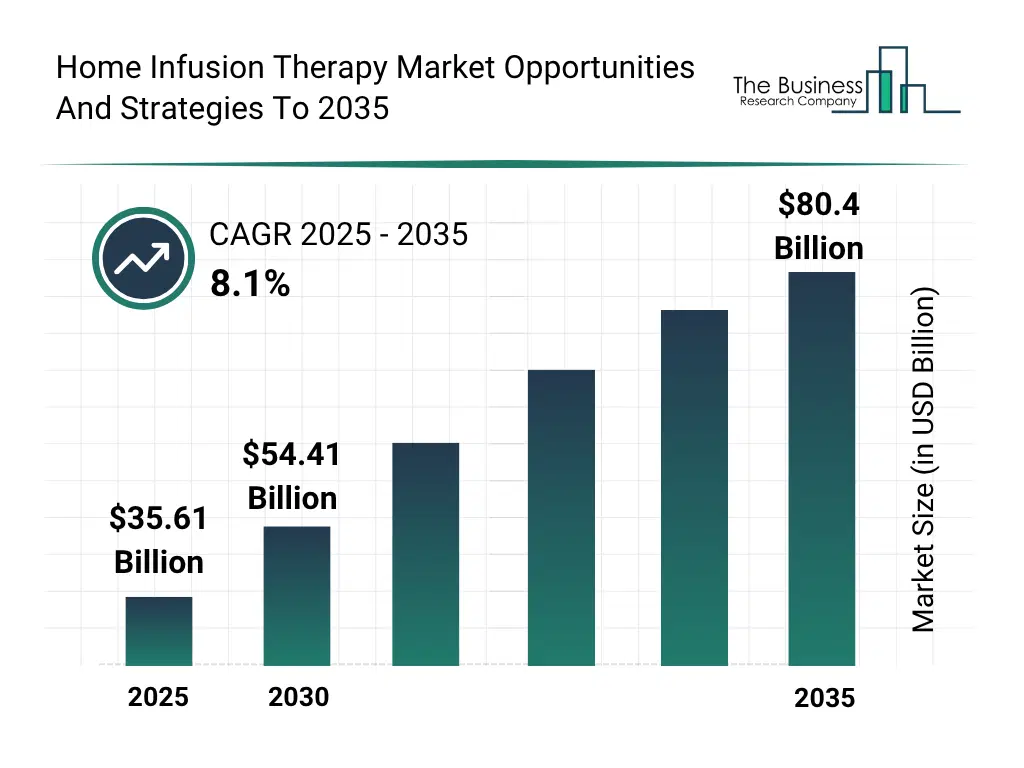
Home Infusion Therapy Market Size
The global home infusion therapy market reached a value of nearly $35,611.1 million in 2025, having grown at a compound annual growth rate (CAGR) of 9.4% since 2020. The market is expected to grow from $35,611.1 million in 2025 to $54,406.2 million in 2030 at a rate of 8.8%. The market is then expected to grow at a CAGR of 8.1% from 2030 and reach $80,400.7 million in 2035. Growth in the historic period resulted from rising prevalence of autoimmune disorders, growing number of surgical procedures and post-operative care needs, increasing prevalence of chronic diseases and high prevalence of infectious diseases. Factors that negatively affected growth in the historic period were strict regulatory and compliance requirements and safety concerns regarding adverse drug reactions. Going forward, growing aging population, expansion of home healthcare services, growing incidence of hospital-acquired infections (HAIs) and rising demand for convenient long-term therapy administration will drive the growth. Factors that could hinder the growth of the home infusion therapy market in the future include shortage of skilled healthcare professionals, limited reimbursement coverage and impact of trade war and tariffs.
Home Infusion Therapy Market Segmentation
The home infusion therapy market is segmented by product, by administration, by application and by end user.By Product –
The home infusion therapy market is segmented by product into:
- a) Infusion Pumps
- b) Intravenous Sets
- c) Iv Cannulas
- d) Needleless Connectors
By Administration –
The home infusion therapy market is segmented by administration into:
- a) Intravenous
- b) Subcutaneous
- c) Epidural
- d) Intramuscular
By Application –
The home infusion therapy market is segmented by application into:
- a) Total Parenteral Nutrition
- b) Anti-Infective Therapy
- c) Hydration Therapy
- d) Chemotherapy
- e) Ivig Or Specialty Pharmaceuticals
- f) Other Applications
By End User –
The home infusion therapy market is segmented by end user into:
- a) Patients
- b) Nurse
- c) Other End Users
By Geography - The home infusion therapy market is segmented by geography into:
- China
- India
- Japan
- Australia
- South Korea
- Indonesia
- USA
- Canada
- Brazil
- France
- Germany
- UK
- Italy
- Spain
- Russia
-
o Asia Pacific
o Africa