
Home-Use Beauty Devices Market Report 2026
Global Outlook – By Type ( Hair Removal, Cleansing, Acne Treatment, Light-Emitting Diode (LED) Therapy And Photo Rejuvenation, Oxygen Or Facial Steaming, Hair Growth, Other Types), By Technology ( Laser Or Light, Vibration, Radio Frequency (RF) Energy, Nano-Iconic, Microneedling, Electroporation), By Application ( Specialty Stores, Online Channels, Other Applications) – Market Size, Trends, Strategies, and Forecast to 2030
Home-Use Beauty Devices Market Overview
• Home-Use Beauty Devices market size has reached to $12.94 billion in 2025 • Expected to grow to $21.85 billion in 2030 at a compound annual growth rate (CAGR) of 11% • Growth Driver: Growing Skin Problems Driving Growth Of Home-Use Beauty Device Market • Market Trend: Advanced Technology Devices For Efficient Hair Removal • North America was the largest region in 2025 and Asia-Pacific is the fastest growing region.Market Gains By 2030 – Top Opportunities By Segment
Market Gain identifies the most promising market opportunities by highlighting the segments or products expected to generate the highest incremental revenue growth over the next five years.
What Is Covered Under Home-Use Beauty Devices Market?
Home-use beauty devices are electronic tools designed for personal care and beauty treatments that can be safely and effectively used by consumers at home. These devices offer accessibility and cost-effectiveness to help users achieve professional-quality skincare treatments in the comfort of their own homes. The main types of home-use beauty devices are hair removal, cleansing, acne treatment, light-emitting diode (LED) therapy and photo rejuvenation, oxygen or facial steaming, hair growth, and others. Hair removal refers to the process of eliminating unwanted hair from the body using various techniques such as shaving, waxing, laser therapy, or depilatory creams. It includes technology such as laser or light, vibration, radio frequency energy, nano-iconic, micro-needling, and electroporation, that serve applications such as beauty salons, specialty stores, online channels, and others.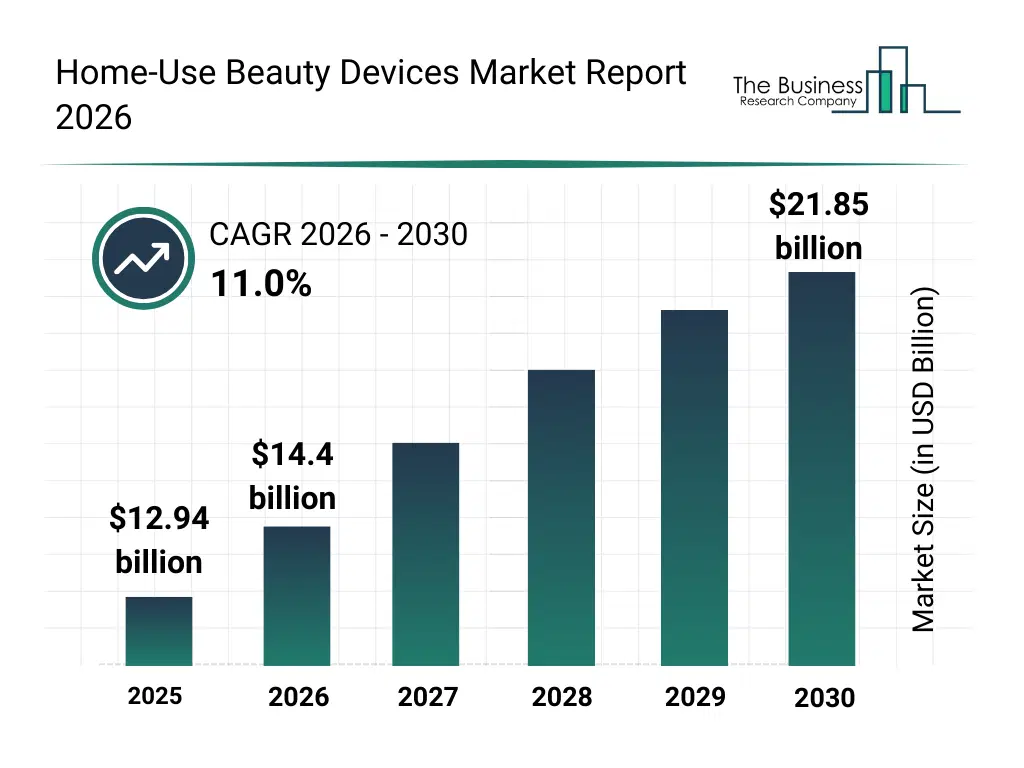
What Is The Home-Use Beauty Devices Market Size 2026 And Growth Rate?
The home-use beauty devices market size has grown rapidly in recent years. It will grow from $12.94 billion in 2025 to $14.4 billion in 2026 at a compound annual growth rate (CAGR) of 11.3%. The growth in the historic period can be attributed to increasing consumer spending on personal grooming, rising influence of beauty influencers and social media, growth of do-it-yourself skincare culture, expansion of e-commerce beauty platforms, increasing availability of affordable beauty devices.What Is The Home-Use Beauty Devices Market Growth Forecast?
The home-use beauty devices market size is expected to see rapid growth in the next few years. It will grow to $21.85 billion in 2030 at a compound annual growth rate (CAGR) of 11.0%. The growth in the forecast period can be attributed to advancements in home-use aesthetic technologies, growing demand for personalized beauty treatments, rising awareness of skin health and wellness, increasing preference for cost-effective alternatives to clinics, continuous innovation in compact device design. Major trends in the forecast period include growth in at-home professional-grade skincare devices, rising adoption of multi-function beauty devices, increasing demand for non-invasive cosmetic treatments, expansion of personalized skincare solutions, growing popularity of portable and compact beauty devices.
Global Home-Use Beauty Devices Market Segmentation
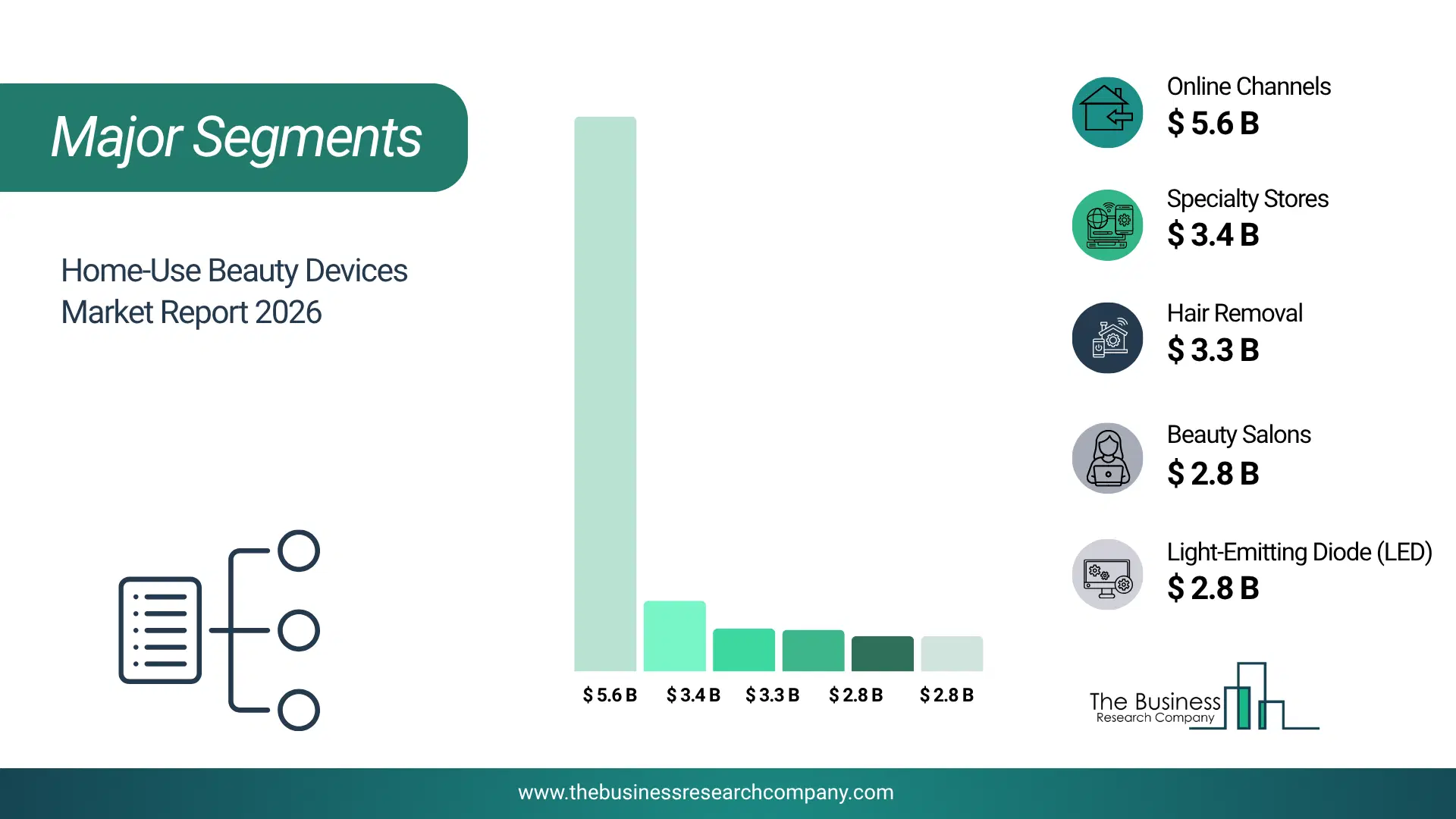
1) By Type: Hair Removal, Cleansing, Acne Treatment, Light-Emitting Diode (LED) Therapy And Photo Rejuvenation, Oxygen Or Facial Steaming, Hair Growth, Other Types 2) By Technology: Laser Or Light, Vibration, Radio Frequency (RF) Energy, Nano-Iconic, Microneedling, Electroporation 3) By Application: Specialty Stores, Online Channels, Other Applications Subsegments: 1) By Hair Removal: Laser Hair Removal Devices, Intense Pulsed Light (IPL) Hair Removal, Electric Epilators, Epilating Razors, IPL-Based Shavers 2) By Cleansing: Facial Brushes, Sonic Cleansing Devices, Spinning Facial Brushes, Ultrasonic Facial Cleaners, Microdermabrasion Devices 3) By Acne Treatment: Light Therapy Devices (Blue Light, Red Light), Sonic Acne Brushes, Acne Spot Treatment Devices, Microdermabrasion Acne Treatment Tools, Electromagnetic Acne Treatment Devices 4) By Light-Emitting Diode (LED) Therapy And Photo Rejuvenation: Red LED Light Therapy Devices, Blue LED Light Therapy Devices, Multi-Color LED Therapy Devices, LED Facial Masks, Handheld LED Devices For Anti-Aging And Skin Rejuvenation 5) By Oxygen Or Facial Steaming: Facial Steamers, Oxygen Infusion Devices, Nano-Atomization Facial Steamers, Steam Masks For Facial Care 6) By Hair Growth: Laser Hair Growth Combs Or Brushes, Low-Level Laser Therapy (LLLT) Devices, LED Hair Growth Devices, Scalp Massagers For Hair Growth 7) By Other Types: Anti-Aging Devices, Microcurrent Facial Toning Devices, Micro-Needling Derma Rollers, Facial Massage Tools, At-Home Radiofrequency Devices The top segments in the home-use beauty devices market will be: • Online Channels will reach $5678.36 Million by 2025. • Specialty Stores will reach $3457.66 Million by 2025. • Hair Removal will reach $3368.77 Million by 2025. • Beauty Salons will reach $2819.22 Million by 2025. • Light-Emitting Diode (LED) will reach $2805.53 Million by 2025.What Is The Driver Of The Home-Use Beauty Devices Market?
The increasing prevalence of skin problems is expected to propel the growth of the home-use beauty device market going forward. Skin problems refer to various conditions affecting the skin's appearance, texture, or function, often causing discomfort or health issues. The rise in environmental pollution, lifestyle changes, genetic predispositions, dietary habits, and stress levels are leading to a rise in the prevalence of skin problems. Home-use beauty devices can be beneficial in managing certain skin problems when used as part of a comprehensive skincare routine. For instancein February 2024, according to Skin Cancer Foundation a US-based organization, the total number of melanoma cases in 2023 was 186710 which increased by 7.3% and reached 200340 in 2024. Therefore, the increasing prevalence of skin problems is driving the growth of the home-use beauty device industry.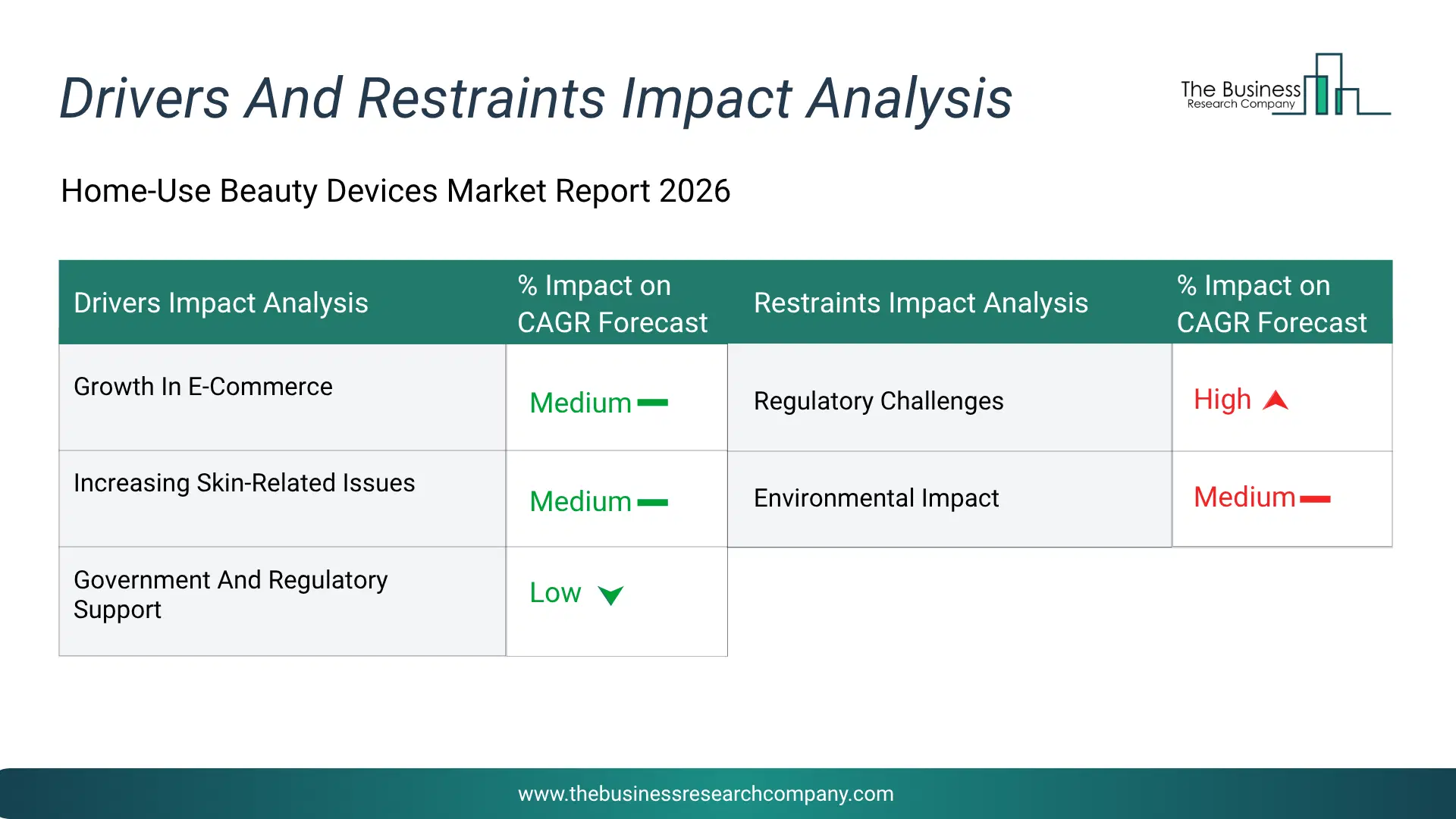
Infographic Chart Showing Key Market Drivers Analysis And Restraints For Home-Use Beauty Devices Market
The chart presents an impact analysis of key drivers and restraints, quantifying their relative influence on the market's growth rate and helping assess the balance between growth enablers and limiting factors. This chart offers a high-level perspective; the full report contains more detailed insights.
How Will The Drivers Impact Growth In The Global Home-Use Beauty Devices Market?
• Growth In E-Commerce (Medium) – The growth in e-commerce will become a key driver of growth in the home-use beauty devices market by 2030. The growth in e-commerce has significantly boosted home-use beauty device by making advanced skincare tools more accessible to consumers globally. Online platforms allow brands to reach wider audiences, offer personalized recommendations and leverage influencer marketing to drive sales. As a result, the growth in e-commerce is anticipated to contributing to a 1.7% annual growth in the market. • Increasing Skin-Related Issues (Medium) – The increasing skin-related issues will emerge as a major factor driving the expansion of the home-use beauty devices market by 2030. Home-use beauty devices play a crucial role in managing the growing prevalence of skin problems by offering convenient, non-invasive solutions for issues like acne, wrinkles, pigmentation and uneven skin tone. These devices empower users to maintain consistent skincare routines and address specific concerns from the comfort of their homes. Consequently, the increasing skin-related issues capabilities is projected to contributing to a 1.2% annual growth in the market. • Government And Regulatory Support (Low) – The government and regulatory support will serve as a key growth catalyst for the home-use beauty devices market by 2030. Government and regulatory support help the home-use beauty device by ensuring safety standards, promoting consumer confidence and fostering innovation through funding programs while regulating product claims to protect users from harmful or misleading technologies. This creates a safe and competitive environment for growth and development in the sector. Therefore, this government and regulatory support operations is projected to supporting to a 0.7% annual growth in the market. • Increased Consumer Spending On Beauty (Low) – The increase in consumer spending on beauty will become a significant driver contributing to the growth of the home-use beauty devices market by 2030. As individuals seek more cost-effective, convenient solutions for their personal care routines. This growing expenditure reflects a shift toward self-care, encouraging consumers to explore at-home alternatives for professional treatments. Consequently, the increase in consumer spending on beauty strategies is projected to contributing to a 0.2% annual growth in the market.How Will The Restraints Impact Growth In The Global Home-Use Beauty Devices Market?
• Regulatory Challenges (Medium) – Regulatory Challenges will restrict the growth of the Home-Use Beauty Devices market during the forecast period. Home-use beauty devices are subject to varying regulatory requirements across regions, with some devices classified as medical devices requiring regulatory approval. Compliance with safety standards and efficacy requirements can be complex and costly. Uncertainty about regulatory classification and evolving standards creates challenges for product development and market entry, potentially limiting the availability of certain devices. • Environmental Impact (Medium) – Environmental Impact will restrict the growth of the Home-Use Beauty Devices market during the forecast period. Home-use beauty devices consume energy and may contain materials that contribute to environmental concerns. The lifecycle impact of disposable components and packaging raises environmental questions. Increasing consumer awareness of sustainability issues may affect adoption decisions, particularly among environmentally conscious consumers. Regulatory pressure to reduce environmental impact may also increase production costs and limit market growth.Key Players In The Global Home-Use Beauty Devices Market
Major companies operating in the home-use beauty devices market are The Procter & Gamble Company, Panasonic Corporation, Xiaomi Corporation, L’Oréal S.A., YA-MAN Co LTD., Koninklijke Philips N.V., Spectrum Brands Holdings Inc., Amorepacific Corporation, Conair Corporation, MTG Co. Ltd., Dr. Dennis Gross Skincare LLC, Cyden Limited, NuFACE LLC, FOREO AB, Photomedex Inc., Silkn beauty Ltd., TRIA Beauty Inc., Lifetrons Switzerland AG, Beauty Bioscience Inc., Project E Beauty, Luke Lady, Shenzhen Mismon Technology Co. Ltd., LightStim, Shenzhen Rhafine Technology Co. Ltd., Pollogen Ltd.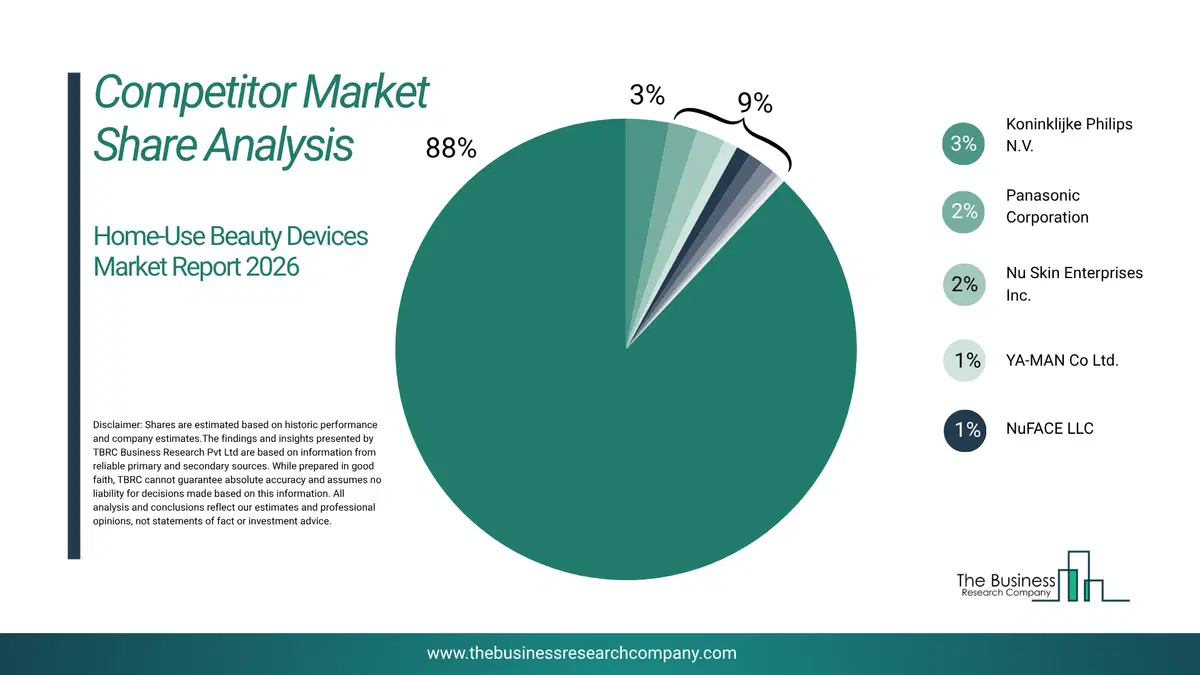
This chart is for illustrative purposes; the full report includes a detailed competitor analysis and comprehensive overview of the top 10 companies in the market.
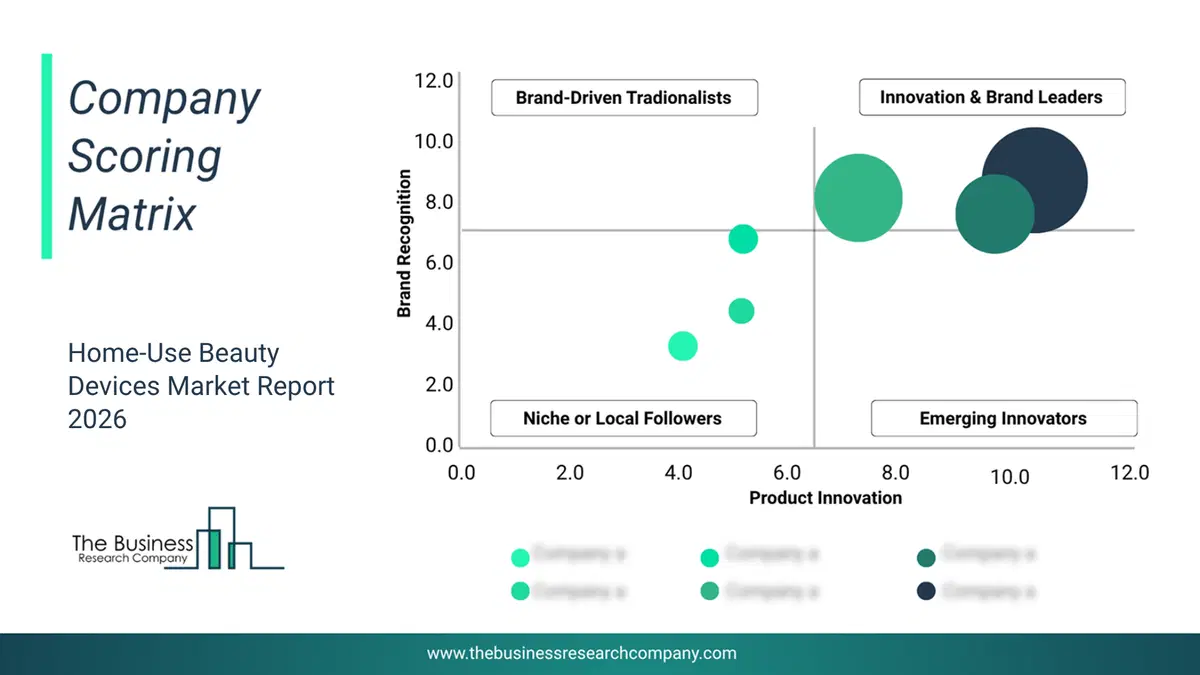
This chart maps companies by product innovation and brand strength, with bubble size indicating relative revenue, helping identify market leaders, challengers, and niche players. This is an illustrative chart; the full report provides a complete and accurate competitive analysis.
Global Home-Use Beauty Devices Market Trends and Insights
Major companies operating in the home-use beauty device market are focused on developing devices that use advanced technology, such as intense pulsed light (IPL) technology, to allow for painless, efficient, silky-smooth hair removal and gain a competitive edge in the market. IPL (intense pulsed light) technology employs broad-spectrum light to target various skin concerns, including hair removal and skin rejuvenation. For instance, in November 2023, Foreo AB., a Sweden-based company that offers cosmetics and beauty products, launched the Peach 2, a device that offers advanced intense pulsed light (IPL) technology with an ergonomic design, delivering precise and effective hair removal for smooth, radiant skin, while its SmartSensor ensures safe and personalized treatments tailored to individual skin tones.What Are Latest Mergers And Acquisitions In The Home-Use Beauty Devices Market?
In April 2024, IBeauty Brands Inc., a US-based company that designs high-performance hair styling tools and products, acquired Voloom for an undisclosed amount. Through this acquisition, IBeauty Brands Inc. aimed to enhance its product portfolio and market presence and gain access to innovative hair styling technology. Voloom is a US-based company that offers home hair care and styling products.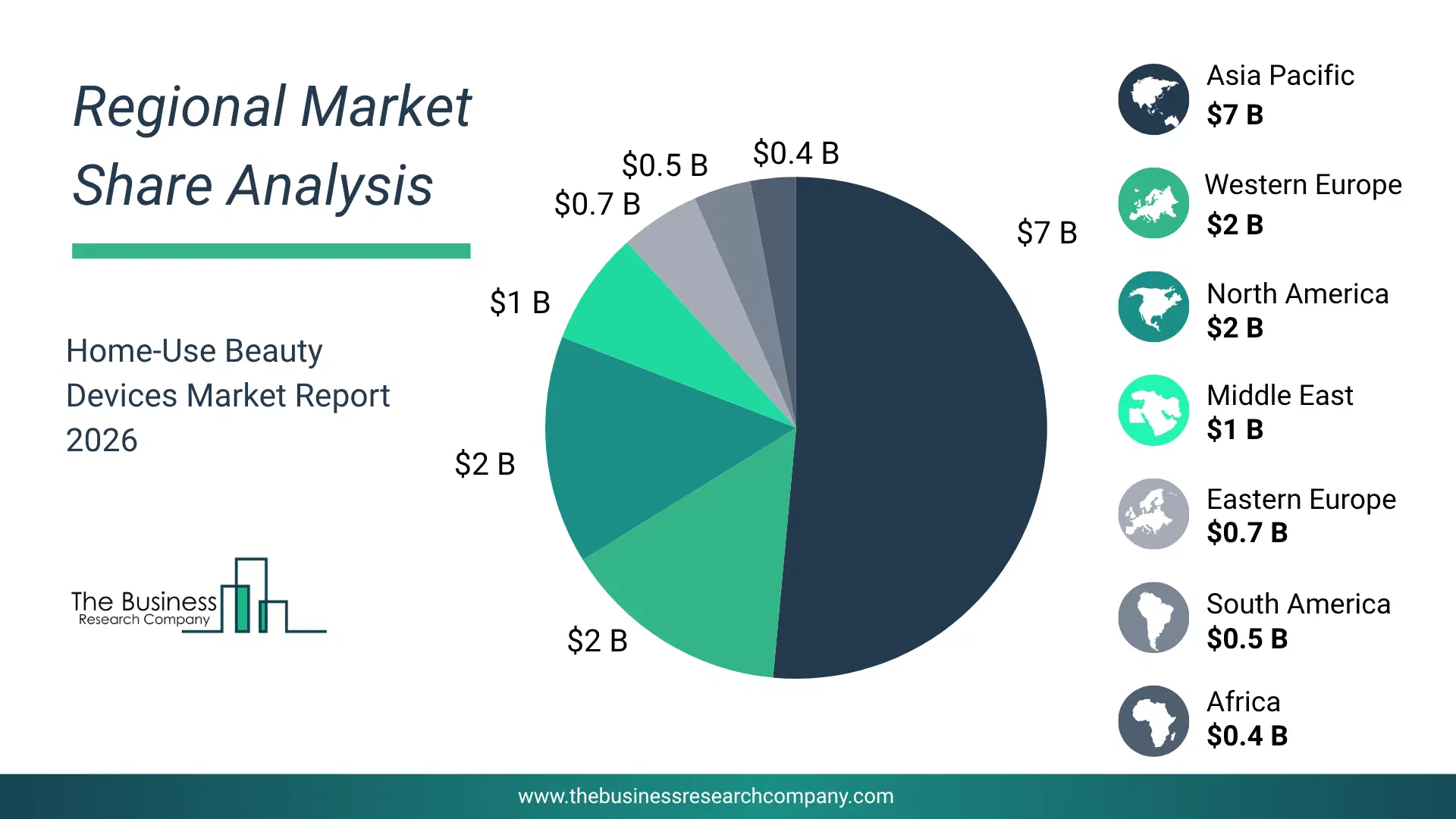
Regional Outlook
North America was the largest region in the home-use beauty devices market in 2025. Asia-Pacific is expected to be the fastest-growing region in the forecast period. The regions covered in this market report are Asia-Pacific, South East Asia, Western Europe, Eastern Europe, North America, South America, Middle East, Africa. The countries covered in this market report are Australia, Brazil, China, France, Germany, India, Indonesia, Japan, Taiwan, Russia, South Korea, UK, USA, Canada, Italy, Spain.What Defines the Home-Use Beauty Devices Market?
The home-use beauty devices market consists of sales of facial massagers, facial cleansing brushes, microcurrent devices, anti-aging and wrinkle treatment devices, and ultrasonic devices. Values in this market are ‘factory gate’ values, that is the value of goods sold by the manufacturers or creators of the goods, whether to other entities (including downstream manufacturers, wholesalers, distributors and retailers) or directly to end customers. The value of goods in this market includes related services sold by the creators of the goods.How is Market Value Defined and Measured?
The market value is defined as the revenues that enterprises gain from the sale of goods and/or services within the specified market and geography through sales, grants, or donations in terms of the currency (in USD unless otherwise specified). The revenues for a specified geography are consumption values that are revenues generated by organizations in the specified geography within the market, irrespective of where they are produced. It does not include revenues from resales along the supply chain, either further along the supply chain or as part of other products.
This chart presents market attractiveness based on a quantitative evaluation of growth, competition, strategic alignment, and risk, offering a clear view of opportunity areas for decision-making. This chart is for illustrative purposes; the full report contains the complete analysis.

This chart highlights the Total Addressable Market (TAM) by estimating the maximum revenue opportunity using an assumption-driven approach, supporting strategic planning and opportunity sizing across markets. The chart is illustrative; the full report provides a more comprehensive analysis.
What Key Data and Analysis Are Included in the Home-Use Beauty Devices Market Report 2026?
The home-use beauty devices market research report is one of a series of new reports from The Business Research Company that provides market statistics, including industry global market size, regional shares, competitors with the market share, detailed market segments, market trends and opportunities, and any further data you may need to thrive in the home-use beauty devices industry. The market research report delivers a complete perspective of everything you need, with an in-depth analysis of the current and future state of the industry.Home-Use Beauty Devices Market Report 2026 Market Report Forecast Analysis
| Report Attribute | Details |
|---|---|
| Market Size Value In 2026 | $14.4 billion |
| Revenue Forecast In 2030 | $21.85 billion |
| Growth Rate | CAGR of 11.3% from 2026 to 2030 |
| Base Year For Estimation | 2025 |
| Actual Estimates/Historical Data | 2020-2025 |
| Forecast Period | 2026 - 2030 |
| Market Representation | Revenue in USD Billion and CAGR from 2026 to 2030 |
| Segments Covered | Type, Technology, Application |
| Regional Scope | Asia-Pacific, Western Europe, Eastern Europe, North America, South America, Middle East, Africa |
| Country Scope | The countries covered in the report are Australia, Brazil, China, France, Germany, India, Indonesia, Japan, Taiwan, Russia, South Korea, UK, USA, Canada, Italy, Spain. |
| Key Companies Profiled | The Procter & Gamble Company, Panasonic Corporation, Xiaomi Corporation, L’Oréal S.A., YA-MAN Co LTD., Koninklijke Philips N.V., Spectrum Brands Holdings Inc., Amorepacific Corporation, Conair Corporation, MTG Co. Ltd., Dr. Dennis Gross Skincare LLC, Cyden Limited, NuFACE LLC, FOREO AB, Photomedex Inc., Silkn beauty Ltd., TRIA Beauty Inc., Lifetrons Switzerland AG, Beauty Bioscience Inc., Project E Beauty, Luke Lady, Shenzhen Mismon Technology Co. Ltd., LightStim, Shenzhen Rhafine Technology Co. Ltd., Pollogen Ltd. |
| Customization Scope | Request for Customization |
| Pricing And Purchase Options | Explore Purchase Options |