
Hospital Command Center Software Market Report 2026
Global Outlook – By Component (Software, Services), By Deployment Mode (On-Premises, Cloud-Based), By Application (Patient Flow Management, Resource Allocation, Bed Management, Emergency Response, Operational Analytics, Other Applications), By End-User (Hospitals, Specialty Clinics, Ambulatory Surgical Centers, Other End-Users) – Market Size, Trends, Strategies, and Forecast to 2030
Hospital Command Center Software Market Overview
• Hospital Command Center Software market size has reached to $1.83 billion in 2025 • Expected to grow to $4.10 billion in 2030 at a compound annual growth rate (CAGR) of 17.4% • Growth Driver: Increasing Hospital Capacity Management Fueling The Growth Of The Market Due To Rising Bed Occupancy And Resource Demands • Market Trend: Development Of Real-Time Operational Dashboards for Hospital Capacity And Flow Management • North America was the largest region in 2025 and Asia-Pacific is the fastest growing region.Market Gains By 2030 – Top Opportunities By Segment
Market Gain identifies the most promising market opportunities by highlighting the segments or products expected to generate the highest incremental revenue growth over the next five years.
What Is Covered Under Hospital Command Center Software Market?
Hospital command center software refers to a centralized platform designed to monitor, coordinate, and optimize hospital operations in real-time, ensuring efficient patient flow and resource management. It integrates data from multiple hospital departments, medical devices, and information systems to provide actionable insights for decision-making and operational efficiency. By leveraging predictive analytics, alerts, and dashboards, it helps hospitals reduce delays, improve patient outcomes, and streamline staff coordination. The main component of hospital command center software includes software and services. Software refers to applications and programs that enable the monitoring, coordination, and management of hospital operations and resources. The deployment modes include on-premises and cloud-based solutions. The applications include patient flow management, resource allocation, bed management, emergency response, operational analytics, and others, and the key end users include hospitals, specialty clinics, ambulatory surgical centers, and others.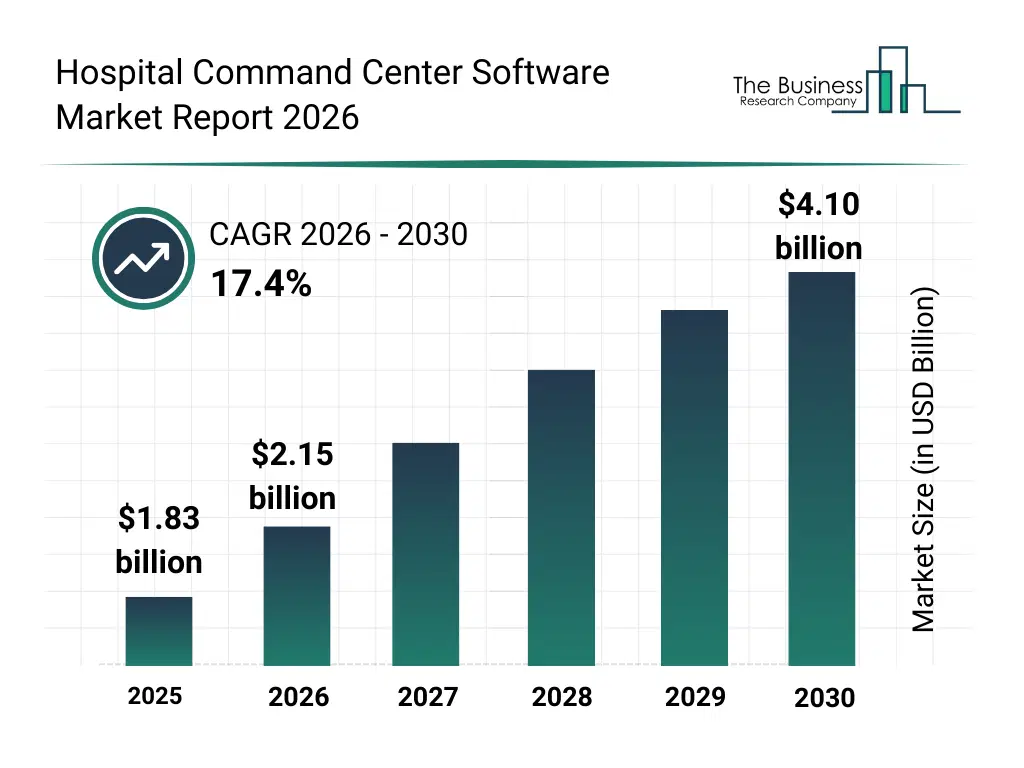
What Is The Hospital Command Center Software Market Size and Share 2026?
The hospital command center software market size has grown rapidly in recent years. It will grow from $1.83 billion in 2025 to $2.15 billion in 2026 at a compound annual growth rate (CAGR) of 17.7%. The growth in the historic period can be attributed to increasing need for real-time hospital visibility, growing adoption of digital health systems, rising demand for patient flow optimization, expansion of hospital capacity management initiatives, increasing focus on reducing operational inefficiencies.What Is The Hospital Command Center Software Market Growth Forecast?
The hospital command center software market size is expected to see rapid growth in the next few years. It will grow to $4.10 billion in 2030 at a compound annual growth rate (CAGR) of 17.4%. he growth in the forecast period can be attributed to growing integration of AI and predictive analytics, increasing investments in hospital automation, rising demand for scalable cloud-based command centers, expansion of telehealth and remote monitoring ecosystems, increasing need for emergency preparedness and rapid response systems. Major trends in the forecast period include technology advancements in ai-driven workflow automation, innovations in unified hospital command platforms, developments in cloud-native healthcare orchestration tools, growing research and development in real-time operational analytics, increasing adoption of interoperability and data integration standards.
Global Hospital Command Center Software Market Segmentation
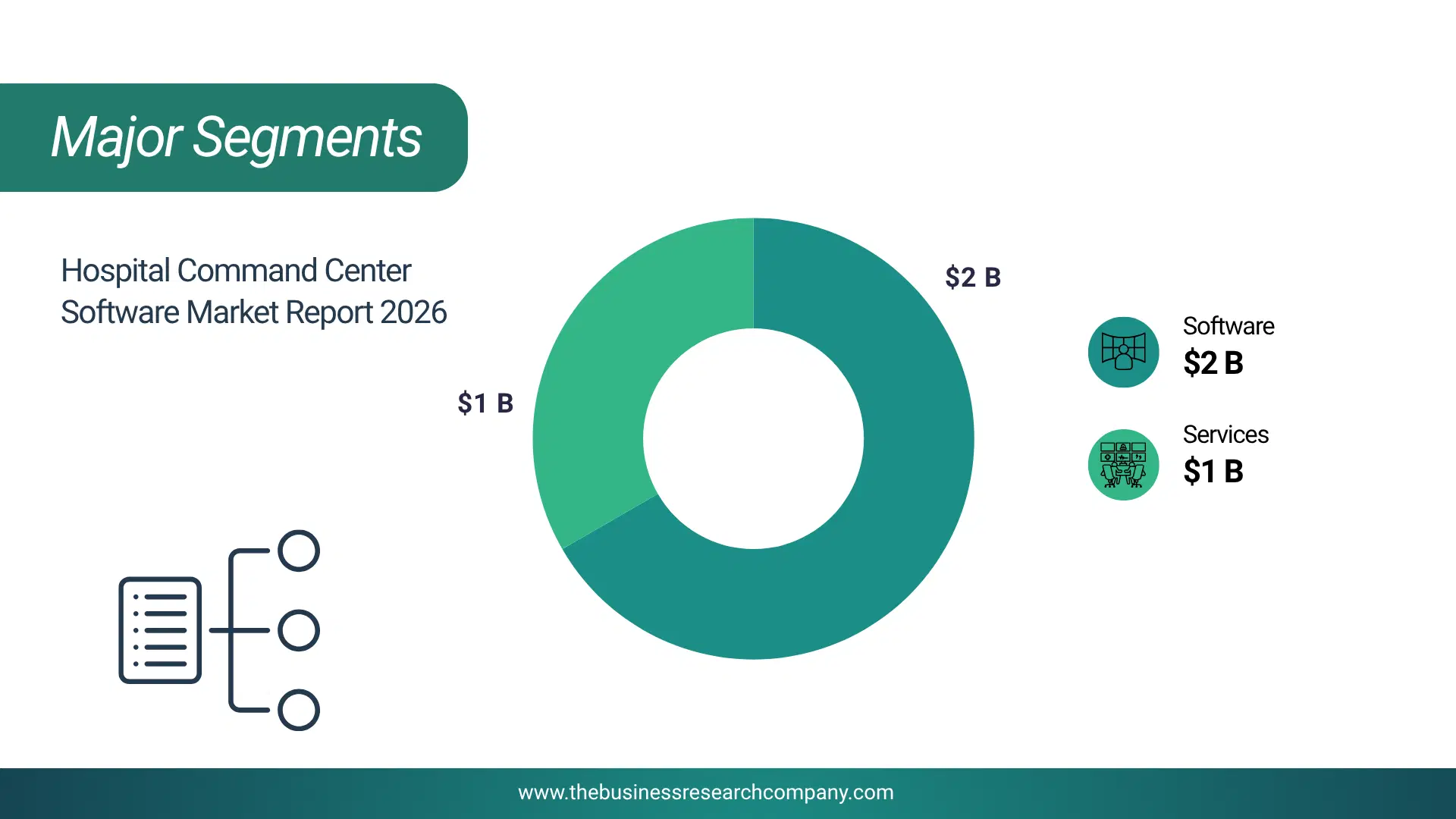
1) By Component: Software, Services 2) By Deployment Mode: On-Premises, Cloud-Based 3) By Application: Patient Flow Management, Resource Allocation, Bed Management, Emergency Response, Operational Analytics, Other Applications 4) By End-User: Hospitals, Specialty Clinics, Ambulatory Surgical Centers, Other End-Users Subsegments: 1) By Software: Hospital Information Management Software, Patient Flow Software, Resource Scheduling Software, Bed Management Software, Emergency Response Software, Operational Analytics Software 2) By Services: Implementation Services, Training And Support Services, Maintenance Services, Cloud Hosting Services, Data Analytics Services, Telehealth Integration Services The top segments in the hospital command center software market will be: • Software will reach $2.49 Billion by 2030. • Services will reach $1.1 Billion by 2030.What Is The Driver Of The Hospital Command Center Software Market?
The increasing focus on hospital capacity management is expected to propel the growth of the hospital command center software market going forward. Hospital capacity management refers to the strategic planning and operational oversight of hospital resources, such as beds and staff, to meet patient demand efficiently. The rise in focus on hospital capacity management is due to increasing patient volumes combined with constrained beds staff and budgets, which forces hospitals to optimize resource use to maintain timely, safe and cost-effective care. Hospital command center software supports hospital capacity management by centralizing data from various departments to provide a holistic view of operations, enabling better decision-making and resource allocation. For instance, in January 2024, according to the National Health Service (NHS) England, a UK-based publicly funded healthcare system, the organization achieved its target of adding 5,000 permanent core beds by early 2024 against a 2022-23 baseline of 94,500 core beds, reaching an average of 99,750 core beds by the week ending January 21, 2024. Therefore, increasing hospital capacity management is driving the growth of the hospital command center software industry.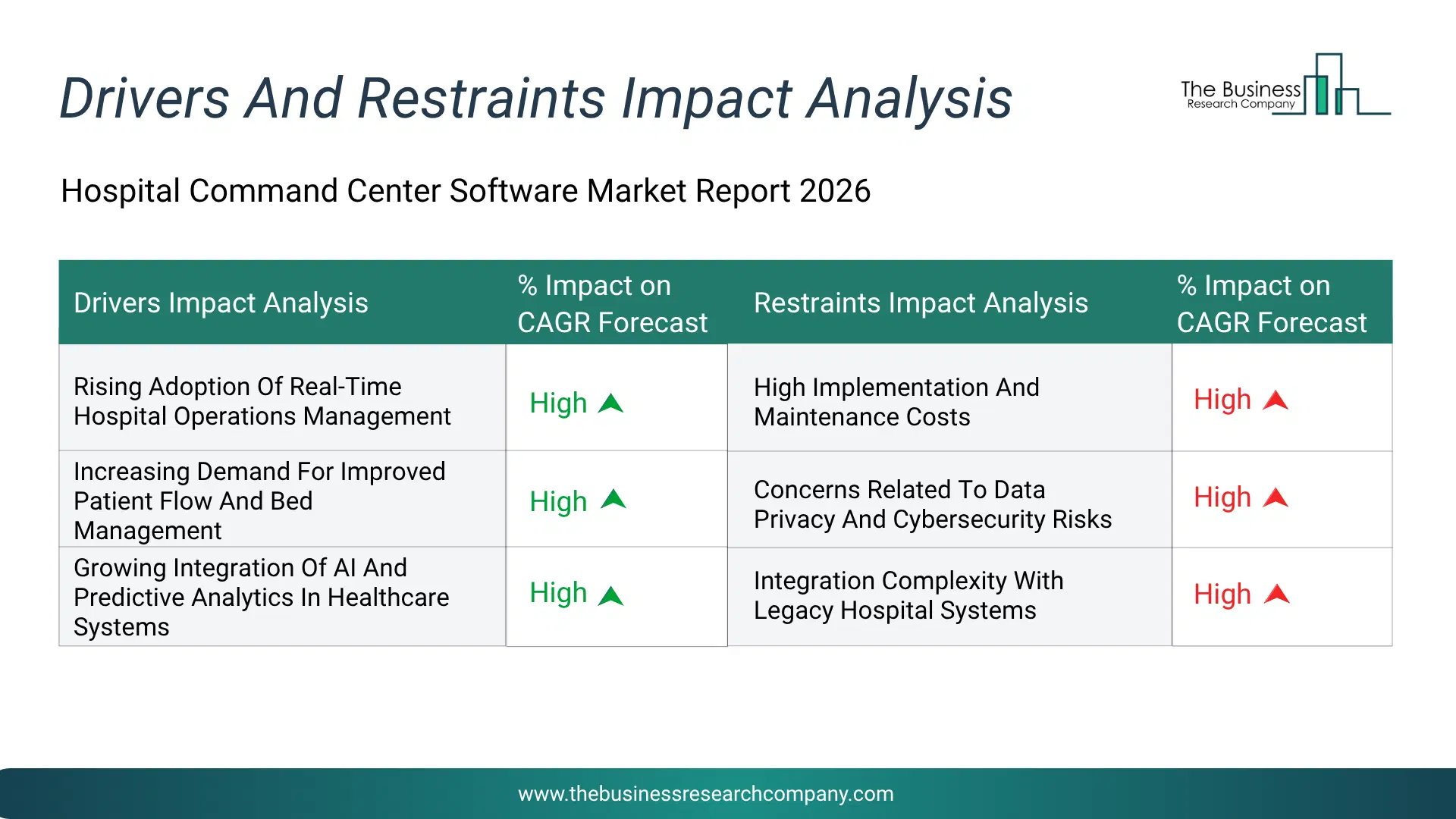
Infographic Chart Showing Key Market Drivers Analysis And Restraints For Hospital Command Center Software Market
The chart presents an impact analysis of key drivers and restraints, quantifying their relative influence on the market's growth rate and helping assess the balance between growth enablers and limiting factors. This chart offers a high-level perspective; the full report contains more detailed insights.
How Will The Drivers Impact Growth In The Global Hospital Command Center Software Market?
• Rising Adoption Of Real-Time Hospital Operations Management (High) – During the forecast period, the rising adoption of real-time hospital operations management is expected to become a key growth driver for the hospital command center software market by 2030. The rising adoption of real-time hospital operations management is significantly driving the hospital command center software market because healthcare providers are increasingly focusing on improving operational visibility and efficiency. Hospitals manage large volumes of patients, staff, equipment, and clinical workflows every day, making real-time monitoring essential for smooth functioning. Hospital command center software enables administrators to track patient admissions, bed occupancy, emergency department status, and staff availability from a centralized platform. This helps hospitals reduce operational delays, optimize resource utilization, and improve coordination between departments. Real-time insights also support faster decision-making during emergencies and high patient inflow situations. • Increasing Demand For Improved Patient Flow And Bed Management (High) – During the forecast period, the increasing demand for improved patient flow and bed management is expected to emerge as a major factor driving the expansion of the hospital command center software market by 2030. The increasing demand for improved patient flow and bed management is another major factor supporting the growth of the hospital command center software market. Hospitals often face challenges such as overcrowding, delayed patient transfers, and inefficient bed allocation, which can negatively impact patient care quality and hospital productivity. Hospital command center software helps healthcare providers streamline patient movement from admission to discharge by offering real-time visibility into bed availability and patient status. The software also assists in reducing emergency room waiting times and preventing bottlenecks across departments. Efficient bed management allows hospitals to maximize capacity utilization while maintaining quality healthcare services. • Growing Integration Of AI And Predictive Analytics In Healthcare Systems (High) – During the forecast period, the growing integration of AI and predictive analytics in healthcare systems is expected to act as a key growth catalyst for the hospital command center software market by 2030. The growing integration of artificial intelligence and predictive analytics in healthcare systems is accelerating the adoption of hospital command center software. Modern hospitals are increasingly using AI-powered tools to analyze large amounts of operational and clinical data for better decision-making. Hospital command center platforms equipped with predictive analytics can forecast patient admissions, identify resource shortages, and predict potential delays before they occur. These capabilities help healthcare providers proactively manage hospital operations and improve care delivery. AI-driven alerts and recommendations also support staff in prioritizing critical tasks and responding quickly to changing patient conditions. The ability to improve operational efficiency while reducing costs is encouraging hospitals to adopt intelligent command center solutions.How Will The Restraints Impact Growth In The Global Hospital Command Center Software Market?
• High Implementation And Maintenance Costs (High) – During the forecast period, the high implementation and maintenance costs act as a major restraint in the hospital command center software market because deploying these platforms requires significant financial investment. Hospitals must spend heavily on software licensing, servers, workstations, display systems, network infrastructure, and integration tools to establish an effective command center environment. In addition, healthcare facilities often need customized solutions that can connect with existing hospital information systems, electronic health records, and medical devices, further increasing deployment expenses. The implementation process also involves consulting, employee training, system upgrades, and ongoing technical support, which add to operational costs over time. Small and medium-sized hospitals with limited budgets may find it difficult to afford such advanced systems, leading to slower adoption rates. Maintenance expenses, including software updates, cybersecurity monitoring, and hardware replacement, also create long-term financial pressure on healthcare providers. As a result, many hospitals delay or avoid adopting hospital command center software, which restricts overall market growth. • Concerns Related To Data Privacy And Cybersecurity Risks (High) – During the forecast period, the concerns related to data privacy and cybersecurity risks are another key restraint affecting the hospital command center software market. These platforms collect and process large volumes of sensitive patient information, operational records, and clinical data from multiple hospital departments and connected medical devices. Any cyberattack, data breach, or unauthorized access can compromise confidential healthcare information and disrupt hospital operations. Healthcare organizations are therefore highly cautious about implementing centralized digital platforms due to strict regulatory requirements related to patient data protection and privacy compliance. The increasing frequency of ransomware attacks and cyber threats targeting healthcare institutions further raises concerns among hospitals regarding system security. In addition, integrating command center software with various hospital systems and external networks can create vulnerabilities if proper cybersecurity measures are not maintained. Hospitals may also face financial penalties, legal liabilities, and reputational damage in the event of data leaks or security failures. These risks reduce confidence among healthcare providers and can slow the adoption of hospital command center software solutions. • Integration Complexity With Legacy Hospital Systems (High) – During the forecast period, the integration complexity with legacy hospital systems is expected to restrain the growth of the hospital command center software market. Hospital command center software must integrate seamlessly with multiple existing systems, including electronic health records (EHRs), laboratory information systems (LIS), radiology information systems (RIS), pharmacy management systems, and medical devices to provide a unified operational view. However, many healthcare facilities continue to rely on legacy IT infrastructure that lacks interoperability with modern digital platforms. Differences in data standards, communication protocols, and software architectures often require extensive customization, system upgrades, and integration services, increasing implementation complexity and deployment timelines. Inconsistent data quality and fragmented information across hospital departments can further reduce the effectiveness of command center operations and real-time decision-making. Healthcare providers may also experience temporary workflow disruptions during system integration and migration. These technical challenges increase project risks and discourage some hospitals from investing in advanced command center solutions. Consequently, integration complexity with legacy hospital systems remains a significant barrier to the widespread adoption of hospital command center software.Key Players In The Global Hospital Command Center Software Market
Major companies operating in the hospital command center software market are Oracle Corporation, GE HealthCare Technologies Inc., Koninklijke Philips N.V., Baxter International Inc., Palantir Technologies Inc., Epic Systems Corporation, Getinge AB, Dedalus Group S.p.A., Ascom Holding AG, Biofourmis Inc., TeleTracking Technologies Inc., Qmatic Group AB, LeanTaaS Inc., CenTrak Inc., Qventus Inc., Spok Holdings Inc., Alcidion Group Limited, Connexall Corporation, Q-nomy Inc., ABOUT Healthcare Inc., Zebra Technologies Corporation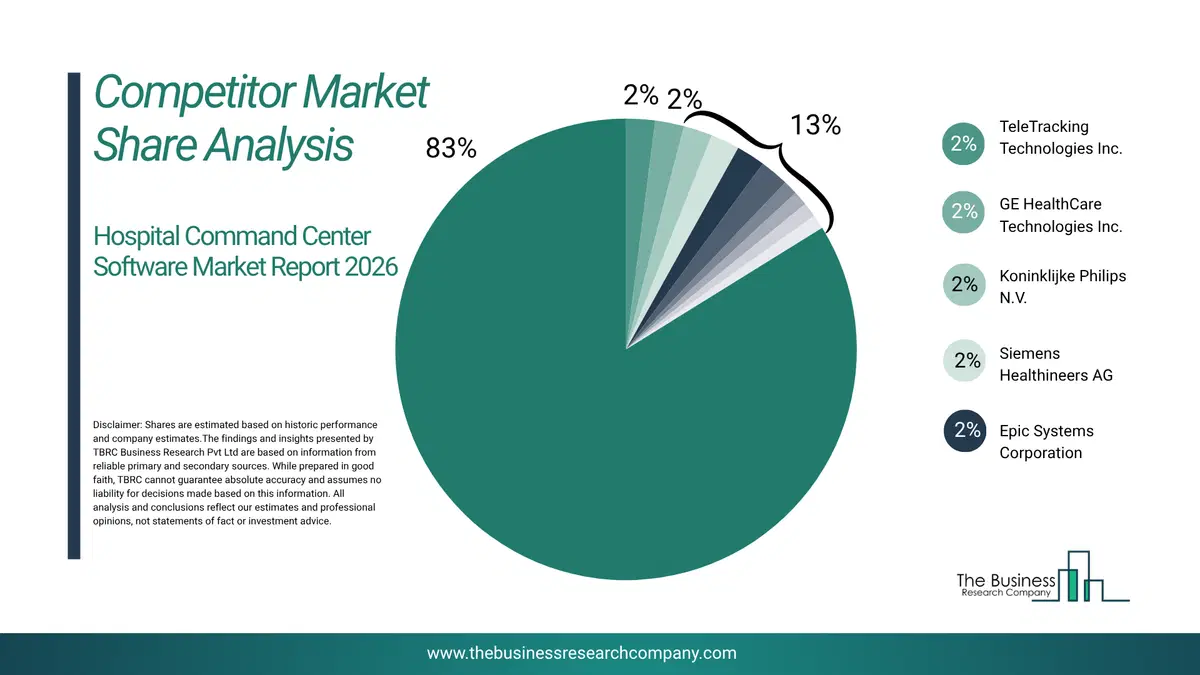
This chart is for illustrative purposes; the full report includes a detailed competitor analysis and comprehensive overview of the top 10 companies in the market.
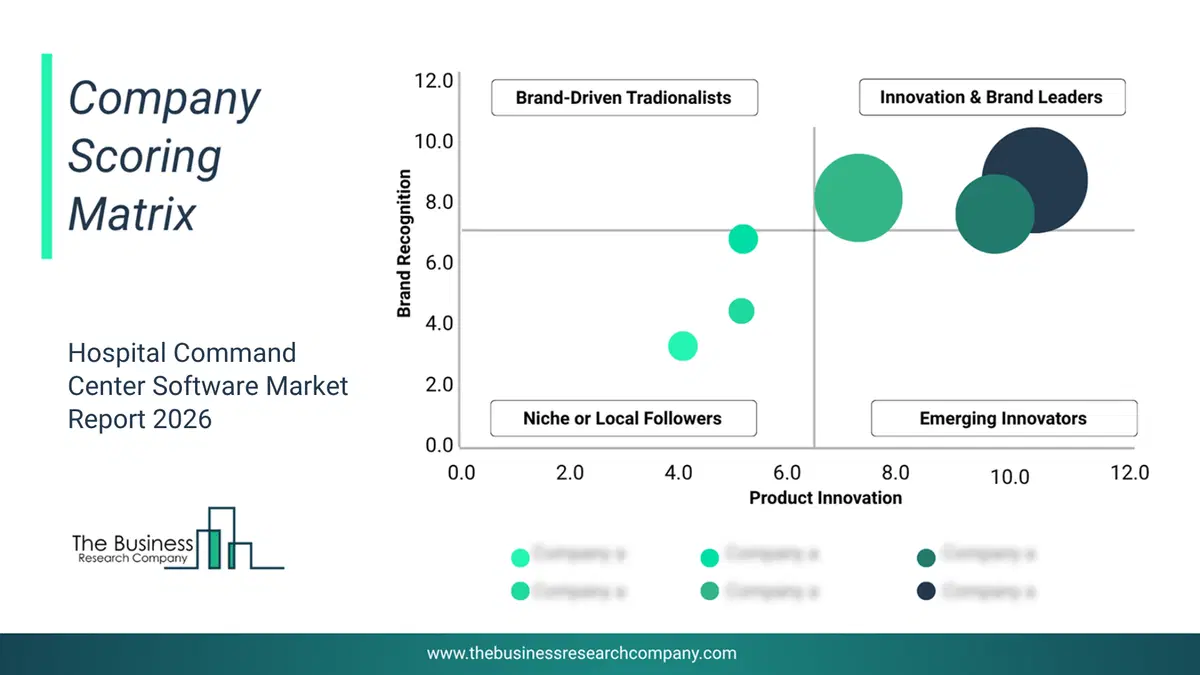
This chart maps companies by product innovation and brand strength, with bubble size indicating relative revenue, helping identify market leaders, challengers, and niche players. This is an illustrative chart; the full report provides a complete and accurate competitive analysis.
Global Hospital Command Center Software Market Trends and Insights
Major companies operating in the hospital command center software market are focusing on developing advanced solutions, such as real-time predictive analytics, to improve operational efficiency, patient flow, and clinical decision-making across health systems. Real-time predictive analytics refers to software-driven capabilities that continuously aggregate and analyze live hospital data to forecast demand, identify bottlenecks, and enable proactive operational interventions. For instance, in October 2024, GE HealthCare Technologies Inc., a US-based medical technology company, launched the Hospital Pulse Tile for its Command Center Software. The launch integrates real-time predictive analytics to provide system-wide visibility into capacity, staffing, patient throughput, and care delivery performance. The Command Center uses advanced analytics and AI to turn complex hospital data into actionable insights, allowing leaders to anticipate surges, optimize resource utilization, and reduce delays in care.What Are Latest Mergers And Acquisitions In The Hospital Command Center Software Market?
In September 2024, Stryker Corporation, a US-based medical technology company, acquired care.ai for an undisclosed amount. With this acquisition, Stryker Corporation aims to expand its healthcare IT and wirelessly connected medical device offerings by integrating care.ai’s platform, which specializes in AI-assisted virtual care workflows, ambient intelligence, and smart room technology. care.ai is a US-based healthcare technology company providing an AI-assisted command center platform that provides hospitals and care facilities with a real-time, unified view of clinical and operational workflows across the entire care environment.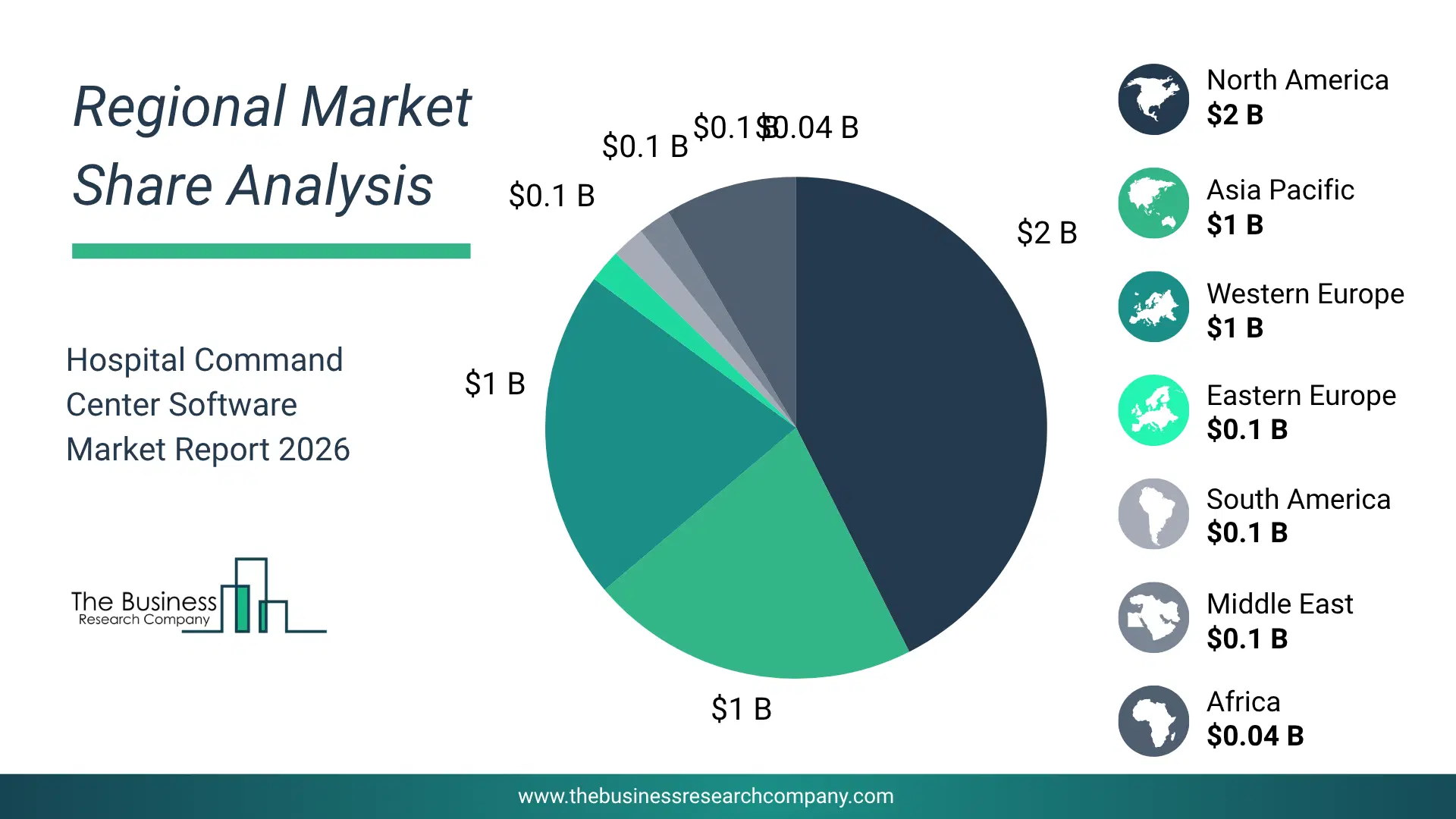
Regional Insights
North America was the largest region in the hospital command center software market in 2025. Asia-Pacific is expected to be the fastest-growing region in the forecast period. The regions covered in this market report are Asia-Pacific, South East Asia, Western Europe, Eastern Europe, North America, South America, Middle East, Africa. The countries covered in this market report are Australia, Brazil, China, France, Germany, India, Indonesia, Japan, Taiwan, Russia, South Korea, UK, USA, Canada, Italy, Spain.What Defines the Hospital Command Center Software Market?
The hospital command center software market consists of revenues earned by entities by providing services such as implementation, consulting, training, maintenance, support. The market value includes the value of related goods sold by the service provider or included within the service offering. The hospital command center software market also includes sales of servers, workstations, display monitors, network equipment, and barcode scanners. Values in this market are ‘factory gate’ values, that is the value of goods sold by the manufacturers or creators of the goods, whether to other entities (including downstream manufacturers, wholesalers, distributors and retailers) or directly to end customers. The value of goods in this market includes related services sold by the creators of the goods.How is Market Value Defined and Measured?
The market value is defined as the revenues that enterprises gain from the sale of goods and/or services within the specified market and geography through sales, grants, or donations in terms of the currency (in USD unless otherwise specified). The revenues for a specified geography are consumption values that are revenues generated by organizations in the specified geography within the market, irrespective of where they are produced. It does not include revenues from resales along the supply chain, either further along the supply chain or as part of other products.
This chart presents market attractiveness based on a quantitative evaluation of growth, competition, strategic alignment, and risk, offering a clear view of opportunity areas for decision-making. This chart is for illustrative purposes; the full report contains the complete analysis.

This chart highlights the Total Addressable Market (TAM) by estimating the maximum revenue opportunity using an assumption-driven approach, supporting strategic planning and opportunity sizing across markets. The chart is illustrative; the full report provides a more comprehensive analysis.
What Key Data and Analysis Are Included in the Hospital Command Center Software Market Report 2026?
The hospital command center software market research report is one of a series of new reports from The Business Research Company that provides market statistics, including industry global market size, regional shares, competitors with the market share, detailed market segments, market trends and opportunities, and any further data you may need to thrive in the hospital command center software industry. The market research report delivers a complete perspective of everything you need, with an in-depth analysis of the current and future state of the industry.Hospital Command Center Software Market Report Forecast Analysis
| Report Attribute | Details |
|---|---|
| Market Size Value In 2026 | $2.15 billion |
| Revenue Forecast In 2030 | $4.10 billion |
| Growth Rate | CAGR of 17.7% from 2026 to 2030 |
| Base Year For Estimation | 2025 |
| Actual Estimates/Historical Data | 2020-2025 |
| Forecast Period | 2026 - 2030 |
| Market Representation | Revenue in USD Billion and CAGR from 2026 to 2030 |
| Segments Covered | Component, Deployment Mode, Application, End-User |
| Regional Scope | Asia-Pacific, Western Europe, Eastern Europe, North America, South America, Middle East, Africa |
| Country Scope | The countries covered in the report are Australia, Brazil, China, France, Germany, India, Indonesia, Japan, Taiwan, Russia, South Korea, UK, USA, Canada, Italy, Spain. |
| Key Companies Profiled | Oracle Corporation, GE HealthCare Technologies Inc., Koninklijke Philips N.V., Baxter International Inc., Palantir Technologies Inc., Epic Systems Corporation, Getinge AB, Dedalus Group S.p.A., Ascom Holding AG, Biofourmis Inc., TeleTracking Technologies Inc., Qmatic Group AB, LeanTaaS Inc., CenTrak Inc., Qventus Inc., Spok Holdings Inc., Alcidion Group Limited, Connexall Corporation, Q-nomy Inc., ABOUT Healthcare Inc., Zebra Technologies Corporation |
| Customization Scope | Request for Customization |
| Pricing And Purchase Options | Explore Purchase Options |