

Hospital Outsourcing Market Report 2026
Global Outlook – By Hospital Type (Private, Public), By Hospital Size (Small And Medium Hospitals, Large Hospitals), By Services (Healthcare IT, Clinical Services, Business Services, Transportation Services, Other Services), By End-Users (Nursing Homes And Assisted Living, Specialty Hospitals, General Medical And Surgical Hospitals, Emergency And Other Outpatient Care Centers, Other End Users) - Market Size, Trends, And Global Forecast 2026-2030
Hospital Outsourcing Market Overview
• Hospital Outsourcing market size has reached to $458.68 billion in 2025 • Expected to grow to $767.47 billion in 2030 at a compound annual growth rate (CAGR) of 10.8% • Growth Driver: Geriatric Population Surge Boosts Hospital Outsourcing • Market Trend: Transforming Hospital Revenue Cycles With Advanced Technologies • North America was the largest region in 2025.Market Gains By 2030 – Top Opportunities By Segment
Market Gain identifies the most promising market opportunities by highlighting the segments or products expected to generate the highest incremental revenue growth over the next five years.
What Is Covered Under Hospital Outsourcing Market?
Hospital outsourcing is a process in which some processes of a hospital are assigned to another vendor or a smaller facility that has expertise and specialization in the specific area. This helps to provide support to hospital processes and smooth running of the hospitals. The main types of hospitals in the hospital outsourcing market are private and public. A private hospital refers to a hospital that is not owned by the government, these hospitals provide various types of services and activities conducted for the development and smooth function of hospitals. The various sizes of hospitals include small and medium hospitals and large hospitals that provide several services such as healthcare IT, clinical services, business services, transportation services, and others. The various end-users include nursing homes and assisted living, specialty hospitals, general medical and surgical hospitals, emergency and other outpatient care centers, and others.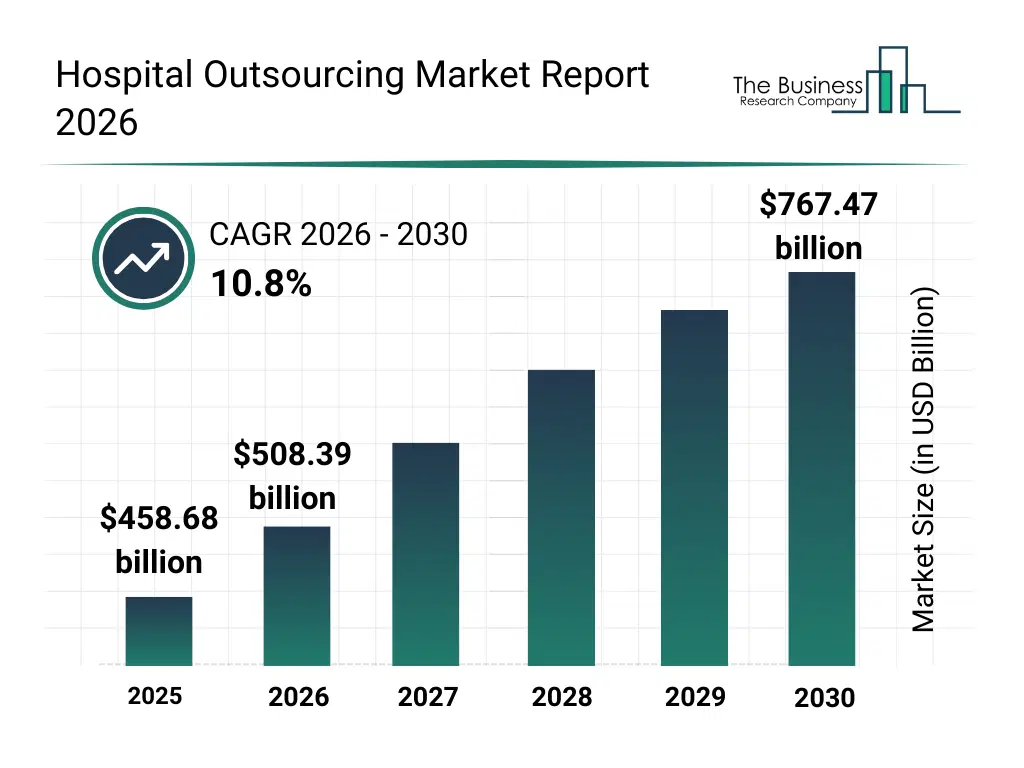
What Is The Hospital Outsourcing Market Size and Share 2026?
The hospital outsourcing market size has grown rapidly in recent years. It will grow from $458.68 billion in 2025 to $508.39 billion in 2026 at a compound annual growth rate (CAGR) of 10.8%. The growth in the historic period can be attributed to rising hospital operational costs, shortage of skilled in-house staff, increasing complexity of hospital operations, expansion of private healthcare facilities, early adoption of outsourced support services.What Is The Hospital Outsourcing Market Growth Forecast?
The hospital outsourcing market size is expected to see rapid growth in the next few years. It will grow to $767.47 billion in 2030 at a compound annual growth rate (CAGR) of 10.8%. The growth in the forecast period can be attributed to increasing pressure to improve hospital profitability, growing demand for specialized healthcare IT and clinical services, expansion of large hospital networks, rising focus on service quality and compliance, increasing acceptance of long-term outsourcing partnerships. Major trends in the forecast period include increasing outsourcing of non-core hospital operations, rising demand for specialized third-party service providers, growing focus on cost optimization and operational efficiency, expansion of end-to-end managed service contracts, increasing preference for flexible and scalable service models.
Global Hospital Outsourcing Market Segmentation
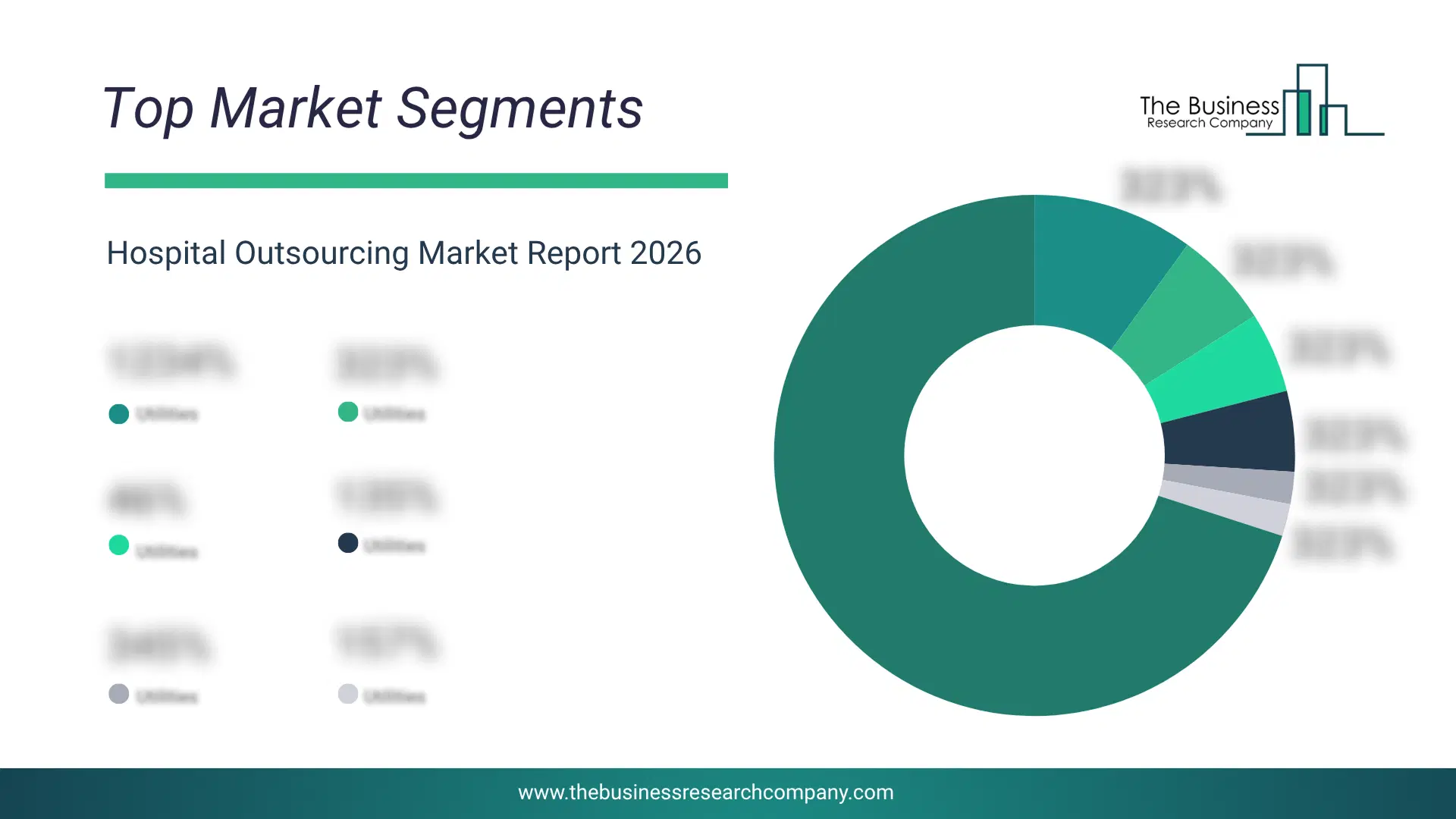
1) By Hospital Type: Private, Public 2) By Hospital Size: Small And Medium Hospitals, Large Hospitals 3) By Services: Healthcare IT, Clinical Services, Business Services, Transportation Services, Other Services 4) By End-Users: Nursing Homes And Assisted Living, Specialty Hospitals, General Medical And Surgical Hospitals, Emergency And Other Outpatient Care Centers, Other End Users Subsegments: 1) By Private: For-profit Hospitals, Non-profit Hospitals 2) By Public: Government Hospitals, Community Hospitals The top segments in the hospital outsourcing market will be: • Private will reach $539.55 Billion by 2030. • Public will reach $224.71 Billion by 2030.What Is The Driver Of The Hospital Outsourcing Market?
Rising growth in geriatric population is expected to propel the growth of the hospital outsourcing market going forward. Geriatric population refers to the elderly or senior citizen demographic group within a population. Hospital outsourcing improves healthcare for the elderly by offering specialized care, utilizing technology for remote services, enhancing documentation, and providing cost-effective solutions to address unique challenges faced by older adults. For instance, in January 2024, according to a report published by the US-based Pew Research Center Organization, in 2024 it was 0.2% the geriatric population is increasing by 0.5% in 2054. Therefore, rising growth in geriatric population is driving the growth of the hospital outsourcing industry.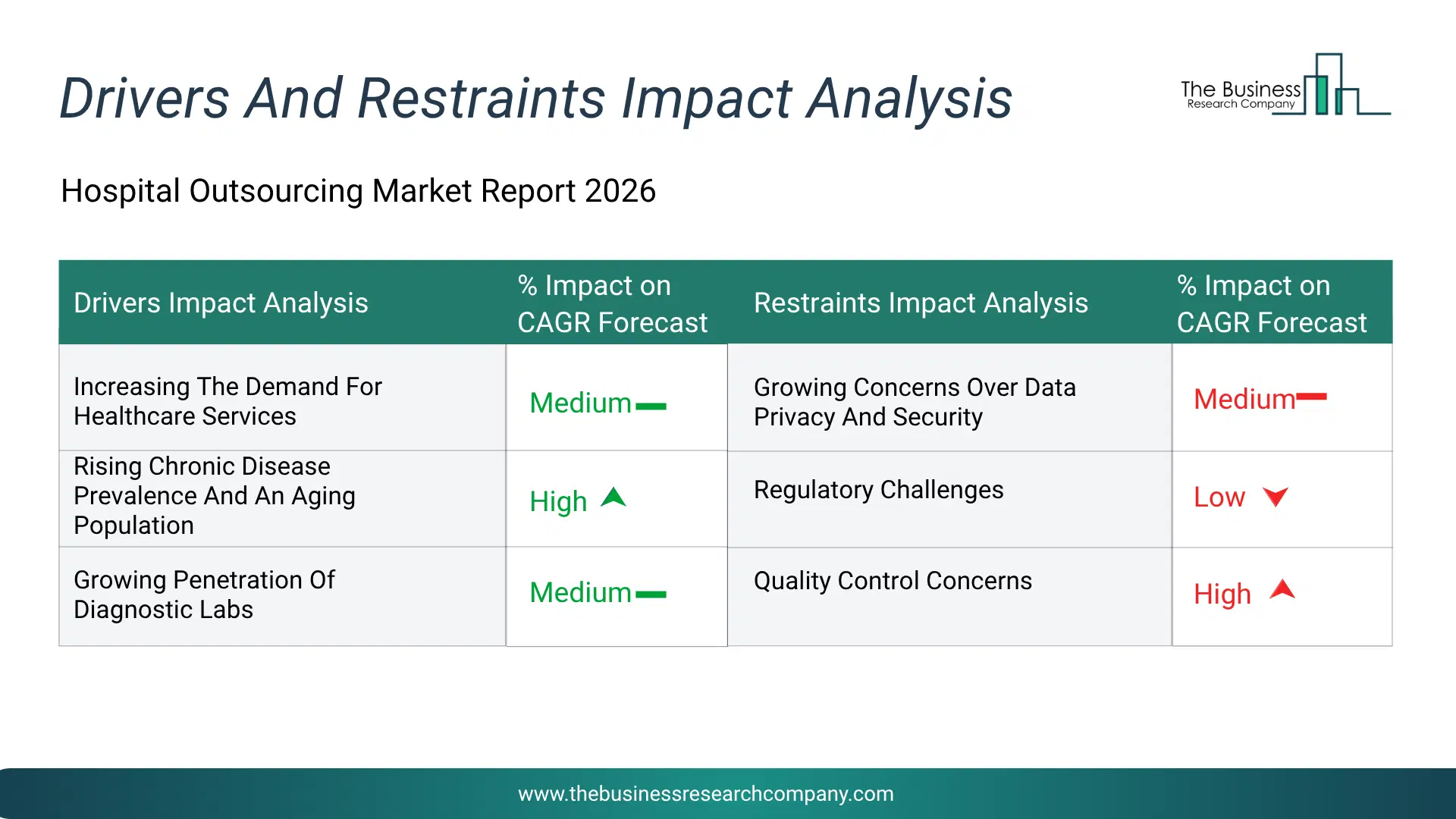
Infographic Chart Showing Key Market Drivers Analysis And Restraints For Hospital Outsourcing Market
The chart presents an impact analysis of key drivers and restraints, quantifying their relative influence on the market's growth rate and helping assess the balance between growth enablers and limiting factors. This chart offers a high-level perspective; the full report contains more detailed insights.
How Will The Drivers Impact Growth In The Global Hospital Outsourcing Market?
• Increasing The Demand For Healthcare Services (Medium) – During the forecast period, the increasing demand for healthcare services is expected to become a key growth driver for the hospital outsourcing market by 2030. Rising patient volumes across inpatient, outpatient, and emergency care settings are placing significant pressure on hospitals to optimize resource utilization and service delivery. Healthcare providers are increasingly outsourcing non-core and specialized functions to improve responsiveness, reduce administrative burdens, and maintain high standards of patient care. Outsourcing partners enable hospitals to scale operations efficiently while addressing fluctuations in service demand. • Rising Chronic Disease Prevalence And An Aging Population (High) – During the forecast period, the rising chronic disease prevalence and an aging population are expected to emerge as major factors driving the expansion of the hospital outsourcing market by 2030. The growing number of patients requiring long-term treatment, monitoring, and support services is increasing operational complexity for healthcare institutions. Hospitals are leveraging outsourced clinical, administrative, and support services to manage expanding care requirements while maintaining service quality and continuity. The need for specialized expertise and efficient care coordination is further strengthening reliance on external service providers. • Growing Penetration Of Diagnostic Labs (Medium) – During the forecast period, the growing penetration of diagnostic labs is expected to act as a key growth catalyst for the hospital outsourcing market by 2030. The increasing utilization of laboratory testing for disease detection, preventive care, and treatment monitoring is driving demand for specialized diagnostic support services. Hospitals are collaborating with external laboratory networks and service providers to enhance testing capacity, improve turnaround times, and access advanced diagnostic technologies without substantial capital investments. The expansion of diagnostic infrastructure is creating new opportunities for outsourced healthcare services across multiple care settings.How Will The Restraints Impact Growth In The Global Hospital Outsourcing Market?
• Growing Concerns Over Data Privacy And Security (Medium) – During the forecast period, the growing concerns over data privacy and security are restraining the hospital outsourcing market because outsourced healthcare operations often involve the transfer and storage of sensitive patient information across external platforms and third-party vendors. Hospitals face increasing risks related to cyberattacks, data breaches, unauthorized access, and misuse of confidential medical records. Strict healthcare data protection regulations require hospitals and outsourcing providers to maintain high cybersecurity standards, which increases compliance and infrastructure costs. Any failure in protecting patient information can lead to legal penalties, reputational damage, and loss of patient trust. Healthcare organizations may therefore hesitate to outsource critical operations involving confidential data management. In addition, increasing digitalization and cloud-based healthcare systems are making data security concerns more complex. Consequently, these privacy and security risks are limiting the wider adoption of hospital outsourcing services. • Regulatory Challenges (High) – During the forecast period, the regulatory challenges are restraining the hospital outsourcing market because healthcare outsourcing providers must comply with complex and continuously evolving healthcare regulations across different countries and regions. Hospitals outsourcing services such as medical billing, patient data management, transcription, and diagnostics must ensure adherence to strict legal, operational, and quality standards. Variations in healthcare policies, licensing requirements, and compliance procedures often create operational difficulties for outsourcing vendors. Non-compliance can result in financial penalties, legal liabilities, and service disruptions for both hospitals and outsourcing companies. Regulatory approvals and audits can also increase operational costs and delay outsourcing implementation. Additionally, cross-border outsourcing activities face further challenges related to data transfer laws and healthcare governance. Consequently, these regulatory complexities slow market expansion and create barriers for outsourcing adoption. • Quality Control Concerns (Medium) – During the forecast period, the quality control concerns are restraining the hospital outsourcing market because hospitals must maintain consistent service quality and patient safety while relying on third-party service providers. Outsourced services such as medical transcription, billing, diagnostics, and administrative support may sometimes experience errors, communication gaps, or delays that can negatively impact hospital operations and patient care. Maintaining standardized service quality across multiple outsourcing vendors becomes challenging, especially in large healthcare networks. Hospitals also face difficulties in monitoring vendor performance and ensuring compliance with healthcare quality standards. Inadequate quality management can lead to operational inefficiencies, patient dissatisfaction, and increased healthcare risks. Additionally, variations in workforce expertise and technology capabilities among outsourcing providers can affect service reliability. Consequently, concerns regarding service accuracy and operational consistency continue to limit outsourcing adoption in the healthcare sector.Key Players In The Global Hospital Outsourcing Market
Major companies operating in the hospital outsourcing market are Sodexo S.A., Aramark Corporation, ABM Industries Incorporated, Cerner Corporation, AllScripts Healthcare Solutions Inc., Steris Plc, Getinge AB, Sotera Health LLC, Sterigenics International LLC, TriMedx LLC, LogistiCare Solutions LLC, Integrated Medical Transport Inc., Flatworld Solutions, MMM Group, Belimed AG, Matachana Group, Schülke & Mayr GmbH, 3M Company, Becton Dickinson and Company, Honeywell International Inc., Fortive Corporation, Ansell Limited, Pal International Ltd., PDI Inc., Reckitt Benckiser Group plc, bioMérieux S.A., Alere Inc., Cantel Medical, Halyard Health Inc.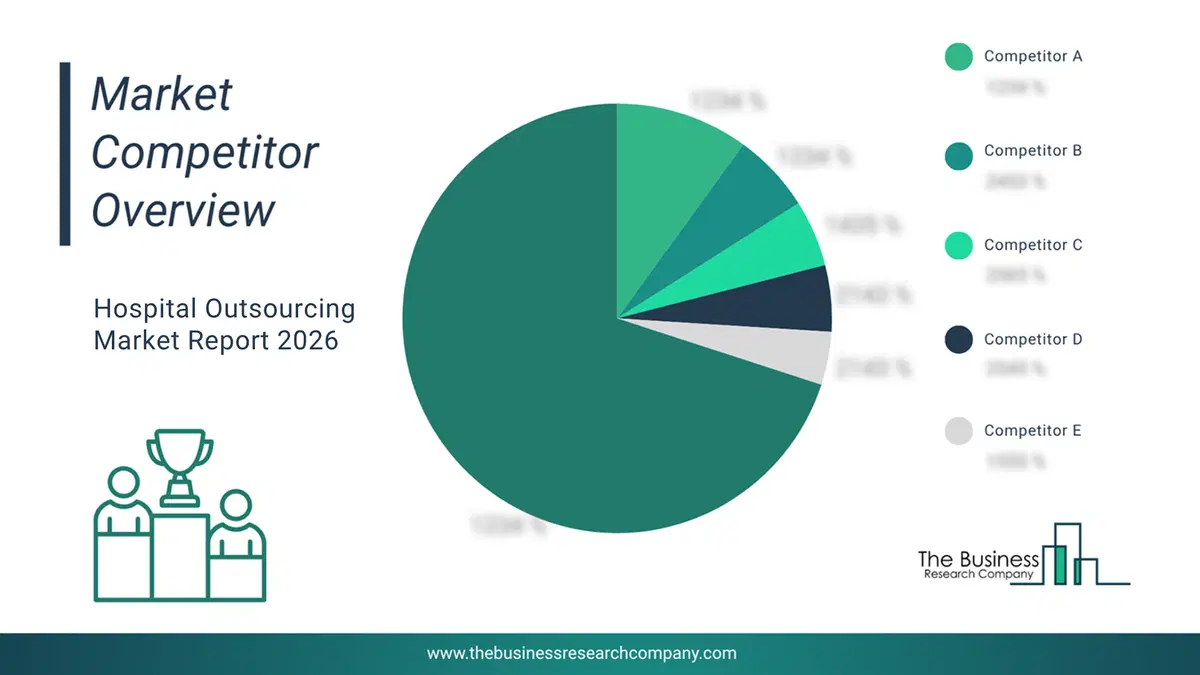
This chart is for illustrative purposes; the full report includes a detailed competitor analysis and comprehensive overview of the top 10 companies in the market.
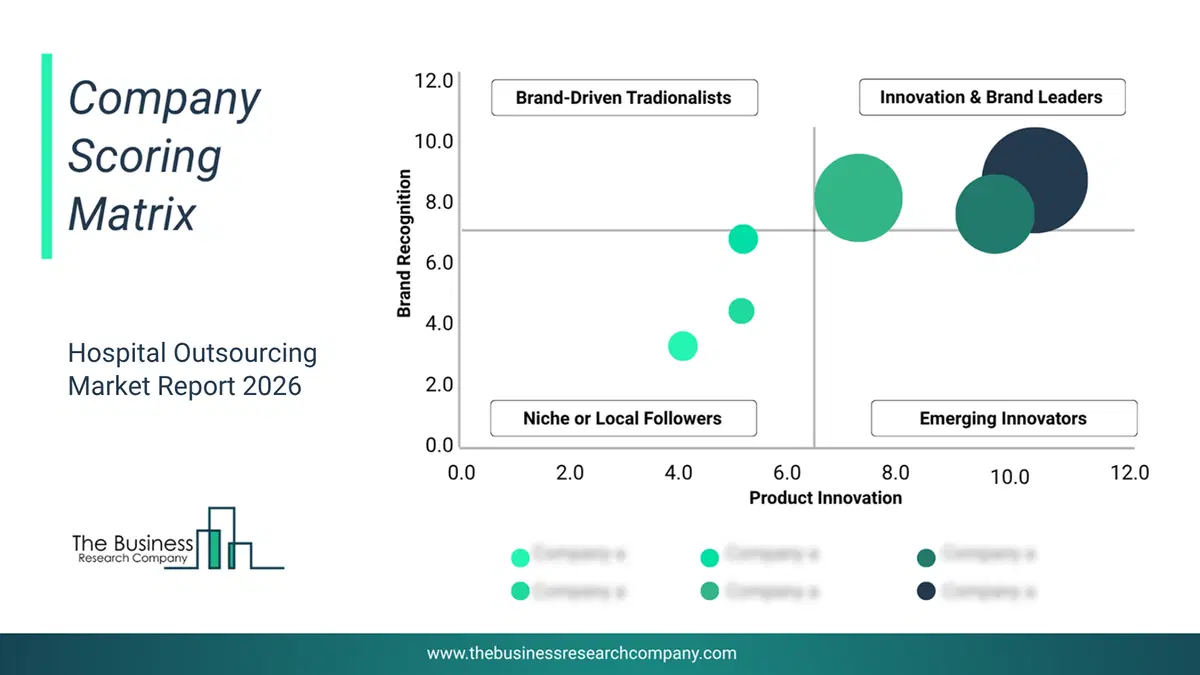
This chart maps companies by product innovation and brand strength, with bubble size indicating relative revenue, helping identify market leaders, challengers, and niche players. This is an illustrative chart; the full report provides a complete and accurate competitive analysis.
Global Hospital Outsourcing Market Trends and Insights
Major companies operating in the hospital outsourcing market are developing advanced technologies, such as digital platforms, to improve revenue cycle outcomes, thereby increasing their profitability in the market. A digital platform is a technology-enabled solution designed to streamline and optimize various administrative and financial functions within healthcare organizations. For instance, in October 2023, Omega Healthcare, a US-based healthcare services company, launched the Omega Digital Platform. The platform employs AI, RPA, ML, bots, and NLP. Omega Healthcare's solutions enhance efficiency in revenue cycle tasks, minimizing human intervention and reallocating resources. The goal is to achieve outcomes such as lowering coding costs with over 95% accuracy and reducing accounts receivable days, ultimately optimizing revenue for providers, payers, pharma, and clinical research organizations. Omega's proprietary technology and analytics aim to boost efficiencies, cut costs, expedite cash flow, and enhance financial outcomes.What Are Latest Mergers And Acquisitions In The Hospital Outsourcing Market?
In September 2024, EQT AB, a Sweden-based private equity company, acquired GeBBS Healthcare Solutions for an undisclosed amount. Through this acquisition, EQT is aimed at accelerating growth in the healthcare technology sector by enhancing revenue cycle management services, expanding customer segments, and strengthening technology infrastructure, thereby aligning with EQT's strategy to create long-term value in the growing healthcare outsourcing market. GeBBS Healthcare Solutions is a US-based provider of technology-enabled Revenue Cycle Management (RCM) services.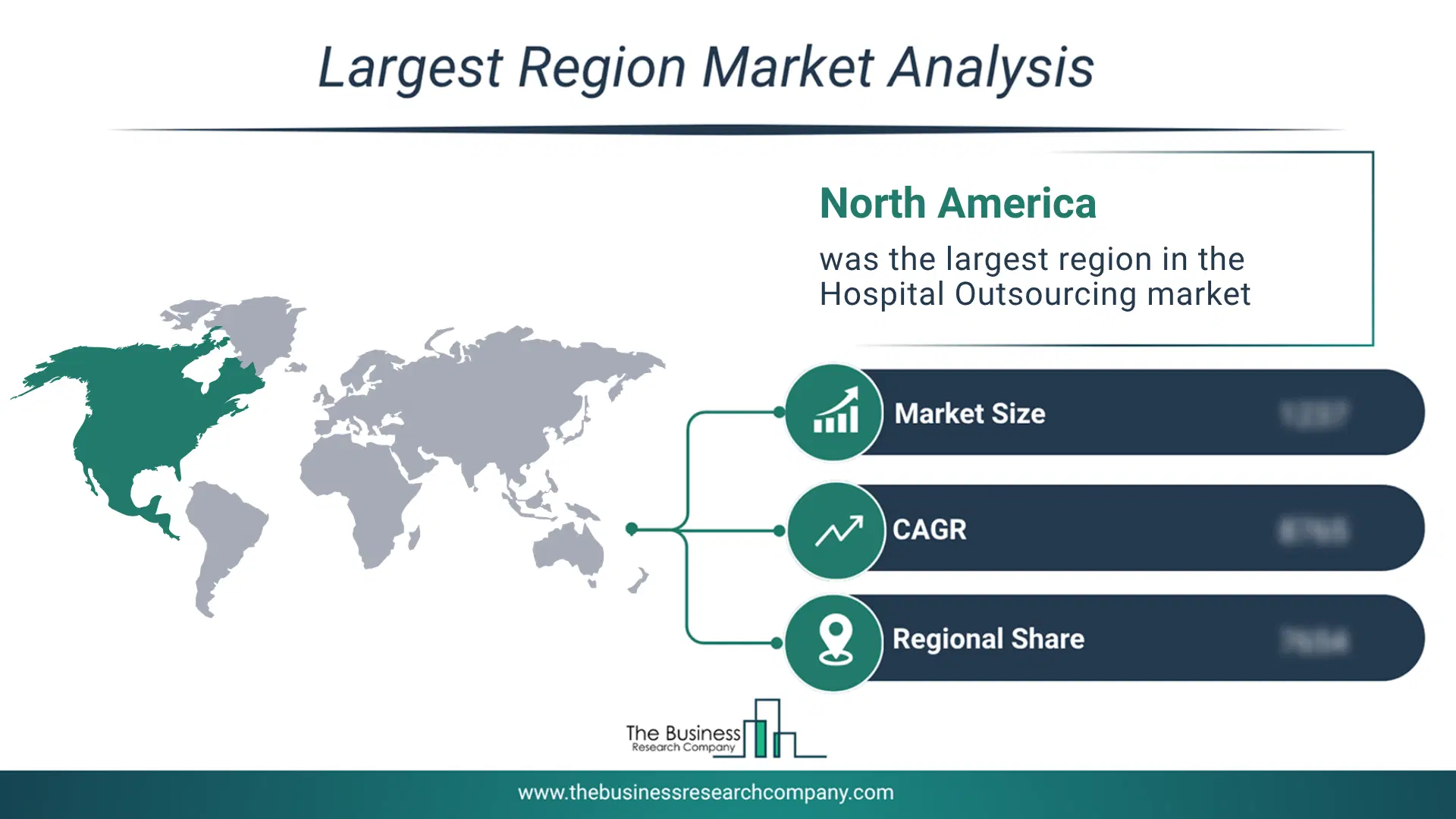
Regional Outlook
North America was the largest region in the hospital outsourcing market in 2025. The regions covered in this market report are Asia-Pacific, South East Asia, Western Europe, Eastern Europe, North America, South America, Middle East, Africa. The countries covered in this market report are Australia, Brazil, China, France, Germany, India, Indonesia, Japan, Taiwan, Russia, South Korea, UK, USA, Canada, Italy, Spain.What Defines the Hospital Outsourcing Market?
The hospital outsourcing market includes revenues earned by entities by providing medical administration, medical transcription, it systems management and consultancy services. The market value includes the value of related goods sold by the service provider or included within the service offering. Only goods and services traded between entities or sold to end consumers are included.How is Market Value Defined and Measured?
The market value is defined as the revenues that enterprises gain from the sale of goods and/or services within the specified market and geography through sales, grants, or donations in terms of the currency (in USD unless otherwise specified). The revenues for a specified geography are consumption values that are revenues generated by organizations in the specified geography within the market, irrespective of where they are produced. It does not include revenues from resales along the supply chain, either further along the supply chain or as part of other products.
This chart presents market attractiveness based on a quantitative evaluation of growth, competition, strategic alignment, and risk, offering a clear view of opportunity areas for decision-making. This chart is for illustrative purposes; the full report contains the complete analysis.

This chart highlights the Total Addressable Market (TAM) by estimating the maximum revenue opportunity using an assumption-driven approach, supporting strategic planning and opportunity sizing across markets. The chart is illustrative; the full report provides a more comprehensive analysis.
What Key Data and Analysis Are Included in the Hospital Outsourcing Market Report 2026?
The hospital outsourcing market research report is one of a series of new reports from The Business Research Company that provides market statistics, including industry global market size, regional shares, competitors with the market share, detailed market segments, market trends and opportunities, and any further data you may need to thrive in the hospital outsourcing industry. The market research report delivers a complete perspective of everything you need, with an in-depth analysis of the current and future state of the industry.Hospital Outsourcing Market Report Forecast Analysis
| Report Attribute | Details |
|---|---|
| Market Size Value In 2026 | $508.39 billion |
| Revenue Forecast In 2030 | $767.47 billion |
| Growth Rate | CAGR of 10.8% from 2026 to 2030 |
| Base Year For Estimation | 2025 |
| Actual Estimates/Historical Data | 2020-2025 |
| Forecast Period | 2026 - 2030 |
| Market Representation | Revenue in USD Billion and CAGR from 2026 to 2030 |
| Segments Covered | Hospital Type, Hospital Size, Services, End-Users |
| Regional Scope | Asia-Pacific, Western Europe, Eastern Europe, North America, South America, Middle East, Africa |
| Country Scope | The countries covered in the report are Australia, Brazil, China, France, Germany, India, Indonesia, Japan, Taiwan, Russia, South Korea, UK, USA, Canada, Italy, Spain. |
| Key Companies Profiled | Sodexo S.A., Aramark Corporation, ABM Industries Incorporated, Cerner Corporation, AllScripts Healthcare Solutions Inc., Steris Plc, Getinge AB, Sotera Health LLC, Sterigenics International LLC, TriMedx LLC, LogistiCare Solutions LLC, Integrated Medical Transport Inc., Flatworld Solutions, MMM Group, Belimed AG, Matachana Group, Schülke & Mayr GmbH, 3M Company, Becton Dickinson and Company, Honeywell International Inc., Fortive Corporation, Ansell Limited, Pal International Ltd., PDI Inc., Reckitt Benckiser Group plc, bioMérieux S.A., Alere Inc., Cantel Medical, Halyard Health Inc. |
| Customization Scope | Request for Customization |
| Pricing And Purchase Options | Explore Purchase Options |