
Human Centric Lighting Market Report 2026
Global Outlook – By Component ( Sensors, Drivers, Microprocessors And Microcontrollers, Switches And Dimmers, Transmitters And Receivers), By Installation Type ( New Installations, Retrofit Installations), By Application ( Wholesale And Retail, Enterprises And Data Centers, Residential, Educational Institutions, Healthcare, Industrial, Hospitality) – Market Size, Trends, Strategies, and Forecast to 2030
Human Centric Lighting Market Overview
• Human Centric Lighting market size has reached to $2.77 billion in 2025 • Expected to grow to $8.32 billion in 2030 at a compound annual growth rate (CAGR) of 24.1% • Growth Driver: Smart City Initiatives Fuel The Growth Of The Human-Centric Lighting Market • Market Trend: Innovation in Smart Lighting Solutions Drives Growth in the Human-Centric Lighting Market • North America was the largest region in 2025 and Asia-Pacific is the fastest growing region.Market Gains By 2030 – Top Opportunities By Segment
Market Gain identifies the most promising market opportunities by highlighting the segments or products expected to generate the highest incremental revenue growth over the next five years.
What Is Covered Under Human Centric Lighting Market?
Human-centric lighting (HCL) refers to lighting solutions designed to enhance well-being, productivity, and comfort by considering humans' biological and emotional needs. It aims to mimic natural daylight cycles to support circadian rhythms, regulate hormones such as melatonin and cortisol, and improve overall mood, alertness, and cognitive function. The main components of human-centric lighting are sensors, drivers, microprocessors and microcontrollers, switches and dimmers, and transmitters and receivers. New installations refer to the incorporation of human-centric lighting systems during the construction of new buildings or facilities. This segment includes the installation of LED bulbs, switches, sensors, and gateways, among others, in newly constructed spaces. The various installation types include new installations and retrofit installations and are used in various applications such as wholesale and retail, enterprises and data centers, residential, educational institutions, healthcare, industrial, and hospitality.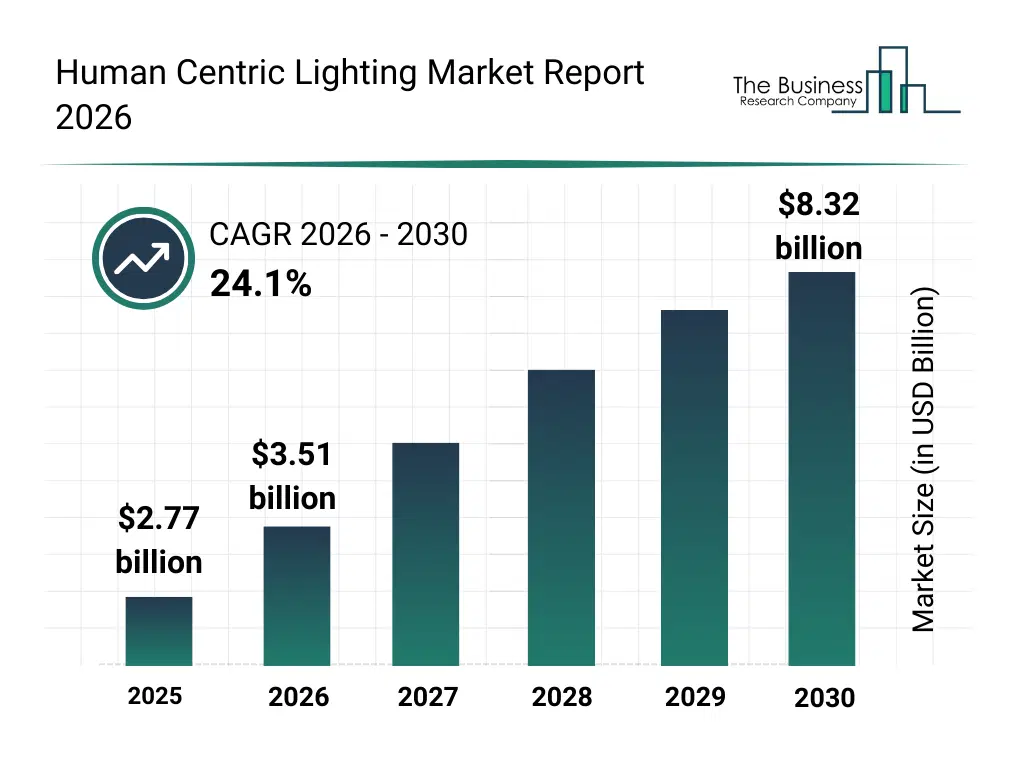
What Is The Human Centric Lighting Market Size 2026 And Growth Rate?
The human centric lighting market size has grown exponentially in recent years. It will grow from $2.77 billion in 2025 to $3.51 billion in 2026 at a compound annual growth rate (CAGR) of 27.0%. The growth in the historic period can be attributed to growing awareness of lighting impact on human health, early adoption of LED lighting technologies, demand for energy efficient lighting solutions, increasing workplace productivity focus, adoption of smart building concepts.What Is The Human Centric Lighting Market Growth Forecast?
The human centric lighting market size is expected to see exponential growth in the next few years. It will grow to $8.32 billion in 2030 at a compound annual growth rate (CAGR) of 24.1%. The growth in the forecast period can be attributed to rising focus on employee well being, expansion of smart and connected buildings, increasing healthcare infrastructure development, advancements in sensor and control technologies, growing investments in sustainable lighting systems. Major trends in the forecast period include rising adoption of circadian rhythm based lighting systems, increasing integration of smart sensors in lighting controls, growing demand for human-centric lighting in workspaces, expansion of tunable white and color temperature lighting, rising use of hcl in healthcare and educational facilities.
Global Human Centric Lighting Market Segmentation
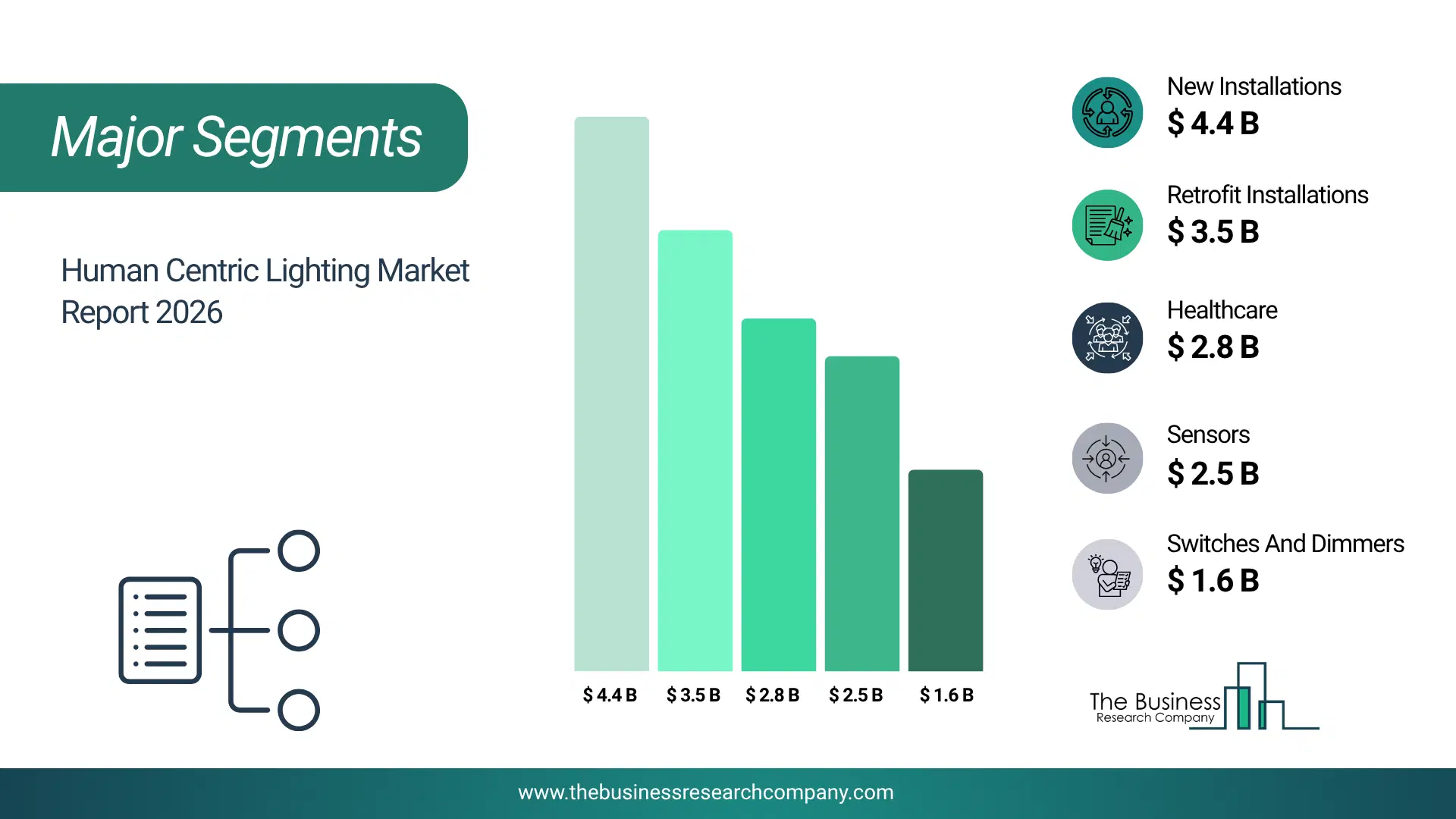
1) By Component: Sensors, Drivers, Microprocessors And Microcontrollers, Switches And Dimmers, Transmitters And Receivers 2) By Installation Type: New Installations, Retrofit Installations 3) By Application: Wholesale And Retail, Enterprises And Data Centers, Residential, Educational Institutions, Healthcare, Industrial, Hospitality Subsegments: 1) By Sensors: Ambient Light Sensors, Motion Sensors, Presence Sensors, Color Temperature Sensors, Brightness Sensors 2) By Drivers: LED Drivers, AC-DC Drivers, Dimmable Drivers, Constant Current Drivers, Constant Voltage Drivers 3) By Microprocessors and Microcontrollers: Microcontrollers for Lighting Control, Microprocessors for Smart Lighting Systems, Integrated Circuits (ICs) for Lighting Systems, Wireless Communication Controllers 4) By Switches and Dimmers: Manual Switches, Smart Switches, Dimmer Switches, Touch-sensitive Switches, Wi-Fi/Bluetooth-enabled Dimmers 5) By Transmitters and Receivers: Wireless Transmitters, Wireless Receivers, Bluetooth Transmitters/Receivers, Zigbee-enabled Transmitters/Receivers, Infrared (IR) Transmitters/Receivers The top segments in the human centric lighting market will be: • New Installations will reach $4478.64 Million by 2030. • Retrofit Installations will reach $3572.77 Million by 2030. • Sensors will reach $2504.2 Million by 2030. • Healthcare will reach $2799.88 Million by 2030. • Switches And Dimmers will reach $1619.74 Million by 2030.What Is The Driver Of The Human Centric Lighting Market?
The increasing initiatives towards establishing smart cities are expected to propel the growth of the human-centric lighting market. A smart city is an urban area that uses advanced technology and data-driven solutions to enhance the quality of life for its residents, improve efficiency in urban operations, and promote sustainable development. The growth of smart cities is driven by a convergence of technological innovation, urban development needs, policy support, private sector involvement, and community engagement. Human-centric lighting is a crucial component of smart city development, helping to create urban environments that support residents' health, productivity, and overall well-being through adaptive, biologically optimized lighting systems. For instance, in June 2024, according to the Press Information Bureau, an Indian-based government agency, the smart cities mission in India has achieved significant advancements in 100 cities, with a total of 8,013 projects approved at a cost of ?1,64,158 crore ($19.66 billion), of these, 7,157 projects have been completed, amounting to ?1,43,958 crore ($12.24 billion). Therefore, increasing initiatives towards establishing smart cities will drive the human-centric lighting market.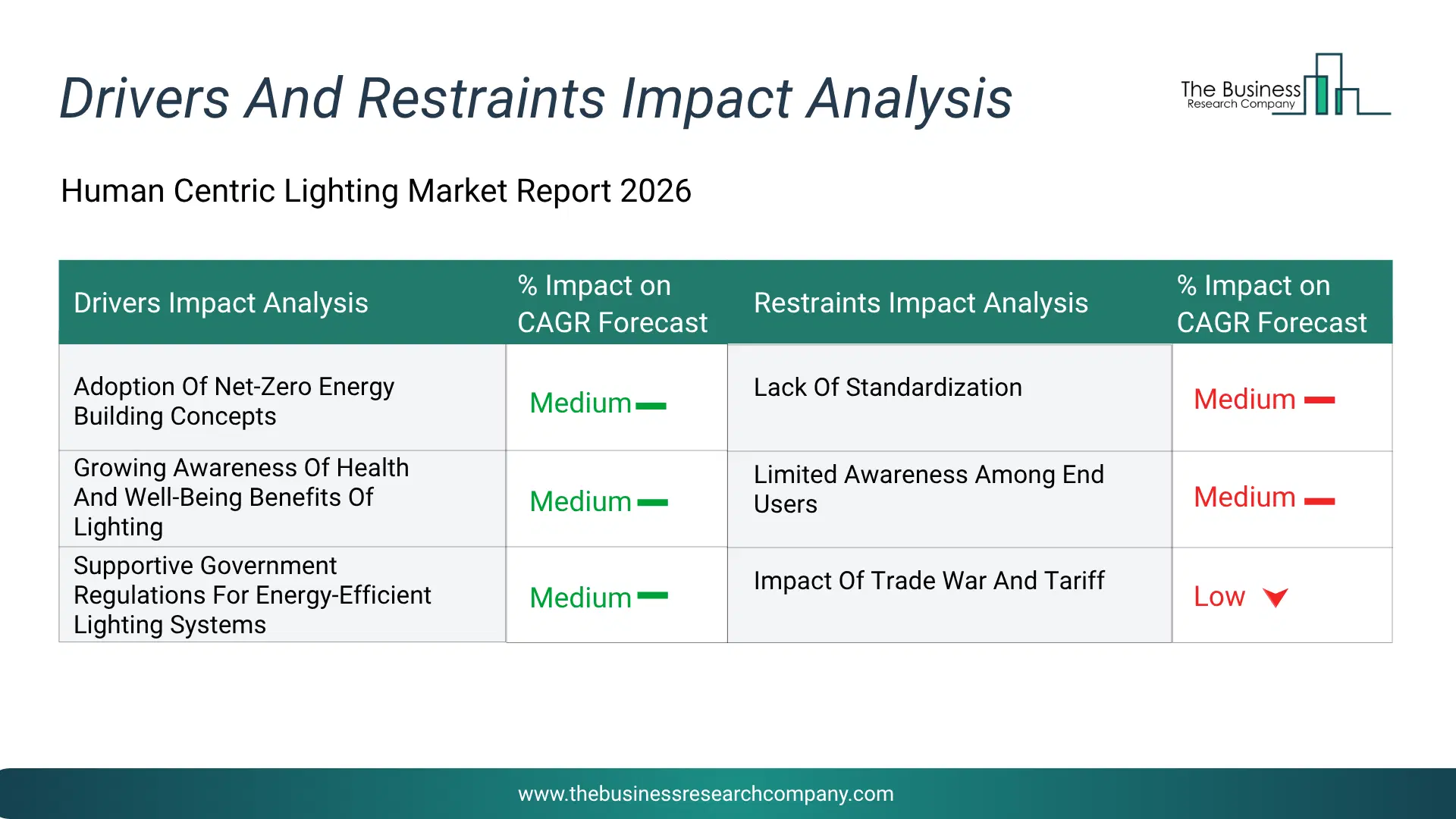
Infographic Chart Showing Key Market Drivers Analysis And Restraints For Human Centric Lighting Market
The chart presents an impact analysis of key drivers and restraints, quantifying their relative influence on the market's growth rate and helping assess the balance between growth enablers and limiting factors. This chart offers a high-level perspective; the full report contains more detailed insights.
How Will The Drivers Impact Growth In The Global Human Centric Lighting Market?
• Adoption Of Net-Zero Energy Building Concepts (Medium) – During the forecast period, the adoption of net-zero energy building concepts is expected to propel the growth of human centric lighting market in the forecast period. nzebs prioritize energy efficiency, renewable energy integration, and occupant well-being, creating strong alignment with hcl solutions that optimize lighting based on natural daylight cycles. as developers and building owners increasingly focus on reducing carbon footprints while enhancing indoor environmental quality, demand for intelligent, energy-efficient lighting systems is rising. human-centric lighting not only supports sustainability goals but also improves productivity, comfort, and health, making it a key component in modern green building designs. therefore, the adoption of net-zero energy building concepts will drive the growth of human centric lighting market. the adoption of net-zero energy building concepts growth contribution during the forecast period in 2025 is 1.8%. • Growing Awareness Of Health And Well-Being Benefits Of Lighting (Medium) – During the forecast period, the growing awareness of health and well-being benefits of lighting is expected to propel the growth of the human centric lighting market. Consumers and organizations are becoming more conscious of how lighting influences circadian rhythms, mood, sleep quality, and overall productivity. This shift is encouraging the adoption of advanced lighting systems that mimic natural daylight patterns and support biological functions. In sectors such as offices, healthcare, and education, HCL solutions are being integrated to enhance occupant comfort and performance. As a result, rising demand for wellness-oriented environments is accelerating investment in human-centric lighting technologies. Therefore, the growing awareness of health and well-being benefits of lighting will drive the growth of the human centric lighting market. The growing awareness of health and well-being benefits of lighting growth contribution during the forecast period in 2025 is 1.3%. • Supportive Government Regulations For Energy-Efficient Lighting Systems (Medium) – During the forecast period, supportive government regulations for energy-efficient lighting systems are expected to propel the growth of human centric lighting market in the forecast period. policies encouraging the adoption of led lighting, smart controls, and sustainable building standards are pushing organizations to upgrade traditional lighting infrastructure. these regulations often include incentives, subsidies, and strict energy performance requirements, making advanced lighting solutions more attractive and cost-effective. human-centric lighting aligns with these initiatives by combining energy efficiency with enhanced occupant well-being. as governments continue to prioritize sustainability and carbon reduction goals, the integration of hcl systems is increasing, thereby accelerating market growth across residential, commercial, and industrial sectors. therefore, supportive government regulations for energy-efficient lighting systems will drive the growth of human centric lighting market. the supportive government regulations for energy-efficient lighting systems growth contribution during the forecast period in 2025 is 1.0%. • Growth In Smart Home Adoption (Low) – During the forecast period, the growth in smart home adoption is expected to propel the growth of the human centric lighting market. Increasing consumer preference for connected and automated home environments is accelerating the integration of intelligent lighting systems. Human-centric lighting solutions seamlessly align with smart home ecosystems by offering features such as adaptive brightness, color tuning, and automated schedules that mimic natural daylight cycles. These capabilities enhance comfort, convenience, and well-being while improving energy efficiency. As the penetration of IoT-enabled devices continues to rise, demand for advanced, personalized lighting solutions is increasing. Therefore, the growth in smart home adoption is will drive the growth of the human centric lighting market. The growth in smart home adoption growth contribution during the forecast period in 2025 is 0.8%.How Will The Restraints Impact Growth In The Global Human Centric Lighting Market?
• Lack Of Standardization (Medium) – During the forecast period, lack of standardization is expected to hinder the growth of the human centric lighting market in forecast period. the absence of universally accepted protocols, performance metrics, and design guidelines creates inconsistencies across products and solutions. this fragmentation leads to interoperability challenges between different systems and vendors, limiting seamless integration, particularly in large-scale or smart building projects. additionally, unclear standards make it difficult for end-users to evaluate product effectiveness and return on investment. as a result, adoption rates may slow due to uncertainty and higher implementation risks. therefore, lack of standardization may hinder the growth of the human centric lighting market. growth affected by the lack of standardization during the forecast period in 2025 is -1.5%. • Limited Awareness Among End Users (Medium) – During the forecast period, limited awareness among end users is expected to hinder the growth of the human centric lighting market. Many consumers and organizations remain unfamiliar with the benefits of HCL, including its impact on circadian rhythms, productivity, and overall well-being. This lack of understanding reduces the perceived value of investing in advanced lighting solutions compared to conventional systems. Additionally, insufficient knowledge about long-term cost savings and performance advantages further delays adoption. As a result, market penetration remains constrained, particularly in emerging regions. Therefore, limited awareness among end users may hinder the growth of the human centric lighting market. Growth affected by the limited awareness among end users during the forecast period in 2025 is -1.0%. • Impact Of Trade War And Tariff (Medium) – During the forecast period, trade wars and tariffs are expected to restrain the growth of the human-centric lighting (hcl) market during the forecast period by increasing the costs of imported lighting components, led drivers, sensors, smart controls, and advanced connectivity modules, as well as software platforms and related integration services required for intelligent lighting systems. many hcl systems rely on globally sourced inputs such as leds, sensors, drivers, and smart control modules, which become more expensive under tariff pressures. these cost increases can disrupt supply chains and elevate overall project expenses for manufacturers and end users. as a result, adoption may slow, particularly in cost-sensitive markets. therefore, trade wars and tariffs may restrain the growth of the human-centric lighting (hcl) market. growth affected by the impact of trade wars and tariffs during the forecast period in 2025 is -0.4%.Key Players In The Global Human Centric Lighting Market
Major companies operating in the human centric lighting market are Eaton Corporation, Legrand, Signify, Hubbell Incorporated, Acuity Brands Inc., Osram GmbH, Zumtobel Group AG, LEDVANCE GmbH, Seoul Semiconductor Co. Ltd., Fagerhult Group, Trilux GmbH & Co. KG, Lutron Electronics Co. Inc., Cree Lighting, ERCO GmbH, Schréder Group, Beghelli S.p.A., Helvar Ltd., Delta Light NV, GE Lighting, Xicato Inc., OMS Lighting, Herbert Waldmann GmbH & Co. KG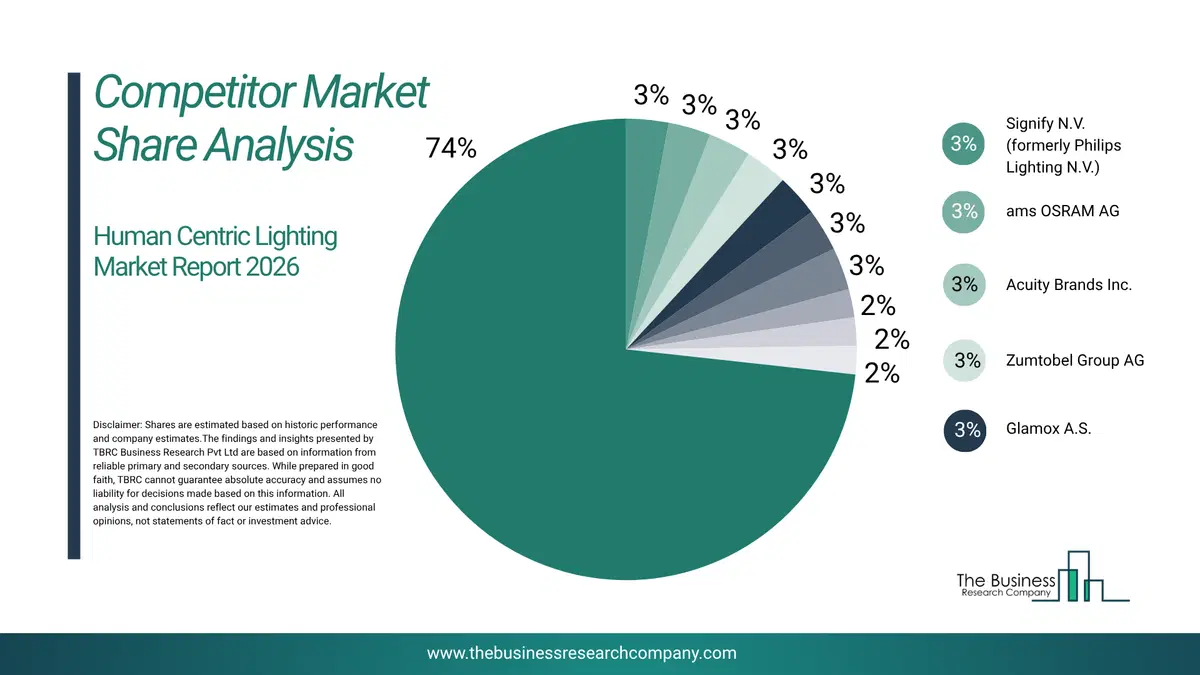
This chart is for illustrative purposes; the full report includes a detailed competitor analysis and comprehensive overview of the top 10 companies in the market.
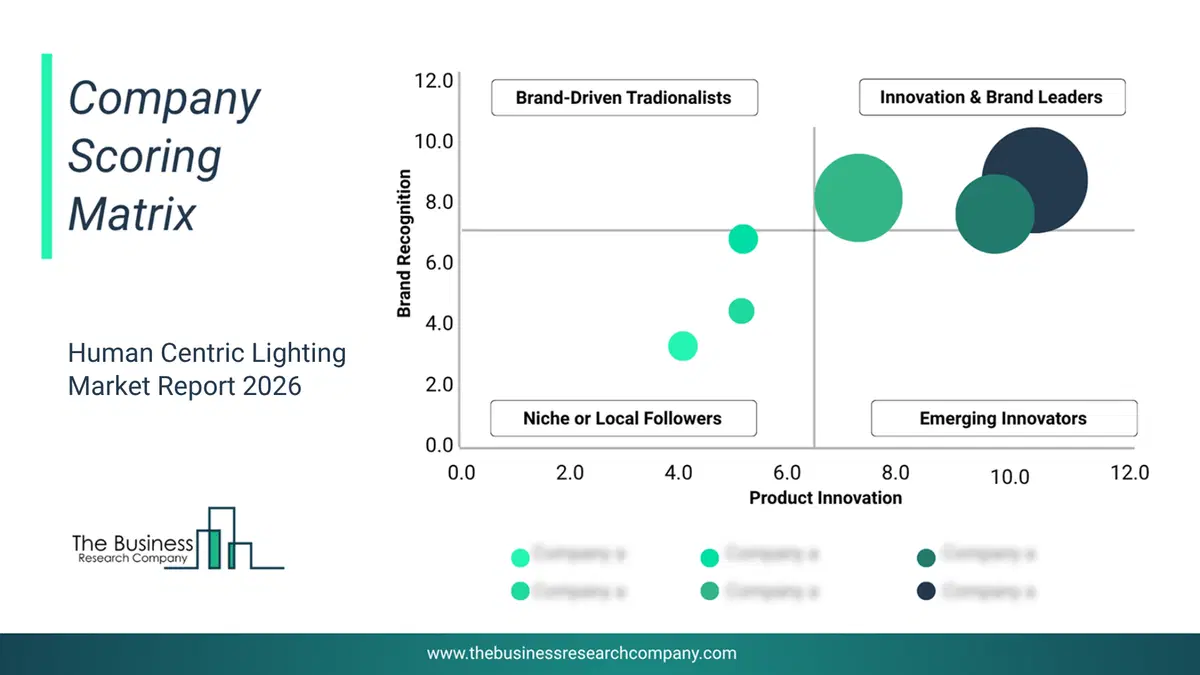
This chart maps companies by product innovation and brand strength, with bubble size indicating relative revenue, helping identify market leaders, challengers, and niche players. This is an illustrative chart; the full report provides a complete and accurate competitive analysis.
Global Human Centric Lighting Market Trends and Insights
Major companies operating in the human-centric lighting market are focused on introducing innovative products such as smart lighting solution to gain a competitive edge. A smart lighting solution refers to an advanced lighting system that uses internet connectivity, sensors, and automation to optimize energy use, improve convenience, and enhance control over lighting environments. For instance, in May 2024, Signify N.V., a Netherlands-based lighting corporation, launched NatureConnect lighting system. NatureConnect is a lighting system that mimics natural sunlight to improve well-being, including better sleep, mood, and focus. It offers customizable, energy-efficient solutions for professional spaces, hospitality, and healthcare.What Are Latest Mergers And Acquisitions In The Human Centric Lighting Market?
In January 2025, LEDVANCE GmbH, a Germany-based global lighting company, acquired Loblicht GmbH for an undisclosed amount. With this acquisition, LEDVANCE’s aim is to expand its brand portfolio and strengthen its presence in the German and European lighting markets, enhancing its range of innovative and high-quality lighting solutions. Loblicht GmbH is a Germany-based company that provides products and solutions that fall under the category of human-centric lighting (HCL).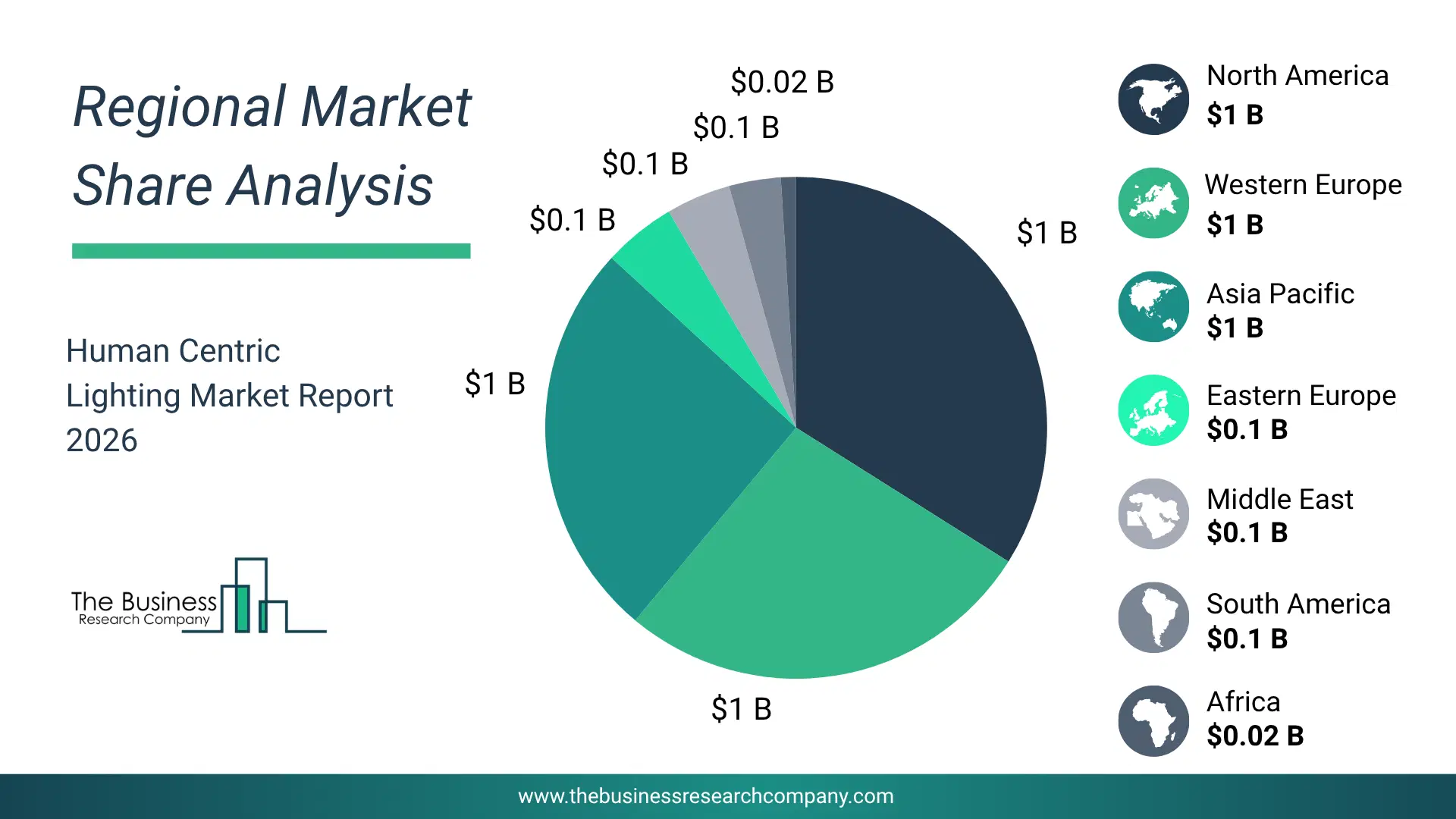
Regional Outlook
North America was the largest region in the human centric lighting market in 2025. Asia-Pacific is expected to be the fastest-growing region in the forecast period. The regions covered in this market report are Asia-Pacific, South East Asia, Western Europe, Eastern Europe, North America, South America, Middle East, Africa. The countries covered in this market report are Australia, Brazil, China, France, Germany, India, Indonesia, Japan, Taiwan, Russia, South Korea, UK, USA, Canada, Italy, Spain.What Defines the Human Centric Lighting Market?
The human-centric lighting market consists of revenues earned by entities by providing services such as consultation and assessment, design and customization, installation and integration, and performance monitoring and reporting. The market value includes the value of related goods sold by the service provider or included within the service offering. The human-centric lighting market also includes sales of dynamic lighting controls, biodynamic lighting systems, lighting management systems (LMS), occupancy and daylight sensors, and lighting design software. Values in this market are ‘factory gate’ values, that is the value of goods sold by the manufacturers or creators of the goods, whether to other entities (including downstream manufacturers, wholesalers, distributors and retailers) or directly to end customers. The value of goods in this market includes related services sold by the creators of the goods.How is Market Value Defined and Measured?
The market value is defined as the revenues that enterprises gain from the sale of goods and/or services within the specified market and geography through sales, grants, or donations in terms of the currency (in USD unless otherwise specified). The revenues for a specified geography are consumption values that are revenues generated by organizations in the specified geography within the market, irrespective of where they are produced. It does not include revenues from resales along the supply chain, either further along the supply chain or as part of other products.
This chart presents market attractiveness based on a quantitative evaluation of growth, competition, strategic alignment, and risk, offering a clear view of opportunity areas for decision-making. This chart is for illustrative purposes; the full report contains the complete analysis.

This chart highlights the Total Addressable Market (TAM) by estimating the maximum revenue opportunity using an assumption-driven approach, supporting strategic planning and opportunity sizing across markets. The chart is illustrative; the full report provides a more comprehensive analysis.
What Key Data and Analysis Are Included in the Human Centric Lighting Market Report 2026?
The human centric lighting market research report is one of a series of new reports from The Business Research Company that provides market statistics, including industry global market size, regional shares, competitors with the market share, detailed market segments, market trends and opportunities, and any further data you may need to thrive in the human centric lighting industry. The market research report delivers a complete perspective of everything you need, with an in-depth analysis of the current and future state of the industry.Human Centric Lighting Market Report 2026 Market Report Forecast Analysis
| Report Attribute | Details |
|---|---|
| Market Size Value In 2026 | $3.51 billion |
| Revenue Forecast In 2030 | $8.32 billion |
| Growth Rate | CAGR of 27.0% from 2026 to 2030 |
| Base Year For Estimation | 2025 |
| Actual Estimates/Historical Data | 2020-2025 |
| Forecast Period | 2026 - 2030 - 2035 |
| Market Representation | Revenue in USD Billion and CAGR from 2026 to 2030 |
| Segments Covered | Component, Installation Type, Application |
| Regional Scope | Asia-Pacific, Western Europe, Eastern Europe, North America, South America, Middle East, Africa |
| Country Scope | The countries covered in the report are Australia, Brazil, China, France, Germany, India, Indonesia, Japan, Taiwan, Russia, South Korea, UK, USA, Canada, Italy, Spain. |
| Key Companies Profiled | Eaton Corporation, Legrand, Signify, Hubbell Incorporated, Acuity Brands Inc., Osram GmbH, Zumtobel Group AG, LEDVANCE GmbH, Seoul Semiconductor Co. Ltd., Fagerhult Group, Trilux GmbH & Co. KG, Lutron Electronics Co. Inc., Cree Lighting, ERCO GmbH, Schréder Group, Beghelli S.p.A., Helvar Ltd., Delta Light NV, GE Lighting, Xicato Inc., OMS Lighting, Herbert Waldmann GmbH & Co. KG |
| Customization Scope | Request for Customization |
| Pricing And Purchase Options | Explore Purchase Options |