

Human Epidermal Growth Factor Market Report 2026
Global Outlook – By Product Type (Recombinant Human Epidermal Growth Factor, Natural Human Epidermal Growth Factor), By Formulation (Injectable Form, Topical Form, Oral Form), By Distribution Channel (Direct Sales, Online Pharmacies, Retail Pharmacies, Hospital Pharmacies, Specialty Clinics), By Application (Dermatology, Oncology, Ophthalmology, Wound Healing, Cosmetic Procedures), By End-User (Hospitals, Clinics, Research Institutes, Other End-Users) - Market Size, Trends, Strategies, and Forecast to 2030
Human Epidermal Growth Factor Market Overview
• Human Epidermal Growth Factor market size has reached to $2.39 billion in 2025 • Expected to grow to $3.66 billion in 2030 at a compound annual growth rate (CAGR) of 8.9% • Growth Driver: Rising Clinical Trials Fuel Growth In The Market Due To Need For Advanced Wound Healing Therapies • Market Trend: AI-Driven IHC Solutions Enhancing Precision In HER2 Biomarker Detection • North America was the largest region in 2025 and Asia-Pacific is the fastest growing region.What Is Covered Under Human Epidermal Growth Factor Market?
Human epidermal growth factor (EGF) is a protein that promotes cell growth, proliferation, and differentiation by binding to the epidermal growth factor receptor (EGFR). It helps accelerate wound healing by stimulating the migration and proliferation of skin cells, such as keratinocytes and fibroblasts, which are essential for closing wounds and rebuilding tissue. The main product types of human epidermal growth factor are recombinant human epidermal growth factor and natural human epidermal growth factor. Recombinant human epidermal growth factor (rhEGF) is a bioengineered protein designed to stimulate cell growth and support tissue repair. It is formulated in various forms, including injectable, topical, and oral. These are distributed through various distribution channels such as direct sales, online pharmacies, retail pharmacies, hospital pharmacies, and specialty clinics. Key application areas span dermatology, oncology, ophthalmology, wound healing, and cosmetic procedures. These are used by various end-users such as hospitals, clinics, research institutes, and other healthcare facilities.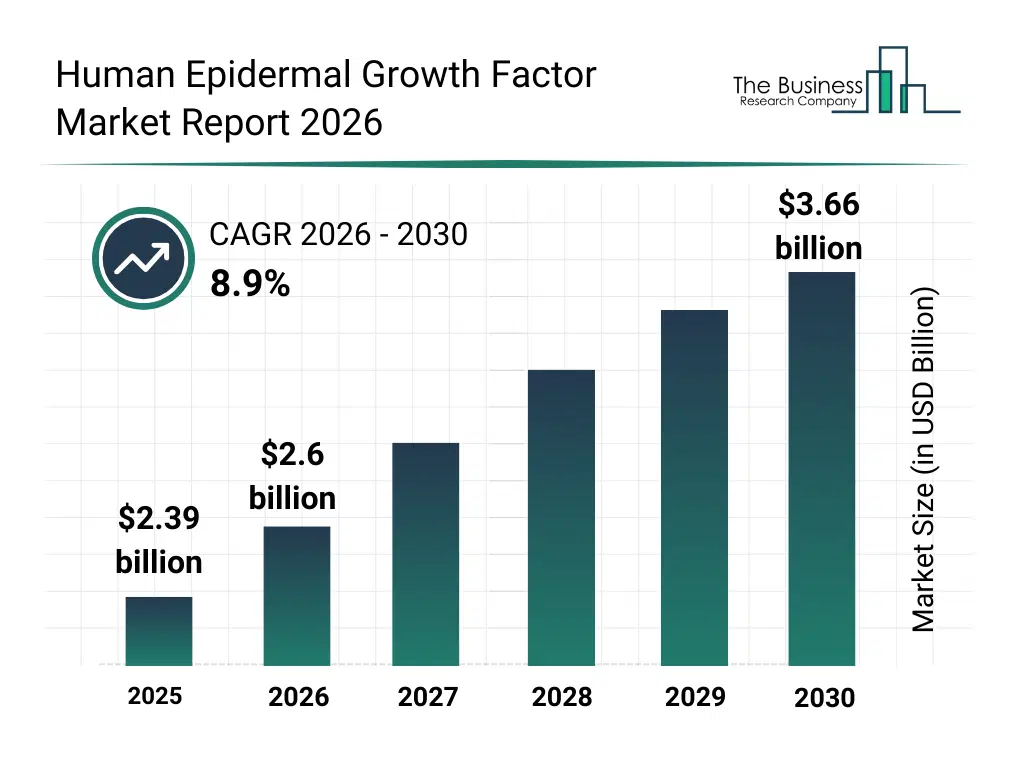
What Is The Human Epidermal Growth Factor Market Size and Share 2026?
The human epidermal growth factor market size has grown strongly in recent years. It will grow from $2.39 billion in 2025 to $2.6 billion in 2026 at a compound annual growth rate (CAGR) of 9.2%. The growth in the historic period can be attributed to expansion of wound care treatment needs, increasing use of biologics in dermatology, advancements in protein purification technologies, growth of regenerative medicine research, rising clinical adoption of growth factor therapies.What Is The Human Epidermal Growth Factor Market Growth Forecast?
The human epidermal growth factor market size is expected to see strong growth in the next few years. It will grow to $3.66 billion in 2030 at a compound annual growth rate (CAGR) of 8.9%. The growth in the forecast period can be attributed to increasing demand for tissue regeneration therapies, rising investments in biologics manufacturing, expansion of cosmetic and aesthetic procedures, growing focus on precision biologics, increasing research into novel growth factor applications. Major trends in the forecast period include increasing use of recombinant growth factors, rising adoption in advanced wound care, growing application in dermatology and aesthetic medicine, expansion of clinical research in regenerative therapies, enhanced focus on high-purity biologic formulations.
Global Human Epidermal Growth Factor Market Segmentation
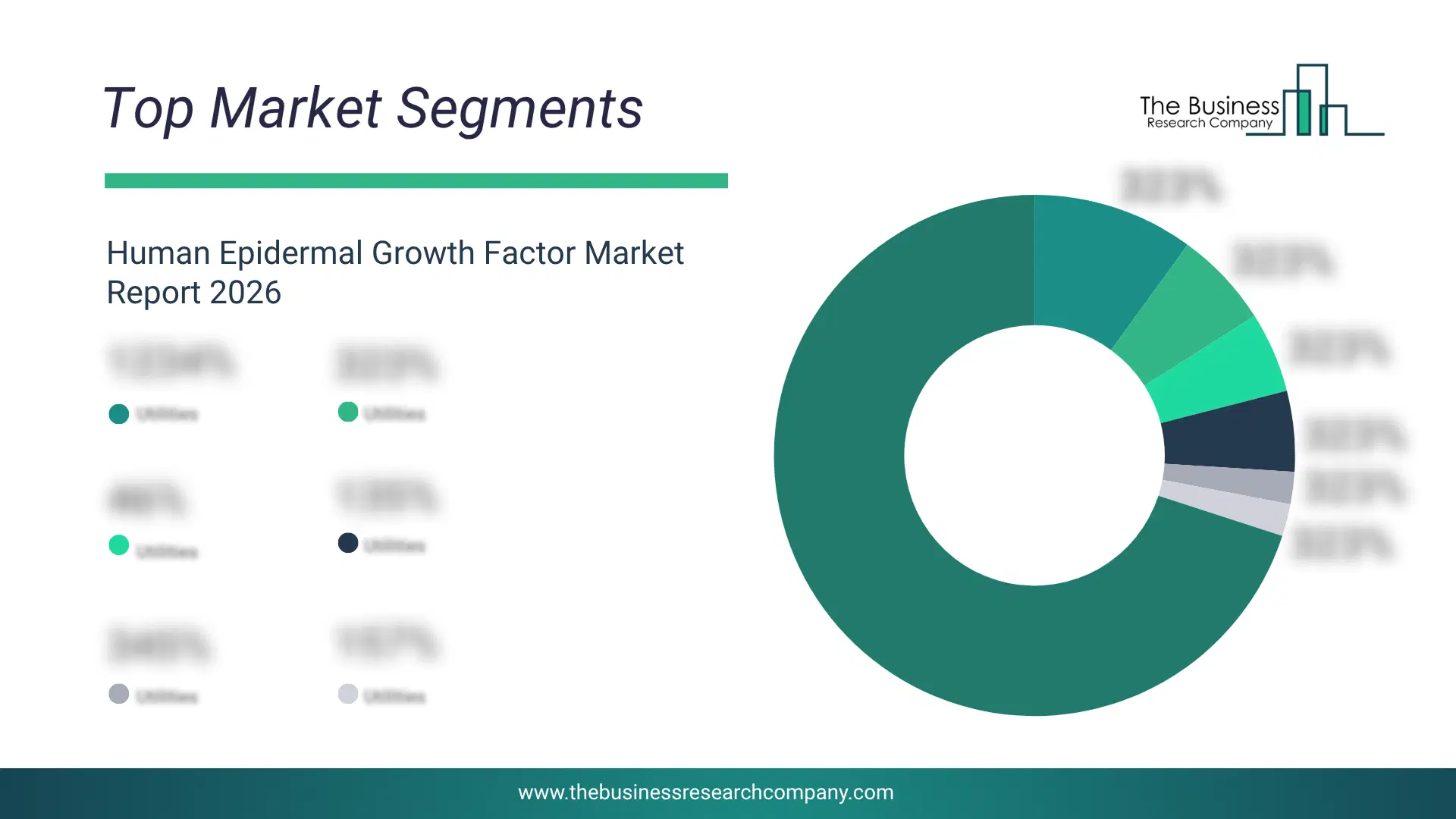
1) By Product Type: Recombinant Human Epidermal Growth Factor, Natural Human Epidermal Growth Factor 2) By Formulation: Injectable Form, Topical Form, Oral Form 3) By Distribution Channel: Direct Sales, Online Pharmacies, Retail Pharmacies, Hospital Pharmacies, Specialty Clinics 4) By Application: Dermatology, Oncology, Ophthalmology, Wound Healing, Cosmetic Procedures 5) By End-User: Hospitals, Clinics, Research Institutes, Other End-Users Subsegments: 1) By Recombinant Human Epidermal Growth Factor: Injectable Solutions, Oncology Therapeutics, Eye Drops, Wound Healing Agents 2) By Natural Human Epidermal Growth Factor: Plasma-Derived Products, Colostrum-Based Products, Amniotic Fluid-Derived Products, Salivary-Derived FormulationsWhat Is The Driver Of The Human Epidermal Growth Factor Market?
The increasing clinical trials are expected to propel the growth of the human epidermal growth factor market going forward. Clinical trials are research studies conducted on humans to evaluate the safety, effectiveness, and side effects of medical treatments or interventions. Clinical trials are increasing due to the growing demand for personalized and innovative treatments that require rigorous testing for safety and efficacy. Human epidermal growth factor (hEGF) aids clinical trials by promoting cell growth and tissue repair, enabling evaluation of therapies for wound healing, skin regeneration, and related conditions. For instance, in December 2024, according to the Association of the British Pharmaceutical Industry, a UK-based government and NHS organisation to improve patient access to new treatments, reported that the total number of industry clinical trials initiated in the UK increased, up from 411 trials in 2022 to 426 in 2023. Therefore, the increasing clinical trials are driving the growth of the human epidermal growth factor industry.Human Epidermal Growth Factor industry Driver: Rising Adoption Of Personalized Medicine Driving Growth In The Market Due To Advancements in Genomic Technologies And Targeted Therapy Approaches
The rising use of personalized medicine is expected to propel the growth of the human epidermal growth factor market going forward. Personalized medicine is a healthcare approach that tailors medical treatment to an individual's genetic profile, lifestyle, and environment for more precise and effective care. Personalized medicine is increasing due to advances in genomic technologies that enable faster, cheaper, and more precise identification of individual genetic profiles for tailored treatments. Human epidermal growth factor supports personalized medicine by enabling precise targeting of EGFR-driven pathways, helping clinicians tailor therapies based on an individual’s tumor biology to improve treatment effectiveness and reduce unnecessary side effects. For instance, in February 2024, the Personalized Medicine Coalition, a US-based non-profit organization, reported that in 2023, the FDA approved 16 new personalized treatments for rare disease patients, up from six in 2022. Therefore, the rising use of personalized medicine is driving the growth of the human epidermal growth factor industry.Key Players In The Global Human Epidermal Growth Factor Market
Major companies operating in the human epidermal growth factor market are Pfizer Inc, Johnson & Johnson Services Inc, F. Hoffmann-La Roche AG, Merck & Co. Inc., Bayer AG, AstraZeneca plc, Novartis AG, GlaxoSmithKline Plc, Amgen Inc, Lonza Group AG, STEMCELL Technologies, Abcam plc, BioLegend Inc, RayBiotech Inc, Enzo Life Sciences Inc, Neocutis S.A, Proteintech Group Inc, Creative BioMart Co. Ltd, Abbkine Scientific Co. Ltd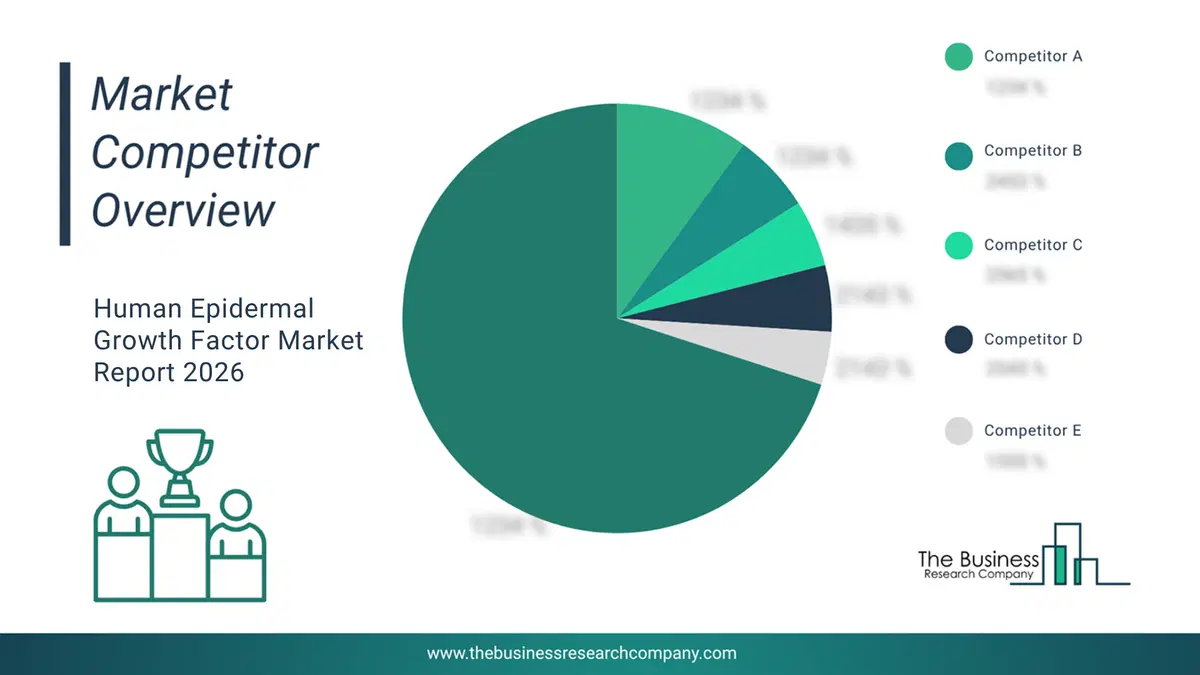
This chart is for illustrative purposes; the full report includes a detailed competitor analysis and comprehensive overview of the top 10 companies in the market.
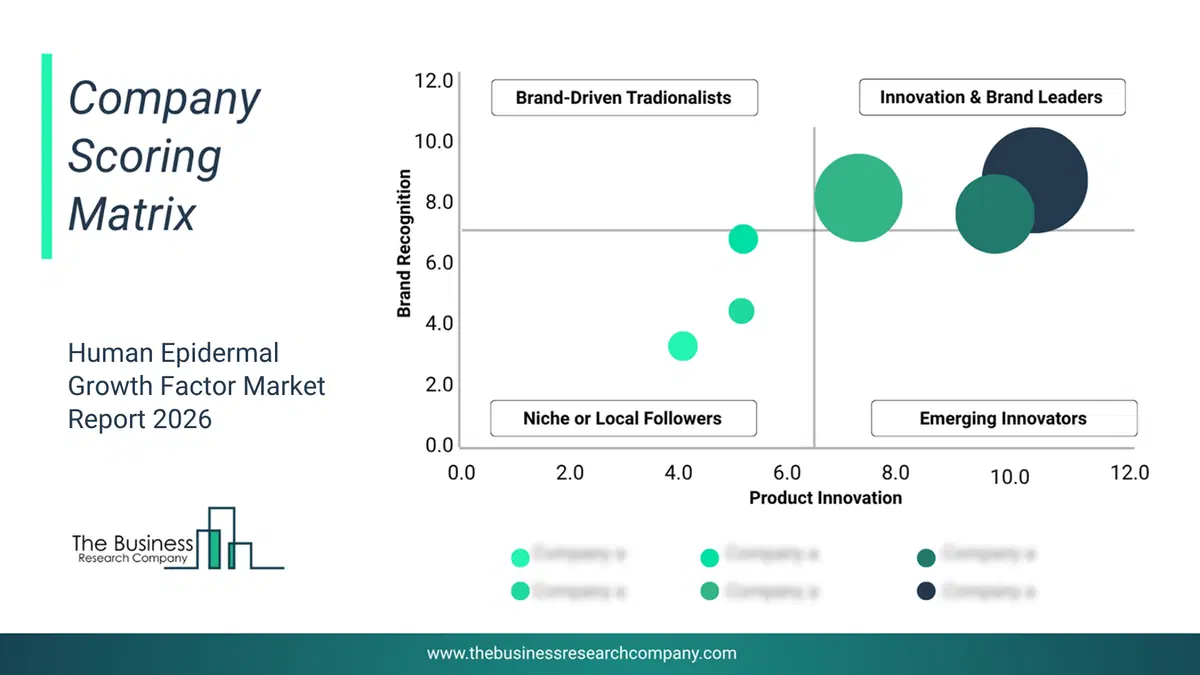
This chart maps companies by product innovation and brand strength, with bubble size indicating relative revenue, helping identify market leaders, challengers, and niche players. This is an illustrative chart; the full report provides a complete and accurate competitive analysis.
Global Human Epidermal Growth Factor Market Trends and Insights
Major companies operating in the human epidermal growth factor market are focusing on developing technological advancements such as an AI-powered immunohistochemistry (IHC) scoring solution to improve the precision, speed, and reproducibility of biomarker detection and cancer diagnostics. An AI-powered immunohistochemistry (IHC) scoring solution refers to a technology that uses artificial intelligence algorithms to automatically analyze and quantify protein expression in tissue samples stained through IHC, enhancing accuracy, consistency, and speed in diagnostic pathology. For instance, in September 2023, Ibex Medical Analytics, an Israel-based company, launched an Ibex Breast HER2. This increases the precision and consistency of HER2 biomarker scoring in breast cancer, especially in challenging HER2-low cases, enabling optimized treatment pathways and improved patient outcomes. Its main benefits are highly accurate, reproducible, and efficient HER2 IHC scoring, supporting pathologists in making confident, objective decisions for targeted therapy selection.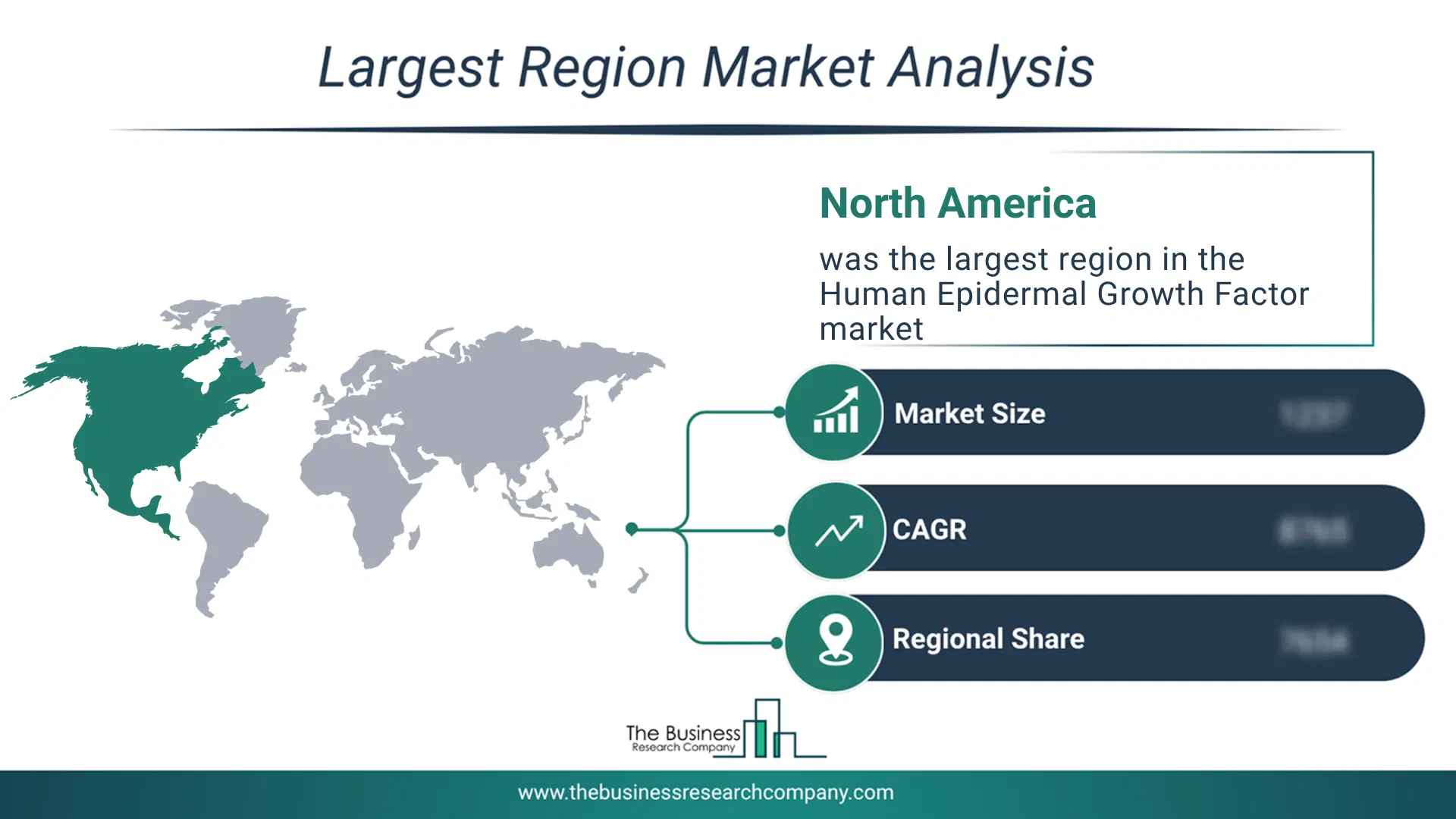
Regional Outlook
North America was the largest region in the human epidermal growth factor market in 2025. Asia-Pacific is expected to be the fastest-growing region in the forecast period. The regions covered in this market report are Asia-Pacific, South East Asia, Western Europe, Eastern Europe, North America, South America, Middle East, Africa. The countries covered in this market report are Australia, Brazil, China, France, Germany, India, Indonesia, Japan, Taiwan, Russia, South Korea, UK, USA, Canada, Italy, Spain.What Defines the Human Epidermal Growth Factor Market?
The human epidermal growth factor market consists of sales of skincare serums and creams, wound-healing gels and ointments, and hair growth treatments. Values in this market are ‘factory gate’ values, that is, the value of goods sold by the manufacturers or creators of the goods, whether to other entities (including downstream manufacturers, wholesalers, distributors, and retailers) or directly to end customers. The value of goods in this market includes related services sold by the creators of the goods.How is Market Value Defined and Measured?
The market value is defined as the revenues that enterprises gain from the sale of goods and/or services within the specified market and geography through sales, grants, or donations in terms of the currency (in USD unless otherwise specified). The revenues for a specified geography are consumption values that are revenues generated by organizations in the specified geography within the market, irrespective of where they are produced. It does not include revenues from resales along the supply chain, either further along the supply chain or as part of other products.
This chart presents market attractiveness based on a quantitative evaluation of growth, competition, strategic alignment, and risk, offering a clear view of opportunity areas for decision-making. This chart is for illustrative purposes; the full report contains the complete analysis.

This chart highlights the Total Addressable Market (TAM) by estimating the maximum revenue opportunity using an assumption-driven approach, supporting strategic planning and opportunity sizing across markets. The chart is illustrative; the full report provides a more comprehensive analysis.
What Key Data and Analysis Are Included in the Human Epidermal Growth Factor Market Report 2026?
The human epidermal growth factor market research report is one of a series of new reports from The Business Research Company that provides market statistics, including industry global market size, regional shares, competitors with the market share, detailed market segments, market trends and opportunities, and any further data you may need to thrive in the human epidermal growth factor industry. The market research report delivers a complete perspective of everything you need, with an in-depth analysis of the current and future state of the industry.Human Epidermal Growth Factor Market Report Forecast Analysis
| Report Attribute | Details |
|---|---|
| Market Size Value In 2026 | $2.6 billion |
| Revenue Forecast In 2030 | $3.66 billion |
| Growth Rate | CAGR of 8.9% from 2026 to 2030 |
| Base Year For Estimation | 2025 |
| Actual Estimates/Historical Data | 2020-2025 |
| Forecast Period | 2026 - 2030 |
| Market Representation | Revenue in USD Billion and CAGR from 2026 to 2030 |
| Segments Covered | Product Type, Formulation, Distribution Channel, Application, End-User |
| Regional Scope | Asia-Pacific, Western Europe, Eastern Europe, North America, South America, Middle East, Africa |
| Country Scope | The countries covered in the report are Australia, Brazil, China, France, Germany, India, Indonesia, Japan, Taiwan, Russia, South Korea, UK, USA, Canada, Italy, Spain |
| Key Companies Profiled | Pfizer Inc, Johnson & Johnson Services Inc, F. Hoffmann-La Roche AG, Merck & Co. Inc., Bayer AG, AstraZeneca plc, Novartis AG, GlaxoSmithKline Plc, Amgen Inc, Lonza Group AG, STEMCELL Technologies, Abcam plc, BioLegend Inc, RayBiotech Inc, Enzo Life Sciences Inc, Neocutis S.A, Proteintech Group Inc, Creative BioMart Co. Ltd, Abbkine Scientific Co. Ltd |
| Customization Scope | Request for Customization |
| Pricing And Purchase Options | Explore Purchase Options |