
Human Serum Albumin Market Report 2026
Global Outlook – By Type Of Preparation (Recombinant Human Serum Albumin, Plasma-Derived Human Serum Albumin), By Formulation Type (Injection Solutions, Lyophilized Powder), By Distribution Channel (Direct Sales, Online Pharmacies, Third-party Distributors, Hospital Pharmacies), By Application (Volume Expanders, Drug Delivery Systems, Nutrition Enhancement, Diagnostic Agents), By End-User (Hospitals, Research Laboratories, Pharmaceutical Companies, Blood Banks) – Market Size, Trends, Strategies, and Forecast to 2030
Human Serum Albumin Market Overview
• Human Serum Albumin market size has reached to $5.79 billion in 2025 • Expected to grow to $8.16 billion in 2030 at a compound annual growth rate (CAGR) of 7% • Growth Driver: Rising Liver Disease Cases Fueling The Growth Of The Market Due To Increasing Obesity-Linked Non-Alcoholic Fatty Liver Disease (NAFLD) Cases • Market Trend: Advancements In Human Serum First Recombinant For Closed-System Biomanufacturing • North America was the largest region in 2025 and Asia-Pacific is the fastest growing region.Market Gains By 2030 – Top Opportunities By Segment
Market Gain identifies the most promising market opportunities by highlighting the segments or products expected to generate the highest incremental revenue growth over the next five years.
What Is Covered Under Human Serum Albumin Market?
Human serum albumin refers to a protein found in human blood plasma that plays a critical role in maintaining oncotic pressure, which helps regulate the exchange of water between blood vessels and body tissues. It is also responsible for transporting hormones, fatty acids, and other compounds, as well as buffering pH and binding various drugs, making it essential for many physiological functions. The main types of preparation of human serum albumin are recombinant human serum albumin and plasma-derived human serum albumin. Recombinant human serum albumin is a lab-made version of human serum albumin produced using genetically modified cells such as yeast or bacteria. The various formulation type involved are injection solutions and lyophilized powder that are distributed though various distribution channels includes direct sales, online pharmacies, third-party distributors and hospital pharmacies through various applications such as volume expanders, drug delivery systems, nutrition enhancement, and diagnostic agents and cater to several end users such as hospitals, research laboratories, pharmaceutical companies, and blood banks.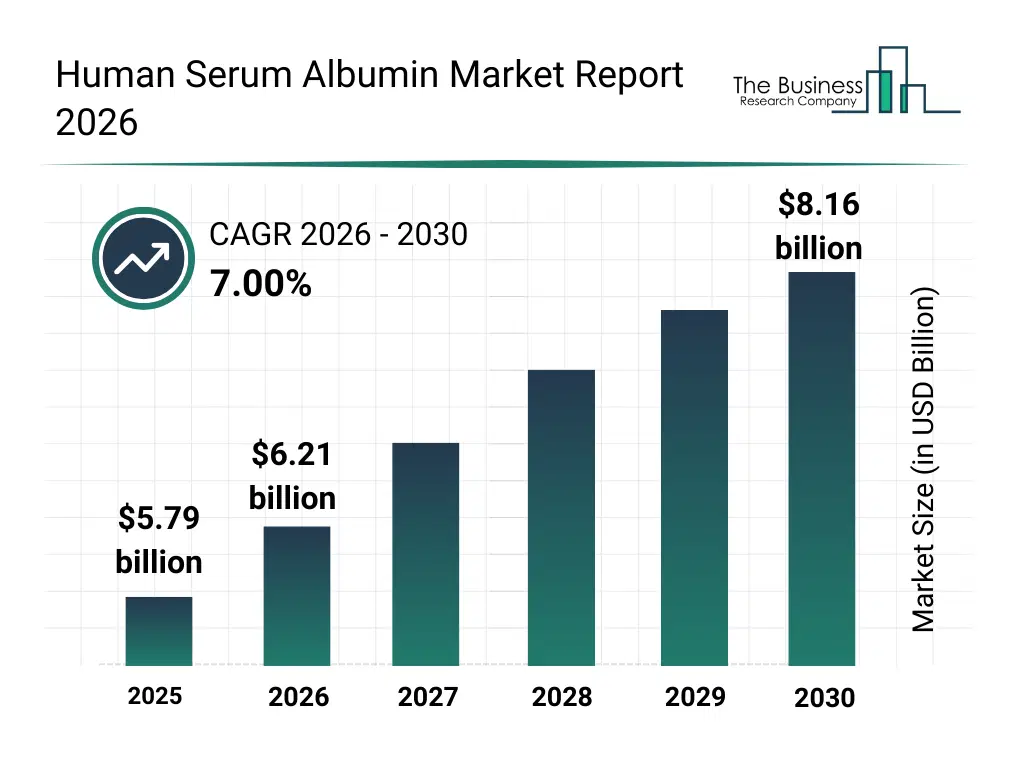
What Is The Human Serum Albumin Market Size and Share 2026?
The human serum albumin market size has grown strongly in recent years. It will grow from $5.79 billion in 2025 to $6.21 billion in 2026 at a compound annual growth rate (CAGR) of 7.3%. The growth in the historic period can be attributed to limited availability of recombinant hsa, reliance on plasma-derived hsa, growing hospital and clinical demand, increasing use in diagnostic and therapeutic applications, adoption of standard injection solutions.What Is The Human Serum Albumin Market Growth Forecast?
The human serum albumin market size is expected to see strong growth in the next few years. It will grow to $8.16 billion in 2030 at a compound annual growth rate (CAGR) of 7.0%. The growth in the forecast period can be attributed to development of yeast, bacterial, and plant-based recombinant hsa, rising demand for fatty acid-free formulations, expansion of drug delivery and nutrition enhancement applications, increasing investment in research laboratories, growth in hospital and blood bank procurement. Major trends in the forecast period include rising demand for plasma-derived and recombinant human serum albumin, growth in use of hsa in volume expanders and drug delivery systems, increasing adoption of lyophilized powder and injection solutions, expansion of hospital and research laboratory applications, focus on fatty acid-free and specialty hsa preparations.
Global Human Serum Albumin Market Segmentation
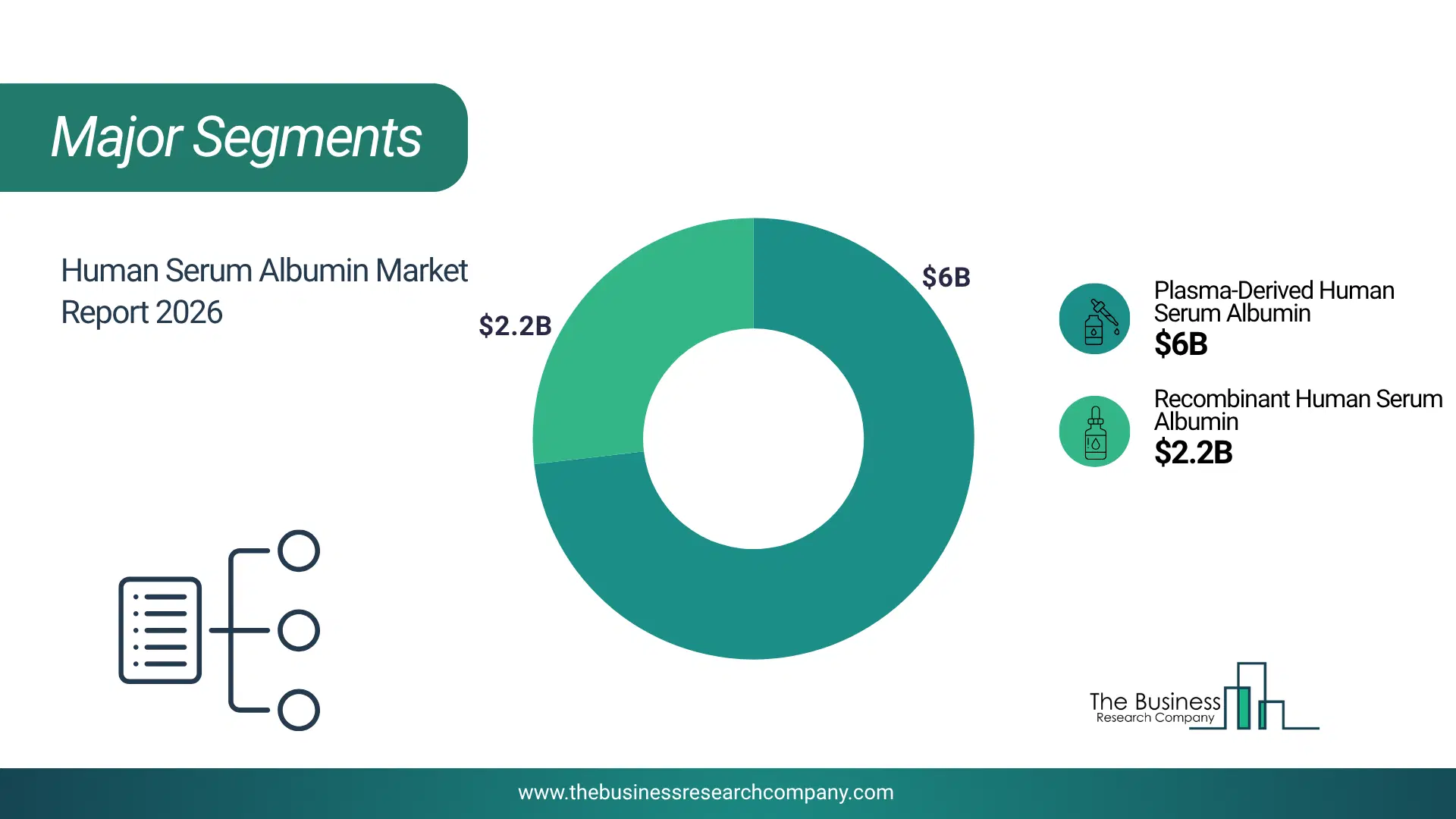
1) By Type Of Preparation: Recombinant Human Serum Albumin, Plasma-Derived Human Serum Albumin 2) By Formulation Type: Injection Solutions, Lyophilized Powder 3) By Distribution Channel: Direct Sales, Online Pharmacies, Third-party Distributors, Hospital Pharmacies 4) By Application: Volume Expanders, Drug Delivery Systems, Nutrition Enhancement, Diagnostic Agents 5) By End-User: Hospitals, Research Laboratories, Pharmaceutical Companies, Blood Banks Subsegments: 1) By Recombinant Human Serum Albumin: Yeast-Based Recombinant Human Serum Albumin, Bacterial-Based Recombinant Human Serum Albumin, Plant-Based Recombinant Human Serum Albumin, Mammalian Cell-Based Recombinant Human Serum Albumin, Insect Cell-Based Recombinant Human Serum Albumin 2) By Plasma-Derived Human Serum Albumin: 5% Human Serum Albumin Solution, 20% Human Serum Albumin Solution, 25% Human Serum Albumin Solution, Lyophilized Human Serum Albumin, Fatty Acid-Free Human Serum Albumin The top segments in the human serum albumin market will be: • Plasma-Derived Human Serum Albumin will reach $5.96 billion by 2030. • Recombinant Human Serum Albumin will reach $2.12 billion by 2030.What Is The Driver Of The Human Serum Albumin Market?
The increasing prevalence of liver diseases is expected to propel the growth of the human serum albumin market going forward. Liver diseases refer to a group of conditions that impair liver function, including hepatitis, fatty liver disease, cirrhosis, and liver cancer. The increase in liver diseases is due to the rising prevalence of obesity, as excess abdominal fat leads to non-alcoholic fatty liver disease (NAFLD), causing fat accumulation, inflammation, and potential liver failure. Human serum albumin helps liver disease by restoring blood volume, reducing fluid buildup, protecting kidney function, and improving outcomes in complications such as ascites and hepatorenal syndrome. For instance, in December 2024, according to a report published by the Office for Health Improvement and Disparities, a UK-based government agency, the number of premature deaths from alcoholic liver disease increased by 3.6% in 2023, reaching 5,984 cases compared with 5,776 in 2022. Therefore, the increasing prevalence of liver diseases is driving the growth of the human serum albumin industry.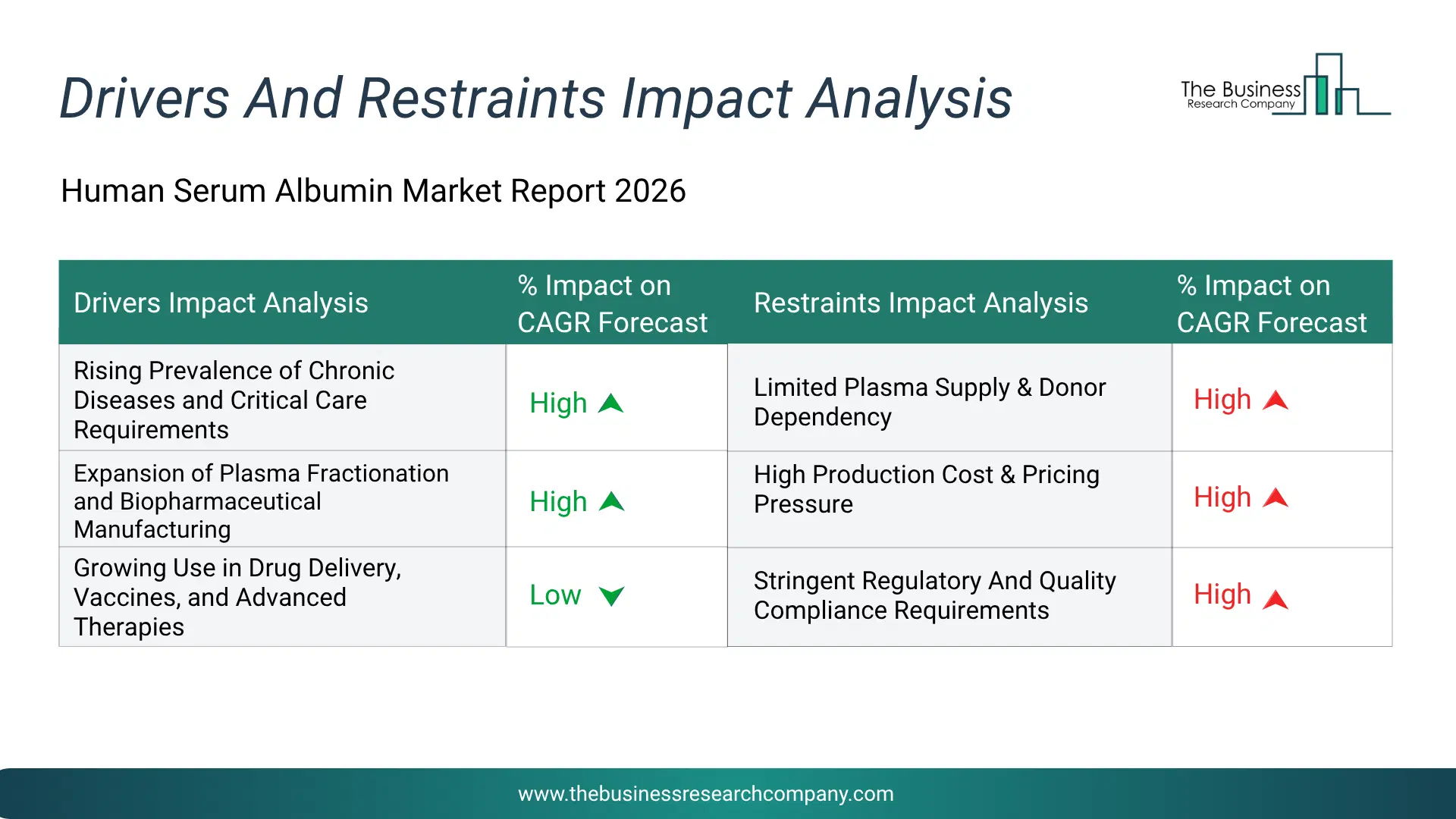
Infographic Chart Showing Key Market Drivers Analysis And Restraints For Human Serum Albumin Market
The chart presents an impact analysis of key drivers and restraints, quantifying their relative influence on the market's growth rate and helping assess the balance between growth enablers and limiting factors. This chart offers a high-level perspective; the full report contains more detailed insights.
How Will The Drivers Impact Growth In The Global Human Serum Albumin Market?
• Rising Prevalence of Chronic Diseases and Critical Care Requirements (High) – During the forecast period, the rising prevalence of chronic diseases and critical care requirements is expected to become a key growth driver for the human serum albumin market by 2030. Increasing incidences of liver disorders, kidney diseases, trauma cases, and severe infections are driving demand for albumin in volume replacement and intensive care treatments. Hospitals are increasingly relying on albumin -based therapies for managing critically ill patients due to their effectiveness in maintaining blood volume and osmotic pressure. This growing clinical dependency is strengthening demand across healthcare systems globally. • Expansion of Plasma Fractionation and Biopharmaceutical Manufacturing (High) – During the forecast period, the expansion of plasma fractionation and biopharmaceutical manufacturing is expected to emerge as a major factor driving the expansion of the human serum albumin market by 2030. Increasing investments in plasma collection centers and fractionation facilities are improving the supply of plasma-derived albumin worldwide. Additionally, advancements in purification technologies and large-scale biologics manufacturing are enhancing production efficiency and product quality. Biopharmaceutical companies are also expanding their product portfolios to include albumin-based formulations. • Growing Use in Drug Delivery, Vaccines, and Advanced Therapies (Low) – During the forecast period, the growing use of human serum albumin in drug delivery, vaccines, and advanced therapies is expected to act as a key growth catalyst for the market by 2030. Albumin is increasingly utilized as a stabilizing and carrier agent in drug formulations, including oncology drugs and vaccines, due to its biocompatibility and long circulation time. Its role in advanced therapies such as cell and gene therapies is also expanding, supporting innovation in precision medicine. Pharmaceutical companies are leveraging albumin to enhance drug efficacy and reduce toxicity.How Will The Restraints Impact Growth In The Global Human Serum Albumin Market?
• Limited Plasma Supply & Donor Dependency (High) – During the forecast period, the the production of plasma-derived albumin depends heavily on voluntary human donors, which creates supply limitations. Plasma collection is a time-consuming and regulated process, making it difficult to scale quickly with rising demand. Any disruption in donor availability can directly impact production volumes. This imbalance between supply and demand restricts market growth potential. As a result, dependence on plasma remains a key structural constraint. • High Production Cost & Pricing Pressure (High) – During the forecast period, the albumin production involves complex fractionation, purification, and safety testing processes, which significantly increase manufacturing costs. These costs are often passed on to end users, making albumin products relatively expensive. In price-sensitive markets, this limits accessibility and adoption, especially for non-critical applications. Healthcare providers may also opt for alternative therapies to reduce expenses. Therefore, high costs create barriers to widespread market penetration. • Stringent Regulatory And Quality Compliance Requirements (High) – During the forecast period, the human serum albumin products are derived from human plasma and must comply with rigorous safety, traceability, and quality standards. Manufacturers are required to implement extensive screening, purification, and validation procedures to minimize contamination risks. Regulatory compliance increases operational complexity and production timelines. These requirements can raise costs and create barriers for new market entrants.Key Players In The Global Human Serum Albumin Market
Major companies operating in the human serum albumin market are Thermo Fisher Scientific Inc., Takeda Pharmaceutical Company Limited, Merck KGaA, CSL Behring (CSL), Baxter International Inc., Grifols SA, Sartorius AG, Octapharma AG, Kedrion Biopharma, Shanghai RAAS Blood Products Co Ltd., Biotest Aktiengesellschaft, LFB Group, Hualan Biological Engineering Inc., Taibang Biologic Group, Kamada Ltd., InVitria Inc., Reliance Life Sciences, Bio Products Laboratory, Mitsubishi Tanabe Pharma, Sichuan Yuanda Shuyang Pharmaceutical Co Ltd.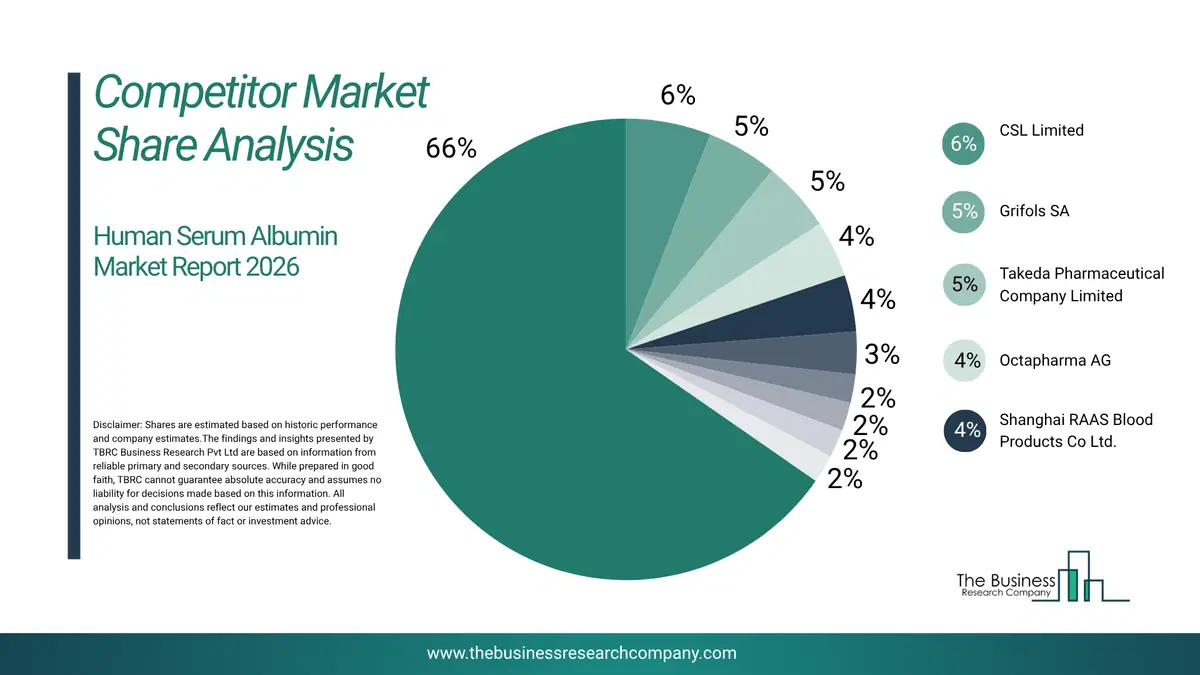
This chart is for illustrative purposes; the full report includes a detailed competitor analysis and comprehensive overview of the top 10 companies in the market.
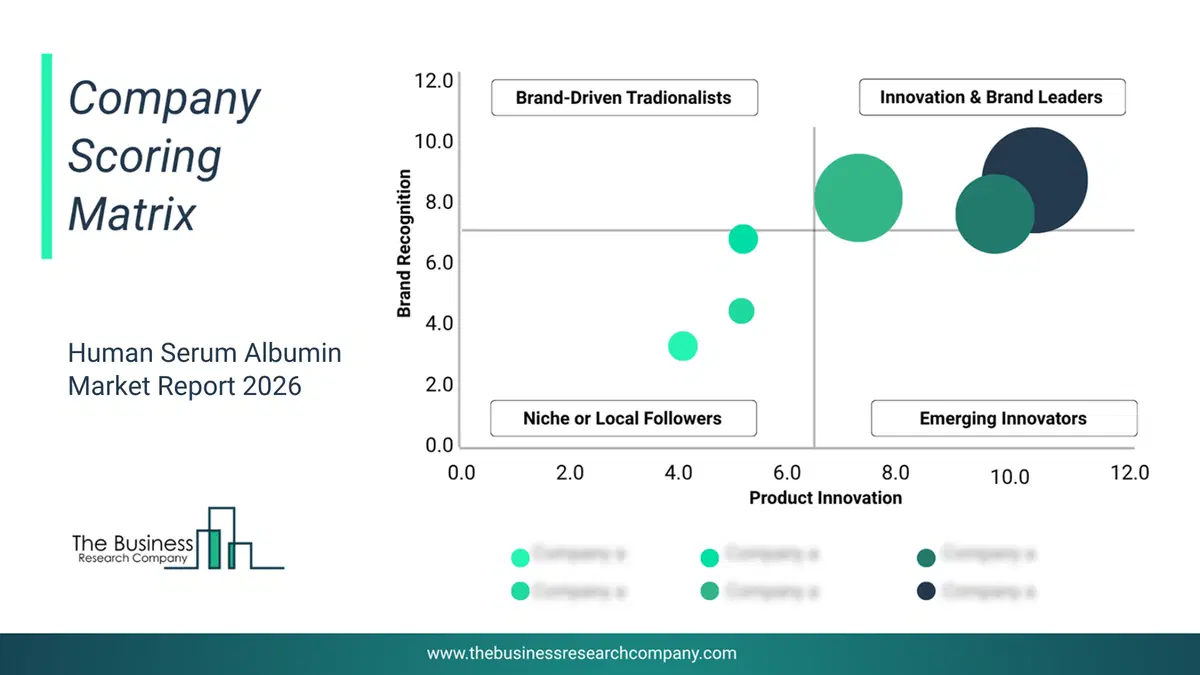
This chart maps companies by product innovation and brand strength, with bubble size indicating relative revenue, helping identify market leaders, challengers, and niche players. This is an illustrative chart; the full report provides a complete and accurate competitive analysis.
Global Human Serum Albumin Market Trends and Insights
Major companies operating in the human serum albumin market are focusing on developing innovative solutions, such as animal-free recombinant excipients, to enhance product safety, scalability, and compliance with regulatory standards in biomanufacturing applications. Animal-free recombinant excipient refers to a biologically engineered inactive substance produced using recombinant DNA technology without any animal- or human-derived components, ensuring high purity and safety in pharmaceutical and biomanufacturing applications. For instance, in April 2025, InVitri Inc., a US-based provider of animal-free, recombinant proteins and excipients, launched Optibumin 25, the first recombinant 25% human serum albumin for closed-system biomanufacturing. It is the first recombinant 25% human serum albumin specifically designed for closed-system biomanufacturing. It is optimized for downstream processing, formulation, and cryopreservation workflows, and is currently available in 100 mL single-use bags. With its animal-origin-free and chemically defined composition, it ensures high purity, consistency, and reduced contamination risks. It is GMP-ready, scalable to commercial production volumes, and offers a stable, sterile solution that integrates seamlessly into applications such as viral vector manufacturing, stem cell preservation, vaccine formulation, and regenerative medicine.What Are Latest Mergers And Acquisitions In The Human Serum Albumin Market?
In June 2024, Proliant Health and Biologicals, a US-based manufacturing company, partnered with Dyadic International Inc. to commercialize animal-free recombinant human serum albumin. With this partnership, Proliant and Dyadic aim to accelerate the production and market availability of scalable, non-animal-sourced albumin for diagnostics, cell-culture, nutrition and therapeutic applications by combining Proliant’s purified-protein manufacturing and commercial channels with Dyadic’s C1 microbial expression platform, while improving supply-chain resilience, reducing reliance on plasma-derived materials, and meeting regulatory and customer demands for GMP-grade recombinant proteins. Dyadic International Inc. is a US-based biotechnology company that specializes in large-scale, microbial production platforms (including the C1 system) for manufacturing recombinant proteins and other ancillary biologics.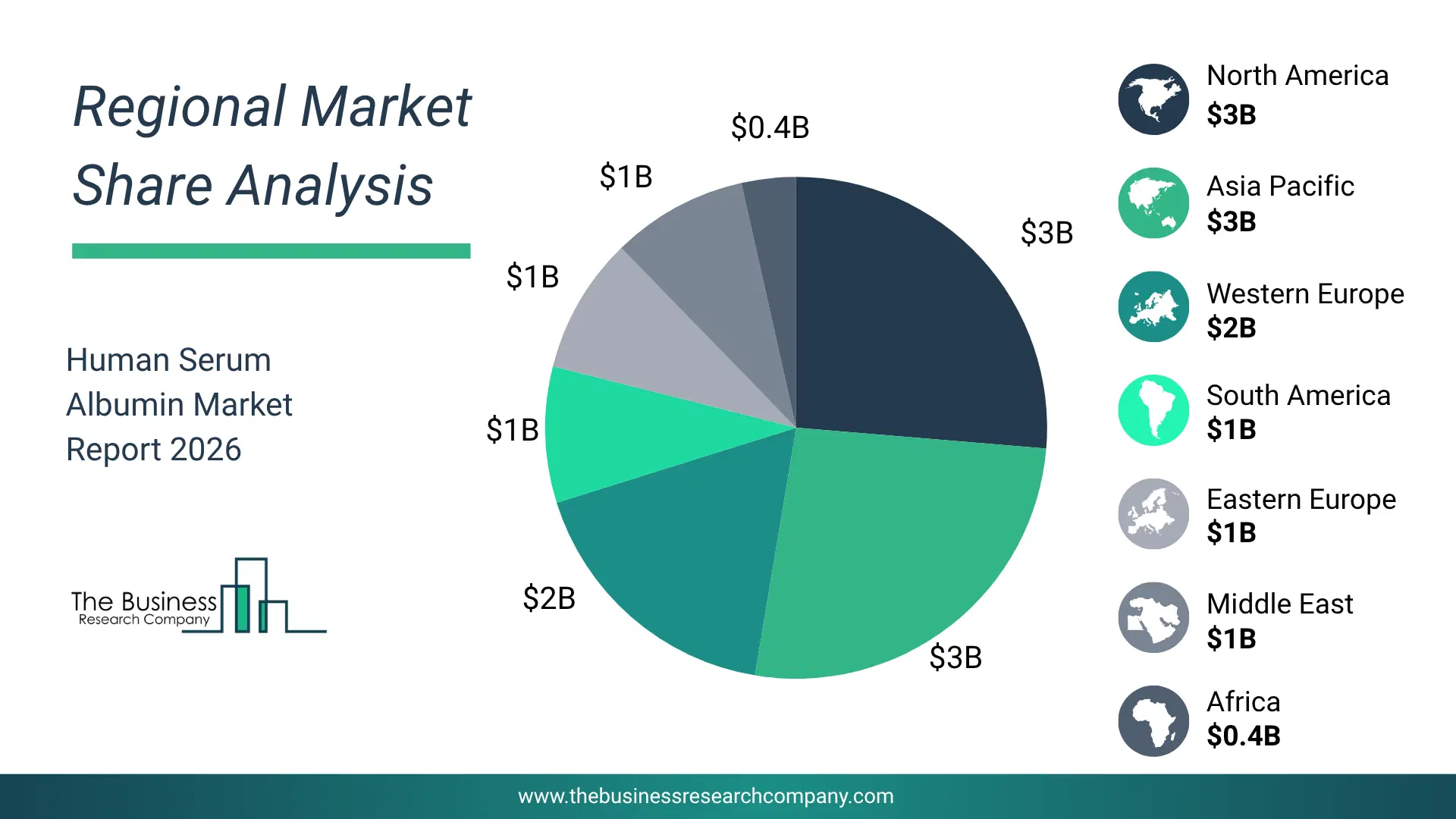
Regional Insights
North America was the largest region in the human serum albumin market in 2025. Asia-Pacific is expected to be the fastest-growing region in the forecast period. The regions covered in this market report are Asia-Pacific, South East Asia, Western Europe, Eastern Europe, North America, South America, Middle East, Africa. The countries covered in this market report are Australia, Brazil, China, France, Germany, India, Indonesia, Japan, Taiwan, Russia, South Korea, UK, USA, Canada, Italy, Spain.What Defines the Human Serum Albumin Market?
The human serum albumin market consists of sales of human serum albumin injection, plasma-derived albumin, albumin-based drug delivery systems, and albumin solutions for cell culture and diagnostics. Values in this market are ‘factory gate’ values, that is, the value of goods sold by the manufacturers or creators of the goods, whether to other entities (including downstream manufacturers, wholesalers, distributors, and retailers) or directly to end customers. The value of goods in this market includes related services sold by the creators of the goods.How is Market Value Defined and Measured?
The market value is defined as the revenues that enterprises gain from the sale of goods and/or services within the specified market and geography through sales, grants, or donations in terms of the currency (in USD unless otherwise specified). The revenues for a specified geography are consumption values that are revenues generated by organizations in the specified geography within the market, irrespective of where they are produced. It does not include revenues from resales along the supply chain, either further along the supply chain or as part of other products.
This chart presents market attractiveness based on a quantitative evaluation of growth, competition, strategic alignment, and risk, offering a clear view of opportunity areas for decision-making. This chart is for illustrative purposes; the full report contains the complete analysis.

This chart highlights the Total Addressable Market (TAM) by estimating the maximum revenue opportunity using an assumption-driven approach, supporting strategic planning and opportunity sizing across markets. The chart is illustrative; the full report provides a more comprehensive analysis.
What Key Data and Analysis Are Included in the Human Serum Albumin Market Report 2026?
The human serum albumin market research report is one of a series of new reports from The Business Research Company that provides market statistics, including industry global market size, regional shares, competitors with the market share, detailed market segments, market trends and opportunities, and any further data you may need to thrive in the human serum albumin industry. The market research report delivers a complete perspective of everything you need, with an in-depth analysis of the current and future state of the industry.Human Serum Albumin Market Report Forecast Analysis
| Report Attribute | Details |
|---|---|
| Market Size Value In 2026 | $6.21 billion |
| Revenue Forecast In 2030 | $8.16 billion |
| Growth Rate | CAGR of 7% from 2026 to 2030 |
| Base Year For Estimation | 2025 |
| Actual Estimates/Historical Data | 2020-2025 |
| Forecast Period | 2026 - 2030 |
| Market Representation | Revenue in USD Billion and CAGR from 2026 to 2030 |
| Segments Covered | Type Of Preparation, Formulation Type, Distribution Channel, Application, End-User |
| Regional Scope | Asia-Pacific, Western Europe, Eastern Europe, North America, South America, Middle East, Africa |
| Country Scope | The countries covered in the report are Australia, Brazil, China, France, Germany, India, ... |
| Key Companies Profiled | Thermo Fisher Scientific Inc., Takeda Pharmaceutical Company Limited, Merck KGaA, CSL Behring (CSL), Baxter International Inc., Grifols SA, Sartorius AG, Octapharma AG, Kedrion Biopharma, Shanghai RAAS Blood Products Co Ltd., Biotest Aktiengesellschaft, LFB Group, Hualan Biological Engineering Inc., Taibang Biologic Group, Kamada Ltd., InVitria Inc., Reliance Life Sciences, Bio Products Laboratory, Mitsubishi Tanabe Pharma, Sichuan Yuanda Shuyang Pharmaceutical Co Ltd. |
| Customization Scope | Request for Customization |
| Pricing And Purchase Options | Explore Purchase Options |