

Humanoid Robot Market Report 2026
Global Outlook – By Component (Hardware, Software, Services), By Motion Type (Biped, Wheel Drive), By Application (Education And Entertainment, Research And Space Exploration, Personal Assistance And Caregiving, Search And Rescue, Public Relations, Other Applications) – Market Size, Trends, Strategies, and Forecast to 2030
Humanoid Robot Market Overview
• Humanoid Robot market size has reached to $5.44 billion in 2025 • Expected to grow to $39 billion in 2030 at a compound annual growth rate (CAGR) of 47.1% • Growth Driver: Surging Demand For Humanoid Robots Driven By The Rise Of Industrial Automation • Market Trend: Collaborative Humanoid Robot Redefining Efficiency In Warehouse Operations • North America was the largest region in 2025 and Asia-Pacific is the fastest growing region.Market Gains By 2030 – Top Opportunities By Segment
Market Gain identifies the most promising market opportunities by highlighting the segments or products expected to generate the highest incremental revenue growth over the next five years.
What Is Covered Under Humanoid Robot Market?
Humanoid robots refer to robots designed to resemble and mimic human physical characteristics, behaviors, and capabilities. These robots interact and perform tasks familiar to humans, making them more approachable and easier to work with in human environments. The main types of humanoid robot components are hardware, software, and services. Hardware refers to the physical components of a system that can be touched or viewed. The various motion types are biped, and wheel drive applied in education and entertainment, research and space exploration, personal assistance and caregiving, search and rescue, public relations, and others.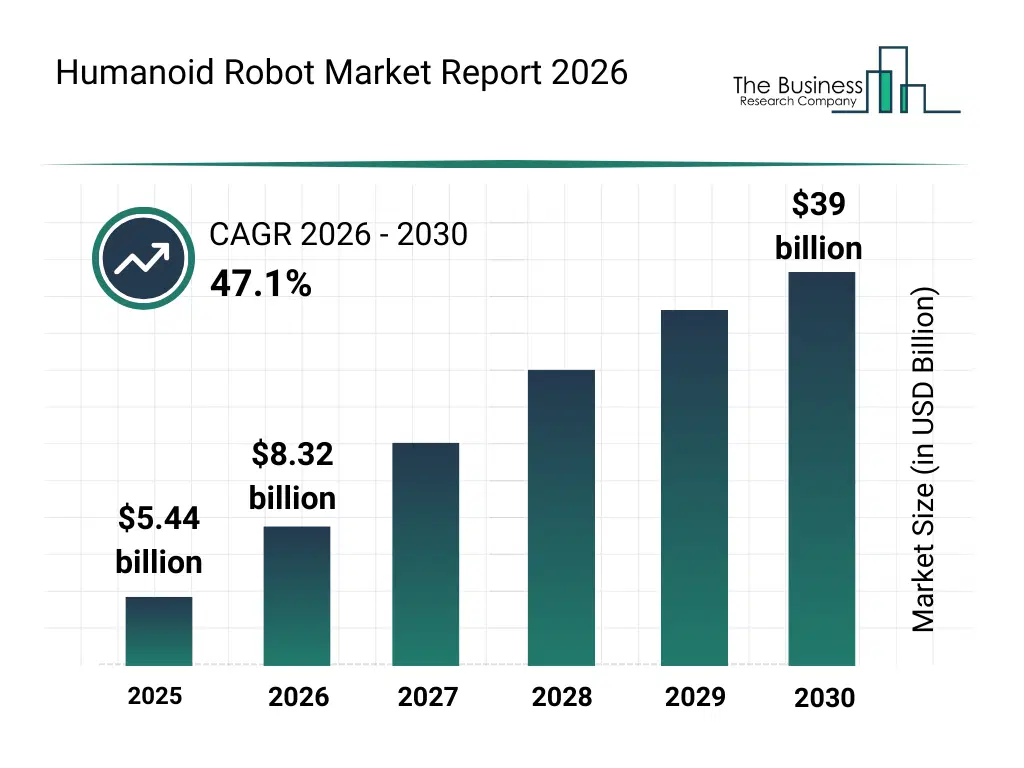
What Is The Humanoid Robot Market Size and Share 2026?
The humanoid robot market size has grown exponentially in recent years. It will grow from $5.44 billion in 2025 to $8.32 billion in 2026 at a compound annual growth rate (CAGR) of 52.9%. The growth in the historic period can be attributed to research investments in robotics, early adoption in education and labs, defense and space research programs, academic humanoid platforms, pilot service robot deployments.What Is The Humanoid Robot Market Growth Forecast?
The humanoid robot market size is expected to see exponential growth in the next few years. It will grow to $39 billion in 2030 at a compound annual growth rate (CAGR) of 47.1%. The growth in the forecast period can be attributed to expansion of ai capabilities, aging population support needs, demand for service automation, declining sensor costs, commercialization of humanoid platforms. Major trends in the forecast period include advancements in human-like motion control, growing use in service and assistance roles, integration of multimodal human robot interaction, expansion of research and educational deployments, focus on safety and collaborative design.
Global Humanoid Robot Market Segmentation
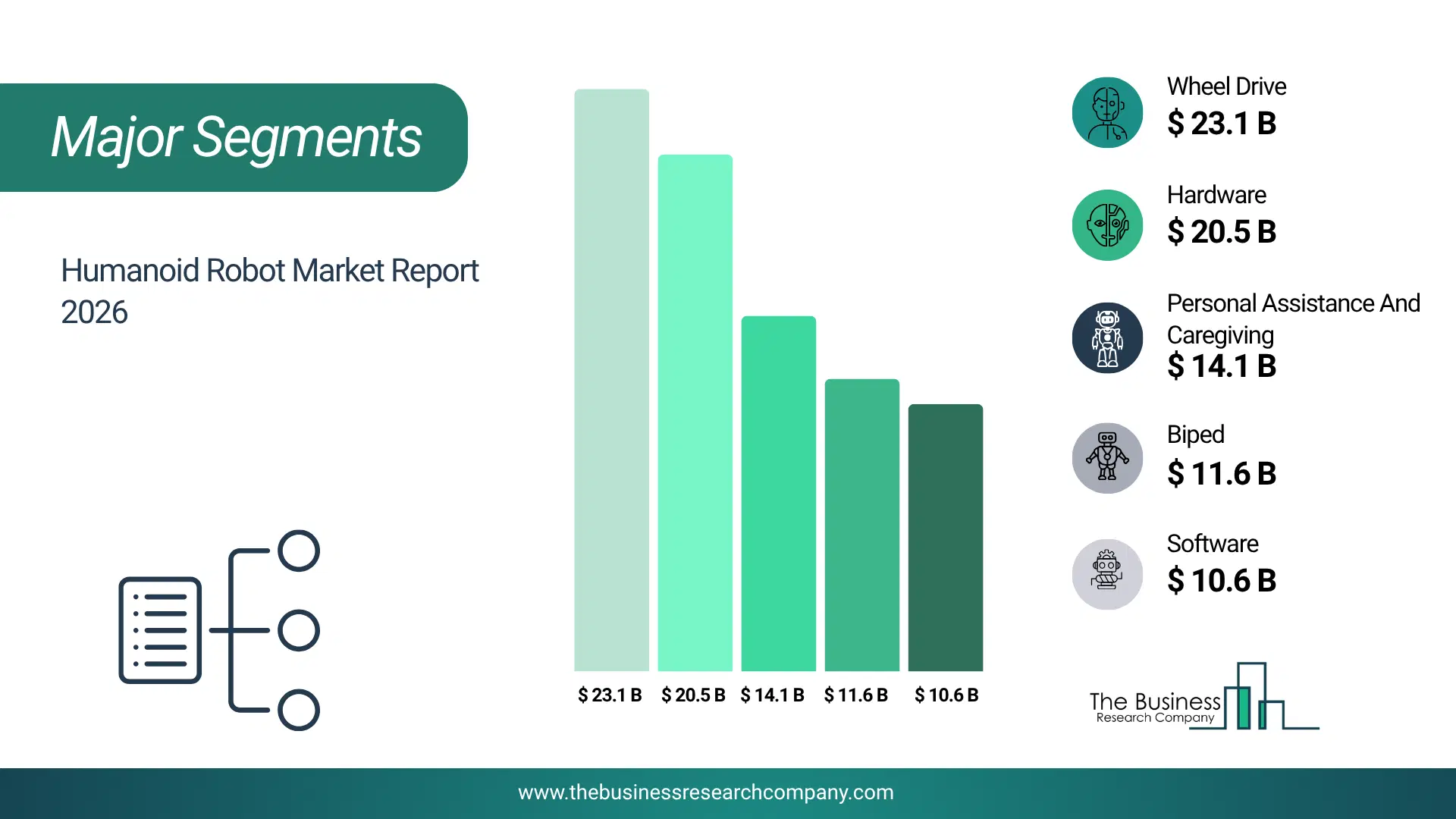
1) By Component: Hardware, Software, Services 2) By Motion Type: Biped, Wheel Drive 3) By Application: Education And Entertainment, Research And Space Exploration, Personal Assistance And Caregiving, Search And Rescue, Public Relations, Other Applications Subsegments: 1) By Hardware: Actuators, Sensors, Power Supply Units, Chassis And Structural Components 2) By Software: Control Software, Programming And Development Tools, Artificial Intelligence And Machine Learning Algorithms, Simulation Software 3) By Services: Maintenance And Support Services, Consulting Services, Integration Services, Training And Education Services The top segments in the humanoid robot market will be: • Wheel Drive will reach $23102.16 Million by 2030. • Hardware will reach $20512.01 Million by 2030. • Personal Assistance And Caregiving will reach $14188.56 Million by 2030. • Biped will reach $11641.72 Million by 2030. • Software will reach $10661.69 Million by 2030.What Is The Driver Of The Humanoid Robot Market?
Rising automation is expected to propel the growth of the humanoid robot market going forward. Automation refers to the use of technology, machinery, or systems to perform tasks or processes with minimal human intervention. Humanoid robots play a significant role in industry automation by performing complex tasks, enhancing efficiency, and collaborating with human workers, thereby contributing to streamlined production processes and increased productivity. For instance, in September 2024, according to the World Robotics Report published by the International Federation of Robotics, a Germany-based non-profit organization, approximately 4,281,585 industrial robots were operating in factories worldwide in 2023, marking a 10% increase from the previous year. Annual installations exceeded 541,302 units in 2023, with 70% of newly deployed robots in Asia, 17% in Europe, and 10% in the Americas, highlighting the global scale and regional concentration of automation growth. Therefore, rising automation is driving the growth of the humanoid robot industry.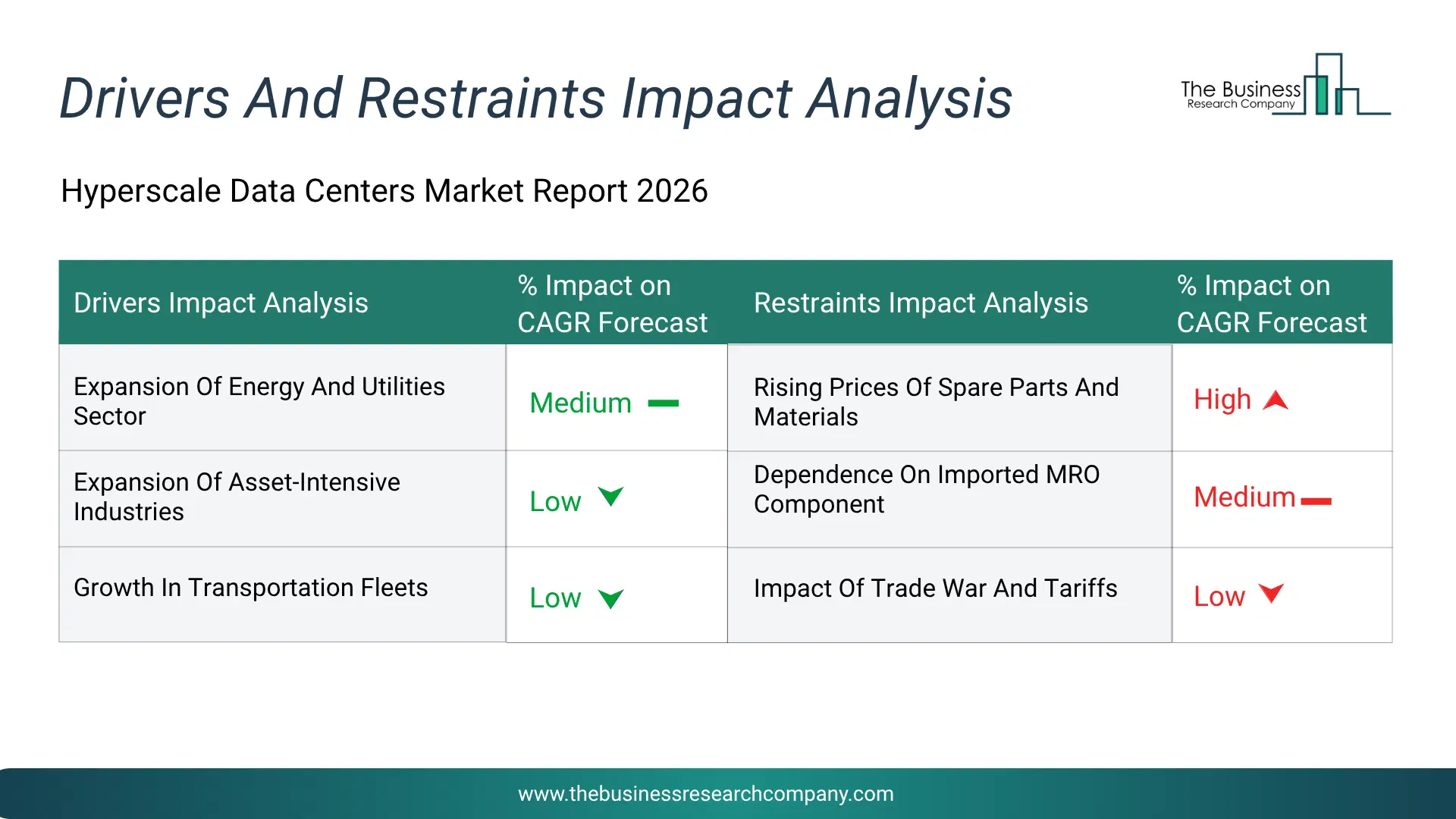
Infographic Chart Showing Key Market Drivers Analysis And Restraints For Humanoid Robot Market
The chart presents an impact analysis of key drivers and restraints, quantifying their relative influence on the market's growth rate and helping assess the balance between growth enablers and limiting factors. This chart offers a high-level perspective; the full report contains more detailed insights.
How Will The Drivers Impact Growth In The Global Humanoid Robot Market?
• Rise In E-Commerce And Logistics (Medium) – During the forecast period, the rise in e-commerce and logistics will propel the growth of the humanoid robot market. As retailers, manufacturers and logistics providers expand online sales channels, the rapid increase in order volumes and delivery expectations generates growing demand for automation in fulfilment and distribution operations. Industry and trade indicators show that global e-commerce activity continues to increase steadily year on year, supported by wider digital payment adoption, cross-border trade expansion and urban consumer purchasing behaviours. As organizations deploy larger and more complex warehouse and logistics networks to manage this growth, the integration of humanoid robots becomes essential to handle picking, sorting, material movement and last-meter tasks in human-designed environments. This capability enables enterprises to improve operational efficiency, reduce labor dependency and scale logistics performance, thereby significantly driving demand for humanoid robots across global supply chains. The rise in e-commerce and logistics growth contribution during the forecast period in 2025 is 1.5%. • Growing Focus On Workplace Safety (Medium) – During the forecast period, the growing focus on workplace safety will propel the growth of the humanoid robot market. As industries and enterprises place greater emphasis on reducing workplace injuries, fatalities and long-term health risks, organizations increasingly seek solutions that can perform hazardous, physically demanding and repetitive tasks. Regulatory authorities and employers continue to strengthen safety standards across sectors such as manufacturing, construction and logistics, reflecting a broader shift toward risk mitigation and worker protection. As companies operate in environments with stricter safety expectations and higher compliance requirements, humanoid robots become essential tools to substitute human labor in high-risk settings while maintaining productivity. By enabling safe task execution in human-centric workplaces, humanoid robots help organizations minimize accident exposure, sustain operational efficiency and support safer working conditions, thereby significantly driving demand for humanoid robot adoption across industries. The growing focus on workplace safety growth contribution during the forecast period in 2025 is 1.0%. • Rising Use In Medical Procedures And Patient Care (Low) – During the forecast period, the rising use of automation in medical procedures and patient care will propel the growth of the humanoid robot market. As healthcare providers increasingly adopt automated solutions to manage patient handling, clinical assistance and hospital operations, the expanding use of humanoid robots drives demand for systems that can operate safely and effectively in human-centric care environments. Projections from global health organizations indicate that healthcare demand will continue to increase steadily through 2030, driven by aging populations, higher chronic disease prevalence and persistent workforce shortages across care settings. As hospitals and care facilities deploy humanoid robots to support mobility assistance, procedural support and routine service tasks, the integration of these robots becomes essential to maintain service quality, reduce staff workload and improve operational resilience. This growing reliance on humanoid robots to augment medical and patient care functions significantly drives demand for humanoid robotics solutions across healthcare systems worldwide. The rising use of automation in medical procedures and patient care growth contribution during the forecast period in 2025 is 0.8%. • Education And Research Expansion (Low) – During the forecast period, the expansion of education and research will propel the growth of the humanoid robot market. As governments, universities and research institutions increasingly invest in robotics education and applied research programs, the demand for advanced humanoid platforms that support learning, experimentation and skill development continues to rise. Policy initiatives and academic frameworks emphasize hands-on training, interdisciplinary collaboration and early exposure to robotics and automation, reflecting a broader shift toward preparing a future-ready workforce. As educational institutions deploy humanoid robots in laboratories, classrooms and research facilities to study human–robot interaction and real-world task execution, the need for flexible, programmable systems operating in human environments intensifies. This growing institutional reliance on humanoid robots strengthens long-term market demand, supports innovation ecosystems and drives sustained adoption across academic and research sectors. The expansion of education and research growth contribution during the forecast period in 2025 is 0.5%.How Will The Restraints Impact Growth In The Global Humanoid Robot Market?
• Ethical And Job‑Displacement Concerns (Medium) – During the forecast period, ethical and job-displacement concerns are restricting the growth of the humanoid robot market during the forecast period. As humanoid robots increasingly demonstrate the ability to perform tasks traditionally handled by human workers, concerns around workforce displacement, employment security and social inequality have intensified among labour groups, policymakers and the public. These concerns gain prominence as robots move from experimental use into service, logistics and industrial roles that involve direct human interaction. Regulatory discussions and public debates around fair workforce transitions and responsible automation adoption may slow decision-making and delay large-scale deployments. As a result, organizations may adopt humanoid robots more cautiously in the face of heightened societal and regulatory uncertainties, thereby restricting the growth of the humanoid robot market. Growth affected by ethical and job-displacement concerns during the forecast period in 2025 is -3.0%. • Lack Of Skilled Personnel And Technical Expertise (Medium) – During the forecast period, lack of skilled personnel and technical expertise is restricting the growth of the humanoid robot market during the forecast period. The development, deployment and maintenance of humanoid robots require advanced skills in robotics operation, systems integration and human-machine interaction, which remain in limited supply across many regions. Persistent workforce shortages in robotics and automation-related fields are expected to create bottlenecks, as demand for specialized talent grows faster than training programs and educational initiatives can respond. Insufficient qualified personnel can hinder large-scale deployment, compromise operational efficiency and increase reliance on external consultants or third-party support. As a result, skill deficits may slow adoption rates, elevate operational risks and delay commercialization timelines, thereby restricting the growth of the humanoid robot market. Growth affected by lack of skilled personnel and technical expertise during the forecast period in 2025 is -1.0%. • Impact Of Trade War And Tariffs (Low) – During the forecast period, impact of trade wars and tariffs is restricting the growth of the humanoid robot market during the forecast period. Escalating geopolitical tensions and the imposition of steep tariffs on key humanoid robot components, such as actuators, sensors, control electronics and precision manufacturing inputs, increase production costs and create uncertainty for manufacturers planning large-scale humanoid robot investments. Tariff-related disruptions to supply chains can delay component sourcing, assembly schedules and system integration activities critical for timely humanoid robot deployment and may force organizations to reallocate budgets from robotics initiatives to offset increased expenses and mitigate risks. As a result, enterprises may postpone or scale back the adoption of humanoid robot solutions in the face of heightened geopolitical and economic uncertainties, thereby restricting the growth of the humanoid robot market. Growth affected by impact of trade wars and tariffs during the forecast period in 2025 is -0.3%.Key Players In The Global Humanoid Robot Market
Major companies operating in the humanoid robot market are Toyota Motor Corporation, Samsung Electronics Co., Ltd., Honda Motor Co., Ltd., SoftBank Corp., Toshiba Corporation, Istituto Italiano di Tecnologia, UBTECH Robotics Corp., Ltd., Hyulim Robot Co., Ltd., ZMP Inc., CYBERDYNE Inc., Agility Robotics, Inc., Apptronik, Inc., PAL Robotics S.L., The Shadow Robot Company Ltd., F&P Robotics AG, Engineered Arts Limited, Beyond Imagination, Inc., Hanson Robotics Limited, Furhat Robotics AB, KAWADA Robotics Corporation, Figure AI, Inc., 1X Technologies AS, Intuitive Robots, QIHAN Technology Co., Ltd., Robo Garage Co., Ltd.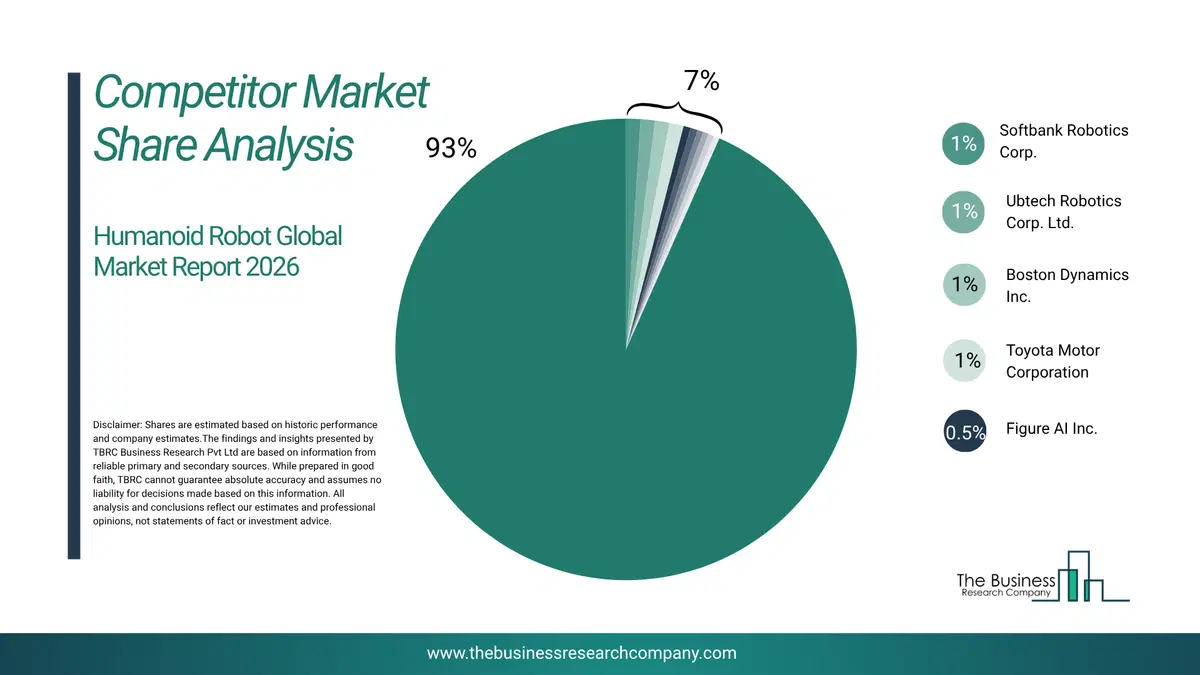
This chart is for illustrative purposes; the full report includes a detailed competitor analysis and comprehensive overview of the top 10 companies in the market.
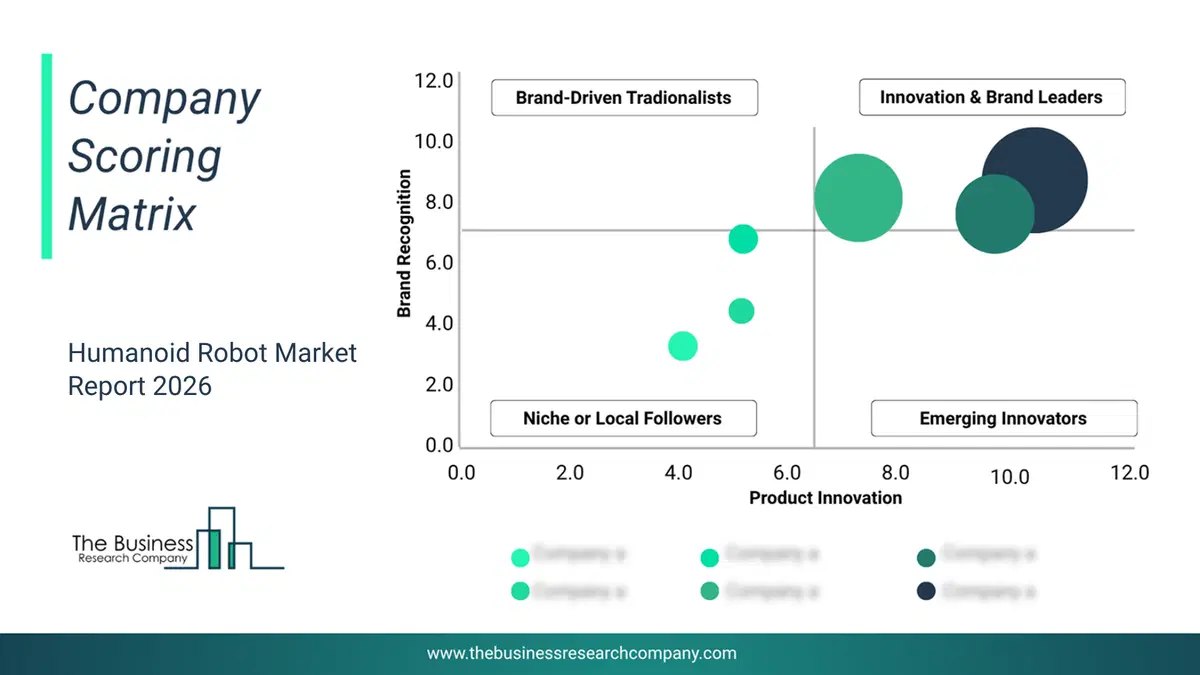
This chart maps companies by product innovation and brand strength, with bubble size indicating relative revenue, helping identify market leaders, challengers, and niche players. This is an illustrative chart; the full report provides a complete and accurate competitive analysis.
Global Humanoid Robot Market Trends and Insights
Major companies operating in the humanoid robot market are increasing their focus on introducing advanced robots, such as warehouse robots, to maximize their revenues in the market. Warehouse robots are automated machines designed to perform various tasks within a warehouse or distribution center, including inventory management, order picking, packing, and transportation of goods. For instance, in October 2023, Amazon, a US-based e-commerce company, launched a new humanoid bipedal robot called Digit, which is designed to work collaboratively with employees in its warehouses, not replace them. The robot is from Agility Robotics, which Amazon has invested in as part of its Industrial Innovation Fund. Amazon is currently testing Digit for tote recycling, a highly repetitive process of picking up and moving empty totes.What Are Latest Mergers And Acquisitions In The Humanoid Robot Market?
In January 2025, 1X Technologies AS, a US–based robotics and AI company, acquired Kind Humanoid Inc. for an undisclosed amount. With this acquisition, 1X sought to strengthen and accelerate its humanoid-robotics roadmap by integrating Kind Humanoid’s specialized design talent and AI-driven humanoid development, thereby advancing toward general-purpose robots capable of living and working alongside humans. Kind Humanoid Inc. is a US-based robotics startup that developed “Mona,” a bipedal humanoid robot designed for home use and human-centric tasks by combining a bio-inspired body design with advanced AI and large-language-model capabilities.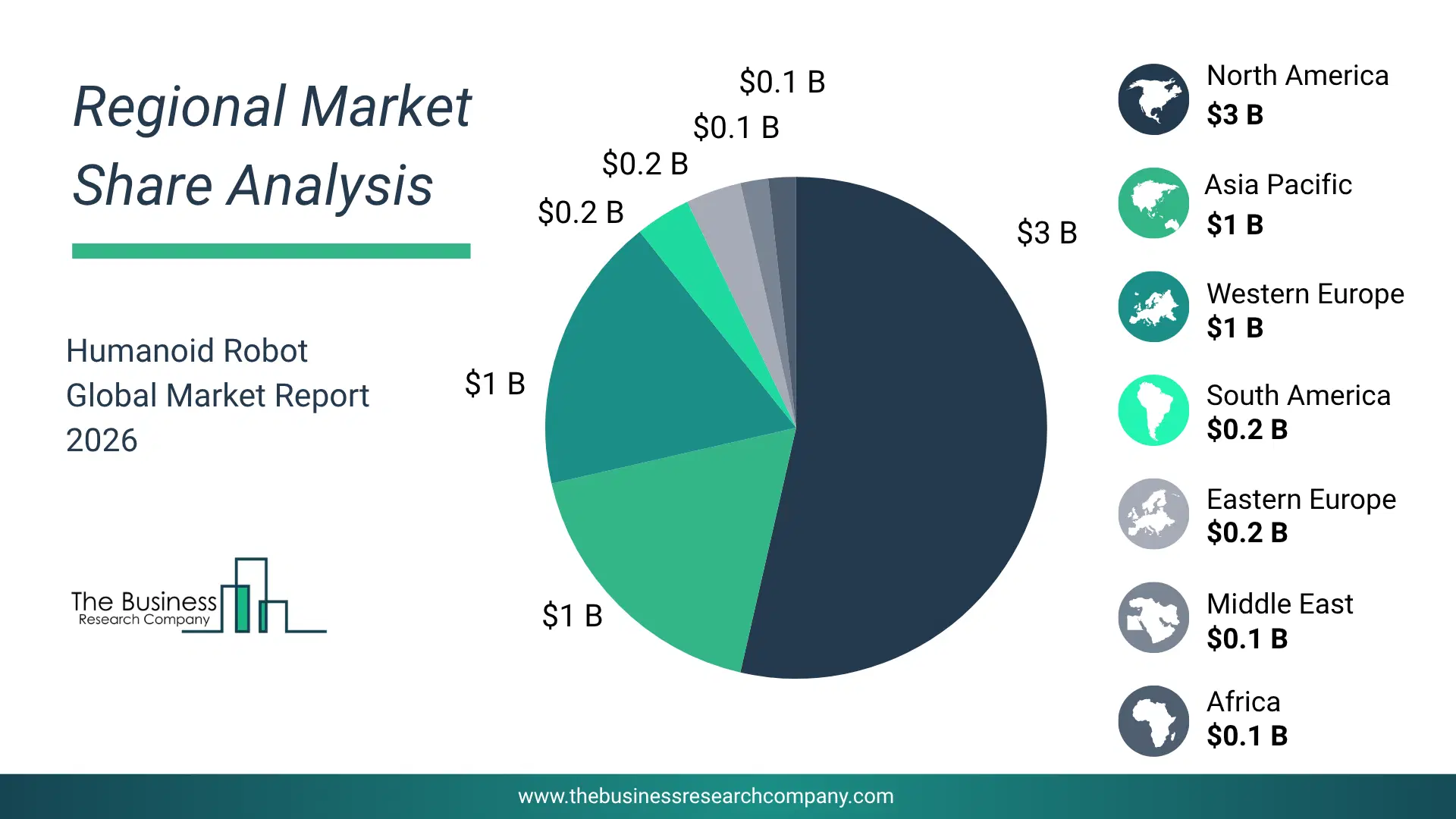
Regional Outlook
North America was the largest region in the humanoid robot market in 2025. Asia-Pacific is expected to be the fastest-growing region in the forecast period. The regions covered in this market report are Asia-Pacific, South East Asia, Western Europe, Eastern Europe, North America, South America, Middle East, Africa The countries covered in this market report are Australia, Brazil, China, France, Germany, India, Indonesia, Japan, Taiwan, Russia, South Korea, UK, USA, Canada, Italy, Spain.What Defines the Humanoid Robot Market?
The humanoid robot market consists of sales of DC motor-driven robots, brushless DC motor robots, linear actuator robots, stepper motor-driven robots, and mobility gearmotor-driven robots. Values in this market are ‘factory gate’ values, that is, the value of goods sold by the manufacturers or creators of the goods, whether to other entities (including downstream manufacturers, wholesalers, distributors, and retailers) or directly to end customers. The value of goods in this market includes related services sold by the creators of the goods.How is Market Value Defined and Measured?
The market value is defined as the revenues that enterprises gain from the sale of goods and/or services within the specified market and geography through sales, grants, or donations in terms of the currency (in USD unless otherwise specified). The revenues for a specified geography are consumption values that are revenues generated by organizations in the specified geography within the market, irrespective of where they are produced. It does not include revenues from resales along the supply chain, either further along the supply chain or as part of other products.
This chart presents market attractiveness based on a quantitative evaluation of growth, competition, strategic alignment, and risk, offering a clear view of opportunity areas for decision-making. This chart is for illustrative purposes; the full report contains the complete analysis.

This chart highlights the Total Addressable Market (TAM) by estimating the maximum revenue opportunity using an assumption-driven approach, supporting strategic planning and opportunity sizing across markets. The chart is illustrative; the full report provides a more comprehensive analysis.
What Key Data and Analysis Are Included in the Humanoid Robot Market Report 2026?
The humanoid robot market research report is one of a series of new reports from The Business Research Company that provides market statistics, including industry global market size, regional shares, competitors with the market share, detailed market segments, market trends and opportunities, and any further data you may need to thrive in the humanoid robot industry. The market research report delivers a complete perspective of everything you need, with an in-depth analysis of the current and future state of the industry.Humanoid Robot Market Report Forecast Analysis
| Report Attribute | Details |
|---|---|
| Market Size Value In 2026 | $8.32 billion |
| Revenue Forecast In 2030 | $39 billion |
| Growth Rate | CAGR of 52.9% from 2026 to 2030 |
| Base Year For Estimation | 2025 |
| Actual Estimates/Historical Data | 2020-2025 |
| Forecast Period | 2026 - 2030 - 2035 |
| Market Representation | Revenue in USD Billion and CAGR from 2026 to 2030 |
| Segments Covered | Component, Motion Type, Application |
| Regional Scope | Asia-Pacific, Western Europe, Eastern Europe, North America, South America, Middle East, Africa |
| Country Scope | The countries covered in the report are Australia, Brazil, China, France, Germany, India, Indonesia, Japan, Taiwan, Russia, South Korea, UK, USA, Canada, Italy, Spain. |
| Key Companies Profiled | Toyota Motor Corporation, Samsung Electronics Co., Ltd., Honda Motor Co., Ltd., SoftBank Corp., Toshiba Corporation, Istituto Italiano di Tecnologia, UBTECH Robotics Corp., Ltd., Hyulim Robot Co., Ltd., ZMP Inc., CYBERDYNE Inc., Agility Robotics, Inc., Apptronik, Inc., PAL Robotics S.L., The Shadow Robot Company Ltd., F&P Robotics AG, Engineered Arts Limited, Beyond Imagination, Inc., Hanson Robotics Limited, Furhat Robotics AB, KAWADA Robotics Corporation, Figure AI, Inc., 1X Technologies AS, Intuitive Robots, QIHAN Technology Co., Ltd., Robo Garage Co., Ltd. |
| Customization Scope | Request for Customization |
| Pricing And Purchase Options | Explore Purchase Options |