
Hybrid Collaborative Robot (Cobot) Market Report 2026
Global Outlook – By Component (Hardware, Services, Software), By Payload Capacity (10 to 20 Kilograms (Kg), 5 to 10 Kilograms (Kg), Above 20 Kilograms (Kg), Up to 5 Kilograms (Kg)), By Control Technology (Force Control, Machine Learning, Vision Guidance), By Application (Assembly, Machine Tending, Material Handling, Packaging And Palletizing, Quality Inspection, Welding), By End Use Industry (Automotive, Electronics, Food And Beverage, Metal And Machinery, Pharmaceuticals, Plastics And Chemicals) – Market Size, Trends, Strategies, and Forecast to 2030
Hybrid Collaborative Robot (Cobot) Market Overview
• Hybrid Collaborative Robot (Cobot) market size has reached to $2.24 billion in 2025 • Expected to grow to $3.98 billion in 2030 at a compound annual growth rate (CAGR) of 12.2% • Growth Driver: Increasing Demand For Automation In Manufacturing Driving The Market Growth Due To Enhance Operational Efficiency • Market Trend: Next-Generation Robots Revolutionizing Industrial Automation With Flexible, High-Payload, And Collaborative Capabilities • North America was the largest region in 2025 and Asia-Pacific is the fastest growing region.What Is Covered Under Hybrid Collaborative Robot (Cobot) Market?
A hybrid collaborative robot (Cobot) is a collaborative robot that merges the adaptability of human-like interaction with the precision of automated systems. It can alternate between autonomous operation and collaborative tasks, enabling smooth integration with other processes. It is designed to manage complex or variable workflows while maintaining safety and efficiency. The main components of hybrid collaborative robot (cobot) include hardware, services, and software. Hardware refers to physical robotic systems designed to work safely alongside humans in industrial environments, enhancing productivity and operational efficiency. These solutions are available with payload capacities of up to 5 kilograms (Kg), 5 to 10 kilograms (Kg), 10 to 20 kilograms (Kg), and above 20 kilograms (Kg), and they utilize control technologies such as force control, machine learning, and vision guidance. The various applications involved are assembly, machine tending, material handling, packaging and palletizing, quality inspection, and welding, and they are used by several end-use industries such as automotive, electronics, food and beverage, metal and machinery, pharmaceuticals, and plastics and chemicals.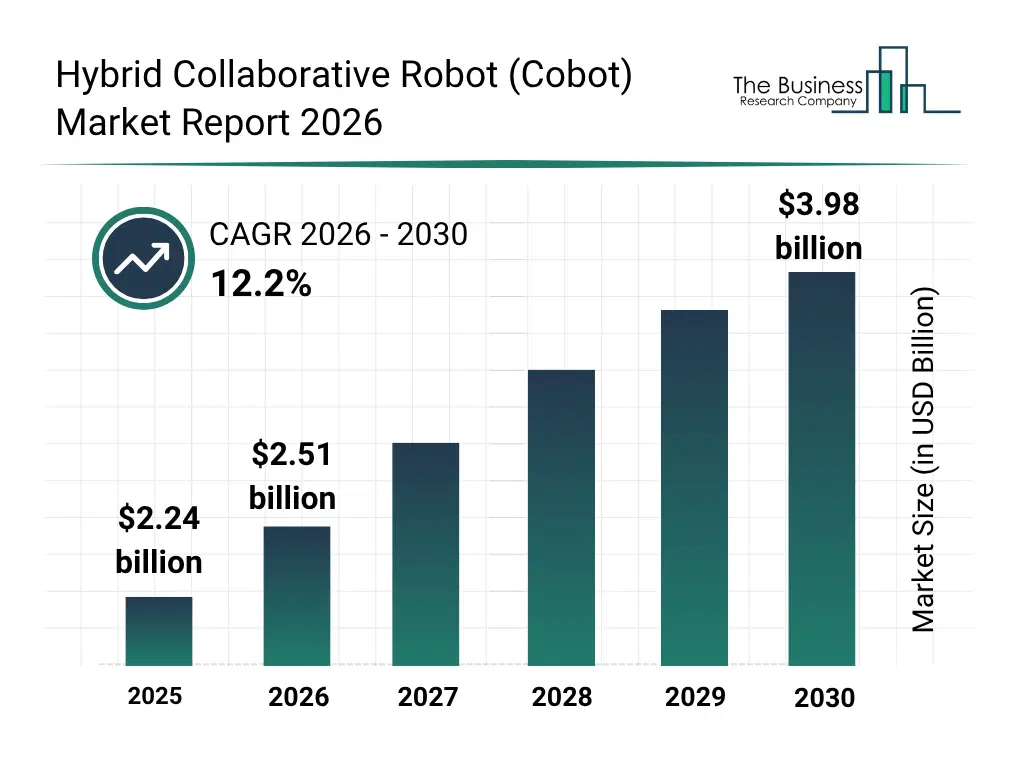
What Is The Hybrid Collaborative Robot (Cobot) Market Size and Share 2026?
The hybrid collaborative robot (Cobot) market size has grown rapidly in recent years. It will grow from $2.24 billion in 2025 to $2.51 billion in 2026 at a compound annual growth rate (CAGR) of 12.0%. The growth in the historic period can be attributed to increasing industrial automation adoption, rising labor cost pressures, growing demand for workplace safety, expansion of automotive manufacturing automation, early adoption of collaborative robotic arms.What Is The Hybrid Collaborative Robot (Cobot) Market Growth Forecast?
The hybrid collaborative robot (Cobot) market size is expected to see rapid growth in the next few years. It will grow to $3.98 billion in 2030 at a compound annual growth rate (CAGR) of 12.2%. The growth in the forecast period can be attributed to increasing demand for adaptive manufacturing systems, rising adoption in electronics and pharmaceutical sectors, growing need for high mix low volume production, expansion of smart factory investments, increasing focus on operational efficiency and productivity. Major trends in the forecast period include rising demand for flexible human robot collaboration, increasing adoption of modular and reconfigurable cobot systems, growing deployment in small and medium enterprises, expansion of safety certified collaborative workcells, rising integration of multi task capabilities in single cobot units.
Global Hybrid Collaborative Robot (Cobot) Market Segmentation
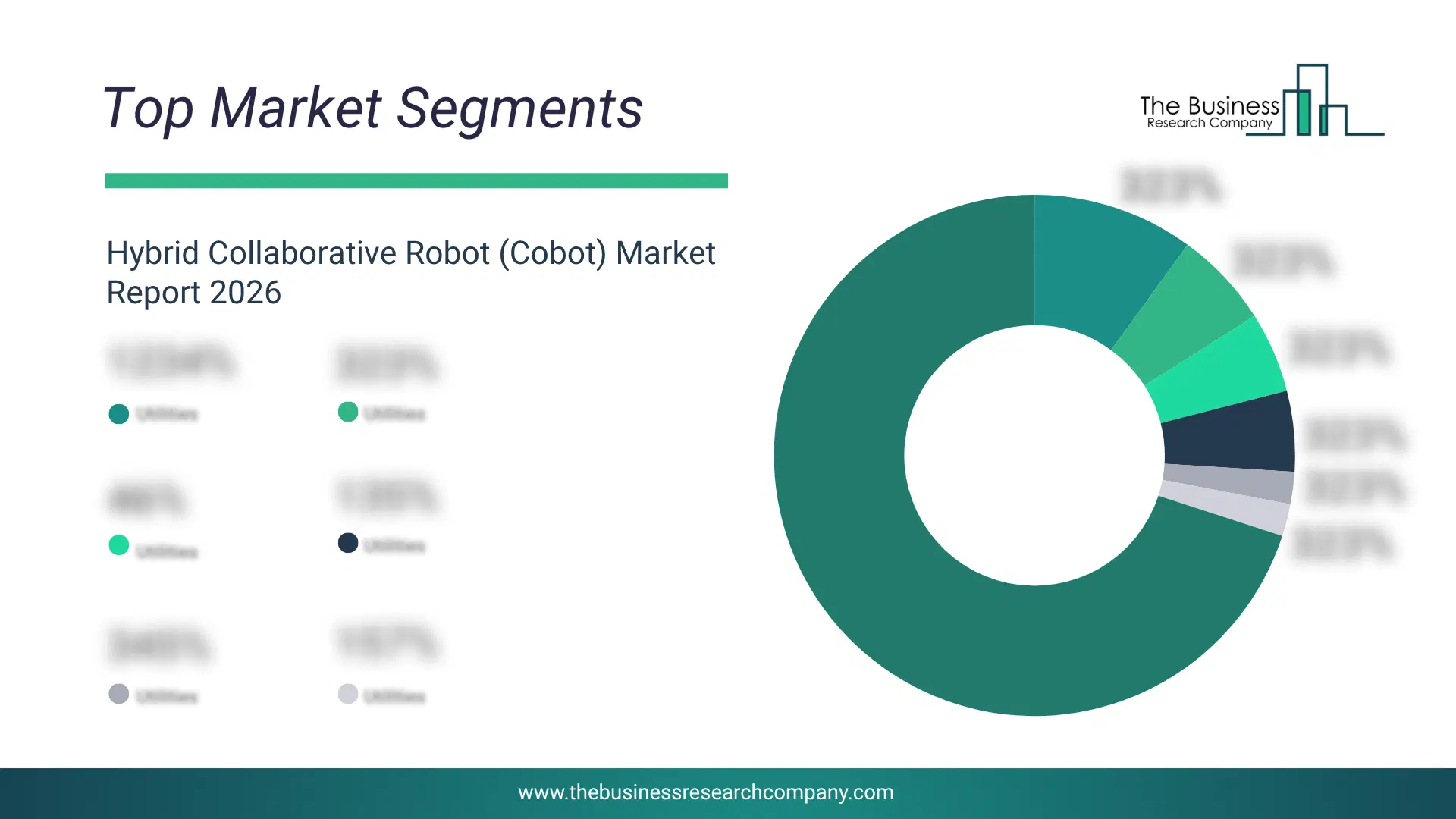
1) By Component: Hardware, Services, Software 2) By Payload Capacity: 10 to 20 Kilograms (Kg), 5 to 10 Kilograms (Kg), Above 20 Kilograms (Kg), Up to 5 Kilograms (Kg) 3) By Control Technology: Force Control, Machine Learning, Vision Guidance 4) By Application: Assembly, Machine Tending, Material Handling, Packaging And Palletizing, Quality Inspection, Welding 5) By End Use Industry: Automotive, Electronics, Food And Beverage, Metal And Machinery, Pharmaceuticals, Plastics And Chemicals Subsegments: 1) By Hardware: Mobile Robot Platforms, Autonomous Mobile Robot Bases, Collaborative Robotic Arms, Vision And Perception Modules, Safety Scanners And Sensors, End of Arm Tooling And Grippers, Controllers And Drive Systems, Battery And Power Management Units 2) By Services: System Integration And Deployment, Application Programming And Customization, Robot as a Service Offerings, Maintenance And Lifecycle Support, Training And Operator Enablement, Process Optimization And Consulting, After Sales Technical Support, Upgrades And Retrofitting Services 3) By Software: Fleet Management Software, Robot Operating And Control Software, Navigation And Mapping Software, Vision Processing Software, Safety And Compliance Software, Simulation And Digital Twin Software, Data Analytics And Performance Monitoring Software, Integration Software with Manufacturing SystemsWhat Are The Drivers Of The Hybrid Collaborative Robot (Cobot) Market?
The increasing demand for automation in manufacturing is expected to propel the growth of the hybrid collaborative robot (Cobot) market going forward. Automation in manufacturing refers to the use of advanced technology systems to perform production tasks with minimal human intervention, enhancing efficiency and precision. The demand for automation in manufacturing is rising due to the need to increase productivity, streamline processes, reduce human error, lower operational costs. Hybrid cobots help in manufacturing by combining human intelligence with robotic precision, enabling safe collaboration between workers and robots, increasing efficiency, performing repetitive or hazardous tasks, and enhancing productivity while maintaining flexibility and high-quality output. For instance, according to the World Robotics 2025 report released by the International Federation of Robotics, a Germany-based non-profit organization, in 2024, there were 4,664,000 Industrial Robots in operation worldwide, representing a 9% increase from the previous year. Therefore, the increasing demand for automation in manufacturing is driving the growth of the hybrid collaborative robot (Cobot) industry. The increasing demand for industry 4.0 technologies integration is expected to propel the growth of the hybrid collaborative robot (Cobot) market going forward. Industry 4.0 technologies integration refers to the incorporation of advanced digital technologies such as artificial intelligence, Internet of Things, machine learning, and collaborative robotics into manufacturing and production processes to create smart, interconnected systems. The demand for Industry 4.0 technology integration is rising due to the need for smarter, more flexible, and data-driven manufacturing processes that improve productivity, reduce downtime, enable predictive maintenance, and allow companies to respond rapidly to changing market demands. Industry 4.0 technology integration supports hybrid cobots by enabling real-time data exchange, intelligent decision-making, predictive maintenance, and seamless coordination with other smart machines and human operators, enhancing their adaptability, efficiency, and safety in dynamic industrial environments. For instance, in March 2024, according to Rockwell Automation Inc., a US-based automation company, manufacturers consider AI the leading capability for achieving significant business impact, with 83% anticipating the adoption of generative AI (GenAI) in their operations. Furthermore, 95% of manufacturers are either using or evaluating smart manufacturing technologies, up from 84% in 2023. Therefore, increasing demand for industry 4.0 technologies integration is driving the growth of the hybrid collaborative robot (Cobot) industry.Key Players In The Global Hybrid Collaborative Robot (Cobot) Market
Major companies operating in the hybrid collaborative robot (Cobot) market are DENSO Corporation, FANUC Corporation, OMRON Corporation, Yaskawa Electric Corporation, Stäubli International AG, Siasun Robot & Automation Co. Ltd., Kawasaki Robotics a division of Kawasaki Heavy Industries Ltd., Neura Robotics, Neobotix GmbH, Doosan Robotics Inc., Iplusmobot Technology Co. Ltd., JAKA Robotics Co. Ltd., AUBO Robotics Technology Co. Ltd., Reeman Robotics, F&P Robotics AG, Techman Robot Inc., AgileX Robotics Shenzhen Ltd., Shenzhen Dobot Co. Ltd., Suzhou Elite Robot Co. Ltd., and AIDIN Robotics Co. Ltd.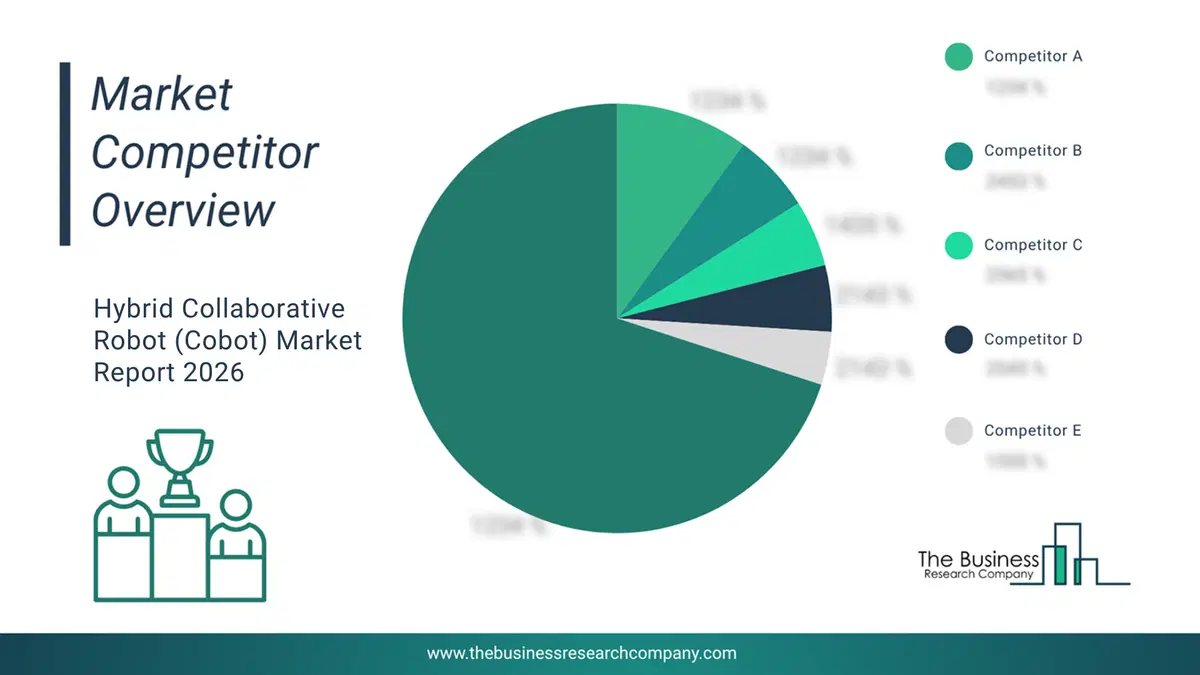
This chart is for illustrative purposes; the full report includes a detailed competitor analysis and comprehensive overview of the top 10 companies in the market.
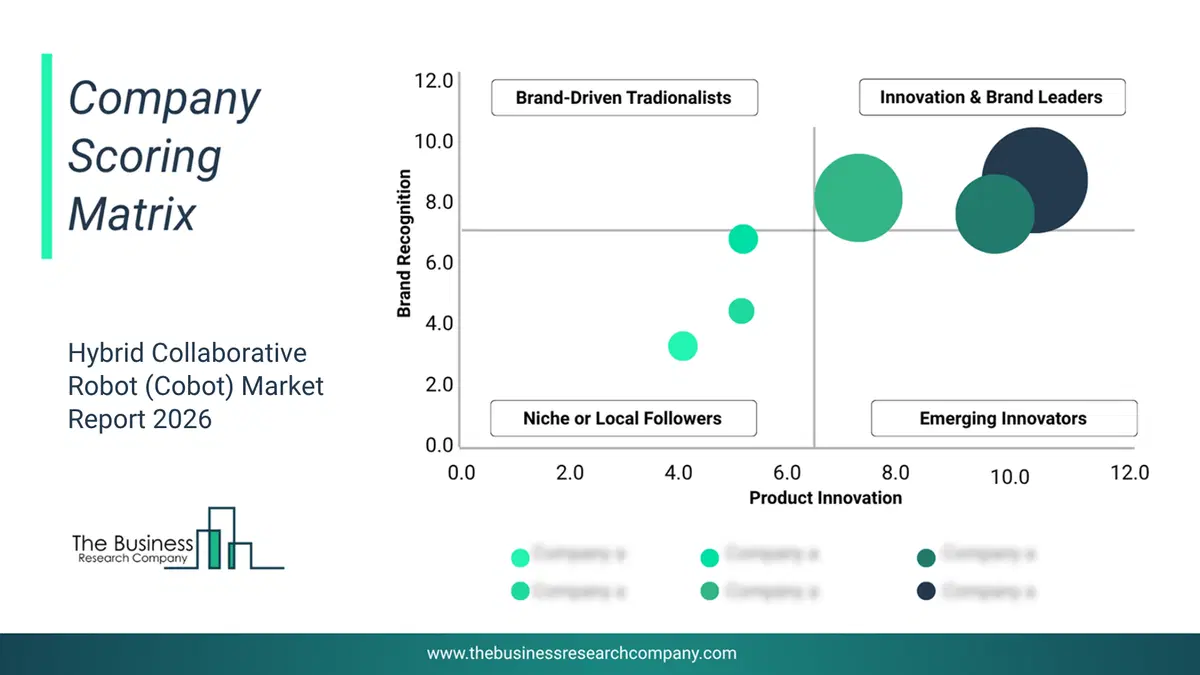
This chart maps companies by product innovation and brand strength, with bubble size indicating relative revenue, helping identify market leaders, challengers, and niche players. This is an illustrative chart; the full report provides a complete and accurate competitive analysis.
Global Hybrid Collaborative Robot (Cobot) Market Trends and Insights
Major companies operating in the hybrid collaborative robot (Cobot) market are focusing on developing innovative products such as mobile collaborative robots to automate heavy material handling and complex industrial tasks efficiently and safely. Mobile collaborative robots are robots that combine autonomous mobility with a collaborative robotic arm, enabling them to navigate workplaces and perform tasks alongside humans safely, helping automate material handling, palletizing, machine tending, and repetitive workflows to boost productivity and reduce physical strain on workers. For instance, in November 2024, Mobile Industrial Robots (MiR), a Denmark-based robotics company, launched the MC600, an innovative hybrid cobot designed to automate tasks such as palletizing, box handling, and machine tending. The MC600 combines the MiR600 autonomous mobile robot base with Universal Robots’ UR20/UR30 heavy-payload cobot arms, enabling it to transport loads up to 600 kg (1322 lbs) while executing precise robotic operations. Its unique features include extended reach, seamless coordination between mobility and manipulation through a unified software platform, and enhanced safety and ergonomics for operators. Applications span manufacturing, logistics, and other industrial settings requiring continuous material handling and complex workflow automation.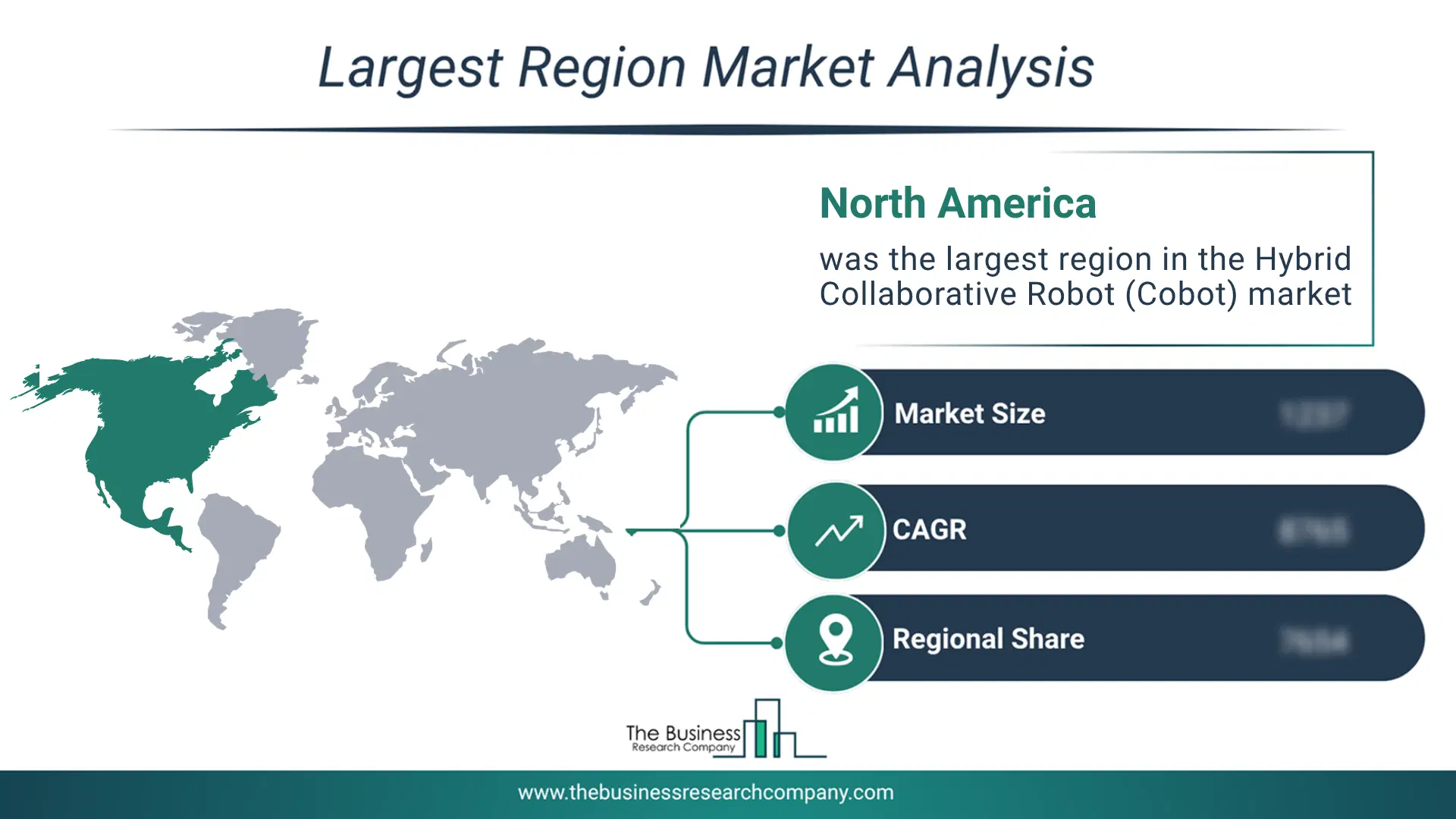
Regional Insights
North America was the largest region in the hybrid collaborative robot (Cobot) market in 2025. Asia-Pacific is expected to be the fastest-growing region in the forecast period. The regions covered in this market report are Asia-Pacific, South East Asia, Western Europe, Eastern Europe, North America, South America, Middle East, Africa. The countries covered in this market report are Australia, Brazil, China, France, Germany, India, Indonesia, Japan, Taiwan, Russia, South Korea, UK, USA, Canada, Italy, Spain.What Defines the Hybrid Collaborative Robot (Cobot) Market?
The hybrid collaborative robot (Cobot) market consists of revenues earned by entities by providing services such as consulting, software updates and upgrades, remote monitoring and diagnostics, customization, technical support, leasing and rental, and safety compliance and certification. The market value includes the value of related goods sold by the service provider or included within the service offering. The hybrid cobot market also consists of sales of delta cobots, mobile cobots, and collaborative robotic arms equipped with sensors, end-effectors, and vision systems. Values in this market are ‘factory gate’ values, that is, the value of goods sold by the manufacturers or creators of the goods, whether to other entities (including downstream manufacturers, wholesalers, distributors, and retailers) or directly to end customers. The value of goods in this market includes related services sold by the creators of the goods.How is Market Value Defined and Measured?
The market value is defined as the revenues that enterprises gain from the sale of goods and/or services within the specified market and geography through sales, grants, or donations in terms of the currency (in USD unless otherwise specified). The revenues for a specified geography are consumption values that are revenues generated by organizations in the specified geography within the market, irrespective of where they are produced. It does not include revenues from resales along the supply chain, either further along the supply chain or as part of other products.
This chart presents market attractiveness based on a quantitative evaluation of growth, competition, strategic alignment, and risk, offering a clear view of opportunity areas for decision-making. This chart is for illustrative purposes; the full report contains the complete analysis.

This chart highlights the Total Addressable Market (TAM) by estimating the maximum revenue opportunity using an assumption-driven approach, supporting strategic planning and opportunity sizing across markets. The chart is illustrative; the full report provides a more comprehensive analysis.
What Key Data And Analysis Are Included In The Hybrid Collaborative Robot (Cobot) Market Report 2026?
The hybrid collaborative robot (cobot) market research report is one of a series of new reports from The Business Research Company that provides market statistics, including industry global market size, regional shares, competitors with the market share, detailed market segments, market trends and opportunities, and any further data you may need to thrive in the hybrid collaborative robot (cobot) industry. The market research report delivers a complete perspective of everything you need, with an in-depth analysis of the current and future state of the industry.Hybrid Collaborative Robot (Cobot) Market Report Forecast Analysis
| Report Attribute | Details |
|---|---|
| Market Size Value In 2026 | $2.51 billion |
| Revenue Forecast In 2030 | $3.98 billion |
| Growth Rate | CAGR of 12.2% from 2026 to 2030 |
| Base Year For Estimation | 2025 |
| Actual Estimates/Historical Data | 2020-2025 |
| Forecast Period | 2026 - 2030 |
| Market Representation | Revenue in USD Billion and CAGR from 2026 to 2030 |
| Segments Covered | Component, Payload Capacity, Control Technology, Application, End Use Industry |
| Regional Scope | Asia-Pacific, Western Europe, Eastern Europe, North America, South America, Middle East, Africa |
| Country Scope | The Countries Covered In This Market Report Are Australia, Brazil, China, France, Germany, India, Indonesia, Japan, Taiwan, Russia, South Korea, Uk, Usa, Canada, Italy, Spain. |
| Key Companies Profiled | DENSO Corporation, FANUC Corporation, OMRON Corporation, Yaskawa Electric Corporation, Stäubli International AG, Siasun Robot & Automation Co. Ltd., Kawasaki Robotics a division of Kawasaki Heavy Industries Ltd., Neura Robotics, Neobotix GmbH, Doosan Robotics Inc., Iplusmobot Technology Co. Ltd., JAKA Robotics Co. Ltd., AUBO Robotics Technology Co. Ltd., Reeman Robotics, F&P Robotics AG, Techman Robot Inc., AgileX Robotics Shenzhen Ltd., Shenzhen Dobot Co. Ltd., Suzhou Elite Robot Co. Ltd., and AIDIN Robotics Co. Ltd. |
| Customization Scope | Request for Customization |
| Pricing And Purchase Options | Explore Purchase Options |