
Hybrid Graphics Processing Unit (GPU)-Central Processing Unit (CPU) Market Report 2026
Global Outlook – By Type (Homogeneous Architecture, Heterogeneous Architecture, Coprocessor Architecture), By Processor Type (Central Processing Unit Centric Hybrid Systems, Graphics Processing Unit Centric Hybrid Systems, Accelerated Processing Units, Artificial Intelligence Optimized Hybrid Processors), By Deployment (On-Premises, Cloud Based, Edge Based), By Application (Consumer Electronics, High Performance Computing, Automotive, Other Applications), By End User (Data Centers And Cloud Service Providers, Healthcare, Banking, Financial Services And Insurance, Manufacturing) – Market Size, Trends, Strategies, and Forecast to 2030
Hybrid Graphics Processing Unit (GPU)-Central Processing Unit (CPU) Market Overview
• Hybrid Graphics Processing Unit (GPU)-Central Processing Unit (CPU) market size has reached to $13.19 billion in 2025 • Expected to grow to $38.13 billion in 2030 at a compound annual growth rate (CAGR) of 23.6% • Growth Driver: Growing Demand For Localized Drug Delivery Fueling The Growth Of The Market Due To Rising Adoption Of Drug-Coated Balloon Procedures • Market Trend: Advancements In Next Generation Coating Services Enhancing Drug Delivery And Patient Safety • Asia-Pacific was the largest region and fastest growing region.What Is Covered Under Hybrid Graphics Processing Unit (GPU)-Central Processing Unit (CPU) Market?
A hybrid graphics processing unit (GPU)-central processing unit (CPU) architecture combines the CPU and GPU to work together, with the CPU handling general-purpose computing tasks and the GPU accelerating parallel processing for graphics and compute-intensive workloads. It improves overall system performance, energy efficiency, and responsiveness by assigning tasks to the processor best suited for each workload. The main types of hybrid graphics processing unit (GPU)-central processing unit (CPU) include homogeneous architecture, heterogeneous architecture, and coprocessor architecture. Homogeneous architecture refers to a computing architecture that uses similar processing units working together to execute computational workloads efficiently. These hybrid systems include central processing unit centric hybrid systems, graphics processing unit centric hybrid systems, accelerated processing units, and artificial intelligence optimized hybrid processors and are deployed through on premises, cloud based, and edge based environments. They find application in consumer electronics, high performance computing, automotive, and others, serving end users including data centers and cloud service providers, automotive, healthcare, banking, financial services and insurance, and manufacturing.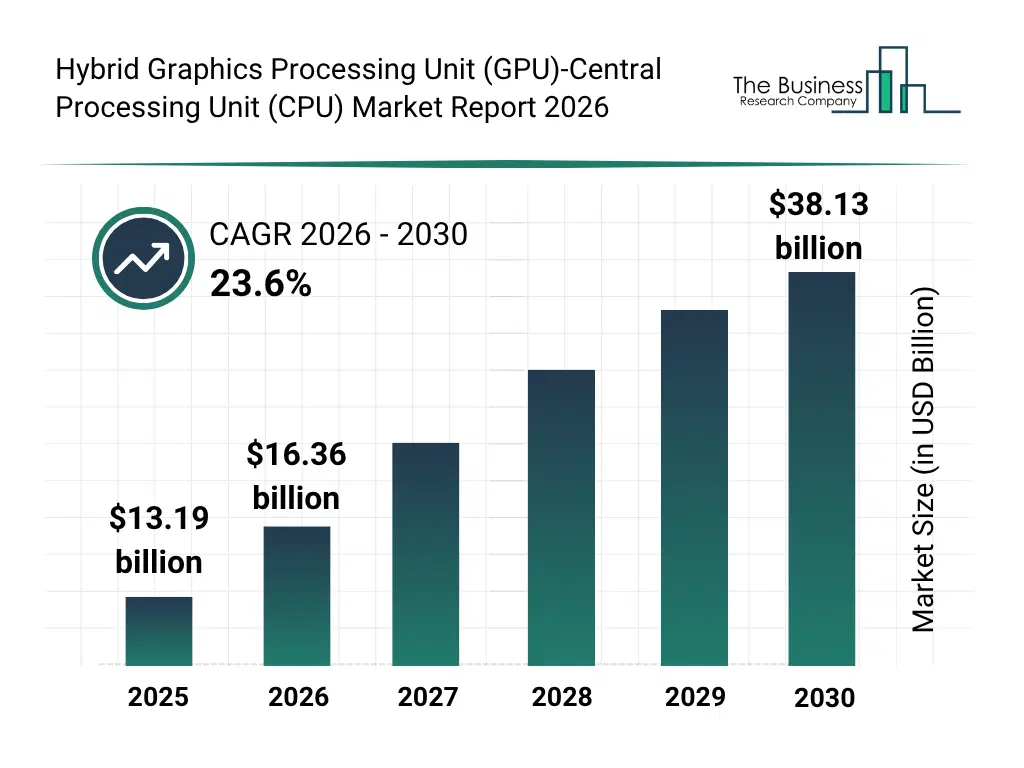
What Is The Hybrid Graphics Processing Unit (GPU)-Central Processing Unit (CPU) Market Size and Share 2026?
The hybrid graphics processing unit (GPU)-central processing unit (CPU) market size has grown exponentially in recent years. It will grow from $13.19 billion in 2025 to $16.36 billion in 2026 at a compound annual growth rate (CAGR) of 24.0%. The growth in the historic period can be attributed to increasing demand for higher computing performance, rising adoption of integrated graphics processors, growing demand for energy-efficient computing architectures, increasing use of parallel processing workloads, rising demand for responsive computing systems.What Is The Hybrid Graphics Processing Unit (GPU)-Central Processing Unit (CPU) Market Growth Forecast?
The hybrid graphics processing unit (GPU)-central processing unit (CPU) market size is expected to see exponential growth in the next few years. It will grow to $38.13 billion in 2030 at a compound annual growth rate (CAGR) of 23.6%. The growth in the forecast period can be attributed to increasing demand for advanced heterogeneous computing, rising adoption of unified memory architectures, growing need for optimized processor resource allocation, expanding demand for high-performance edge computing, increasing development of scalable hybrid processor architectures. Major trends in the forecast period include increasing integration of CPU and GPU processing resources, rising adoption of heterogeneous computing architectures, growing demand for unified memory architectures, increasing development of chiplet-based hybrid processor designs, rising demand for energy-efficient hybrid computing solutions.Tariff Impact On Hybrid Graphics Processing Unit (GPU)-Central Processing Unit (CPU) Market
Tariffs are impacting the hybrid graphics processing unit (GPU)-central processing unit (CPU) market by increasing the cost of imported processors, semiconductor components, advanced packaging materials, and computing hardware required for hybrid processing systems. This is raising production and deployment costs for consumer electronics, data centers, automotive systems, and high-performance computing applications, particularly in regions dependent on semiconductor imports such as Asia-Pacific and North America. Hardware-intensive segments such as heterogeneous architectures, accelerated processing units, and GPU-CPU integrated systems are most affected due to global semiconductor supply chain dependencies. However, tariffs are also encouraging domestic semiconductor manufacturing, regional supplier diversification, localized component sourcing, and investment in advanced processor development, creating greater long-term supply chain resilience.
Global Hybrid Graphics Processing Unit (GPU)-Central Processing Unit (CPU) Market Segmentation
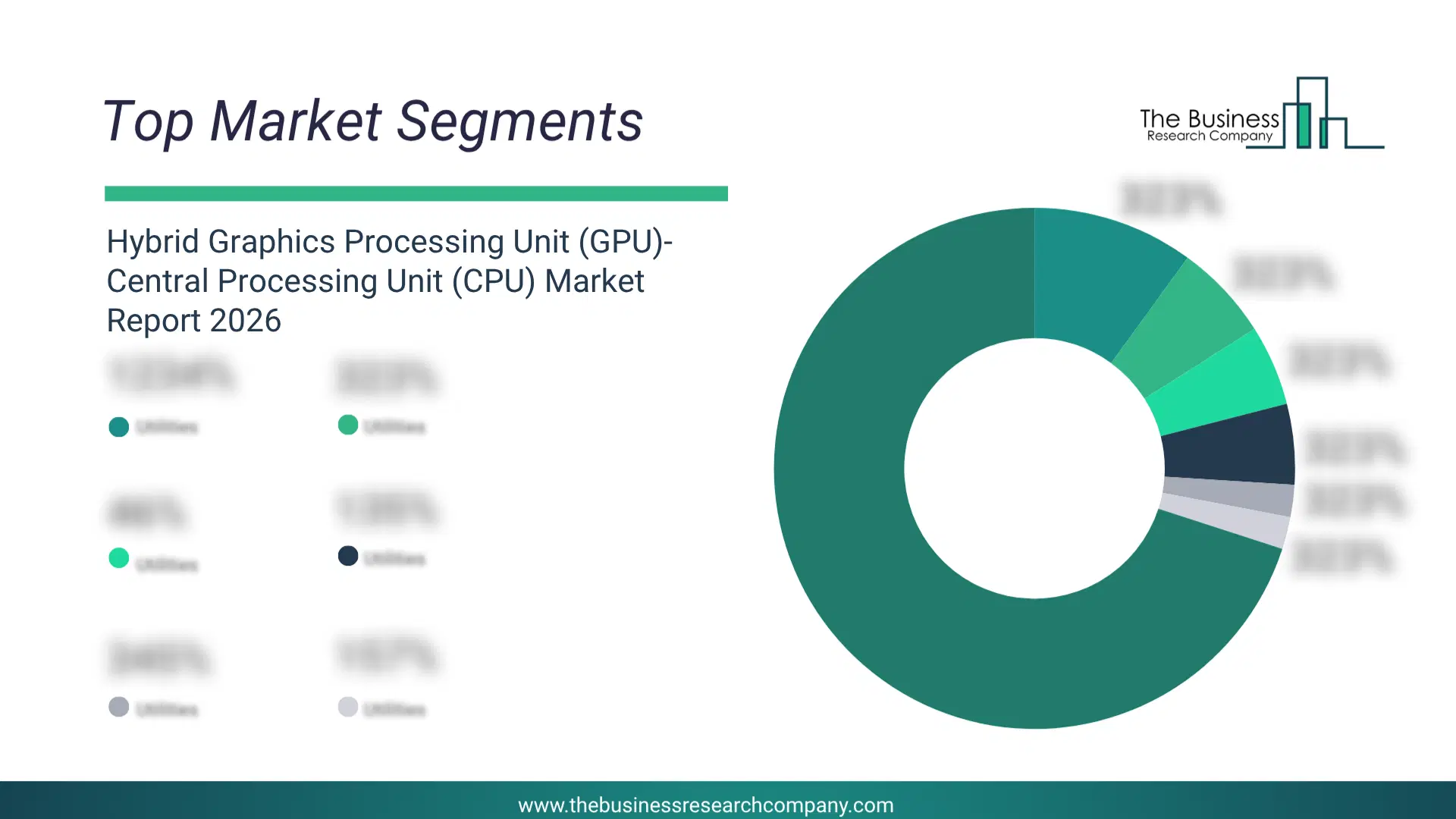
2) By Processor Type: Central Processing Unit Centric Hybrid Systems, Graphics Processing Unit Centric Hybrid Systems, Accelerated Processing Units, Artificial Intelligence Optimized Hybrid Processors 3) By Deployment: On-Premises, Cloud Based, Edge Based 4) By Application: Consumer Electronics, High Performance Computing, Automotive, Other Applications 5) By End User: Data Centers And Cloud Service Providers, Healthcare, Banking, Financial Services And Insurance, Manufacturing Subsegments: 1) By Homogeneous Architecture: Shared Memory Architecture, Unified Processing Architecture, Integrated Multi Core Architecture, Symmetric Computing Architecture, Parallel Processing Architecture, Scalable Computing Architecture 2) By Heterogeneous Architecture: Integrated Graphics Processing Unit Central Processing Unit Architecture, Discrete Graphics Processing Unit Central Processing Unit Architecture, Chiplet Based Architecture, Hybrid Memory Architecture, Unified Memory Architecture 3) By Coprocessor Architecture: Graphics Processing Unit Accelerator, Artificial Intelligence Accelerator, High Performance Computing Coprocessor, Data Analytics Coprocessor, Scientific Computing Coprocessor, Machine Learning CoprocessorWhat Is The Driver Of The Hybrid Graphics Processing Unit (GPU)-Central Processing Unit (CPU) Market?
The expansion of data centers is expected to propel the growth of the hybrid graphics processing unit (GPU)-central processing unit (CPU) market going forward. Data centers are facilities that house computing infrastructure, including servers, storage systems, and networking equipment, to process, store, and distribute large volumes of digital data and applications. Data center growth is accelerating due to the increasing adoption of cloud computing, as organizations require scalable infrastructure to support AI workloads, big data analytics, enterprise applications, and digital transformation initiatives. Hybrid GPU-CPU solutions enable data centers to efficiently process AI workloads, high-performance computing, and data analytics by combining the parallel processing capabilities of GPUs with the sequential processing efficiency of CPUs, improving overall system performance and energy efficiency. For instance, in September 2024, according to the National Telecommunications and Information Administration, a US-based government agency, the United States has around 5,000 data centers, and demand for these facilities is expected to increase by approximately 9% annually until 2030. Therefore, the expansion of data centers is driving the growth of the hybrid graphics processing unit (GPU)-central processing unit (CPU) industry.Key Players In The Global Hybrid Graphics Processing Unit (GPU)-Central Processing Unit (CPU) Market
Major companies operating in the hybrid graphics processing unit (gpu)-central processing unit (cpu) market are Samsung Electronics Co. Ltd., NVIDIA Corporation, Intel Corporation, Advanced Micro Devices Inc., Fujitsu Limited, NEC Corporation, NXP Semiconductors N.V., Renesas Electronics Corporation, Arm Holdings plc, Socionext Inc., Tenstorrent Inc., Imagination Technologies Group Limited, EdgeCortix Inc., SiPearl SAS, Hailo Technologies Ltd., NeuReality Ltd., Kalray S.A., Moore Threads Intelligent Technology (Beijing) Co. Ltd.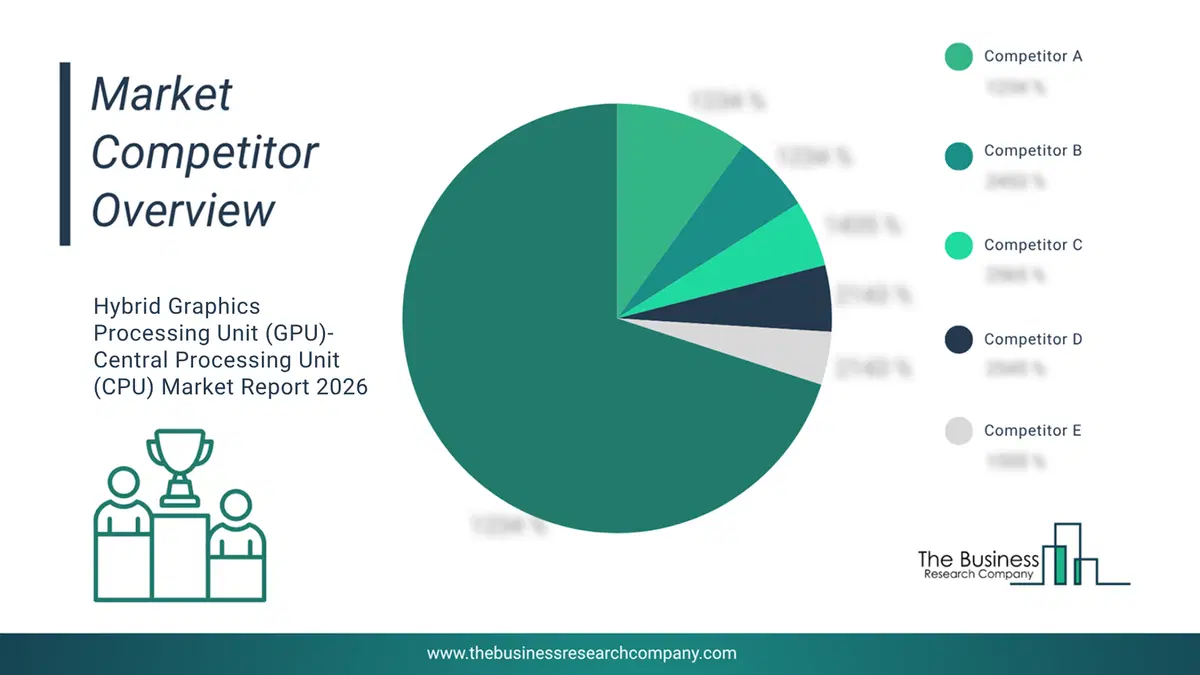
This chart is for illustrative purposes; the full report includes a detailed competitor analysis and comprehensive overview of the top 10 companies in the market.
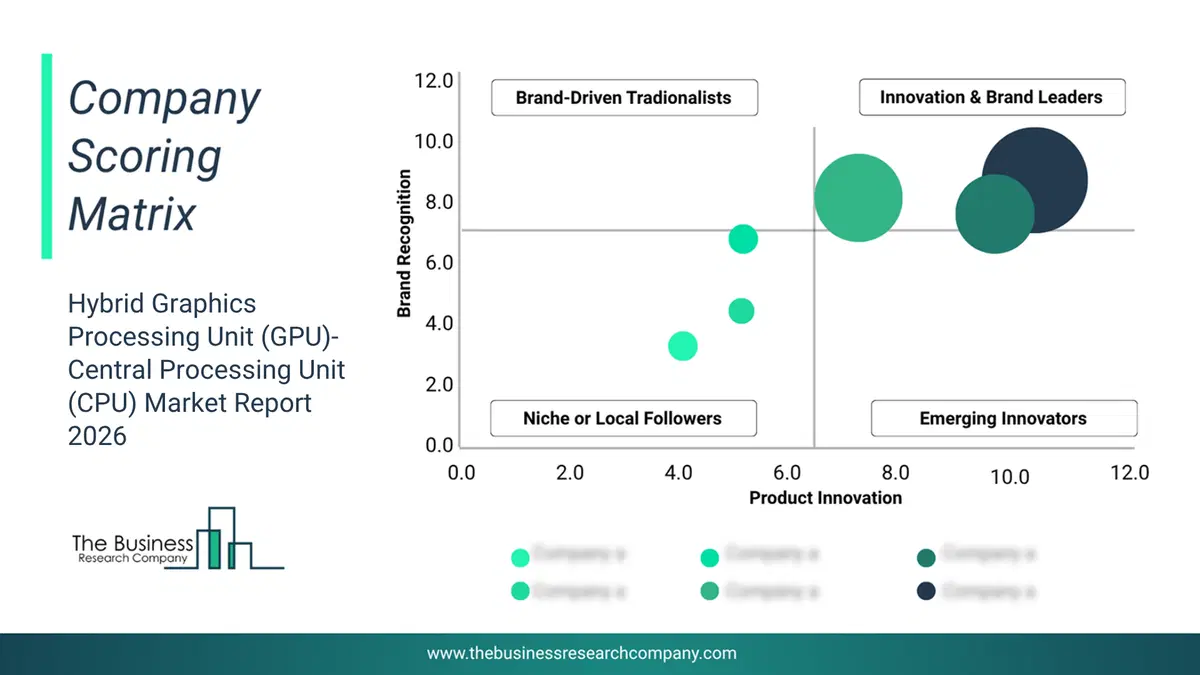
This chart maps companies by product innovation and brand strength, with bubble size indicating relative revenue, helping identify market leaders, challengers, and niche players. This is an illustrative chart; the full report provides a complete and accurate competitive analysis.
Global Hybrid Graphics Processing Unit (GPU)-Central Processing Unit (CPU) Market Trends and Insights
Major companies operating in the hybrid graphics processing unit (GPU)-central processing unit (CPU) market are focusing on developing innovative solutions such as, hybrid AI supercomputing platforms to enhance AI training efficiency, inference performance, and large-scale data processing. Hybrid AI supercomputing platforms integrate high-performance CPUs and GPUs with advanced networking, memory, and interconnect technologies to optimize workload distribution, accelerate complex AI computations, and deliver greater performance and energy efficiency than traditional CPU- or GPU-only computing architectures. For instance, in January 2026, NVIDIA Corporation, a US-based semiconductor company, launched the NVIDIA Rubin platform, a next-generation AI supercomputing platform comprising the NVIDIA Vera CPU, NVIDIA Rubin GPU, NVLink 6 Switch, ConnectX-9 SuperNIC, BlueField-4 DPU, and Spectrum-6 Ethernet Switch. The platform employs extreme hardware-software codesign to reduce AI inference token costs by up to 10 times and train mixture-of-experts (MoE) models using four times fewer GPUs compared with the NVIDIA Blackwell platform. It also incorporates next-generation interconnect, transformer engine, confidential computing, and networking technologies to accelerate agentic AI, advanced reasoning, and hyperscale AI workloads while improving system performance, scalability, and operational efficiency. These advancements demonstrate the growing adoption of tightly integrated hybrid CPU-GPU architectures for next-generation AI infrastructure.What Are Latest Mergers And Acquisitions In The Hybrid Graphics Processing Unit (GPU)-Central Processing Unit (CPU) Market?
In September 2025, NVIDIA Corporation, a US-based semiconductor and artificial intelligence computing company, partnered with Intel Corporation to develop next-generation AI infrastructure and personal computing products. With this partnership, NVIDIA Corporation and Intel Corporation aim to combine NVIDIA’s AI computing technologies with Intel’s processor and platform capabilities to accelerate AI adoption across data centers and PCs, improve system performance and efficiency, and deliver advanced AI-powered computing solutions for enterprises and consumers. Intel Corporation is a US-based semiconductor company specializing in designing and manufacturing processors, semiconductor chips, and computing platforms.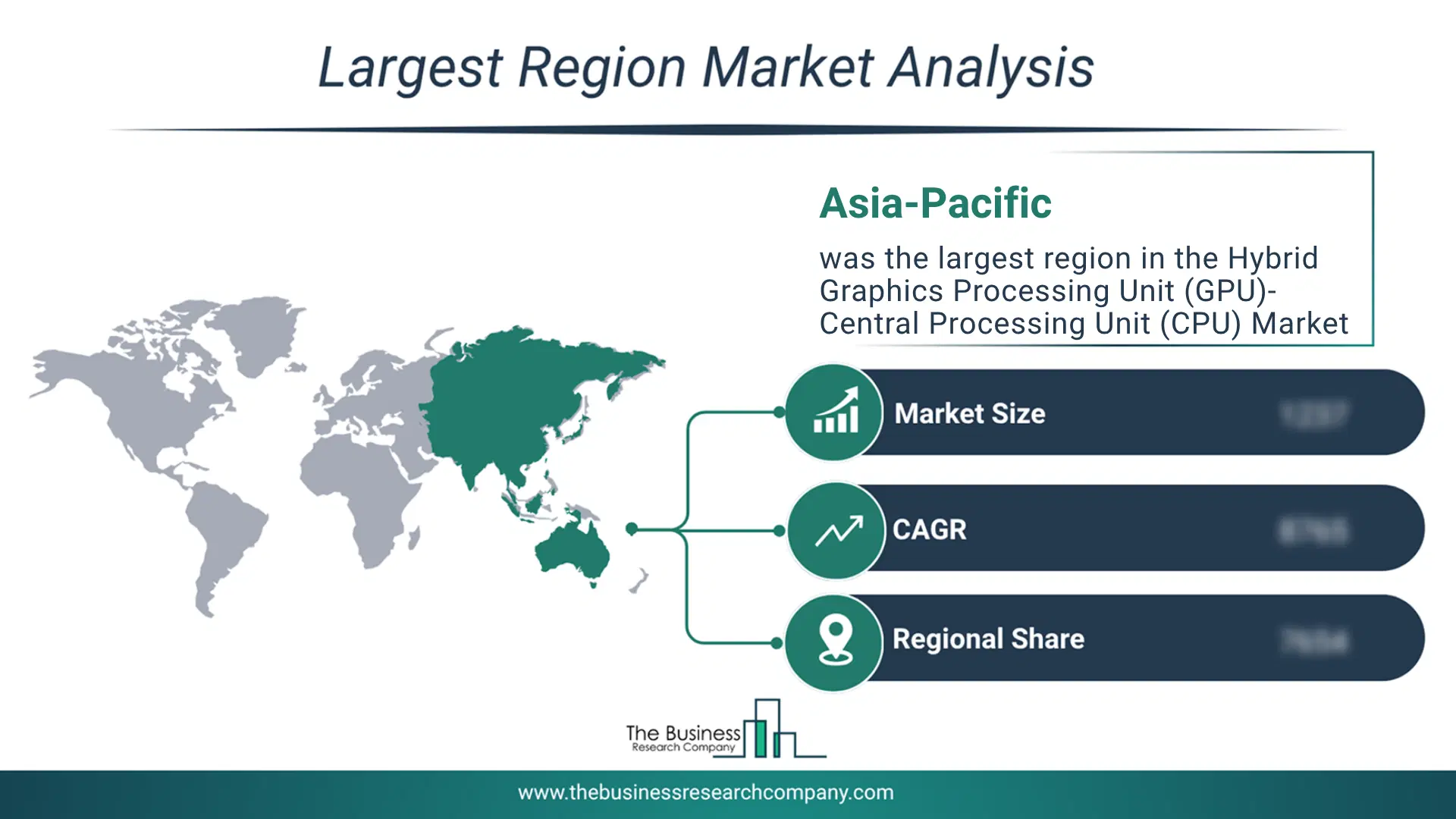
Regional Outlook
Asia-Pacific was the largest region in the hybrid graphics processing unit (GPU)-central processing unit (CPU) market in 2025. Asia-Pacific is expected to be the fastest-growing region in the forecast period. The regions covered in the hybrid graphics processing unit (gpu)-central processing unit (cpu) market are Asia-Pacific, South East Asia, Western Europe, Eastern Europe, North America, South America, Middle East, Africa. The countries covered in the hybrid graphics processing unit (gpu)-central processing unit (cpu) market are Australia, Brazil, China, France, Germany, India, Indonesia, Japan, Taiwan, Russia, South Korea, UK, USA, Canada, Italy, Spain.What Defines the Hybrid Graphics Processing Unit (GPU)-Central Processing Unit (CPU) Market?
The hybrid graphics processing unit (GPU)-central processing unit (CPU) market consists of sales of integrated computing platforms, processors, and system-on-chip (SoC) solutions. Values in this market are ‘factory gate’ values, that is the value of goods sold by the manufacturers or creators of the goods, whether to other entities (including downstream manufacturers, wholesalers, distributors and retailers) or directly to end customers. The value of goods in this market includes related services sold by the creators of the goods.How is Market Value Defined and Measured?
The market value is defined as the revenues that enterprises gain from the sale of goods and/or services within the specified market and geography through sales, grants, or donations in terms of the currency (in USD unless otherwise specified). The revenues for a specified geography are consumption values that are revenues generated by organizations in the specified geography within the market, irrespective of where they are produced. It does not include revenues from resales along the supply chain, either further along the supply chain or as part of other products.
This chart presents market attractiveness based on a quantitative evaluation of growth, competition, strategic alignment, and risk, offering a clear view of opportunity areas for decision-making. This chart is for illustrative purposes; the full report contains the complete analysis.

This chart highlights the Total Addressable Market (TAM) by estimating the maximum revenue opportunity using an assumption-driven approach, supporting strategic planning and opportunity sizing across markets. The chart is illustrative; the full report provides a more comprehensive analysis.
What Key Data and Analysis Are Included in the Hybrid Graphics Processing Unit (GPU)-Central Processing Unit (CPU) Market Report 2026?
The hybrid graphics processing unit (gpu)-central processing unit (cpu) market research report is one of a series of new reports from The Business Research Company that provides market statistics, including industry global market size, regional shares, competitors with the market share, detailed market segments, market trends and opportunities, and any further data you may need to thrive in the hybrid graphics processing unit (gpu)-central processing unit (cpu) industry. The market research report delivers a complete perspective of everything you need, with an in-depth analysis of the current and future state of the industry.Hybrid Graphics Processing Unit (GPU)-Central Processing Unit (CPU) Market Report Forecast Analysis
| Report Attribute | Details |
|---|---|
| Market Size Value In 2026 | $16.36 billion |
| Revenue Forecast In 2030 | $38.13 billion |
| Growth Rate | CAGR of 23.6% from 2026 to 2030 |
| Base Year For Estimation | 2025 |
| Actual Estimates/Historical Data | 2020-2025 |
| Forecast Period | 2026 - 2030 |
| Market Representation | Revenue in USD Billion and CAGR from 2026 to 2030 |
| Segments Covered | Type, Processor Type, Deployment, Application, End User |
| Regional Scope | Asia-Pacific, Western Europe, Eastern Europe, North America, South America, Middle East, Africa |
| Country Scope | The countries covered in the report are Australia, Brazil, China, France, Germany, India, Indonesia, Japan, Taiwan, Russia, South Korea, UK, USA, Canada, Italy, Spain. |
| Key Companies Profiled | Samsung Electronics Co. Ltd., NVIDIA Corporation, Intel Corporation, Advanced Micro Devices Inc., Fujitsu Limited, NEC Corporation, NXP Semiconductors N.V., Renesas Electronics Corporation, Arm Holdings plc, Socionext Inc., Tenstorrent Inc., Imagination Technologies Group Limited, EdgeCortix Inc., SiPearl SAS, Hailo Technologies Ltd., NeuReality Ltd., Kalray S.A., Moore Threads Intelligent Technology (Beijing) Co. Ltd. |
| Customization Scope | Request for Customization |
| Pricing And Purchase Options | Explore Purchase Options |