
Hybrid Memory Cube (HMC) Market Report 2026
Global Outlook – By Product (2GB, 4GB, 8GB), By Application (Graphics Processing Unit (GPU), Central Processing Unit (CPU), Accelerated Processing Unit (APU), Field-Programmable Gate Array (FPGA), Application-Specific Integrated Circuit (ASIC)), By End-User (Enterprise Storage, Telecommunications and Networking, Other End-Users) – Market Size, Trends, Strategies, and Forecast to 2030
Hybrid Memory Cube (HMC) Market Overview
• Hybrid Memory Cube (HMC) market size has reached to $2.04 billion in 2025 • Expected to grow to $6.04 billion in 2030 at a compound annual growth rate (CAGR) of 24.3% • Growth Driver: Mobility And Cloud Services Fueling Growth In The Hybrid Memory Cube (HMC) Market • Market Trend: Transformative Innovations in Hybrid Memory Solutions • North America was the largest region in 2025 and Asia-Pacific is the fastest growing region.What Is Covered Under Hybrid Memory Cube (HMC) Market?
A hybrid memory cube (HMC) is an advanced computer memory architecture designed to address the increasing demand for higher memory bandwidth and improved energy efficiency in modern computing systems. It is used in many applications that require fast and efficient memory access, including high-performance computing, consumer electronics, and specialized applications. The main product types of hybrid memory cubes (HMC) are 2 GB, 4 GB, and 8 GB. 2GB refers to a standard unit of measurement for the size of computer memory or storage devices that is equal to roughly 2 billion bytes used in sophisticated computing systems. These are used in various applications such as graphics processing units (GPU), central processing units (CPU), accelerated processing units (APU), field-programmable gate arrays (FPGA), application-specific integrated circuits (ASIC), and by various end-users such as enterprise storage, telecommunications, and networking, others.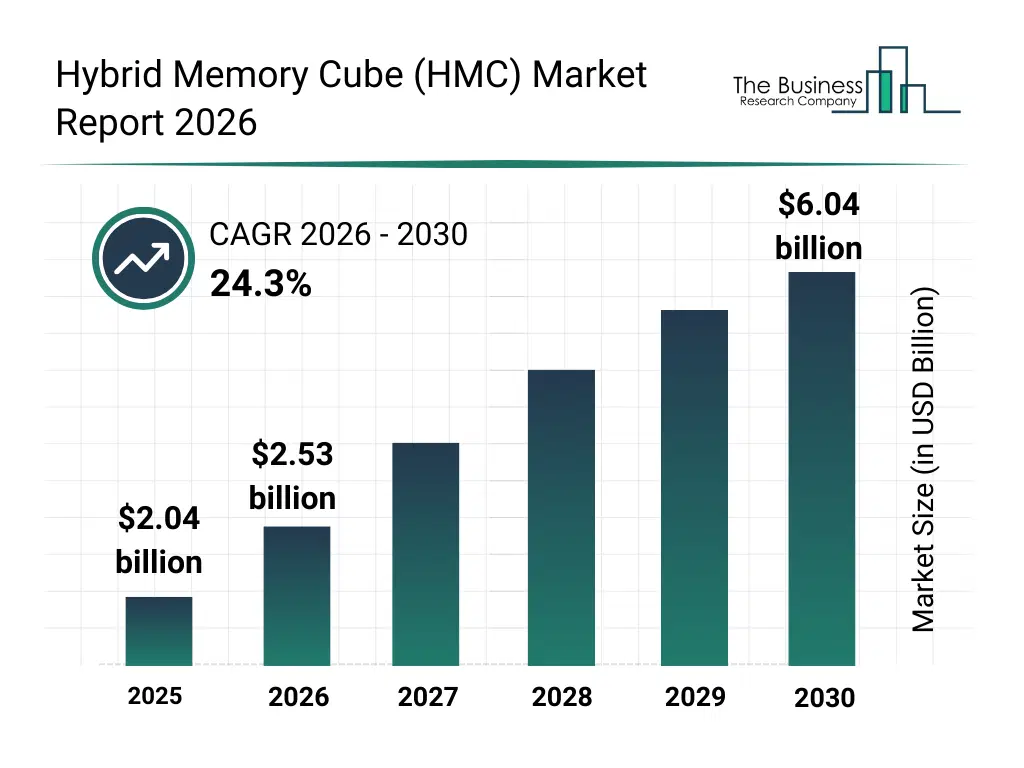
What Is The Hybrid Memory Cube (HMC) Market Size and Share 2026?
The hybrid memory cube (hmc) market size has grown exponentially in recent years. It will grow from $2.04 billion in 2025 to $2.53 billion in 2026 at a compound annual growth rate (CAGR) of 24.3%. The growth in the historic period can be attributed to growth of high performance computing systems, rising demand for faster memory solutions, expansion of data intensive applications, adoption of advanced semiconductor technologies, increasing use of parallel processing architectures.What Is The Hybrid Memory Cube (HMC) Market Growth Forecast?
The hybrid memory cube (hmc) market size is expected to see exponential growth in the next few years. It will grow to $6.04 billion in 2030 at a compound annual growth rate (CAGR) of 24.3%. The growth in the forecast period can be attributed to growing AI and machine learning workloads, rising deployment of HPC data centers, demand for power efficient memory solutions, expansion of edge computing infrastructure, increasing use of accelerators and ASICs. Major trends in the forecast period include high bandwidth memory integration, energy efficient memory architecture, 3D memory stacking adoption, advanced memory interconnect design, low latency data access.
Global Hybrid Memory Cube (HMC) Market Segmentation
1) By Product: 2GB, 4GB, 8GB 2) By Application: Graphics Processing Unit (GPU), Central Processing Unit (CPU), Accelerated Processing Unit (APU), Field-Programmable Gate Array (FPGA), Application-Specific Integrated Circuit (ASIC) 3) By End-User: Enterprise Storage, Telecommunications and Networking, Other End-Users Subsegments: 1) By 2GB: Standard 2GB HMC Modules, High-Performance 2GB HMC Modules 2) By 4GB: Standard 4GB HMC Modules, High-Performance 4GB HMC Modules 3) By 8GB: Standard 8GB HMC Modules, High-Performance 8GB HMC ModulesWhat Are The Drivers Of The Hybrid Memory Cube (HMC) Market?
The demand for mobility and cloud services is expected to propel the growth of the hybrid memory cube (HMC) market going forward. A cloud service refers to a broad range of services provided to businesses and customers on demand over the Internet. Cloud services support the hybrid memory cube (HMC) market by providing scalable and effective data processing and storage capabilities, enabling seamless integration of high-performance memory solutions for diverse applications and industries. For instance, in December 2023, according to Eurostat, a Luxembourg-based government agency reported that, in 2023, 45.2% of EU enterprises purchased cloud computing services. Furthermore, most purchased services were e-mail services (82.7%), followed by storage services for files (68.0%) and office software (66.3%). Security software applications (61.0%), finance or accounting software applications (51.6%), and hosting for the enterprise's database (43.0%) were also popular. Therefore, the demand for mobility and cloud services is driving the hybrid memory cube (HMC) industry. The rising gaming industry is expected to propel the growth of the hybrid memory cube (HMC) market going forward. The gaming industry refers to the collective businesses, organizations, and individuals involved in the creation, development, marketing, and distribution of video games. By addressing the memory challenges associated with modern gaming, Hybrid Memory Cube technology contributes to elevating the gaming experience, making games more immersive, responsive, and visually stunning. For instance, in November 2025, according to the American Gaming Association (AGA), a U.S.-based trade organization that represents the casino gaming industry, gaming industry executive sentiment improved to a net positive 7.1% in Q3 2025, marking the first return to positive confidence levels since Q1 2024. Therefore, the demand for mobility and cloud services is driving the hybrid memory cube (HMC) industry.Key Players In The Global Hybrid Memory Cube (HMC) Market
Major companies operating in the hybrid memory cube (hmc) market are Micron Technology; Samsung Electronics Co Ltd; Intel Corporation; SK Hynix Inc; Xilinx Inc; Fujitsu Limited; IBM Corporation; Rambus Inc; NVIDIA Corporation; Toshiba Corporation; AMD Advanced Micro Devices Inc; Nanya Technology Corporation; Broadcom Inc; Marvell Technology Group Ltd; Texas Instruments Inc; Qualcomm Technologies Inc; Applied Micro Circuits Corporation; TSMC Taiwan Semiconductor Manufacturing Company; Infineon Technologies AG; Western Digital Corporation; MediaTek Inc; Huawei Technologies Co Ltd; Cadence Design Systems Inc; Arm Holdings Ltd; Mentor Graphics Corporation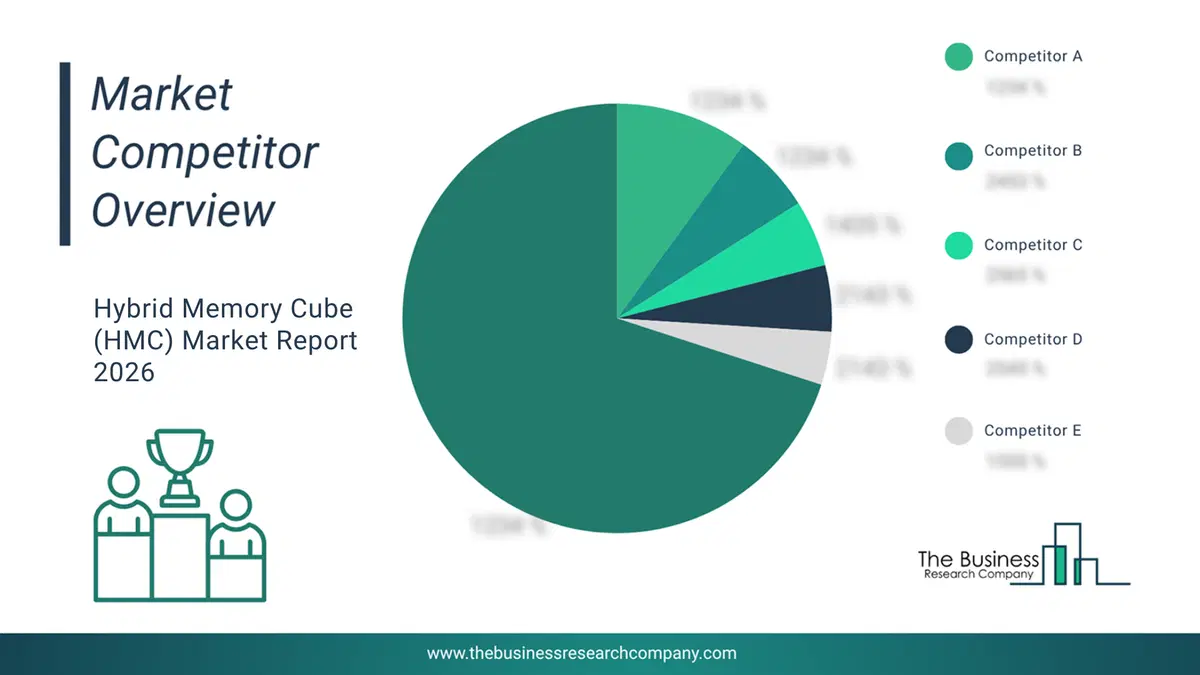
This chart is for illustrative purposes; the full report includes a detailed competitor analysis and comprehensive overview of the top 10 companies in the market.
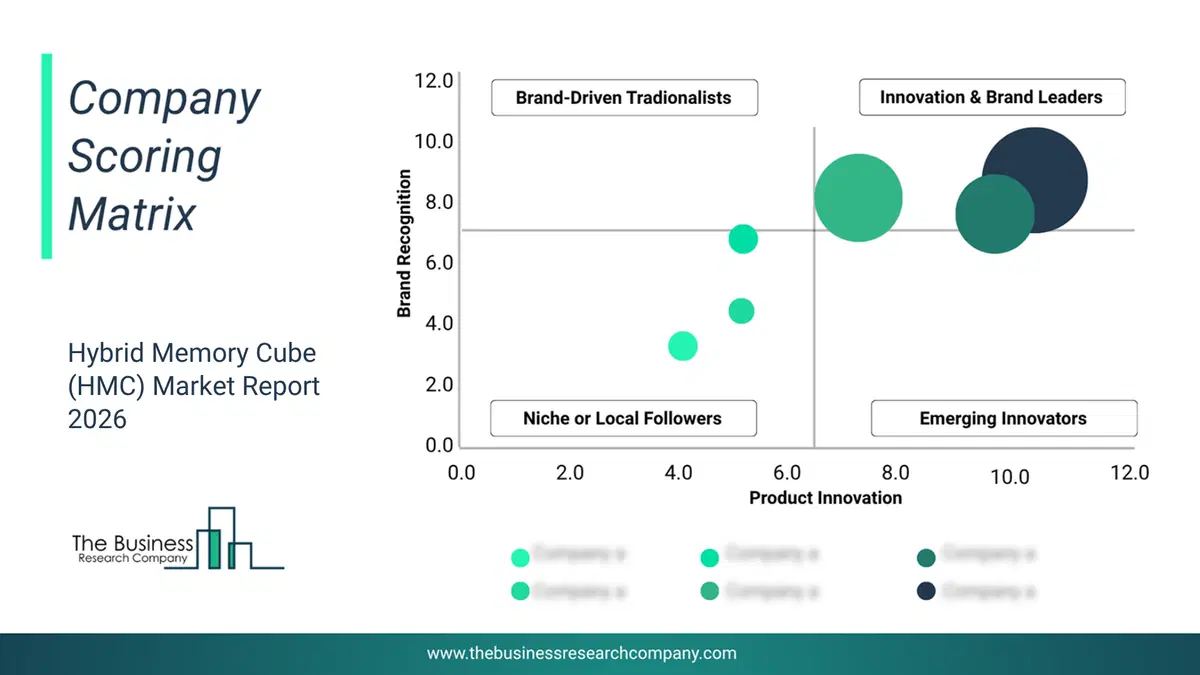
This chart maps companies by product innovation and brand strength, with bubble size indicating relative revenue, helping identify market leaders, challengers, and niche players. This is an illustrative chart; the full report provides a complete and accurate competitive analysis.
Global Hybrid Memory Cube (HMC) Market Trends and Insights
Major companies operating in the hybrid memory cubes (HMC) market are introducing innovative products with advanced hybrid memory technology to maintain their competitive position in the market. Hybrid memory technology refers to a combination of DRAM (Dynamic Random Access Memory) and non-volatile memory, designed to enhance performance, reduce power consumption, and increase data bandwidth in computing systems. For instance, in June 2023, the Tokyo Institute of Technology, a public university in Japan, introduced BBCube 3D technology, a cutting-edge memory technology that stacks processing units and DRAM in three dimensions using through-silicon vias (TSVs). This innovation enables 30 times higher data bandwidth than DDR5 while significantly reducing energy consumption, making it ideal for applications like AI and molecular simulations.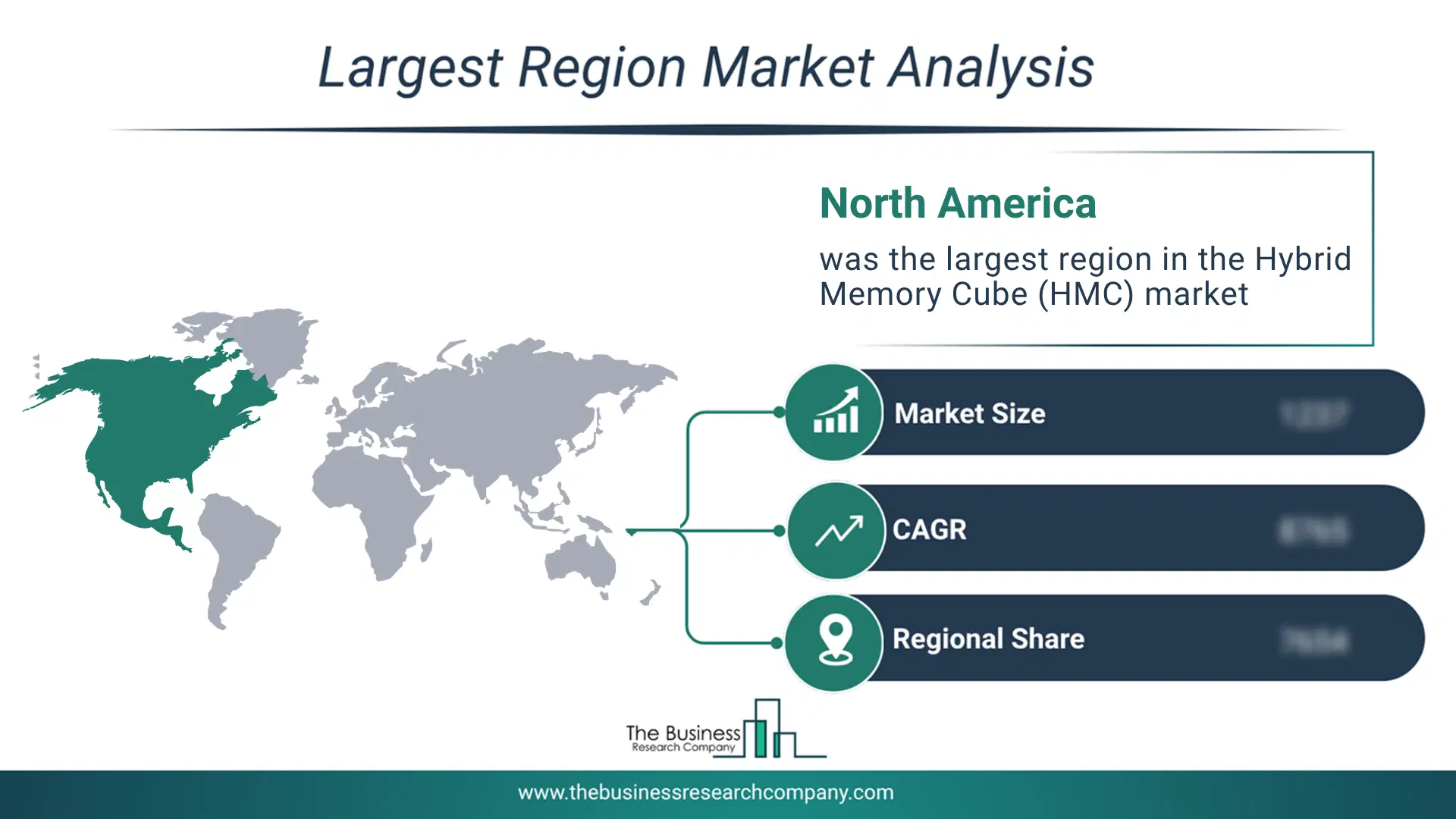
Regional Insights
North America was the largest region in the hybrid memory cube (HMC) market in 2025. Asia-Pacific is expected to be the fastest-growing region in the forecast period. The regions covered in this market report are Asia-Pacific, South East Asia, Western Europe, Eastern Europe, North America, South America, Middle East, Africa. The countries covered in this market report are Australia, Brazil, China, France, Germany, India, Indonesia, Japan, Taiwan, Russia, South Korea, UK, USA, Canada, Italy, SpainWhat Defines the Hybrid Memory Cube (HMC) Market?
The hybrid memory cube (HMC) market consists of sales of memory modules, graphics cards, high-performance computing systems, and network equipment. Values in this market are ‘factory gate’ values, that is the value of goods sold by the manufacturers or creators of the goods, whether to other entities (including downstream manufacturers, wholesalers, distributors, and retailers) or directly to end customers. The value of goods in this market includes related services sold by the creators of the goods.How is Market Value Defined and Measured?
The market value is defined as the revenues that enterprises gain from the sale of goods and/or services within the specified market and geography through sales, grants, or donations in terms of the currency (in USD unless otherwise specified). The revenues for a specified geography are consumption values that are revenues generated by organizations in the specified geography within the market, irrespective of where they are produced. It does not include revenues from resales along the supply chain, either further along the supply chain or as part of other products.
This chart presents market attractiveness based on a quantitative evaluation of growth, competition, strategic alignment, and risk, offering a clear view of opportunity areas for decision-making. This chart is for illustrative purposes; the full report contains the complete analysis.

This chart highlights the Total Addressable Market (TAM) by estimating the maximum revenue opportunity using an assumption-driven approach, supporting strategic planning and opportunity sizing across markets. The chart is illustrative; the full report provides a more comprehensive analysis.
What Key Data and Analysis Are Included in the Hybrid Memory Cube (HMC) Market Report 2026?
The hybrid memory cube (hmc) market research report is one of a series of new reports from The Business Research Company that provides market statistics, including industry global market size, regional shares, competitors with the market share, detailed market segments, market trends and opportunities, and any further data you may need to thrive in the hybrid memory cube (hmc) industry. The market research report delivers a complete perspective of everything you need, with an in-depth analysis of the current and future state of the industry.Hybrid Memory Cube (HMC) Market Report Forecast Analysis
| Report Attribute | Details |
|---|---|
| Market Size Value In 2026 | $2.53 billion |
| Revenue Forecast In 2030 | $6.04 billion |
| Growth Rate | CAGR of 24.3% from 2026 to 2030 |
| Base Year For Estimation | 2025 |
| Actual Estimates/Historical Data | 2020-2025 |
| Forecast Period | 2026 - 2030 |
| Market Representation | Revenue in USD Billion and CAGR from 2026 to 2030 |
| Segments Covered | Product, Application, End-User |
| Regional Scope | Asia-Pacific, Western Europe, Eastern Europe, North America, South America, Middle East, Africa |
| Country Scope | The Countries Covered In This Market Report Are Australia, Brazil, China, France, Germany, India, Indonesia, Japan, Taiwan, Russia, South Korea, Uk, Usa, Canada, Italy, Spain. |
| Key Companies Profiled | Micron Technology, Samsung Electronics Co Ltd, Intel Corporation, SK Hynix Inc, Xilinx Inc, Fujitsu Limited, IBM Corporation, Rambus Inc, NVIDIA Corporation, Toshiba Corporation, AMD Advanced Micro Devices Inc, Nanya Technology Corporation, Broadcom Inc, Marvell Technology Group Ltd, Texas Instruments Inc, Qualcomm Technologies Inc, Applied Micro Circuits Corporation, TSMC Taiwan Semiconductor Manufacturing Company, Infineon Technologies AG, Western Digital Corporation, MediaTek Inc, Huawei Technologies Co Ltd, Cadence Design Systems Inc, Arm Holdings Ltd, Mentor Graphics Corporation |
| Customization Scope | Request for Customization |
| Pricing And Purchase Options | Explore Purchase Options |