
Hydraulic Self-Climbing System Market Report 2026
Global Outlook – By Type (Hydraulic Climbing Systems, Hybrid Climbing Systems), By Application (High-Rise Buildings, Bridges, Dams, Power Plants, Other Applications), By End User (Construction, Transportation) – Market Size, Trends, Strategies, and Forecast to 2030
Hydraulic Self-Climbing System Market Overview
• Hydraulic Self-Climbing System market size has reached to $1.28 billion in 2025 • Expected to grow to $1.99 billion in 2030 at a compound annual growth rate (CAGR) of 9.3% • Growth Driver: Rise In High-Rise Buildings Fueling The Growth Of The Market Due To Increasing Urbanization And Vertical Construction Needs • Market Trend: Innovative Hydraulic Climbing Solutions Drive Faster And Safer Building Projects • North America was the largest region in 2025 and Asia-Pacific is the fastest growing region.What Is Covered Under Hydraulic Self-Climbing System Market?
Hydraulic self-climbing systems refer to advanced construction platforms or formwork systems that utilize hydraulic mechanisms to climb vertically along a structure without the need for cranes. These systems are widely used in high-rise building construction and bridge pylons, offering enhanced efficiency, safety, and reduced labor. By automating the climbing process, they enable continuous construction cycles and minimize downtime. The main types of hydraulic self-climbing systems include hydraulic climbing systems, hydraulic hoisting systems, and hybrid climbing systems. Hydraulic climbing systems are mechanical platforms that use hydraulic power to lift and reposition themselves along a structure during high-rise construction. It is applied for high-rise buildings, bridges, dams, power plants, and others by several end users, including construction, oil and gas, manufacturing, and transportation.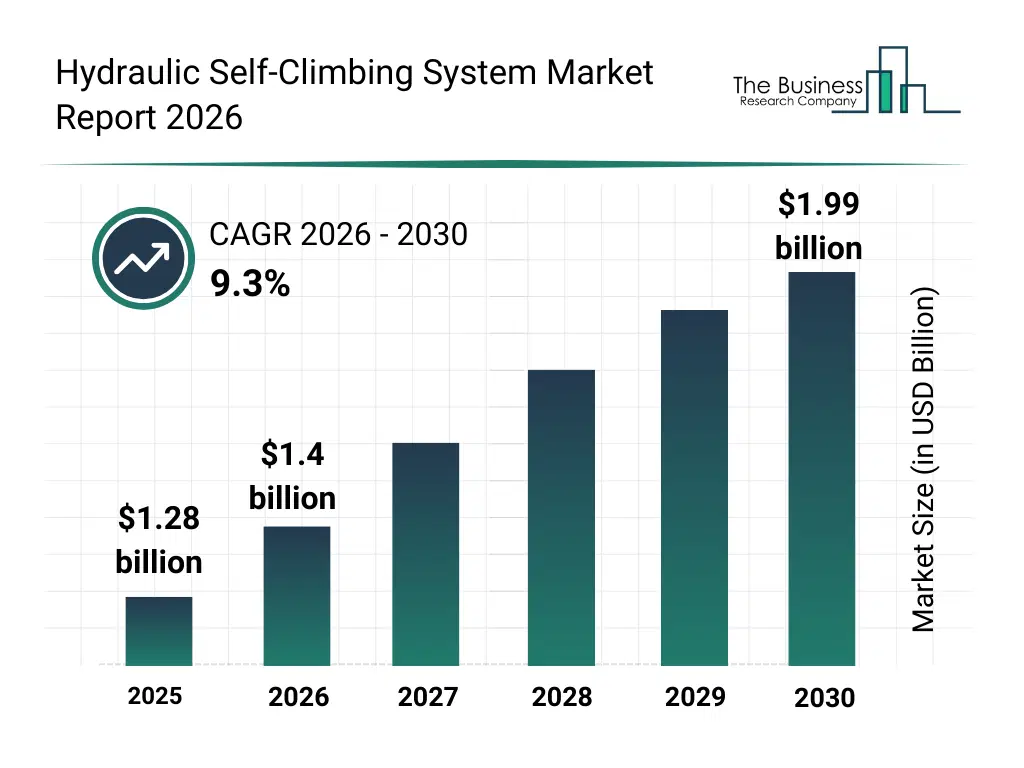
What Is The Hydraulic Self-Climbing System Market Size and Share 2026?
The hydraulic self-climbing system market size has grown strongly in recent years. It will grow from $1.28 billion in 2025 to $1.4 billion in 2026 at a compound annual growth rate (CAGR) of 9.5%. The growth in the historic period can be attributed to rise of skyscraper construction, shortage of skilled labor, demand for faster project cycles, safety regulations in construction, growth of bridge and dam projects.What Is The Hydraulic Self-Climbing System Market Growth Forecast?
The hydraulic self-climbing system market size is expected to see strong growth in the next few years. It will grow to $1.99 billion in 2030 at a compound annual growth rate (CAGR) of 9.3%. The growth in the forecast period can be attributed to smart city development, expansion of urban skylines, adoption of automated construction equipment, infrastructure modernization programs, demand for productivity optimization. Major trends in the forecast period include automation of vertical construction platforms, reduced crane dependency on high rise sites, improved worker safety through hydraulic control, adoption in mega infrastructure projects, integration of modular climbing formwork.Tariff Impact On Hydraulic Self-Climbing System Market
Tariffs have impacted the hydraulic self climbing system market by increasing the cost of hydraulic components, steel frames, and control units. These effects are most visible in large scale projects across Asia Pacific and Europe. Higher system costs have affected contractor margins. At the same time, tariffs are encouraging localized manufacturing of climbing systems.
Global Hydraulic Self-Climbing System Market Segmentation
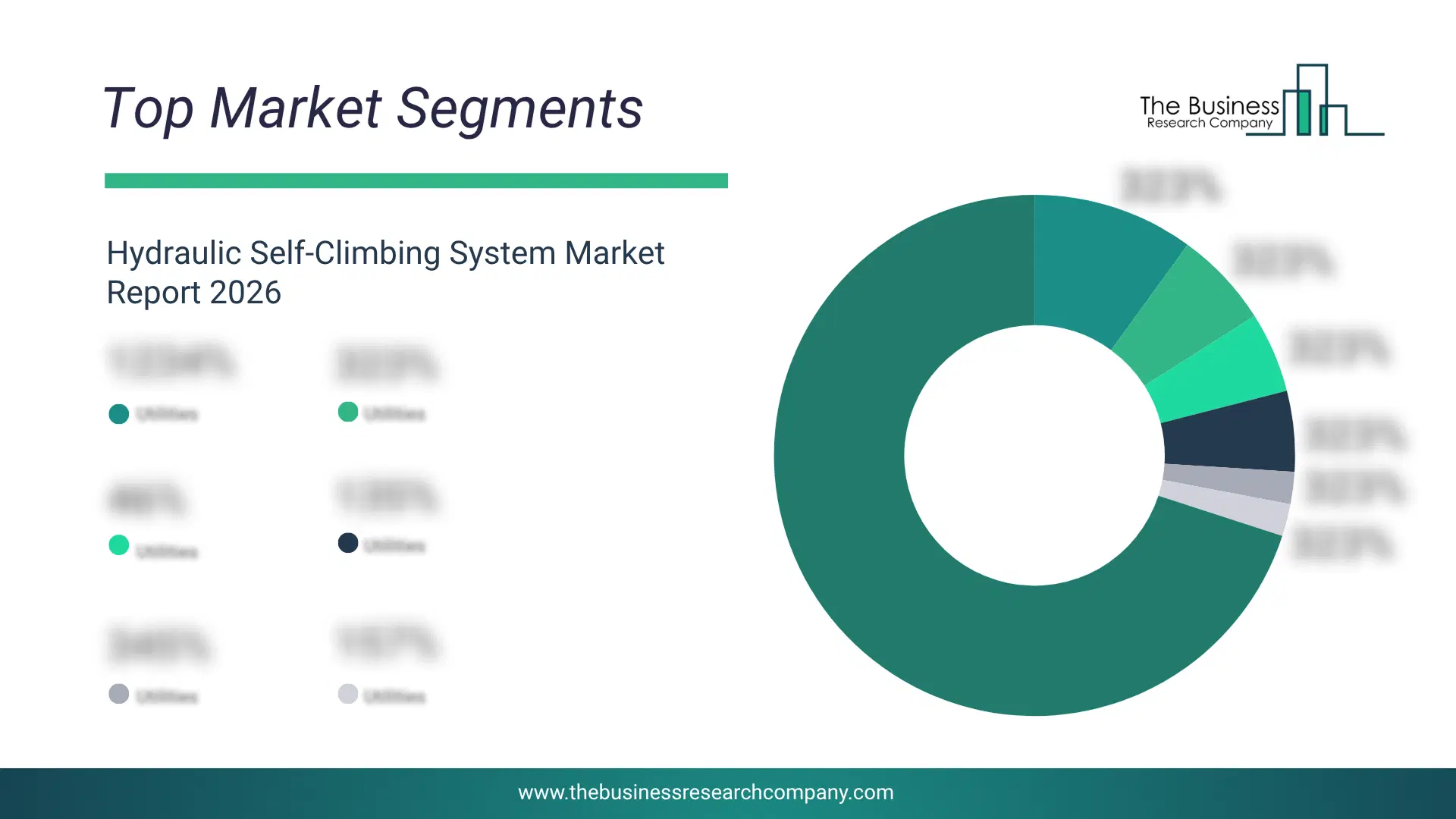
1) By Type: Hydraulic Climbing Systems, Hybrid Climbing Systems 2) By Application: High-Rise Buildings, Bridges, Dams, Power Plants, Other Applications 3) By End User: Construction, Transportation Subsegments: 1) By Hydraulic Climbing Systems: Internal Climbing Systems, External Climbing Systems, Combined Climbing Systems 2) By Hybrid Climbing Systems: Hydraulic-Electric Hybrid Systems, Hydraulic-Mechanical Hybrid Systems, Automated Hybrid SystemsWhat Is The Driver Of The Hydraulic Self-Climbing System Market?
The rising demand for high-rise buildings is expected to propel the growth of the hydraulic self-climbing system market going forward. High-rise buildings are tall structures with many floors, usually requiring elevators to move between levels due to their significant height. The demand for high-rise buildings is rising due to rapid urbanization, as growing populations in cities increase the need to maximize limited land space through vertical construction. Hydraulic self-climbing systems are beneficial for high-rise buildings as they enable faster and safer vertical construction by automatically lifting formwork without the need for cranes. For instance, in January 2024, according to the Council on Tall Buildings and Urban Habitat (CTBUH), a US-based non-profit organization that monitors global skyscraper development, 185 buildings of 200 meters or greater in height were completed in 2023, marking a 10.1 percent increase from 168 such completions in 2022. Therefore, the rising demand for high-rise buildings is driving the growth of the hydraulic self-climbing system industry.Key Players In The Global Hydraulic Self-Climbing System Market
Major companies operating in the hydraulic self-climbing system market are PERI GmbH, ULMA Construction, S. Coop. (ULMA Construction Group), MEVA Formwork Systems GmbH, EFCO Corporation, Alsina Formwork, S.A., Doka GmbH, Kumkang Kind Co., Ltd., Pilosio S.p.A., Condor S.p.A., Faresin Building S.p.A., RMD Kwikform Limited, PASCHAL-Werk G. Maier GmbH, TMS Formwork Systems Ltd., Acrow Engineering Group Limited, TECON Formwork Systems Sdn. Bhd., Novatec Formwork Systems Private Limited, Kitsen Formworks Private Limited, Alulite Forms Private Limited, Geto Formwork Private Limited, Sampmax Formwork Systems Co., Ltd., MFE Formwork Technology Sdn. Bhd., NOE Schaltechnik GmbH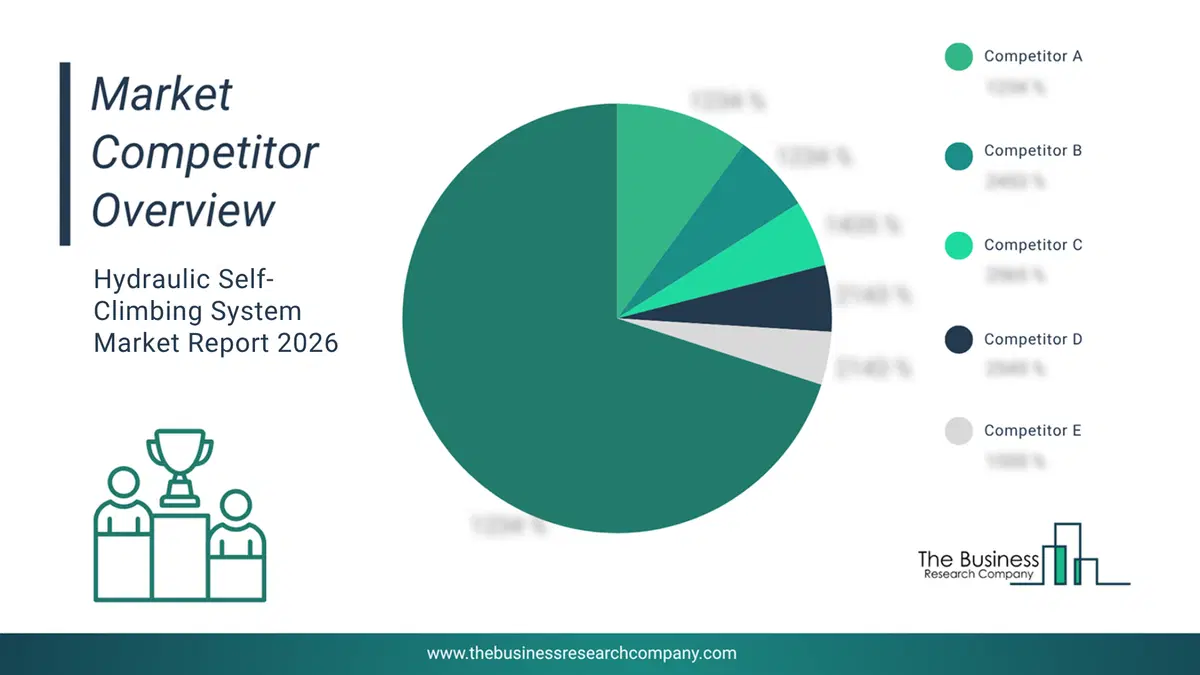
This chart is for illustrative purposes; the full report includes a detailed competitor analysis and comprehensive overview of the top 10 companies in the market.
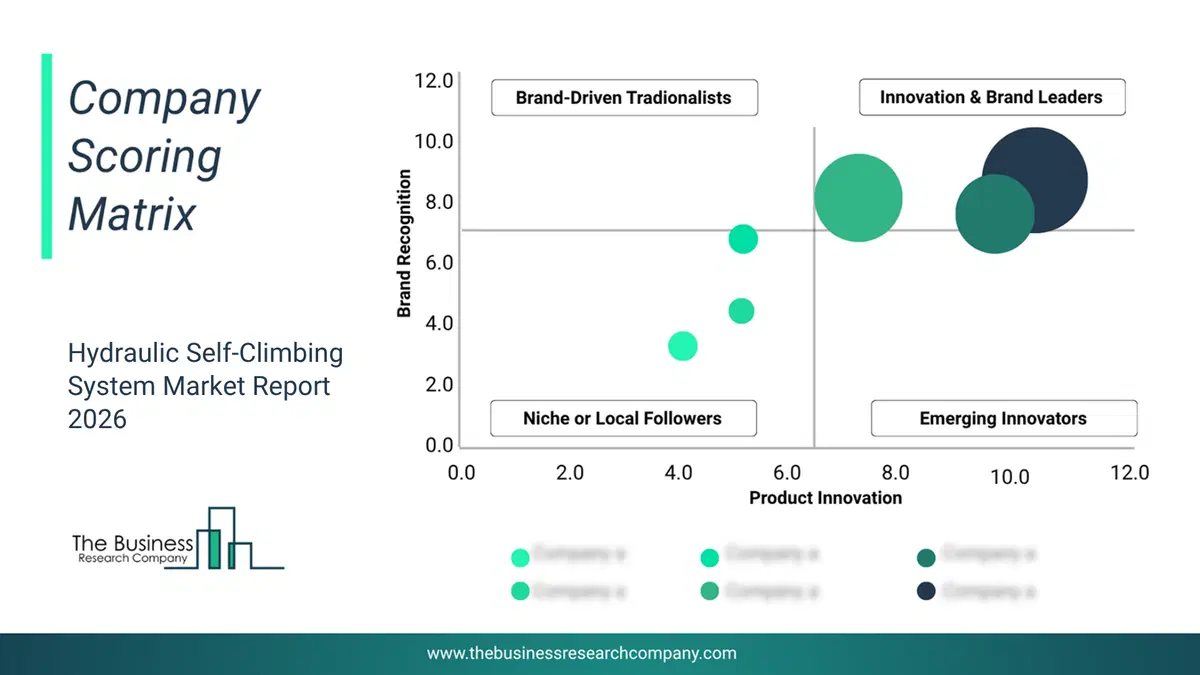
This chart maps companies by product innovation and brand strength, with bubble size indicating relative revenue, helping identify market leaders, challengers, and niche players. This is an illustrative chart; the full report provides a complete and accurate competitive analysis.
Global Hydraulic Self-Climbing System Market Trends and Insights
Major companies operating in the hydraulic self-climbing system market are focusing on developing advanced solutions, such as modular hydraulic climbing systems, to enhance construction efficiency, improve worker safety, and enable faster, more adaptable climbing solutions for complex high-rise and core wall projects. A modular hydraulic climbing system refers to a customizable, hydraulically powered platform system that climbs building structures to support formwork and safety panels in high-rise construction. For instance, in April 2025, PERI SE, a Germany-based manufacturer and supplier of formwork and scaffolding systems, introduced the RCS MAX Rail Climbing System. This modular hydraulic system is designed for efficient climbing of formwork and protection panels, specifically in high-rise and core wall construction projects. The RCS MAX enhances climbing power and accelerates cycle times, enabling faster progress on tall building projects. Its adaptable modular design allows for easy customization to different building shapes while ensuring top-level safety. Additionally, the system minimizes the need for crane operations and manual labor, making the construction process more streamlined and efficient.What Are Latest Mergers And Acquisitions In The Hydraulic Self-Climbing System Market?
In February 2024, Doka GmbH, an Austria-based global provider of formwork and scaffolding systems, acquired MFE Formwork Technology for an undisclosed amount. With this acquisition, Doka gains access to MFE’s state-of-the-art production facilities, its monolithic aluminum formwork technology including slab, wall, decking, column systems and self-climbing platforms, and MFE’s strong presence in Southeast Asia, thereby expanding and enhancing Doka’s formwork and scaffolding portfolio and significantly improving its operational scale, geographic reach and ability to serve diverse construction segments globally. MFE Formwork Technology is a Malaysia-based provider of monolithic aluminium formwork solutions, known for efficient single-pour slab and wall systems and a comprehensive modular formwork and safety-platform product line.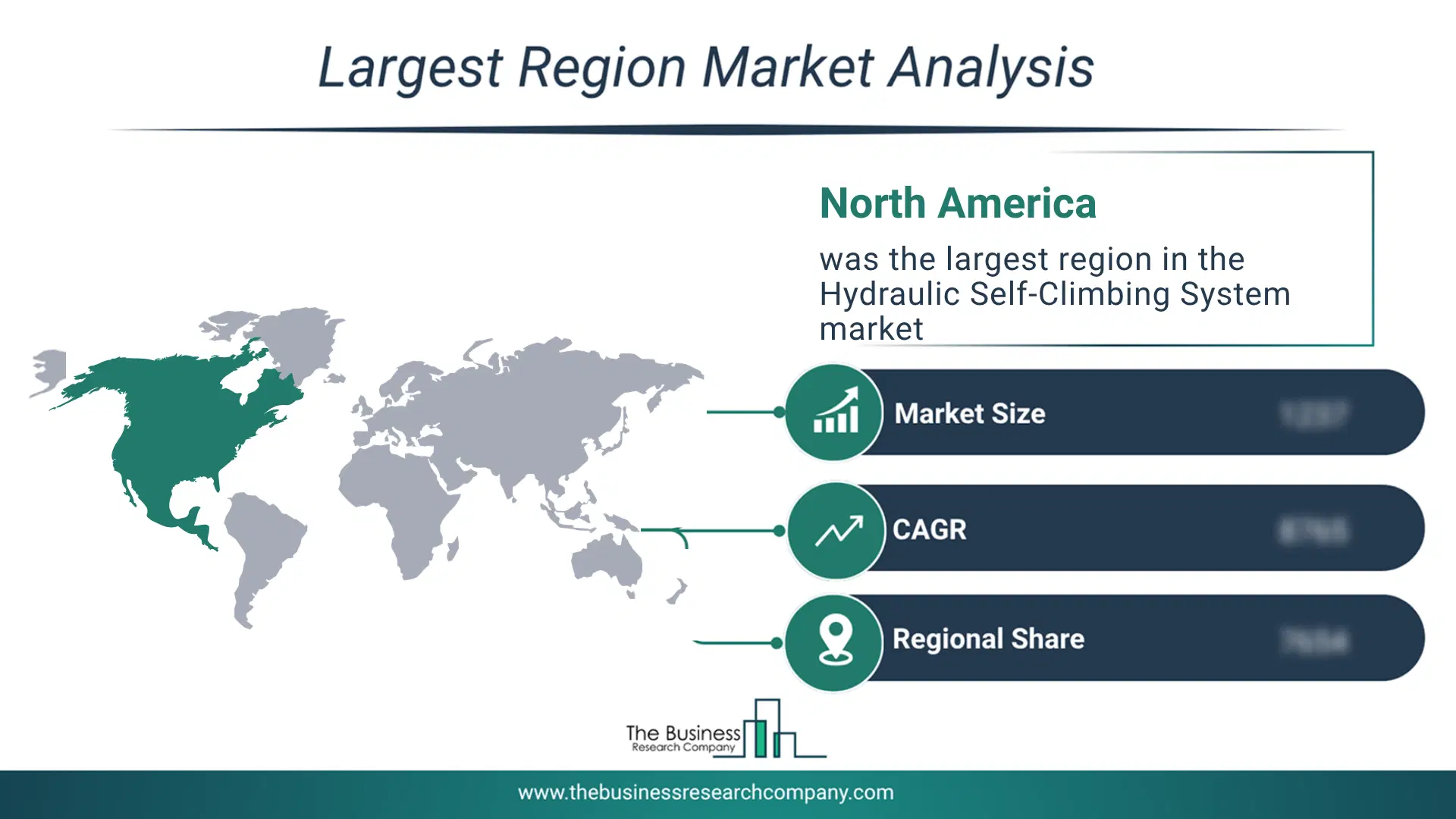
Regional Outlook
North America was the largest region in the hydraulic self-climbing system market in 2025. Asia-Pacific is expected to be the fastest-growing region in the forecast period. The regions covered in this market report are Asia-Pacific, South East Asia, Western Europe, Eastern Europe, North America, South America, Middle East, Africa The countries covered in this market report are Australia, Brazil, China, France, Germany, India, Indonesia, Japan, Taiwan, Russia, South Korea, UK, USA, Canada, Italy, Spain.What Defines the Hydraulic Self-Climbing System Market?
The hydraulic self-climbing system market consists of sales of platform climbing systems, crane-independent climbing systems, and multi-level climbing systems. Values in this market are ‘factory gate’ values, that is, the value of goods sold by the manufacturers or creators of the goods, whether to other entities (including downstream manufacturers, wholesalers, distributors, and retailers) or directly to end customers. The value of goods in this market includes related services sold by the creators of the goods.How is Market Value Defined and Measured?
The market value is defined as the revenues that enterprises gain from the sale of goods and/or services within the specified market and geography through sales, grants, or donations in terms of the currency (in USD unless otherwise specified). The revenues for a specified geography are consumption values that are revenues generated by organizations in the specified geography within the market, irrespective of where they are produced. It does not include revenues from resales along the supply chain, either further along the supply chain or as part of other products.
This chart presents market attractiveness based on a quantitative evaluation of growth, competition, strategic alignment, and risk, offering a clear view of opportunity areas for decision-making. This chart is for illustrative purposes; the full report contains the complete analysis.

This chart highlights the Total Addressable Market (TAM) by estimating the maximum revenue opportunity using an assumption-driven approach, supporting strategic planning and opportunity sizing across markets. The chart is illustrative; the full report provides a more comprehensive analysis.
What Key Data and Analysis Are Included in the Hydraulic Self-Climbing System Market Report 2026?
The hydraulic self-climbing system market research report is one of a series of new reports from The Business Research Company that provides market statistics, including industry global market size, regional shares, competitors with the market share, detailed market segments, market trends and opportunities, and any further data you may need to thrive in the hydraulic self-climbing system industry. The market research report delivers a complete perspective of everything you need, with an in-depth analysis of the current and future state of the industry.Hydraulic Self Climbing System Market Report Forecast Analysis
| Report Attribute | Details |
|---|---|
| Market Size Value In 2026 | $1.4 billion |
| Revenue Forecast In 2030 | $1.99 billion |
| Base Year For Estimation | 2025 |
| Actual Estimates/Historical Data | 2020-2025 |
| Forecast Period | 2026 - 2030 |
| Market Representation | Revenue in USD Billion and CAGR from 2026 to 2030 |
| Segments Covered | Type, Application, End User |
| Regional Scope | Asia-Pacific, Western Europe, Eastern Europe, North America, South America, Middle East, Africa |
| Key Companies Profiled | PERI GmbH, ULMA Construction, S. Coop. (ULMA Construction Group), MEVA Formwork Systems GmbH, EFCO Corporation, Alsina Formwork, S.A., Doka GmbH, Kumkang Kind Co., Ltd., Pilosio S.p.A., Condor S.p.A., Faresin Building S.p.A., RMD Kwikform Limited, PASCHAL-Werk G. Maier GmbH, TMS Formwork Systems Ltd., Acrow Engineering Group Limited, TECON Formwork Systems Sdn. Bhd., Novatec Formwork Systems Private Limited, Kitsen Formworks Private Limited, Alulite Forms Private Limited, Geto Formwork Private Limited, Sampmax Formwork Systems Co., Ltd., MFE Formwork Technology Sdn. Bhd., NOE Schaltechnik GmbH |
| Customization Scope | Request for Customization |
| Pricing And Purchase Options | Explore Purchase Options |