

Hydro-Processing Catalysts Market Report 2026
Global Outlook – By Catalyst Type (Hydrotreating Catalysts, Hydrocracking Catalysts), By Ingredient (Molybdenum, Nickel, Cobalt, Tungsten, Other Ingredients), By Application (Diesel Fuel Hydroprocessing, Gasoline Hydroprocessing, Jet Fuel Hydroprocessing, Vacuum Gas Oil Hydroprocessing, Residue Hydroprocessing), By End User (Petroleum Refineries, Petrochemical Companies, Renewable Fuel Producers, Catalyst Regeneration Service Providers, Research And Development Institutions) – Market Size, Trends, Strategies, and Forecast to 2030
Hydro-Processing Catalysts Market Overview
• Hydro-Processing Catalysts market size has reached to $5.18 billion in 2025 • Expected to grow to $7.5 billion in 2030 at a compound annual growth rate (CAGR) of 7.5% • Growth Driver: Surge In Demand For Cleaner Transportation Fuels Is Fueling The Market Growth Due To Cleaner Fuel Production Needs • Market Trend: Expansion Of Hydroprocessing Catalyst Portfolios Strengthens Refining And Fuel Processing Capabilities • North America was the largest region in 2025 and Asia-Pacific is the fastest growing region.What Is Covered Under Hydro-Processing Catalysts Market?
Hydro-processing catalysts are specialized chemical catalysts used in petroleum refining processes to remove impurities and improve the quality of hydrocarbon feedstocks through reactions involving hydrogen. They facilitate processes such as desulfurization, denitrogenation, demetallization, and hydrocracking by promoting chemical transformations under high temperature and pressure conditions. Hydro-processing catalysts help produce cleaner fuels with improved performance characteristics while supporting compliance with stringent environmental regulations. The main catalyst types of hydro-processing catalysts include hydrotreating catalysts and hydrocracking catalysts. Hydrotreating catalysts refer to catalysts used to remove impurities such as sulfur, nitrogen, and metals from petroleum feedstocks through hydrogenation reactions. These catalysts contain molybdenum, nickel, cobalt, tungsten, and other ingredients. The various applications involved are diesel fuel hydroprocessing, gasoline hydroprocessing, jet fuel hydroprocessing, vacuum gas oil hydroprocessing, and residue hydroprocessing, and they are utilized by end users including petroleum refineries, petrochemical companies, renewable fuel producers, catalyst regeneration service providers, and research and development institutions.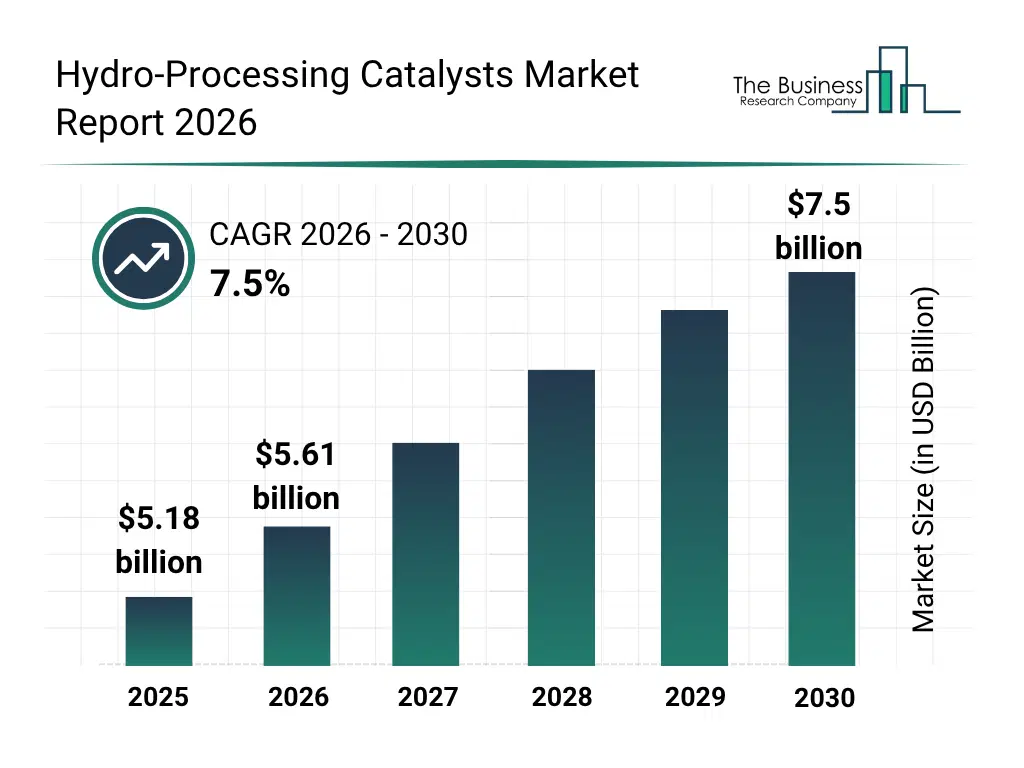
What Is The Hydro-Processing Catalysts Market Size and Share 2026?
The hydro-processing catalysts market size has grown strongly in recent years. It will grow from $5.18 billion in 2025 to $5.61 billion in 2026 at a compound annual growth rate (CAGR) of 8.2%. The growth in the historic period can be attributed to tightening fuel sulfur regulations, increasing demand for cleaner transportation fuels, growth in petroleum refining capacity, rising processing of heavy crude oils, increasing adoption of hydrodesulfurization processes.What Is The Hydro-Processing Catalysts Market Growth Forecast?
The hydro-processing catalysts market size is expected to see strong growth in the next few years. It will grow to $7.5 billion in 2030 at a compound annual growth rate (CAGR) of 7.5%. The growth in the forecast period can be attributed to increasing demand for ultra-low-sulfur fuels, growing refinery investments in hydro-processing units, rising processing of heavier and more complex feedstocks, increasing demand for high-quality jet fuel and diesel, expansion of renewable fuel co-processing. Major trends in the forecast period include increasing adoption of high-activity hydro-processing catalysts, development of longer-life catalyst formulations, growing use of bimetallic catalyst systems, increasing adoption of regenerable hydro-processing catalysts, development of catalysts for heavy and high-sulfur feedstocks.Tariff Impact On Hydro-Processing Catalysts Market
Tariffs are impacting the hydro-processing catalysts market by increasing the cost of imported catalyst ingredients, specialty metals, chemical precursors, and catalyst manufacturing equipment. This is increasing refining costs for diesel, gasoline, jet fuel, and residue hydroprocessing, particularly in regions dependent on imported catalyst materials such as Asia-Pacific and North America. Metal-intensive segments such as molybdenum, nickel, cobalt, and tungsten-based catalysts are most affected due to global supply chain dependencies. However, tariffs are also encouraging domestic catalyst production, regional sourcing of critical materials, and investment in catalyst regeneration and recycling capabilities, creating long-term resilience in the market.
Global Hydro Processing Catalysts Market Segmentation
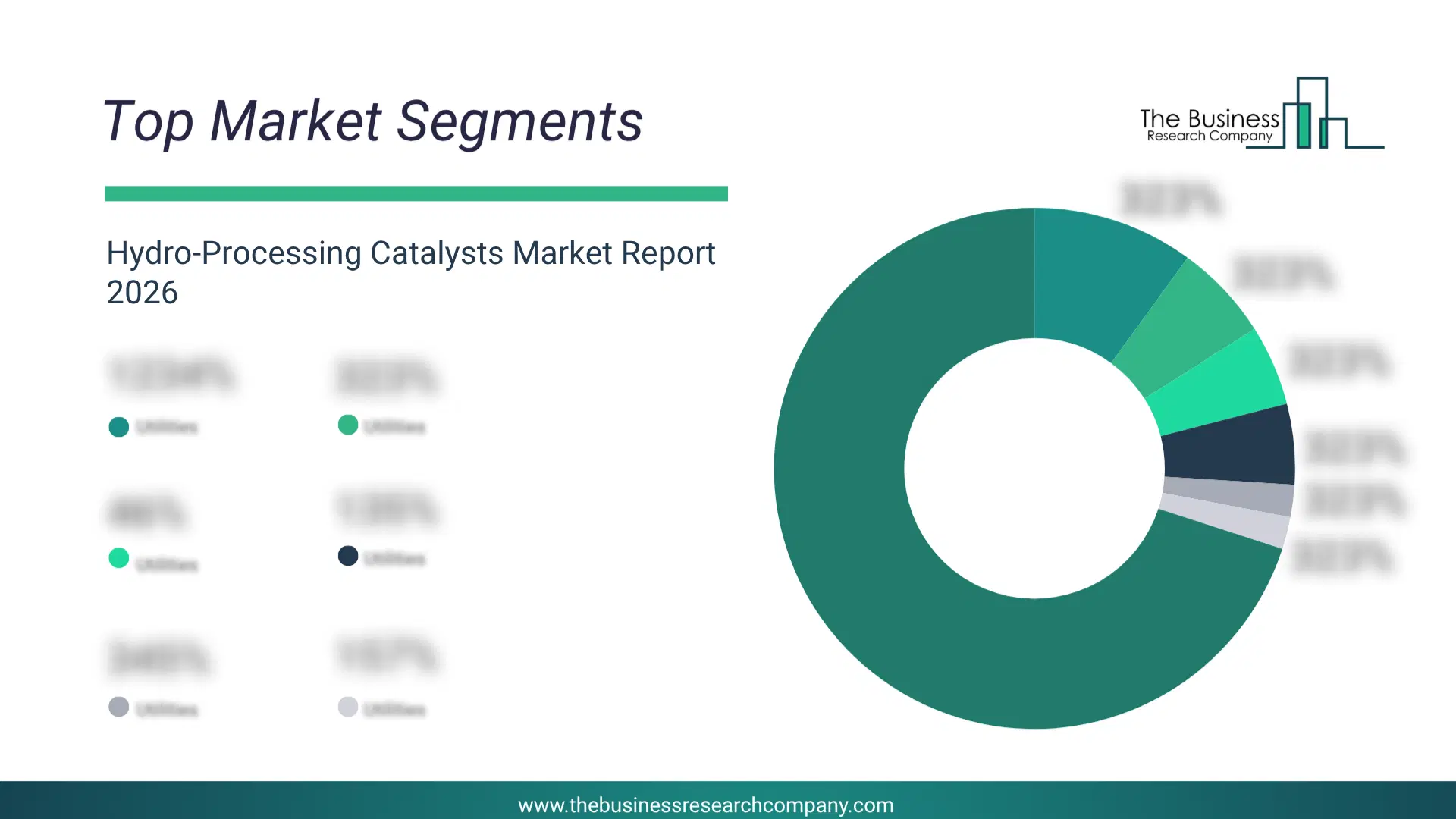
1) By Catalyst Type: Hydrotreating Catalysts, Hydrocracking Catalysts 2) By Ingredient: Molybdenum, Nickel, Cobalt, Tungsten, Other Ingredients 3) By Application: Diesel Fuel Hydroprocessing, Gasoline Hydroprocessing, Jet Fuel Hydroprocessing, Vacuum Gas Oil Hydroprocessing, Residue Hydroprocessing 4) By End User: Petroleum Refineries, Petrochemical Companies, Renewable Fuel Producers, Catalyst Regeneration Service Providers, Research And Development Institutions Subsegments: 1) By Hydrotreating Catalysts: Hydrodesulfurization Catalysts, Hydrodenitrogenation Catalysts, Hydrodemetallization Catalysts 2) By Hydrocracking Catalysts: Amorphous Silica Alumina Catalysts, Zeolite Based Catalysts, Bifunctional CatalystsWhat Is The Driver Of The Hydro-Processing Catalysts Market?
The growing demand for cleaner transportation fuels is expected to propel the growth of the hydro-processing catalysts market going forward. Cleaner transportation fuels refer to fuels that produce lower emissions and reduce environmental impact compared with conventional fossil fuels. The growing demand for cleaner transportation fuels is driven by increasing environmental concerns, as they help reduce greenhouse gas emissions and support the transition toward sustainable transportation. The growing demand for cleaner transportation fuels supports the hydro-processing catalysts by increasing the adoption of hydrotreating and hydrodesulfurization catalysts, which enable refiners to remove sulfur, nitrogen, and other contaminants from petroleum feedstocks while producing high-quality fuels. For instance, in November 2025, according to the Department for Transport, a UK-based government department, renewable fuels represented 8% of total road and non-road mobile machinery fuel supplied in the UK, equivalent to 3,809 million liters. Therefore, the growing demand for cleaner transportation fuels is driving the growth of the hydro-processing catalysts industry.Key Players In The Global Hydro-Processing Catalysts Market
Major companies operating in the hydro-processing catalysts market are Exxon Mobil Corporation, Honeywell International Inc, Sinopec Catalyst Co Ltd, BASF SE, Johnson Matthey Plc, Evonik Industries AG, W R Grace & Co -Conn, Clariant AG, Axens SA, Topsoe AS, Ecovyst Inc, KNT Group Co Ltd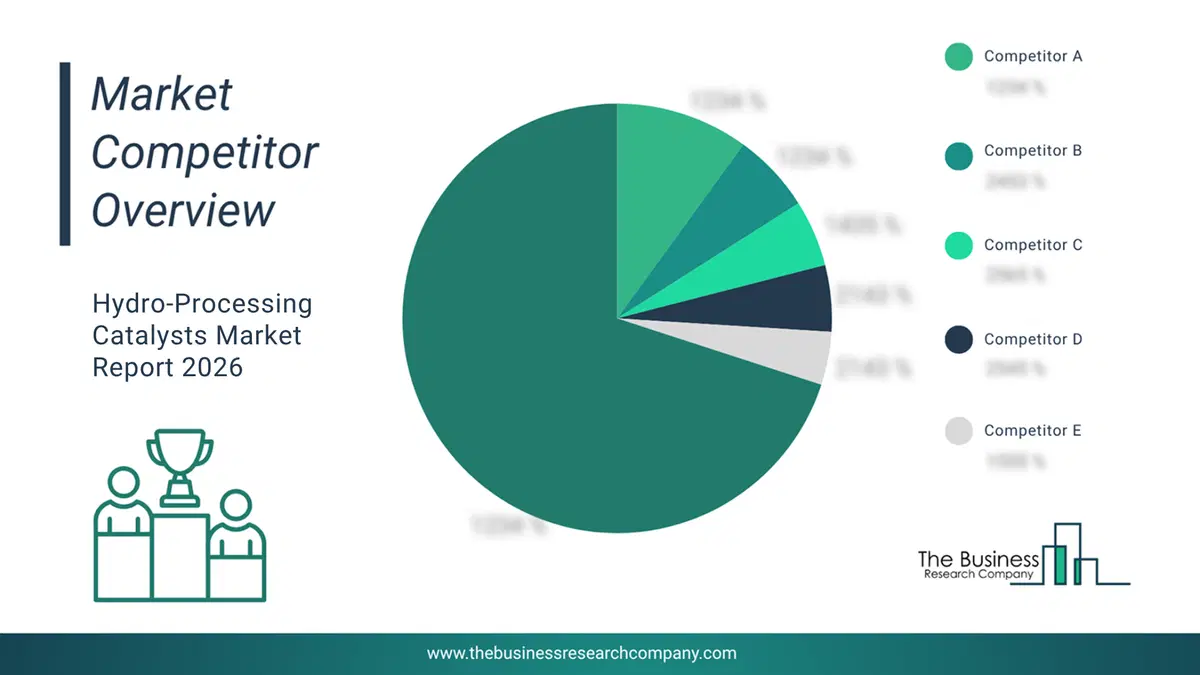
This chart is for illustrative purposes; the full report includes a detailed competitor analysis and comprehensive overview of the top 10 companies in the market.
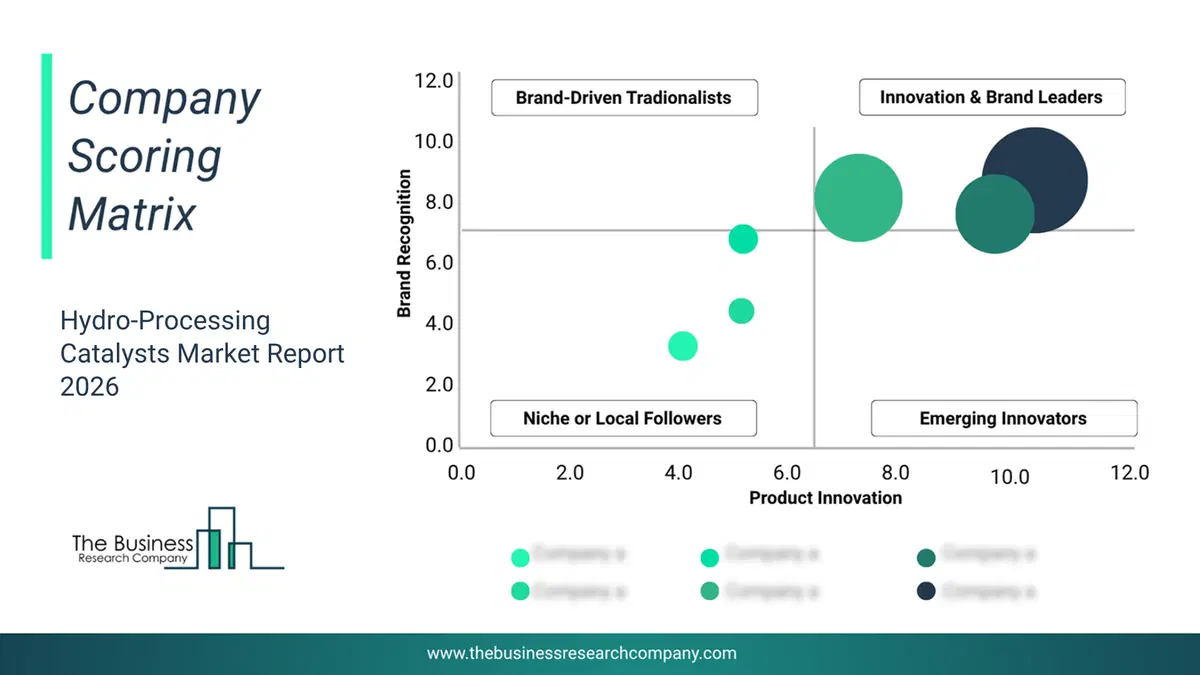
This chart maps companies by product innovation and brand strength, with bubble size indicating relative revenue, helping identify market leaders, challengers, and niche players. This is an illustrative chart; the full report provides a complete and accurate competitive analysis.
Global Hydro-Processing Catalysts Market Trends and Insights
Major companies operating in the hydro-processing catalysts market are focusing on expanding their catalyst portfolios, such as integrated hydro-processing catalyst solutions, to enhance refining efficiency, support diverse feedstocks, and improve the production of lower-carbon-intensity fuels. Integrated hydro-processing catalyst solutions refer to specialized catalyst systems designed for processes such as hydrocracking, lubricants hydroprocessing, hydrotreating, and renewable feedstock processing to improve product quality and process performance. For instance, in November 2025, Chevron Lummus Global, a US-based provider of refining and hydro-processing technologies, announced an agreement to expand and strengthen its catalyst business through the integration of a portion of the Advanced Refining Technologies (ART) hydroprocessing catalyst portfolio. The agreement, resulting from W. R. Grace and Company’s acquisition of Chevron’s stake in ART, enables Chevron Lummus Global to develop, sell, and provide technical support for catalysts used in hydrocracking, lubricants hydroprocessing, and renewable hydroprocessing, strengthening its ability to deliver integrated technology and catalyst solutions across the hydroprocessing catalyst market.What Are Latest Mergers And Acquisitions In The Hydro-Processing Catalysts Market?
In November 2025, W. R. Grace & Co., a US-based specialty chemicals and catalyst company, acquired Advanced Refining Technologies (ART) for an undisclosed amount. Through this acquisition, Grace aims to strengthen its hydroprocessing catalyst capabilities by integrating ART’s catalyst technologies for fixed-bed and ebullated-bed resid hydroprocessing, distillate hydrotreating, and renewable fuel applications. Advanced Refining Technologies is a US-based catalyst company that provides hydro-processing catalysts for refining and renewable fuels production.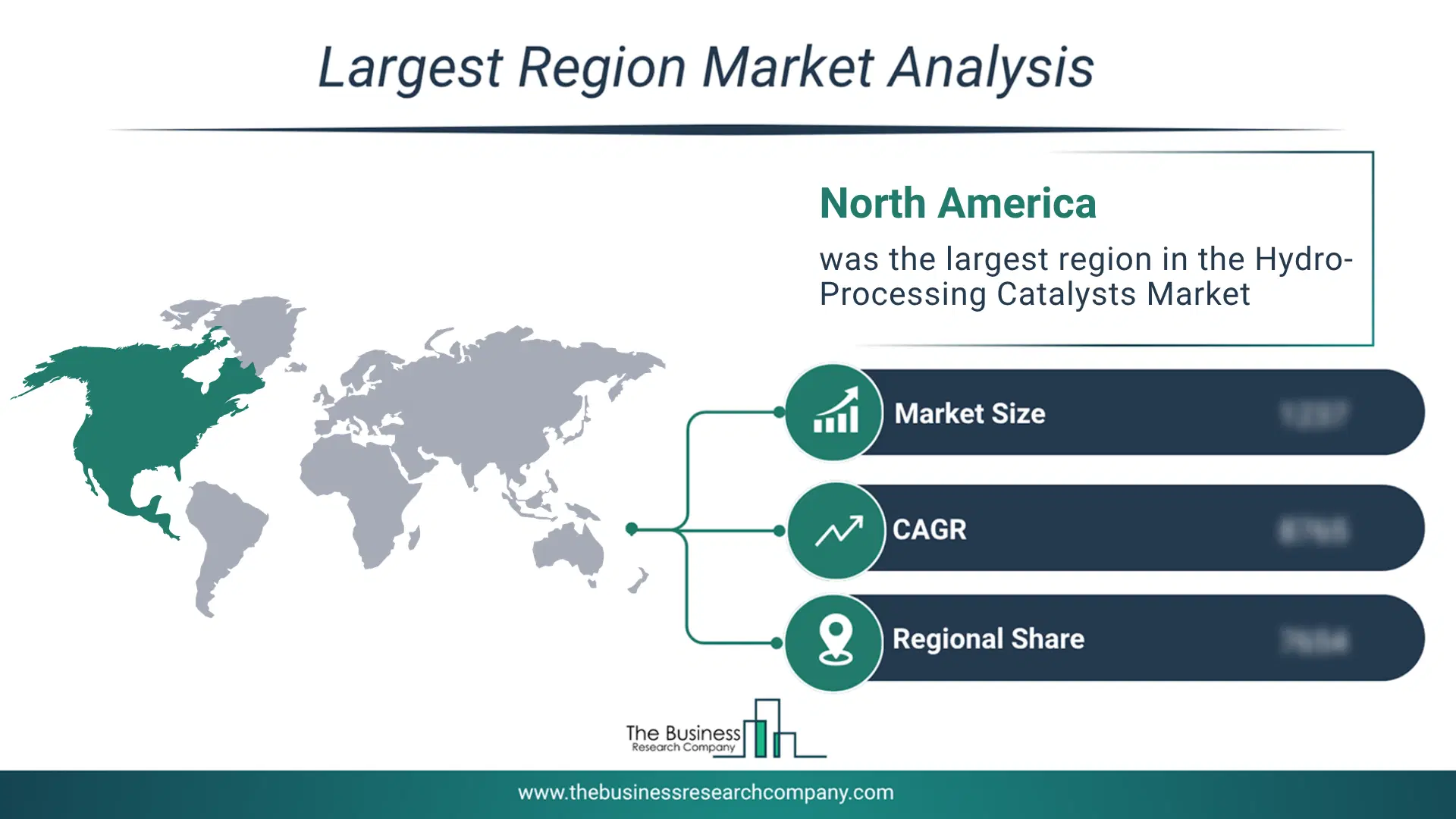
Regional Outlook
North America was the largest region in the hydro-processing catalysts market in 2025. Asia-Pacific is expected to be the fastest-growing region in the forecast period. The regions covered in this market report are Asia-Pacific, South East Asia, Western Europe, Eastern Europe, North America, South America, Middle East, Africa. The countries covered in this market report are Australia, Brazil, China, France, Germany, India, Indonesia, Japan, Taiwan, Russia, South Korea, UK, USA, Canada, Italy, Spain.What Defines the Hydro-Processing Catalysts Market?
The hydro-processing catalysts market consists of sales of catalyst beads, catalyst powders, spent catalyst recovery material, and catalyst regeneration chemicals. Values in this market are ‘factory gate’ values, that is, the value of goods sold by the manufacturers or creators of the goods, whether to other entities (including downstream manufacturers, wholesalers, distributors, and retailers) or directly to end customers. The value of goods in this market includes related services sold by the creators of the goods.How is Market Value Defined and Measured?
The market value is defined as the revenues that enterprises gain from the sale of goods and/or services within the specified market and geography through sales, grants, or donations in terms of the currency (in USD unless otherwise specified). The revenues for a specified geography are consumption values that are revenues generated by organizations in the specified geography within the market, irrespective of where they are produced. It does not include revenues from resales along the supply chain, either further along the supply chain or as part of other products.
This chart presents market attractiveness based on a quantitative evaluation of growth, competition, strategic alignment, and risk, offering a clear view of opportunity areas for decision-making. This chart is for illustrative purposes; the full report contains the complete analysis.

This chart highlights the Total Addressable Market (TAM) by estimating the maximum revenue opportunity using an assumption-driven approach, supporting strategic planning and opportunity sizing across markets. The chart is illustrative; the full report provides a more comprehensive analysis.
What Key Data and Analysis Are Included in the Hydro-Processing Catalysts Market Report 2026?
The hydro-processing catalysts market research report is one of a series of new reports from The Business Research Company that provides market statistics, including industry global market size, regional shares, competitors with the market share, detailed market segments, market trends and opportunities, and any further data you may need to thrive in the hydro-processing catalysts industry. The market research report delivers a complete perspective of everything you need, with an in-depth analysis of the current and future state of the industry.Hydro-Processing Catalysts Market Report Forecast Analysis
| Report Attribute | Details |
|---|---|
| Market Size Value In 2026 | $5.61 billion |
| Revenue Forecast In 2030 | $7.5 billion |
| Growth Rate | CAGR of 7.5% from 2026 to 2030 |
| Base Year For Estimation | 2025 |
| Actual Estimates/Historical Data | 2020-2025 |
| Forecast Period | 2026 - 2030 |
| Market Representation | Revenue in USD Billion and CAGR from 2026 to 2030 |
| Segments Covered | Catalyst Type, Ingredient, Application, End User |
| Regional Scope | Asia-Pacific, Western Europe, Eastern Europe, North America, South America, Middle East, Africa |
| Country Scope | The countries covered in the report are Australia, Brazil, China, France, Germany, India, Indonesia, Japan, Taiwan, Russia, South Korea, UK, USA, Canada, Italy, Spain. |
| Key Companies Profiled | Exxon Mobil Corporation, Honeywell International Inc, Sinopec Catalyst Co Ltd, BASF SE, Johnson Matthey Plc, Evonik Industries AG, W R Grace & Co -Conn, Clariant AG, Axens SA, Topsoe AS, Ecovyst Inc, KNT Group Co Ltd |
| Customization Scope | Request for Customization |
| Pricing And Purchase Options | Explore Purchase Options |