
Hydrogen Combustion Engine Market Report 2026
Global Outlook – By Technology (Proton Membrane Exchange, Phosphoric Acid Fuel Cell, Other Technologies), By Installation (OEM (Original Equipment Manufacturer), Retrofit), By Application (Passenger Vehicle, Commercial Vehicle, Ships, Other Applications) – Market Size, Trends, Strategies, and Forecast to 2030
Hydrogen Combustion Engine Market Overview
• Hydrogen Combustion Engine market size has reached to $47.1 billion in 2025 • Expected to grow to $79.39 billion in 2030 at a compound annual growth rate (CAGR) of 11.1% • Growth Driver: The Rise Of Hydrogen Combustion Engines Fueled By The Growing Adoption Of Fuel-Cell Cars • Market Trend: Technological Advancements In Hydrogen Combustion Engines By Leading Companies • North America was the largest region in 2025 and Asia-Pacific is the fastest growing region.Market Gains By 2030 – Top Opportunities By Segment
Market Gain identifies the most promising market opportunities by highlighting the segments or products expected to generate the highest incremental revenue growth over the next five years.
What Is Covered Under Hydrogen Combustion Engine Market?
Hydrogen combustion engine refers to an internal combustion engine that uses hydrogen as fuel, producing power with only water vapor as a byproduct. These engines are employed in transportation and industrial applications, offering a cleaner alternative to fossil fuels. Their primary benefits include reduced greenhouse gas emissions and lower air pollution compared to traditional gasoline and diesel engines. The main technologies involved in hydrogen combustion engine are proton membrane exchange, phosphoric acid fuel cell, and others. A proton membrane exchange is a thin, porous substance that serves as the fuel cell's electrolyte and promotes the passage of protons (hydrogen ions) during the electrochemical processes that take place inside the fuel cell. The installation of hydrogen combustion engine are suitable for OEM (original equipment manufacturer) and retrofit that can be fitted in passenger vehicles, commercial vehicles, ships, and others.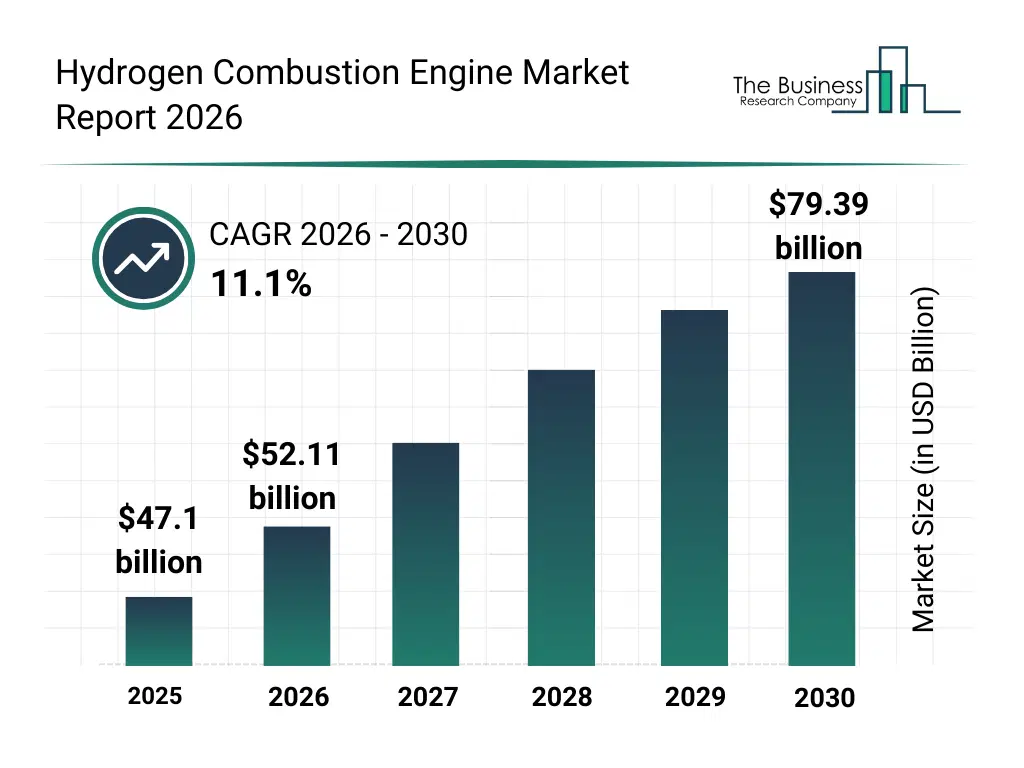
What Is The Hydrogen Combustion Engine Market Size and Share 2026?
The hydrogen combustion engine market size has grown rapidly in recent years. It will grow from $47.1 billion in 2025 to $52.11 billion in 2026 at a compound annual growth rate (CAGR) of 10.6%. The growth in the historic period can be attributed to emission reduction regulations, dependence on fossil fuel engines, internal combustion engine dominance, automotive manufacturing scale, early hydrogen research programs.What Is The Hydrogen Combustion Engine Market Growth Forecast?
The hydrogen combustion engine market size is expected to see rapid growth in the next few years. It will grow to $79.39 billion in 2030 at a compound annual growth rate (CAGR) of 11.1%. The growth in the forecast period can be attributed to government hydrogen roadmaps, investment in clean combustion technologies, commercial fleet decarbonization, hydrogen fuel availability expansion, low carbon mobility demand. Major trends in the forecast period include development of hydrogen ready ice platforms, focus on engine efficiency optimization, adaptation of existing ice architectures, expansion of pilot fleets and demonstrators, integration with hybrid powertrains.
Global Hydrogen Combustion Engine Market Segmentation
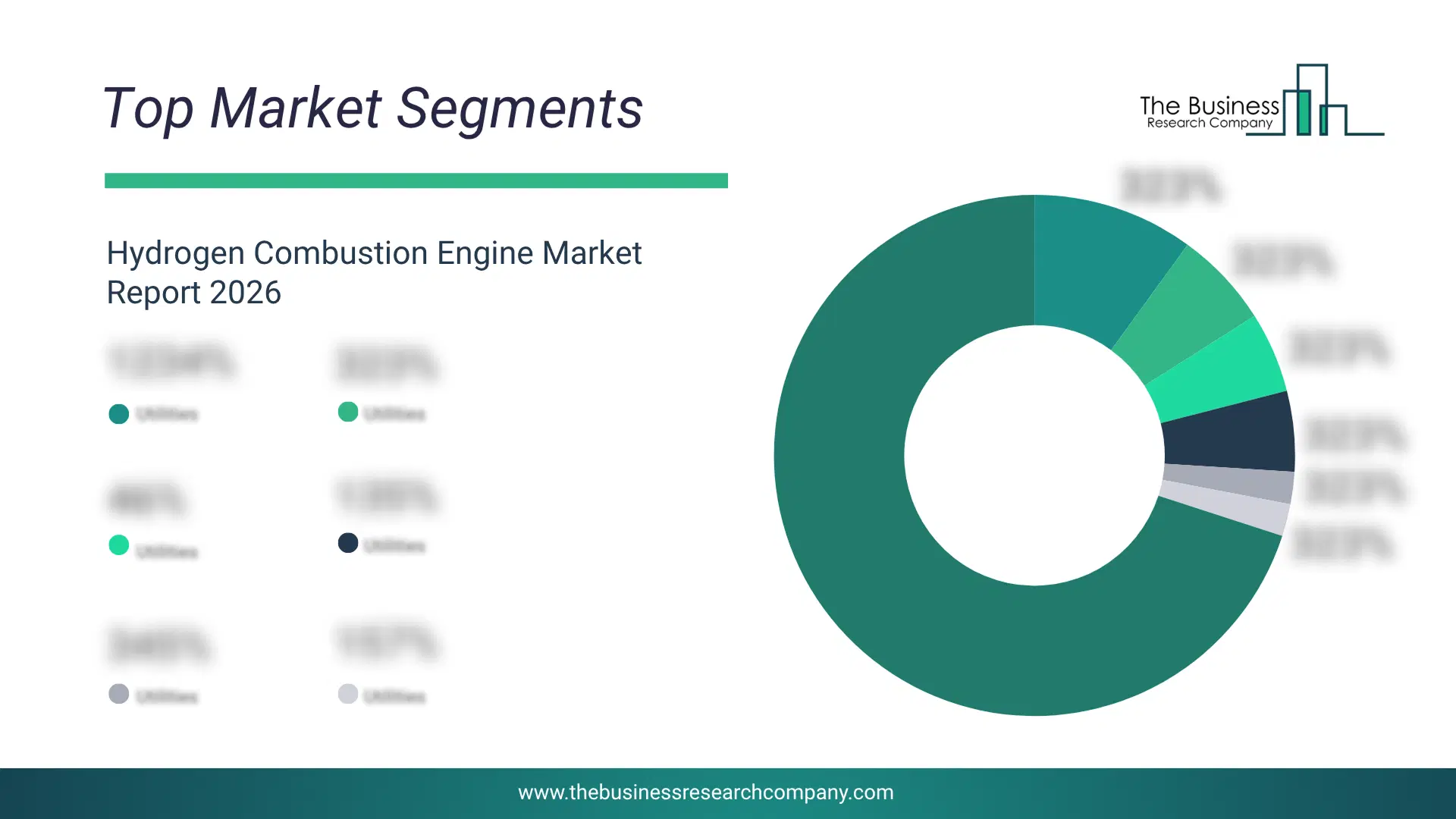
1) By Technology: Proton Membrane Exchange, Phosphoric Acid Fuel Cell, Other Technologies 2) By Installation: OEM (Original Equipment Manufacturer), Retrofit 3) By Application: Passenger Vehicle, Commercial Vehicle, Ships, Other Applications Subsegments: 1) By Proton Membrane Exchange: Proton Exchange Membrane Fuel Cells (PEMFC), Applications In Vehicles And Power Systems 2) By Phosphoric Acid Fuel Cell: PAFC For Transportation, PAFC For Stationary Applications 3) By Other Technologies: Solid Oxide Fuel Cells (SOFC), Alkaline Fuel Cells (AFC), Direct Methanol Fuel Cells (DMFC) The top segments in the hydrogen combustion engine market will be: • Proton Membrane Exchange will reach $55.23 Billion by 2030. • Phosphoric Acid Fuel Cell will reach $16.76 Billion by 2030. • Other Technologies will reach $8.9 Billion by 2030.What Is The Driver Of The Hydrogen Combustion Engine Market?
The increasing use of fuel-cell cars is expected to propel the growth of the hydrogen combustion engine market going forward. A fuel cell car is an electric vehicle that generates electricity for propulsion using a fuel cell. Hydrogen is used as the fuel for fuel-cell electric vehicles. They are more effective than typical internal combustion engines and don't have any hazardous exhaust emissions. The increasing use of fuel-cell cars contributes to the growth of the hydrogen combustion engine. For instance, in January 2024, according to the U.S. Department of Energy, a US-based government agency, in December 2023, plug-in electric vehicles accounted for 9.8% of all light-duty vehicle sales, up from 7.8% in December 2022. Throughout 2023, plug-in vehicles consistently made up at least 8% of monthly sales, whereas in 2022 their share ranged between 5.5% and 7.8%. Therefore, the increasing use of fuel-cell cars is driving the growth of the hydrogen combustion engine industry.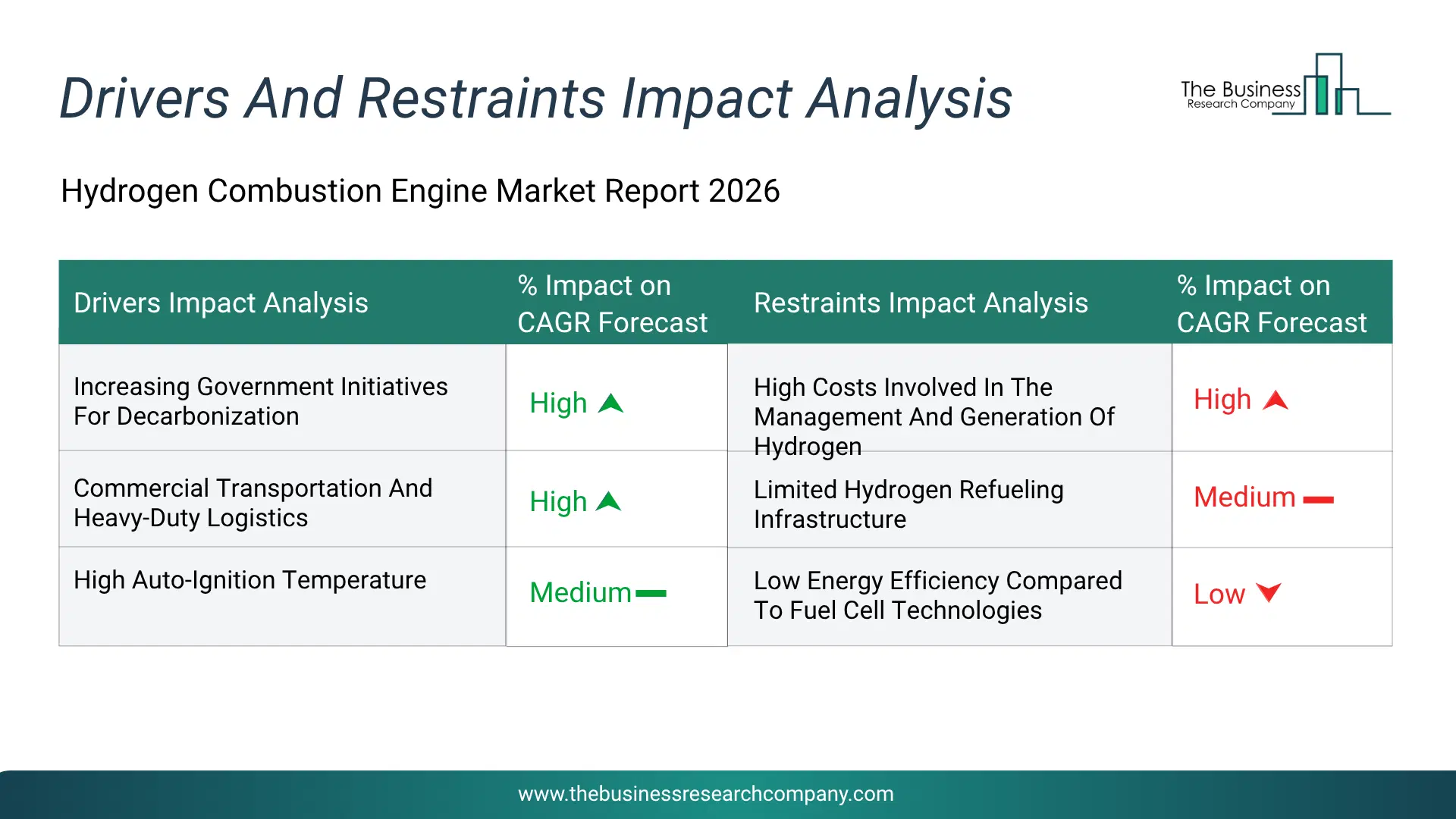
Infographic Chart Showing Key Market Drivers Analysis And Restraints For Hydrogen Combustion Engine Market
The chart presents an impact analysis of key drivers and restraints, quantifying their relative influence on the market's growth rate and helping assess the balance between growth enablers and limiting factors. This chart offers a high-level perspective; the full report contains more detailed insights.
How Will The Drivers Impact Growth In The Global Hydrogen Combustion Engine Market?
• Increasing Government Initiatives For Decarbonization (High) – During the forecast period, the increasing government initiatives for decarbonization is expected to become a key growth driver for the hydrogen combustion engine market by 2030. Increasing government initiatives for decarbonization act as a major driver for the Hydrogen Combustion Engine market because governments worldwide are implementing policies to reduce greenhouse gas emissions from transportation and industrial sectors. Financial incentives, tax benefits, research grants, and clean mobility programs encourage manufacturers to invest in hydrogen-powered engine technologies. Many countries are also introducing stricter emission standards that favor low-carbon fuel alternatives. Hydrogen combustion engines provide a practical pathway to reduce carbon emissions while utilizing existing engine manufacturing expertise. Public funding for hydrogen infrastructure development further supports market growth. Regulatory backing increases confidence among investors and industry participants. As decarbonization targets become more ambitious, demand for hydrogen combustion engines continues to expand across multiple applications. • Commercial Transportation And Heavy-Duty Logistics (High) – During the forecast period, the commercial transportation and heavy-duty logistics is expected to emerge as a major factor driving the expansion of the hydrogen combustion engine market by 2030. Commercial transportation and heavy-duty logistics serve as a significant driver for the Hydrogen Combustion Engine market due to the growing need for clean and efficient power solutions in high-utilization vehicles. Trucks, buses, construction equipment, and other heavy-duty vehicles require long operating ranges and rapid refueling capabilities. Hydrogen combustion engines can meet these operational requirements while significantly reducing carbon emissions compared to conventional diesel engines. Fleet operators are increasingly exploring hydrogen technologies to comply with environmental regulations and sustainability goals. The technology also allows easier integration into existing vehicle platforms and supply chains. Rising freight movement and logistics activities further strengthen demand. As industries seek low-emission alternatives without compromising performance, hydrogen combustion engines gain wider adoption. • High Auto-Ignition Temperature (Medium) – During the forecast period, the high auto-ignition temperature is expected to act as a key growth catalyst for the hydrogen combustion engine market by 2030. High auto-ignition temperature acts as an important driver for the Hydrogen Combustion Engine market because it enhances operational safety and combustion control within engine systems. Hydrogen requires higher temperatures to ignite spontaneously, allowing engineers greater flexibility in managing the combustion process. This characteristic helps reduce the risk of unintended ignition during fuel handling and engine operation. Improved combustion control contributes to higher engine efficiency and reliability in demanding applications. Manufacturers can optimize engine performance while maintaining safety standards. The feature is particularly valuable in commercial and industrial environments where operational stability is essential. As industries prioritize safe and efficient alternative fuel technologies, the demand for hydrogen combustion engines continues to increase.How Will The Restraints Impact Growth In The Global Hydrogen Combustion Engine Market?
• High Costs Involved In The Management And Generation Of Hydrogen (High) – During the forecast period, the high costs involved in the management and generation of hydrogen act as a significant restraint for the hydrogen combustion engine market because hydrogen production, storage, transportation, and distribution require substantial financial investment. Green hydrogen produced through electrolysis remains more expensive than conventional fossil fuels in many regions. The need for specialized storage tanks, compression systems, and safety equipment further increases operational costs. These expenses can make hydrogen-powered solutions less economically attractive for fleet operators and industrial users. High capital requirements also slow the development of supporting infrastructure and large-scale deployment projects. Small and medium-sized enterprises may face challenges in adopting hydrogen technologies due to budget constraints. As a result, elevated hydrogen-related costs can limit the pace of market growth and commercialization. • Limited Hydrogen Refueling Infrastructure (High) – During the forecast period, the limited hydrogen refueling infrastructure serves as a major restraint for the hydrogen combustion engine market because the availability of hydrogen fueling stations remains insufficient across many countries and regions. A lack of widespread refueling networks creates operational challenges for vehicle owners and fleet operators considering hydrogen-powered solutions. Businesses may hesitate to invest in hydrogen combustion engines due to concerns about fuel accessibility and route planning limitations. The development of hydrogen infrastructure requires substantial capital investment and coordination among governments, energy providers, and private stakeholders. Slow infrastructure expansion can delay large-scale adoption of hydrogen-powered transportation and industrial equipment. In addition, inadequate refueling coverage reduces consumer confidence in the technology. Consequently, infrastructure limitations continue to restrict market penetration and overall growth potential. • Low Energy Efficiency Compared To Fuel Cell Technologies (Medium) – During the forecast period, the low energy efficiency compared to fuel cell technologies acts as a significant restraint for the hydrogen combustion engine market because hydrogen combustion engines convert less of the fuel's energy into useful power than hydrogen fuel cells. A considerable portion of energy is lost during the combustion process, resulting in higher hydrogen consumption for the same level of performance. This lower efficiency increases operating costs and reduces the economic attractiveness of hydrogen combustion engines for transportation and industrial applications. As fuel cell technologies continue to improve, many end users may prefer more energy-efficient alternatives, limiting the growth potential of hydrogen combustion engines.Key Players In The Global Hydrogen Combustion Engine Market
Major companies operating in the hydrogen combustion engine market are Toyota Motor Corporation, Stellantis N.V., Ford Motor Company, General Motors Company, Honda Motor Co., Ltd., Hyundai Motor Company, Cummins Inc., Caterpillar Inc., MAN Energy Solutions SE, Rolls-Royce Holdings plc, Mitsubishi Heavy Industries, Ltd., Komatsu Ltd., Mahindra & Mahindra Limited, AGCO Corporation, Renault S.A., Mazda Motor Corporation, Yamaha Motor Co., Ltd., AVL List GmbH, Bosch Mahle Turbo Systems GmbH & Co. KG, Liebherr Group, DEUTZ AG, Scania AB, IVECO Group N.V., Ricardo plc, Origin Engines Inc.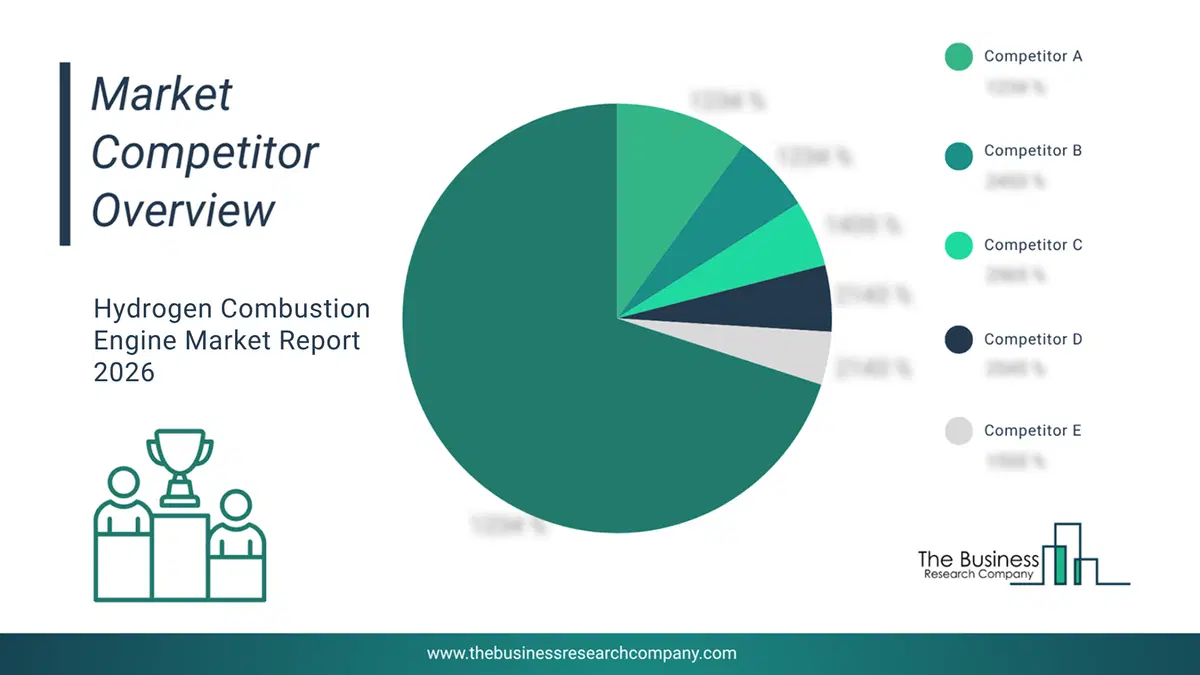
This chart is for illustrative purposes; the full report includes a detailed competitor analysis and comprehensive overview of the top 10 companies in the market.
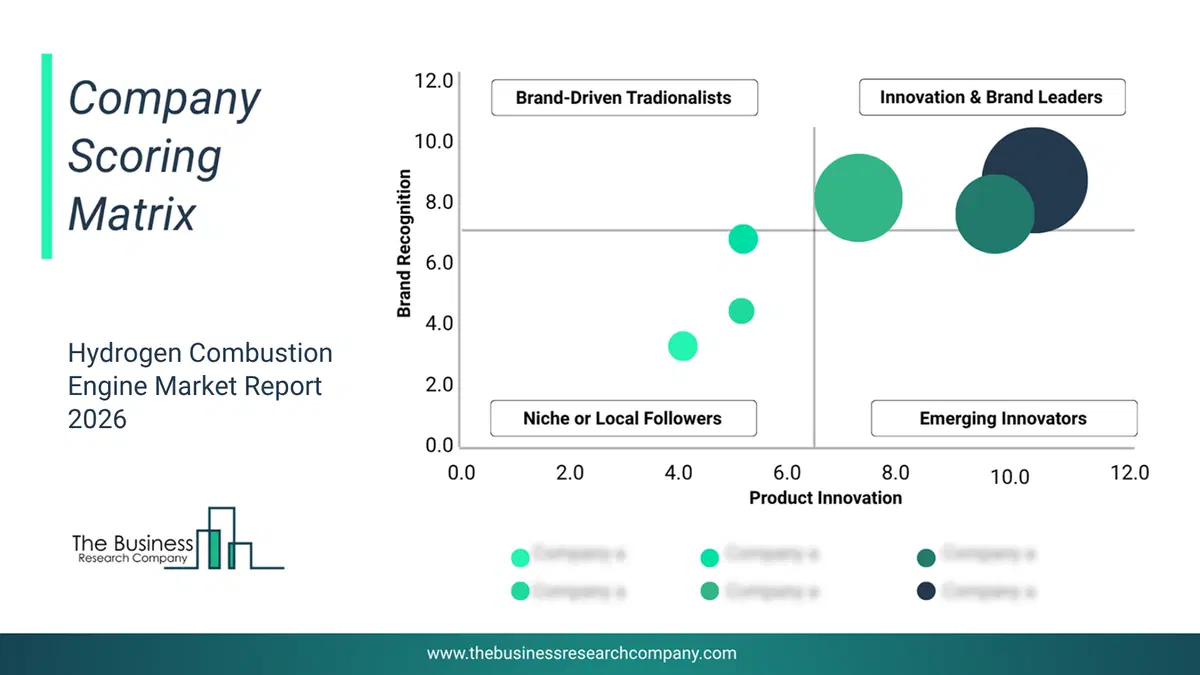
This chart maps companies by product innovation and brand strength, with bubble size indicating relative revenue, helping identify market leaders, challengers, and niche players. This is an illustrative chart; the full report provides a complete and accurate competitive analysis.
Global Hydrogen Combustion Engine Market Trends and Insights
Major companies in the hydrogen combustion engine market are focusing on developing innovative products such as advanced hydrogen fuel cell systems to enhance performance and reduce emissions. Advanced hydrogen fuel cell systems are technology-driven engines that generate electricity by combining hydrogen and oxygen, producing only water as a byproduct, and they help power vehicles efficiently while reducing greenhouse gas emissions. For instance, in February 2023, Bayerische Motoren Werke AG (BMW), a Germany-based luxury vehicle company, launched its first hydrogen-operated BMW iX5 Hydrogen models. The BMW Group has created specialized hydrogen components for its new fuel cell system. These components are designed to enhance the system's functionality and draw parallels to ingredients found in traditional combustion engines. These include the intercooler, air filter, control units, and sensor technology.What Are Latest Mergers And Acquisitions In The Hydrogen Combustion Engine Market?
In February 2023, Reliance Industries Limited (RIL), an India-based manufacturing company, partnered with Ashok Leyland Limited to unveil India’s first heavy-duty truck powered by hydrogen combustion engine technology. With this partnership, Reliance Industries Limited and Ashok Leyland Limited aim to promote sustainable transportation solutions, accelerate the adoption of hydrogen-powered commercial vehicles, and reduce carbon emissions in India’s logistics sector. Ashok Leyland Limited is an India-based manufacturer of commercial vehicles and engines.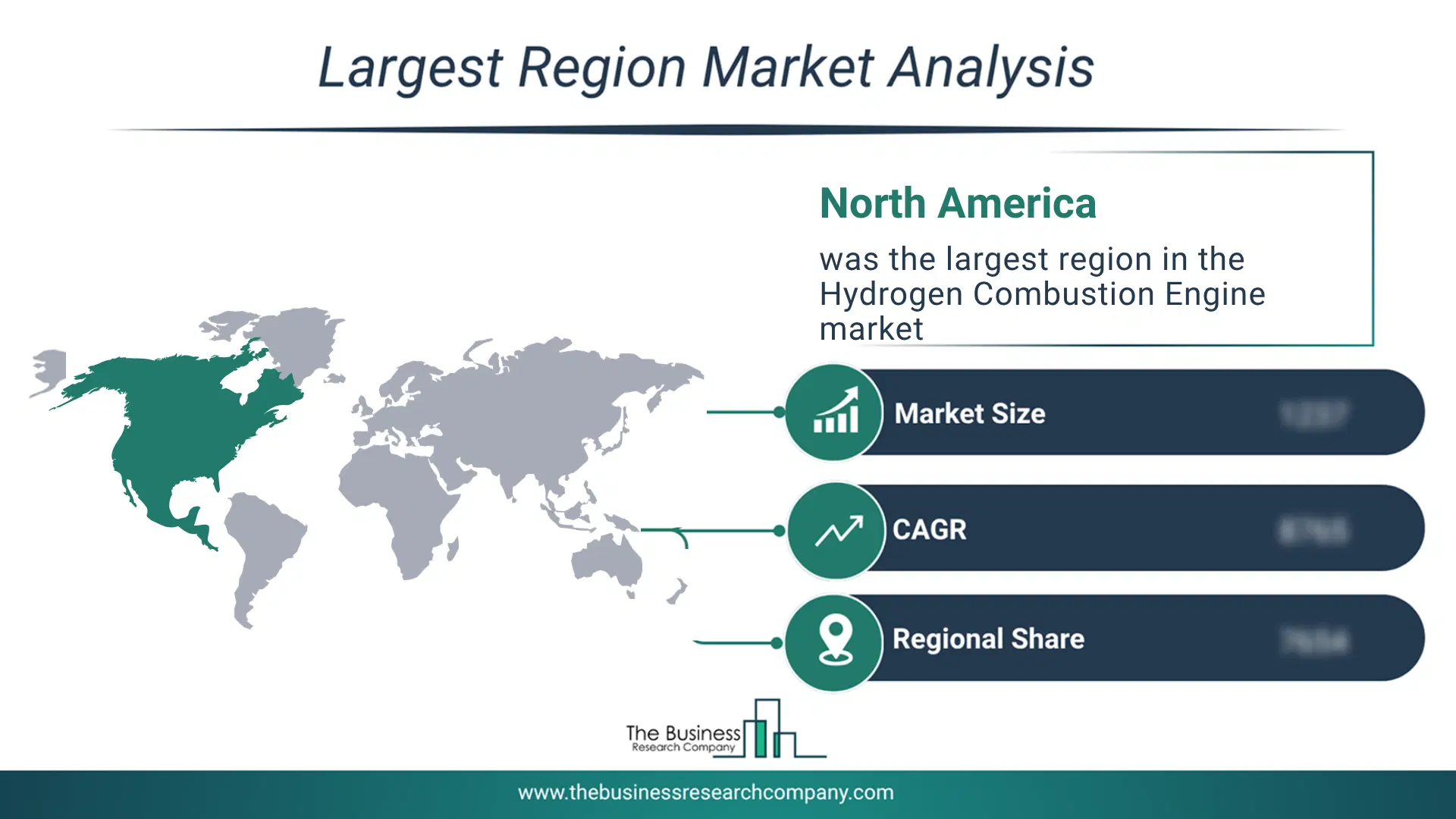
Regional Outlook
North America was the largest region in the hydrogen combustion engine market in 2025. Asia-Pacific is expected to be the fastest-growing region in the forecast period. The regions covered in this market report are Asia-Pacific, South East Asia, Western Europe, Eastern Europe, North America, South America, Middle East, Africa The countries covered in this market report are Australia, Brazil, China, France, Germany, India, Indonesia, Japan, Taiwan, Russia, South Korea, UK, USA, Canada, Italy, Spain.What Defines the Hydrogen Combustion Engine Market?
The hydrogen combustion engine market consists of sales of combustion chambers, cylinder heads, installation parts, intake systems, fuel injection systems, ignition systems, crankshafts, pistons or rotors, and control and monitoring systems. Values in this market are ‘factory gate’ values, that is the value of goods sold by the manufacturers or creators of the goods, whether to other entities (including downstream manufacturers, wholesalers, distributors, and retailers) or directly to end customers. The value of goods in this market includes related services sold by the creators of the goods.How is Market Value Defined and Measured?
The market value is defined as the revenues that enterprises gain from the sale of goods and/or services within the specified market and geography through sales, grants, or donations in terms of the currency (in USD unless otherwise specified). The revenues for a specified geography are consumption values that are revenues generated by organizations in the specified geography within the market, irrespective of where they are produced. It does not include revenues from resales along the supply chain, either further along the supply chain or as part of other products.
This chart presents market attractiveness based on a quantitative evaluation of growth, competition, strategic alignment, and risk, offering a clear view of opportunity areas for decision-making. This chart is for illustrative purposes; the full report contains the complete analysis.

This chart highlights the Total Addressable Market (TAM) by estimating the maximum revenue opportunity using an assumption-driven approach, supporting strategic planning and opportunity sizing across markets. The chart is illustrative; the full report provides a more comprehensive analysis.
What Key Data and Analysis Are Included in the Hydrogen Combustion Engine Market Report 2026?
The hydrogen combustion engine market research report is one of a series of new reports from The Business Research Company that provides market statistics, including industry global market size, regional shares, competitors with the market share, detailed market segments, market trends and opportunities, and any further data you may need to thrive in the hydrogen combustion engine industry. The market research report delivers a complete perspective of everything you need, with an in-depth analysis of the current and future state of the industry.Hydrogen Combustion Engine Market Report Forecast Analysis
| Report Attribute | Details |
|---|---|
| Market Size Value In 2026 | $52.11 billion |
| Revenue Forecast In 2030 | $79.39 billion |
| Growth Rate | CAGR of 10.6% from 2026 to 2030 |
| Base Year For Estimation | 2025 |
| Actual Estimates/Historical Data | 2020-2025 |
| Forecast Period | 2026 - 2030 |
| Market Representation | Revenue in USD Billion and CAGR from 2026 to 2030 |
| Segments Covered | Technology, Installation, Application |
| Regional Scope | Asia-Pacific, Western Europe, Eastern Europe, North America, South America, Middle East, Africa |
| Country Scope | The countries covered in the report are Australia, Brazil, China, France, Germany, India, ... |
| Key Companies Profiled | Toyota Motor Corporation, Stellantis N.V., Ford Motor Company, General Motors Company, Honda Motor Co., Ltd., Hyundai Motor Company, Cummins Inc., Caterpillar Inc., MAN Energy Solutions SE, Rolls-Royce Holdings plc, Mitsubishi Heavy Industries, Ltd., Komatsu Ltd., Mahindra & Mahindra Limited, AGCO Corporation, Renault S.A., Mazda Motor Corporation, Yamaha Motor Co., Ltd., AVL List GmbH, Bosch Mahle Turbo Systems GmbH & Co. KG, Liebherr Group, DEUTZ AG, Scania AB, IVECO Group N.V., Ricardo plc, Origin Engines Inc. |
| Customization Scope | Request for Customization |
| Pricing And Purchase Options | Explore Purchase Options |