
Hydrogen Fuel Cell Liquid Cooling Pump Market Report 2026
Global Outlook – By Pump Type (Positive Displacement Pumps, Centrifugal Pumps), By Fuel Cell Type (Proton Exchange Membrane Fuel Cell (PEMFC), Solid Oxide Fuel Cell (SOFC), Alkaline Fuel Cell (AFC), Other Fuel Cell Types), By Vehicle Type (Passenger Vehicles, Light Commercial Vehicles, Heavy Commercial Vehicles, Buses, Two-Wheelers, Off-Highway Vehicles), By Application (Fuel Cell Stack Cooling, Hydrogen System Cooling, Battery Cooling, Power Electronics Cooling), By End Use (Automotive, Material Handling Equipment, Stationary Power Generation, Marine, Aerospace) – Market Size, Trends, Strategies, and Forecast to 2030
Hydrogen Fuel Cell Liquid Cooling Pump Market Overview
• Hydrogen Fuel Cell Liquid Cooling Pump market size has reached to $0.75 billion in 2025 • Expected to grow to $1.5 billion in 2030 at a compound annual growth rate (CAGR) of 14.7% • Growth Driver: Surge In Adoption Of Hydrogen Fuel Cell Vehicles Driving The Market Growth Through Increasing Demand For Thermal Management Systems • North America was the largest region in 2025 and Asia-Pacific is the fastest growing region.What Is Covered Under Hydrogen Fuel Cell Liquid Cooling Pump Market?
Hydrogen fuel cell liquid cooling pumps are specialized pumps that circulate coolant to regulate the temperature of hydrogen fuel cell systems during operation. They prevent overheating by enabling efficient heat dissipation, ensuring optimal performance and system reliability. Hydrogen fuel cell liquid cooling pumps are designed for high efficiency, continuous coolant flow, and durable operation across a wide range of operating conditions. The main pump types of hydrogen fuel cell liquid cooling pump include positive displacement pumps and centrifugal pumps. Positive displacement pumps refer to pumps that transfer cooling liquids by trapping and mechanically moving a defined volume of fluid through the system, providing controlled and consistent flow for thermal management applications. These pumps are used with fuel cell types such as proton exchange membrane fuel cell (PEMFC), solid oxide fuel cell (SOFC), alkaline fuel cell (AFC), and others, and are designed for vehicle types such as passenger vehicles, light commercial vehicles, heavy commercial vehicles, buses, two-wheelers, and off-highway vehicles. They are used in applications such as fuel cell stack cooling, hydrogen system cooling, battery cooling, and power electronics cooling across end uses such as automotive, material handling equipment, stationary power generation, marine, and aerospace.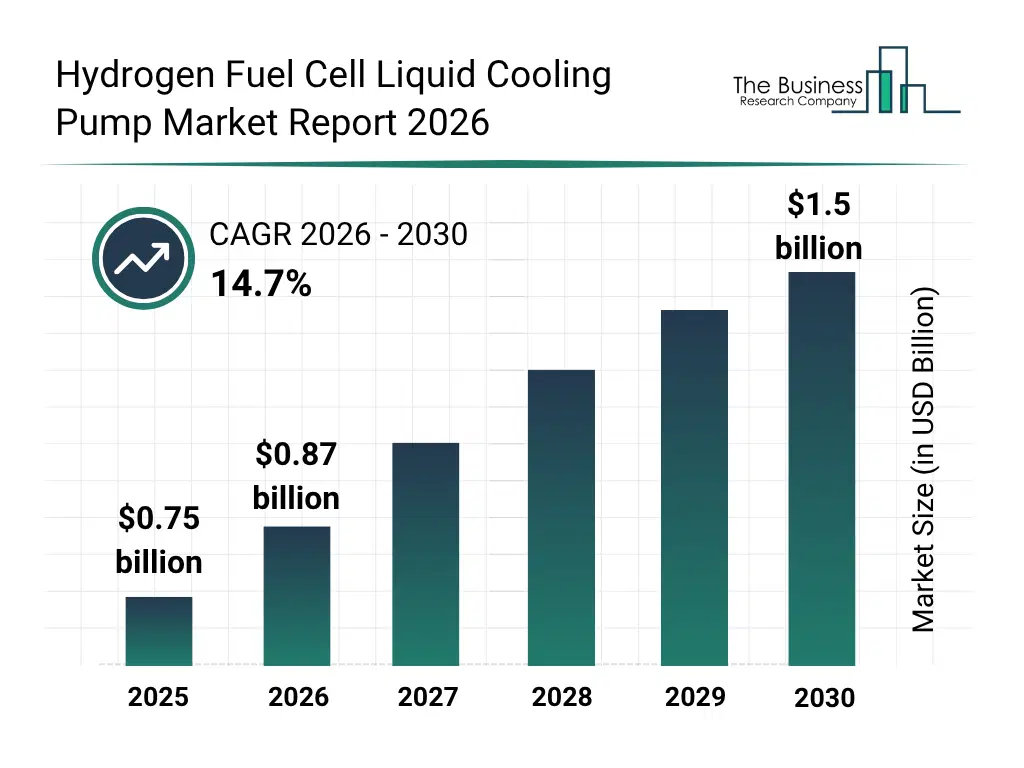
What Is The Hydrogen Fuel Cell Liquid Cooling Pump Market Size and Share 2026?
The hydrogen fuel cell liquid cooling pump market size has grown rapidly in recent years. It will grow from $0.75 billion in 2025 to $0.87 billion in 2026 at a compound annual growth rate (CAGR) of 15.1%. The growth in the historic period can be attributed to increasing deployment of hydrogen fuel cell vehicles, growing demand for efficient fuel cell thermal management, expansion of hydrogen fueling infrastructure, rising fuel cell system production, increasing adoption of PEMFC technology.What Is The Hydrogen Fuel Cell Liquid Cooling Pump Market Growth Forecast?
The hydrogen fuel cell liquid cooling pump market size is expected to see rapid growth in the next few years. It will grow to $1.5 billion in 2030 at a compound annual growth rate (CAGR) of 14.7%. The growth in the forecast period can be attributed to growing adoption of hydrogen-powered commercial vehicles, increasing demand for high-efficiency fuel cell cooling systems, expansion of stationary hydrogen fuel cell applications, rising deployment of fuel cell buses and heavy-duty vehicles, increasing investments in hydrogen energy infrastructure. Major trends in the forecast period include increasing adoption of brushless DC cooling pumps, development of compact high-flow cooling pump designs, growing use of corrosion-resistant coolant pump materials, increasing demand for variable-speed liquid cooling pumps, development of low-noise hydrogen fuel cell cooling pumps.Tariff Impact On Hydrogen Fuel Cell Liquid Cooling Pump Market
Tariffs are impacting the hydrogen fuel cell liquid cooling pumps market by increasing the cost of imported electric motors, pump components, electronic controls, and specialized materials used in cooling systems. This is increasing production costs for fuel cell vehicles and stationary power systems, particularly in regions dependent on imported components such as Asia-Pacific, Europe, and North America. Component-intensive segments such as centrifugal pumps and advanced variable-speed cooling systems are most affected due to global supply chain dependencies. However, tariffs are also encouraging localized pump manufacturing, regional supplier diversification, and increased investment in domestic hydrogen and fuel cell component ecosystems, creating long-term resilience in the market.
Global Hydrogen Fuel Cell Liquid Cooling Pump Market Segmentation
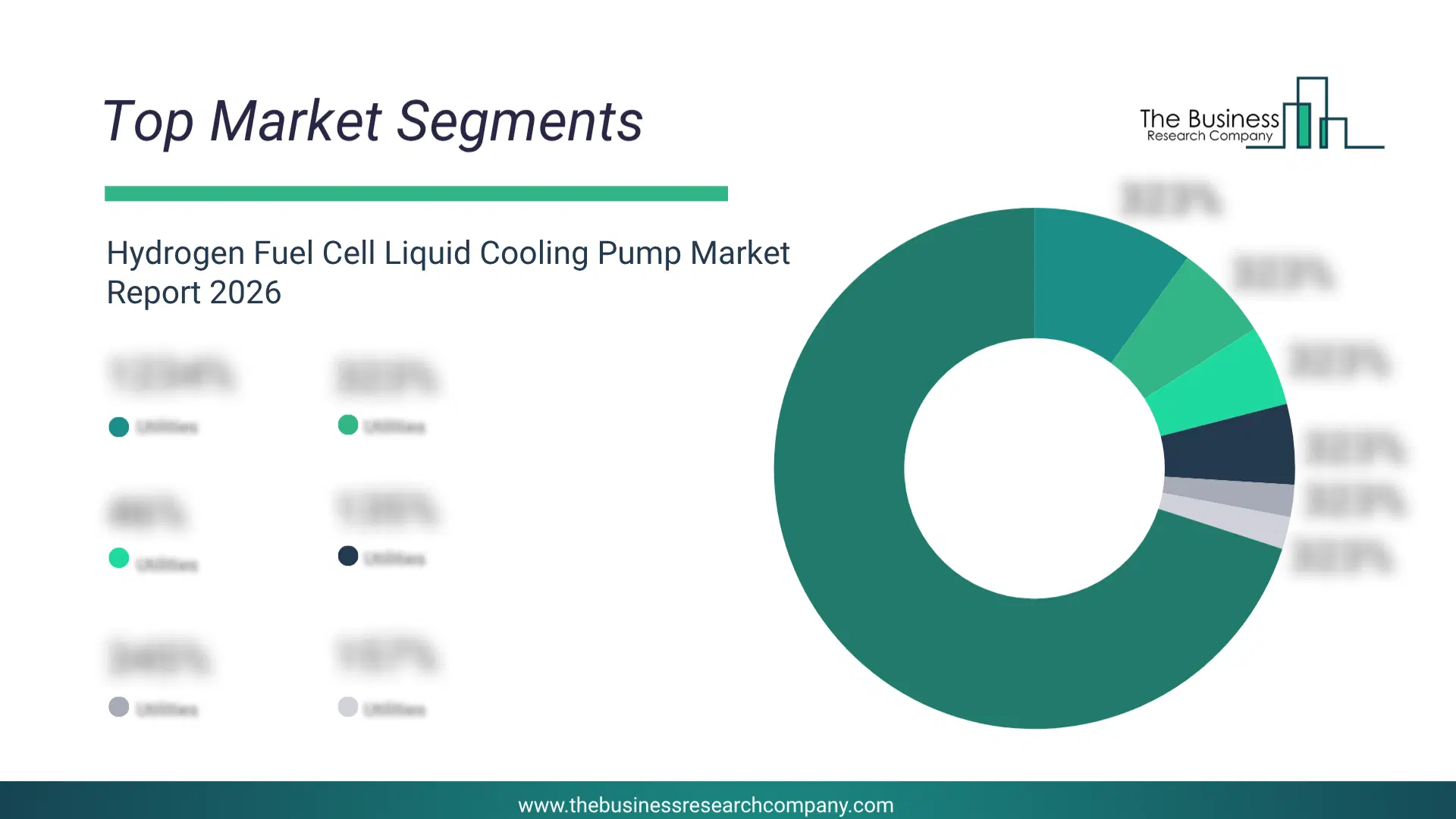
1) By Pump Type: Positive Displacement Pumps, Centrifugal Pumps 2) By Fuel Cell Type: Proton Exchange Membrane Fuel Cell (PEMFC), Solid Oxide Fuel Cell (SOFC), Alkaline Fuel Cell (AFC), Other Fuel Cell Types 3) By Vehicle Type: Passenger Vehicles, Light Commercial Vehicles, Heavy Commercial Vehicles, Buses, Two-Wheelers, Off-Highway Vehicles 4) By Application: Fuel Cell Stack Cooling, Hydrogen System Cooling, Battery Cooling, Power Electronics Cooling 5) By End Use: Automotive, Material Handling Equipment, Stationary Power Generation, Marine, Aerospace Subsegments: 1) By Positive Displacement Pumps: Gear Pumps, Vane Pumps, Piston Pumps, Diaphragm Pumps 2) By Centrifugal Pumps: Single Stage Centrifugal Pumps, Multistage Centrifugal Pumps, Magnetic Drive Centrifugal Pumps, Inline Centrifugal PumpsWhat Are The Drivers Of The Hydrogen Fuel Cell Liquid Cooling Pump Market?
The increasing adoption of hydrogen fuel cell vehicles is expected to propel the growth of the hydrogen fuel cell liquid cooling pump market going forward. Hydrogen fuel cell vehicles are zero-emission vehicles that use hydrogen fuel cells to generate electricity for propulsion. The increasing adoption of hydrogen fuel cell vehicles is driven by the demand for cleaner transportation solutions, as they offer zero-emission mobility by producing electricity with water as the primary byproduct. The increasing adoption of hydrogen fuel cell vehicles supports the hydrogen fuel cell liquid cooling pump by increasing the demand for efficient thermal management systems that regulate fuel cell operating temperatures, improve energy efficiency, enhance durability, and maintain optimal performance under varying operating conditions. For instance, in June 2025, according to the California Energy Commission, a US-based government agency, approximately 36,000 fuel cell electric vehicles (FCEVs), representing more than twice the fueling demand of the estimated 14,415 light-duty FCEVs operating on the road at the end of the third quarter of 2024. Therefore, the increasing adoption of hydrogen fuel cell vehicles is driving the growth of the hydrogen fuel cell liquid cooling pump industry. The rising demand for clean energy and decarbonization solutions is expected to propel the growth of the hydrogen fuel cell liquid cooling pump market going forward. Clean energy and decarbonization solutions focus on reducing greenhouse gas emissions, improving energy efficiency, and supporting the transition toward low-carbon energy systems through technologies such as hydrogen fuel cells. The rising demand for clean energy and decarbonization solutions is driven by the need to reduce carbon emissions, as governments and industries increasingly adopt low-carbon technologies to achieve sustainability goals. This growing adoption of hydrogen fuel cell technologies creates demand for advanced liquid cooling pumps that regulate fuel cell temperatures, improve efficiency, enhance durability, and ensure reliable operation under varying conditions. For instance, in July 2026, according to the U.S. Energy Information Administration, a US-based government agency, energy-related CO₂ emissions increased by 2% (approximately 115 million metric tons) in 2025, primarily due to higher electricity demand and increased coal-based power generation, highlighting the need for cleaner energy solutions. Therefore, the rising demand for clean energy and decarbonization solutions is driving the growth of the hydrogen fuel cell liquid cooling pump industry. The expansion of hydrogen infrastructure development is expected to propel the growth of the hydrogen fuel cell liquid cooling pump market going forward. Hydrogen infrastructure development involves establishing production, storage, transportation, and fueling networks that support hydrogen-based energy systems, including fuel cell technologies. The expansion of hydrogen infrastructure is driven by increasing government investments and initiatives to develop hydrogen production, storage, transportation, and fueling facilities that accelerate the transition to clean energy. The growing hydrogen infrastructure supports hydrogen fuel cell liquid cooling pumps by enabling wider deployment of fuel cell systems across transportation, power generation, and industrial applications, increasing the demand for efficient thermal management solutions that maintain optimal operating temperatures, improve fuel cell performance, and enhance system reliability. For instance, in January 2025, according to the U.S. Department of Energy, a U.S.-based government department, $20 million in funding was announced for the Energy & Environmental Research Center (EERC) to begin Phase 1 activities under a hydrogen hub project with a total federal cost share of up to $925 million. Therefore, the expansion of hydrogen infrastructure development is driving the growth of the hydrogen fuel cell liquid cooling pump industry.Key Players In The Global Hydrogen Fuel Cell Liquid Cooling Pump Market
Major companies operating in the hydrogen fuel cell liquid cooling pump market are Robert Bosch GmbH, DENSO Corporation, Aisin Corporation, Valeo SE, Ebara Corporation, Rheinmetall AG, Schaeffler AG, Nidec Corporation, MAHLE GmbH, Hanon Systems, Zhejiang Sanhua Intelligent Controls Co Ltd, Johnson Electric Holdings Limited, Concentric AB, Iwaki Co Ltd, Myunghwa Ind Co Ltd, Bühler Motor GmbH, Grayson Thermal Systems Limited, TOPS Industry & Technology Co Ltd, Davies Craig Pty Ltd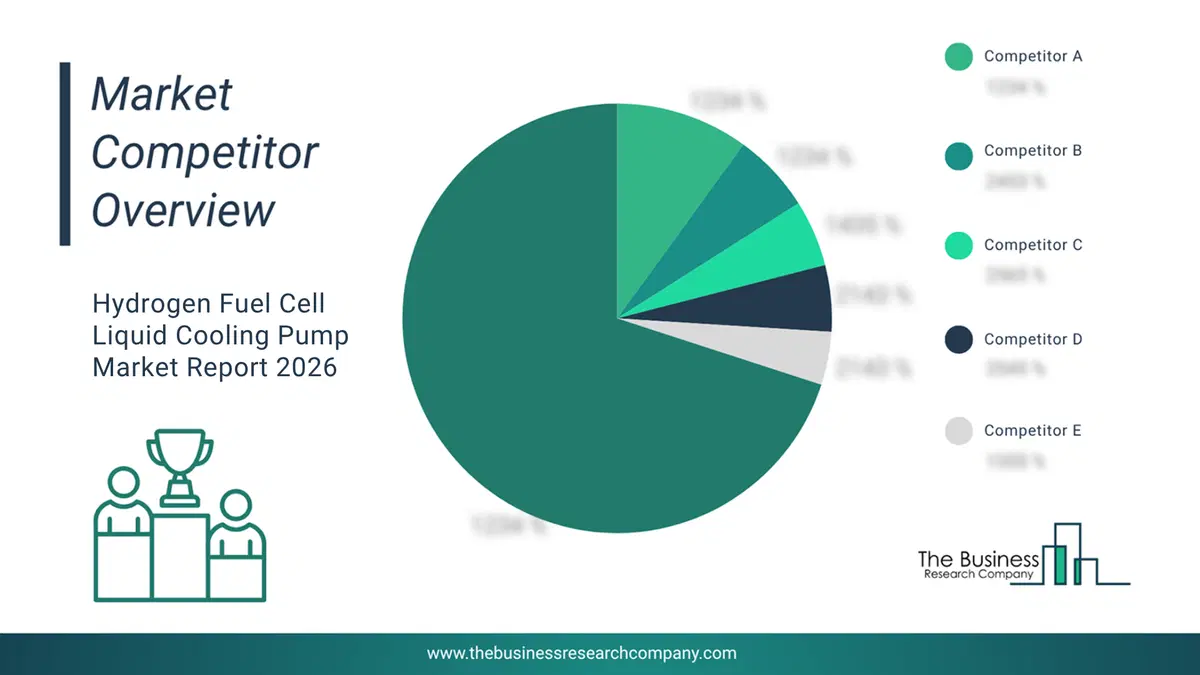
This chart is for illustrative purposes; the full report includes a detailed competitor analysis and comprehensive overview of the top 10 companies in the market.
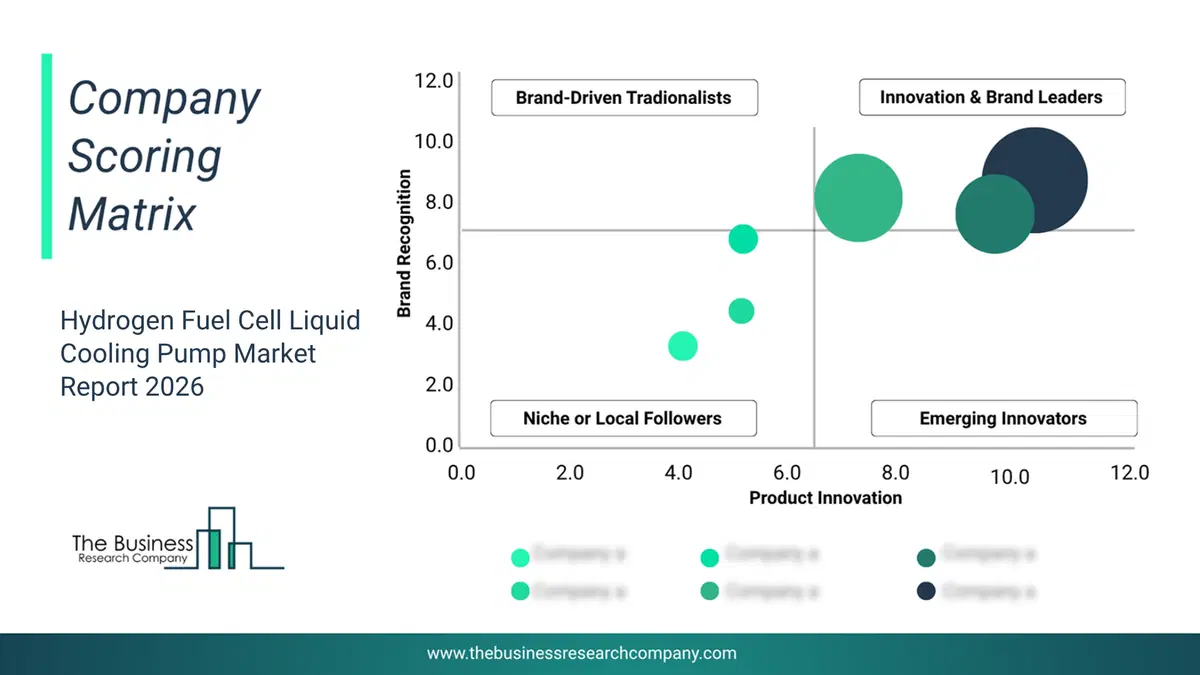
This chart maps companies by product innovation and brand strength, with bubble size indicating relative revenue, helping identify market leaders, challengers, and niche players. This is an illustrative chart; the full report provides a complete and accurate competitive analysis.
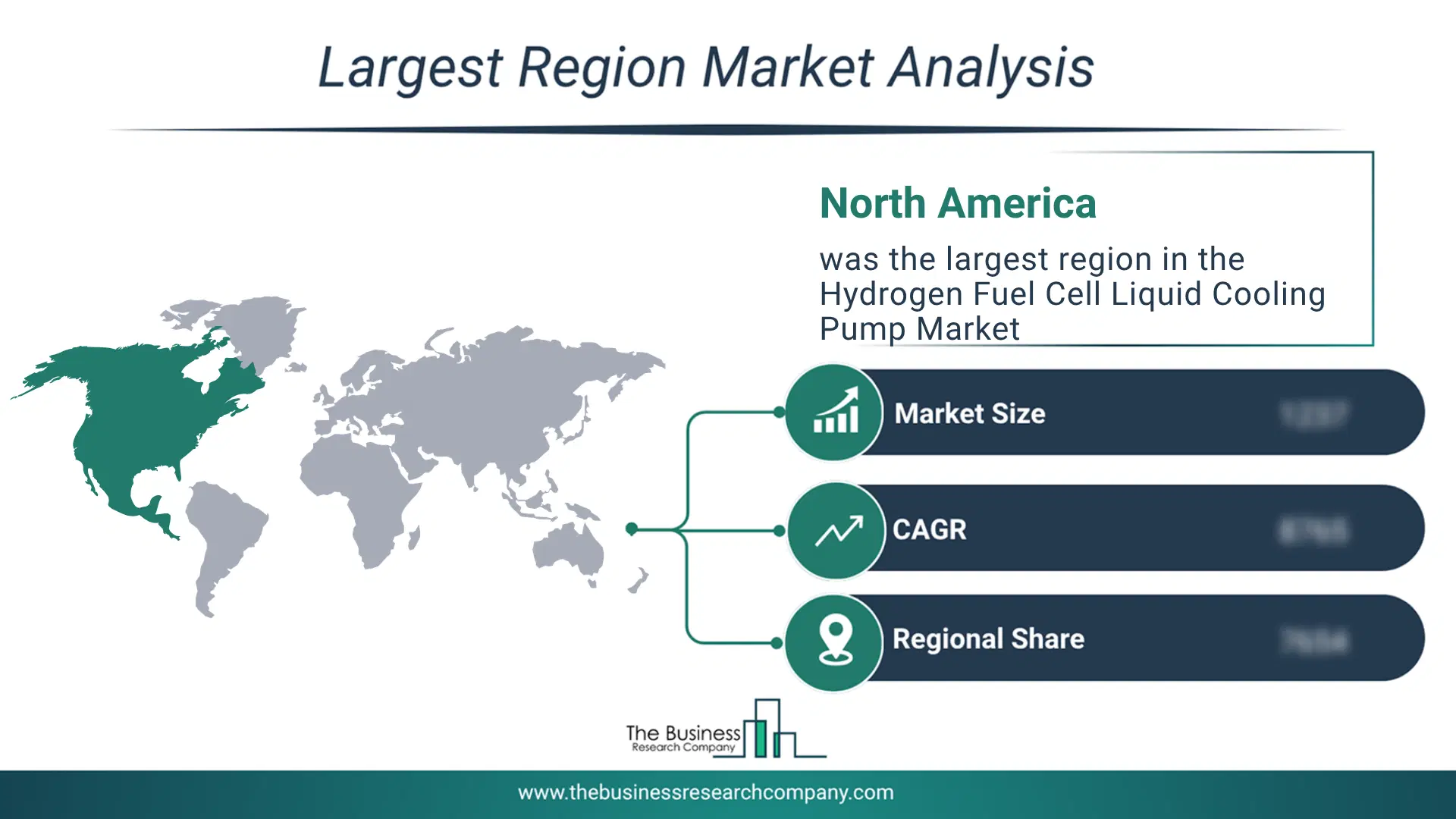
Regional Outlook
North America was the largest region in the hydrogen fuel cell liquid cooling pump market in 2025. Asia-Pacific is expected to be the fastest-growing region in the forecast period. The regions covered in this market report are Asia-Pacific, South East Asia, Western Europe, Eastern Europe, North America, South America, Middle East, Africa. The countries covered in this market report are Australia, Brazil, China, France, Germany, India, Indonesia, Japan, Taiwan, Russia, South Korea, UK, USA, Canada, Italy, Spain.What Defines the Hydrogen Fuel Cell Liquid Cooling Pump Market?
The hydrogen fuel cell liquid cooling pumps market consists of sales of fuel cell coolant control units, micro cooling pumps, high pressure coolant pumps, and low noise cooling pumps. Values in this market are ‘factory gate’ values, that is, the value of goods sold by the manufacturers or creators of the goods, whether to other entities (including downstream manufacturers, wholesalers, distributors, and retailers) or directly to end customers. The value of goods in this market includes related services sold by the creators of the goods.How is Market Value Defined and Measured?
The market value is defined as the revenues that enterprises gain from the sale of goods and/or services within the specified market and geography through sales, grants, or donations in terms of the currency (in USD unless otherwise specified). The revenues for a specified geography are consumption values that are revenues generated by organizations in the specified geography within the market, irrespective of where they are produced. It does not include revenues from resales along the supply chain, either further along the supply chain or as part of other products.
This chart presents market attractiveness based on a quantitative evaluation of growth, competition, strategic alignment, and risk, offering a clear view of opportunity areas for decision-making. This chart is for illustrative purposes; the full report contains the complete analysis.

This chart highlights the Total Addressable Market (TAM) by estimating the maximum revenue opportunity using an assumption-driven approach, supporting strategic planning and opportunity sizing across markets. The chart is illustrative; the full report provides a more comprehensive analysis.
What Key Data and Analysis Are Included in the Hydrogen Fuel Cell Liquid Cooling Pump Market Report 2026?
The hydrogen fuel cell liquid cooling pump market research report is one of a series of new reports from The Business Research Company that provides market statistics, including industry global market size, regional shares, competitors with the market share, detailed market segments, market trends and opportunities, and any further data you may need to thrive in the hydrogen fuel cell liquid cooling pump industry. The market research report delivers a complete perspective of everything you need, with an in-depth analysis of the current and future state of the industry.Hydrogen Fuel Cell Liquid Cooling Pump Market Report Forecast Analysis
| Report Attribute | Details |
|---|---|
| Market Size Value In 2026 | $0.87 billion |
| Revenue Forecast In 2030 | $1.5 billion |
| Growth Rate | CAGR of 14.7% from 2026 to 2030 |
| Base Year For Estimation | 2025 |
| Actual Estimates/Historical Data | 2020-2025 |
| Forecast Period | 2026 - 2030 |
| Market Representation | Revenue in USD Billion and CAGR from 2026 to 2030 |
| Segments Covered | Pump Type, Fuel Cell Type, Vehicle Type, Application, End Use |
| Regional Scope | Asia-Pacific, Western Europe, Eastern Europe, North America, South America, Middle East, Africa |
| Country Scope | The countries covered in the report are Australia, Brazil, China, France, Germany, India, Indonesia, Japan, Taiwan, Russia, South Korea, UK, USA, Canada, Italy, Spain. |
| Key Companies Profiled | Robert Bosch GmbH, DENSO Corporation, Aisin Corporation, Valeo SE, Ebara Corporation, Rheinmetall AG, Schaeffler AG, Nidec Corporation, MAHLE GmbH, Hanon Systems, Zhejiang Sanhua Intelligent Controls Co Ltd, Johnson Electric Holdings Limited, Concentric AB, Iwaki Co Ltd, Myunghwa Ind Co Ltd, Bühler Motor GmbH, Grayson Thermal Systems Limited, TOPS Industry & Technology Co Ltd, Davies Craig Pty Ltd |
| Customization Scope | Request for Customization |
| Pricing And Purchase Options | Explore Purchase Options |