
Hydroxychloroquine Global Market Opportunities And Strategies To 2035
By Drug Activity (Anti-Malarial Drug, Anti-Rheumatic Drug, Lupus Suppressant Drug, Anti COVID-19 Drug, Other Drug Activity), By Formulation (Tablets, Injection), By Distribution Channel (Hospital Pharmacy, Online Pharmacy, Specialty Drug Stores, Retail Pharmacy), And By Region, Opportunities And Strategies – Global Forecast To 2035
Hydroxychloroquine Market Definition
Hydroxychloroquine is a prescription medication primarily used to prevent and treat malaria and to manage autoimmune diseases such as rheumatoid arthritis and systemic lupus erythematosus (SLE). It works by modulating immune system activity and reducing inflammation, which helps control symptoms such as joint pain, swelling, skin rashes, and fatigue. The drug is also valued for its long-term disease management benefits and relatively established safety profile when used under medical supervision. The hydroxychloroquine market consists of sales by entities (organizations, sole traders and partnerships) that provide hydroxychloroquine formulations to the healthcare sector. These entities supply branded and generic versions of hydroxychloroquine through hospital pharmacies, retail pharmacies and online pharmacy channels. The market supports data-driven prescribing and long-term therapy management, as hydroxychloroquine is typically used on a continuous or chronic basis for autoimmune diseases, with periodic clinical monitoring to manage efficacy and safety.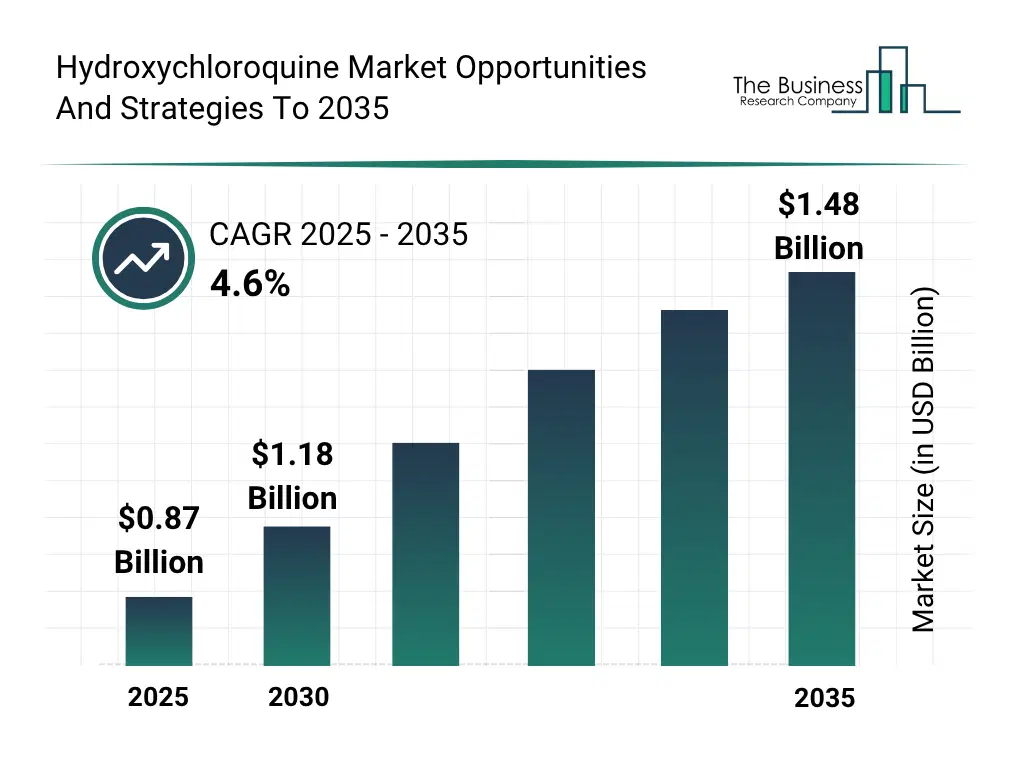
Hydroxychloroquine Market Size
The global hydroxychloroquine market reached a value of nearly $873.4 million in 2025, having grown at a compound annual growth rate (CAGR) of 7.0% since 2020. The market is expected to grow from $873.4 million in 2025 to $1,178.7 million in 2030 at a rate of 6.2%. The market is then expected to grow at a CAGR of 4.6% from 2030 and reach $1,477.8 million in 2035. Growth in the historic period resulted from persistent malaria burden in endemic regions, rising public health programs and government procurement of antimalarial drugs, growing incidence of autoimmune disorders and increasing awareness and early diagnosis of autoimmune disorders. Factors that negatively affected growth in the historic period were supply shortages and distribution disruptions and rising concerns regarding retinal toxicity and side effects. Going forward, rising healthcare expenditure, rising investment in infectious disease control programs, growing chronic care management programs for autoimmune patients and expanding government-supported access to antirheumatic medications will drive the growth. Factors that could hinder the growth of the hydroxychloroquine market in the future include growing adoption of biologic and targeted therapies, shift toward artemisinin-based combination therapies (ACTs) reducing reliance and impact of trade war and tariff.
Hydroxychloroquine Market Segmentation
The hydroxychloroquine market is segmented by drug activity, by formulation, and by distribution channel.By Drug Activity –
The hydroxychloroquine market is segmented by drug activity into:
- a) Anti-Malarial Drug
- b) Anti-Rheumatic Drug
- c) Lupus Suppressant Drug
- d) Anti COVID-19 Drug
- e) Other Drug Activity
By Formulation –
The hydroxychloroquine market is segmented by formulation into:
- a) Tablets
- b) Injection
By Distribution Channel –
The hydroxychloroquine market is segmented by distribution channel into:
- a) Hospital Pharmacy
- b) Online Pharmacy
- c) Specialty Drug Stores
- d) Retail Pharmacy
By Geography - The hydroxychloroquine market is segmented by geography into:
- China
- India
- Japan
- Australia
- Indonesia
- South Korea
- USA
- Canada
- Brazil
- France
- Germany
- UK
- Italy
- Spain
- Russia
-
o Asia Pacific
o Africa