

Hyperhidrosis Treatment Market Report 2026
Global Outlook – By Treatment Type (Topical Treatments, Surgical Treatments, Botulin Toxin A, Iontophoresis, Laser Treatments, Other Treatments), By Route Of Administration (Oral, Injectable), By Disease Type (Axillary Hyperhidrosis, Palmar Hyperhidrosis, Plantar Hyperhidrosis, Other Diseases), By Distribution Channel (Hospitals, Ambulatory Surgical Centers, Retail Pharmacies, Online) - Market Size, Trends, Strategies, and Forecast to 2030
Hyperhidrosis Treatment Market Overview
• Hyperhidrosis Treatment market size has reached to $1.67 billion in 2025 • Expected to grow to $2.29 billion in 2030 at a compound annual growth rate (CAGR) of 6.7% • Growth Driver: Rising Prevalence Of Diabetes Mellitus Boosts The Hyperhidrosis Treatment Market • Market Trend: Breakthrough In Non-Invasive Hyperhidrosis Therapies Focused On Longer-Lasting Relief With Fewer Side Effects • North America was the largest region in 2025 and Asia-Pacific is the fastest growing region.What Is Covered Under Hyperhidrosis Treatment Market?
Hyperhidrosis is a medical condition known for causing abundant sweat production beyond the body's temperature-regulating needs. It can impact different body areas, such as the underarms, palms, and the soles of the feet. Hyperhidrosis treatment refers to medical interventions and therapies aimed at alleviating or managing the symptoms of hyperhidrosis. Hyperhidrosis treatment aims to improve the quality of life for individuals affected by this condition by reducing or controlling their excessive sweating. The main types of hyperhidrosis treatments are topical treatments, surgical treatments, botulin toxin A, iontophoresis, laser treatments, and others. Topical treatment means treating any condition by using topical agents that are applied to the skin. These are administered through various routes, including oral and injectable, to treat several types of diseases, such as axillary hyperhidrosis, palmar hyperhidrosis, plantar hyperhidrosis, and others. These are sold through various distribution channels, including hospitals, ambulatory surgical centers, retail pharmacies, and online.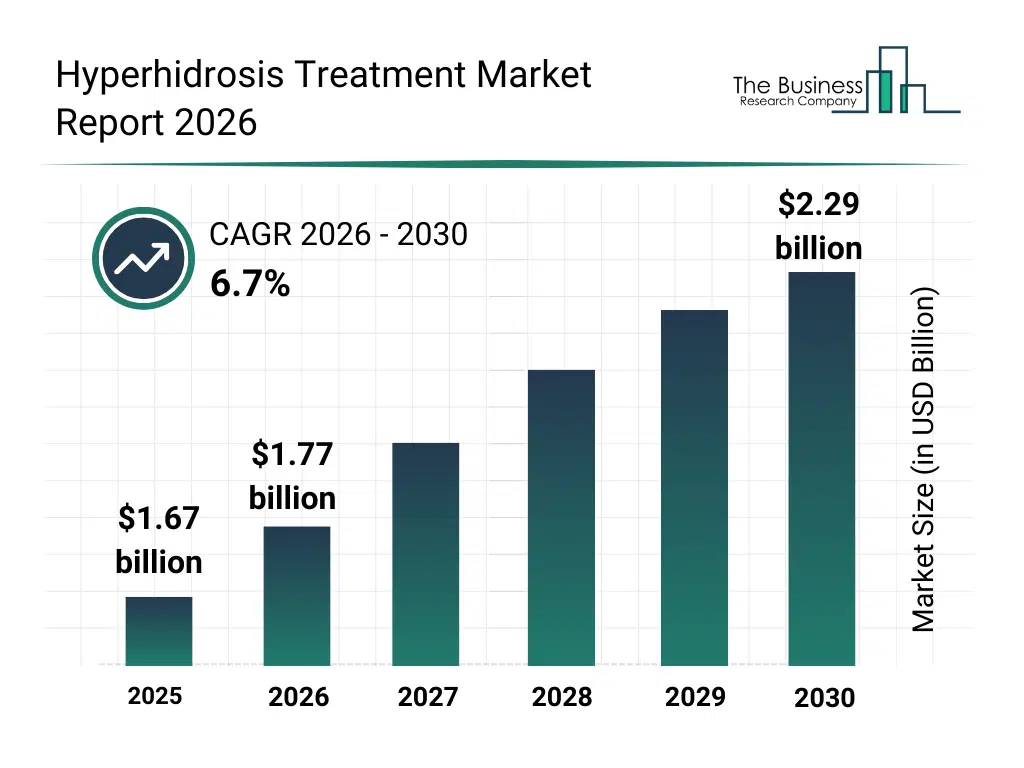
What Is The Hyperhidrosis Treatment Market Size and Share 2026?
The hyperhidrosis treatment market size has grown strongly in recent years. It will grow from $1.67 billion in 2025 to $1.77 billion in 2026 at a compound annual growth rate (CAGR) of 5.9%. The growth in the historic period can be attributed to increased awareness of hyperhidrosis as a medical condition, widespread use of aluminum chloride topical treatments, growing dermatology clinic availability, rising social discomfort linked to excessive sweating, established surgical intervention practices.What Is The Hyperhidrosis Treatment Market Growth Forecast?
The hyperhidrosis treatment market size is expected to see strong growth in the next few years. It will grow to $2.29 billion in 2030 at a compound annual growth rate (CAGR) of 6.7%. The growth in the forecast period can be attributed to increasing demand for non-surgical treatments, technological advancements in laser therapies, rising adoption of botulinum toxin a injections, growth in home-use medical devices, expanding healthcare access in emerging markets. Major trends in the forecast period include growing adoption of botulinum toxin treatments, increasing preference for minimally invasive procedures, rising demand for home-based iontophoresis devices, expansion of laser and energy-based therapies, higher focus on quality-of-life improvement therapies.
Global Hyperhidrosis Treatment Market Segmentation
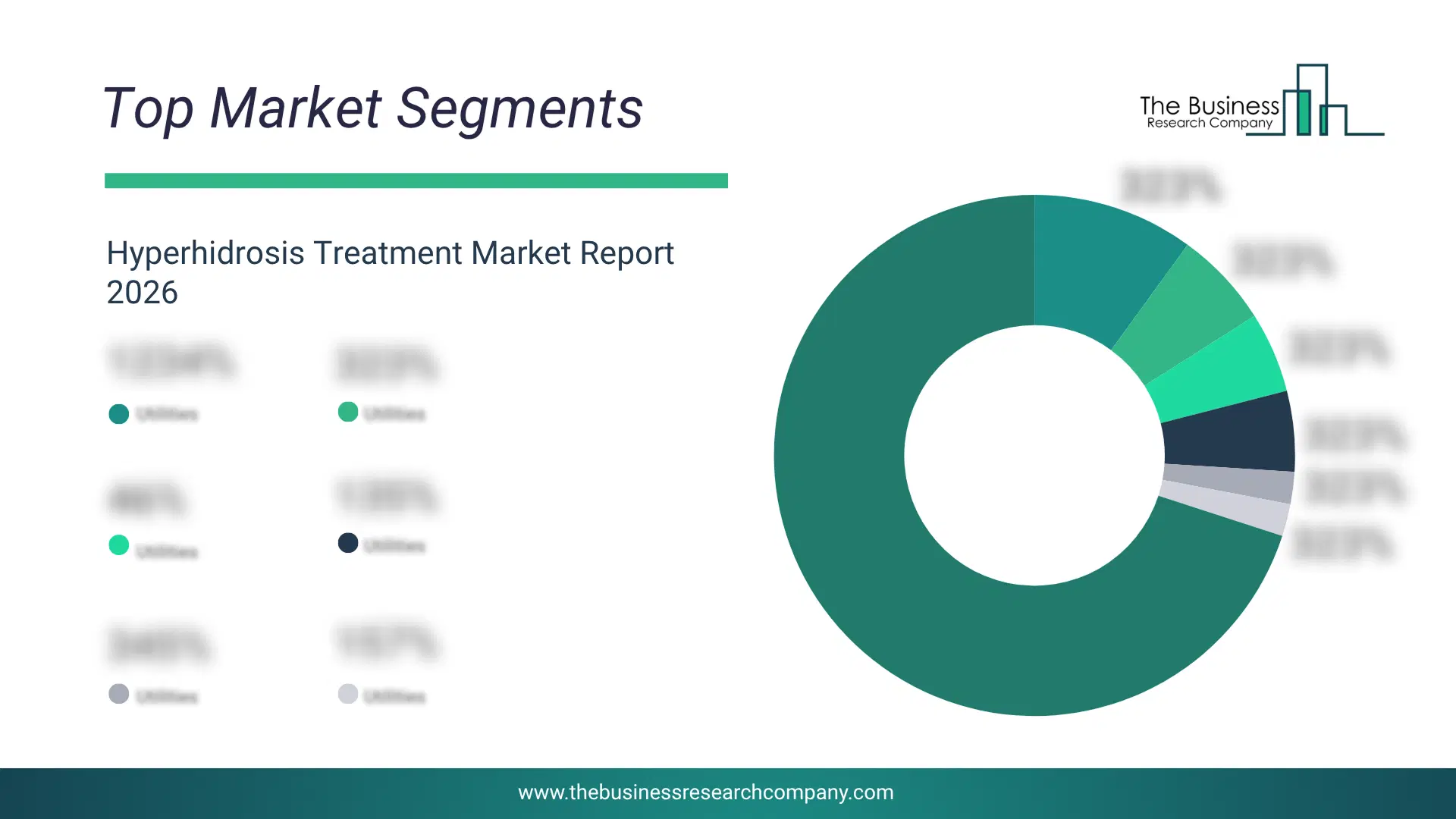
1) By Treatment Type: Topical Treatments, Surgical Treatments, Botulin Toxin A, Iontophoresis, Laser Treatments, Other Treatments 2) By Route Of Administration: Oral, Injectable 3) By Disease Type: Axillary Hyperhidrosis, Palmar Hyperhidrosis, Plantar Hyperhidrosis, Other Diseases 4) By Distribution Channel: Hospitals, Ambulatory Surgical Centers, Retail Pharmacies, Online Subsegments: 1) By Topical Treatments: Aluminum Chloride Solutions, Antiperspirants 2) By Surgical Treatments: Sympathectomy, Excision 3) By Botulin Toxin A: Injection Treatments, Combination Therapies 4) By Iontophoresis: Home Devices, Clinical Devices 5) By Laser Treatments: Microwave Therapy, Laser Ablation 6) By Other Treatments: Oral Medications, Alternative TherapiesWhat Is The Driver Of The Hyperhidrosis Treatment Market?
The increasing prevalence of diabetes mellitus is expected to propel the growth of the hyperhidrosis treatment market going forward. Diabetes mellitus is a condition that occurs when the body does not create enough insulin or does not respond correctly to insulin, resulting in excessively high blood sugar (glucose) levels. Diabetes may damage the nerves that control sweat glands and cause excessive sweating or hyperhidrosis. Diabetes can make it difficult for a person’s body to maintain a steady temperature and produce the right amount of sweat to keep the body cool. For instance, in June 2023, the Institute for Health Metrics and Evaluation, a US-based public health research institute, reported that over half a billion people globally were living with diabetes. This number is expected to more than double, reaching 1.3 billion people by 2050. Therefore, the increasing prevalence of diabetes mellitus is driving the hyperhidrosis treatment industry.Key Players In The Global Hyperhidrosis Treatment Market
Major companies operating in the hyperhidrosis treatment market are Pfizer Inc., AbbVie Inc., Sanofi S.A., AstraZeneca Plc, GSK plc, Teva Pharmaceutical Industries Ltd., Mylan N.V., Cynosure LLC, Ipsen SA, Galderma S.A., Merz Pharma GmbH & Co. KGaA, Daewoong Pharmaceutical Co. Ltd., Supernus Pharmaceuticals Inc, Kaken Pharmaceutical Co Ltd, Avanor Healthcare Ltd., HUGEL Inc., Evolus Inc., Revance Therapeutics Inc., Dermira Inc., Sesderma SL, Miramar Labs Inc., Dermavant Sciences Inc., Theravida Inc., SweatBlock, Brickell Biotech Inc., Fresh Tracks Therapeutics Inc., Advin Health Care Inc, Dermadry Laboratories Inc., Ulthera Inc., Dermata Therapeutics Inc.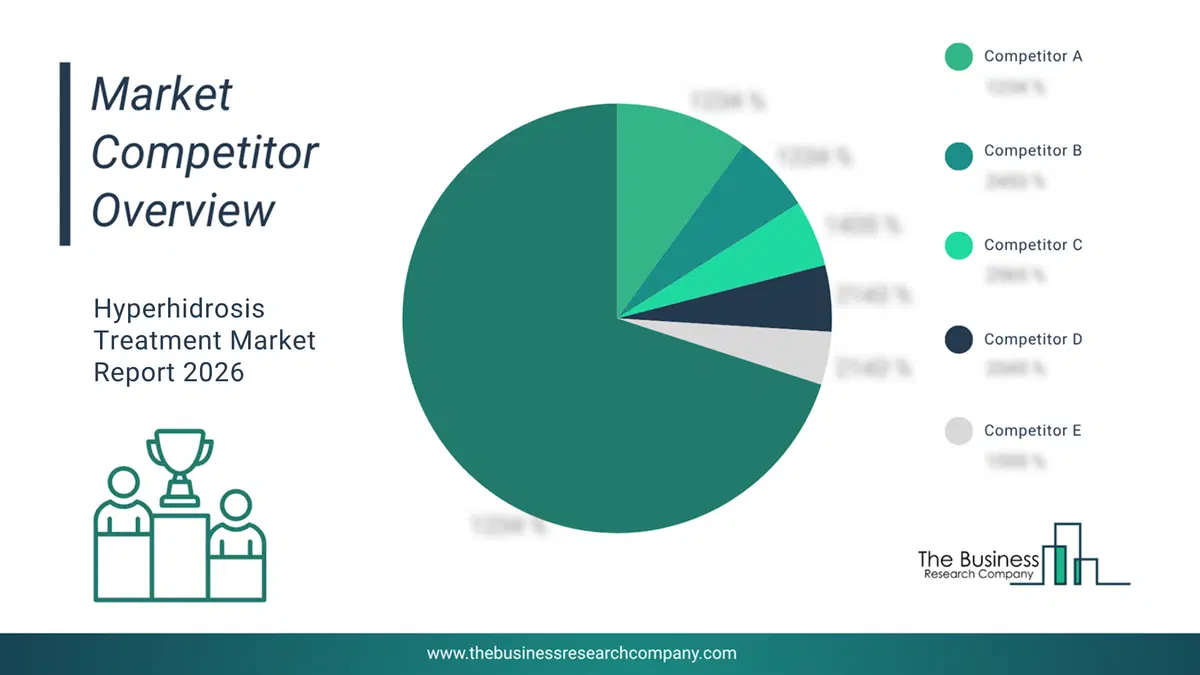
This chart is for illustrative purposes; the full report includes a detailed competitor analysis and comprehensive overview of the top 10 companies in the market.
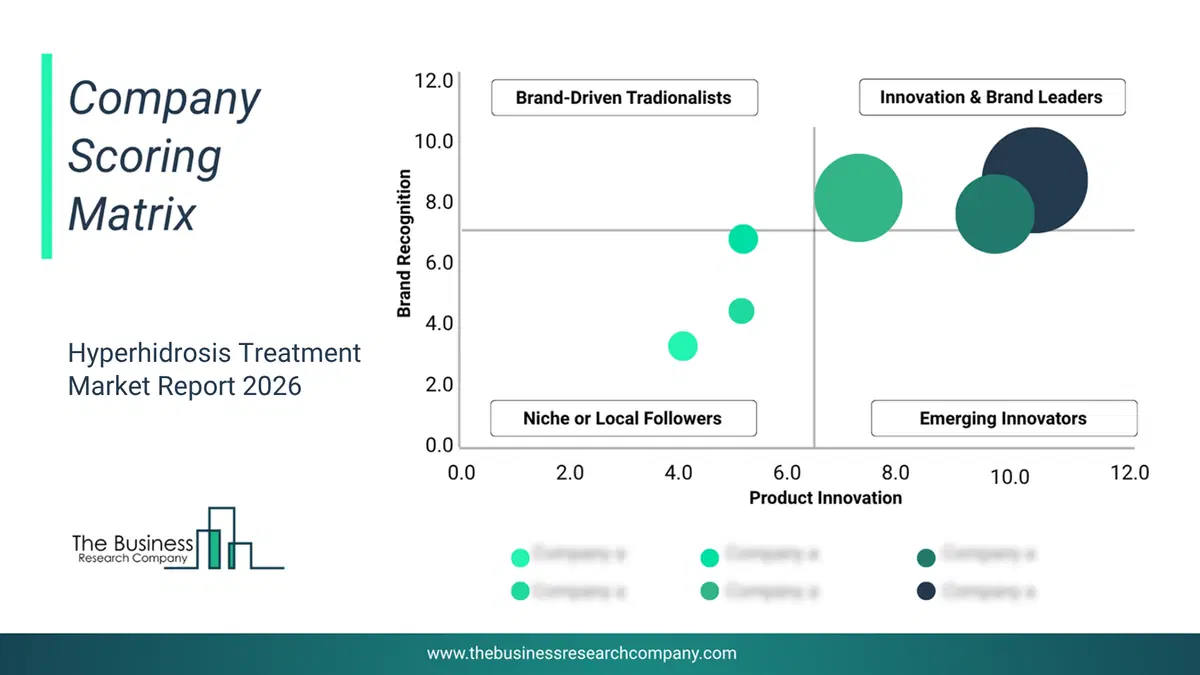
This chart maps companies by product innovation and brand strength, with bubble size indicating relative revenue, helping identify market leaders, challengers, and niche players. This is an illustrative chart; the full report provides a complete and accurate competitive analysis.
Global Hyperhidrosis Treatment Market Trends and Insights
Major companies operating in the hyperhidrosis treatment market are focusing on developing safer, non-invasive therapies with improved efficacy, advancing topical and targeted drug formulations, and conducting clinical trials to deliver longer-lasting symptom relief with fewer side effects. For instance, in March 2025, a newly approved topical therapy, sofpironium gel, introduces a significant advancement in treating primary axillary hyperhidrosis, a condition affecting millions in the U.S. The gel is a retrometabolic drug that targets M3 muscarinic receptors in sweat glands, reducing sweating while minimizing systemic side effects due to rapid metabolism. Phase 3 trials showed notable symptom improvement, with relief beginning within one week and continuing throughout the six-week study. Compared with existing topical anticholinergics, sofpironium demonstrated a better safety profile and fewer adverse reactions. Long-term data also confirmed sustained efficacy and tolerability, positioning the gel as an effective, non-invasive alternative for patients dissatisfied with current treatments.What Are Latest Mergers And Acquisitions In The Hyperhidrosis Treatment Market?
In June 2023, miraDry Inc., a US-based company specializing in non-invasive hyperhidrosis treatment, partnered with the International Hyperhidrosis Society (IHhS). Through this partnership, miraDry aims to work with the International Hyperhidrosis Society (IHhS) to enhance hyperhidrosis therapy, reinforcing its dedication to improving the lives of those who suffer from excessive sweating. The International Hyperhidrosis Society (IHhS) is a US-based non-profit organization that serves millions of hyperhidrosis patients.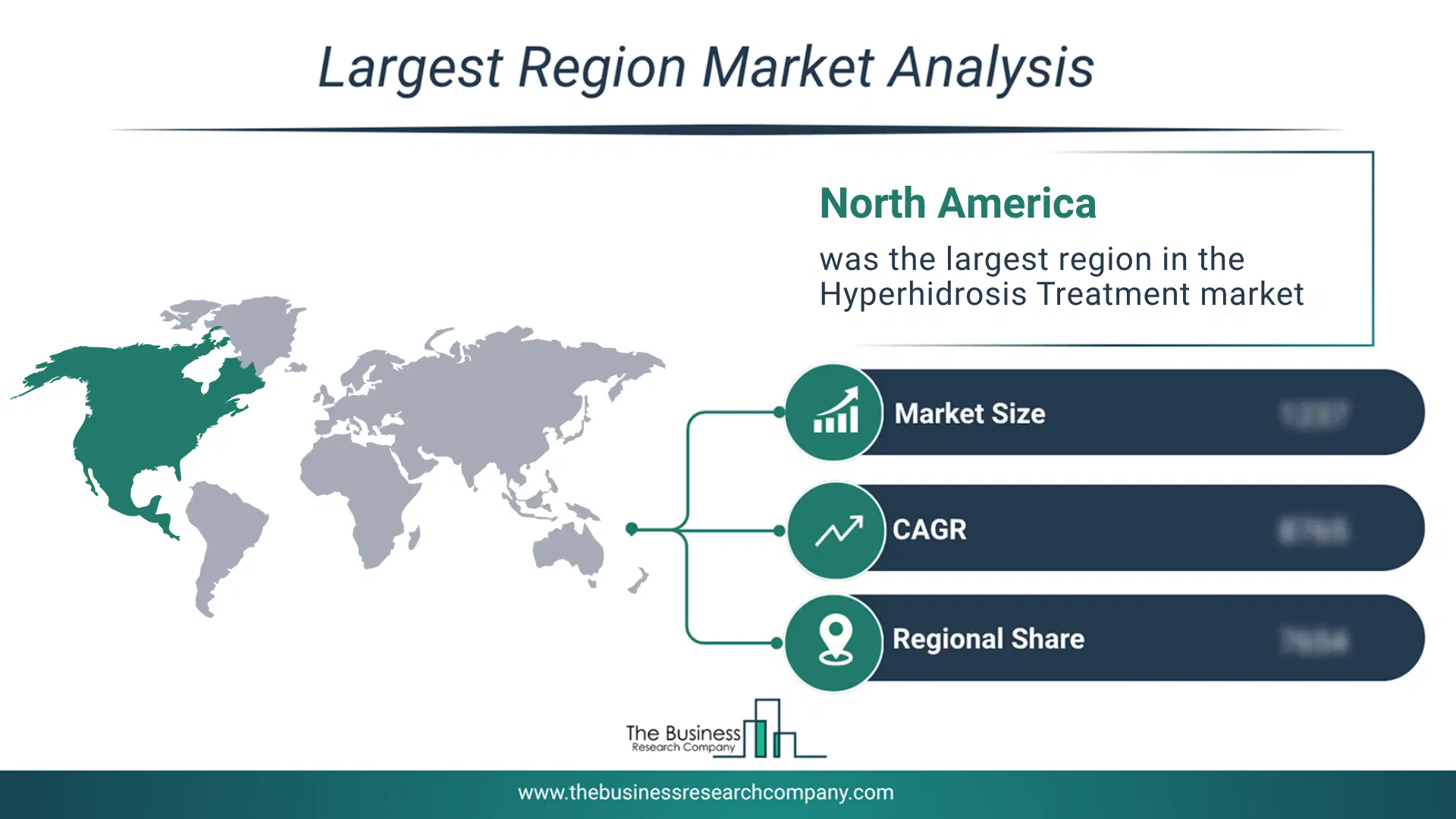
Regional Outlook
North America was the largest region in the hyperhidrosis treatment market in 2025. Asia-Pacific is expected to be the fastest-growing region in the forecast period. The regions covered in this market report are Asia-Pacific, South East Asia, Western Europe, Eastern Europe, North America, South America, Middle East, Africa. The countries covered in this market report are Australia, Brazil, China, France, Germany, India, Indonesia, Japan, Taiwan, Russia, South Korea, UK, USA, Canada, Italy, Spain.What Defines the Hyperhidrosis Treatment Market?
The hyperhidrosis treatment market consists of revenues earned by entities by providing services such as microwave therapy, iontophoresis, sympathectomy, and sweat gland removal. The market value includes the value of related goods sold by the service provider or included within the service offering. The hyperhidrosis treatment market also includes sales of drysol, xerac AC, glycopyrrolate, benztropine and beta blockers. Values in this market are ‘factory gate’ values, that is the value of goods sold by the manufacturers or creators of the goods, whether to other entities (including downstream manufacturers, wholesalers, distributors and retailers) or directly to end customers. The value of goods in this market includes related services sold by the creators of the goods.How is Market Value Defined and Measured?
The market value is defined as the revenues that enterprises gain from the sale of goods and/or services within the specified market and geography through sales, grants, or donations in terms of the currency (in USD unless otherwise specified). The revenues for a specified geography are consumption values that are revenues generated by organizations in the specified geography within the market, irrespective of where they are produced. It does not include revenues from resales along the supply chain, either further along the supply chain or as part of other products.
This chart presents market attractiveness based on a quantitative evaluation of growth, competition, strategic alignment, and risk, offering a clear view of opportunity areas for decision-making. This chart is for illustrative purposes; the full report contains the complete analysis.

This chart highlights the Total Addressable Market (TAM) by estimating the maximum revenue opportunity using an assumption-driven approach, supporting strategic planning and opportunity sizing across markets. The chart is illustrative; the full report provides a more comprehensive analysis.
What Key Data and Analysis Are Included in the Hyperhidrosis Treatment Market Report 2026?
The hyperhidrosis treatment market research report is one of a series of new reports from The Business Research Company that provides market statistics, including industry global market size, regional shares, competitors with the market share, detailed market segments, market trends and opportunities, and any further data you may need to thrive in the hyperhidrosis treatment industry. The market research report delivers a complete perspective of everything you need, with an in-depth analysis of the current and future state of the industry.Hyperhidrosis Treatment Market Report Forecast Analysis
| Report Attribute | Details |
|---|---|
| Market Size Value In 2026 | $1.77 billion |
| Revenue Forecast In 2030 | $2.29 billion |
| Growth Rate | CAGR of 6.7% from 2026 to 2030 |
| Base Year For Estimation | 2025 |
| Actual Estimates/Historical Data | 2020-2025 |
| Forecast Period | 2026 - 2030 |
| Market Representation | Revenue in USD Billion and CAGR from 2026 to 2030 |
| Segments Covered | Treatment Type, Route Of Administration, Disease Type, Distribution Channel |
| Regional Scope | Asia-Pacific, Western Europe, Eastern Europe, North America, South America, Middle East, Africa |
| Country Scope | The countries covered in the report are Australia, Brazil, China, France, Germany, India, Indonesia, Japan, Taiwan, Russia, South Korea, UK, USA, Canada, Italy, Spain |
| Key Companies Profiled | Pfizer Inc., AbbVie Inc., Sanofi S.A., AstraZeneca Plc, GSK plc, Teva Pharmaceutical Industries Ltd., Mylan N.V., Cynosure LLC, Ipsen SA, Galderma S.A., Merz Pharma GmbH & Co. KGaA, Daewoong Pharmaceutical Co. Ltd., Supernus Pharmaceuticals Inc, Kaken Pharmaceutical Co Ltd, Avanor Healthcare Ltd., HUGEL Inc., Evolus Inc., Revance Therapeutics Inc., Dermira Inc., Sesderma SL, Miramar Labs Inc., Dermavant Sciences Inc., Theravida Inc., SweatBlock, Brickell Biotech Inc., Fresh Tracks Therapeutics Inc., Advin Health Care Inc, Dermadry Laboratories Inc., Ulthera Inc., Dermata Therapeutics Inc. |
| Customization Scope | Request for Customization |
| Pricing And Purchase Options | Explore Purchase Options |