
Hyperimmune Globulins Market Report 2026
Global Outlook – By Type (Hepatitis B Hyperimmune Globulin, Rabies Hyperimmune Globulin, Tetanus Hyperimmune Globulin, Cytomegalovirus (CMV) Hyperimmune Globulin, Varicella-Zoster Virus (VZV) Hyperimmune Globulin, Respiratory Syncytial Virus (RSV) Hyperimmune Globulin, Other Types), By Route Of Administration (Intramuscular, Intravenous), By Application (Government Institution, Private Sector, Other Applications) - Market Size, Trends, Strategies, and Forecast to 2030
Hyperimmune Globulins Market Overview
• Hyperimmune Globulins market size has reached to $2.06 billion in 2025 • Expected to grow to $2.86 billion in 2030 at a compound annual growth rate (CAGR) of 6.7% • Growth Driver: Rising Infectious Disease Prevalence Fuels Growth In The Hyperimmune Globulins Market • North America was the largest region in 2025 and Asia-Pacific is the fastest growing region.What Is Covered Under Hyperimmune Globulins Market?
Hyperimmune globulins refer to specialized preparations of immunoglobulins (antibodies) that are enriched with specific antibodies against a particular pathogen or antigen. These preparations are derived from the plasma of individuals who have high levels of antibodies against a specific infectious agent or toxin. Hyperimmune globulins are used for passive immunization to provide immediate immunity against certain diseases, especially in situations where rapid protection is needed. The main types of hyperimmune globulins are hepatitis B hyperimmune globulin, rabies hyperimmune globulin, tetanus hyperimmune globulin, cytomegalovirus (CMV) hyperimmune globulin, varicella-zoster virus (VZV) hyperimmune globulin, respiratory syncytial virus (RSV) hyperimmune globulin, others. Hepatitis B hyperimmune globulin is a type of immunoglobulin derived from the plasma of donors with high antibody titers against the hepatitis B virus. These are used through various routes of administration such as intramuscular, intravenous that are used in various applications such as government institutions, the private sector, and others.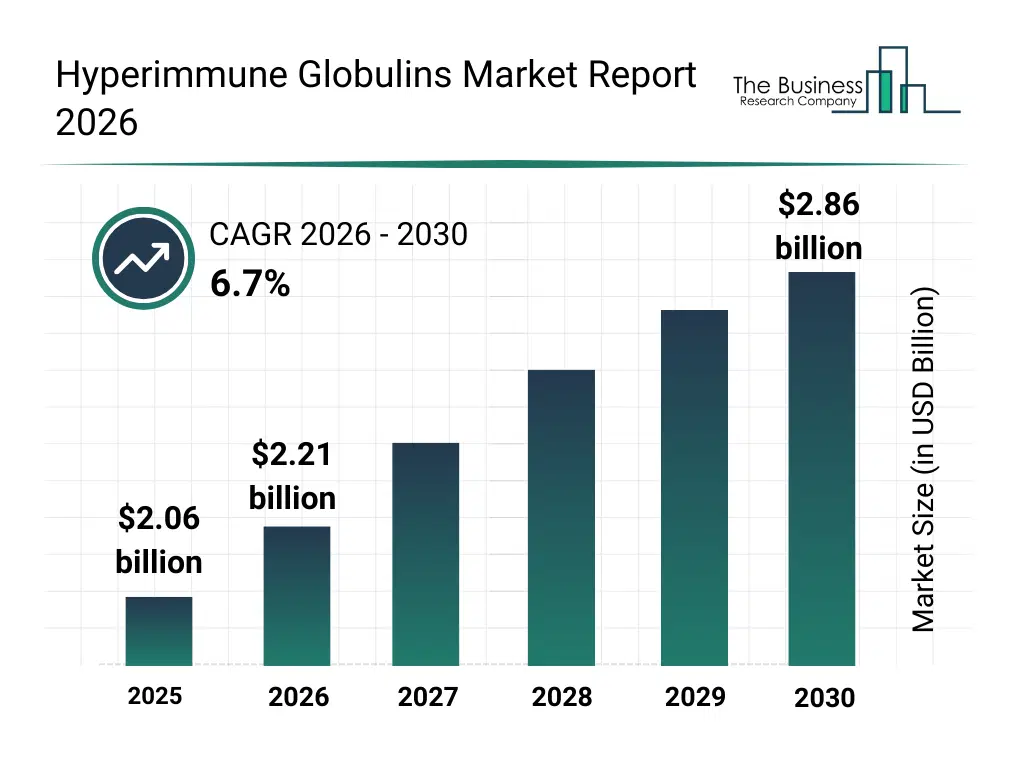
What Is The Hyperimmune Globulins Market Size and Share 2026?
The hyperimmune globulins market size has grown strongly in recent years. It will grow from $2.06 billion in 2025 to $2.21 billion in 2026 at a compound annual growth rate (CAGR) of 7.6%. The growth in the historic period can be attributed to established use in rabies and tetanus prophylaxis, increasing incidence of infectious diseases, reliance on plasma-derived therapies, government immunization programs, growth of hospital-based emergency care.What Is The Hyperimmune Globulins Market Growth Forecast?
The hyperimmune globulins market size is expected to see strong growth in the next few years. It will grow to $2.86 billion in 2030 at a compound annual growth rate (CAGR) of 6.7%. The growth in the forecast period can be attributed to rising organ transplantation rates, increasing outbreaks of viral infections, expansion of plasma donation infrastructure, advancements in purification technologies, growing focus on rapid immune protection. Major trends in the forecast period include rising demand for passive immunization therapies, increased use in post-exposure prophylaxis, growing adoption in transplant and immunocompromised care, expansion of plasma collection and fractionation capacity, strengthening of regulatory oversight and quality standards.
Global Hyperimmune Globulins Market Segmentation
1) By Type: Hepatitis B Hyperimmune Globulin, Rabies Hyperimmune Globulin, Tetanus Hyperimmune Globulin, Cytomegalovirus (CMV) Hyperimmune Globulin, Varicella-Zoster Virus (VZV) Hyperimmune Globulin, Respiratory Syncytial Virus (RSV) Hyperimmune Globulin, Other Types 2) By Route Of Administration: Intramuscular, Intravenous 3) By Application: Government Institution, Private Sector, Other Applications Subsegments: 1) By Hepatitis B Hyperimmune Globulin: Intramuscular Hepatitis B Hyperimmune Globulin, Intravenous Hepatitis B Hyperimmune Globulin 2) By Rabies Hyperimmune Globulin: Rabies Immune Globulin (Human), Rabies Immune Globulin (Equine) 3) By Tetanus Hyperimmune Globulin: Tetanus Immune Globulin (Human), Tetanus Immune Globulin (Equine) 4) By Cytomegalovirus (Cmv) Hyperimmune Globulin: Cmv Immune Globulin For Organ Transplantation, Cmv Immune Globulin For Neonatal Infection 5) By Varicella-Zoster Virus (Vzv) Hyperimmune Globulin: Vzv Immune Globulin For Post-Exposure Prophylaxis, Vzv Immune Globulin For Immunocompromised Patients 6) By Respiratory Syncytial Virus (Rsv) Hyperimmune Globulin: Rsv Immune Globulin For Infants And Children, Rsv Immune Globulin For Adults With Respiratory Conditions 7) By Other Types: Diphtheria Hyperimmune Globulin, Botulism Hyperimmune Globulin, Other Specialized Hyperimmune GlobulinsWhat Are The Drivers Of The Hyperimmune Globulins Market?
The increasing prevalence of infectious diseases is expected to propel the growth of the hyperimmune globulin market going forward. Infectious diseases are illnesses caused by harmful agents (pathogens) that get into your body, such as viruses, bacteria, fungi, and parasites. The increasing prevalence of infectious diseases can be attributed to factors such as antimicrobial resistance, climate change, and population growth. Hyperimmune globulins are utilized in infectious diseases to provide immediate passive immunity by delivering concentrated antibodies against specific pathogens, aiding in the prevention or treatment of diseases such as rabies, hepatitis B, or tetanus. For instance, in August 2024, according to a report published by the UK Health Security Agency, a UK-based government agency, in 2023, the West Midlands region reported the highest number of measles cases, with 160 cases (44%), followed by London with 122 cases (33%). Notably, children under the age of 10 represented 63% of the total cases, amounting to 232 cases. Measles activity saw a significant rise towards the end of the year, with 157 new cases recorded in December, compared to just 45 cases in November. Therefore, the increasing prevalence of infectious diseases is driving the growth of the hyperimmune globulin industry. Government initiatives for research and development in healthcare are expected to propel the growth of the hyperimmune globulins market going forward. Government initiatives for research and development in healthcare are rising due to increasing demand for innovative medical solutions and the need to address emerging health challenges. Government initiatives facilitate the development and accessibility of hyperimmune globulins to combat specific infectious diseases effectively. For instance, in May 2024, according to the Office for National Statistics, a UK-based government department, reported that total healthcare expenditure saw a 5.6% increase in nominal terms from 2022 to 2023, marking a significant acceleration compared to the 0.9% growth observed in 2022. Therefore, the increasing government initiatives for research and development in healthcare drive the hyperimmune globulins industry. The increasing incidence of autoimmune diseases is expected to propel the growth of the hyperimmune globulins market going forward. Autoimmune diseases are conditions in which the immune system mistakenly attacks the body’s own healthy tissues. Autoimmune diseases are increasing due to rising environmental triggers such as pollution and chemical exposure. Hyperimmune globulins help treat autoimmune diseases by supplying concentrated antibodies that modulate abnormal immune responses. For instance, in August 2024, according to the data from Public Health Scotland, a Scotland-based national organization, reported that in 2023, the Scottish Multiple Sclerosis Register (SMSR) recorded 455 newly diagnosed MS patients. Therefore, the increasing incidence of autoimmune diseases is driving the growth of the hyperimmune globulins industry.Key Players In The Global Hyperimmune Globulins Market
Major companies operating in the hyperimmune globulins market are Bayer AG, Takeda Pharmaceutical Company Limited, Baxter International Inc., CSL Ltd., Fresenius Kabi AG, Grifols SA, Octapharma AG, Shanghai RAAS Blood Products Co. Ltd., Emergent BioSolutions Inc., Kedrion Biopharma Inc., LFB SA, Hualan Biological Engineering Inc., Taibang Biologic Group, Bio Products Laboratory (BPL) Ltd., ADMA Biologics, Cangene Corporation, Kamada Ltd., Saol Therapeutics Inc., Shire, Sichuan Yuanda Shuyang Pharmaceutical Co. Ltd.
This chart is for illustrative purposes; the full report includes a detailed competitor analysis and comprehensive overview of the top 10 companies in the market.
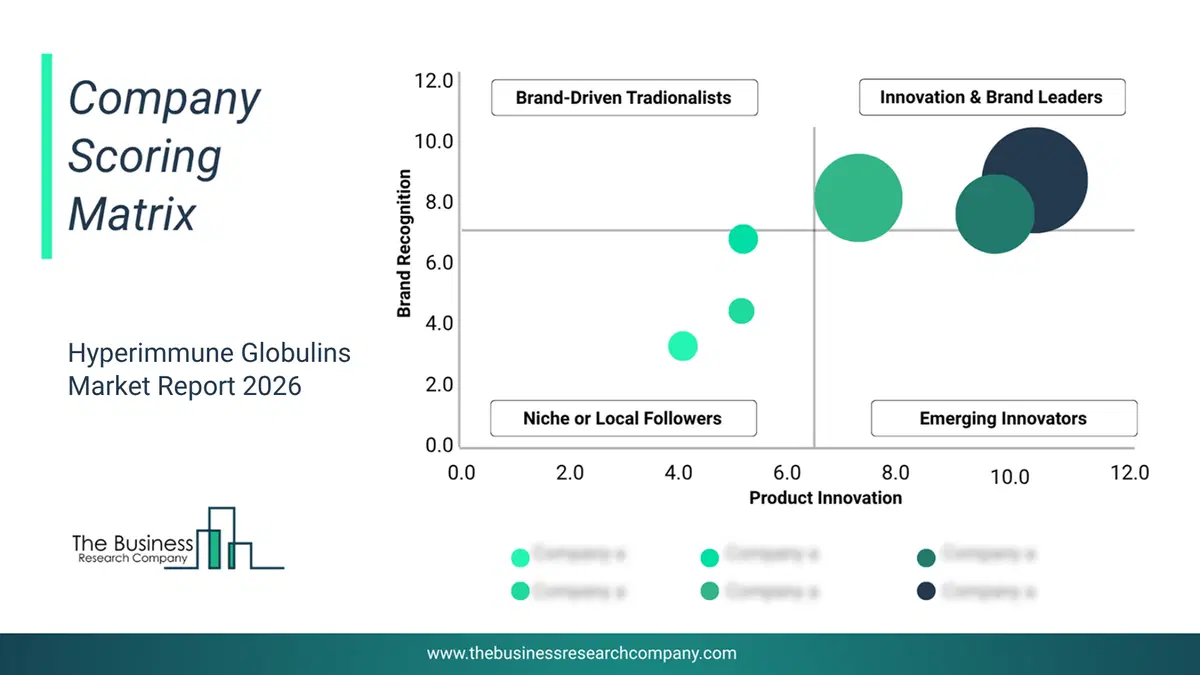
This chart maps companies by product innovation and brand strength, with bubble size indicating relative revenue, helping identify market leaders, challengers, and niche players. This is an illustrative chart; the full report provides a complete and accurate competitive analysis.
Regional Outlook
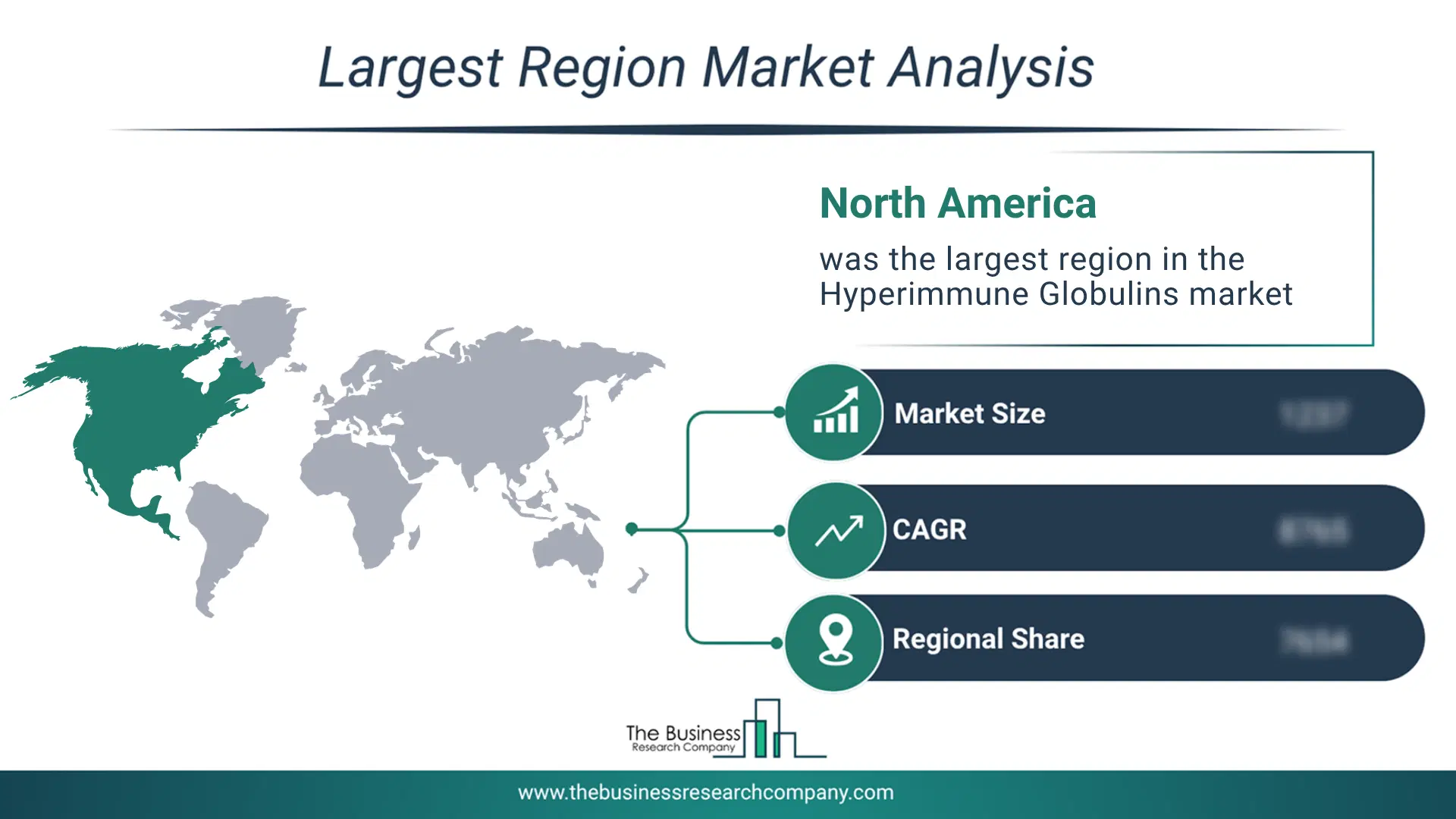
North America was the largest region in the hyperimmune globulins market in 2025. Asia-Pacific is expected to be the fastest-growing region in the forecast period. The regions covered in this market report are Asia-Pacific, South East Asia, Western Europe, Eastern Europe, North America, South America, Middle East, Africa. The countries covered in this market report are Australia, Brazil, China, France, Germany, India, Indonesia, Japan, Taiwan, Russia, South Korea, UK, USA, Canada, Italy, Spain.What Defines the Hyperimmune Globulins Market?
The hyperimmune globulins market consists of sales of bayrab, hepaGam B, Tetanus Immune Globulin (TIG), variZIG, respiGam, and cytogam. Values in this market are ‘factory gate’ values, that is, the value of goods sold by the manufacturers or creators of the goods, whether to other entities (including downstream manufacturers, wholesalers, distributors, and retailers) or directly to end customers. The value of goods in this market includes related services sold by the creators of the goods.How is Market Value Defined and Measured?
The market value is defined as the revenues that enterprises gain from the sale of goods and/or services within the specified market and geography through sales, grants, or donations in terms of the currency (in USD unless otherwise specified). The revenues for a specified geography are consumption values that are revenues generated by organizations in the specified geography within the market, irrespective of where they are produced. It does not include revenues from resales along the supply chain, either further along the supply chain or as part of other products.
This chart presents market attractiveness based on a quantitative evaluation of growth, competition, strategic alignment, and risk, offering a clear view of opportunity areas for decision-making. This chart is for illustrative purposes; the full report contains the complete analysis.

This chart highlights the Total Addressable Market (TAM) by estimating the maximum revenue opportunity using an assumption-driven approach, supporting strategic planning and opportunity sizing across markets. The chart is illustrative; the full report provides a more comprehensive analysis.
What Key Data and Analysis Are Included in the Hyperimmune Globulins Market Report 2026?
The hyperimmune globulins market research report is one of a series of new reports from The Business Research Company that provides market statistics, including industry global market size, regional shares, competitors with the market share, detailed market segments, market trends and opportunities, and any further data you may need to thrive in the hyperimmune globulins industry. The market research report delivers a complete perspective of everything you need, with an in-depth analysis of the current and future state of the industry.Hyperimmune Globulins Market Report Forecast Analysis
| Report Attribute | Details |
|---|---|
| Market Size Value In 2026 | $2.21 billion |
| Revenue Forecast In 2030 | $2.86 billion |
| Growth Rate | CAGR of 6.7% from 2026 to 2030 |
| Base Year For Estimation | 2025 |
| Actual Estimates/Historical Data | 2020-2025 |
| Forecast Period | 2026 - 2030 |
| Market Representation | Revenue in USD Billion and CAGR from 2026 to 2030 |
| Segments Covered | Type, Route Of Administration, Application |
| Regional Scope | Asia-Pacific, Western Europe, Eastern Europe, North America, South America, Middle East, Africa |
| Country Scope | The countries covered in the report are Australia, Brazil, China, France, Germany, India, Indonesia, Japan, Taiwan, Russia, South Korea, UK, USA, Canada, Italy, Spain |
| Key Companies Profiled | Bayer AG, Takeda Pharmaceutical Company Limited, Baxter International Inc., CSL Ltd., Fresenius Kabi AG, Grifols SA, Octapharma AG, Shanghai RAAS Blood Products Co. Ltd., Emergent BioSolutions Inc., Kedrion Biopharma Inc., LFB SA, Hualan Biological Engineering Inc., Taibang Biologic Group, Bio Products Laboratory (BPL) Ltd., ADMA Biologics, Cangene Corporation, Kamada Ltd., Saol Therapeutics Inc., Shire, Sichuan Yuanda Shuyang Pharmaceutical Co. Ltd. |
| Customization Scope | Request for Customization |
| Pricing And Purchase Options | Explore Purchase Options |