

Hypertrophic Cardiomyopathy Treatment Market Report 2026
Global Outlook – By Disease Type (Obstructive Hypertrophic Cardiomyopathy Treatment, Non-Obstructive Hypertrophic Cardiomyopathy Treatment), By Diagnosis (Chest X-Ray, Echocardiogram, Electrocardiogram (ECG), Treadmill Stress Test, Cardiac Catheterization, Cardiac MRI, Cardiac CT Scan, Blood Tests, Genetic Testing Or Screening), By Treatment (Medication, Surgically Implanted Devices, Nonsurgical Procedures, Surgery), By End-User (Hospitals, Research Institutes, Specialty Clinics) - Market Size, Trends, Strategies, and Forecast to 2030
Hypertrophic Cardiomyopathy Treatment Market Overview
• Hypertrophic Cardiomyopathy Treatment market size has reached to $1.41 billion in 2025 • Expected to grow to $1.81 billion in 2030 at a compound annual growth rate (CAGR) of 5.4% • Growth Driver: Rising Patient Awareness And Education Programs Boosting The Market Growth • Market Trend: Emergence Of Next Generation Myosin Inhibitors Driven By Precision Mechanism • North America was the largest region in 2025.What Is Covered Under Hypertrophic Cardiomyopathy Treatment Market?
Hypertrophic cardiomyopathy (HCM) refers to a disorder of the heart when the left ventricle, the major pumping chamber, is affected by the thickening of the heart muscle. This is most prevalent at the septum. The septum is the muscular wall that separates the heart's left and right sides. The treatment strategy for hypertrophic cardiomyopathy is tailored to the individual and specific recommendations may differ. The main types of hypertrophic cardiomyopathy treatment are obstructive hypertrophic cardiomyopathy treatment and non-obstructive hypertrophic cardiomyopathy treatment. Obstructive hypertrophic cardiomyopathy (HCM) is a disorder in which the muscular wall (septum) between the two bottom chambers of the heart (ventricles) thickens, allowing blood flow out of the heart to become blocked. They are diagnosed through various tests such as chest x-ray, echocardiogram, electrocardiogram (ECG), treadmill stress test, cardiac catheterization, genetic testing or screening, cardiac MRI, cardiac CT scan and blood tests. They are administered in various forms, such as medication, surgically implanted devices, nonsurgical procedures and surgery and are utilized by various end-users, such as hospitals, research institutes and specialty clinics.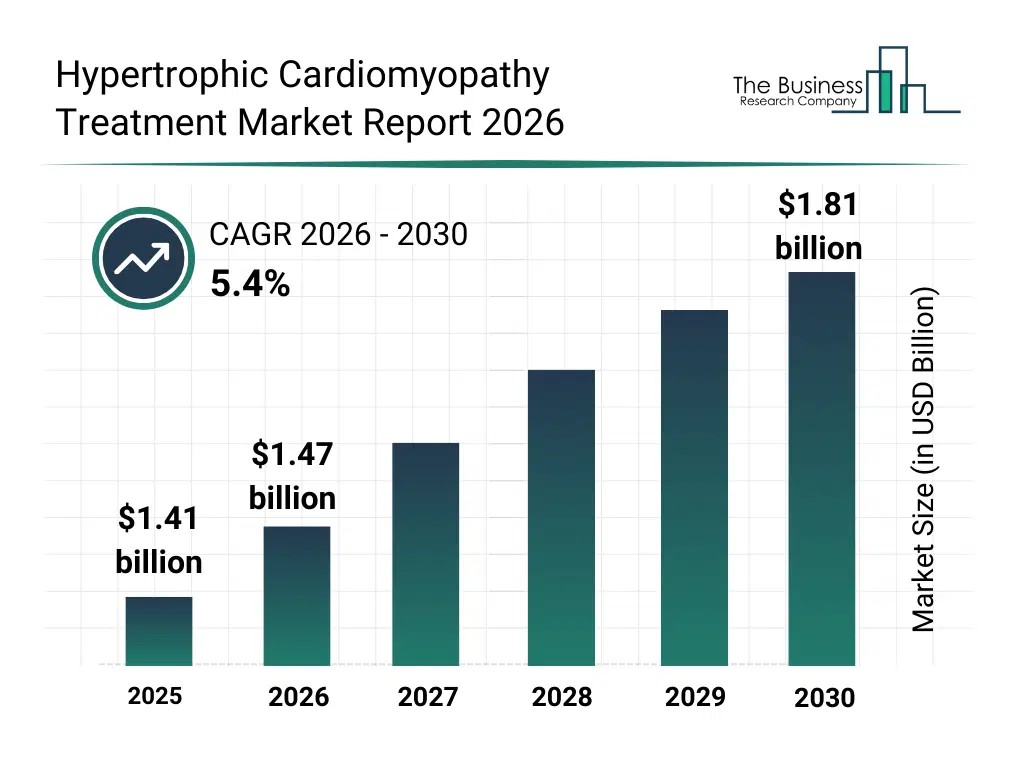
What Is The Hypertrophic Cardiomyopathy Treatment Market Size and Share 2026?
The hypertrophic cardiomyopathy treatment market size has grown steadily in recent years. It will grow from $1.41 billion in 2025 to $1.47 billion in 2026 at a compound annual growth rate (CAGR) of 4.2%. The growth in the historic period can be attributed to improved awareness of hypertrophic cardiomyopathy, widespread use of beta blockers and calcium channel blockers, increased availability of echocardiography diagnostics, hospital-based management of symptomatic patients, growing identification of familial hcm cases.What Is The Hypertrophic Cardiomyopathy Treatment Market Growth Forecast?
The hypertrophic cardiomyopathy treatment market size is expected to see strong growth in the next few years. It will grow to $1.81 billion in 2030 at a compound annual growth rate (CAGR) of 5.4%. The growth in the forecast period can be attributed to increasing adoption of genetic testing and screening, rising demand for implantable cardioverter defibrillators, growing use of targeted pharmacological therapies, expansion of specialized cardiology centers, improving long-term patient monitoring and follow-up care. Major trends in the forecast period include growing adoption of precision medicine in hcm treatment, rising use of advanced cardiac imaging for treatment planning, increasing preference for minimally invasive septal reduction therapies, expansion of implantable cardiac devices for sudden cardiac death prevention, enhanced focus on personalized long-term disease management.
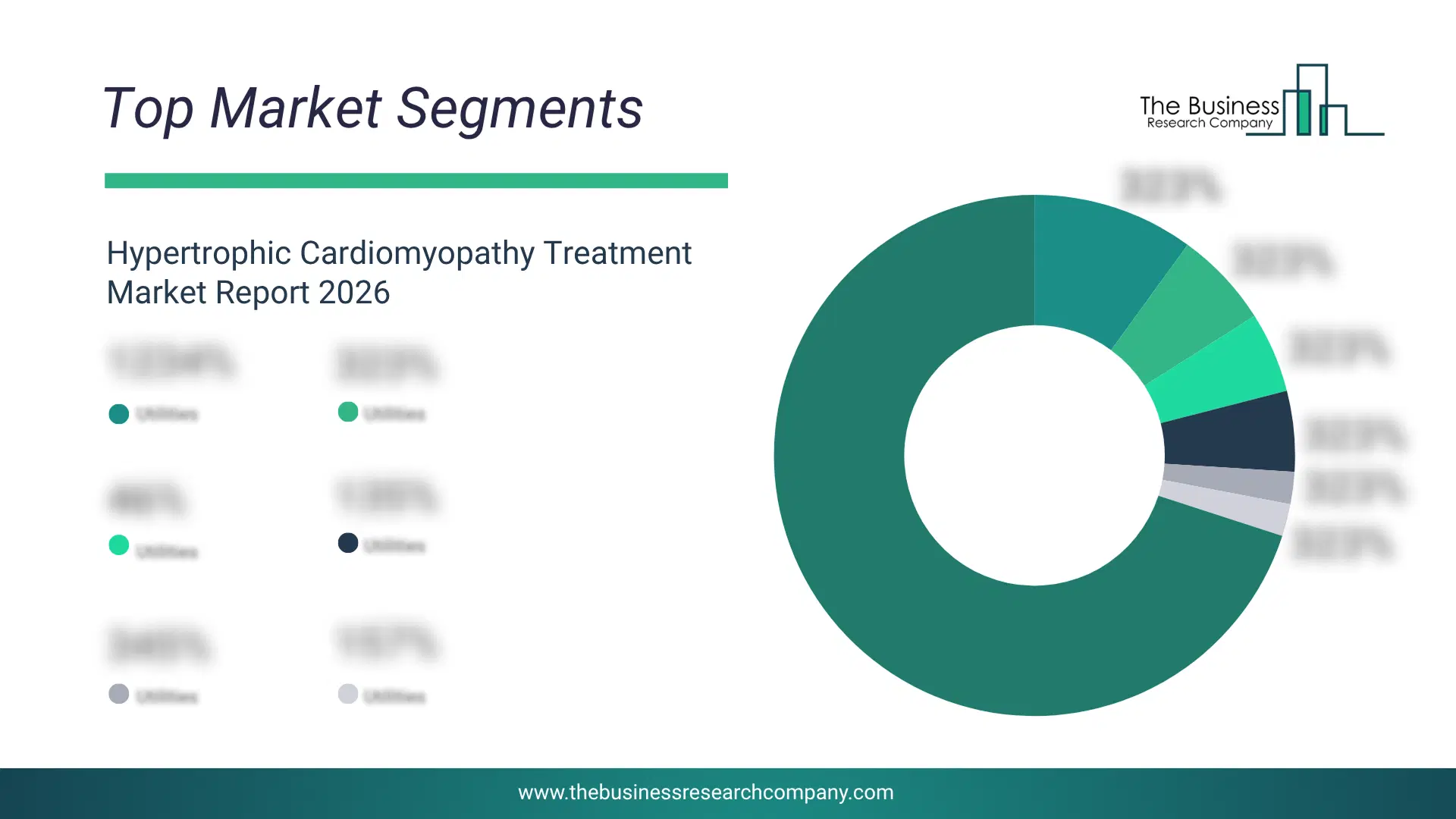
Global Hypertrophic Cardiomyopathy Treatment Market Segmentation
1) By Disease Type: Obstructive Hypertrophic Cardiomyopathy Treatment, Non-Obstructive Hypertrophic Cardiomyopathy Treatment 2) By Diagnosis: Chest X-Ray, Echocardiogram, Electrocardiogram (ECG), Treadmill Stress Test, Cardiac Catheterization, Cardiac MRI, Cardiac CT Scan, Blood Tests, Genetic Testing Or Screening 3) By Treatment: Medication, Surgically Implanted Devices, Nonsurgical Procedures, Surgery 4) By End-User: Hospitals, Research Institutes, Specialty Clinics Subsegments: 1) By Obstructive Hypertrophic Cardiomyopathy Treatment: Medications, Surgical Procedures, Alcohol Septal Ablation, Implantable Cardioverter Defibrillators (ICDs) 2) By Non-Obstructive Hypertrophic Cardiomyopathy Treatment: Medications, Lifestyle Modifications, Genetic Counseling And Testing, Monitoring And Follow-Up CareWhat Is The Driver Of The Hypertrophic Cardiomyopathy Treatment Market?
Rising patient awareness and education programs are expected to propel the growth of the hypertrophic cardiomyopathy treatment market in the coming years. Patient awareness and education programs are a means of influencing patient behavior and resulting in modifications to the understanding, mindset, and abilities required to maintain or enhance health through the provision of data and knowledge to patients. Hypertrophic cardiomyopathy is a rare genetic disorder that is an unknown disease, and people remain undiagnosed due to a lack of awareness regarding the disease. The launch of awareness and education programs related to this disease aids in minimizing the risk of disease through early diagnosis and treatment. For instance, in September 2024, according to the GOV.UK, a UK-based government department, in the UK adult participation in further education and skills has reached 1,627,320, showing a 0.9% rise from 2022/23. Additionally, participation in adult education and training has increased by 4.6% to 863,790. Therefore, rising patient awareness and education programs are driving the hypertrophic cardiomyopathy treatment industry.Key Players In The Global Hypertrophic Cardiomyopathy Treatment Market
Major companies operating in the hypertrophic cardiomyopathy treatment market are Pfizer Inc., F. Hoffmann-La Roche AG, Merck & Co. Inc., Novartis AG, Sanofi S.A., Bristol-Myers Squibb Company, AstraZeneca plc, Abbott Laboratories Ltd., GlaxoSmithKline plc, Takeda Pharmaceutical Company Limited, Teva Pharmaceutical Industries Ltd., Boston Scientific Corporation, Mylan N.V., Sun Pharmaceutical Industries Ltd., Cipla Ltd., Aurobindo Pharma Ltd., Hikma Pharmaceuticals plc, Lupin Limited, Zydus Lifesciences Limited, XyloCor Therapeutics Inc., Cytokinetics Inc., Santhera Pharmaceuticals Holding AG, DiNAQOR AG, Correvio Pharma Corp, Cardurion Pharmaceuticals Inc.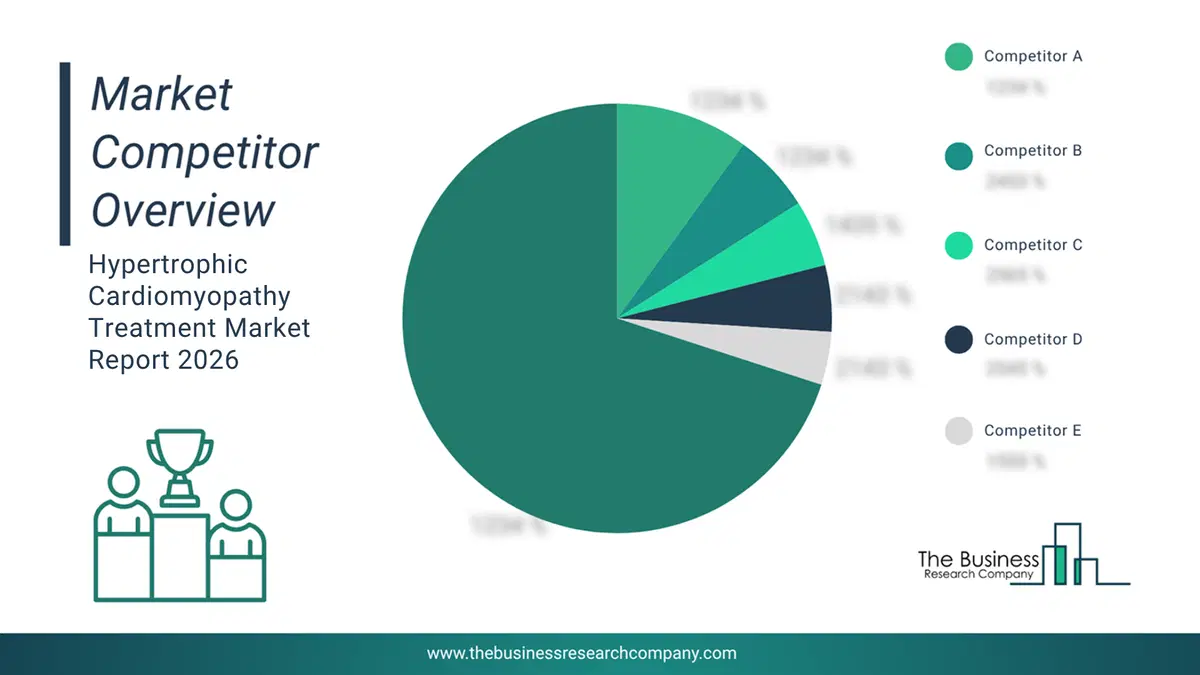
This chart is for illustrative purposes; the full report includes a detailed competitor analysis and comprehensive overview of the top 10 companies in the market.
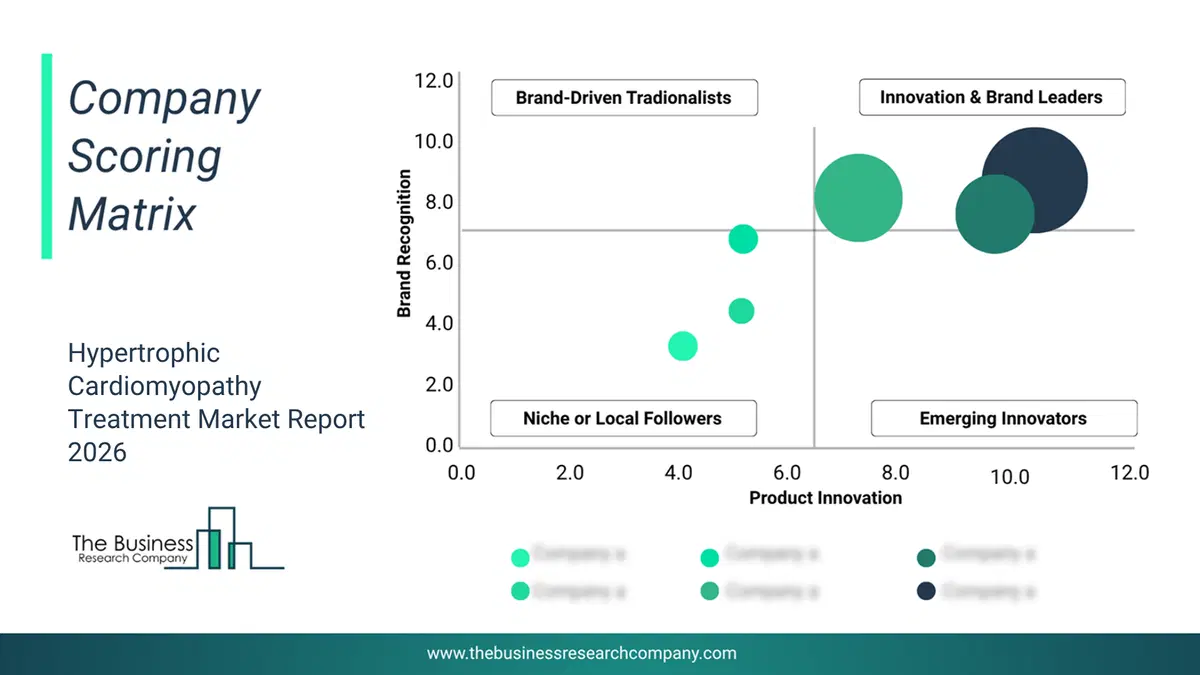
This chart maps companies by product innovation and brand strength, with bubble size indicating relative revenue, helping identify market leaders, challengers, and niche players. This is an illustrative chart; the full report provides a complete and accurate competitive analysis.
Global Hypertrophic Cardiomyopathy Treatment Market Trends and Insights
Major companies operating in the Hypertrophic Cardiomyopathy Treatment market are focusing on selective cardiac myosin inhibition, such as small molecule allosteric myosin inhibitors, to gain a competitive advantage. These agents directly target hypercontractility in HCM by reducing the number of active actin-myosin cross bridges. For instance, in December 2024, Cytokinetics, a US-based biotechnology company, announced that the FDA accepted its New Drug Application for aficamten, a next generation cardiac myosin inhibitor, with a target action date of September 2025; aficamten demonstrated statistically significant improvement in exercise capacity (peak VO₂), reductions in left ventricular outflow tract gradients, and favorable safety in the SEQUOIA HCM Phase III trial. This trend strengthens disease modifying approaches beyond symptom control, but long term safety and label competition (e.g., non obstructive HCM) remain hurdles.What Are Latest Mergers And Acquisitions In The Hypertrophic Cardiomyopathy Treatment Market?
In March 2023, Viz.ai, a US-based medical imaging firm that offers AI-based care coordination tools for diagnosis and operations optimization, partnered with Bristol-Myers Squibb Company to detect and triage patients who require further evaluation for hypertrophic cardiomyopathy (HCM) detection using an artificial intelligence (AI) algorithm and the Viz HCM provider workflow software. Viz's collaboration with Bristol Myers Squibb enables it to provide underdiagnosed and underserved HCM patients with the care they need from skilled professionals at the correct time. The bundle comprises a mobile-based ECG viewer, timely AI-based alerts and communication capabilities to improve cardiac care coordination. Bristol Myers Squibb Co. is a US-based pharmaceutical firm treating hypertrophic cardiomyopathy (HCM).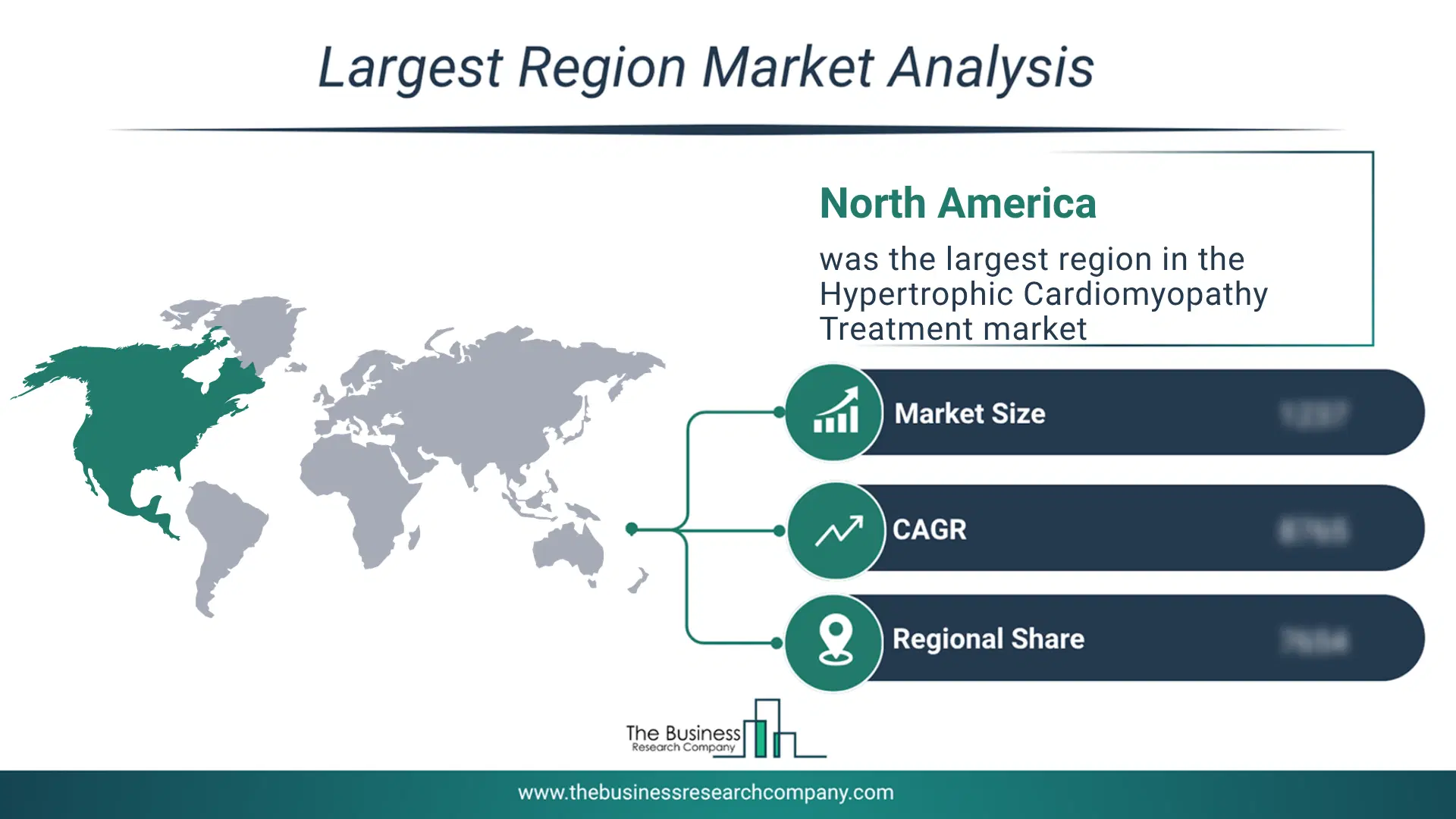
Regional Outlook
North America was the largest region in the hypertrophic cardiomyopathy treatment market in 2025. The regions covered in this market report are Asia-Pacific, South East Asia, Western Europe, Eastern Europe, North America, South America, Middle East, Africa. The countries covered in this market report are Australia, Brazil, China, France, Germany, India, Indonesia, Japan, Taiwan, Russia, South Korea, UK, USA, Canada, Italy, Spain.What Defines the Hypertrophic Cardiomyopathy Treatment Market?
The hypertrophic cardiomyopathy treatment market consists of revenues earned by entities by providing services such as surgical myectomy, implantable defibrillator and septal alcohol ablation therapy. The market value includes the value of related goods sold by the service provider or included within the service offering. The hypertrophic cardiomyopathy market also includes the sales of medications such as calcium channel blockers, heart rhythm drugs and blood thinners. Values in this market are ‘factory gate’ values, that is the value of goods sold by the manufacturers or creators of the goods, whether to other entities (including downstream manufacturers, wholesalers, distributors and retailers) or directly to end customers. The value of goods in this market includes related services sold by the creators of the goods.How is Market Value Defined and Measured?
The market value is defined as the revenues that enterprises gain from the sale of goods and/or services within the specified market and geography through sales, grants, or donations in terms of the currency (in USD unless otherwise specified). The revenues for a specified geography are consumption values that are revenues generated by organizations in the specified geography within the market, irrespective of where they are produced. It does not include revenues from resales along the supply chain, either further along the supply chain or as part of other products.
This chart presents market attractiveness based on a quantitative evaluation of growth, competition, strategic alignment, and risk, offering a clear view of opportunity areas for decision-making. This chart is for illustrative purposes; the full report contains the complete analysis.

This chart highlights the Total Addressable Market (TAM) by estimating the maximum revenue opportunity using an assumption-driven approach, supporting strategic planning and opportunity sizing across markets. The chart is illustrative; the full report provides a more comprehensive analysis.
What Key Data and Analysis Are Included in the Hypertrophic Cardiomyopathy Treatment Market Report 2026?
The hypertrophic cardiomyopathy treatment market research report is one of a series of new reports from The Business Research Company that provides market statistics, including industry global market size, regional shares, competitors with the market share, detailed market segments, market trends and opportunities, and any further data you may need to thrive in the hypertrophic cardiomyopathy treatment industry. The market research report delivers a complete perspective of everything you need, with an in-depth analysis of the current and future state of the industry.Hypertrophic Cardiomyopathy Treatment Market Report Forecast Analysis
| Report Attribute | Details |
|---|---|
| Market Size Value In 2026 | $1.47 billion |
| Revenue Forecast In 2030 | $1.81 billion |
| Growth Rate | CAGR of 5.4% from 2026 to 2030 |
| Base Year For Estimation | 2025 |
| Actual Estimates/Historical Data | 2020-2025 |
| Forecast Period | 2026 - 2030 |
| Market Representation | Revenue in USD Billion and CAGR from 2026 to 2030 |
| Segments Covered | Disease Type, Diagnosis, Treatment, End-User |
| Regional Scope | Asia-Pacific, Western Europe, Eastern Europe, North America, South America, Middle East, Africa |
| Country Scope | The countries covered in the report are Australia, Brazil, China, France, Germany, India, Indonesia, Japan, Taiwan, Russia, South Korea, UK, USA, Canada, Italy, Spain |
| Key Companies Profiled | Pfizer Inc., F. Hoffmann-La Roche AG, Merck & Co. Inc., Novartis AG, Sanofi S.A., Bristol-Myers Squibb Company, AstraZeneca plc, Abbott Laboratories Ltd., GlaxoSmithKline plc, Takeda Pharmaceutical Company Limited, Teva Pharmaceutical Industries Ltd., Boston Scientific Corporation, Mylan N.V., Sun Pharmaceutical Industries Ltd., Cipla Ltd., Aurobindo Pharma Ltd., Hikma Pharmaceuticals plc, Lupin Limited, Zydus Lifesciences Limited, XyloCor Therapeutics Inc., Cytokinetics Inc., Santhera Pharmaceuticals Holding AG, DiNAQOR AG, Correvio Pharma Corp, Cardurion Pharmaceuticals Inc. |
| Customization Scope | Request for Customization |
| Pricing And Purchase Options | Explore Purchase Options |