
Hyperuricemia Drugs Market Report 2026
Global Outlook – By Type (Asymptomatic Hyperuricemia, Symptomatic Hyperuricemia, Other Types), By Drugs (Nonsteroidal Anti-Inflammatory Drugs, Xanthine Oxidase Inhibitors, Selective Uric Acid Reabsorption Inhibitor (SURI), Uricosuric Agents, Other Drugs), By Diseases (Gout, Kidney Stone, Other Diseases), By End-User (Hospitals, Homecare, Specialty Clinics, Other End-Users) – Market Size, Trends, Strategies, and Forecast to 2030
Hyperuricemia Drugs Market Overview
• Hyperuricemia Drugs market size has reached to $5.16 billion in 2025 • Expected to grow to $7.64 billion in 2030 at a compound annual growth rate (CAGR) of 8.1% • Growth Driver: Rising Incidence Of Hyperuricemia And Gout Fuels Growth In The Hyperuricemia Drug Market • Market Trend: Innovation In Hyperuricemia Treatment Enhanced Market Growth • North America was the largest region in 2025.What Is Covered Under Hyperuricemia Drugs Market?
Hyperuricemia drugs are medications used to lower high levels of uric acid in the blood. These drugs work by either reducing the production of uric acid in the body or increasing its excretion through the urine. These drugs are usually taken orally, and dosage is determined based on the severity of hyperuricemia, patient tolerance, and underlying health conditions. The main types of hyperuricemia drugs are asymptomatic hyperuricemia, symptomatic hyperuricemia, and others. Asymptomatic hyperuricemia is a condition where elevated uric acid levels are present in the blood without any noticeable symptoms, and it is often monitored to prevent the development of gout or kidney stones. Hyperuricemia drugs are categorized by drugs into nonsteroidal anti-inflammatory drugs, xanthine oxidase inhibitors, selective uric acid reabsorption inhibitors (SURI), uricosuric agents, and others. These drugs address various diseases, such as gout, kidney stones, and others. They are used across different end-users, including hospitals, homecare, specialty clinics, and others.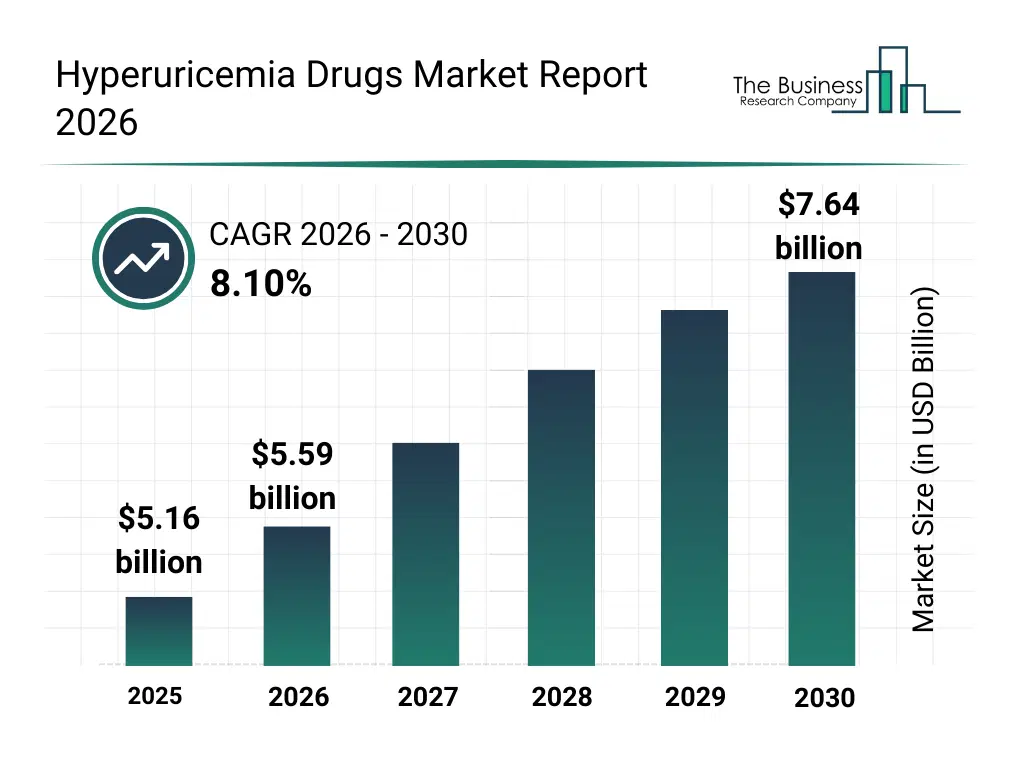
What Is The Hyperuricemia Drugs Market Size and Share 2026?
The hyperuricemia drugs market size has grown strongly in recent years. It will grow from $5.16 billion in 2025 to $5.59 billion in 2026 at a compound annual growth rate (CAGR) of 8.4%. The growth in the historic period can be attributed to limited availability of advanced hyperuricemia drugs, increasing incidence of gout and kidney stones, lack of patient awareness about uric acid management, reliance on traditional anti-inflammatory medications, growth of hospital and clinic infrastructure.What Is The Hyperuricemia Drugs Market Growth Forecast?
The hyperuricemia drugs market size is expected to see strong growth in the next few years. It will grow to $7.64 billion in 2030 at a compound annual growth rate (CAGR) of 8.1%. The growth in the forecast period can be attributed to development of selective uric acid reabsorption inhibitors (suri), increasing adoption of combination therapy, rising awareness about preventive care and lifestyle modifications, expansion of homecare services, growing government initiatives for metabolic disorder management. Major trends in the forecast period include rising prevalence of hyperuricemia and gout, increased adoption of xanthine oxidase inhibitors and uricosuric agents, growth in combination therapy and supportive care medications, expansion of homecare and specialty clinics for hyperuricemia management, emphasis on lifestyle modification and preventive care supplements.
Global Hyperuricemia Drugs Market Segmentation
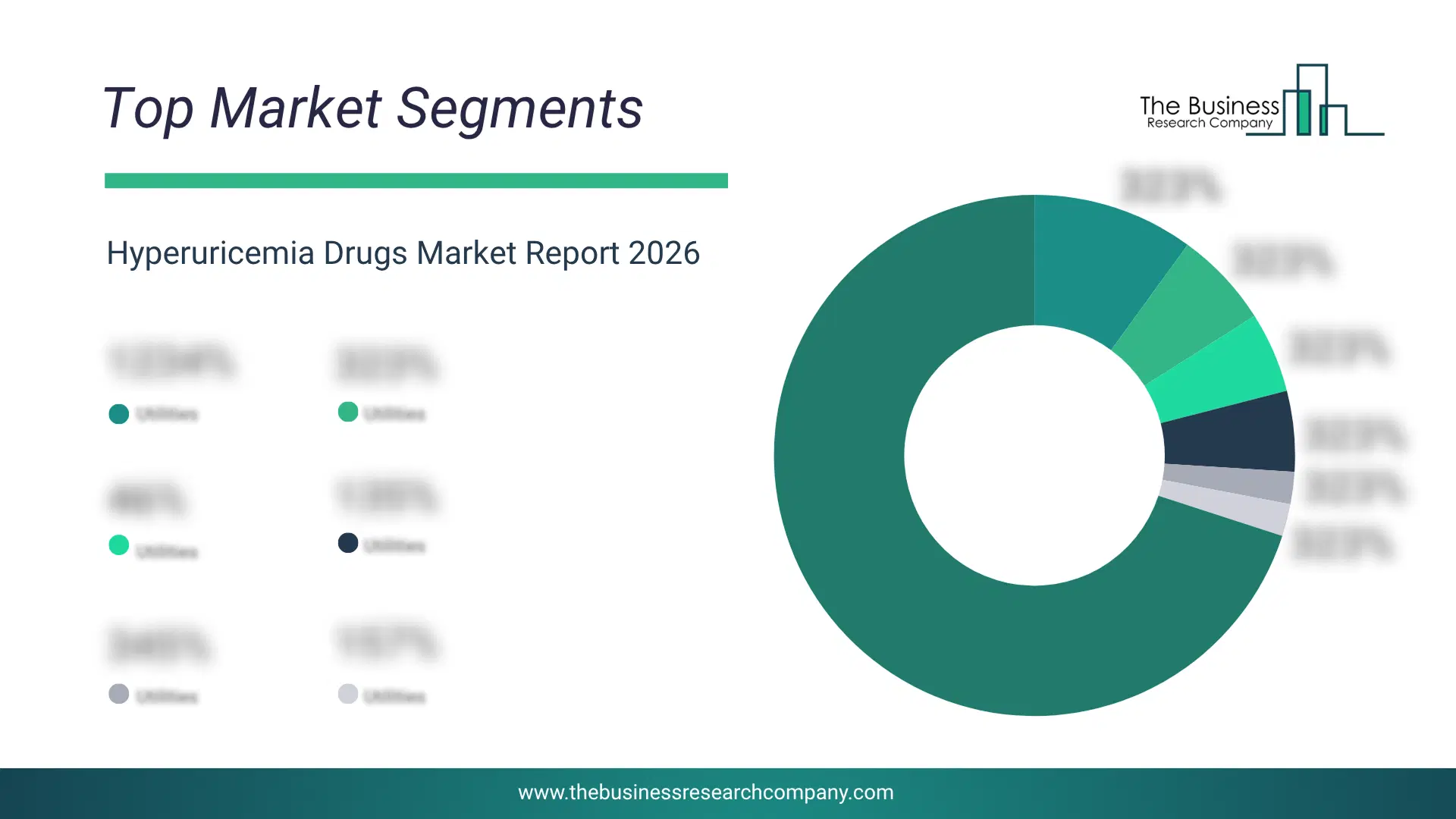
1) By Type: Asymptomatic Hyperuricemia, Symptomatic Hyperuricemia, Other Types 2) By Drugs: Nonsteroidal Anti-Inflammatory Drugs, Xanthine Oxidase Inhibitors, Selective Uric Acid Reabsorption Inhibitor (SURI), Uricosuric Agents, Other Drugs 3) By Diseases: Gout, Kidney Stone, Other Diseases 4) By End-User: Hospitals, Homecare, Specialty Clinics, Other End-Users Subsegments: 1) By Asymptomatic Hyperuricemia: Uric Acid Lowering Agents, Lifestyle Modification Supplements 2) By Symptomatic Hyperuricemia: Anti-Inflammatory Drugs, Uric Acid Inhibitors 3) By Other Types: Combination Therapy, Dietary SupplementsWhat Is The Driver Of The Hyperuricemia Drugs Market?
The rising incidence of hyperuricemia and gout is expected to propel the growth of the hyperuricemia drug market going forward. Hyperuricemia is a condition characterized by elevated levels of uric acid in the blood, which can lead to the development of gout, a painful form of arthritis caused by the accumulation of urate crystals in the joints. The incidence of hyperuricemia and gout is influenced by factors such as genetic predisposition, dietary habits (notably high purine intake), obesity, kidney function, lifestyle choices (alcohol consumption and dehydration), certain medications, and chronic conditions such as hypertension and diabetes. Hyperuricemia drugs are essential in controlling uric acid levels, which helps prevent the development and progression of hyperuricemia and gout by reducing uric acid buildup and alleviating associated symptoms. For instance, in July 2024, according to the data published by The Lancet, a UK-based general medical journal, globally, gout was 3.26 times more prevalent in males than in females in 2020 and increased with age, with an estimated 95.8 million prevalent cases expected by 2050. Therefore, the rising incidence of hyperuricemia and gout is driving growth in the hyperuricemia drug industry.Key Players In The Global Hyperuricemia Drugs Market
Major companies operating in the hyperuricemia drugs market are Pfizer Inc., Merck & Co., Bayer AG, Sanofi SA, AstraZeneca plc, Novartis AG, Boehringer Ingelheim International GmbH, Teva Pharmaceuticals, Teijin Pharma Limited, Sun Pharmaceutical Industries Ltd., Dr. Reddy’s Laboratories Ltd., Hikma Pharmaceuticals PLC, Amneal Pharmaceuticals Inc., Glenmark Pharmaceuticals Ltd., Kissei Pharmaceutical Co. Ltd., Fuji Yakuhin Co. Ltd.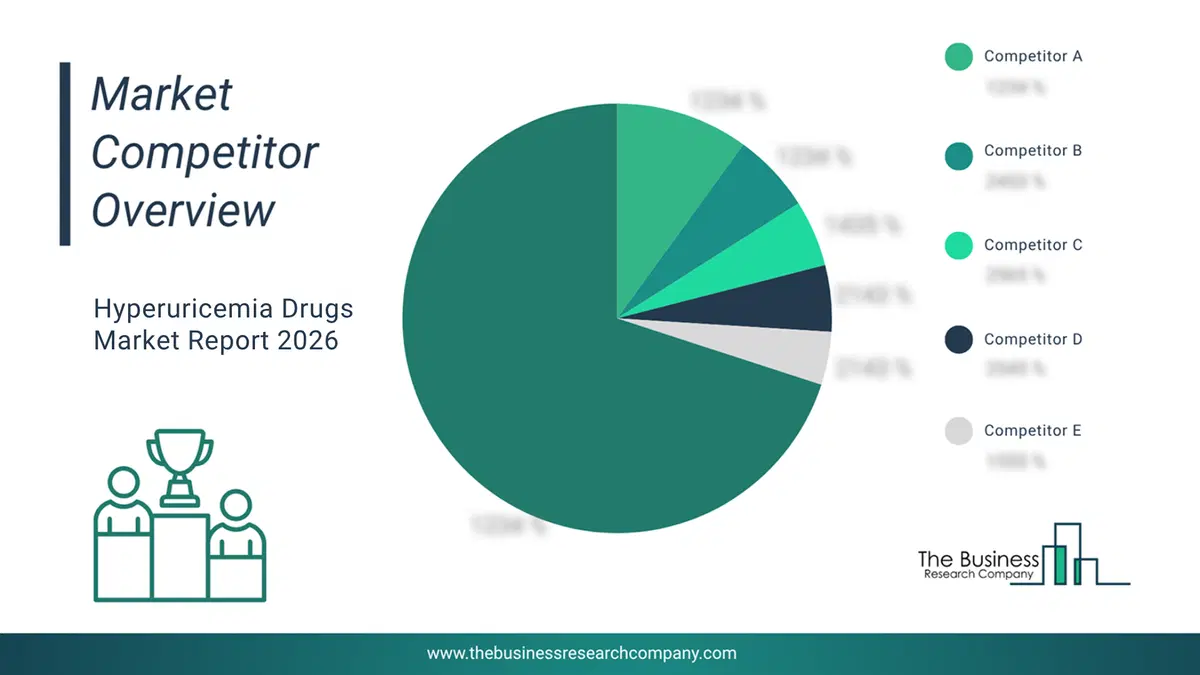
This chart is for illustrative purposes; the full report includes a detailed competitor analysis and comprehensive overview of the top 10 companies in the market.
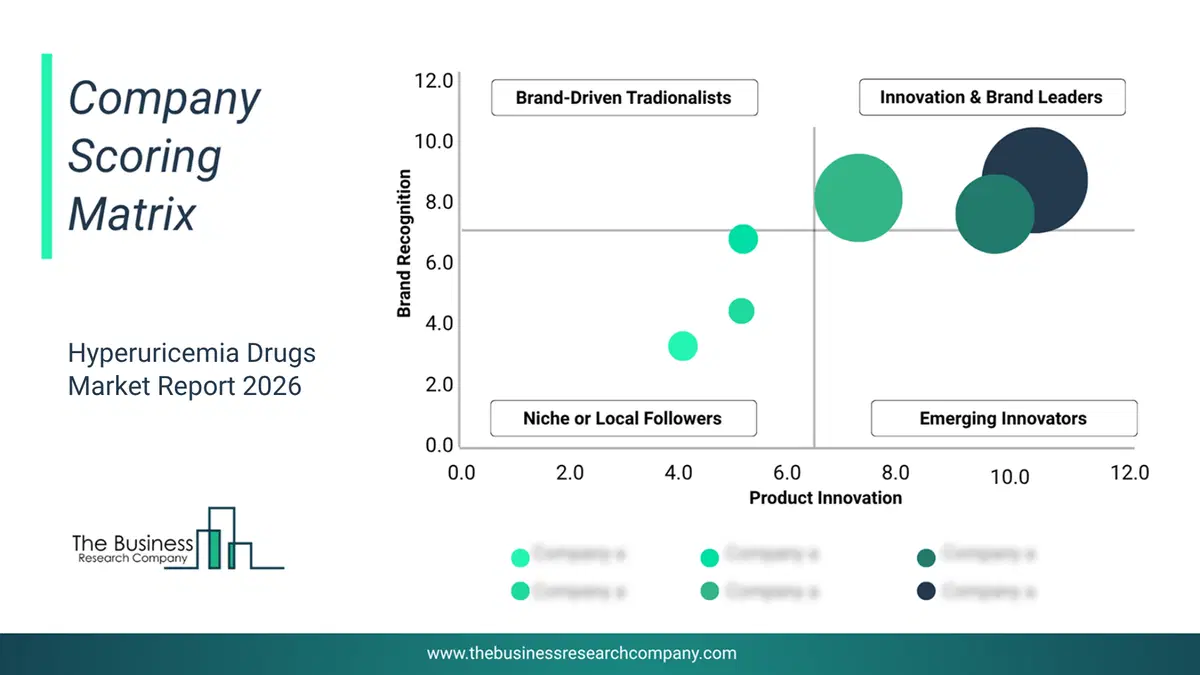
This chart maps companies by product innovation and brand strength, with bubble size indicating relative revenue, helping identify market leaders, challengers, and niche players. This is an illustrative chart; the full report provides a complete and accurate competitive analysis.
Global Hyperuricemia Drugs Market Trends and Insights
Major companies operating in the hyperuricemia drug market are focusing on developing innovative products, such as therapeutic equivalent generic versions, to provide a cost-effective alternative that enhances access to gout treatment for patients. Therapeutic equivalent generic versions are medications that contain the same active ingredient as a brand-name drug, are administered in the same dosage form, and are expected to have the same clinical effect and safety profile. For instance, in January 2024, Lupin, an India-based pharmaceutical company, received approval from US health regulator for Febuxostat Tablets (40 mg and 80 mg) and Varenicline Tablets (0.5 mg and 1 mg. These generic drugs aim to provide more affordable options for patients requiring hyperuricemia treatment (Febuxostat) and smoking cessation aid (Varenicline). By offering these generics, Lupin seeks to increase accessibility to essential medications while capturing a share of the US pharmaceutical market and supporting patients with cost-effective alternatives for their healthcare needs.What Are Latest Mergers And Acquisitions In The Hyperuricemia Drugs Market?
In October 2023, Amgen Inc., a US-based pharmaceutical company, acquired Horizon Therapeutics plc for $27.8 billion. With this strategic acquisition, Amgen Inc. is expected to bolster its mission to serve patients with innovative therapies, particularly in the areas of autoimmune and severe inflammatory diseases. Horizon Therapeutics PLC, an Ireland-based biotechnology company, offers anti-hyperuricemic drugs, including Krystexxa (pegloticase), which also treats chronic gout.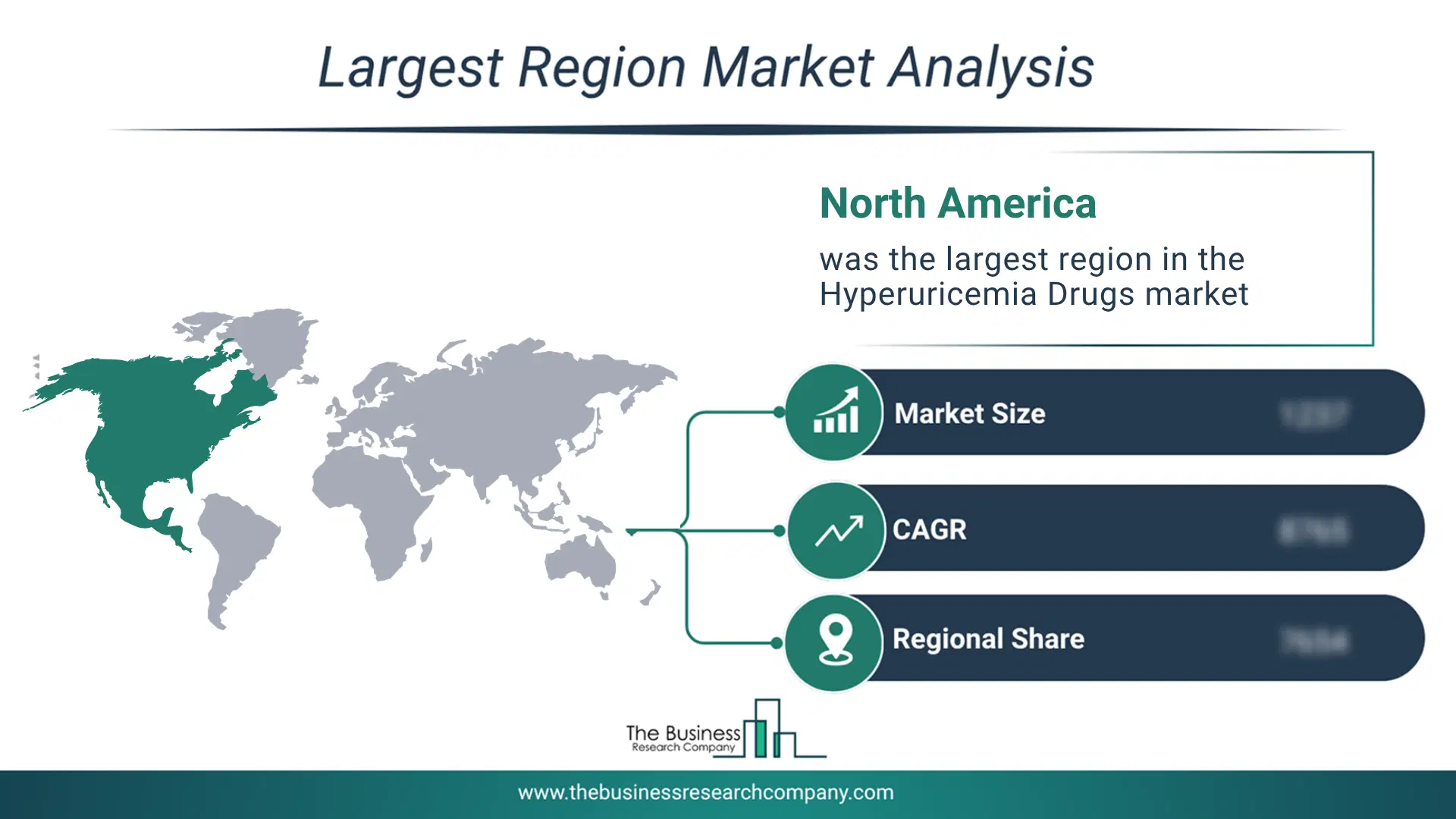
Regional Insights
North America was the largest region in the hyperuricemia drugs market in 2025. The regions covered in this market report are Asia-Pacific, South East Asia, Western Europe, Eastern Europe, North America, South America, Middle East, Africa. The countries covered in this market report are Australia, Brazil, China, France, Germany, India, Indonesia, Japan, Taiwan, Russia, South Korea, UK, USA, Canada, Italy, Spain.What Defines the Hyperuricemia Drugs Market?
The hyperuricemia drugs market consists of sales of allopurinol, febuxostat, probenecid, and rasburicase. Values in this market are ‘factory gate’ values, that is the value of goods sold by the manufacturers or creators of the goods, whether to other entities (including downstream manufacturers, wholesalers, distributors and retailers) or directly to end customers. The value of goods in this market includes related services sold by the creators of the goods.How is Market Value Defined and Measured?
The market value is defined as the revenues that enterprises gain from the sale of goods and/or services within the specified market and geography through sales, grants, or donations in terms of the currency (in USD unless otherwise specified). The revenues for a specified geography are consumption values that are revenues generated by organizations in the specified geography within the market, irrespective of where they are produced. It does not include revenues from resales along the supply chain, either further along the supply chain or as part of other products.
This chart presents market attractiveness based on a quantitative evaluation of growth, competition, strategic alignment, and risk, offering a clear view of opportunity areas for decision-making. This chart is for illustrative purposes; the full report contains the complete analysis.

This chart highlights the Total Addressable Market (TAM) by estimating the maximum revenue opportunity using an assumption-driven approach, supporting strategic planning and opportunity sizing across markets. The chart is illustrative; the full report provides a more comprehensive analysis.
What Key Data and Analysis Are Included in the Hyperuricemia Drugs Market Report 2026?
The hyperuricemia drugs market research report is one of a series of new reports from The Business Research Company that provides market statistics, including industry global market size, regional shares, competitors with the market share, detailed market segments, market trends and opportunities, and any further data you may need to thrive in the hyperuricemia drugs industry. The market research report delivers a complete perspective of everything you need, with an in-depth analysis of the current and future state of the industry.Hyperuricemia Drugs Market Report Forecast Analysis
| Report Attribute | Details |
|---|---|
| Market Size Value In 2026 | $5.59 billion |
| Revenue Forecast In 2030 | $7.64 billion |
| Growth Rate | CAGR of 8.4% from 2026 to 2030 |
| Base Year For Estimation | 2025 |
| Actual Estimates/Historical Data | 2020-2025 |
| Forecast Period | 2026 - 2030 |
| Market Representation | Revenue in USD Billion and CAGR from 2026 to 2030 |
| Segments Covered | Type, Drugs, Diseases, End-User |
| Regional Scope | Asia-Pacific, Western Europe, Eastern Europe, North America, South America, Middle East, Africa |
| Country Scope | The countries covered in the report are Australia, Brazil, China, France, Germany, India, Indonesia, Japan, Taiwan, Russia, South Korea, UK, USA, Canada, Italy, Spain. |
| Key Companies Profiled | Pfizer Inc., Merck & Co., Bayer AG, Sanofi SA, AstraZeneca plc, Novartis AG, Boehringer Ingelheim International GmbH, Teva Pharmaceuticals, Teijin Pharma Limited, Sun Pharmaceutical Industries Ltd., Dr. Reddy’s Laboratories Ltd., Hikma Pharmaceuticals PLC, Amneal Pharmaceuticals Inc., Glenmark Pharmaceuticals Ltd., Kissei Pharmaceutical Co. Ltd., Fuji Yakuhin Co. Ltd. |
| Customization Scope | Request for Customization |
| Pricing And Purchase Options | Explore Purchase Options |