

Idiopathic Intracranial Hypertension Treatment Market Report 2026
Global Outlook – By Treatment Type (Medications, Surgeries, Therapies), By Treatment Administration (Oral Administration, Intrathecal Administration), By Diagnostic Type (Neuroimaging, Lumbar Puncture, Visual Field Tests ), By End User (Hospitals, Specialty Clinics, Ambulatory Surgical Centres) - Market Size, Trends, Strategies, and Forecast to 2030
Idiopathic Intracranial Hypertension Treatment Market Overview
• Idiopathic Intracranial Hypertension Treatment market size has reached to $1.48 billion in 2025 • Expected to grow to $2.01 billion in 2030 at a compound annual growth rate (CAGR) of 6.3% • Growth Driver: Rising Prevalence Of Obesity Driving Growth Of The Market Due To Its Role In Increasing Intracranial Pressure • Market Trend: Advances In Fast-Acting Therapeutics Offering New Hope For Managing Rising Idiopathic Intracranial Hypertension Cases • North America was the largest region in 2025 and Asia-Pacific is the fastest growing region.What Is Covered Under Idiopathic Intracranial Hypertension Treatment Market?
Idiopathic intracranial hypertension treatment refers to medical and surgical approaches aimed at reducing pressure inside the skull and preventing complications such as vision loss. These treatments involve lifestyle changes such as weight loss, medications such as acetazolamide to decrease fluid buildup, and surgical procedures such as shunt placement or optic nerve sheath fenestration for severe cases. The main treatment types in idiopathic intracranial hypertension treatment are medications, surgeries, and therapies. Medications are used to reduce cerebrospinal fluid production, alleviate symptoms such as headaches and vision disturbances, and address underlying conditions contributing to the disorder. These medications are delivered either orally or via intrathecal administration. Diagnostic approaches include neuroimaging, lumbar puncture, and visual field examinations, and treatment is generally carried out in hospitals, specialized clinics, or ambulatory surgical centers.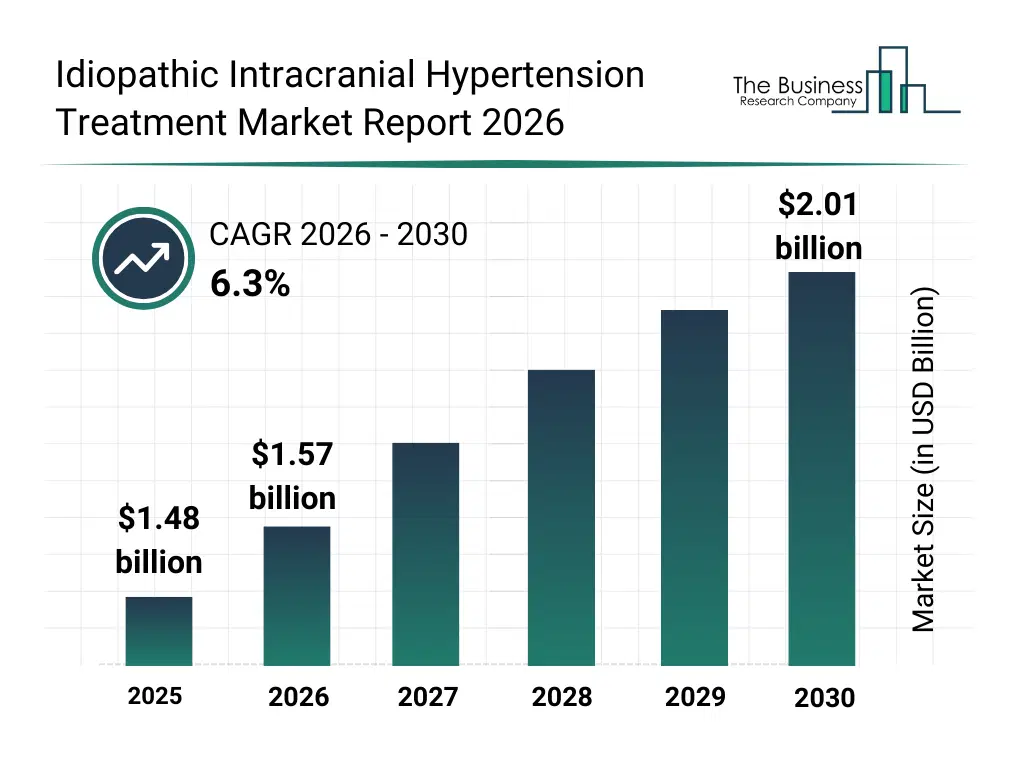
What Is The Idiopathic Intracranial Hypertension Treatment Market Size and Share 2026?
The idiopathic intracranial hypertension treatment market size has grown strongly in recent years. It will grow from $1.48 billion in 2025 to $1.57 billion in 2026 at a compound annual growth rate (CAGR) of 6.5%. The growth in the historic period can be attributed to rising incidence of obesity-related neurological disorders, improved availability of neuroimaging techniques, increased awareness of vision-related complications, hospital-based management of severe cases, established use of acetazolamide therapy.What Is The Idiopathic Intracranial Hypertension Treatment Market Growth Forecast?
The idiopathic intracranial hypertension treatment market size is expected to see strong growth in the next few years. It will grow to $2.01 billion in 2030 at a compound annual growth rate (CAGR) of 6.3%. The growth in the forecast period can be attributed to growing prevalence of obesity globally, advancements in minimally invasive neurosurgical techniques, expansion of specialty neurology clinics, increasing focus on early screening and diagnosis, development of novel therapeutic approaches. Major trends in the forecast period include growing use of pharmacological management as first-line therapy, increasing focus on early diagnosis to prevent vision loss, rising adoption of minimally invasive surgical interventions, expansion of multidisciplinary care models for IIH management, increasing emphasis on lifestyle and weight management programs.
Global Idiopathic Intracranial Hypertension Treatment Market Segmentation
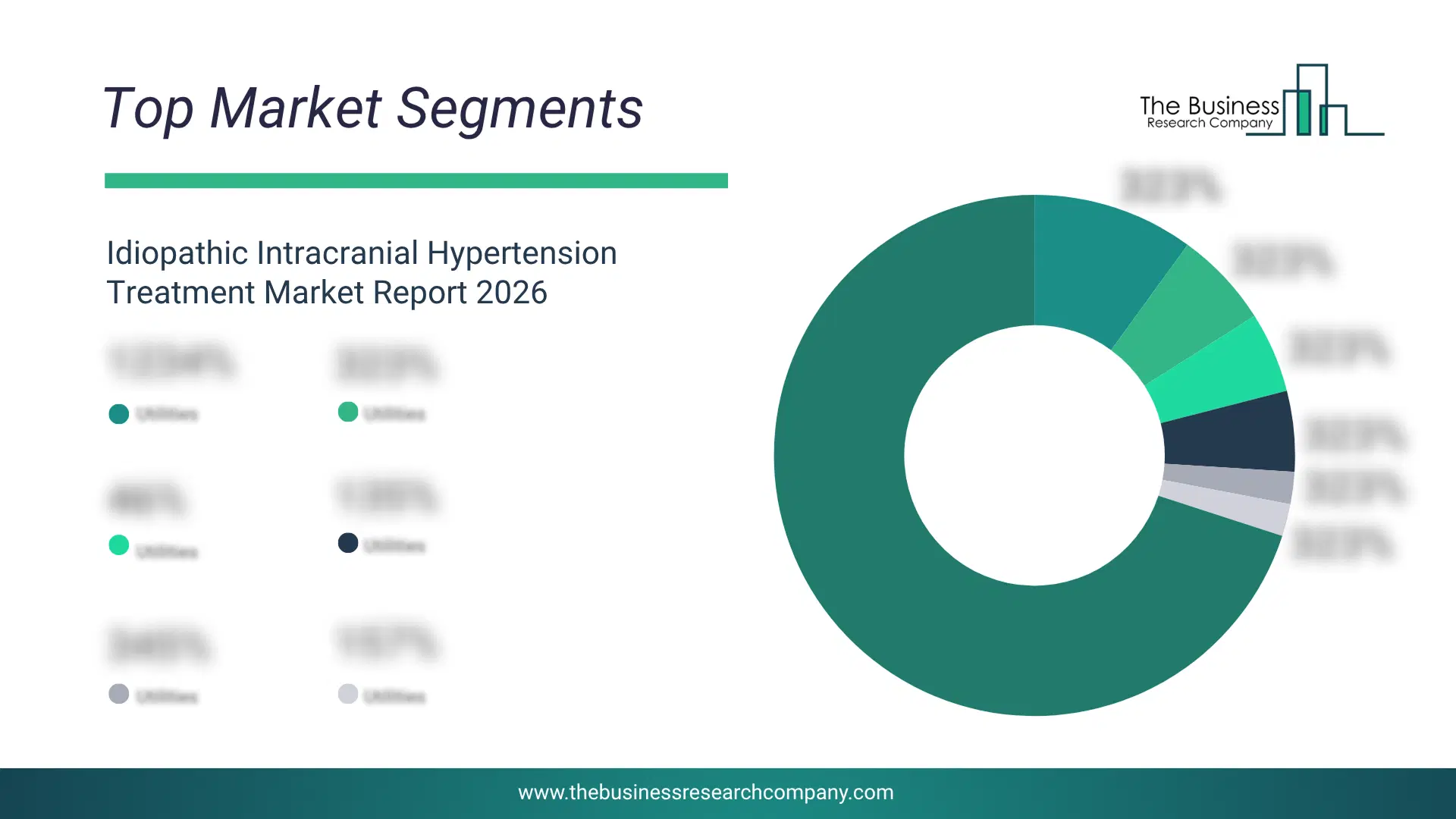
1) By Treatment Type: Medications, Surgeries, Therapies 2) By Treatment Administration: Oral Administration, Intrathecal Administration 3) By Diagnostic Type: Neuroimaging, Lumbar Puncture, Visual Field Tests 4) By End User: Hospitals, Specialty Clinics, Ambulatory Surgical Centres Subsegments: 1) By Medications: Diuretics, Corticosteroids, Acetazolamide 2) By Surgeries: Shunt Surgery, Optic Nerve Sheath Fenestration, Stenting 3) By Therapies: Weight Management Programs, Lifestyle Modifications, Physical TherapyWhat Is The Driver Of The Idiopathic Intracranial Hypertension Treatment Market?
The increasing prevalence of obesity is expected to propel the growth of the idiopathic intracranial hypertension treatment market going forward. Obesity refers to a medical condition where a person has excessive body fat that may harm their health. Obesity is rising due to increasingly sedentary lifestyles combined with a surge in the consumption of calorie-dense processed foods. Obesity increases intracranial pressure by promoting excessive cerebrospinal fluid production and impairing its absorption, contributing to idiopathic intracranial hypertension. For instance, in 2024, according to a report published by the Office for Health Improvement and Disparities, a UK-based government department responsible for maintaining public health policies, between 2022 and 2023, 64.0% of adults aged 18 and over in England were classified as overweight or living with obesity. Therefore, the increasing prevalence of obesity is driving the growth of the idiopathic intracranial hypertension treatment industry.Key Players In The Global Idiopathic Intracranial Hypertension Treatment Market
Major companies operating in the idiopathic intracranial hypertension treatment market are Siemens AG, Medtronic plc, Becton Dickinson and Company, Philips Healthcare, GE HealthCare Technologies Inc., Teva Pharmaceuticals, Boston Scientific Corporation, Henry Schein, Sun Pharmaceutical Industries, Zydus LifeSciences, Topcon Corporation, Natus Medical Incorporated, Canon Medical Systems Corporation, Carl Zeiss Meditec AG, Optopol Technology, Strides Pharma, NIDEK Co., Haag-Streit AG, Invex Therapeutics, Metrovision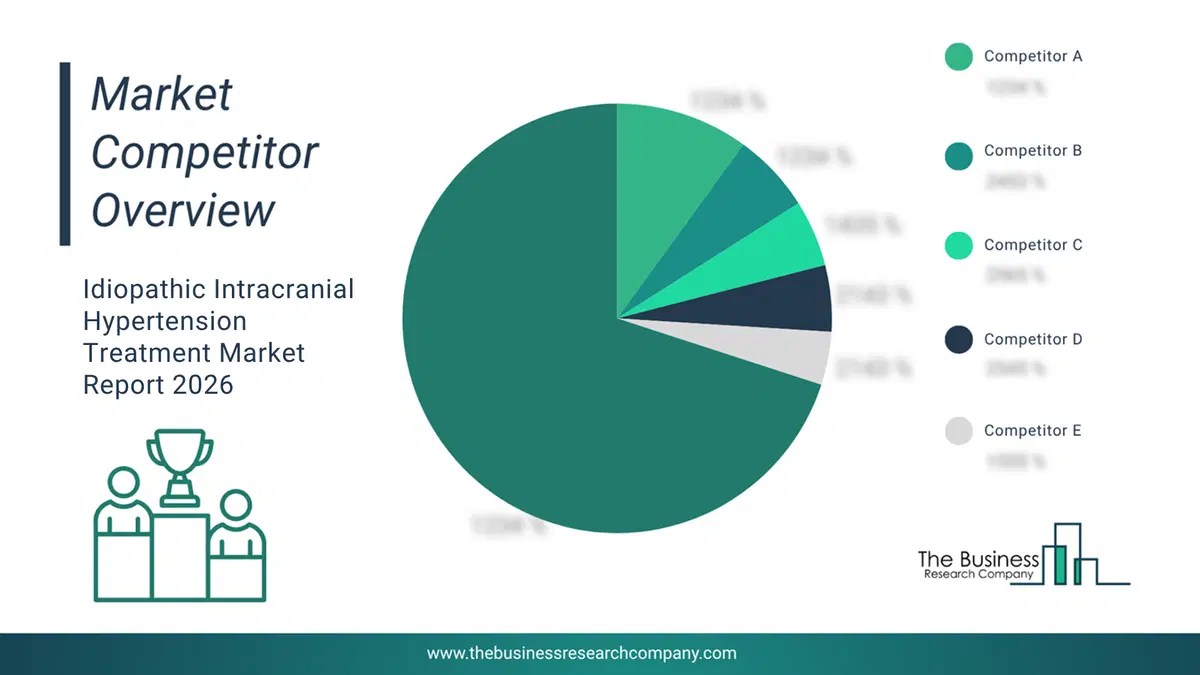
This chart is for illustrative purposes; the full report includes a detailed competitor analysis and comprehensive overview of the top 10 companies in the market.
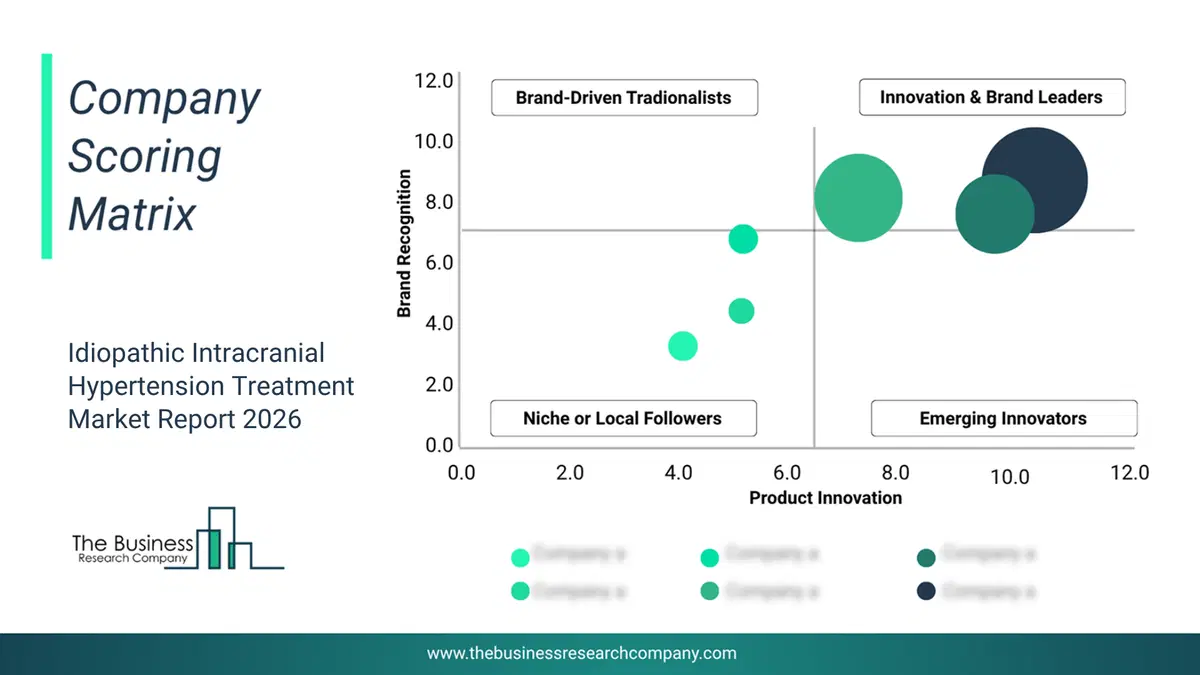
This chart maps companies by product innovation and brand strength, with bubble size indicating relative revenue, helping identify market leaders, challengers, and niche players. This is an illustrative chart; the full report provides a complete and accurate competitive analysis.
Global Idiopathic Intracranial Hypertension Treatment Market Trends and Insights
Major companies operating in the idiopathic intracranial hypertension treatment market are focusing on developing novel, fast-acting therapies that can safely reduce brain pressure and improve headache outcomes, supported by emerging clinical evidence such as the promising phase two results for exenatide. For instance, in March 2023, researchers at the University of Birmingham (UK), a UK-based institute, announced that a phase two trial has highlighted exenatide, an injectable GLP-1 receptor agonist already used for type 2 diabetes, as a potential new treatment for idiopathic intracranial hypertension (IIH). The study, led by neurologists at the University of Birmingham, showed that patients receiving exenatide experienced a significant drop in brain pressure within hours and sustained improvement over 12 weeks. Participants also reported nearly eight fewer headache days per month compared with minimal changes in the placebo group. As IIH rates rise alongside global obesity, this promising evidence marks an important step toward a much-needed licensed therapy for a condition that can cause severe headaches and vision loss.What Are Latest Mergers And Acquisitions In The Idiopathic Intracranial Hypertension Treatment Market?
In March 2024, Bristol Myers Squibb, a US-based pharmaceutical company, acquired Karuna Therapeutics Inc. for $12 billion. This acquisition strengthens its neuroscience portfolio by adding KarXT, a novel antipsychotic with a unique mechanism of action and a promising efficacy and safety profile. This acquisition aligns with BMS’s long-term growth strategy and positions the company to address critical unmet needs in neurodegenerative conditions. Karuna Therapeutics Inc. is a US-based biopharmaceutical company that specializes in developing therapies for neurological conditions.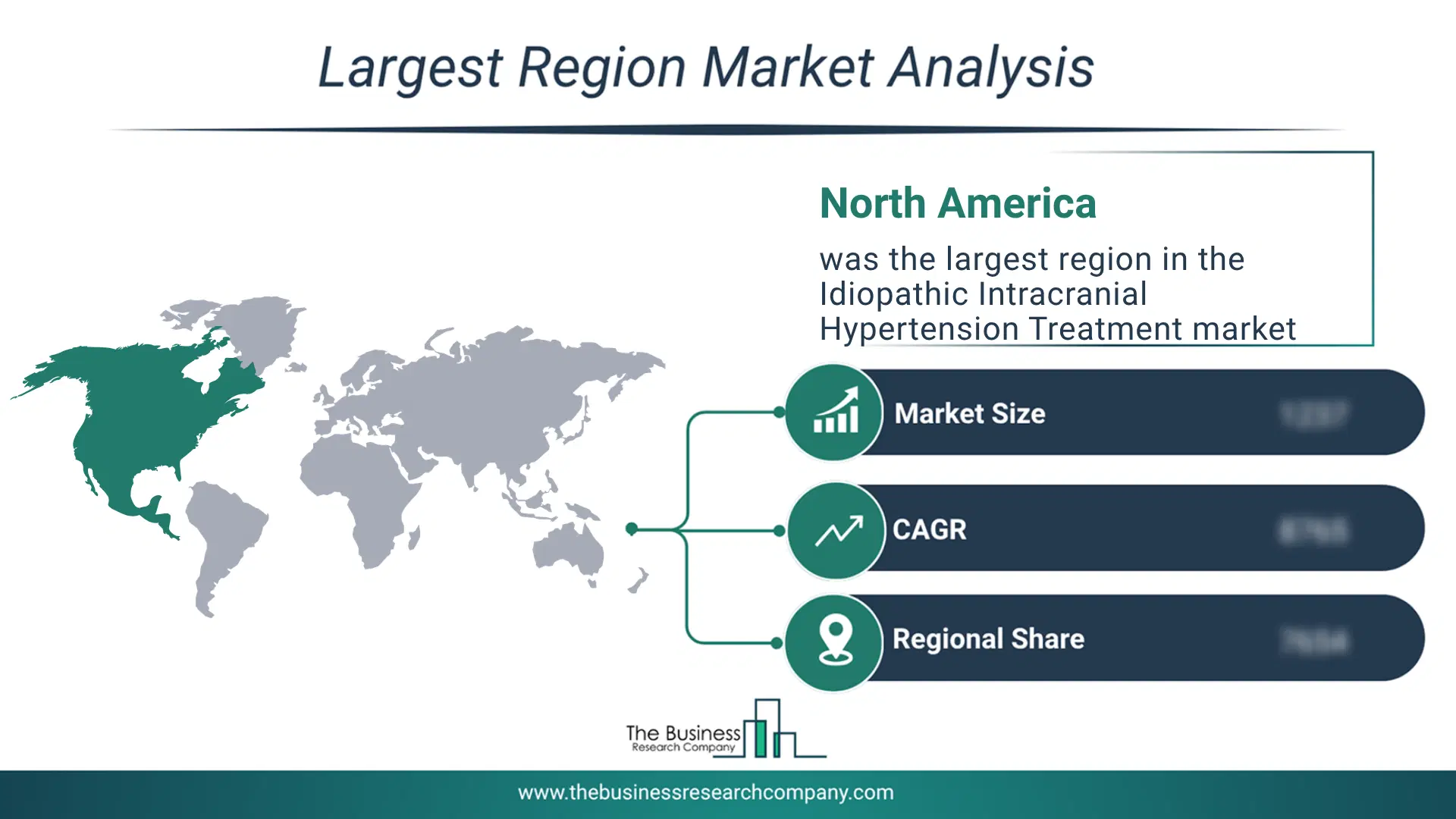
Regional Outlook
North America was the largest region in the idiopathic intracranial hypertension treatment market in 2025. Asia-Pacific is expected to be the fastest-growing region in the forecast period. The regions covered in this market report are Asia-Pacific, South East Asia, Western Europe, Eastern Europe, North America, South America, Middle East, Africa. The countries covered in this market report are Australia, Brazil, China, France, Germany, India, Indonesia, Japan, Taiwan, Russia, South Korea, UK, USA, Canada, Italy, Spain.What Defines the Idiopathic Intracranial Hypertension Treatment Market?
The idiopathic intracranial hypertension treatment market consists of revenues earned by entities by providing services such as diagnostic imaging services, nutritional counseling, optic nerve sheath fenestration procedures, ophthalmologic evaluations, and visual field monitoring. The market value includes the value of related goods sold by the service provider or included within the service offering. The idiopathic intracranial hypertension treatment market also includes sales of shunt systems, surgical instruments, intracranial pressure monitoring devices, and optical coherence tomography (OCT). Values in this market are ‘factory gate’ values, that is, the value of goods sold by the manufacturers or creators of the goods, whether to other entities (including downstream manufacturers, wholesalers, distributors, and retailers) or directly to end customers. The value of goods in this market includes related services sold by the creators of the goods.How is Market Value Defined and Measured?
The market value is defined as the revenues that enterprises gain from the sale of goods and/or services within the specified market and geography through sales, grants, or donations in terms of the currency (in USD unless otherwise specified). The revenues for a specified geography are consumption values that are revenues generated by organizations in the specified geography within the market, irrespective of where they are produced. It does not include revenues from resales along the supply chain, either further along the supply chain or as part of other products.
This chart presents market attractiveness based on a quantitative evaluation of growth, competition, strategic alignment, and risk, offering a clear view of opportunity areas for decision-making. This chart is for illustrative purposes; the full report contains the complete analysis.

This chart highlights the Total Addressable Market (TAM) by estimating the maximum revenue opportunity using an assumption-driven approach, supporting strategic planning and opportunity sizing across markets. The chart is illustrative; the full report provides a more comprehensive analysis.
What Key Data and Analysis Are Included in the Idiopathic Intracranial Hypertension Treatment Market Report 2026?
The idiopathic intracranial hypertension treatment market research report is one of a series of new reports from The Business Research Company that provides market statistics, including industry global market size, regional shares, competitors with the market share, detailed market segments, market trends and opportunities, and any further data you may need to thrive in the idiopathic intracranial hypertension treatment industry. The market research report delivers a complete perspective of everything you need, with an in-depth analysis of the current and future state of the industry.Idiopathic Intracranial Hypertension Treatment Market Report Forecast Analysis
| Report Attribute | Details |
|---|---|
| Market Size Value In 2026 | $1.57 billion |
| Revenue Forecast In 2030 | $2.01 billion |
| Growth Rate | CAGR of 6.3% from 2026 to 2030 |
| Base Year For Estimation | 2025 |
| Actual Estimates/Historical Data | 2020-2025 |
| Forecast Period | 2026 - 2030 |
| Market Representation | Revenue in USD Billion and CAGR from 2026 to 2030 |
| Segments Covered | Treatment Type, Treatment Administration, Diagnostic Type, End User |
| Regional Scope | Asia-Pacific, Western Europe, Eastern Europe, North America, South America, Middle East, Africa |
| Country Scope | The countries covered in the report are Australia, Brazil, China, France, Germany, India, Indonesia, Japan, Taiwan, Russia, South Korea, UK, USA, Canada, Italy, Spain |
| Key Companies Profiled | Siemens AG, Medtronic plc, Becton Dickinson and Company, Philips Healthcare, GE HealthCare Technologies Inc., Teva Pharmaceuticals, Boston Scientific Corporation, Henry Schein, Sun Pharmaceutical Industries, Zydus LifeSciences, Topcon Corporation, Natus Medical Incorporated, Canon Medical Systems Corporation, Carl Zeiss Meditec AG, Optopol Technology, Strides Pharma, NIDEK Co., Haag-Streit AG, Invex Therapeutics, Metrovision |
| Customization Scope | Request for Customization |
| Pricing And Purchase Options | Explore Purchase Options |