
Immunohematology Market Report 2026
Global Outlook – By Product (Analyzers And Systems, Reagents), By Technology (Biochips, Erythrocyte-Magnetized Technology (Met), Gel Cards, Microplates, Polymerase Chain Reaction (PCR)), By Disease (Blood-Related Diseases, HIV, Hepatitis), By Application (Pretransfusion Testing, Investigation Of Immune Hemolysis, Perinatal Testing, Blood Group Phenotyping, Leucocyte And Platelet Serology), By End User (Blood Banks, Diagnostic And Reference Laboratories, Hospitals, Academic And Research Institutes) – Market Size, Trends, Strategies, and Forecast to 2030
Immunohematology Market Overview
• Immunohematology market size has reached to $2.56 billion in 2025 • Expected to grow to $3.27 billion in 2030 at a compound annual growth rate (CAGR) of 5% • Growth Driver: Immunohematology Market Rises With Elderly Population Surge • Market Trend: Revolutionizing Blood Transfusion Testing With Innovative Solutions • North America was the largest region in 2025 and Asia-Pacific is the fastest growing region.Market Gains By 2030 – Top Opportunities By Segment
Market Gain identifies the most promising market opportunities by highlighting the segments or products expected to generate the highest incremental revenue growth over the next five years.
What Is Covered Under Immunohematology Market?
Immunohematology is a branch of laboratory medicine that studies blood groups and the body’s immune response to foreign substances, particularly in blood transfusions. Immune hematological techniques are used to locate and address diagnostic issues in patients with hematological conditions, such as auto-immune hemolytic anemia. The main products included in the immunohematology analyzers and systems and reagents. Analyzers and systems are automated instruments for blood typing and antibody screening. The technologies used are biochips, erythrocyte-magnetized technology (EMT), gel cards, microplates, and polymerase chain reaction (PCR) that are used to treat various diseases such as HIV and hepatitis. The various applications involved are pretransfusion testing, investigation of immune hemolysis, perinatal testing, blood group phenotyping, and leucocyte and platelet serology in end-users such as blood banks, diagnostic and reference laboratories, hospitals, and academic and research institutes.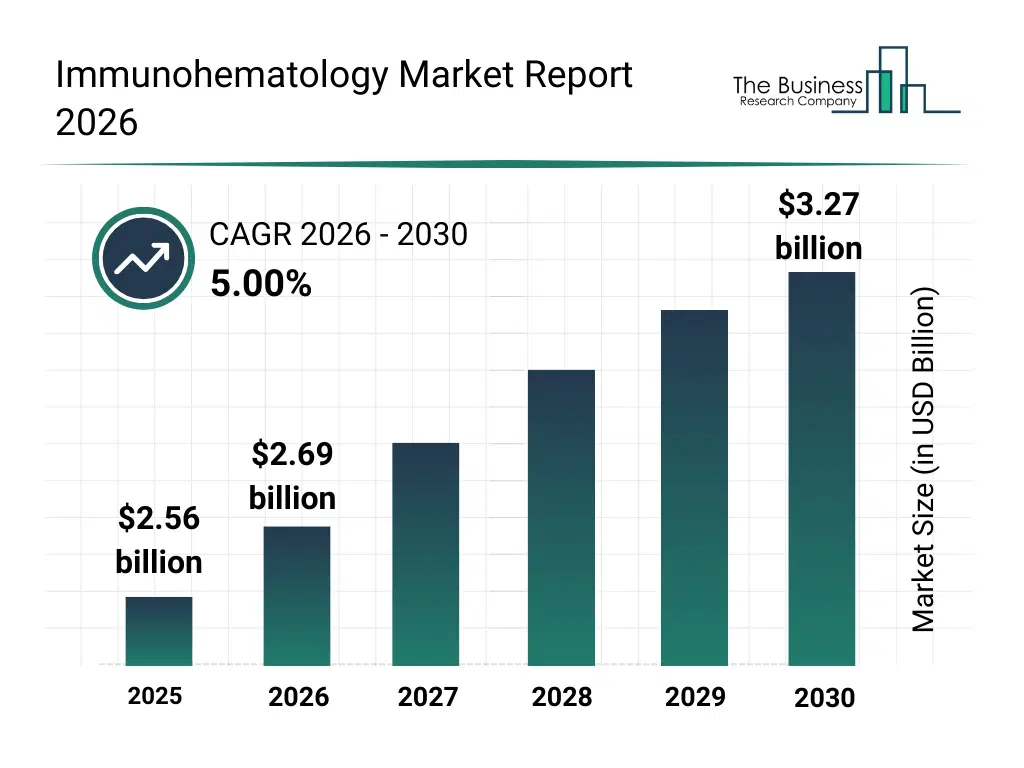
What Is The Immunohematology Market Size and Share 2026?
The immunohematology market size has grown steadily in recent years. It will grow from $2.56 billion in 2025 to $2.69 billion in 2026 at a compound annual growth rate (CAGR) of 4.9%. The growth in the historic period can be attributed to increasing prevalence of blood disorders, rising demand for safe blood transfusions, development of blood banks, growth in diagnostic laboratories, advancements in hematology reagents.What Is The Immunohematology Market Growth Forecast?
The immunohematology market size is expected to see strong growth in the next few years. It will grow to $3.27 billion in 2030 at a compound annual growth rate (CAGR) of 5.0%. The growth in the forecast period can be attributed to technological advancements in analyzers, adoption of AI in laboratory diagnostics, rise in precision medicine, integration of digital health systems, expansion of blood screening programs. Major trends in the forecast period include advanced blood typing techniques, automation in immunohematology testing, personalized transfusion therapy, point-of-care immune diagnostics, integration of laboratory information systems.
Global Immunohematology Market Segmentation
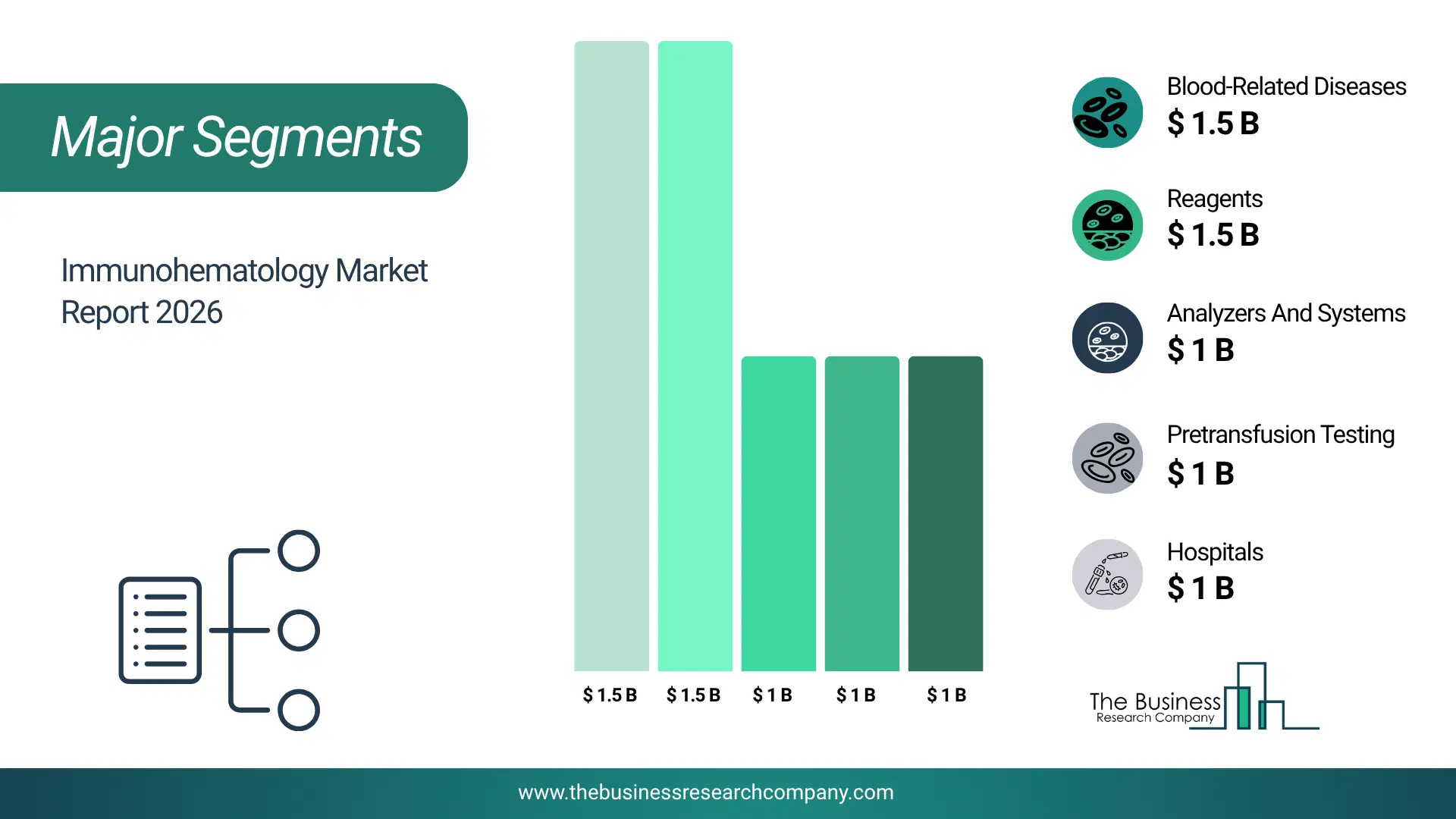
1) By Product: Analyzers And Systems, Reagents 2) By Technology: Biochips, Erythrocyte-Magnetized Technology (Met), Gel Cards, Microplates, Polymerase Chain Reaction (PCR) 3) By Disease: Blood-Related Diseases, HIV, Hepatitis 4) By Application: Pretransfusion Testing, Investigation Of Immune Hemolysis, Perinatal Testing, Blood Group Phenotyping, Leucocyte And Platelet Serology 5) By End User: Blood Banks, Diagnostic And Reference Laboratories, Hospitals, Academic And Research Institutes Subsegments: 1) By Analyzers And Systems: Blood Typing Analyzers, Cross-Matching Analyzers, Gel Card Systems 2) By Reagents: Blood Grouping Reagents, Antisera, Control Serum The top segments in the immunohematology market will be: • Blood-Related Diseases will reach $1554.4 Million by 2025. • Reagents will reach $1525.52 Million by 2025. • Analyzers And Systems will reach $1063.13 Million by 2025. • Pretransfusion Testing will reach $1061.67 Million by 2025. • Hospitals will reach $1019.06 Million by 2025.What Is The Driver Of The Immunohematology Market?
The aging population is expected to propel the growth of the immunohematology market going forward. An aging population refers to a demographic condition characterized by an increasing proportion of elderly individuals within a society or population. Immunohematology is essential for addressing age-related transfusion needs, ensuring safe blood product use, and supporting medical interventions in the aging population. For instance, in January 2024, according to the Population Reference Bureau, a US-based nonprofit organization, the population of Americans aged 65 and older is expected to grow from 58 million in 2022 to 82 million by 2050, a 47% increase. This age group’s share of the overall population is also projected to rise from 17% to 23% during the same period. Therefore, aging population is driving the growth of the immunohematology industry.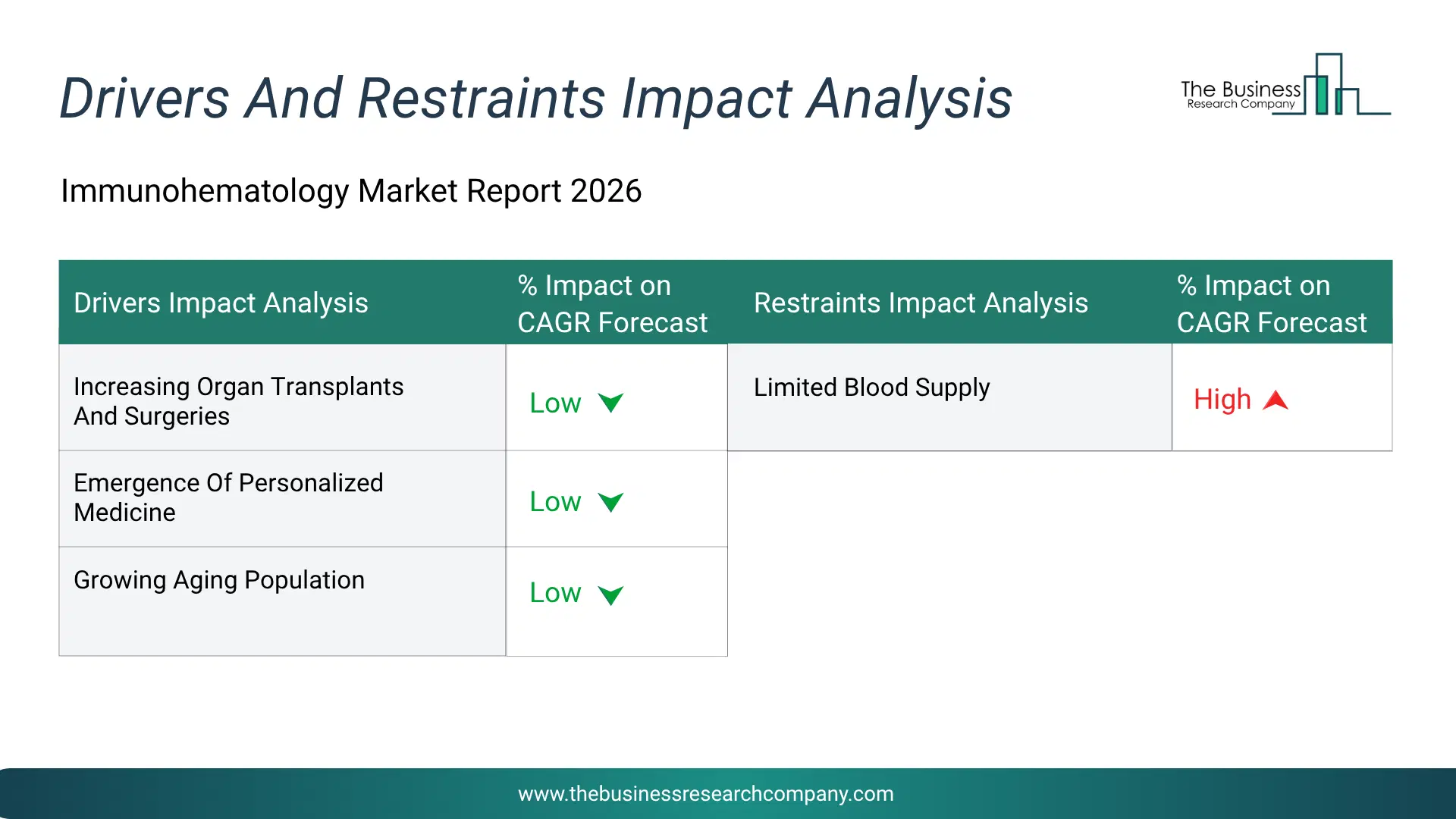
Infographic Chart Showing Key Market Drivers Analysis And Restraints For Immunohematology Market
The chart presents an impact analysis of key drivers and restraints, quantifying their relative influence on the market's growth rate and helping assess the balance between growth enablers and limiting factors. This chart offers a high-level perspective; the full report contains more detailed insights.
How Will The Drivers Impact Growth In The Global Immunohematology Market?
• Increasing Organ Transplants And Surgeries (Low) – The increasing organ transplants and surgeries will become a key driver of growth in the immunohematology market by 2030. The increasing prevalence of organ transplants has driven a heightened demand for rigorous blood typing and crossmatching to ensure donor-recipient compatibility. Immunohematology plays a critical role in this process by preventing immune rejection of transplanted organs. As the volume of organ transplants continues to grow, the demand for immunohematology testing has correspondingly increased, presenting significant opportunities for growth in this sector. As a result, the increasing organ transplants and surgeries is anticipated to contributing to annual growth in the market. • Emergence Of Personalized Medicine (Low) – The emergence of personalized medicine will emerge as a major factor driving the expansion of the immunohematology market by 2030. Personalized medicine, also known as precision medicine, is an innovative approach to healthcare that tailor’s medical treatment and practices to the individual characteristics of each patient. Advancement in personalized medicine, particularly through genomic sequencing, has greatly enhanced immunohematology. Genomic sequencing allows for the precise identification of rare blood types by analyzing genetic markers that determine blood group antigens. Consequently, the emergence of personalized medicine is projected to contributing to annual growth in the market. • Growing Aging Population (Low) – The growing aging population within digital manufacturing processes will serve as a key growth catalyst for the immunohematology market by 2030. The aging population increasingly undergoes surgeries such as joint replacements and cardiac procedures, often accompanied by substantial blood loss. Immunohematology plays a vital role in ensuring adequate blood supply for these operations. Additionally, older adults are more prone to blood-related conditions, including thrombocytopenia and hematologic cancers, necessitating diagnostic and therapeutic interventions that rely on immunohematology. Therefore, this growing aging population is projected to supporting to annual growth in the market. • Strong Economic Growth (Medium) – The strong economic growth will become a significant driver contributing to the growth of the immunohematology market by 2030. Robust economic growth drives increased investments in modern laboratories, blood banks and transfusion services by both governmental and private sectors. It also boosts public awareness and adoption of advanced diagnostic solutions, enabling early detection and effective management of blood disorders. Additionally, higher income levels enhance access to specialized immunohematology services. Consequently, the strong economic growth is projected to contributing to annual growth in the market.How Will The Restraints Impact Growth In The Global Immunohematology Market?
• Limited Blood Supply (Low) – Limited Blood Supply will restrict the growth of the Immunohematology market during the forecast period. Immunohematology testing depends on the availability of blood samples and blood products for testing and transfusion. Blood supply shortages, particularly for rare blood types, can limit testing capacity and clinical applications. Donor recruitment challenges and blood collection infrastructure limitations affect the availability of blood samples, potentially constraining market growth.Key Players In The Global Immunohematology Market
Major companies operating in the immunohematology market are Ortho Clinical Diagnostics Inc., Immunocor Inc., Abbott Laboratories, Siemens Healthineers AG, Grifols S.A., Beckman Coulter Inc., Thermo Fisher Scientific Inc., Becton Dickinson and Company, Merck Co. & KGaA, Bio-Rad Laboratories, Sysmex Corporation, Danaher Corporation, Biosystems S.A., Roche Holdings AG, Mindray Medical International Limited, F.Hoffmann La-Roche Ltd., Biotest AG, Cardinal Health Inc., Quotient Limited, DiaSorin S.p.A., Lorne Laboratories Ltd., Biokit S.A., Avox Technologies, Diagnostic Automation/Cortez Diagnostics Inc., Inno-train Diagnostik GmbH, Drucker Diagnostics Inc., Immundia Diagnostics Pvt. Ltd.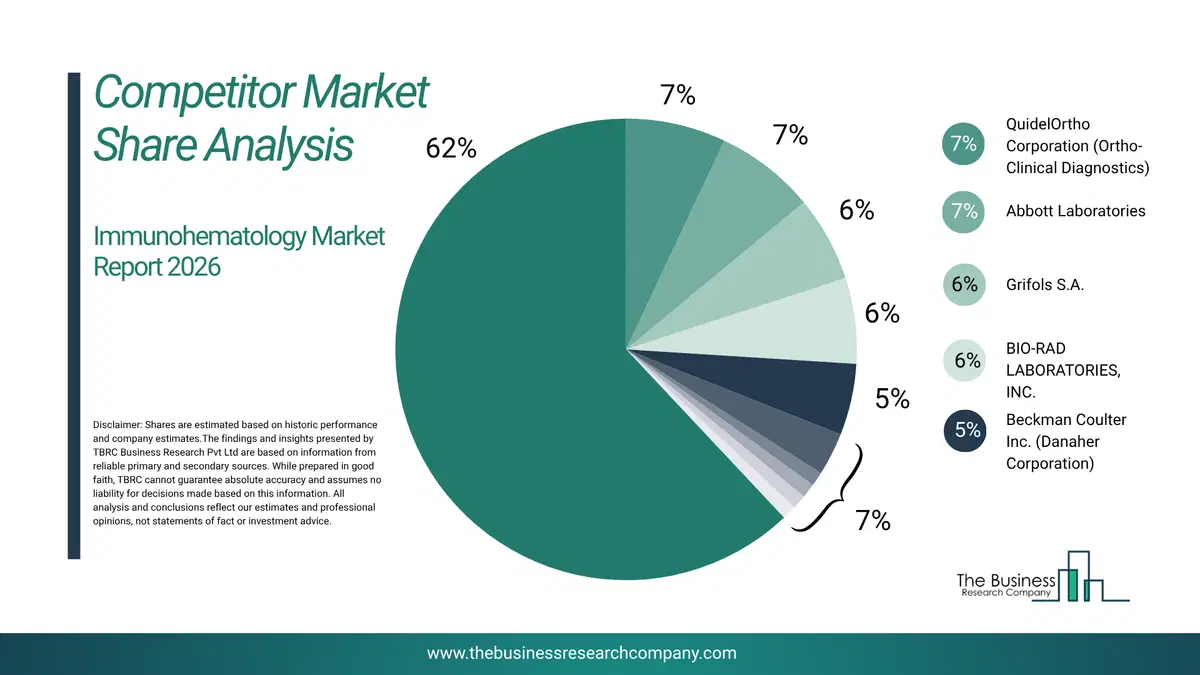
This chart is for illustrative purposes; the full report includes a detailed competitor analysis and comprehensive overview of the top 10 companies in the market.
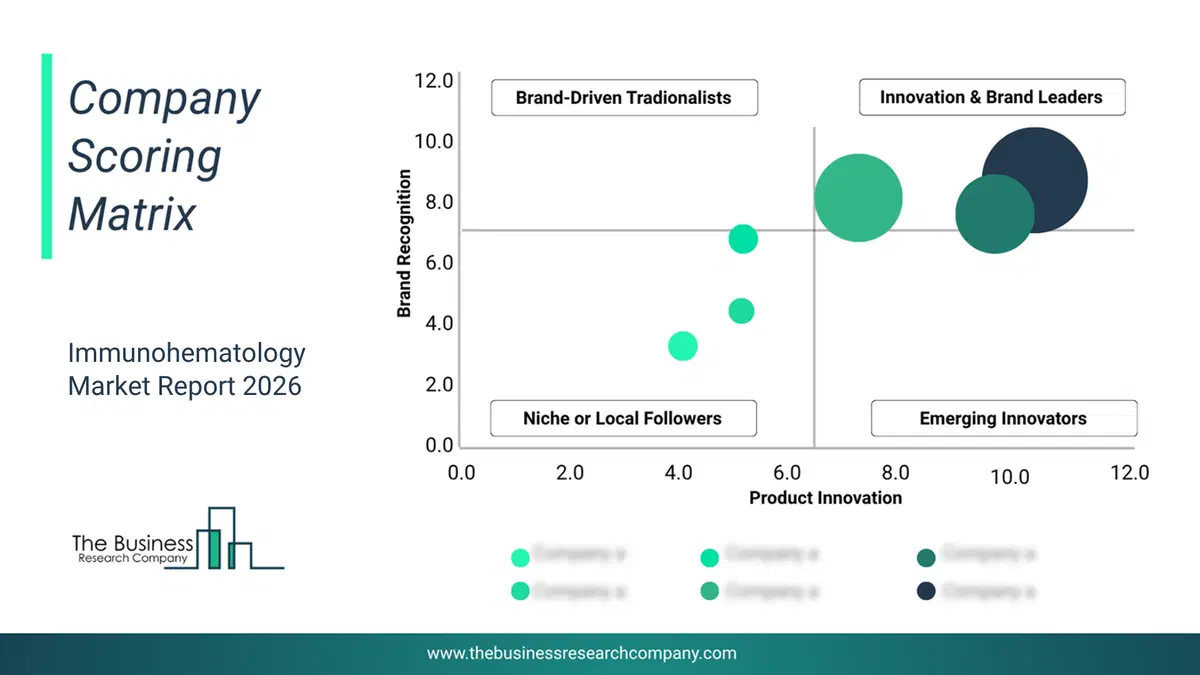
This chart maps companies by product innovation and brand strength, with bubble size indicating relative revenue, helping identify market leaders, challengers, and niche players. This is an illustrative chart; the full report provides a complete and accurate competitive analysis.
Global Immunohematology Market Trends and Insights
Major companies operating in the immunohematology market are focused on developing innovative diagnostic solutions, such as soluble recombinant proteins designed to overcome the interference of the cancer therapy daratumumab. Soluble recombinant protein is a protein produced through recombinant DNA technology that remains properly folded and functional in a soluble form within a host cell or solution, facilitating its use in research and therapeutic applications. For instance, in November 2023, Grifols, S.A., a Spain-based pharmaceutical company, launched the Grifols sCD38 solution. Grifols' sCD38 is the first-ever soluble recombinant protein. Developed to address the interference caused by the cancer therapy daratumumab in vital blood transfusion compatibility testing. Specifically designed for multiple myeloma patients, this groundbreaking solution blocks daratumumab from attaching to CD38 proteins on red blood cells, ensuring precise pre-transfusion test outcomes. By facilitating a more efficient process for screening, identification, and crossmatching, Grifols sCD38 enhances blood transfusion protocols and minimizes delays in delivering lifesaving transfusions.What Are Latest Mergers And Acquisitions In The Immunohematology Market?
In March 2023, Werfen S.A., a Spain-based diagnostic care company, acquired Immucor Inc. for approximately $2 billion. The acquisition aimed to expand Werfen S.A.’s capabilities in specialized diagnostic testing, particularly for diagnostic solutions. Immucor Inc. is a Spain-based transfusion diagnostics company focused on providing blood tests that are safe, accessible, and affordable.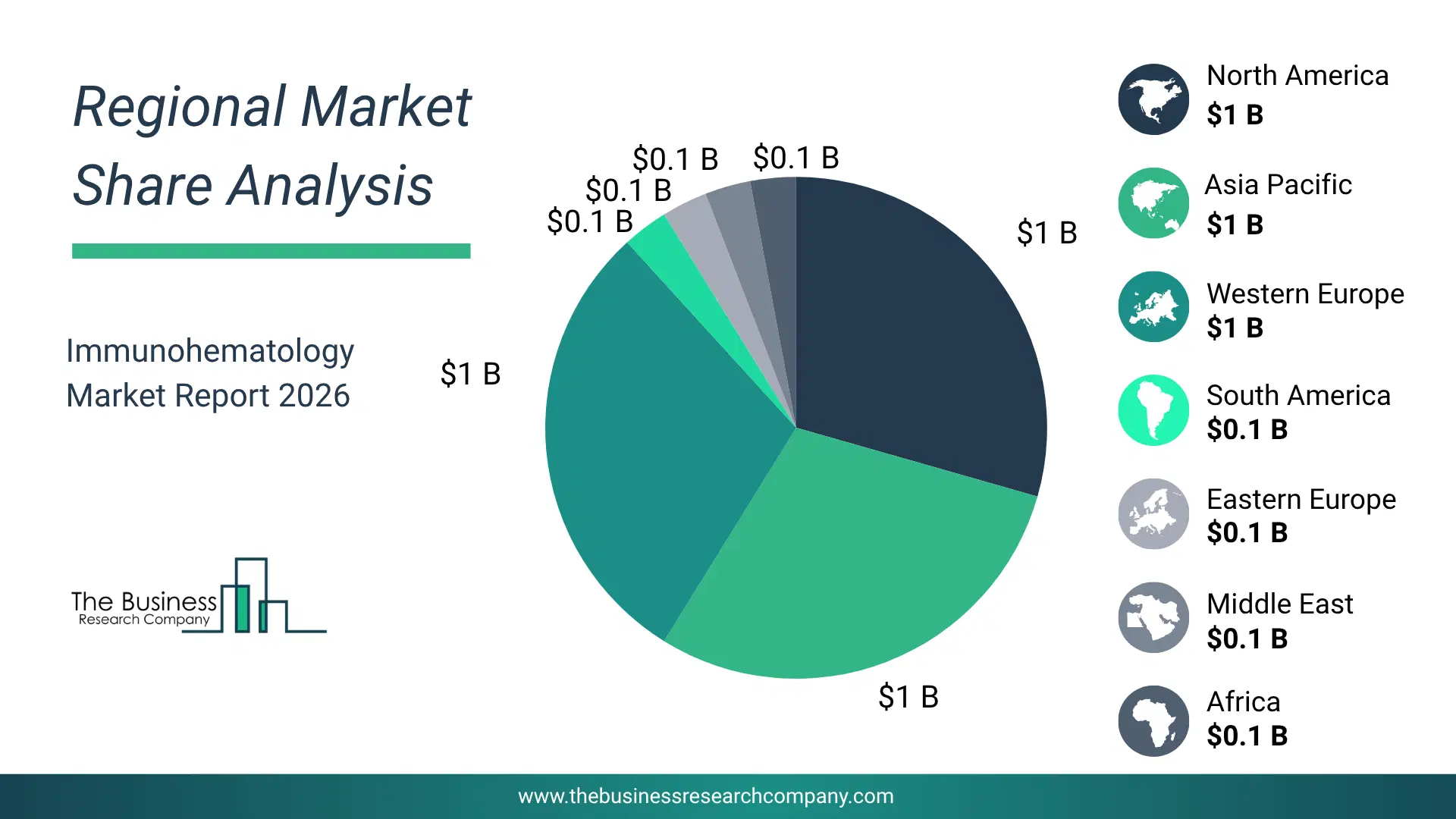
Regional Insights
North America was the largest region in the immunohematology market in 2025. Asia-Pacific is expected to be the fastest-growing region in the global immunohematology market during the forecast period. The regions covered in this market report are Asia-Pacific, South East Asia, Western Europe, Eastern Europe, North America, South America, Middle East, Africa. The countries covered in this market report are Australia, Brazil, China, France, Germany, India, Indonesia, Japan, Taiwan, Russia, South Korea, UK, USA, Canada, Italy, Spain.What Defines the Immunohematology Market?
The immunohematology market includes revenues earned by entities by providing blood banking and transfusion medicine services. The market value includes the value of related goods sold by the service provider or included within the service offering. Only goods and services traded between entities or sold to end consumers are included.How is Market Value Defined and Measured?
The market value is defined as the revenues that enterprises gain from the sale of goods and/or services within the specified market and geography through sales, grants, or donations in terms of the currency (in USD unless otherwise specified). The revenues for a specified geography are consumption values that are revenues generated by organizations in the specified geography within the market, irrespective of where they are produced. It does not include revenues from resales along the supply chain, either further along the supply chain or as part of other products.
This chart presents market attractiveness based on a quantitative evaluation of growth, competition, strategic alignment, and risk, offering a clear view of opportunity areas for decision-making. This chart is for illustrative purposes; the full report contains the complete analysis.

This chart highlights the Total Addressable Market (TAM) by estimating the maximum revenue opportunity using an assumption-driven approach, supporting strategic planning and opportunity sizing across markets. The chart is illustrative; the full report provides a more comprehensive analysis.
What Key Data and Analysis Are Included in the Immunohematology Market Report 2026?
The immunohematology market research report is one of a series of new reports from The Business Research Company that provides market statistics, including industry global market size, regional shares, competitors with the market share, detailed market segments, market trends and opportunities, and any further data you may need to thrive in the immunohematology industry. The market research report delivers a complete perspective of everything you need, with an in-depth analysis of the current and future state of the industry.Immunohematology Market Report Forecast Analysis
| Report Attribute | Details |
|---|---|
| Market Size Value In 2026 | $2.69 billion |
| Revenue Forecast In 2030 | $3.27 billion |
| Growth Rate | CAGR of 4.9% from 2026 to 2030 |
| Base Year For Estimation | 2025 |
| Actual Estimates/Historical Data | 2020-2025 |
| Forecast Period | 2026 - 2030 |
| Market Representation | Revenue in USD Billion and CAGR from 2026 to 2030 |
| Segments Covered | Product, Technology, Disease, Application, End User |
| Regional Scope | Asia-Pacific, Western Europe, Eastern Europe, North America, South America, Middle East, Africa |
| Country Scope | The countries covered in the report are Australia, Brazil, China, France, Germany, India, Indonesia, Japan, Taiwan, Russia, South Korea, UK, USA, Canada, Italy, Spain. |
| Key Companies Profiled | Ortho Clinical Diagnostics Inc., Immunocor Inc., Abbott Laboratories, Siemens Healthineers AG, Grifols S.A., Beckman Coulter Inc., Thermo Fisher Scientific Inc., Becton Dickinson and Company, Merck Co. & KGaA, Bio-Rad Laboratories, Sysmex Corporation, Danaher Corporation, Biosystems S.A., Roche Holdings AG, Mindray Medical International Limited, F.Hoffmann La-Roche Ltd., Biotest AG, Cardinal Health Inc., Quotient Limited, DiaSorin S.p.A., Lorne Laboratories Ltd., Biokit S.A., Avox Technologies, Diagnostic Automation/Cortez Diagnostics Inc., Inno-train Diagnostik GmbH, Drucker Diagnostics Inc., Immundia Diagnostics Pvt. Ltd. |
| Customization Scope | Request for Customization |
| Pricing And Purchase Options | Explore Purchase Options |