

Implantable Defibrillators Market Report 2026
Global Outlook – By Product Type (Single Chambered Implantable Defibrillators, Dual Chambered Implantable Defibrillators, Biventricular Implantable Defibrillators), By Procedure Type (Trans-Venous Implantable Defibrillators, Subcutaneous Implantable Defibrillators), By End User (Hospitals And Clinics, Specialty Cardiac Centers, Ambulatory Surgery Centers, Other End Users) – Market Size, Trends, Strategies, and Forecast to 2030
Implantable Defibrillators Market Overview
• Implantable Defibrillators market size has reached to $5.69 billion in 2025 • Expected to grow to $7.72 billion in 2030 at a compound annual growth rate (CAGR) of 6.4% • Growth Driver: The Rise In Cardiovascular Diseases Drives The Growth Of The Implantable Defibrillators Market Due To Increasing Demand For Life-Saving Heart Rhythm Management • Market Trend: Product Innovations In Implantable Defibrillators Market • North America was the largest region in 2025 and Asia-Pacific is the fastest growing region.What Is Covered Under Implantable Defibrillators Market?
An implantable defibrillator refers to a small, battery-operated device inserted into the chest to help regulate abnormal heart rhythms. It continuously monitors the heart's rhythm, and if it detects a dangerous or irregular rhythm, it delivers an electrical shock to the heart to restore a normal rhythm. The main types of implantable defibrillators are single-chambered implantable defibrillators, dual-chambered implantable defibrillators, and biventricular implantable defibrillators. Single-chamber implantable defibrillators refer to implantable defibrillators with only one right ventricular ICD shocking coil lead that is placed inside the heart's right ventricle. The single-chamber ICD continuously monitors the patient's heart rate and rhythm, and it can deliver electrical shocks to the heart. The main procedures are trans-venous implantable defibrillators and subcutaneous implantable defibrillators, used by hospitals and clinics, ambulatory surgery centers, and other end users.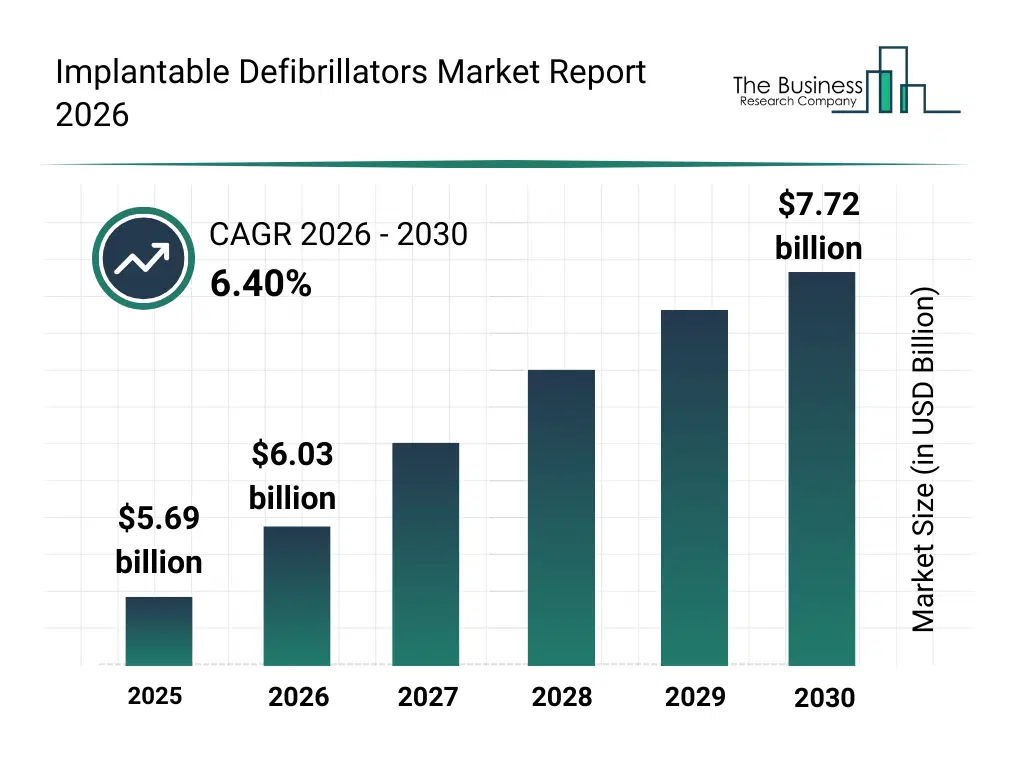
What Is The Implantable Defibrillators Market Size and Share 2026?
The implantable defibrillators market size has grown strongly in recent years. It will grow from $5.69 billion in 2025 to $6.03 billion in 2026 at a compound annual growth rate (CAGR) of 5.9%. The growth in the historic period can be attributed to increasing incidence of sudden cardiac arrest, expansion of implantable defibrillator adoption, growing awareness of cardiac rhythm disorders, improvements in device miniaturization, availability of advanced ICD technologies.What Is The Implantable Defibrillators Market Growth Forecast?
The implantable defibrillators market size is expected to see strong growth in the next few years. It will grow to $7.72 billion in 2030 at a compound annual growth rate (CAGR) of 6.4%. The growth in the forecast period can be attributed to increasing demand for minimally invasive defibrillator systems, rising integration of remote monitoring solutions, expansion of AI-based arrhythmia detection, growing focus on long-term device reliability, increasing investments in advanced cardiac care technologies. Major trends in the forecast period include increasing adoption of advanced defibrillation algorithms, rising demand for subcutaneous implantable defibrillators, growing use of leadless defibrillator technologies, expansion of remote device monitoring platforms, enhanced focus on patient safety and comfort.
Global Implantable Defibrillators Market Segmentation
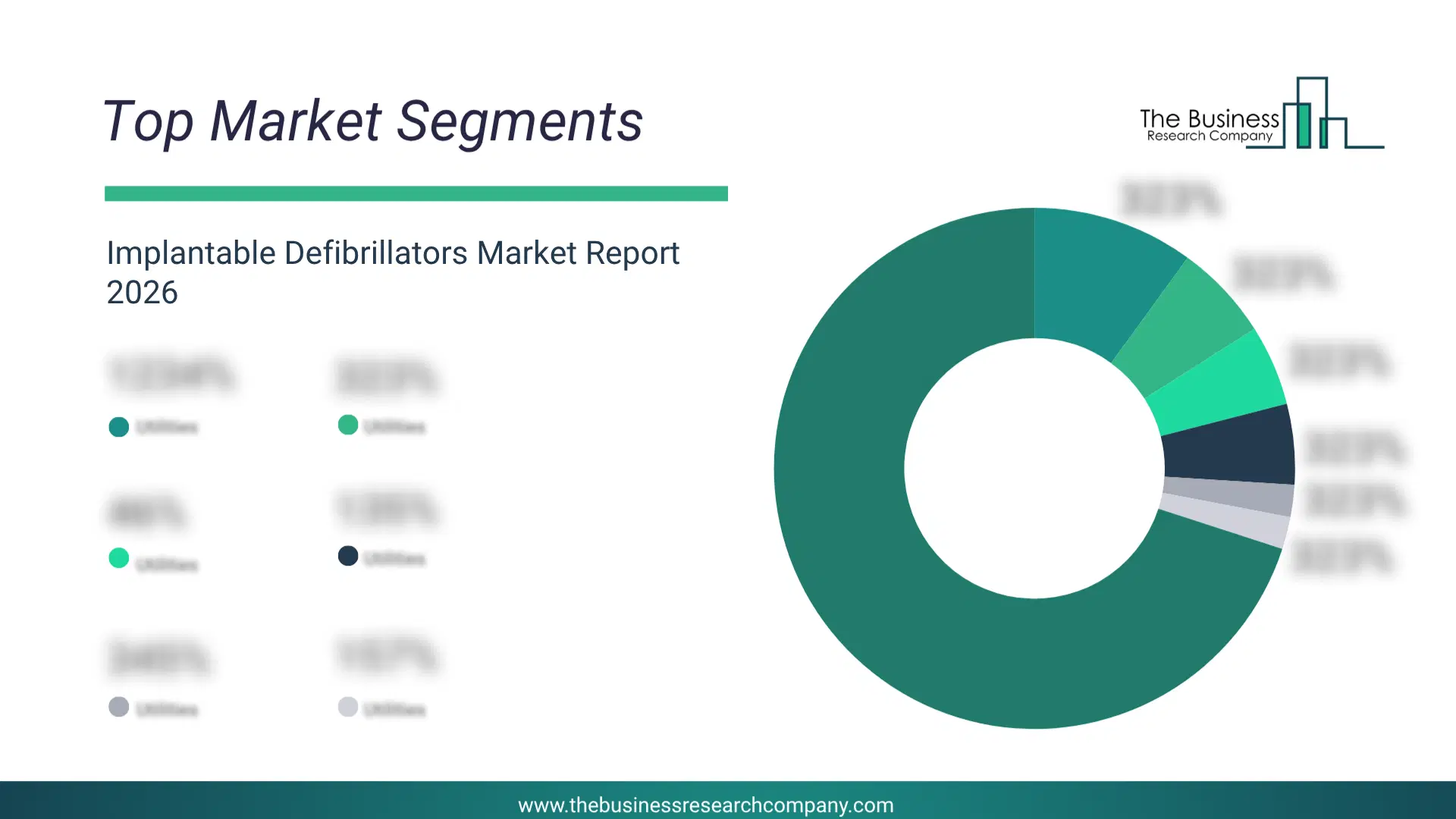
1) By Product Type: Single Chambered Implantable Defibrillators, Dual Chambered Implantable Defibrillators, Biventricular Implantable Defibrillators 2) By Procedure Type: Trans-Venous Implantable Defibrillators, Subcutaneous Implantable Defibrillators 3) By End User: Hospitals And Clinics, Specialty Cardiac Centers, Ambulatory Surgery Centers, Other End Users Subsegments: 1) By Single Chambered Implantable Defibrillators: Standard Single Chamber ICDs, Leadless Single Chamber ICDs 2) By Dual Chambered Implantable Defibrillators: Standard Dual Chamber ICDs, Advanced Dual Chamber ICDs 3) By Biventricular Implantable Defibrillators: Standard Biventricular ICDs, Advanced Biventricular ICDs With CRTWhat Are The Drivers Of The Implantable Defibrillators Market?
The increasing prevalence of cardiovascular diseases (CVDs) is expected to propel the growth of the implantable defibrillators market going forward. Cardiovascular diseases (CVDs) are a group of disorders affecting the heart and blood vessels, including conditions such as heart attacks, strokes, and hypertension, often caused by factors like poor diet, lack of exercise, smoking, and genetics. The increasing prevalence of cardiovascular diseases is primarily driven by aging populations, unhealthy lifestyle choices, and rising rates of risk factors such as obesity, diabetes, and hypertension. Implantable defibrillators support cardiovascular health by continuously monitoring heart rhythms and delivering life-saving shocks to prevent sudden cardiac arrest in patients with high-risk heart conditions. For instance, in January 2024, according to the American Heart Association, a US-based non-profit organization, the age-adjusted death rate from cardiovascular disease increased to 233.3 per 100,000 in 2024, up 4.0% from 224.4 per 100,000 in 2023. Therefore, the increasing prevalence of cardiovascular diseases (CVDs) is driving the growth of the implantable defibrillators industry. The increasing prevalence of diabetes is expected to propel the growth of the implantable defibrillators market going forward. Diabetes is a chronic metabolic disease characterized by elevated levels of blood glucose or blood sugar, which leads over time to serious damage to the heart, blood vessels, eyes, kidneys, and nerves. Implantable cardioverter defibrillators (ICDs) play a crucial role in the management of patients with diabetes, particularly those at risk of sudden cardiac death. ICDs have been shown to effectively reduce arrhythmic death and all-cause mortality in patients with severe myocardial dysfunction, including those with diabetes. For instance, in June 2024, according to the NHS England, a UK-based governing body, in 2023, 3,615,330 individuals registered with a GP were identified as having non-diabetic hyperglycemia, commonly referred to as pre-diabetes, marking an increase from 3,065,825 in 2022 an increase of nearly 18%. Therefore, the increasing prevalence of diabetes is driving the growth of the implantable defibrillators industry.Key Players In The Global Implantable Defibrillators Market
Major companies operating in the implantable defibrillators market are Medtronic plc, Abbott Laboratories, Boston Scientific Corporation, Biotronik SE & Co KG, MicroPort Scientific Corporation, LivaNova PLC, Zhejiang Lepu Medical Technology Co Ltd, Shree Pacetronix Ltd, EBR Systems Inc, Imricor Medical Systems Inc, Carmat SA, BiVACOR Inc, Procyrion Inc, Jarvik Heart Inc, Fineheart SA, CorWave SA, NuPulseCV Inc, Calon Cardio Technology Ltd, Evaheart Inc, CH Biomedical Inc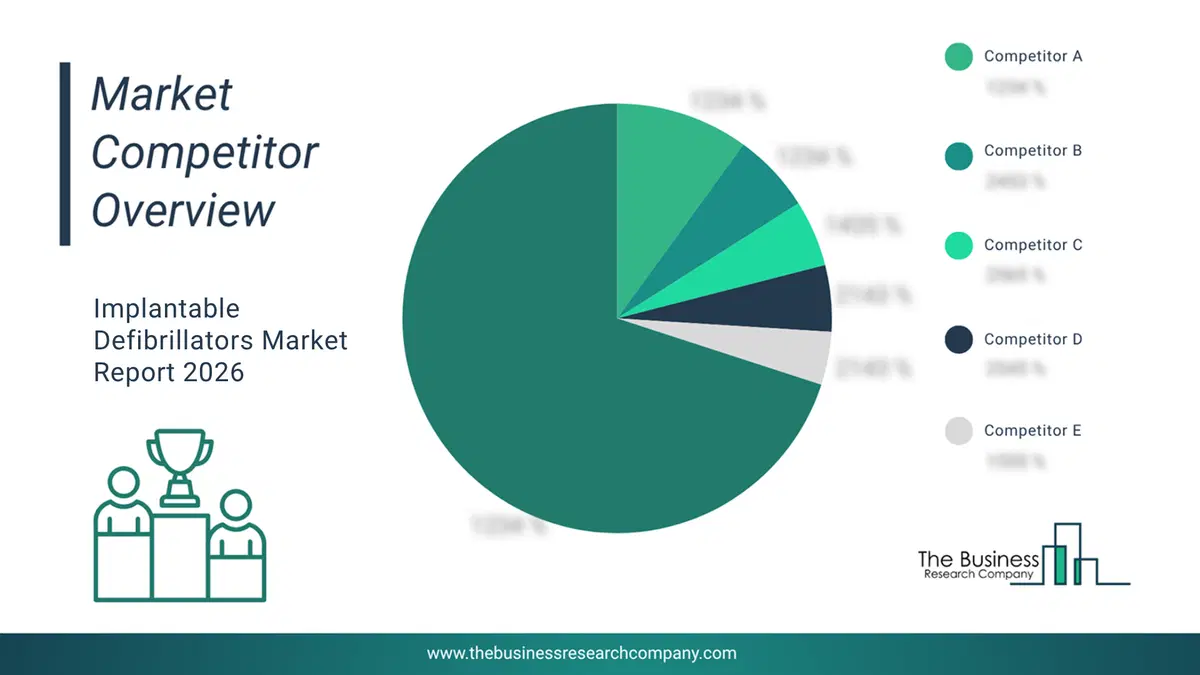
This chart is for illustrative purposes; the full report includes a detailed competitor analysis and comprehensive overview of the top 10 companies in the market.
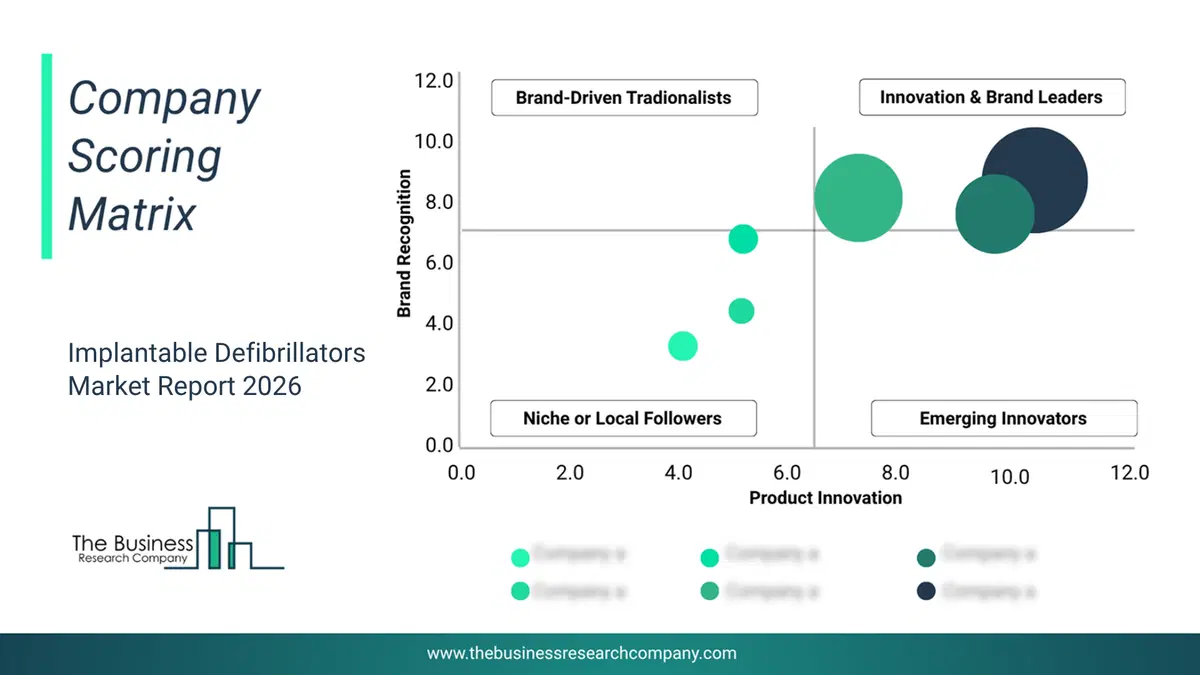
This chart maps companies by product innovation and brand strength, with bubble size indicating relative revenue, helping identify market leaders, challengers, and niche players. This is an illustrative chart; the full report provides a complete and accurate competitive analysis.
Global Implantable Defibrillators Market Trends and Insights
Major companies in the implantable defibrillators market are focusing on developing innovative products such as extravascular ICDs and ultra-thin defibrillation leads to enhance patient safety, reduce complications, and improve long-term therapy effectiveness. Extravascular ICDs are implantable defibrillators with leads placed outside the heart and blood vessels to reduce complications, while ultra-thin defibrillation leads are very slim wires designed for safer, less invasive heart rhythm correction. For instance, in December 2023, Medtronic, an Ireland-based medical device company, launched its new type of implantable cardioverter-defibrillator. The Aurora extravascular ICD is a device that is inserted under the skin under the left armpit rather than under the collarbone. It is similar in size, shape, and battery life to the company's traditional transvenous ICDs, but it can provide defibrillation to patients undergoing cardiac arrest as well as ongoing pacemaker therapies. Its Epsila leads are then minimally invasively linked to the heart beneath the breastbone. The implant also has Medtronic's Smart Sense technology, which attempts to lower the risk of unwarranted shocks, and SureScan technology, which permits a patient to have an MRI while the device is placed.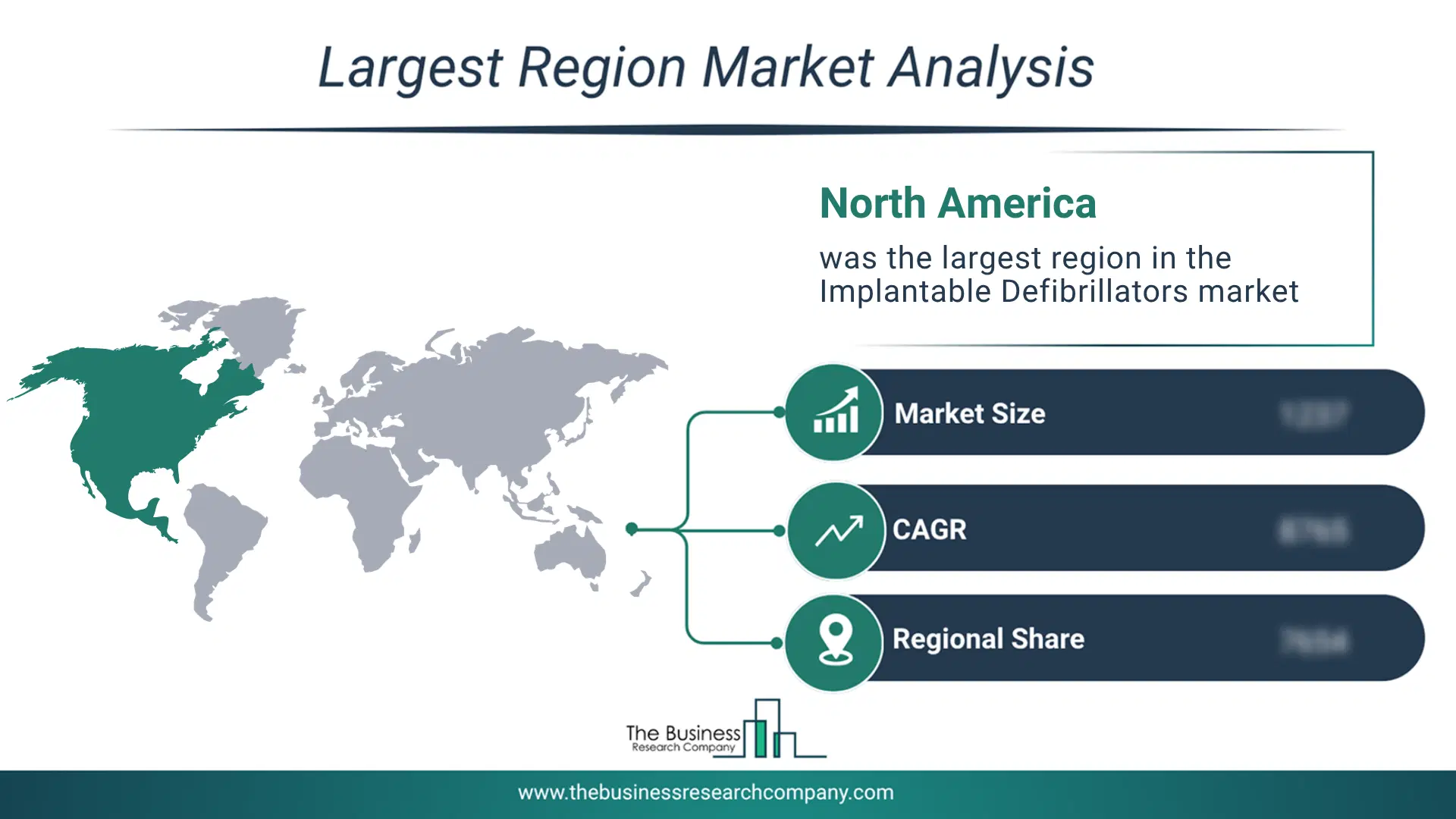
Regional Outlook
North America was the largest region in the implantable defibrillators market in 2025. Asia-Pacific is expected to be the fastest-growing region in the global implanted defibrillator market forecast period. The regions covered in this market report are Asia-Pacific, South East Asia, Western Europe, Eastern Europe, North America, South America, Middle East, Africa. The countries covered in this market report are Australia, Brazil, China, France, Germany, India, Indonesia, Japan, Taiwan, Russia, South Korea, UK, USA, Canada, Italy, SpainWhat Defines the Implantable Defibrillators Market?
The implantable defibrillator market consists of sales of epicardial implantable cardioverter-defibrillator, substernal implantable cardioverter-defibrillator, and single-chamber ICD with atrial sensing. Values in this market are ‘factory gate’ values, that is the value of goods sold by the manufacturers or creators of the goods, whether to other entities (including downstream manufacturers, wholesalers, distributors and retailers) or directly to end customers. The value of goods in this market includes related services sold by the creators of the goods.How is Market Value Defined and Measured?
The market value is defined as the revenues that enterprises gain from the sale of goods and/or services within the specified market and geography through sales, grants, or donations in terms of the currency (in USD unless otherwise specified). The revenues for a specified geography are consumption values that are revenues generated by organizations in the specified geography within the market, irrespective of where they are produced. It does not include revenues from resales along the supply chain, either further along the supply chain or as part of other products.
This chart presents market attractiveness based on a quantitative evaluation of growth, competition, strategic alignment, and risk, offering a clear view of opportunity areas for decision-making. This chart is for illustrative purposes; the full report contains the complete analysis.

This chart highlights the Total Addressable Market (TAM) by estimating the maximum revenue opportunity using an assumption-driven approach, supporting strategic planning and opportunity sizing across markets. The chart is illustrative; the full report provides a more comprehensive analysis.
What Key Data and Analysis Are Included in the Implantable Defibrillators Market Report 2026?
The implantable defibrillators market research report is one of a series of new reports from The Business Research Company that provides market statistics, including industry global market size, regional shares, competitors with the market share, detailed market segments, market trends and opportunities, and any further data you may need to thrive in the implantable defibrillators industry. The market research report delivers a complete perspective of everything you need, with an in-depth analysis of the current and future state of the industry.Implantable Defibrillators Market Report Forecast Analysis
| Report Attribute | Details |
|---|---|
| Market Size Value In 2026 | $6.03 billion |
| Revenue Forecast In 2030 | $7.72 billion |
| Growth Rate | CAGR of 6.4% from 2026 to 2030 |
| Base Year For Estimation | 2025 |
| Actual Estimates/Historical Data | 2020-2025 |
| Forecast Period | 2026 - 2030 |
| Market Representation | Revenue in USD Billion and CAGR from 2026 to 2030 |
| Segments Covered | Product Type, Procedure Type, End User |
| Regional Scope | Asia-Pacific, Western Europe, Eastern Europe, North America, South America, Middle East, Africa |
| Country Scope | The countries covered in the report are Australia, Brazil, China, France, Germany, India, Indonesia, Japan, Taiwan, Russia, South Korea, UK, USA, Canada, Italy, Spain. |
| Key Companies Profiled | Medtronic plc, Abbott Laboratories, Boston Scientific Corporation, Biotronik SE & Co KG, MicroPort Scientific Corporation, LivaNova PLC, Zhejiang Lepu Medical Technology Co Ltd, Shree Pacetronix Ltd, EBR Systems Inc, Imricor Medical Systems Inc, Carmat SA, BiVACOR Inc, Procyrion Inc, Jarvik Heart Inc, Fineheart SA, CorWave SA, NuPulseCV Inc, Calon Cardio Technology Ltd, Evaheart Inc, CH Biomedical Inc |
| Customization Scope | Request for Customization |
| Pricing And Purchase Options | Explore Purchase Options |